
Walnut Veneer at a Glance
Walnut veneer gives you the look and figure of solid black walnut at a fraction of the cost. A dining table top that would cost $140 in solid walnut lumber runs about $85 in veneer on MDF. It often looks better too, because premium logs go to veneer before they go to the lumberyard. You don't need a vacuum press. A household iron and paper-backed veneer is a real, professional-quality application method.
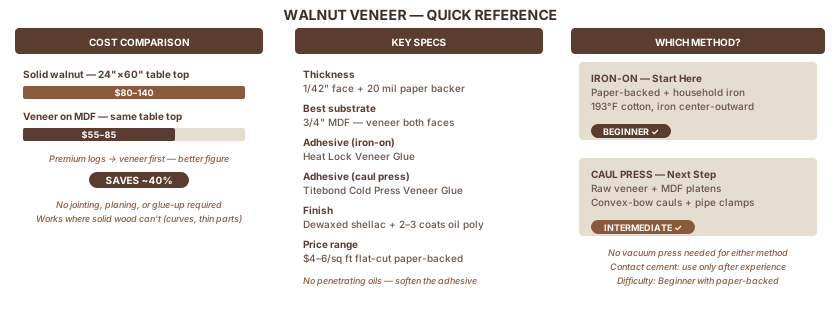
| Standard thickness | 1/42" face + paper backer (~0.030" total) |
| Best substrate | 3/4" MDF (veneer both sides) |
| Best adhesive | Titebond Cold Press Veneer Glue or Heat Lock Veneer Glue |
| Price range | $4–6/sq ft for paper-backed flat cut |
| Finish | Shellac sealer + 2–3 coats poly (no penetrating oils) |
| Difficulty | Beginner with paper-backed; Moderate with raw unbacked |
In this guide:
- Why walnut veneer makes sense for home shops
- How to choose the right veneer (type, backing, supplier)
- Substrate selection and the both-sides rule
- Which adhesive to use, and why walnut's porosity matters
- Three application methods without a press
- Finishing walnut veneer safely
- Fixing bubbles, lifted edges, and bleed-through
Part 1: Why Walnut Veneer
Solid black walnut runs $8–14 per board foot at retail. A simple 24"×60" table top needs about 10 board feet. That's $80–140 in lumber before you've touched a tool. Then you need to flatten, joint, and glue up multiple boards, because premium-width solid walnut is rare and expensive.
Paper-backed walnut veneer on MDF cuts that to roughly $55–85 total and skips the milling. The finished surface looks the same. In most cases it looks better. Premium logs with the most interesting figure are typically sliced into veneer rather than sawn into lumber. You're buying the good stuff.
Veneer also works where solid wood can't. Curved cabinet doors, large panel surfaces, thin drawer fronts all require veneer. Calling it a shortcut mistakes it for a compromise. It isn't.
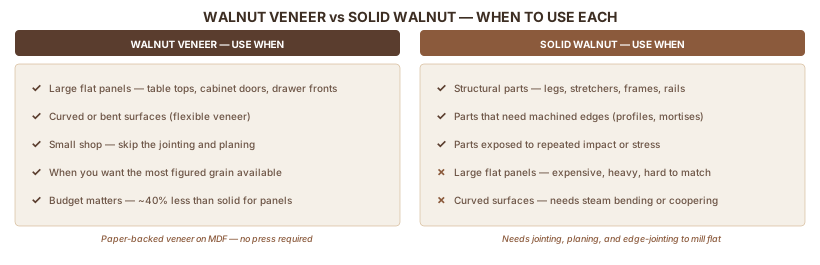
When to use veneer vs. solid walnut
| Situation | Veneer | Solid |
|---|---|---|
| Large flat panels (table tops, cabinet doors) | Better choice | Expensive, heavier |
| Structural parts (legs, stretchers, frames) | Not suitable | Required |
| Curved or bent surfaces | Works (flexible veneer) | Difficult |
| Parts that need machined edges | Not suitable | Required |
| Small shop with limited milling capacity | Ideal | Needs jointer/planer |
Black walnut: what you're working with
Black walnut (Juglans nigra) is the standard in the North American market. English or Claro walnut looks similar but is less common. When a supplier lists "walnut veneer" without qualification, it's black walnut.
Key properties from The Wood Database: Janka hardness 1,010 lbf, specific gravity 0.59, typically straight open grain with figured variants (curly, burl, crotch) available. The chocolate-brown heartwood with creamy white sapwood contrast is the visual signature. That sapwood is worth thinking about before you buy.
Part 2: Choosing Your Walnut Veneer
The biggest decision isn't which supplier. It's which type. Raw unbacked veneer and paper-backed veneer look identical on the finished piece and differ completely in how you handle them.
Paper-backed vs. raw: get paper-backed for your first project
Raw unbacked walnut is 1/42" (~0.024") of pure wood. It's brittle, prone to cracking, and needs to be flattened before pressing. That's a whole skill set on its own. Skip it for project one.
Paper-backed veneer is the same 1/42" wood face laminated to a 10 or 20 mil paper backer. It ships pre-sanded to about 220 grit, handles without cracking, lies flat, and works with a household iron. The 20 mil backer is more stable than the 10 mil. Get 20 mil when you have the choice.
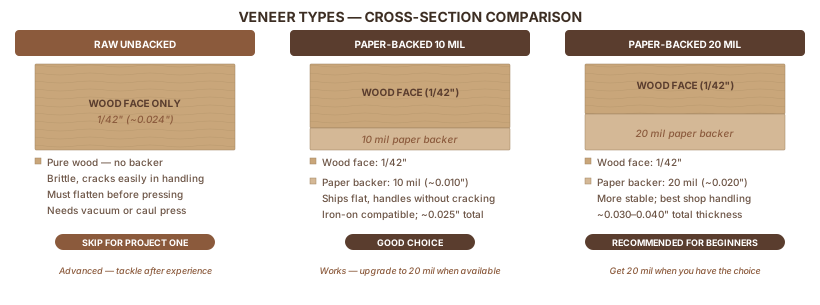
| Type | Thickness | Notes | Beginner? |
|---|---|---|---|
| Raw unbacked | 1/42" | Brittle; must flatten first | No |
| Paper-backed 10 mil | ~0.025" total | Flexible; iron-on compatible | Yes |
| Paper-backed 20 mil | ~0.030–0.040" total | More stable; best handling | Yes (recommended) |
| 2-ply (wood-on-wood) | ~0.060"+ | Better with contact cement | Moderate |
| PSA (peel-and-stick) | Varies | Only on lacquered/painted surfaces | Limited |
Cut types and grain patterns
Flat cut (plain sliced): Classic cathedral arch grain. Most affordable. Widest sheet sizes. Use this for table tops, cabinet faces, and furniture panels.
Quarter cut: Tight straight grain with subtle ray flecking. More dimensionally stable. Better for vertical surfaces and drawer fronts.
Burl and crotch: Highly figured. Expensive ($6+/sq ft). Best after you've done a few projects with flat cut.
For your first walnut veneer project, buy flat cut. It's cheaper, more widely available, and easier to match across sheets.
Managing sapwood
Large flat-cut walnut sheets often include creamy white sapwood along the edges. It doesn't look intentional. It looks unplanned. Before you buy, ask the supplier whether sheets are heartwood-only. If not, plan to trim sapwood edges during sizing, or use a dye to blend it into the heartwood color during finishing.
Where to buy and what to pay
| Supplier | Type | Price/sq ft | Notes |
|---|---|---|---|
| WiseWood Veneer | Paper-backed | From $2.79 | Best value; flat and quarter cut |
| VeneerSupplies.com | Paper-backed 20 mil | ~$4.13 (4'×8' sheet) | Reliable; pressing supplies available |
| Woodworkers Source | Architectural paper-backed | ~$10 | Smaller quantities; premium quality |
| Oakwood Veneer | Multiple types | Varies | Best selection; PSA, 2-ply, BFV options |
| Joe Woodworker | Figured/burl specialty | ~$6.50 (burl) | Specialty figured; also sells supplies |
| Rockler / Woodcraft | Small retail packs | $7–12 equiv | In-store convenience; higher per-sq-ft cost |
For a first project, budget $4–6/sq ft for quality paper-backed flat-cut walnut.
Part 3: Substrate and Prep
Veneer is only as stable as what's underneath it. The substrate choice isn't about cost. It's about dimensional stability.
MDF is the right call
MDF is flat, consistent in density, and doesn't have grain to telegraph through thin veneer. Joe Woodworker puts it plainly: "If you ask most guys who do this for a living, MDF is the gold standard for veneer panels."
Plywood works if it's quality plywood. Test it: try to peel the face veneer off by hand. If it lifts with minimal force, the plywood is too low-grade and your walnut veneer will eventually follow it. Void-free Baltic birch is the best plywood option.
Solid wood works only if it's quartersawn. Flat-sawn solid wood expands and contracts significantly across its width every season. That movement will crack the veneer glue line within a few years.
Do not use hardboard or Masonite. The internal glue layers separate, taking your walnut veneer with them.
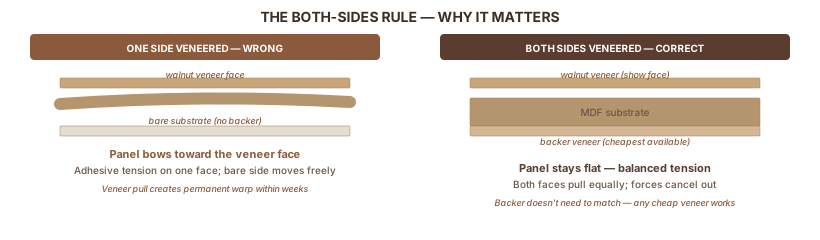
The both-sides rule: most beginners skip this
Veneer one face of a panel and leave the back bare, and the panel warps. The adhesive and veneer create tension on one face while the bare side stays free to move. Always veneer both sides.
The back face doesn't need to match. Use the cheapest backer veneer available. It just needs to balance the panel.
Prep steps
- Cut substrate 1" larger than final size in each dimension. Trim to final size after pressing. Pressed edges are cleaner than pre-cut edges.
- Acclimate the substrate and veneer together in the same space for 48+ hours before pressing. Moisture mismatch after pressing causes warping.
- Sand both faces with 80-grit to give adhesive mechanical bite. Clean dust with compressed air or a tack cloth.
- MDF water test: drop a small bead of water on the surface. It should absorb within 30 seconds. If it beads up, re-sand.
RELATED: Sheet Goods for Cabinets Covers every substrate type for cabinet and veneer work — plywood grades, MDF, and how to pick the right core for your application.
Part 4: Adhesives for Walnut Veneer
Walnut has a reputation for being oily. That reputation is mostly wrong, and it leads beginners to solve the wrong problem.
The real walnut adhesive issue: bleed-through, not oil
Teak, rosewood, and cocobolo are genuinely oily. Their extractives bead up and prevent adhesive from bonding. Black walnut doesn't have that problem. It bonds readily with standard woodworking adhesives.
What walnut does have is open pores. Those pores are wide enough that low-viscosity adhesives wick in and push through to the face, leaving dark shadow staining under the finish. That's the risk to manage. The solution is a higher-solids adhesive, thick enough to stay on the surface rather than soak in.
Per Fine Woodworking, acetone wiping before gluing is genuinely necessary for teak and rosewood. For walnut, it's a reasonable precaution but not the critical step it is for tropical oily species.
Which adhesive to use
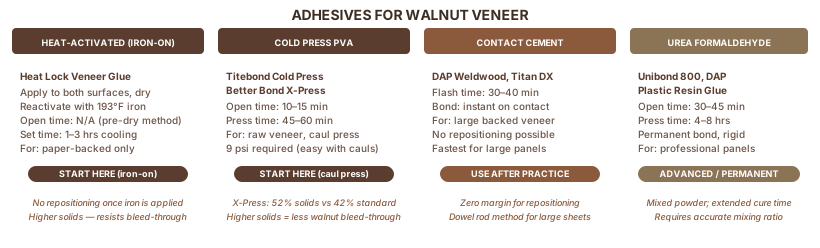
| Adhesive | Best For | Products | Open Time | Press/Set Time |
|---|---|---|---|---|
| Heat-activated (iron-on) | Paper-backed, iron method | Heat Lock Veneer Glue | N/A | 1–3 hrs cooling |
| Cold press PVA (veneer-specific) | Raw/unbacked, caul press | Titebond Cold Press, Better Bond X-Press | 10–15 min | 45–60 min |
| Contact cement | Large flat panels, backed veneer | DAP Weldwood Original, Titan DX | 30–40 min flash | Instant |
| Urea formaldehyde | Permanent panels | Unibond 800, DAP Plastic Resin | 30–45 min | 4–8 hrs |
Joe Woodworker's testing found that Better Bond X-Press has 52% solids content vs. 42% in standard cold press PVA. Higher solids means less bleed-through on walnut's open grain. It also requires only 9 psi of pressure. A well-clamped caul setup achieves that easily.
For your first project: if you're ironing paper-backed veneer, use Heat Lock Veneer Glue. If you're clamping raw veneer, use Titebond Cold Press Veneer Glue.
Part 5: Applying Walnut Veneer Without a Press
Three methods work in a home shop without a vacuum press. Iron-on is the right starting point for most beginners. The caul press is the professional home-shop approach for raw veneer and larger panels. Contact cement is the fastest option but leaves no room for repositioning.
Method 1: Iron-On (start here for paper-backed veneer)
You need paper-backed walnut, Heat Lock Veneer Glue, a household iron (steam off), and a cotton or flannel cloth. No clamps required.
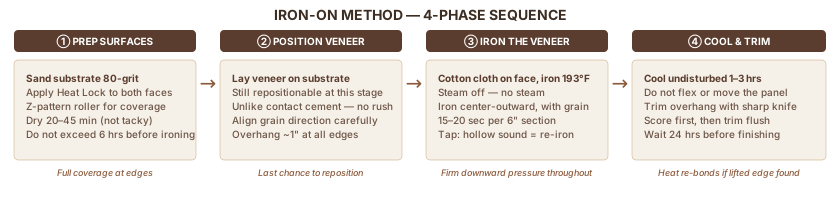
- Sand the substrate with 80-grit and clean the dust.
- Apply Heat Lock adhesive to both the substrate surface and the veneer back. Use a foam brush or small roller in a Z-pattern for even coverage. Full coverage: don't leave thin spots at edges.
- Let both surfaces dry 20–45 minutes. The glue should look dry and feel non-tacky. Don't exceed 6 hours before ironing.
- Position the veneer on the substrate. Unlike contact cement, you can still reposition it at this stage.
- Cover the veneer face with the cotton cloth. Set your iron to "cotton," steam off, ~193°F.
- Iron from center outward, moving with the grain. Firm downward pressure. Spend 15–20 seconds per 6-inch section before moving.
- Tap the surface with a fingernail as you go. A hollow sound means poor bond. Re-iron those spots immediately.
- Let it cool undisturbed for 1–3 hours before trimming. Wait 24 hours before applying any finish.
The iron-on method works because the heat reactivates the dried adhesive and the pressure bonds it permanently. It produces professional results on flat surfaces.
Method 2: Caul Press with Clamps (for raw veneer and larger projects)
A caul press requires more setup but handles raw veneer and larger panels. You need two 3/4" MDF platens cut to panel size, 2×4 caul boards with a slight convex bow on the pressing face, pipe clamps spaced every 8–12", wax paper, and Titebond Cold Press Veneer Glue.
The convex bow on the cauls is the key detail. WOODWEB's clamp-and-caul guide explains why: when you tighten the clamps, the bow forces pressure to the center of the panel first. This drives air and adhesive outward as clamps tighten. Flat cauls do the opposite, trapping air in the middle.
- Roll a thin, even coat of cold press glue on the substrate. Apply backer veneer glue coat at the same time if you're doing both faces.
- Position veneer. Lay wax paper over the face to prevent the platen from sticking.
- Stack: bottom cauls → bottom MDF platen → panel → top MDF platen → top cauls → clamps.
- Tighten clamps gradually, alternating end-to-end and side-to-side. Space them every 8–12".
- Press 45–60 minutes for standard PVA. Better Bond X-Press: 2–4 hours. Urea formaldehyde: 4–8 hours.
- Trim to final size after full cure.
Method 3: Contact Cement (not the right starting method)
Contact cement works for large flat surfaces with backed veneer. The bond is permanent the instant the two surfaces touch, so there's no repositioning. Oakwood Veneer's contact cement guide covers the full process. For large sheets, use the dowel rod method: lay dowels across the substrate every 6–12" to hold the veneer above it while positioning, then remove them from center outward as you press.
Which method for your first project? One sheet, flat surface, paper-backed veneer: iron-on. Multiple sheets or raw veneer: caul press. Come back to contact cement after you've done a few projects.
Part 6: Finishing Walnut Veneer
Three rules before you open a can of finish.
Rule 1: No power sanding. Paper-backed veneer is pre-sanded to ~220 grit at the factory. It needs almost no preparation before finishing. One or two light passes with a hand sanding block at 180-grit is all. A random orbital sander will sand through walnut veneer in seconds. Hand sanding block only.
Rule 2: No penetrating oil finishes on paper-backed veneer. Tung oil, danish oil, and linseed oil penetrate deeply into wood. On paper-backed veneer, they keep going through the paper backer and into the adhesive layer, potentially softening it. Use film finishes instead.
Rule 3: UV protection. Black walnut shifts from chocolate brown toward orange-gold over years of UV exposure. Use a UV-stable polyurethane or conversion lacquer. Shellac alone won't protect the color.
The right finish stack
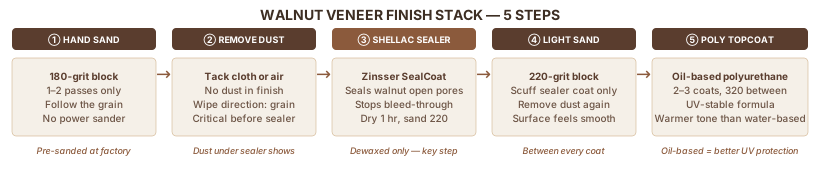
- Hand-sand with 180-grit block. One or two passes. Follow the grain.
- Tack cloth or compressed air for dust removal.
- One coat of dewaxed shellac (Zinsser SealCoat). This seals walnut's open pores, acts as a barrier preventing penetrating chemistry from reaching the adhesive, and ties down any bleed-through staining. Let dry 1 hour.
- Light sand with 220-grit. Remove dust.
- Two to three coats of oil-based polyurethane. Light sand with 320-grit between coats. Oil-based gives better UV protection and a warmer tone; water-based dries faster.
Popping the grain
A plain film finish leaves walnut's open pores unfilled, and the surface can look shallow and dull despite good technique. Woodworkers Source documents three methods for filling the grain and adding depth:
Grain filler (most dramatic result): After sanding to 220, apply a sanding sealer, then a tinted paste wood filler: Old Masters Woodgrain Filler tinted with Zar Moorish Teak stain at a 2:1 ratio. Scrape across the grain diagonally to fill pores. A high-gloss topcoat over filled grain looks deep and professional.
Dye plus glaze (also manages sapwood): Behlen Solar-Lux "Brown Maple" dye, diluted 50%, applied in 2–3 coats. Seal with dewaxed shellac. Apply Old Masters Dark Walnut gel stain as a glaze. Clear topcoat. This approach also blends sapwood into the heartwood color.
For paper-backed veneer, stick to grain filler or the dye-plus-glaze approach. Skip wet-sanded tung oil. The oil soaks through to the adhesive.
RELATED: Applying Polyurethane The complete application guide — product selection, brush technique, between-coat sanding, and how to get a glass-smooth finish on walnut.
Part 7: Troubleshooting
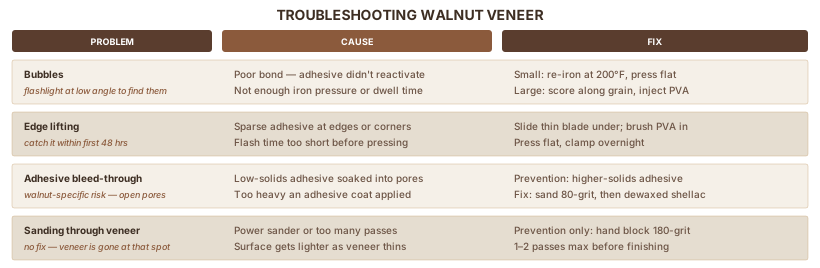
Bubbles
Sweep a flashlight at a low angle across the surface. Bubbles cast visible shadows that disappear under direct overhead light.
Small bubble: Place a cotton cloth over the face, iron at 200°F, and press firmly for 20–30 seconds. Clamp a flat board over the spot until cool.
Larger bubble: Score the bubble along the grain with a razor blade. Inject PVA glue with a syringe or toothpick. Press flat and clamp overnight.
Edge lifting
Slide a thin blade under the lifted edge and brush PVA glue underneath. Press flat, clamp, and leave it overnight. The fix is reliable if caught early.
Prevention is straightforward: 100% adhesive coverage at edges (never go sparse at corners), full flash dry time before pressing, maximum clamp pressure at panel edges.
Adhesive bleed-through (walnut-specific risk)
CP Adhesives specifically cites walnut, along with wenge, as species more susceptible to bleed-through due to open pores and dark color showing adhesive staining.
Prevention: use Titebond Cold Press or Better Bond X-Press (higher solids content); apply a thin even coat rather than a heavy one; allow the recommended open time before pressing.
If bleed-through has already happened: sand aggressively with 80-grit to remove the contaminated surface layer, then progress to 180 and 220. The dewaxed shellac sealer in the finish stack also helps contain light staining.
Sanding through the veneer
The veneer gets lighter in color as it thins, and eventually you see the paper backer or substrate. There's no fixing sanding-through. The veneer is gone at that spot.
Hand sanding block only. 180-grit maximum. Follow the grain. The factory pre-sanding means you rarely need more than two passes before finishing.
Sources
This guide draws on technical documentation from veneer manufacturers and suppliers, adhesive product data, species research, and woodworking knowledge bases.
- The Wood Database — Black Walnut — species properties: Janka hardness, specific gravity, workability
- Joe Woodworker — No Vacuum Press Veneering — three application methods with pressure data
- Joe Woodworker — Substrates — MDF as gold standard; substrate comparison
- Joe Woodworker — Iron-On Veneering — full iron-on method process
- Joe Woodworker — Battle of the Bonds — adhesive viscosity and solids content comparison
- WOODWEB — Clamp-and-Caul Setup — caul bow mechanics; pressure distribution
- WOODWEB — Glue Choices for Veneers — adhesive selection guidance
- Oakwood Veneer — Contact Cement Guide — contact cement process; flash time specifics
- CP Adhesives — Veneer Bleed-Through Prevention — bleed-through causes; walnut cited specifically
- Fine Woodworking — Acetone on Oily Wood — oily vs. non-oily wood distinction
- Woodworkers Source — Walnut Finish Techniques — grain-popping methods; product names
- VeneerSupplies.com — Paper-Backed Walnut 4×8 — 20 mil spec; pricing
Up Next
How to Apply Iron-On Edge Banding
VENEERING & INLAY · Beginner