
How to Use This Guide
Polyurethane is the most common clear finish in woodworking — sand to 180 grit, apply 3–4 coats with the right brush, and a dining table stays protected for 10 years. It guards against scratches, water rings, and daily wear. But the difference between a sticky, bubbly coat and a glass-smooth finish comes down to technique, not talent.
This guide walks you through the entire process, start to finish, with specific product names, exact numbers, and the reasoning behind every step.
- You'll learn how to choose, apply, and sand polyurethane using techniques that produce a smooth, durable finish on any wood project.
- You'll get specific product recommendations, grit progressions, dry times, and coat schedules — no vague advice.
- By the end, you'll understand not just the steps but why each one matters, so you can troubleshoot problems on your own and finish with confidence.
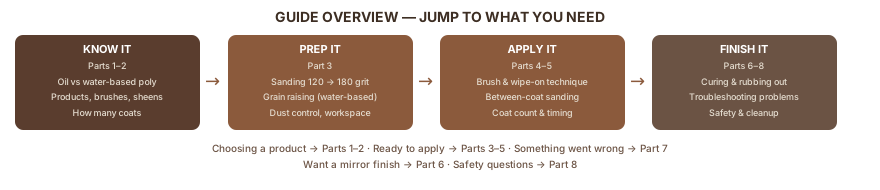
If you're choosing a product: Start with Part 1 (oil vs water-based) and Part 2 (specific products).
If you're ready to apply: Jump to Part 3 (surface prep), Part 4 (application), and Part 5 (between-coat sanding).
If something went wrong: Head straight to Part 7 (troubleshooting).
If you want a mirror finish: Part 6 covers rubbing out and polishing after the final coat cures.
Part 1: Understanding Polyurethane
What Polyurethane Does
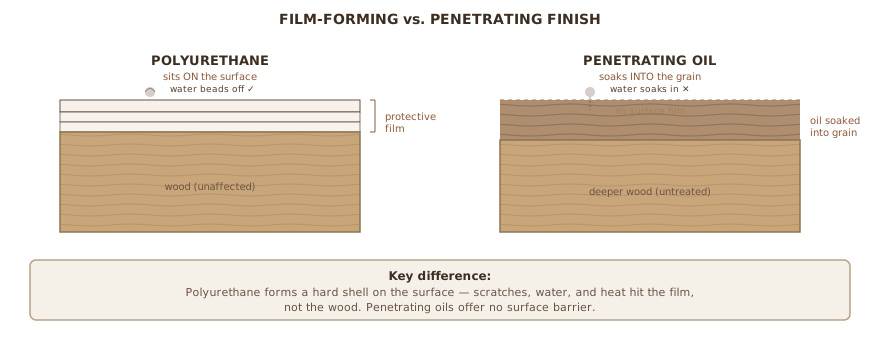
Polyurethane creates a hard, transparent film on the surface of wood. Unlike penetrating finishes (Danish oil, tung oil) that soak into the grain, polyurethane sits on top like a protective shell. That shell is what gives it superior scratch resistance, water resistance, and durability.
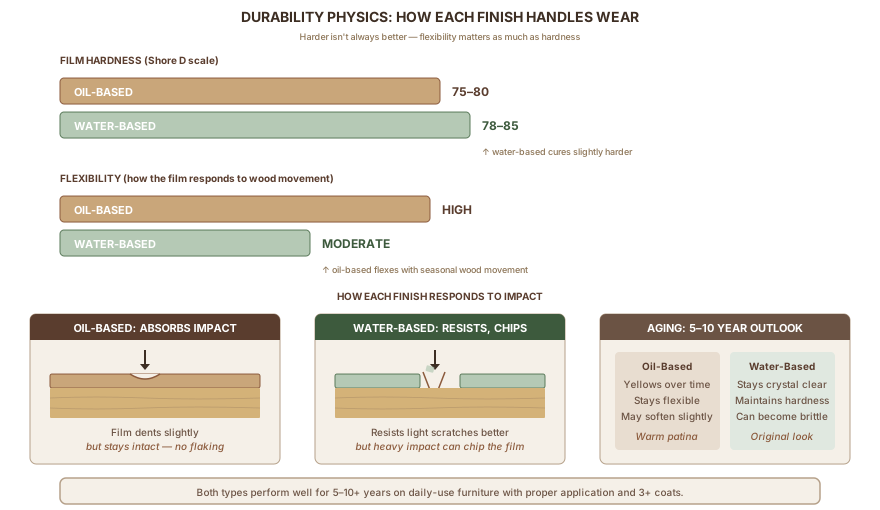
Once cured, polyurethane reaches Shore D 75-85 hardness. Your fingernail can't scratch it. Spilled water beads and wipes off. Hot coffee mugs leave no rings.
That's why polyurethane is the default choice for dining tables, kitchen cabinets, bookshelves, floors, and anything that gets touched, bumped, or spilled on regularly.
Oil-Based vs. Water-Based: The Real Differences
This is the first decision you'll make, and it matters more than most guides let on.
| Property | Oil-Based | Water-Based |
|---|---|---|
| Color | Adds warm amber tone (deepens over time) | Crystal clear (stays clear for years) |
| Dry to touch | 6-8 hours | 30 minutes |
| Recoat time | 8-24 hours | 2-4 hours |
| Full cure | 7 days minimum | 3-5 days |
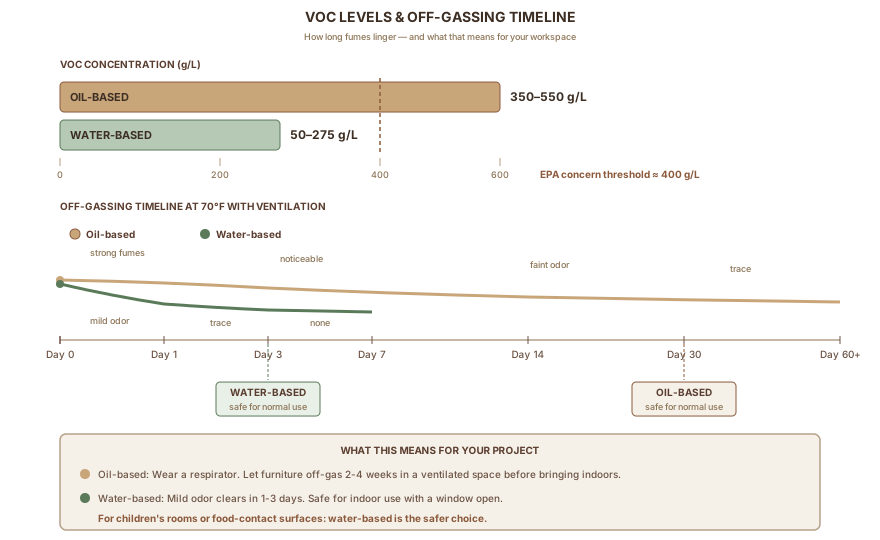
| VOC level | 350-550 g/L (strong fumes) | 200-275 g/L (mild odor) |
| Coverage | ~125 sq ft/quart | ~125 sq ft/quart |
| Brush type needed | Natural bristle (china bristle) | Synthetic bristle (nylon/polyester) |
| Raises grain? | No | Yes (first coat on bare wood) |
| Leveling | Excellent (long open time) | Moderate (dries fast, less forgiving) |
| Durability | Slightly higher film hardness | Slightly lower, but excellent for most uses |
Choose oil-based when:
- You want a warm, amber tone on the wood (looks great on walnut, cherry, oak)
- You're a beginner and want more working time before the finish sets up
- You're finishing a high-use surface and want maximum durability
- You have good ventilation (garage with open door, outdoor workspace)
Choose water-based when:
- You want the wood color to stay exactly as-is (maple, ash, light woods)
- You need to finish in one day (2-hour recoat vs. 24 hours)
- You're working indoors without great ventilation
- You're finishing children's furniture or food-contact items
How Polyurethane Compares to Other Finishes
If you're not sure polyurethane is the right call, here's how it stacks up:
| Property | Polyurethane | Lacquer | Shellac | Danish Oil | Tung Oil |
|---|---|---|---|---|---|
| Scratch resistance | Excellent | Good | Poor | Fair | Fair |
| Water resistance | Excellent | Good | Very poor | Moderate | Moderate |
| Heat resistance | Excellent (up to 150°F) | Moderate | Poor (white rings) | Poor | Poor |
| Chemical resistance | Excellent | Fair | Very poor | Poor | Poor |
| Ease of application | Moderate | High (spray needed) | Easy | Very easy | Very easy |
| Dry time | 2-24 hrs | 30 min-4 hrs | 30 min | 4-24 hrs | 7-30 days |
| Repairability | Sand and recoat | Dissolve and respray | Dissolve and rewipe | Difficult | Difficult |
| Food safe (cured) | Yes (check product TDS) | No | No | Yes | Yes |
| Best for | Tables, cabinets, floors | Guitars, fine furniture | Decorative pieces | Low-use furniture | Decorative items |
Choose polyurethane when the surface handles daily contact: dining tables, kitchen cabinets, desks, floors, bookshelves, children's furniture.
Skip polyurethane for decorative pieces that rarely get touched, or when you want a natural, matte look that shows the raw grain. Danish oil or tung oil handle those better.
Part 2: Choosing Your Product
Recommended Products
These products perform well and are widely available. Pick one and go.
Oil-based (best all-around):
- Minwax Fast-Drying Polyurethane — 350 g/L VOC, 6-hour dry time, 125 sq ft/quart coverage. The most widely available oil-based poly. Available in gloss, semi-gloss, satin, and warm satin. Good leveling, predictable results.
Water-based (best for speed and clarity):
- General Finishes High Performance — Under 275 g/L VOC, 30-minute dry, 2-4 hour recoat. Hybrid urethane-acrylic formula that's tougher than most water-based options. Professional finishing shops use this one.
- Varathane Crystal Clear — 250 g/L VOC, 30-minute dry, 2-hour recoat. Slightly cheaper, easy to find at hardware stores. Good for beginners.
Brushes That Matter
The wrong brush creates problems that technique can't fix. Natural bristles swell and lose shape in water-based poly. Synthetic bristles don't hold oil-based poly well enough to flow smoothly.
For oil-based poly: Natural bristle brush. A good one: Purdy Ox-O-Angular Sash (around $15-20). The natural hair holds finish in the bristles and releases it smoothly onto the surface.
For water-based poly: Synthetic bristle brush (nylon/polyester blend). A good one: Wooster Silver Tip or Purdy XL Glide (around $12-18). Synthetic bristles don't absorb water, so they keep their shape and lay finish down evenly.
For a full guide to brush selection, anatomy, and what to avoid, see Best Brush for Polyurethane.
Foam brushes work for small projects and tight spaces. They don't leave brush marks, but they hold less finish per dip and wear out fast. Good for a cutting board. Not practical for a dining table.
Sheen Options
Sheen is personal preference, not performance. All sheens have the same protective properties.
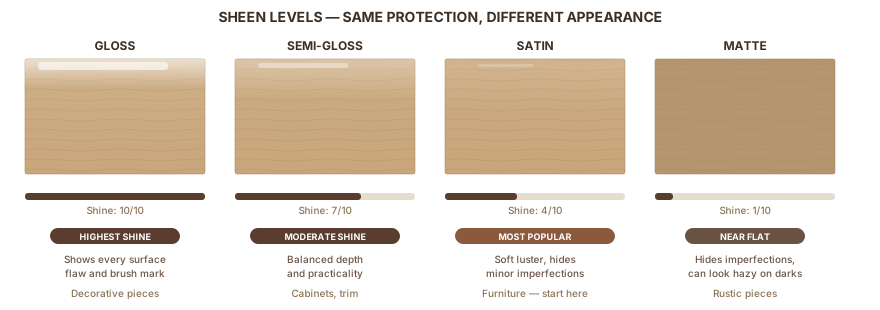
- Gloss — Highest shine. Shows every imperfection in the surface and in your application. Requires the most careful technique. Shows fingerprints.
- Semi-gloss — Moderate shine. More forgiving than gloss. Good balance of depth and practicality.
- Satin — Low shine, soft luster. Hides minor application imperfections. Easiest to maintain. Most popular for furniture.
- Matte — Nearly flat. Hides everything but can look slightly hazy on dark woods.
If you're unsure, start with satin. You can always rub out a gloss finish to satin later, but you can't add shine to a matte finish.
Part 3: Surface Preparation
Surface prep determines 80% of your final result. A perfect application on a poorly prepared surface still looks bad. A decent application on a well-prepared surface looks professional.
Sanding Progression by Wood Type
Don't sand finer than you need to. Over-sanding (especially past 180 grit) can actually prevent the finish from absorbing and bonding properly.
Hardwoods (oak, maple, walnut, cherry):
Start at 120 grit if you have planer or jointer marks. Progress through each grit:
120 → 150 → 180. Stop at 180 for oil-based poly.
For water-based poly, you can go to 220, but you'll need to pre-raise the grain first (explained below).
Softwoods (pine, fir, cedar, poplar):
Softwood fibers compress and crush under heavy pressure. Sand lighter than you think you need to.
Start at 100 or 120 (never coarser). Progress: 100 → 120 → 180. Stop at 180. Don't exceed 220 under any circumstances. Reduce pressure as you move to finer grits.
Between grits: Vacuum or wipe the surface clean before switching to the next grit. Old grit particles left on the surface create scratches that the finer grit can't remove.
Grain Raising (Water-Based Poly Only)
Water-based polyurethane contains water. When that water hits bare wood, it swells the wood fibers, and they stand up above the surface. Your first coat will feel rough like sandpaper, even though the surface was smooth before you applied it.
You can eliminate grain raising with one extra step:
- Sand the wood to your final grit (180)
- Mist the entire surface lightly with clean water from a spray bottle
- Let it dry completely (20-30 minutes, no heat gun)
- The fibers have now raised. Hand-sand with the same grit you finished at (180), using light pressure
- Vacuum and wipe clean
The fibers are now raised and knocked back down. When you apply the first coat of water-based poly, the surface stays smooth.
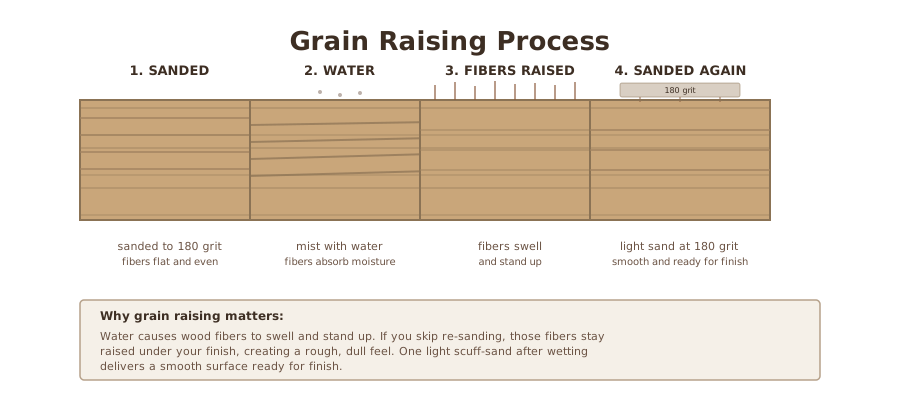
If you skip this step and grain raising happens anyway, sand between the first and second coat with 320 grit. It adds time but fixes the problem.
Cleaning Before You Finish
Dust is the enemy. Any particle on the surface when you apply poly gets locked into the film permanently.
Best method: Vacuum the surface with a brush attachment, then wipe with a slightly damp lint-free cloth. Let the surface dry for 5 minutes before applying finish.
A damp lint-free cloth is safer than a tack cloth and works just as well. Commercial tack cloths can leave a waxy residue on bare wood that prevents the finish from wetting the surface evenly. A blue shop towel, barely damp, removes dust without that risk.
Workspace Setup
You don't need a spray booth. But you do need to control dust.
Minimum setup: A garage with the door cracked, a spare room with a window, even a covered balcony. Vacuum the floor 30 minutes before finishing (gives airborne dust time to settle). Close windows and turn off fans during application. Keep the space 60-80°F. Humidity 30-60%. If you're in a small apartment, water-based poly with its 30-minute dry time is more practical. Open a window and put a box fan in it blowing outward.
Better setup: Build a simple dust shield from cardboard boxes. Three-sided enclosure, taped at the seams, large enough to surround your project. Costs nothing. Blocks 80% of airborne dust from landing on your wet finish.
Part 4: Application
Stirring, Not Shaking
Stir polyurethane gently with a stir stick for 30-60 seconds. Don't shake the can. Shaking introduces air bubbles throughout the liquid. Those bubbles transfer to the surface during application and get trapped as the finish cures, leaving visible pits.
If you already shook the can, pour the poly into a separate clean container and let it sit for an hour. The bubbles rise to the surface and pop.
Brush Application Technique
This is where most finishes go wrong. The key principle: apply the coat once per area and leave it alone.
- Dip the brush about 1-1.5 inches into the poly. Don't submerge it past the ferrule (the metal band).
- Tap the brush gently on the inside rim of the can to remove excess. Don't wipe the brush across the rim. Wiping strips too much finish and creates bubbles in the can.
- Apply long, smooth strokes following the grain of the wood. Light pressure. Let the finish flow off the bristles.
- Overlap each stroke slightly (about 50%) to avoid gaps.
- Don't go back over areas you've already brushed. The finish levels itself as it dries. Re-brushing disturbs the partially set film and creates permanent marks.
- At the end of a section, "tip off" by lightly dragging just the tips of the bristles across the surface in the direction of the grain. This smooths out any remaining brush marks without disturbing the coat.
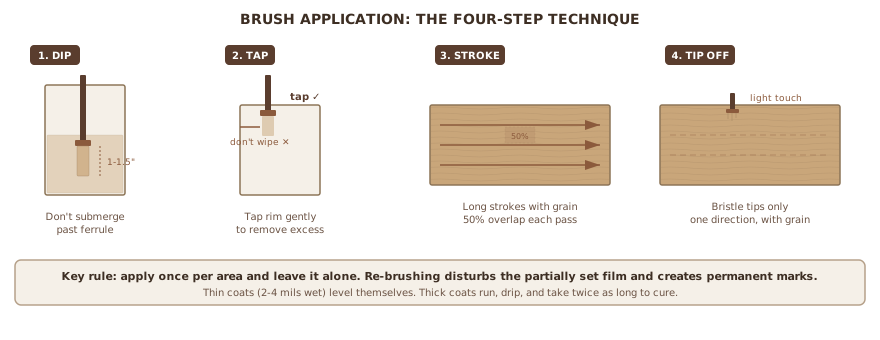
Apply thin coats: 2-4 mils wet film thickness. The coat should look wet and even but not pool or drip. If you see the finish sitting in thick spots, you've put too much on. Thick coats run, drip, bubble, and take twice as long to cure.
Wipe-On Polyurethane Application
If brush marks intimidate you, wipe-on poly is more forgiving. You can buy it pre-mixed (Minwax Wipe-On Poly) or make your own:
DIY wipe-on formula: Mix 1 part oil-based polyurethane with 1 part mineral spirits. Stir gently. Store in a glass jar with a tight lid (not plastic, which some polys can dissolve). This mixture keeps indefinitely.
Application:
- Dip a clean, lint-free cloth into the mixture. Wring it out until the cloth is damp but won't drip. Blue shop towels work well.
- Wipe onto the wood in smooth, even strokes with the grain, or in light circular motions.
- Cover the entire surface. Touch each area only once per coat.
- Let dry 6-8 hours between coats.
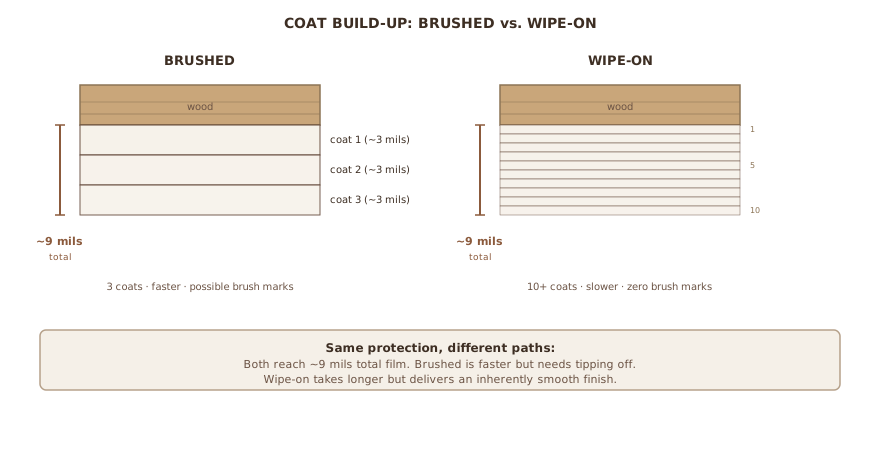
The trade-off: Each wipe-on coat deposits about 0.5-1 mil of film (compared to 2-4 mils brushed). You need significantly more coats to build the same protection:
| Use Case | Brushed Coats | Wipe-On Coats |
|---|---|---|
| Decorative shelf | 2 | 5-7 |
| Bookshelf | 2-3 | 7-10 |
| Dining table | 3-4 | 10-15 |
| Cutting board | 4-5 | 12-20 |
Wipe-on is ideal for small projects (cutting boards, picture frames, boxes), complex shapes (turned pieces, carvings), and anyone who wants zero brush marks and doesn't mind extra coats.
How Many Coats of Polyurethane?
More coats means more protection, but there's a point of diminishing returns.
| Use Case | Oil-Based Coats | Water-Based Coats | Why |
|---|---|---|---|
| Display shelf | 1-2 | 2-3 | Minimal contact, mostly visual |
| Bookshelf | 2-3 | 3-4 | Light handling, book sliding |
| Cabinet doors | 2-3 | 3-4 | Light contact, occasional cleaning |
| Dining table | 3-4 | 5-6 | Daily contact, spills, cleaning products |
| Kitchen island | 4-5 | 6-8 | Heavy traffic, water, food prep |
Water-based poly requires more coats because each coat deposits a thinner film.
Part 5: Between-Coat Sanding
Why You Sand Between Coats
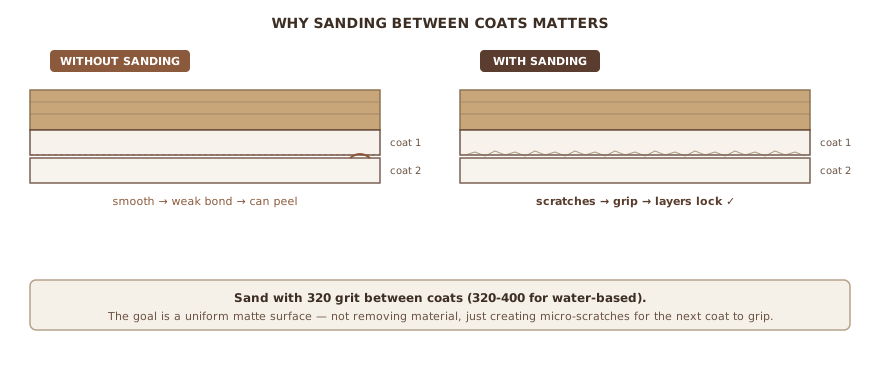
Polyurethane does not chemically bond to itself once it has hardened. Each new coat sits on top of the previous one like stacked sheets of plastic. Without a mechanical grip, those layers can eventually separate and peel.
Sanding between coats creates thousands of micro-scratches in the surface. The next coat flows into those scratches and locks in. This mechanical adhesion is what keeps your finish intact for years instead of months.
Sanding also knocks down dust nibs, brush marks, and any small imperfections from the previous coat. Each subsequent coat goes on smoother because you're building on a level surface.
How to Sand Between Coats
Grit: 320 for oil-based poly. 320-400 for water-based poly (which cures harder and benefits from a finer scratch pattern).
Method: Hand-sand with a sanding block or foam pad. Sand lightly with the grain. The goal is to dull the entire surface to a uniform matte appearance. If you see shiny spots, those areas still need more passes.
This should take about 5-10 minutes for a typical furniture surface. You're not removing material. You're scratching the surface.
Don't use anything coarser than 220. You'll sand through the finish to bare wood, and that spot will look different under the next coat.
When to Sand
The finish must be hard enough to sand cleanly. Too soon and you'll gum up the sandpaper, tear the film, and leave a mess.
Oil-based: Wait a minimum of 8-12 hours. Ideal: 24 hours between coats.
Water-based: Can sand after 3-4 hours. Ideal: 8-12 hours.
The thumbnail test: Press your thumbnail firmly into the finish on a hidden area (underside, back edge) for 2-3 seconds. Release and look at the mark.
- No mark at all → Ready to sand and recoat
- Shallow dent that slowly fills back → Almost ready, wait another 2 hours
- Deep dent that stays → Not ready, wait longer
- Feels tacky → Definitely not ready, wait at least 4 more hours
Cold rooms extend every timeline. A garage at 55°F turns a 24-hour recoat window into 48 hours. Below 50°F, the finish may not cure properly at all.
After Sanding
Vacuum the surface. Then wipe with a damp lint-free cloth to pick up every last particle. Let it dry for 5 minutes. Then apply the next coat.
Part 6: Final Steps and Rubbing Out
Curing vs. Drying
"Dry to touch" means you can handle the piece without leaving fingerprints. "Cured" means the polyurethane has reached its full hardness, chemical resistance, and heat resistance. These are different timelines.
Oil-based full cure: 7 days at 70°F. Don't put heavy items on the surface, don't set hot dishes on it, don't clean it with chemicals until it's fully cured.
Water-based full cure: 3-5 days at 70°F. Same precautions apply.
Cold or humid conditions extend cure time by 3-5 days.
Rubbing Out for a Better Finish (Optional)
If your final coat has minor dust nibs, slight orange peel texture, or you want to change the sheen level, you can rub it out after it fully cures. This is how professional finishers get that glass-smooth feel.
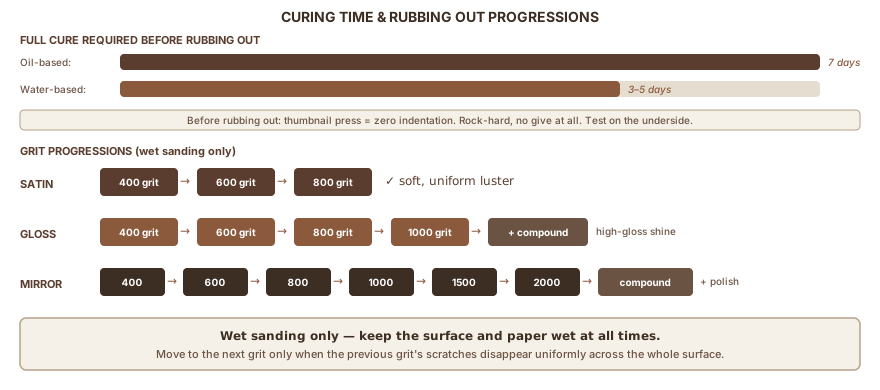
Wait for full cure first. Minimum 7 days for oil-based, 5 days for water-based, at 70°F. The finish must be rock-hard. Test with the thumbnail press: zero indentation.
For a smooth satin finish:
- Wet-sand with 400 grit (keep the paper and surface wet at all times)
- Progress to 600, then 800 grit
- Wipe clean. The surface will have a soft, uniform satin luster.
For a high-gloss finish:
- Wet-sand through 400 → 600 → 800 → 1000 grit
- Apply automotive rubbing compound (3M Perfect-It or similar) with a soft cloth
- Buff with a clean cloth
- Apply automotive polishing compound for final clarity
For a mirror finish (small pieces, decorative work):
- Wet-sand through 400 → 600 → 800 → 1000 → 1500 → 2000 grit
- Rubbing compound, then polishing compound, then hand-buff
- This is labor-intensive. Practical for a jewelry box or guitar body. Not practical for a dining table.
Wet sanding technique: Keep the sandpaper and surface constantly wet. A spray bottle works. Sand in light, even strokes with the grain. A milky slurry will form. That's the finish being polished. Rinse and inspect frequently. Move to the next grit when the surface shows uniform, consistent scratches with no shiny spots from the previous grit.
Part 7: Troubleshooting
Every problem in this section is fixable. Most of them are common. If something went wrong, you didn't ruin your project.
Bubbles in the Finish
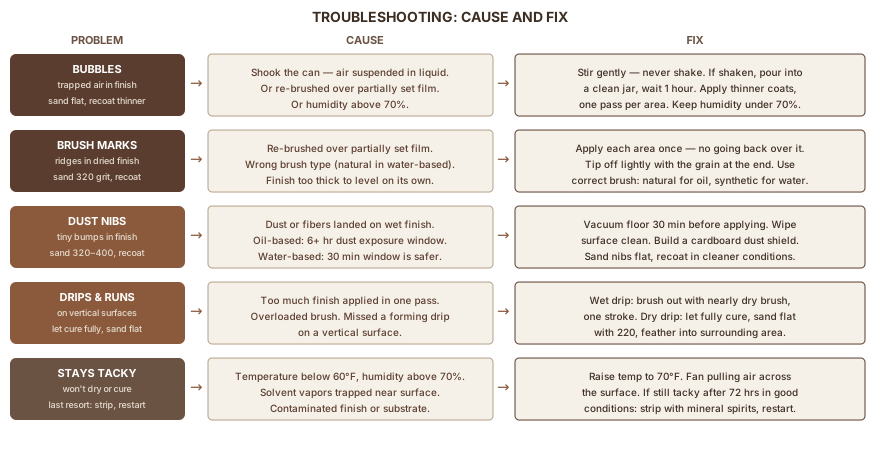
Most likely cause: You shook the can. Shaking suspends air throughout the liquid. Those bubbles transfer to the surface and get trapped.
Fix: Stir gently next time. If the can was already shaken, pour the poly into a clean jar and let it sit for an hour before use.
Other causes: Overloading the brush (air trapped in bristles), applying too thick, or working in high humidity (above 70%). In all cases, apply thinner coats with a light touch.
If bubbles are already in the dried finish: Sand the surface smooth with 320 grit. Apply the next coat thinner, from an unstirred (gently stirred) batch.
Brush Marks
Most likely cause: Going back over areas you've already brushed. The finish starts to set up within minutes (especially water-based), and re-brushing drags the partially cured film into ridges.
Fix: Apply each area once. Tip off lightly with the grain. Walk away.
Other causes: Cheap brush with coarse bristles, finish too thick to level, or wrong brush type for your product (natural bristles in water-based poly swell and leave marks).
If brush marks are in the dried finish: Sand with 320 grit to level the surface. Apply the next coat thinner, with a quality brush, using the one-pass technique.
Dust Nibs (Tiny Bumps in the Finish)
Cause: Dust or fibers landed on the wet finish before it dried.
Prevention: Vacuum the floor 30 minutes before finishing. Wipe the project surface clean. Build a cardboard dust shield. Minimize movement in the room while the finish is wet. Water-based poly dries in 30 minutes (dust window is short). Oil-based takes 6+ hours (longer exposure to airborne dust).
Fix: Sand the cured coat with 320-400 grit to knock the nibs flat. Wipe clean. Apply the next coat in a cleaner environment.
Drips and Runs
Cause: Too much finish in one area. Usually from overloading the brush, applying too thick, or missing a drip on a vertical surface.
Fix: If the drip is still wet, brush it out with a nearly dry brush using a single stroke. If it has started to set, leave it alone and let it cure completely. Sand the cured drip flat with 220 grit, feathering into the surrounding area. Recoat.
Blotchy or Uneven Appearance (Softwoods)
Cause: Pine, fir, and cedar have inconsistent porosity. Some areas absorb finish faster and look different from surrounding areas. Water-based poly makes this more visible.
Prevention: Apply a sanding sealer or wood conditioner before your first coat of poly. General Finishes Pre-Stain Wood Conditioner works well. It evens out absorption across the surface.
Fix: Sand the blotchy coat down to bare wood (120-150 grit). Apply sanding sealer. Let it dry 4 hours. Sand the sealer with 180 grit. Then start your poly coats fresh. The sealer creates a uniform base.
Finish Won't Dry (Stays Tacky)
Cause: Almost always environmental. Temperature below 60°F, humidity above 70%, or both. Insufficient ventilation traps solvent vapors near the surface, preventing cure.
Fix: Increase temperature to 70°F. Improve ventilation (box fan pulling air across the surface). Give it more time. If the finish is still tacky after 72 hours in good conditions, it may be contaminated. Strip it with mineral spirits (oil-based) or sand back to bare wood and start over.
Part 8: Safety
Polyurethane contains solvents that evaporate as the finish dries. Those solvents are volatile organic compounds (VOCs), and you don't want to breathe them.
VOC Levels by Product
| Product | VOC (g/L) | Odor Level |
|---|---|---|
| Minwax oil-based | 350 | Strong |
| Generic oil-based poly | 350-550 | Strong to very strong |
| Minwax water-based | 275 | Mild |
| Varathane water-based | 250 | Mild |
| General Finishes water-based | Under 275 | Mild |
Oil-based poly requires real ventilation. Water-based poly is more forgiving but still deserves respect.
Ventilation
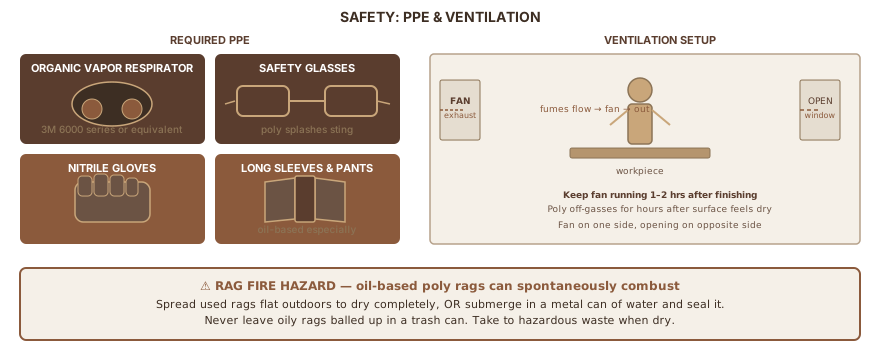
Minimum for brushing indoors: Open a window on one side of the room and place a box fan in a window on the opposite side, set to exhaust (blowing outward). This pulls fumes across the room and out. Keep the fan running for 1-2 hours after you finish applying.
Better: Work in a garage with the door open. Or apply outside on a calm day (no wind carrying dust).
During cure: Leave ventilation running or the space open. Poly continues off-gassing for hours after the surface feels dry.
Personal Protective Equipment
For brushing (oil-based):
- Nitrile gloves (not latex, which poly degrades)
- Safety glasses (poly splashes sting)
- Organic vapor respirator (3M 6000 series or equivalent). A dust mask is not enough. You need a cartridge rated for organic vapors.
- Long sleeves, long pants
For brushing (water-based):
- Nitrile gloves
- Safety glasses
- Organic vapor respirator recommended, though less critical than oil-based
For wipe-on application: Same PPE as brushing. The solvents are the same, just the application method differs.
Cleanup and Disposal
Oil-based poly: Clean brushes with mineral spirits. Dispose of used mineral spirits at a hazardous waste facility, not down the drain.
Rags soaked in oil-based poly or mineral spirits can spontaneously combust. This is real, not theoretical. Spread used rags flat on a non-flammable surface outdoors to dry completely, or submerge them in a metal can filled with water and seal it. Take them to hazardous waste. Don't leave oily rags balled up in a trash can.
Water-based poly: Clean brushes with soap and water. Dried residue in containers is non-hazardous. Check local regulations for water-based wash water disposal (most municipalities allow it down the drain in small quantities).
Quick Reference
Conditions Checklist
Before you start, confirm:
- Temperature: 60-80°F (70°F is ideal)
- Humidity: 30-60% (50% is ideal)
- Surface sanded to 180 grit (hardwood and softwood)
- Surface vacuumed and wiped with damp lint-free cloth
- Poly stirred gently (not shaken)
- Correct brush for your product type
- Ventilation set up and running
- PPE on (gloves, glasses, respirator)
Timing Reference
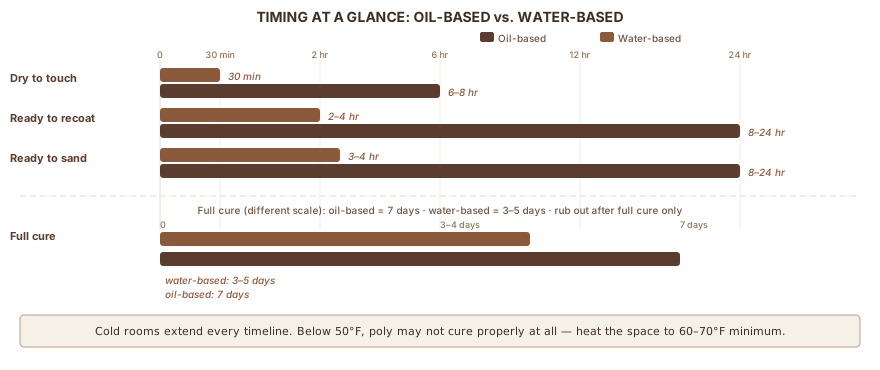
| Step | Oil-Based | Water-Based |
|---|---|---|
| Dry to touch | 6-8 hours | 30 minutes |
| Ready to sand | 8-24 hours | 3-4 hours |
| Ready to recoat | 8-24 hours | 2-4 hours |
| Full cure (use normally) | 7 days | 3-5 days |
| Ready to rub out | 7+ days | 5+ days |
Grit Reference
| Task | Grit |
|---|---|
| Initial surface prep (hardwood) | 120 → 150 → 180 |
| Initial surface prep (softwood) | 100 → 120 → 180 |
| Between coats (oil-based) | 320 |
| Between coats (water-based) | 320-400 |
| Rubbing out (satin) | 400 → 600 → 800 |
| Rubbing out (gloss) | 400 → 600 → 800 → 1000 + compound |
| Rubbing out (mirror) | 400 → 600 → 800 → 1000 → 1500 → 2000 + compound |
Sources
The product specs, dry times, VOC levels, and application data in this guide come from manufacturer technical data sheets and established woodworking resources. Links are provided so you can verify the numbers and dig deeper.
Manufacturer Technical Data
- Minwax Fast-Drying Polyurethane — Dry times, coverage rates, VOC levels, sheen options for oil-based poly.
- Minwax 350 VOC Pro Finisher Polyurethane — Professional-grade oil-based poly specs.
- Varathane Water-Based Floor Polyurethane Technical Data Sheet — Recoat times, wet/dry film thickness, application conditions.
- General Finishes High Performance Polyurethane — Water-based hybrid urethane-acrylic specs, VOC compliance data.
- Rust-Oleum Varathane Technical Data Library — Full product line technical specifications.
Safety and Environmental
- EPA Ventilation Guidance for Spray Polyurethane Application — Government guidance on VOC exposure, ventilation requirements, and health impact.
Application Techniques and Troubleshooting
- Oil vs Water-Based Polyurethane: Which Lasts Longer? (2026) — Detailed product comparison covering durability, yellowing, and workflow differences.
- Varathane vs Minwax (2025 Analysis) — Head-to-head product testing and comparison.
- Best Brushes for Polyurethane Application — Brush type recommendations by product type, specific brand picks.
- How to Fix Polyurethane Mistakes: 13 Common Problems — Troubleshooting bubbles, brush marks, dust nibs, and drips.
- Sanding Between Coats of Polyurethane — Between-coat sanding grits, technique, and timing.
- How to Make Wipe-On Polyurethane — 50/50 mineral spirits formula, application technique, coat schedules.
- Common Polyurethane Problems and Solutions — Root-cause troubleshooting for finish defects.
- Dealing with Raised Grain in Water-Based Finishes — Pre-wetting technique for grain raising prevention.
Finish Comparisons
- Wood Finishes Compared: Poly, Lacquer, Shellac, Wax, Varnish, Oil — Hardness, heat resistance, chemical resistance, and repairability across finish types.
- Water-Based vs Oil-Based Polyurethane for Floors (2026) — Professional flooring perspective on product selection.
Advanced Finishing
- Wet Sanding for a Mirror Gloss Finish — Wet sanding grit progression from 500 through 2000, rubbing and polishing compound technique.
- Grit Progression for Hardwood vs Softwood — Species-specific sanding progressions.
- DIY Cardboard Spray Booth — Zero-cost dust-free finishing enclosure construction.
Tools Used
Tagged
Up Next
Best Polyurethane for Tabletops: 5 Picks for Daily Use
FINISHING · Beginner