
Sheet Goods at a Glance
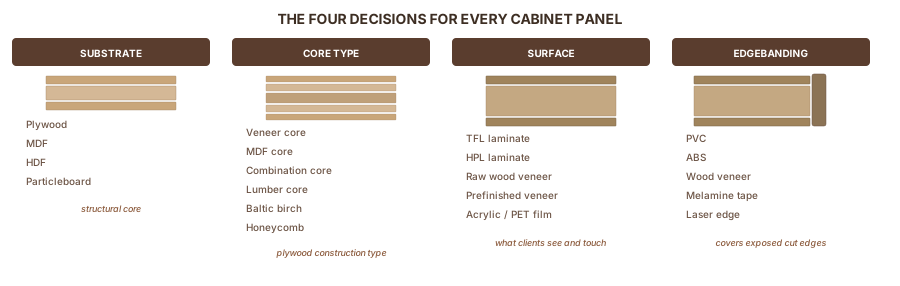
Every cabinet you build starts with a sheet of something. Plywood, MDF, particleboard, or a panel somebody already wrapped in melamine, veneer, or lacquer. The substrate you pick determines strength, weight, screw-holding, and moisture resistance. The surface determines how it looks and how long it lasts. The edgebanding ties it all together.
This guide covers all of it: the three major substrates, six core types, four surface categories, five edgebanding materials, and over twenty brands — with specs, pricing from $25 to $120 per sheet, comparison tables, and the finishing science behind each option.
| Substrates covered | Plywood, MDF, HDF, particleboard |
| Core types | Veneer core, MDF core, combination core, lumber core, Baltic birch, honeycomb |
| Surfaces | TFL (thermally fused laminate), HPL (high pressure laminate), real wood veneer, prefinished lacquered panels, acrylic, PET film |
| Edgebanding | PVC, ABS, wood veneer, melamine, laser-edge |
| Brands profiled | 20+ manufacturers across North America and Europe |
In this guide:
- Substrates — the core that carries the load
- Core types explained
- Surface options — from melamine to real wood
- Edgebanding — finishing the exposed edge
- Brand directory — 20+ manufacturers compared
- Finishing processes and why they matter
- How to spec materials for a cabinet project
- Sources
Part 1: Substrates: The Core That Carries the Load
The substrate is the structural panel underneath whatever surface your client sees. Three materials dominate cabinet building: plywood, MDF, and particleboard. Each has real trade-offs. None is universally best.
Plywood
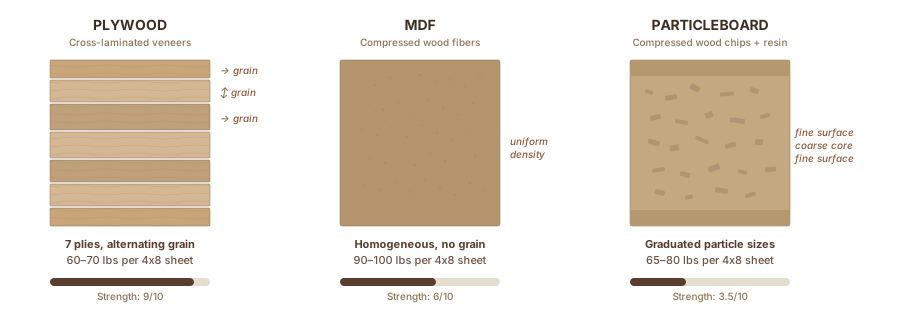
Plywood is layers of wood veneer glued together with alternating grain direction. That cross-lamination is what makes it strong — each layer resists the expansion and shrinkage direction of the layer next to it.
For cabinets, plywood is the strongest option. It holds screws well, resists moisture better than MDF or particleboard, and survives being dropped during installation without blowing out a corner. A 3/4" hardwood plywood panel weighs about 60–70 lbs per 4x8 sheet depending on core type.
Strengths: Best screw-holding, lightest weight relative to strength, good moisture tolerance, excellent for structural components like cabinet sides and bottoms. Plywood cabinets can last 20–30 years with normal use.
Weaknesses: Most expensive of the three substrates. Veneer-core plywood can have internal voids that show up at edges. Surface isn't as smooth as MDF — if you're painting, you need to fill grain.
Cost range: $50–$120 per 4x8 sheet depending on species and grade. Cabinet-grade birch or maple plywood at a hardwood dealer typically runs $65–$90.
MDF (Medium-Density Fiberboard)
MDF is wood fibers compressed with resin under heat and pressure into a dense, uniform panel. No grain direction. No voids. Perfectly flat. That consistency is both its strength and its weakness.
For cabinets, MDF excels at doors and drawer fronts — anywhere you need a perfectly smooth surface for paint or veneer. MDF's density allows intricate edge detailing and router work that would chip plywood or blow out particleboard.
Strengths: Dead-flat surface for paint and veneer. Routes cleanly. No voids. Takes profiles beautifully. The best substrate for cabinet doors that will be painted.
Weaknesses: Heavy — a 3/4" 4x8 sheet weighs 90–100 lbs. Swells permanently if it absorbs water. Screw-holding is decent but weaker than plywood, especially on edges. Produces fine dust when cut — always wear respiratory protection.
Specialty variants: Medex (by Roseburg) is a moisture-resistant MDF rated MR50 for kitchens and bathrooms. Medite II is a formaldehyde-free general-purpose MDF. HDF (high-density fiberboard) is a thinner, denser version used for cabinet backs and drawer bottoms.
Cost range: $40–$65 per 4x8 sheet. Moisture-resistant grades like Medex run $55–$80.
Particleboard
Particleboard is wood chips and shavings compressed with resin. Coarser than MDF, less dense, and considerably cheaper. It's the substrate inside the majority of production cabinets worldwide — and for good reason.
Modern multilayer particleboard from manufacturers like Roseburg uses graduated particle sizes — fine on the surface, coarser in the middle — producing a smooth face that takes melamine lamination well while keeping weight and cost down.
Strengths: Cheapest substrate. Flat enough for TFL and HPL lamination. Lighter than MDF. Good enough for cabinet boxes that won't see excessive moisture. The industry standard for production cabinets.
Weaknesses: Weakest screw-holding of the three — pilot holes are mandatory. Swells and crumbles if water reaches the core. Can't be meaningfully routed. Lowest impact resistance.
Cost range: $15–$35 per 4x8 sheet. Premium ULEF grades like Roseburg SkyBlend run $25–$40.
Substrate Comparison Table
| Property | Plywood | MDF | Particleboard |
|---|---|---|---|
| Screw-holding (face) | Excellent | Good | Fair |
| Screw-holding (edge) | Good | Fair | Poor |
| Moisture resistance | Good | Poor (excellent with Medex) | Poor |
| Surface smoothness | Moderate — needs filling for paint | Excellent | Good when laminated |
| Weight (3/4" 4x8) | 60–70 lbs | 90–100 lbs | 65–80 lbs |
| Impact resistance | Excellent | Moderate | Low |
| Machinability | Good | Excellent — routes clean profiles | Limited — no profiling |
| Cost per sheet | $50–$120 | $40–$65 | $15–$35 |
| Typical cabinet use | Boxes, shelves, structural | Doors, drawer fronts, painted components | Production cabinet boxes under TFL |
| Lifespan | 20–30 years | 15–20 years | 10–15 years |
Part 2: Core Types Explained
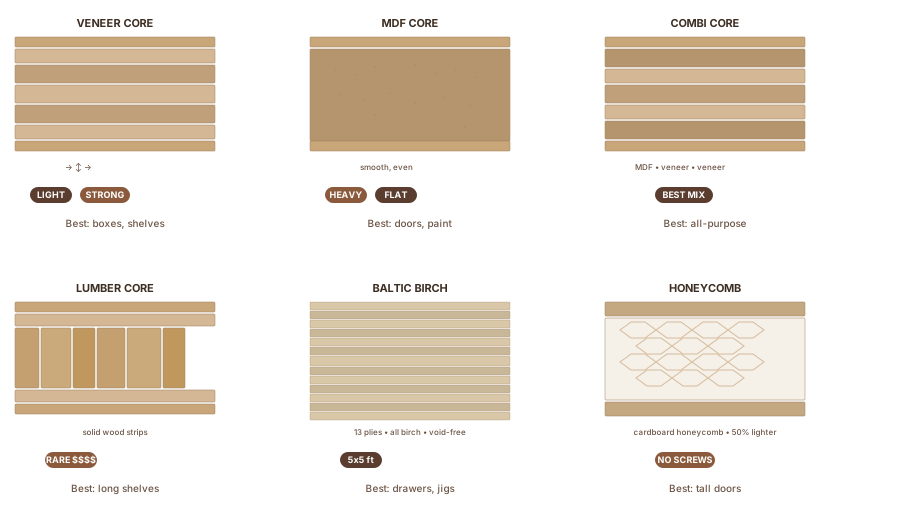
When you buy plywood, the core construction determines weight, flatness, screw-holding, and cost. Hood Distribution and Murphy Plywood break these down clearly. Here are the six options you'll actually encounter:
Veneer Core
The traditional cabinet plywood. Thin layers of wood veneer (usually poplar, birch, or mixed hardwoods) glued together with alternating grain. Light, strong, and the most common option at lumberyards.
Best for: Cabinet boxes and shelving where weight matters. Excellent screw-holding. Good bending strength. The lightest core option — roughly 15% lighter than MDF core in the same thickness.
Watch for: Internal voids. Cheap veneer-core plywood from big-box stores can have gaps between layers that show up when you cut or drill near edges. Pay for cabinet-grade panels with HPVA grading to avoid this.
MDF Core
A slab of MDF with hardwood face veneers on both sides. Heavy, flat, and stable.
Best for: Cabinet doors. The density and uniformity of MDF core means doors stay flat over time — no warping, no twisting. Perfectly smooth surface under the face veneer. The least likely core to react to temperature and humidity changes.
Watch for: Weight. A 3/4" sheet of MDF-core plywood can top 95 lbs. Edge screw-holding is weaker than veneer core. Not ideal for structural components like cabinet sides in large runs.
Combination Core (Combi-Core)
The best of both worlds. Cross-banded hardwood center plies for strength, with MDF layers on top and bottom for a smooth veneer surface. Columbia Forest Products calls their version Classic Core.
Best for: When you need MDF-smooth surfaces AND good screw-holding AND reasonable weight. The go-to for high-end custom cabinetry where doors and boxes come from the same sheet.
Watch for: Cost — typically 10–20% more than veneer core. Not always in stock at smaller dealers.
Lumber Core
Edge-glued strips of solid wood (usually basswood) sandwiched between veneer crossbands and face veneers. The original premium plywood core.
Best for: Long shelves that need minimal deflection. Excellent edge screw-holding because you're screwing into solid wood. Some cabinetmakers prefer it for face frames.
Watch for: Hard to find and expensive. Largely replaced by combination core in most markets.
Baltic Birch
Every layer is solid birch veneer — typically 13 plies in a 3/4" sheet compared to 7 in standard plywood. The core is virtually void-free, and screws bite with 100% of their threads.
Best for: Drawer boxes (the exposed plywood edge is part of the design). Jigs and fixtures. Cabinet components where the edge will show. Load-bearing shelves.
Watch for: Baltic birch comes in 5x5 foot sheets, not 4x8. Face veneers have visible patches. It's a utility material — beautiful in its way, but not a decorative face veneer. Costs 40–60% more than domestic birch plywood on a square-foot basis.
Honeycomb Core (Lightweight)
A thin particleboard top and bottom layer enclosing a cardboard honeycomb grid. EGGER's Eurolight is the best-known version.
Best for: Tall doors, large panels, and wall-hung cabinets where weight is the primary concern. A 3/4" honeycomb panel weighs roughly half what particleboard does.
Watch for: Cannot hold conventional screws — requires specialized hardware. Not suitable for shelving with meaningful load. Limited to doors and vertical panels.
Core Type Comparison Table
| Core Type | Weight | Flatness | Screw-Holding | Cost | Best Cabinet Use |
|---|---|---|---|---|---|
| Veneer | Light | Good | Excellent | $$ | Boxes, shelves, structural |
| MDF | Heavy | Excellent | Good (face), Fair (edge) | $$ | Doors, painted components |
| Combination | Moderate | Excellent | Excellent | $$$ | High-end all-purpose |
| Lumber | Moderate | Good | Excellent (edge) | $$$$ | Long shelves, face frames |
| Baltic Birch | Moderate | Good | Excellent | $$$ | Drawer boxes, exposed edges |
| Honeycomb | Very Light | Good | Poor (specialty hardware) | $$ | Tall doors, wall-hung panels |
Part 3: Surface Options: From Melamine to Real Wood
The surface is what your client sees and touches every day. Four categories cover nearly every cabinet project.
TFL (Thermally Fused Laminate)
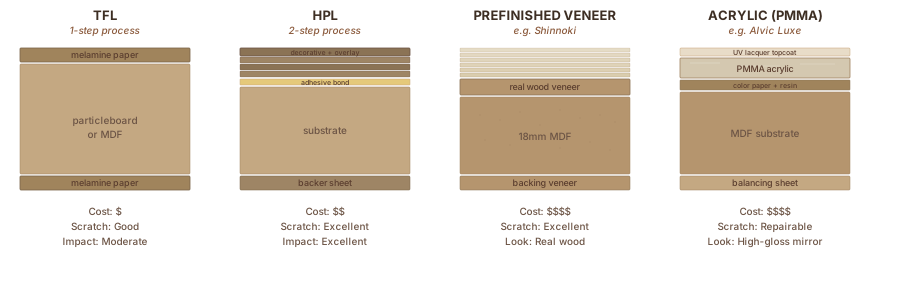
TFL is a decorative paper soaked in melamine resin, then heat-pressed directly onto a particleboard or MDF substrate. One step. The paper and the board become a single panel.
TFL is the workhorse of production cabinetry worldwide. Wilsonart, Arauco, Tafisa, Kronospan, and Uniboard all manufacture TFL panels, each with their own color and texture collections.
Strengths: Affordable, consistent color, no finishing required, scratch-resistant for vertical surfaces, huge design range — woodgrains, solids, stones, abstracts. Arauco's Prism line alone offers over 73 designs. Easy to fabricate with standard shop tools.
Weaknesses: Lower impact resistance than HPL — fine for cabinet interiors and vertical surfaces, but not for heavy-use horizontal surfaces like countertops. The edge is exposed substrate, so edgebanding is mandatory. Cannot be refinished.
Where to use it: Cabinet box interiors, shelving, vertical door faces, closet systems, office furniture. The right choice for probably 70% of cabinet components by volume.
HPL (High Pressure Laminate)
HPL starts with multiple layers of kraft paper soaked in phenolic resin, topped with a decorative layer soaked in melamine resin. This stack gets pressed at over 1,000 PSI and 280°F into a solid sheet — typically 0.028" to 0.048" thick. That sheet then gets glued to a substrate in a separate operation.
The two-step process — make the laminate, then bond it to the board — is what separates HPL from TFL. It's also what makes HPL tougher.
Strengths: Superior scratch, wear, and impact resistance compared to TFL. Stands up to horizontal wear — countertops, work surfaces, heavy-use shelving. Available in specialty finishes: Wilsonart Traceless resists fingerprints with an ultra-matte surface. Formica's ColorCore2 eliminates the dark seam line at edges.
Weaknesses: More expensive than TFL. Requires a secondary bonding step — you need contact cement or a vacuum press and a substrate panel. More labor to fabricate.
Where to use it: Cabinet exteriors in high-traffic areas, countertop surfaces, reception desks, healthcare and hospitality. Any horizontal surface that takes daily impact.
Real Wood Veneer
A thin slice of actual wood — typically 1/42" to 1/16" thick — bonded to a substrate. The grain, color, and character are real. Under your hand, it's wood.
Two categories matter for cabinet work:
Raw veneer panels: Unfinished veneered plywood. You buy the panel, cut it, finish it yourself. This is what most custom cabinetmakers use — birch, maple, walnut, cherry, or white oak face veneers on a plywood, MDF, or combination core. Columbia Forest Products' PureBond is the dominant domestic option, with formaldehyde-free assembly using soy-based adhesive.
Prefinished veneer panels: Veneered panels that arrive with the finish already applied. No sanding, no staining, no spraying. Decospan's Shinnoki line is the gold standard here — six coats of UV-cured lacquer applied in a factory-controlled environment that no job-site finish can match.
Strengths: Nothing looks like real wood because it is real wood. Grain variation, warmth, depth. Can be refinished (if veneer is thick enough). Commands premium pricing from clients who appreciate natural materials.
Weaknesses: More expensive than TFL or HPL. Raw veneer requires finishing — time, skill, and spray equipment. Susceptible to UV fading without proper finish. Veneer thickness varies — thin veneers can sand through.
Where to use it: Cabinet doors and drawer fronts in kitchens, bathrooms, and built-ins. Architectural millwork. Any project where the client wants the look and feel of solid wood without the movement and cost.
Reconstituted Wood Veneer
Real wood fiber — typically plantation-grown Ayous — dyed, reassembled, and sliced to mimic premium species. Echo Wood is the leading brand. The result looks like walnut, fir, or teak but comes from fast-growing, FSC-certified plantation trees.
Strengths: Consistent grain and color — no flitches to match. Looks exotic without using endangered species. Defect-free and uniform across an entire project.
Weaknesses: Trained eyes can spot the uniformity. Doesn't have the same one-of-a-kind character as natural veneer. Limited to specific pattern libraries.
Where to use it: Commercial interiors, hospitality, multi-unit residential — anywhere you need consistent wood appearance across dozens of panels.
Acrylic and PET Film Surfaces
Modern alternatives to paint and laminate for a high-gloss or ultra-matte look.
Acrylic panels (like Alvic Luxe or REHAU RAUVISIO brilliant) use a PMMA (polymethyl methacrylate) layer bonded to MDF. Mirror-like gloss. Intense color depth. UV-stable for decades. Scratches can actually be repaired — a key advantage over PET.
PET film panels use polyethylene terephthalate film laminated to MDF under heat and pressure. Available in both matte and high-gloss finishes. Scratch-resistant, oil-resistant, and easy to clean. Some high-end PET finishes feature thermal self-healing for micro-scratches.
Where to use them: Modern European-style kitchens with slab doors. Commercial projects. Anywhere the design calls for high-gloss or ultra-matte solid colors without the cost and fragility of sprayed lacquer.
Surface Comparison Table
| Surface | Durability | Appearance Range | Cost | Finishing Required | Repairability |
|---|---|---|---|---|---|
| TFL | Good (vertical) | Wide — woodgrains, solids, stones | $ | None | Cannot refinish |
| HPL | Excellent | Wide — includes specialty finishes | $$ | Bond to substrate | Limited repair |
| Raw wood veneer | Good (with finish) | Natural wood — infinite variation | $$$ | Yes — sand, stain, topcoat | Can refinish |
| Prefinished veneer | Excellent | Natural wood — factory selections | $$$$ | None | Touch-up only |
| Reconstituted veneer | Good | Wood-look — controlled patterns | $$$ | Varies by product | Depends on finish |
| Acrylic (PMMA) | Excellent | Solid colors, high gloss | $$$$ | None | Scratches repairable |
| PET film | Very Good | Matte and gloss solids | $$$ | None | Micro-scratch self-healing |
Part 4: Edgebanding: Finishing the Exposed Edge
Cut a panel of TFL or veneered plywood and you expose the substrate — raw particleboard, MDF, or plywood layers. Edgebanding covers that edge, protects it from moisture, and completes the look.
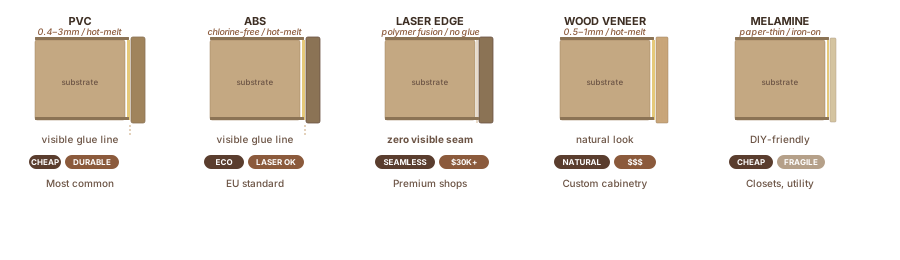
PVC Edgebanding
The most widely used edgebanding material in the furniture industry. Polyvinyl chloride strip, available in thicknesses from 0.4mm to 3mm, in thousands of colors and woodgrain patterns matched to TFL and HPL panels.
PVC is robust, moisture-resistant, and inexpensive. It bonds well with hot-melt adhesive on standard edgebanders. Available in every color any major panel manufacturer produces.
Limitation: PVC produces toxic fumes (hydrochloric acid gas) when burned, which means it cannot be used with laser-edge technology. Some European manufacturers and large furniture companies (including IKEA) are moving away from PVC on environmental grounds.
ABS Edgebanding
Acrylonitrile butadiene styrene — a thermoplastic alternative to PVC. Same visual quality, similar durability, but without the chlorine. ABS is the standard in Europe, where PVC restrictions are tighter.
Key advantage: ABS works with laser and hot-air edgebanding technology because it doesn't produce toxic fumes when the functional layer melts. This enables seamless, invisible edge joints — no visible glue line.
Wood Veneer Edgebanding
Thin real wood strips, typically 0.5mm to 1mm thick, with pre-applied hot-melt adhesive. Available in every common cabinet species. The natural look matches veneered panels perfectly but requires careful color matching between edge tape and face veneer.
Limitation: Not moisture-resistant. Not heat-resistant. Best for furniture and cabinetry in dry, climate-controlled interiors.
Melamine Edgebanding
The budget option — thin melamine-coated paper strip with hot-melt adhesive. Apply with a household iron, trim with a utility knife. Fine for closets, garage cabinets, and utility furniture.
Limitation: Thin, fragile, and prone to chipping at corners. Not suitable for kitchens or any heavy-use application.
Laser Edge (Zero-Joint)
The premium technology. A functional polymer layer co-extruded onto the edgebanding strip replaces traditional glue. A laser beam or hot-air nozzle activates the polymer layer, bonding the edgebanding to the panel with no visible seam. The result is a monolithic surface — you can't feel where the panel ends and the edge begins.
REHAU's LaserEdge and similar systems from Egger, Kronospan, and others use ABS as the base material because it melts cleanly without toxic fumes.
Limitation: Requires a laser or hot-air edgebander — $30,000+ for the machine. Not a DIY option.
Edgebanding Comparison Table
| Type | Thickness | Moisture Resistance | Appearance | Cost | Application Method |
|---|---|---|---|---|---|
| PVC | 0.4–3mm | Excellent | Wide color/pattern match | $ | Hot-melt edgebander |
| ABS | 0.4–3mm | Excellent | Wide color/pattern match | $$ | Hot-melt or laser edgebander |
| Wood veneer | 0.5–1mm | Poor | Natural wood — best appearance | $$$ | Hot-melt edgebander or iron-on |
| Melamine | 0.2–0.4mm | Poor | Basic color match | $ | Iron-on (DIY-friendly) |
| Laser edge | 0.8–2mm (ABS) | Excellent | Seamless — zero visible joint | $$$$ | Laser/hot-air edgebander |
Part 5: Brand Directory: Manufacturers Compared
Twenty-two manufacturers across substrates, surfaces, and specialty panels. Organized by primary product category.
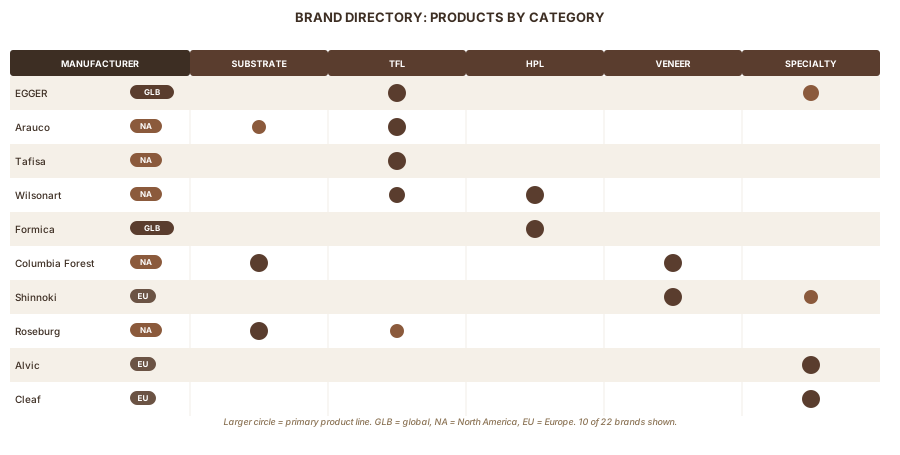
TFL and Decorative Panel Manufacturers
EGGER — Austrian manufacturer with global reach. Four main product lines: Eurodekor (TFL on particleboard or MDF), PerfectSense (premium lacquered panels in matte and gloss — six-coat UV-cured finish), Eurolight (honeycomb lightweight panels), and Flammex (fire-rated). PerfectSense is their flagship — a lacquered MDF or chipboard panel with anti-fingerprint matte or deep-gloss finish. Widely distributed in North America through ForestOne and Commonwealth Plywood.
Tafisa — Canadian manufacturer producing TFL panels from 100% recycled and recovered wood. Over 160 color and texture combinations. Two flagship collections: Sommet (industry-leading embossed-in-register textures including VIVA and BRAVA) and Prélude (nature-inspired woodgrains and versatile solids). Also produces matching SURFORMA HPL for coordinated applications. Distributed through Richelieu and Rugby.
Arauco — Chilean-based, manufactured in North America. Their Prism TFL line includes 73+ exclusive designs on particleboard or MDF substrates. Key differentiator: InCopper antimicrobial surface protection — EPA-certified copper-based technology active for the life of the panel. The only TFL with built-in antimicrobial protection in North America. Vesta ULEF substrate meets CARB-2 and LEED requirements.
Kronospan — Global leader in wood-based panels. KronoDesign TFL collection includes four series: Color, Standard, Contempo, and Harmony. Available on particleboard (PB) or MDF core. Authentic woodgrains, contemporary solids, and specialty patterns. Enormous design range with global distribution.
Wilsonart — American manufacturer of both HPL and TFL. Their coordinated surfaces program lets you use HPL on high-wear horizontal surfaces and matching TFL on cabinet interiors and vertical surfaces — same design, different performance levels. Traceless is their ultra-matte, anti-fingerprint HPL line. GREENGUARD Gold certified.
Uniboard — Canadian manufacturer with 130+ colors and 14 finishes. Two collection tiers: Standard (Bistro, Dolomite, Velum finishes) and Signature (Aura, Calico, Lyra, Omnia, Rio, Sequoia, Glossy, and Supermatte). Complemented by matching HPL, edgebanding, and 3DL thermofoil doors.
Panolam (Nevamar / Pionite) — American HPL specialist with two brands: Nevamar for commercial-grade HPL and Pionite for residential. Specialty lines include ThruColor (color through the core — no dark edge line) and FRL fire-rated laminate. Four manufacturing plants and six distribution centers across the US.
Stevenswood — Specialist in curated TFL collections with coordinated matching products. Their TruMatch program ensures exact color and texture alignment across TFL, 3DL, finish foil, and edgebanding — all using the same design paper. Anti-fingerprint matte, gloss, and write-on/wipe-off panel options.
HPL Manufacturers
Formica — The original laminate brand (founded 1913). 120 plain colors, 25 Plus Colors, 81 woodgrains, 86 patterns. Specialty lines include 180fx (true-to-scale stone patterns), ColorCore2 (color throughout — no dark edge), and HardStop Panels (fiberglass-reinforced, Class A fire rating). Manufacturing in the USA.
Real Wood Veneer and Prefinished Panel Manufacturers
Decospan / Shinnoki — Belgian company that sets the standard for prefinished veneer panels. Shinnoki panels feature real wood veneer on an 18mm MDF core, finished with six coats of UV-cured acrylate urethane lacquer — brushed, stained, and lacquered with a softtouch finish that resists micro-scratches without compromising touch or appearance. Available in 18 prefinished colorways with matching edgebanding. Two quality tiers: Exclusive and Premium. Their proprietary mixmatch technique guarantees continuous look without visual interruptions across panels. Also offers Querkus — customizable unfinished oak veneer panels. FSC certified.
Shinnoki vs. Tafisa — the finish comparison: Shinnoki is a prefinished real wood veneer panel with six UV-lacquer layers that you use as-is — no sanding, no finishing. Tafisa is a TFL panel — melamine paper fused to particleboard. Shinnoki gives you actual wood grain with factory-grade UV protection. Tafisa gives you a printed woodgrain pattern that's more durable against scratches but can't be refinished and doesn't have the depth of real wood. For clients who want the warmth of wood with zero on-site finishing, Shinnoki. For clients who want a consistent, maintenance-free surface at lower cost, Tafisa TFL.
Echo Wood — Reconstituted wood veneer from Hardwoods Specialty Products. Made from plantation-grown Ayous (Obeche), dyed and reassembled to replicate premium species. California-inspired collection includes Monterey, Napa, Malibu, and Santa Monica patterns plus VG Fir and PS Walnut. Available on MDF core in 4x8 and 4x10 sheets. FSC certified. Made-to-order with 25-sheet minimum and 3–4 week lead time.
Columbia Forest Products — North America's largest hardwood plywood manufacturer. PureBond technology uses soy-based, formaldehyde-free adhesive — panels test below the lower detection limit for formaldehyde emissions. Available in maple, birch, walnut, cherry, red oak, and white oak face veneers. Multiple core options including veneer core, Classic Core (combination), and MDF core. Widely available at Home Depot and hardwood dealers. CARB-2 and LEED compliant.
Dragon Ply — Premium hardwood plywood from Hardwoods Specialty Products. Thick face and back veneers composed on European veneer equipment and graded to HPVA or higher standards. Available in an unusually wide range of cores: Radiata Pine/Mixed Hardwood Combi, Eucalyptus, Acacia/Eucalyptus Combi, Ultra-Light Falcata, MDF, Particleboard, MDF X-Band Veneer, Lumber Core, and 100% Euro Birch. Available with Type 1 or Type 2 glue lines and E-0, E-1, or E-2 formaldehyde ratings. Distributed through Paxton Wood and Hardwoods dealers.
Specialty Surface Manufacturers
Cleaf — Italian manufacturer of deeply textured, embossed-in-register decorative panels. Founded by the Caspani family near Milan in 1975. Over 80 design options that create three-dimensional surface effects — woodgrains, fabric, metal, and stone textures that you can feel. Decorative papers or polymeric foils impregnated with melamine resin pressed onto MDF or particleboard. Also produces veneered panels, laminates, and edges. All manufactured in Brianza, Italy. Premium pricing justified by surface quality that photographs beautifully.
Alvic — Spanish manufacturer with three surface technologies. Luxe: high-gloss lacquered MDF with UV-treated mirror finish — intense color depth. Zenit: supermatte lacquered surface with anti-fingerprint silk texture — now in Generation 3.0 with enhanced scratch resistance. Syncron: textured surface with synchronized embossing for realistic natural finishes. Global distribution.
REHAU — German manufacturer of premium acrylic surfaces and laser-edge technology. RAUVISIO brilliant: color-matched PMMA layer for intense gloss with decades of UV stability. RAUVISIO crystal: glass-design polymer that mimics real glass without the weight and fragility (interzum award winner). Both available as individual components or as fabricated, cut-to-size pressed boards with LaserEdge applied — high-gloss available to any shop without investment in specialized machinery.
Finsa — Spanish manufacturer known for Fibracolour — through-dyed MDF where the color runs uniformly through the entire panel thickness, not just on the surface. Made with water-based pigments. Ideal for routed and profiled cabinet doors where the edge reveals the core — no contrasting substrate color. Also produces Superpan, a hybrid board combining particleboard strength with MDF surface smoothness. Meets EPA TSCA Title VI and CARB-2 requirements.
Substrate Manufacturers
Roseburg — Oregon-based manufacturer of the full substrate stack. SkyBlend particleboard: premium ULEF, 100% recycled/recovered fiber, ECC certified. Medex MDF: moisture-resistant MR50 for kitchens and bathrooms. SkyPly: decorative hardwood plywood with hand-selected veneers. Duramine TFL: thermally fused laminate on any Roseburg substrate. One of the few manufacturers offering TFL on hardwood plywood core, not just particleboard.
European Panel Manufacturers
Pfleiderer — German manufacturer with 280+ decors in their DST collection ranging from matte to high-gloss to realistic wood pore textures. DecoBoard product line includes standard particleboard, MDF Plus, HDF, Fibre Compact, and Pyroex (fire-rated) substrates. Six manufacturing facilities across Europe.
Sonae Arauco — Portuguese-Spanish manufacturer with the Innovus decorative brand. Available in approximately 70 countries. Innovus MFC (melamine-faced chipboard) and MDF panels with recent additions including Innovus Coloured MDF for modern interiors. Strong sustainability focus.
Kastamonu Entegre — Turkish manufacturer with 5,000 unique patterns and surfaces. Product lines include MEDELAM (melamine on MDF), TEKNOLAM/YONGALAM (melamine on particleboard), and specialty lines for fire-resistant (MEDELAM FR) and moisture-resistant (MEDELAM MR) applications. Growing global presence.
Brand Comparison: Quick Reference
| Brand | Primary Product | Standout Feature | Region | Distribution |
|---|---|---|---|---|
| EGGER | TFL, PerfectSense lacquered | 6-coat UV lacquer on PerfectSense | Austria/Global | ForestOne, Commonwealth Plywood |
| Tafisa | TFL | 100% recycled wood, EIR textures | Canada | Richelieu, Rugby |
| Arauco | TFL (Prism) | InCopper antimicrobial protection | Chile/North America | Hardwoods, DSI, Rugby |
| Kronospan | TFL (KronoDesign) | Massive design range, global scale | Austria/Global | Hardwoods, regional dealers |
| Wilsonart | HPL + TFL | Traceless anti-fingerprint, coordinated surfaces | USA | Direct + distributors |
| Formica | HPL | ColorCore2 edge-free laminate, 180fx | USA/Global | Direct + distributors |
| Uniboard | TFL | 130+ colors, Supermatte finish | Canada | Richelieu, Hardwoods |
| Panolam | HPL (Nevamar/Pionite) | ThruColor, FRL fire-rated | USA | Direct + distributors |
| Stevenswood | TFL | TruMatch cross-product coordination | USA | Direct |
| Decospan/Shinnoki | Prefinished veneer | 6-layer UV lacquer on real wood | Belgium | Chesapeake, Hardwoods, Rugby |
| Echo Wood | Reconstituted veneer | FSC plantation wood, consistent grain | USA | Paxton, Rugby, DesignOneSource |
| Columbia Forest | Hardwood plywood | PureBond formaldehyde-free | USA | Home Depot, hardwood dealers |
| Dragon Ply | Premium plywood | 10+ core options, thick veneers | USA | Paxton, Hardwoods |
| Cleaf | Textured decorative panels | 3D embossed-in-register surfaces | Italy | Specialty distributors |
| Alvic | Acrylic + matte panels | Luxe mirror gloss, Zenit anti-fingerprint | Spain/Global | Regional distributors |
| REHAU | Acrylic surfaces + laser edge | RAUVISIO brilliant/crystal, LaserEdge | Germany/Global | Direct + distributors |
| Finsa | Through-dyed MDF | Fibracolour — color through entire panel | Spain | UK/European distributors |
| Roseburg | Substrates + TFL | Full stack — substrate to finished panel | USA | National distribution |
| Pfleiderer | TFL (DecoBoard) | 280+ decors, European manufacturing | Germany | European distributors |
| Sonae Arauco | TFL (Innovus) | 70-country distribution, colored MDF | Portugal/Spain | Global distributors |
| Kastamonu | TFL + specialty panels | 5,000+ patterns, fire/moisture variants | Turkey | Growing global network |
Part 6: Finishing Processes and Why They Matter
The finish determines how a surface looks, feels, and holds up over years of daily use. Different manufacturers use fundamentally different processes, and those differences matter for your client's cabinets.
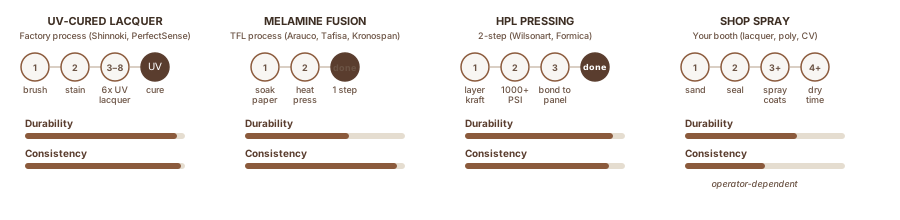
UV-Cured Lacquer (Factory-Applied)
The premium finishing process for prefinished panels. UV-cured lacquer is applied in sequential layers — typically 4 to 6 coats — with each layer cured instantly by ultraviolet light before the next is applied.
Decospan's Shinnoki process is a good example: real wood veneer is brushed, stained, then receives six layers of UV-cured acrylate urethane lacquer, each applied by roller and cured between coats. The result is a surface that resists micro-scratches while maintaining the natural look and soft touch of wood.
EGGER's PerfectSense uses a similar multi-coat UV lacquer process on MDF or chipboard substrate to achieve either premium matte or high-gloss finishes with anti-fingerprint properties.
Why it matters for cabinets: A six-coat factory UV finish outperforms anything you can spray in your shop. The controlled environment — temperature, humidity, dust filtration, precise film thickness — produces a harder, more uniform, more durable surface. Waterborne UV finishes are the most durable cabinet finish available.
Melamine Resin Fusion (TFL Process)
The TFL manufacturing process fuses melamine-impregnated decorative paper directly to the substrate under heat and pressure. The melamine resin cures into a hard, scratch-resistant surface in a single pressing operation.
Why it matters for cabinets: Fast, consistent, and cost-effective. The surface is integral to the panel — it can't delaminate the way HPL theoretically could if the bond fails. Surface hardness is good for vertical applications but lower than HPL for impact resistance.
High-Pressure Lamination (HPL Process)
Multiple layers of kraft paper saturated with phenolic resin are topped with a decorative layer saturated with melamine resin, then pressed at over 1,000 PSI. The resulting sheet is 0.028"–0.048" thick and extremely durable. It's then bonded to a substrate panel in a separate step.
Why it matters for cabinets: The multi-layer construction gives HPL superior scratch, wear, and impact resistance. For countertops, work surfaces, and high-traffic cabinet exteriors, HPL outperforms TFL. Wilsonart's Traceless finish adds anti-fingerprint and smudge resistance — light scratches buff out with a melamine sponge.
Spray Lacquer and Polyurethane (Shop-Applied)
Traditional cabinet finishes applied in your spray booth. Conversion varnish, catalyzed lacquer, or waterborne polyurethane. You control the color, sheen, and application.
Why it matters for cabinets: Maximum design flexibility — any color, any sheen, any tint. Required for solid wood components and custom color matching. But it's time-intensive (multiple coats plus dry time), quality depends entirely on your spray technique and booth setup, and catalyzed lacquer finishes can discolor over time.
Finishing Process Comparison
| Process | Durability | Consistency | Cost | Flexibility | Best For |
|---|---|---|---|---|---|
| UV-cured lacquer | Excellent | Factory-controlled | $$$$ | Limited to manufacturer's options | Prefinished panels (Shinnoki, PerfectSense) |
| Melamine fusion (TFL) | Good | Factory-controlled | $ | Huge design range | Production cabinet boxes, vertical surfaces |
| HPL pressing | Excellent | Factory-controlled | $$ | Good design range + specialty finishes | Countertops, high-traffic exteriors |
| Spray lacquer/poly | Good to Excellent | Operator-dependent | $$$ | Unlimited | Custom colors, solid wood, mixed materials |
Part 7: How to Spec Materials for a Cabinet Project
When a client asks about material options, work through these four decisions in order.
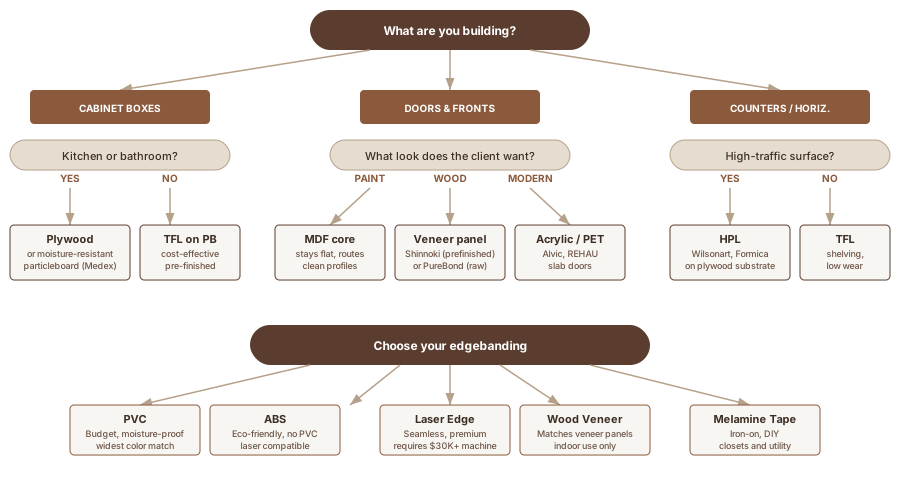
1. Determine the Application
Cabinet boxes (sides, bottoms, shelves): Plywood for strength and moisture resistance, or particleboard with TFL for cost-effective production. Kitchen and bathroom boxes should be plywood or moisture-resistant particleboard.
Cabinet doors and drawer fronts: MDF core for painted doors (stays flat). Veneered plywood or prefinished panels for natural wood appearance. TFL on particleboard or MDF for production work. Acrylic or PET for modern European slab doors.
Cabinet interiors: TFL on particleboard — it's pre-finished, easy to clean, and the cost savings here fund better materials on the exterior.
Countertops and horizontal work surfaces: HPL over plywood or particleboard substrate. Never TFL on a countertop — it's not rated for horizontal wear.
2. Match Surface to Client Expectations
"I want real wood" → Veneered plywood (raw or prefinished). Shinnoki for factory-perfect finish with zero shop finishing time. Columbia PureBond for raw panels you'll finish yourself.
"I want modern, clean, smooth" → TFL for budget-conscious. Alvic Zenit or EGGER PerfectSense for ultra-matte. Alvic Luxe or REHAU RAUVISIO for high-gloss.
"I want durable and low-maintenance" → HPL from Wilsonart or Formica for high-touch surfaces. TFL for interiors.
"I want unique texture" → Cleaf embossed-in-register panels. Tafisa Sommet EIR textures. Egger textured finishes.
3. Choose Core and Edgebanding
Match your edgebanding to your panel brand — most major TFL manufacturers offer coordinated edgebanding. For prefinished veneer panels like Shinnoki, use their matching veneer edgebanding. For painted MDF doors, no edgebanding needed — profile the edge with a router.
For structural panels, choose your core based on the component: veneer core for boxes and shelves, MDF core or combination core for doors, Baltic birch for drawer boxes and exposed edges.
4. Verify Environmental Compliance
Confirm your panels meet current formaldehyde emission standards. In the US, that means EPA TSCA Title VI / CARB Phase 2. For green building projects, verify LEED and GREENGUARD certification.
Columbia PureBond and Roseburg SkyBlend both test below detectable formaldehyde levels. Arauco Prism on Vesta ULEF meets LEED, Green Globes, and CALGreen requirements.
Where This Fits
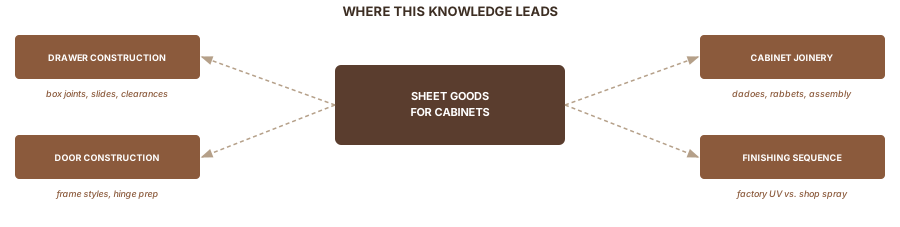
This guide gives you the material knowledge to spec cabinets confidently. From here, you'll want guides on drawer construction, door construction, and cabinet joinery — the techniques that turn these materials into finished cabinetry.
For finishing specifically, understanding the difference between factory-applied UV lacquer and shop-applied conversion varnish will shape how you bid projects. Factory-finished panels cost more per sheet but eliminate finishing labor. Shop finishing gives you unlimited color options but requires spray equipment, booth time, and consistent technique.
The right answer depends on your shop, your volume, and your client. Now you know enough to choose with confidence.
Sources
- Dean Cabinetry — Plywood vs. MDF vs. Particle Board
- CabinetScore — Best Cabinet Materials Compared
- Kitchen Cabinet Kings — Most Durable Kitchen Cabinet Materials (2026)
- Hood Distribution — Plywood Core Types
- Family Handyman — Guide to Plywood Core Options
- Murphy Plywood — Cores
- Packard Forest Products — Plywood Core Types
- Columbia Forest Products — Classic Core
- Columbia Forest Products — PureBond
- McIlvain — Hardwood Plywood Core Comparisons
- Woodworkers Source — Baltic Birch Plywood Guide
- Formica — HPL and TFL: Understanding the Differences
- Wilsonart — Difference Between HPL and TFL
- Wilsonart — Traceless Ultra-Matte Laminate
- Wilsonart — Coordinated Surfaces
- Stevenswood — Understanding Impact Resistance in HPL and TFL
- EGGER — PerfectSense Lacquered Boards
- EGGER — Decorative Collection
- ForestOne — EGGER Panels
- Tafisa — Decorative Panels (TFL)
- Arauco — Prism TFL
- Kronospan — TFL Panels
- Uniboard — TFL and HPL
- Panolam — Nevamar HPL
- Panolam — HPL Overview
- Stevenswood — TFL Panels
- Decospan — Shinnoki Prefinished Panels
- Chesapeake Plywood — Shinnoki Overview
- Decospan — Shinnoki Collection
- BestOnlineCabinets — Shinnoki Wood Veneer Panels
- Hardwoods Specialty Products — Shinnoki
- Echo Wood — Reconstituted Veneers (Paxton)
- DesignOneSource — Echo Wood
- Rugby — Echo Wood
- Hardwoods Specialty Products — Dragon Ply
- Paxton Wood — Dragon Ply
- Cleaf — Products
- BestOnlineCabinets — Cleaf Melamine Panels
- Alvic — Luxe Technology
- Alvic — Zenit Technology
- Alvic — Panels
- REHAU — RAUVISIO Brilliant
- REHAU — RAUVISIO Crystal
- Finsa — Fibracolour
- Finsa — Decorative Surfaces
- Roseburg — SkyBlend Particleboard
- Roseburg — Medex MDF
- Pfleiderer — Melamine Faced Boards
- Sonae Arauco — Innovus
- Kastamonu Entegre — Decorative Panels
- PRI — Ultimate Guide to Edge Banding
- Framatech — Wood Veneer vs. Synthetic Edgebanding
- LEDGEBAND — Types of Edge Banding
- CT Edge Band — How to Choose the Right Edge Banding
- LEDGEBAND — ABS vs PVC Edge Banding
- Formica — Products
- Richelieu — Tafisa Melamine
- CabinetNow — Most Durable Finish for Kitchen Cabinets
- Deslaurier — Plywood vs. Particle Board Cabinet Box Construction
- FurnBoard — Why Choose PET Film
- GoldenHome — Custom Kitchen Cabinet Doors
- Packard Forest Products — PureBond Hardwood Plywood
- Fine Homebuilding — Understanding Cabinet Plywood
- Kosmex Group — Particle Board vs Plywood 2026
- Casta Cabinetry — MDF and MFC vs Plywood
- Forest Plywood — Best Plywood for Cabinets
- Architecture Today — Shinnoki by Decospan
- Material Intelligence — TFL Guide
Up Next
How to Build a Cabinet
CABINETMAKING · Beginner