
Black Walnut Lumber at a Glance
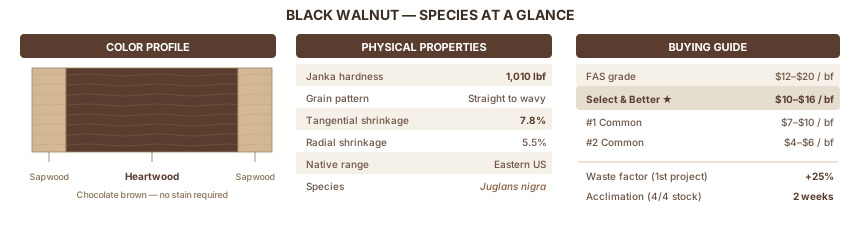
Black walnut (Juglans nigra) is the only common domestic hardwood that's naturally dark chocolate brown — no stain required. Its Janka hardness of 1,010 lbf (a standard measure of resistance to denting and wear) puts it harder than pine, softer than red oak, in a sweet spot that makes it easy to work with standard tools. Budget $10–$15 per board foot for Select & Better grade at a hardwood dealer, and add 20–25% to your board foot estimate for waste.
| Janka hardness | 1,010 lbf — harder than pine (870), softer than red oak (1,290) |
| Fair price | $10–$15/bf (Select & Better, 4/4, kiln-dried) |
| Grade to buy | Select & Better for most furniture projects |
| Waste factor | Add 20–25% over net board feet for your first project |
| Acclimation | 2 weeks flat-stacked in your shop before milling |
| Finishing | No pre-conditioner needed — finishes evenly, oil saturates the grain |
In this guide:
- What makes walnut premium and when it's worth the price
- How to read a walnut board at the lumber yard
- Lumber grades and which one to buy for furniture
- What fair pricing looks like in 2025
- Where to find black walnut
- How much to buy — worked example
Part 1: What Makes Black Walnut Worth the Price
Walnut costs more than oak. Here's why.
Black walnut (Juglans nigra) grows in the eastern United States, concentrated in the Ohio River Basin — Indiana, Ohio, Missouri, Kentucky, Tennessee. It's the darkest of the common domestic hardwoods. No other species at that price point gives you true chocolate-brown heartwood without staining. Oak is tan. Maple is pale. Cherry is a lighter reddish-brown. Walnut is dark, and it stays dark.
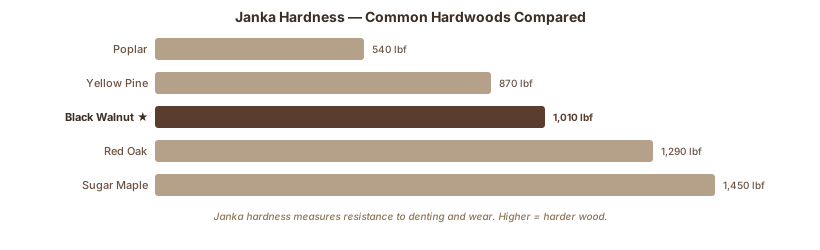
The Janka hardness of 1,010 lbf tells you something about working with it. That number puts walnut harder than pine (870) and poplar (540), softer than red oak (1,290) and sugar maple (1,450). In practice, walnut cuts cleanly, holds crisp edges, and surfaces without fighting you. You're not going to burn through router bits or curse at your planer.
One clarification before you buy: "black walnut" in the US means Juglans nigra. That's different from English walnut (Juglans regia) — the grocery store nut tree — which is lighter-colored, slightly harder (1,220 Janka), and significantly pricier as lumber. When a US hardwood dealer says "walnut," they mean Juglans nigra.
When walnut is worth it:
- You want dark wood without stain
- The piece has visible grain that needs to look finished, not painted
- You're building furniture you'll look at every day
When to consider alternatives:
- The project will be painted — walnut's color is wasted under paint; use poplar instead
- You need large quantities for a utility build — pine at a fraction of the cost does the job
- You want lighter color — cherry or soft maple with similar workability cost less
Part 2: Reading a Walnut Board — Heartwood, Sapwood, and Grain
Walk into a hardwood dealer and pull a walnut board off the rack. You'll see two very different colors on the same piece of wood. Knowing what you're looking at saves you from expensive surprises.
Heartwood and Sapwood
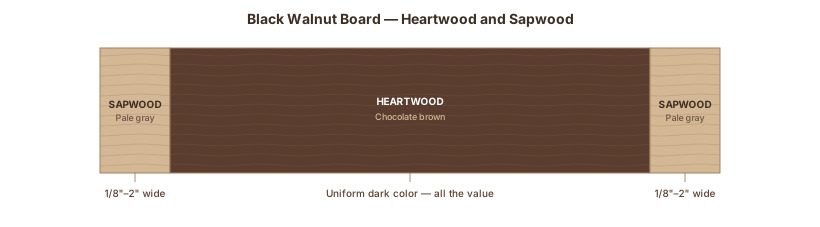
The dark chocolate section is heartwood — the dead interior of the tree where the extractives that give walnut its color live. This is what you're paying for.
The cream or white band along the edges is sapwood — the living outer layer of the tree when it was standing. The contrast in walnut is dramatic. A board with significant sapwood has a sharp line between nearly-white and dark brown. This isn't a structural defect. But on a furniture surface where you expect consistent color, it reads as a mistake if you didn't plan for it.
Steamed vs. unsteamed walnut: Most commercial walnut is steamed during kiln-drying. As Woodworkers Source explains in their walnut guide, the kiln introduces high humidity while drying, causing dark extractives to migrate from heartwood into sapwood and gradually brown it. Steamed walnut looks grayish-brown before finishing — both zones muted to a similar tone. Add an oil-based finish and the warmth and depth return. The difference between heartwood and sapwood becomes gradual rather than sharp.
In unsteamed walnut, that boundary is hard and dramatic. For live-edge slabs, that's a design feature. For a standard furniture panel where you expected uniform color, it's a problem.
What to Do With Sapwood
Avoid it when: You're building a tabletop or any visible surface where consistent color matters. Mixing heartwood boards with heavy-sapwood boards without planning reads as a mistake, not a design choice.
Use it when: The piece has a live-edge aesthetic where the white sapwood edge is part of the look. Or put it on hidden surfaces — undersides, back panels, interior shelves. Nobody sees it there.
The budget angle: Boards with significant sapwood cost less. If you're cutting small parts — drawer fronts, box sides, shelf supports — buy cheaper sapwood boards and orient your cuts to stay in heartwood. You pay for the defect, cut around it.
Grain and Figure
Most commercially available walnut has straight grain. Look at the edges of each board to read which direction the grain rises — this tells you which way to feed the board at the jointer and planer. Mark arrows on your boards before milling so you don't forget mid-session.
Figured walnut — curl, fiddleback, crotch wood, burl — shows up at specialty suppliers and in live-edge slabs. Beautiful, and priced significantly higher than straight-grain stock. For your first walnut project, start with straight-grain boards and learn the material before adding figure.
Part 3: Which Grade to Buy for Furniture
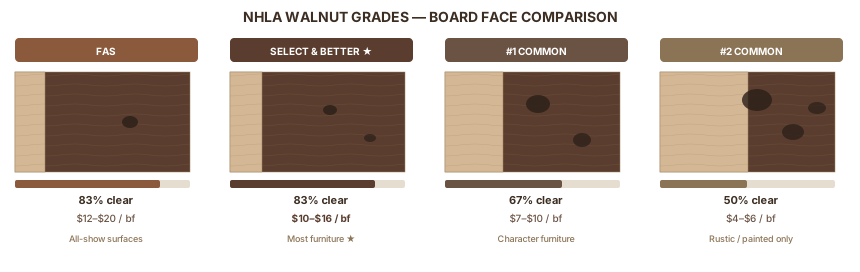
Hardwood lumber is graded by the National Hardwood Lumber Association (NHLA) based on how much clear, defect-free wood a board yields. As McIlvain Lumber's grade guide explains, walnut's grades have slightly relaxed requirements compared to oak or maple — the tree's branching habit naturally produces more knots, so the NHLA adjusted the thresholds to avoid grading most of the timber into unusability.
| Grade | Clear Wood | Min Board Size | Best For | Price Range |
|---|---|---|---|---|
| FAS | 83⅓% clear, best face | 5" × 6' | Showpiece furniture, fully visible panels | $12–$20/bf |
| Select & Better | 83⅓% one face, #1 Common on back | 4" × 6' | Most furniture — backs can have character | $10–$16/bf |
| #1 Common | 66.6% clear, both faces | 3" × 4' | Smaller parts, character furniture | $7–$10/bf |
| #2 Common | 50% clear, better face | 2"+ | Rustic, paint-grade, creative cutting | $4–$6/bf |
What to Buy
For your first walnut furniture project — a shelf, a small table, a box — buy Select & Better. It gives you consistently usable boards without paying the FAS premium for perfectly clear stock. The backs and undersides can have character marks; nobody sees them anyway.
FAS is worth it when every surface shows. A jewelry box with six visible faces. A tabletop where grain must be consistent across the full width. When there's no hidden side to put the defects on.
#1 Common is underrated. Experienced woodworkers often prefer it. Knots positioned well become design features rather than defects. For cutting boards, small boxes, or furniture where character grain is welcome, #1 Common saves real money and often produces more interesting work.
Skip #2 Common on your first project. Recovering the clear sections requires strategic ripping and crosscutting — a skill that takes practice. Save it for paint-grade work where you're covering the wood anyway.
Part 4: What Fair Pricing Looks Like in 2025
This is the question most guides skip.
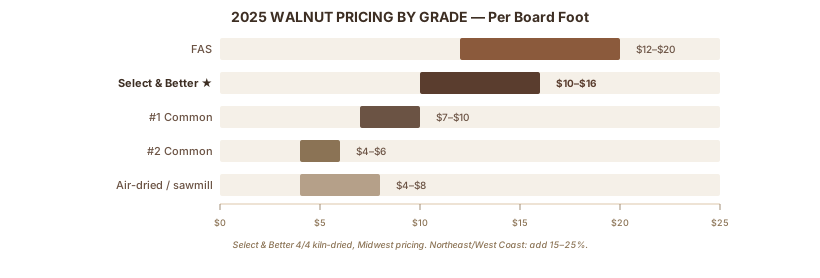
| Grade | Price per Board Foot | Notes |
|---|---|---|
| FAS (4/4, kiln-dried) | $12–$20 | Premium for wide, long, clear boards |
| Select & Better | $10–$16 | The standard commercial offering |
| #1 Common | $7–$10 | Best value for most furniture |
| #2 Common | $4–$6 | Rustic or paint-grade only |
| Air-dried / rough sawmill | $4–$8 | You provide drying time and milling |
The benchmark: $10–$12 per board foot for Select & Better, 4/4, kiln-dried at a hardwood dealer is fair market pricing in 2025. Under $8/bf at a dealer — check that it's actually kiln-dried and ask for the grade label. Over $18/bf for #1 Common — you're overpaying.
What Drives the Price Up
Thickness: 8/4 (2" nominal) costs more per board foot than 4/4 (1" nominal). Thicker boards come from larger, older trees and require longer drying time.
Width: Boards over 10" wide are scarce. A wide walnut board for a single-slab tabletop commands a real premium.
Length: 12-foot boards are rarer than 8-foot boards. Long clear runs cost more.
Figure: Curl, fiddleback, burl, and crotch wood add 50–200% to the base price. Worth it for the right project — not for a utility shelf.
Region: The further from walnut's native Midwest and Appalachian range, the higher the price. West Coast and Northeast dealers pay more to ship it in. Expect 15–25% above Midwest pricing.
For a detailed breakdown of current prices by grade, surfacing, and sourcing channel — including named retailers with current pricing — see Black Walnut Price Per Board Foot.
Part 5: Where to Find Black Walnut
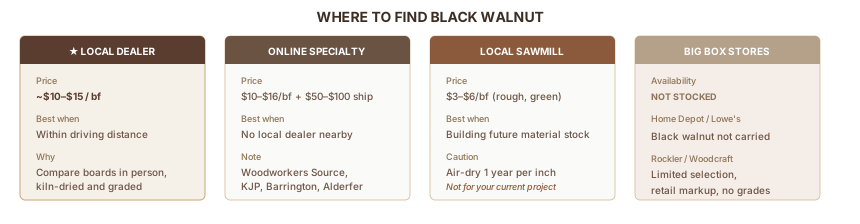
Local Hardwood Dealers
Search "[your city] hardwood lumber" or "[your county] hardwood dealer." Most cities of any size have at least one independent hardwood yard. You see and feel boards before buying, compare grades side by side, and ask questions. Stock is kiln-dried and labeled.
Woodcraft and Rockler stores also carry walnut in limited dimensions — useful for small quantities, but usually at a retail markup above a local yard.
Online Specialty Retailers
When no local dealer exists, several online retailers ship flat-pack hardwood boards:
- Woodworkers Source — wide selection, well-graded
- North Castle Hardwoods — multiple thicknesses, ships boards
- KJP Select Hardwoods — good range of widths
- Barrington Hardwoods — live edge and dimensional
- Alderfer Lumber — ships boards and live-edge slabs
Add $50–$100+ for shipping. For small projects under 20 board feet, online can still make sense. For larger projects, a local yard usually beats the delivered price.
Local Sawmills and Urban Tree Services
Search "[your county] walnut sawmill" or contact local tree removal companies. Black walnut is common in suburban and rural landscapes, and storm removals often produce usable logs. You can buy rough green lumber at $3–$6 per board foot — but you need to air-dry it for one year per inch of thickness. This isn't a source for your current project. It's how you build a material inventory for future builds.
Skip Big Box Stores
Home Depot and Lowe's don't carry black walnut. You might find a small "project board" at Rockler or Woodcraft, but with limited selection and no grade designation.
Regional Pricing Note
Prices are lowest in Indiana, Ohio, Missouri, Kentucky, and Tennessee — the heart of walnut's native range. A road trip to a regional sawmill or hardwood yard there can cut your material cost meaningfully if you need volume.
Part 6: How Much to Buy — Waste Factor and Worked Example
The most expensive mistake first-time walnut buyers make is this: calculate the net board feet, buy exactly that amount, and then run short when a board has a hidden defect or a mis-cut happens mid-project. You can't match late boards to early ones if you're out of stock.
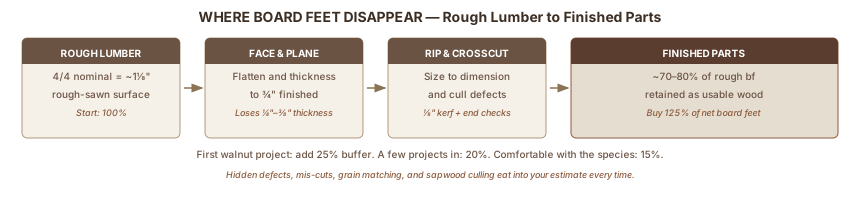
What Consumes Your Material
Before you trust the board foot number, understand what eats material beyond the finished dimensions:
- Jointing and planing: You lose ⅛"–¼" per face when surfacing rough lumber. A 4/4 rough board (nominally 1") surfaces to about ¾" finished.
- Ripping to width: Each table saw cut removes ⅛" of kerf, plus another ⅛" at the jointer to clean the edge.
- Crosscutting to length: ⅛" per crosscut, plus 3"–6" of waste at each board end where end checks (small cracks) are common.
- Defect culling: Knots in the wrong position, hidden interior cracks, sapwood you didn't plan for — these become scrap.
- Grain matching: Two boards that look compatible on the rack sometimes look wrong together once milled. Some sections go to the scrap bin during layout.
The Board Foot Formula
Board feet = (Thickness [in] × Width [in] × Length [in]) ÷ 144
Example: a 4/4 board, 8" wide, 8 feet long = 1 × 8 × 96 ÷ 144 = 5.33 board feet
For a full primer on the formula, see How to Calculate Board Feet.
Recommended Waste Factors
| Experience Level | Waste Factor | Why |
|---|---|---|
| First walnut project | +25% | Hidden defects, learning curve, grain matching |
| A few furniture projects | +20% | Still some unknowns with this species |
| Comfortable with lumber selection | +15% | You know what to look for |
Worked Example: Dining Table Top (36" × 72", ¾" Finished)
Step 1: Net board feet
36" × 72" = 2,592 square inches ÷ 144 = 18 board feet at 1" thickness
Step 2: Adjust for thickness milling
Starting from 4/4 rough stock (~1" nominal), surfacing both faces removes ¼"–⅜". To get ¾" finished parts, use 5/4 stock (1.25" nominal — it surfaces safely to ¾").
18 bf × (1.25 ÷ 1.0) = 22.5 board feet of 5/4 to cover the net surface area
Step 3: Add waste factor (first project = 25%)
22.5 × 1.25 = 28 board feet to purchase
Step 4: Cost
28 bf × $11/bf (Select & Better) = $308 in lumber
Buy 28 board feet, finish the project with scrap left over. The woodworker who orders 18 runs short.
Part 7: Bringing Walnut Home — Acclimation and Moisture
Kiln-dried walnut isn't ready to use the day it arrives. The wood needs to reach equilibrium with your shop's humidity before you mill it. Skip this step and the wood moves after you've assembled the piece.
According to Wagner Meters' moisture guidelines, indoor furniture in a heated home (35–45% relative humidity) needs lumber at 6–8% moisture content (MC). Kiln-dried boards arrive at 7–9% — close, but they still need to stabilize in your specific environment.
Black walnut's tangential shrinkage is 7.8% (per the Wood Database's species data). A 12" wide board can move ¼" or more across its width as seasonal humidity swings. Furniture built from under-acclimated lumber will show that movement as failed joints, cracked panels, or warped surfaces within months.
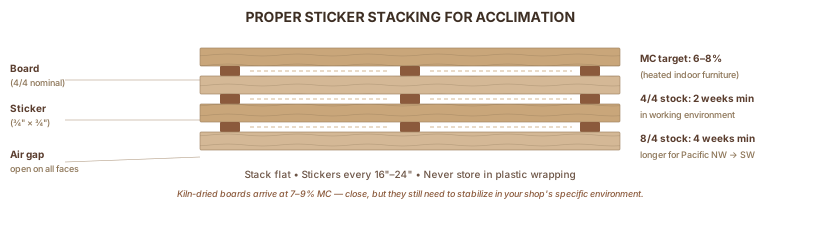
The process:
- Unwrap immediately. Never store walnut in plastic — trapped moisture leads to mold and uneven drying.
- Stack flat with stickers — ¾"-wide scrap strips between each board for air circulation on all faces.
- Store in the working environment: your climate-controlled shop, or in the room where the finished piece will live.
- Wait. Minimum 2 weeks for 4/4 stock. Four weeks for 8/4 (2" thick).
- Check with a moisture meter if you have one. Target within 2% of your shop's equilibrium.
If you order online from a supplier in a different climate zone — Pacific Northwest wood shipped to the desert Southwest, for instance — plan at least 4 weeks of acclimation. Ask the supplier what MC the boards were shipped at.
Part 8: Working with Black Walnut
Walnut is one of the most forgiving hardwoods for a beginner. Four things to know before your first session.
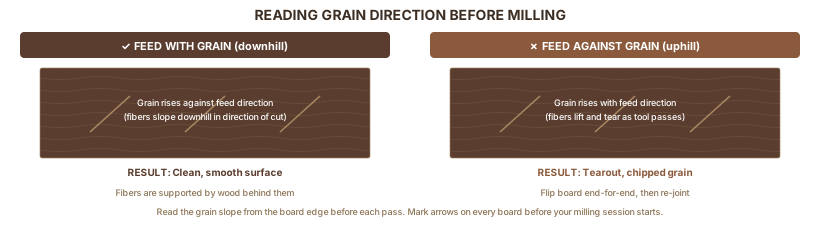
Read grain direction before jointing or planing. Look at the board edges — find which way the grain rises. Mark arrows on each board before milling. Always feed "downhill" (with the grain, not into it). If the jointer tears out, rotate the board end-for-end before adjusting anything else.
Sharp tooling matters more than with softwoods. Walnut shows burning from a dull router bit or table saw blade more visibly than pine does. If you see brown burn marks on routed edges, the bit needs sharpening.
Finishing is easy. Unlike pine, cherry, or maple, walnut doesn't blotch. It takes finishes evenly across the grain. Oil finishes — tung oil, danish oil — saturate the grain and deepen the color dramatically. Film finishes (polyurethane, lacquer) work just as well. Sand through 120 → 180 → 220 → 320 before the first coat. Grain filling before a film finish improves smoothness on walnut's open pores but isn't required for most furniture.
Wear a dust mask — every session. Black walnut contains juglone, a natural compound. The Wisconsin Horticulture Extension documents that juglone in sawdust can cause skin rash and respiratory irritation in sensitive individuals. Risk is low — far milder than many exotic species — but a small percentage of woodworkers develop sensitivity with repeated exposure. An N95 respirator and dust collection are standard practice. Wash your hands and clothing after working.
For finishing once you have boards dimensioned, see Applying Polyurethane. For walnut in cabinet applications, see Black Walnut Cabinets.
Part 9: Black Walnut vs. Other Hardwoods
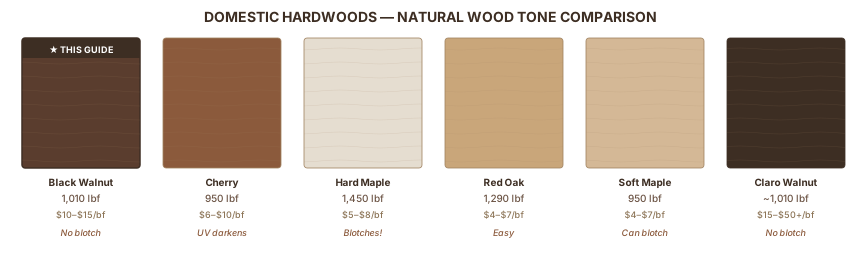
| Species | Janka | Color | Price/bf* | Finishing |
|---|---|---|---|---|
| Black walnut | 1,010 | Dark chocolate | $10–$15 | Easy, no blotching |
| Cherry | 950 | Light reddish-brown | $6–$10 | Easy, darkens with UV exposure |
| Hard maple | 1,450 | Pale white | $5–$8 | Blotches — needs conditioner |
| Red oak | 1,290 | Tan/reddish | $4–$7 | Easy, very open grain |
| Soft maple | 950 | Pale, some figure | $4–$7 | Can blotch |
| Claro walnut | ~1,010 | Darker, highly figured | $15–$50+ | Easy, rare Pacific NW species |
*Select & Better grade, 4/4, kiln-dried, Midwest pricing. Northeast and West Coast add 15–25%.
Cherry is the most natural comparison — similar workability, similar finishing behavior, lighter color, lower price. If you want dark, buy walnut. If your budget is tight and you're open to lighter tones, cherry is worth looking at. Cherry Wood has a closer comparison of the two.
Sources
This guide draws on species databases, NHLA grading references, hardwood supplier documentation, and woodworking community discussions.
- The Wood Database — Black Walnut — Janka hardness, shrinkage coefficients, species range
- McIlvain Lumber, "Walnut Grades Explained" — NHLA grade definitions and walnut-specific adjustments
- Woodworkers Source, "Ultimate Guide to Walnut" — steaming process, sapwood handling, practical notes
- Walnut Outlet, "Understanding Walnut Grading and Pricing" — pricing context by grade
- Wagner Meters, "Acceptable Moisture Levels in Wood" — MC target specifications for indoor furniture
- Wisconsin Horticulture Extension, "Black Walnut Toxicity" — juglone safety and health effects
- WoodWeb, "Black Walnut Sapwood and Heartwood" — sapwood use in furniture
- FineWoodworking Forum, "Finishing Black Walnut" — finishing techniques and grain filling
- FineWoodworking Forum, "Black Walnut Drying Process" — acclimation and drying guidance
- Berkshire Products, "Claro vs. Black Walnut" — species comparison
- Woodshop News, "Buyers, sellers put a premium on walnut" — market pricing context
- Chainsawnerds, "How Much Is Black Walnut Per Board Foot" — pricing factors by grade
Wood Species
Up Next
Is Blue Pine Safe to Use?
WOOD & MATERIALS · Beginner