
Unicorn Spit at a Glance
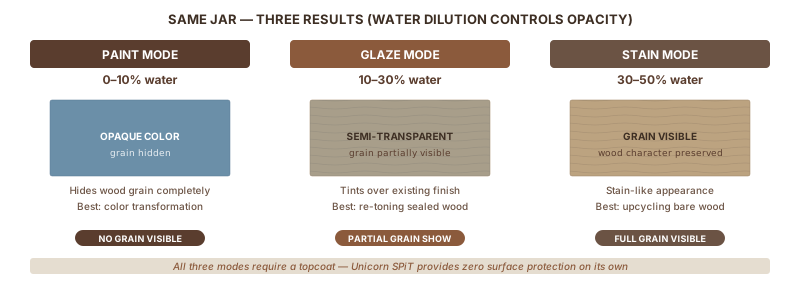
Unicorn SPiT for Wood is a water-based pigment-gel concentrate made by Eclectic Products that functions as a stain, glaze, or paint depending on how much you dilute it with water — but delivers zero surface protection on its own. Undiluted, it lays down opaque, paint-like color; thinned heavily, it behaves like a translucent stain that lets grain show through. It's a legitimate choice for furniture upcycling and decorative projects, but it's not a substitute for traditional wood stain and always requires a topcoat to protect the finish.
| Manufacturer | Eclectic Products |
| Product type | Water-based pigment-gel concentrate |
| Sizes | 4 oz ($12–15) · 8 oz ($18–22) |
| Surfaces | Wood, glass, metal, fabric, concrete, pottery |
| Self-protective without topcoat? | No |
| Recommended sealer | Oil-based poly, epoxy/resin, finishing wax |
In this guide:
- What it actually is — product composition and the dilution table
- Where it fits vs. stain, dye, chalk paint, gel stain
- When it's the right choice — and when it isn't
- How to apply Unicorn Spit to wood, step by step
- Topcoat selection, the reactivation problem, and durability
- Troubleshooting: streaks, muddy color, darkening under sealer
Part 1: What Unicorn Spit Actually Is
The name is ridiculous. The product is real.
Unicorn SPiT (stylized with a capital P-i-T by Eclectic Products) is a water-based pigment-gel concentrate. The manufacturer calls it "a paint, gel stain and glaze concentrate — all in one bottle." That's accurate but vague. The dilution table below is where the product actually makes sense.
Composition
The product is water-based, pigment-driven, and gel-consistency — thicker than most water-based stains, much thinner than acrylic paint. It's non-toxic, zero VOC, and jasmine-scented. It's not a true wood dye (which penetrates wood fibers at a molecular level), and it's not a paint (it doesn't form a protective film on its own).
The manufacturer claims it contains "no harmful plastics like acrylic or latex." That reads like marketing rather than chemistry. The product behaves like a water-based pigment dispersion regardless of how it's labeled. What matters in practice: it's water-soluble when wet, requires a non-water-based sealer for topcoating (see Part 5), and reactivates with water while unsealed.
The Dilution Table Is the Product
The dilution ratio is what makes it versatile. Add water, get a different product. Eclectic Products' official instructions publish the following ratios:
| Use | Water Dilution | Expected Result |
|---|---|---|
| Paint / heavy glaze | 0–10% | Opaque color, hides grain |
| Light glaze / whitewash | 10–30% | Semi-transparent tint over existing finish |
| Wood stain | 30–50% | Grain visible, stain-like color |
| Distressed / weathered wash | 50–70% | Very light color, prominent grain |
| Fabric dye | 60–80% | Color wash on fabric |
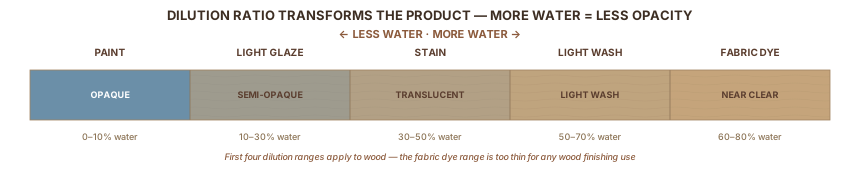
The same 4 oz jar serves all five functions. A jar diluted to 40% water looks and behaves like a wood stain. The same jar at 5% water looks like opaque colored paint. That versatility is real, not marketing.
One important caveat: the Metallic and Sparkling product lines have different dilution ratios than the original. The manufacturer explicitly warns that the standard instructions don't apply to the Metallic line.
Available Colors and Products
- Original Unicorn SPiT: 14+ vivid colors — Blue Thunder, Zia Teal, Purple Hill Majesty, Ogre Green, Rustic Reality (earthy brown), Weathered Daydream (grey), Sparkling Iced Egret (white), and others
- Unicorn SPiT Metallic: pearlescent/metallic finish; different dilution guidelines
- Unicorn SPiT Sparkling: glitter-infused variant
Available at Amazon, Home Depot, Walmart, and Michaels. The 4 oz size ($12–15) is enough for a small furniture piece at stain dilution.
Part 2: The Finishing Landscape
The confusion around Unicorn SPiT comes from treating it as a direct substitute for traditional stain. It isn't.
How Traditional Stain Works
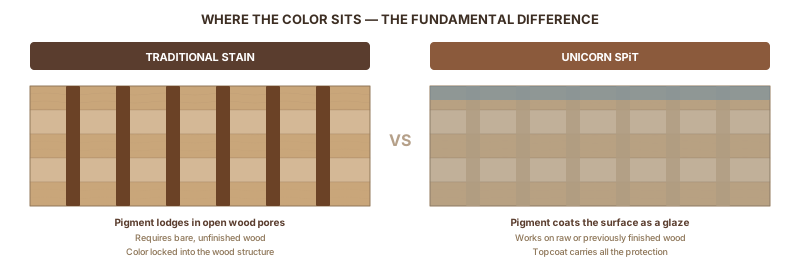
Traditional pigment stains work by lodging pigment particles in the open pores of raw, unfinished wood. Traditional dye stains work by dissolving into the wood fibers themselves. Both mechanisms require one thing: bare, unfinished wood. Apply traditional stain over an existing clear finish and it wipes right off — no pores to absorb into.
Traditional stains also come in a limited palette: browns, ambers, greys, blacks, some reds. You cannot get teal, cobalt blue, vivid orange, or forest green from a traditional pigment stain without multiple steps (bleach, then dye, then topcoat).
How Unicorn SPiT Works Differently
Unicorn SPiT doesn't rely on wood pore absorption as its primary mechanism. It functions as a pigmented glaze that adheres to any porous, clean, or deglossed surface — including previously finished wood. This is why it's popular in furniture flipping: you can skip the full strip-to-bare-wood step that traditional stain demands.
The downside: the color sits more on the surface than in it. Traditional stain's pigments lodge in the pore structure and can't smear or lift. Unicorn SPiT's pigments sit closer to the surface, which matters for topcoating (see Part 5).
Where It Fits Against the Other Options
| Unicorn SPiT | Traditional Pigment Stain | Wood Dye | Chalk Paint | Gel Stain | |
|---|---|---|---|---|---|
| Requires bare wood? | No | Yes | Yes | No | No |
| Color range | Vivid (blues, greens, purples) | Natural wood tones only | Full spectrum | Full spectrum | Natural wood tones |
| Film-forming | No | No | No | Yes (thin) | No |
| Works on glass / metal / fabric | Yes | No | No | No | No |
| Grain visibility | Variable | Preserved | High | Hidden | Variable |
| Best for | Color transformation, upcycling | Natural wood enhancement | Deep color in fine woodworking | Matte / distressed look | Blotch prevention |
Unicorn SPiT is best described as a water-based pigment glaze with staining capability. To show off the wood's natural beauty, use traditional stain or dye. To transform the color for decorative effect, Unicorn SPiT is the right tool.
Part 3: Right Project, Wrong Project
Unicorn SPiT has a specific job. It does that job well. It fails at others.
Projects Where Unicorn SPiT Makes Sense
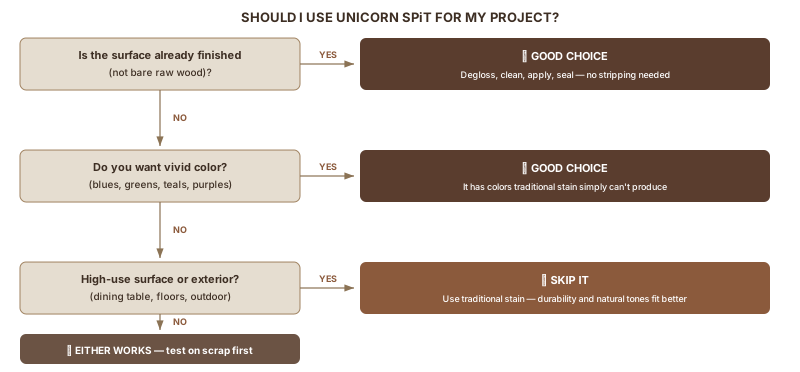
Furniture upcycling with an existing finish. You have a solid wood dresser or side table with an old orange oak stain. You want it grey-blue. Stripping to bare wood is a half-day job. With Unicorn SPiT, you degloss, clean, apply, and seal. The color shift is real and durable with the right topcoat.
Vivid, expressive color. Blues, teals, purples, greens — colors you can't get from traditional stain without bleaching first. If color transformation is the point, Unicorn SPiT has a palette that no other wood-specific product matches.
Multi-color blending and artistic effects. Artists use it wet-on-wet for gradient and marbled effects on furniture. Traditional stain doesn't blend this way.
Mixed-media projects. One product colors wood panels, glass inserts, fabric upholstery, and concrete bases in the same piece. For projects spanning multiple substrates, this reduces the product count from four to one.
Re-toning an existing finish. If a piece's stain is slightly warm or slightly cool compared to what you wanted, Unicorn SPiT applied at glaze dilution (10–30% water) can shift the hue without stripping.
Projects Where Unicorn SPiT Fails
Fine woodworking on new, raw wood where the grain is the feature. If you've selected figured walnut or quartersawn white oak for its character, teal competes with the medullary rays. Use a penetrating dye or traditional oil stain instead.
High-use surfaces. Dining table tops, floors, kitchen cabinetry, workbenches. The topcoat carries 100% of the durability load on these surfaces. Traditional stain with oil-based poly achieves the same visual result with simpler, more predictable chemistry. The topcoat complexity that Unicorn SPiT requires (see Part 5) adds no value here.
Exterior applications. Unicorn SPiT is not UV-stable or weatherproof. It will fade significantly faster than exterior-rated stains even with a sealer. Don't use it on deck furniture, garden planters, or outdoor signs.
When you want natural wood warmth. Unicorn SPiT's palette is vivid pigment colors. It doesn't reproduce the warmth, depth, or tonal variation of natural wood tones the way oil-based stains do. "Walnut brown" isn't in its vocabulary.
Production or saleable pieces needing batch consistency. Color variation from the application process, wood species absorption differences, and topcoat choices make Unicorn SPiT harder to replicate consistently across multiple pieces compared to measured, repeatable traditional staining processes.
Part 4: Applying Unicorn Spit to Wood
The application is simple. The mistakes come from skipping surface prep or rushing the dry time.
Surface Prep
The prep differs based on whether you're working with raw wood or a previously finished piece.
Raw bare wood:
- Sand through grits: 120, then 180, then 220
- Vacuum thoroughly; wipe with a tack cloth
- Wipe with denatured alcohol or 91% isopropyl alcohol; let dry completely
- Just before applying: lightly mist the surface with clean water — this opens pores and significantly reduces blotching on softwoods like pine
Previously finished wood:
- Clean the surface to remove grease, wax, or oils
- Degloss: sand lightly with 220 grit or use liquid sandpaper
- Wipe with denatured alcohol; let dry completely
- The surface doesn't need to be stripped to bare wood — just clean and dull
Application
Unicorn SPiT applies with a brush, foam pad, cloth, spray bottle, airbrush, or your hands. Work with the grain.

- Shake the jar well before opening — redistributes pigment (especially important for the Sparkling line)
- Mist the wood surface lightly with water if working on bare wood
- Apply the product with your chosen tool, working in the direction of the grain
- While the product is wet, blend harsh edges with a clean, slightly damp brush or foam pad
- Use the featherdusting technique to smooth streaks: take a dry brush and make very light, sweeping passes across the surface — this blends without adding product
- Let dry fully: 30–60 minutes in normal conditions; the product turns from glossy-wet to dull and chalky when it's done. Don't rush this — a surface that looks chalky but feels slightly cool to the touch may still be releasing moisture
- Optional: buff lightly with 120–220 grit sandpaper or extra-fine steel wool for a distressed look, then remove all dust
- Seal (see Part 5)
Color Mixing and Layering
Shake well before use. To mix colors, combine in a separate container and stir (don't shake the mixture — shaking introduces air bubbles). The ratio determines the final color.
For layered multi-color effects on the wood surface, choose your approach:
- Wet-on-wet: apply two colors while both are still wet, blend at the edges — produces gradient, marbled effects
- Dry layers: let first color dry fully, then apply second — produces distinct color separation; seal between complete color layers to prevent bleed-through
Anti-muddy-color rule: stick to warm colors (reds, oranges, yellows) OR cool colors (blues, greens, purples) within a single piece. A Crafty Mix's layering guide documents this: mixing warm and cool colors together produces muddy, indistinct results.
How Wood Species Affects Results
Wood species change the result significantly:
Oak, ash, elm (open grain): The large pores absorb product deeply. Grain contrast is dramatic — the pore lines pool with color and stand out. Cathedral grain becomes a design feature, not a background.
Maple, cherry, birch (closed grain): Tight pores absorb less. Color is more uniform and smoother, closer to a paint effect. Less grain drama, more even coverage.
Pine, cedar (softwoods): Pine is the tricky one. Growth rings alternate between earlywood (the lighter, softer spring growth) and latewood (the darker, denser summer growth). These bands absorb stain at very different rates, causing blotchy results on dry wood. Misting the surface before applying reduces this significantly. For difficult pine, a very light wash of shellac (1 lb cut) as a pre-conditioner — the same approach as wood conditioner before traditional stain — helps even out absorption.
Previously finished surfaces: Unicorn SPiT acts purely as a glaze. Adhesion depends entirely on your deglossing quality. Sand with 220 grit or use liquid sandpaper and wipe with denatured alcohol — without this, the product can peel or not adhere evenly.
Part 5: Topcoat Selection and Durability
No Topcoat Means No Durability
Unicorn SPiT provides zero protective finish on its own. The dull, chalky surface after drying is an unsealed pigment layer, not a finished surface.
Without topcoat, it scratches with minimal contact, fades from UV within weeks, and marks from water within seconds. Per Eclectic Products' application guide: "Like all stains, it will eventually fade if left unsealed." Every application needs a topcoat.
The Reactivation Problem
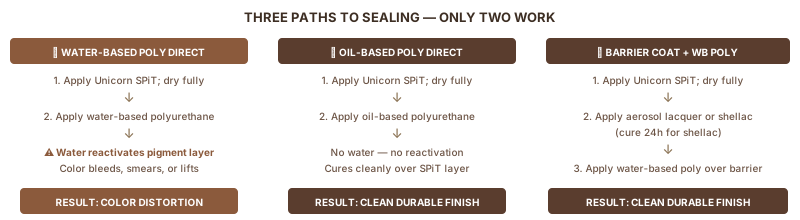
Unicorn SPiT is water-based. While it's unsealed, water reactivates it — rewets the pigment layer and causes it to move. Michelle Nicole's topcoat guide documents this specifically: apply water-based polyurethane directly over Unicorn SPiT and here's what happens:
- The water in the topcoat rewets the pigment layer
- The pigment moves, smears, or lifts
- In multi-color designs, colors bleed into each other
- The result is color distortion and adhesion failure
Oil-based polyurethane contains no water, so it cures over Unicorn SPiT without disturbing it. That's why the manufacturer recommends oil-based sealers.
If you need water-based topcoat (for low odor or easy cleanup), here's the workaround:
- Apply 1–2 light coats of aerosol lacquer or aerosol shellac over the fully dry Unicorn SPiT
- Let the barrier coat cure fully (24 hours for shellac; per label for lacquer)
- Then apply water-based polyurethane over the barrier coat
The barrier coat locks in the Unicorn SPiT layer so the water in the WB poly can't reach it — and the colors stay put.
Topcoat Options
| Topcoat | Sheen | Durability | Notes |
|---|---|---|---|
| Oil-based polyurethane (Minwax, Varathane) | Satin to high gloss | Excellent | Most reliable; no reactivation risk; deepens colors |
| Epoxy / resin (e.g., FAMOWOOD Glaze Coat) | High gloss, "3D" depth | Excellent | Best aesthetic; most dramatic color deepening |
| Finishing wax or beeswax | Matte to satin | Moderate | Easiest; traditional feel; reapply annually |
| Aerosol lacquer | Matte to gloss | Good | Good barrier coat; allows WB poly on top |
| Aerosol shellac | Matte | Moderate | Excellent barrier coat; seals very reliably |
| Marine varnish | Gloss | Excellent | High-humidity environments; water exposure |
How Colors Change Under Topcoat
All topcoats deepen color slightly. Gloss topcoats deepen it significantly. Scroll Saw Woodworking & Crafts forum users have documented purple going "almost black" under high-gloss lacquer.
Test on a scrap piece with your planned topcoat before committing to the full project. Matte and satin finishes preserve more of the as-applied color. Gloss looks dramatic but can push colors further than you intend — especially purples and violets.
Part 6: Troubleshooting
| Problem | Likely Cause | Fix |
|---|---|---|
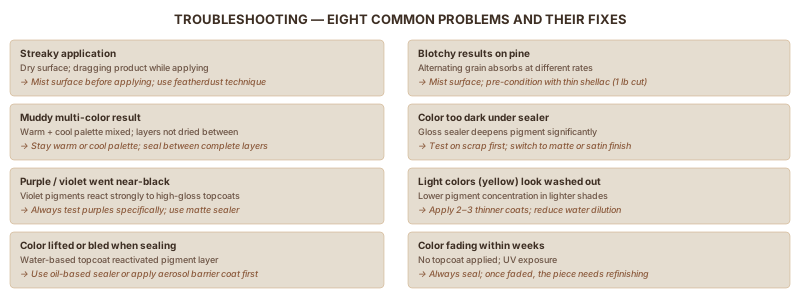
| Streaky application | Dry surface; dragging product | Mist surface before applying; use featherdusting technique |
| Blotchy results on pine | Alternating grain absorption | Mist surface; pre-condition with thin shellac wash (1 lb cut) |
| Muddy multi-color result | Warm + cool palette mixed; no drying between layers | Stay within warm or cool palette; let each layer dry; seal between complete color layers |
| Color too dark under sealer | Gloss sealer deepens pigment | Test on scrap first; switch to matte or satin finish |
| Purple / violet went near-black | Violet pigments react strongly to gloss | Use matte sealer; always test purples specifically |
| Light colors (yellow) look washed out | Lighter pigment concentration in some shades | Apply 2–3 thinner coats instead of one heavy coat; reduce water dilution |
| Color lifted or bled when sealing | Water-based topcoat reactivated pigment layer | Let fully cure (24 hrs); use oil-based sealer or apply aerosol barrier coat first |
| Color fading within weeks | No topcoat applied | Always seal; once faded, refinish the piece |
One safety note: If you use oil-based topcoat over Unicorn SPiT with rags or cloths, dispose of those cloths carefully. Cloths soaked in oil-based products can self-combust. Soak in water immediately after use and lay flat outdoors to dry completely before disposal.
Where This Fits
Unicorn SPiT is a finishing product, not a starting point. It works best when you already know how to apply a topcoat and understand what wood prep requires.
Before this guide: If you're new to finishing, read a primer on wood finishing fundamentals before buying Unicorn SPiT. Understanding how stains, paints, and topcoats relate to each other will help you decide whether Unicorn SPiT is the right product before you commit.
Related reading:
- Applying Polyurethane — the topcoat most Unicorn SPiT projects need; the technique matters as much as the product choice
After this guide: Once you've applied and sealed a Unicorn SPiT piece, the next skill gap is usually finishing consistency — getting the same result across multiple pieces or larger surfaces. That leads into understanding brush technique, roller application, and spray finishing.
Sources
This guide draws on Eclectic Products' official documentation, community forum discussions, and experienced makers' application guides.
- Unicorn SPiT General Instructions — official dilution ratios, application steps, dry time, topcoat recommendations, and safety notes
- Eclectic Products — Unicorn SPiT product page — product specs, available sizes, substrate compatibility list, color line overview
- Michelle Nicole — What Can You Seal Unicorn SPiT With — topcoat compatibility, the reactivation problem, barrier coat workaround
- Scroll Saw Woodworking & Crafts community forum — user-documented color behavior under topcoat, real-world limitations
- A Crafty Mix — Layering Sparkling Unicorn Spit — layering technique, anti-muddy-color guidance
- Repurpose and Upcycle — Furniture Makeover with Unicorn SPiT — furniture application walkthrough with real results and topcoat notes