
Modern Adirondack Chairs at a Glance
A modern Adirondack chair keeps the geometry of the classic design (the reclined back, slanted seat, and wide armrests) and strips away everything that looks dated. Fewer, wider back slats. A square top rail instead of a fan arc. Natural wood instead of white paint. You can build one with a circular saw, a jigsaw, and a drill. Cedar from the home center works perfectly.
| Difficulty | Beginner — no table saw or jointer required |
| Build time | 20–30 hours first build; 15–20 hours experienced |
| Lumber cost | ~$60–$75 in western red cedar |
| Seat height | 13–15" from ground |
| Back angle | 40–45° recline from vertical |
| Screws | #8 stainless exterior (about 60–80 total) |
In this guide:
- The geometry that stays, the aesthetic that changes
- Wood species comparison and the beginner's pick
- Complete cut list and lumber shopping list
- Assembly sequence from first cut to final coat
Prerequisites: You should be comfortable operating a circular saw or miter saw, driving screws with a drill, and using a sander. If you've built a cedar planter box or any basic outdoor project, you have the skills. BobVila's plan overview puts a first Adirondack chair at 15–20 hours for an experienced builder; budget closer to 25–30 for a first furniture project.
Part 1: What Changes and What Stays the Same
The Geometry That Makes It Comfortable
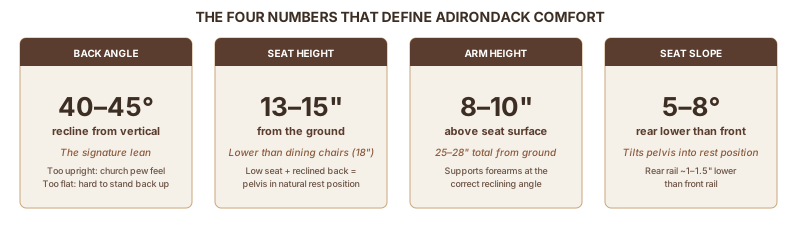
The Adirondack chair's comfort comes from four numbers. Get these right and the chair feels like it was made for human bodies. Change any of them and you have outdoor furniture that people sit in once.
| Dimension | Value | Why it matters |
|---|---|---|
| Seat angle | 5–8° slope (rear lower than front) | Tilts pelvis into a natural resting position |
| Back angle | 40–45° recline from vertical | The signature lean; too upright and it feels like a church pew |
| Seat height | 13–15" from ground | Lower than a standard chair; amplifies the reclined posture |
| Arm height | 8–10" above seat (25–28" from ground) | Supports forearms at the natural reclining angle |
These aren't aesthetic choices. They're why people fall asleep in Adirondack chairs and not in patio dining chairs. Any "modern" design that changes the angles isn't a modern Adirondack. It's just an outdoor chair.
Thomas Lee figured this out in 1903 at his summer home near the Adirondack Mountains in New York. His friend Harry Bunnell patented the design in 1905. The geometry hasn't changed since.
What a Modern Design Changes
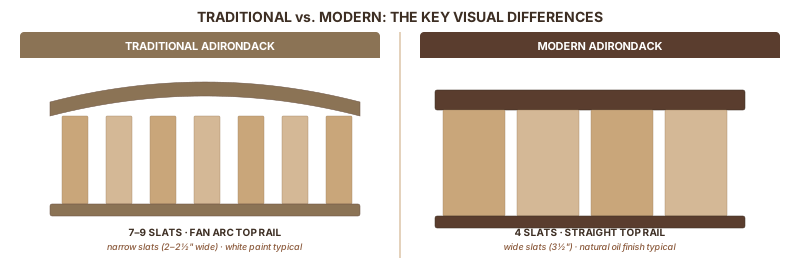
The traditional Adirondack has 7–9 narrow back slats, each about 2"–2.5" wide, arranged in a fan shape with a curved top rail. The look is rustic and heavy. It's the chair that gets painted white and left on a porch for thirty years.
A modern version keeps the anatomy but changes the visual language:
- Fewer, wider back slats — 3–5 slats at 3"–4" each. Less visual noise. The fan shape disappears.
- Square top back rail — a straight horizontal line at the top instead of the fan arc. The most identifiable modern detail.
- Fewer, wider seat slats — 4–6 instead of 7–9.
- Hidden hardware — plugged screws or pocket holes. No exposed screw heads.
- Natural oil finish — shows the wood grain instead of covering it with paint.
- Straight arm profile — one gentle radius at the front, not the traditional ornate S-curve.
What stays the same: the comfort geometry, the rear-leg-as-back-frame structure, the slatted construction with drainage gaps, and the wide arm boards.
This guide uses 4 back slats (each 3½" wide) and 5 seat slats: the simplest modern configuration. No tapering the slats. No curved top rail. Every cut is straight except for one curve on the rear legs and an optional arc on the armrests.
Part 2: Choosing Your Wood
The Beginner's Pick: Western Red Cedar
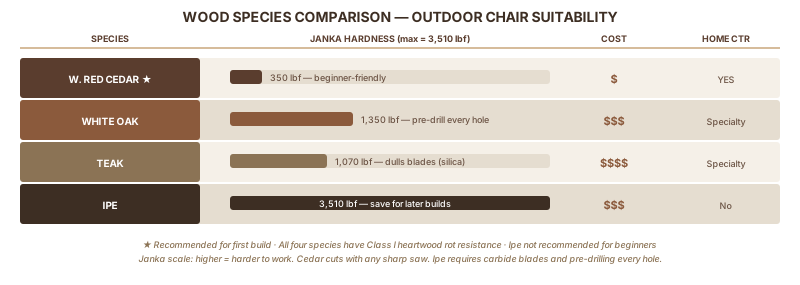
Buy western red cedar from your home center. According to the Western Red Cedar Lumber Association, the heartwood contains natural oils (thujaplicins) that give it Class I rot resistance, the same rating as teak and white oak. The heartwood is the tan-to-pink inner wood; avoid the pale sapwood (outer ring) for parts exposed to weather.
Every Home Depot and Lowe's stocks it in 1x4 and 1x6 boards. Cedar runs roughly 23 lbs per cubic foot, so the finished chair weighs about 20–22 lbs: easy to carry one-handed. At Janka 350 lbf, it cuts cleanly with any saw and bores easily. A full set of lumber for one chair runs about $60–$75.
The one catch with cedar: it dents. Keep clamps padded, don't drop boards on concrete, and use sharp tools. Cedar forgives almost every beginner mistake except physical abuse.
Premium Alternatives
| Species | Rot Resistance | Janka (lbf) | Home Center | Relative Cost |
|---|---|---|---|---|
| Western Red Cedar | Class I (heartwood) | 350 | Yes | $ |
| Cypress | Moderate | 510 | Regional | $$ |
| White Oak | Class I (heartwood) | 1,350 | Specialty | $$$ |
| Teak | Class I | 1,070 | Specialty | $$$$ |
| Ipe | Class I | 3,510 | No | $$$ |
White oak is the upgrade pick for a natural-finish modern chair. According to The Wood Database, tyloses in white oak's pores fill the grain and make heartwood nearly impermeable to water. That's the same property that made it the choice for whiskey barrels. At Janka 1,350 lbf, it's noticeably harder to work than cedar. Pre-drill every hole. Beautiful with a clear hardwood oil.
Teak is the traditional marine and outdoor furniture wood. Natural silica and oils make it weather-resistant. It can be left completely unfinished and will weather to silver-gray in one season. High silica content dulls saw blades quickly, so budget for a fresh blade.
Ipe (Brazilian walnut) is the most durable option at Janka 3,510 lbf, about 10 times harder than cedar. It will last decades outdoors with minimal maintenance. It will also break drill bits and turn a fun first-build into a frustrating one. Save ipe for after you've built a few projects with softer wood.
What to avoid:
- Pressure-treated pine — chemicals and smell; not appropriate for furniture that skin contacts
- Standard SPF pine or poplar — no natural rot resistance; will fail outdoors within a few seasons without constant reapplication of a film finish
- Cedar sapwood — the pale outer ring of cedar boards has much lower oil content than the heartwood; avoid it for end grain, leg bottoms, and any part sitting near the ground
RELATED: Cedar Pergola The same rot-resistance math behind western red cedar — and why it costs less over 20 years than pressure-treated alternatives.
Part 3: The Cut List and Materials
Complete Cut List
This is a modern Adirondack chair using standard 1x4 and 1x6 cedar boards. The dimensions below are derived from the Instructables cedar build with modifications for the wider modern slat configuration. All "1x" boards are actually 3/4" thick at the lumber yard. Nominal dimensions differ from actual.
| Part | Qty | Dimensions | Notes |
|---|---|---|---|
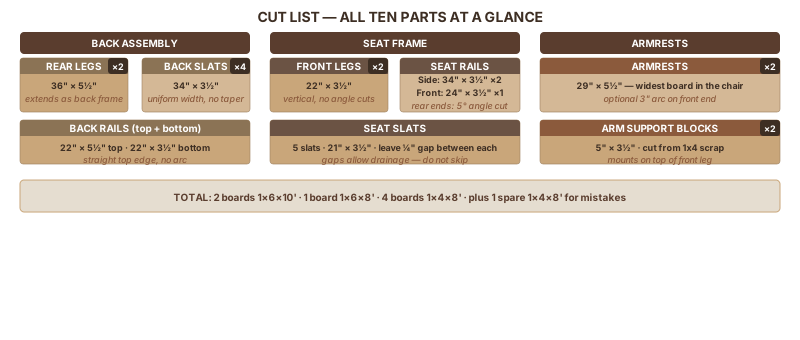
| Rear legs | 2 | ¾" × 5½" × 36" | Cut from 1x6; extends up to form back frame sides |
| Front legs | 2 | ¾" × 3½" × 22" | Cut from 1x4 |
| Seat side rails | 2 | ¾" × 3½" × 34" | Cut from 1x4; rear end gets a 5° angle cut |
| Front seat rail | 1 | ¾" × 3½" × 24" | Cut from 1x4; spans between front legs |
| Seat slats | 5 | ¾" × 3½" × 21" | Cut from 1x4; leave 1/4" gaps between each |
| Back slats | 4 | ¾" × 3½" × 34" | Cut from 1x4; uniform width (no taper) |
| Top back rail | 1 | ¾" × 5½" × 22" | Cut from 1x6; straight top edge |
| Bottom back rail | 1 | ¾" × 3½" × 22" | Cut from 1x4 |
| Armrests | 2 | ¾" × 5½" × 29" | Cut from 1x6; optional front curve |
| Arm supports | 2 | ¾" × 3½" × 5" | Cut from 1x4 scrap |
Lumber to Buy
| Board | Qty | Cut from it |
|---|---|---|
| 1x6 × 10' cedar | 2 | Rear legs (36"), armrests (29") |
| 1x6 × 8' cedar | 1 | Top back rail (22") |
| 1x4 × 8' cedar | 4 | Back slats, seat slats, front legs, rails, arm supports |
Total estimated cost: ~$60–$75 in cedar at a home center (regional prices vary).
Buy one extra 1x4 × 8' as your mistake board. Cedar checks and splits near knots; having scrap is cheaper than a second trip.
Hardware
- #8 × 2" stainless exterior screws — 1 box (50 ct). For slat-to-rail connections.
- #8 × 2½" stainless exterior screws — 1 small box (25 ct). For leg-to-rail connections.
- 3/8" cedar wood plugs — 50 ct (optional, for plugged-screw look)
Stainless steel is non-negotiable. Zinc-plated or galvanized screws will rust within one season and leave orange streaks down your cedar. Stainless screws at a home center cost about $8–$12 for a box of 50. Worth it.
Part 4: Tools and Curves
What You Actually Need
No table saw. No bandsaw. The actual list:
- Miter saw or circular saw — all straight crosscuts
- Jigsaw — for the rear leg profile (one curve per leg) and optional armrest arc
- Drill/driver — screw driving and pre-drilling
- Countersink drill bit (combination countersink/pilot bit) — pre-drill and countersink in one pass; skip this and cedar splits
- Random orbital sander — 80-grit and 120-grit discs
- Clamps — 4 minimum, 6 preferred
- Tape measure, combination square, pencil
- 1/4" spacers — scrap wood pieces for consistent slat gaps
A circular saw and a jigsaw will cut every piece in this chair.
The Two Curves
This design has only two curved cuts. Both happen on flat, unassembled stock.
Curve 1 — Rear leg profile. The rear leg widens slightly toward the top to match the width of the back assembly. Mark a point at the top corner and connect with a gradual curve to the straight leg below. A 5-gallon bucket lid makes a perfect template. Cut with a jigsaw; clean up the edge with 80-grit on the sander.
Curve 2 — Armrest front arc (optional). The front 6" of each armrest can have a gentle arc. Trace a half-circle with a compass set to 3" radius. This is purely aesthetic. Leaving the armrest square reads as modern.
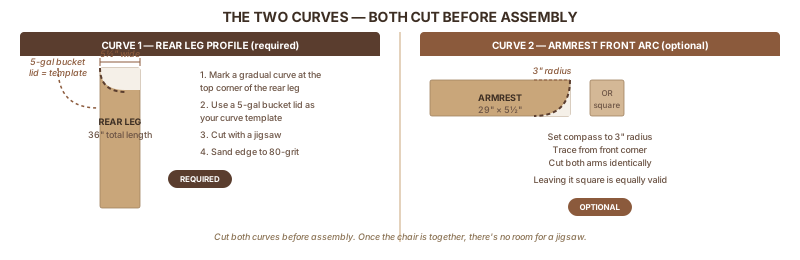
Cut all curves before any assembly. Once the chair is together, getting a jigsaw into the joints is impossible.
Optional Upgrades
- Router with 1/8" roundover bit — runs all edges in one pass; produces the clean, furniture-quality edge that a sander alone won't get
- 3/8" plug cutter — cuts matching cedar plugs from scrap to fill screw holes invisibly
- Pocket hole jig — creates hidden fasteners on slat connections without plugging; Kreg's basic jig ($40) works for this
Part 5: Assembly Sequence
Phase 1: Cut and Sand Everything First
Cut all parts before assembling anything. Sand every board to 120-grit individually. Pay special attention to the faces that will be inside joints after assembly. Those surfaces become inaccessible the moment you drive the first screw.
Two rules for cedar:
- Pre-drill every single screw hole. Cedar splits at ends and edges without a pilot hole.
- Keep padded jaw clamps — bare metal clamp jaws dent cedar.
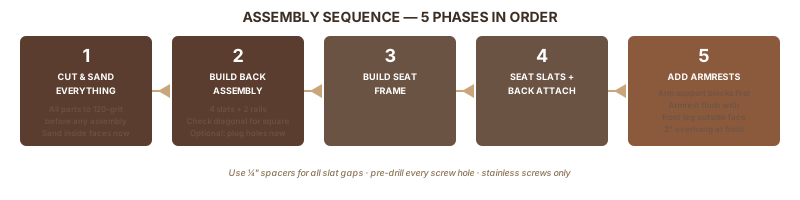
Phase 2: Build the Back Assembly
- Lay the top and bottom back rails parallel on a flat surface, 22" apart (outside-to-outside).
- Arrange 4 back slats evenly across the rails. Use 1/4" scrap spacers between each slat.
- Pre-drill and countersink 2 holes per slat end (8 holes per rail connection, 16 total per slat-to-rail attachment).
- Drive screws. Check diagonal measurements for square before tightening the last slat.
- If plugging: drill a 3/8" × 3/8" deep plug hole over each screw location, drive the screw, glue in a plug, let dry 1 hour, cut flush with a flush-trim saw or sharp chisel.
The back assembly is the visual centerpiece of the chair. Take your time here.
Phase 3: Build the Seat Frame
- Attach the front seat rail between the two front legs. The rail should sit flush with the back face of the front legs, about 1" from the bottom of the legs.
- Attach each seat side rail to its rear leg with 2 screws.
- Attach the front legs (with the front seat rail) to the front ends of the seat side rails.
- Measure diagonals — adjust until square, then tighten all screws.
Phase 4: Seat Slats and Back Attachment
Seat slats: Starting at the front edge of the seat frame, lay the first slat flush with the front of the seat side rails. Use 1/4" spacers between each subsequent slat. Pre-drill and drive 2 screws per slat end into the seat side rails (4 screws per slat, 20 total).
Back attachment: Set the back assembly between the rear legs. The bottom back rail should sit about 2" above the last seat slat. Tilt the back assembly to approximately 45° recline from vertical.
Clamp the back in place and sit down in the frame to test the angle. If it feels too upright, increase the recline. If it's so reclined you can't get up, pull it forward. Mark the position with a pencil on the rear leg faces, then drive 2 screws per leg through the rear leg faces into the back assembly sides.
Phase 5: Armrests
- Screw each arm support block to the top of its front leg (2 screws from inside the leg into the block).
- Set the armrest across the arm support and rear leg. The armrest outside edge should be flush with the outside face of the front leg. The armrest should overhang the front of the front leg by about 2".
- Pre-drill through the armrest top into the arm support (front) and into the rear leg (rear).
- Drive 2 screws at each end. Plug all visible holes.
Common Mistakes
- Zinc or galvanized screws — one season of rain turns them orange and stains the wood; stainless only
- Skipping the pre-drill — cedar splits at end grain within 1" of an edge; drill every hole
- No gaps between slats — water pools, rot follows; keep the 1/4" spacers in place until every screw is driven
- Not sealing end grain — the cut ends of legs and rails absorb moisture aggressively; apply 2 extra coats of any finish to all end grain before the chair sees rain
Part 6: Finishing for Outdoor Use
The Short Answer
Use a penetrating exterior hardwood oil: Cabot Australian Timber Oil, Ready Seal Exterior Stain & Sealer, or any purpose-built outdoor hardwood finish. Apply 2 coats. Wipe on with a rag, let soak for 15 minutes, wipe off the excess. Wait 24 hours between coats.
Cedar is absorbent enough to take the oil well, the oil highlights the natural grain, and annual touch-up coats take about 20 minutes. No sanding between recoats once the surface is clean.
For white oak or teak: same approach. Both species have natural oils that help penetrating finishes bond well.
Finish Comparison
| Finish | Look | Outdoor Durability | Annual Work | Application |
|---|---|---|---|---|
| Penetrating oil | Natural grain, slight amber | Moderate | 1 coat/year | Wipe on, wipe off |
| Spar varnish | Warm gloss film | High | Sand + recoat every 2–3 yr | Brush, multiple coats |
| Exterior paint | Opaque, any color | High | Touch-up every 2–3 yr | Brush/spray, primer first |
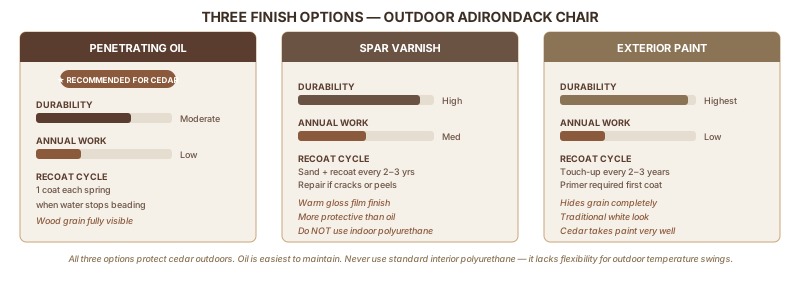
Spar varnish builds a durable film and lasts 2–3 years between recoats. It's more protective than oil, but more work to maintain. If the finish ever cracks or peels, the repair is significant. Don't substitute standard polyurethane — it lacks the flexibility for outdoor temperature swings.
Boiled linseed oil alone is not recommended for outdoor furniture. It offers insufficient UV resistance and stays tacky in humid conditions. If you want an oil finish, use a purpose-built outdoor hardwood oil that contains UV inhibitors and quick-dry additives.
Exterior paint lasts longest and requires the least frequent attention, but you lose the wood grain entirely. If you're going to paint, prime first with an exterior wood primer, then apply 2–3 coats of exterior latex or oil-based paint. Cedar takes paint very well.
Application Steps for Penetrating Oil
- Sand the assembled chair to 120-grit, then 150-grit
- Ease all sharp edges by hand with 150-grit paper or a 1/8" roundover router bit
- Wipe off all dust with a slightly damp rag; let dry 30 minutes
- Pour oil into a small container; apply with a lint-free rag or foam brush
- Work section by section: apply liberally, let soak 15 minutes, wipe off any excess still sitting on the surface
- Let dry 24 hours; apply second coat the same way
- Apply a third coat in the fall before winter storage for the first year
End grain rule: Every cut end absorbs 3–5 times more finish than face grain. Apply your finish to end grain first on each coat. It soaks in completely while you're working on the rest of the chair.
Maintenance
- When to recoat: when water stops beading on the surface and soaks in instead
- Annual spring ritual: scrub the chair with a mild soap and a stiff brush; rinse and dry; apply one fresh oil coat once dry
- Winter storage: if you leave it outside, lean it against a wall or stand it on end so water doesn't pool on horizontal surfaces
Part 7: Variations Worth Building
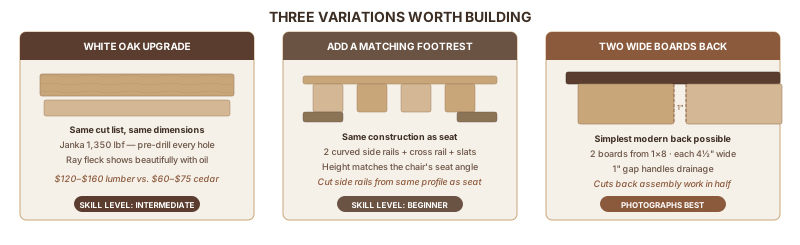
The White Oak Upgrade
Build the same chair with white oak instead of cedar. Same cut list, same dimensions. Sand to 150-grit (oak is harder and needs more work to get clean). Use a sharp countersink bit and pre-drill every hole. Oak at Janka 1,350 will split at end grain without it. Apply 2 coats of hardwood oil and the open grain will show the characteristic ray fleck pattern. A white oak Adirondack finished with natural oil will outlast a painted cedar version by decades.
Budget about $120–$160 in white oak lumber vs. $60–$75 for cedar.
Add a Matching Footrest
An Adirondack footrest (also called an Adirondack ottoman) uses the same basic construction as the seat: two curved side rails, a front cross rail, and 4–5 slats. The footrest sits on its own legs at a height that matches the seat angle. Build the footrest from the same board stock so the grain and finish match. Cut the side rails to the same profile as the chair's seat side rails. The shared curve gives the footrest and chair the same visual language.
A Simpler Back: Two Wide Boards
Replace the 4-back-slat configuration with 2 boards cut from 1x8 stock, each 4½" wide with a 1" gap between them. This produces a very clean, furniture-grade look and cuts the back assembly work nearly in half. The 1" gap handles drainage. Use the same straight top rail. This is the version that photographs best.
Sources
Research for this guide drew on build documentation, wood species references, and manufacturer finish data.
- Instructables Adirondack Chair — cedar cut list, construction sequence
- BobVila Adirondack Chair Plans — plan types overview, build time estimates
- The Wood Database — Janka hardness values and rot resistance classifications by species
- Western Red Cedar Lumber Association — cedar heartwood properties, outdoor use guidance
- Titebond — Titebond III waterproof wood glue specifications
- Kreg Tool — pocket hole joinery for outdoor furniture
Wood Species
Also Referenced
How We Research
We don't take affiliate revenue or accept review units. Picks come from multi-source research — manufacturer specs, OSHA / EPA / ASTM regs, and long-form practitioner threads — plus Ahmed's hands-on use where relevant. When we recommend something, we explain why.