
Miter Joints at a Glance
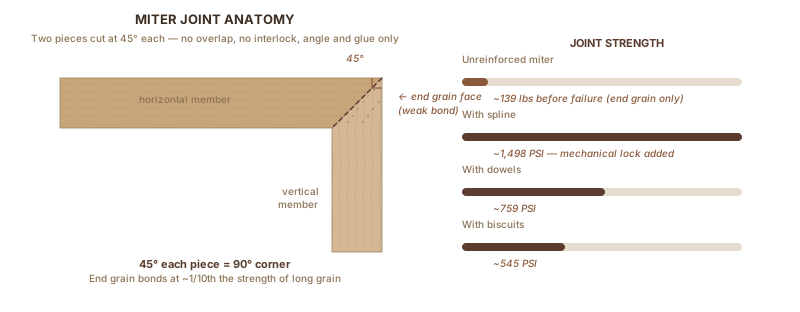
A miter joint is a corner connection where two pieces meet at complementary angles — typically 45° each — to hide end grain along the seam, producing a clean visual finish at the cost of structural strength. Without reinforcement, glue strength across end grain is roughly 1/10th of a long-grain bond, making the joint suitable for light picture frames but inadequate for boxes, casework, or anything load-bearing. Reinforce with splines, biscuits, or dowels when durability matters. Throughout the cut, angle consistency matters more than raw precision — a 0.5° error repeated across four corners produces a gap no clamp can close.
| Joint type | End-grain to end-grain — hides end grain at corners |
| Common angle | 45° each side for a 90° corner |
| Glue strength | ~1/10th of a long-grain bond without reinforcement |
| Unreinforced failure | ~139 lbs of force |
| Reinforced (spline) | ~1,498 PSI tensile strength |
| Best method | Table saw + miter sled for furniture; miter saw for trim |
In this guide:
- Choosing a cutting method and verifying your angle
- Assembly, clamping, and glue selection
- Reinforcement options — splines, dowels, biscuits
- Troubleshooting gaps and weak joints
Part 1: What a Miter Joint Is and Why It Matters
A miter joint connects two pieces at complementary angles that add up to your desired corner. The most common: two 45° cuts meeting to form a 90° corner. The two pieces come together end-grain-to-end-grain, with no overlap or interlock. No rabbet. No dado. No shoulder. Just angle and glue.
Why people use miters:
Aesthetics. A rabbet or butt joint shows a hard line where two pieces meet. A miter hides it. The grain appears to flow continuously around the corner. On a picture frame, a nice table, a decorative box, that's what separates furniture you made from furniture that looks finished.
The structural problem:
Miters are weak. Not slightly. Weak enough that most people reinforce them without realizing why.
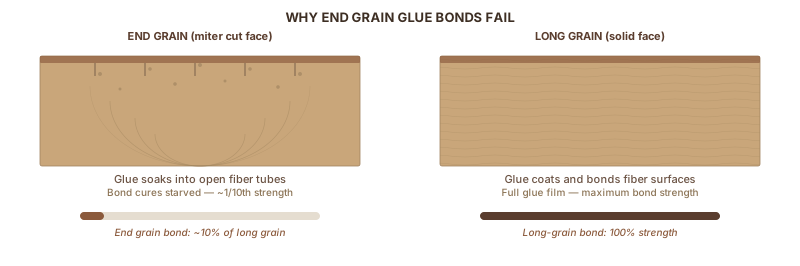
Glue bonds best when both surfaces are long grain. The fibers run parallel to the joint line and absorb the glue evenly. Long-grain bonds hold solid.
End grain soaks up glue too fast, creating a starved joint. The glue sits on the surface instead of bonding through. Woodweb's glue science reference puts end-grain bond strength at roughly 1/10th of a long-grain bond. In Dowelmax's joint strength tests, an unreinforced miter failed at just 139 pounds of force.
Add reinforcement — a spline, a dowel, a biscuit — and that jumps to 500+ pounds. Not because the glue gets stronger. The joint now has mechanical strength independent of glue. The reinforcement bridges the weak bond.
Where miters belong:
Unreinforced: light frames only. Picture frames, small boxes, decorative trim. Anything you'll hang on a wall and forget about.
Reinforced: furniture that moves and gets used. Table aprons, drawer fronts, cabinet frames. Anything that takes weight or stress.
Part 2: Miter Angle Geometry
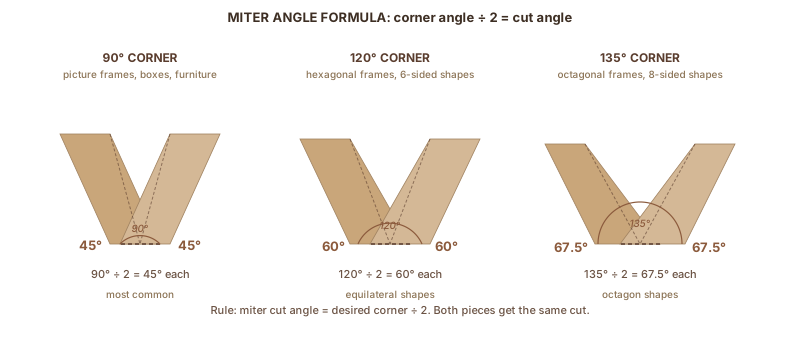
The formula is simple: miter cut angle = desired corner angle ÷ 2. Woodgears.ca has a good visual walkthrough of this for non-standard angles.
For a 90° corner, cut each piece at 45°. For a 120° corner, cut at 60° each. For a 135° corner, cut at 67.5° each. Two complementary angles add up. Two 45° angles = 90°.
The stack-up problem:
A picture frame has four corners — eight cuts. Katz-Moses Tools spells this out clearly: if each cut drifts by 0.1°, the error stacks to 0.8°. The frame won't close. Opposite corners gap.
Consistency beats precision. A saw set to 45.1° for all eight cuts yields a perfect frame. A saw that hits 45.0°, 45.1°, 44.9°, 45.0° produces gaps at every corner.
When gaps become visible:
On a 3-inch frame piece, a 1° error creates a visible gap — you can see it with your eye. On a 6-inch piece, 0.5° is noticeable. On a small project, 0.1° error per cut might be acceptable. On a large project with many corners, it compounds.
The 45.5° strategy:
Professional framers cut slightly sharper than 45° — say 45.5°. Family Handyman calls this "saving a lot on plastic wood" — the gap ends up at the back of the joint where it's invisible. This works only if both pieces match.
Part 3: Five Ways to Cut a Miter
| Method | Precision | Speed | Cost | Best For |
|---|---|---|---|---|
| Table saw + miter sled | High | Medium | $50-200 | Fine furniture, repeatable frames |
| Miter saw (chop saw) | Medium | Fast | $200-400 | Trim, rough construction, speed |
| Router table + 45° bit | Very High | Slow | $40 bit + router | Small stock, cabinet edges |
| Hand plane + shooting board | Very High | Slow | $50-150 plane | Ultimate control, satisfying |
| Circular saw + guide | Medium | Fast | $30-100 guide | On-site work, large stock |
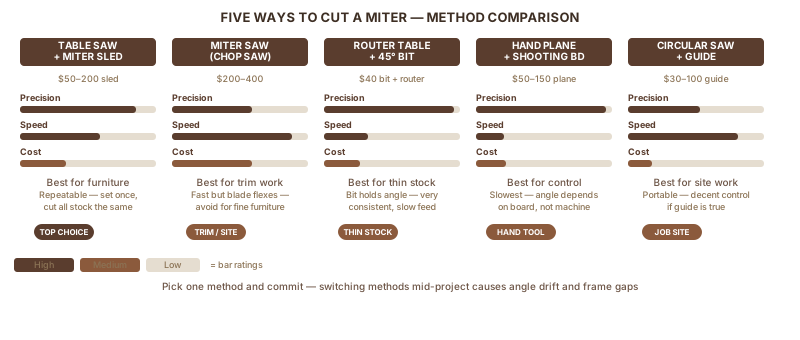
Table saw + miter sled: Standard shop method. Build a sled with a 45° fence, run stock through. Advantage: repeatable — set once, every cut is the same. Disadvantage: depends on your saw's accuracy and fence building. Test-cut before committing stock.
Miter saw (chop saw): Fast. Line up, pull trigger, done. The blade flexes under load and the pivot arm drifts slightly. Good for trim. Poor for furniture joints. If you're still picking a saw, Compound Miter Saw vs Miter Saw covers the first-buy decision.
Router table with 45° bit: Clamp a 45° chamfer or V-groove bit in the table, run the edge past it. The bit holds the angle, not your setup, so it's very consistent. Infinity Tools has a good walkthrough. Limit: stock up to 3/4 inch before the bit runs out of flute. Slow — hand-feed only.
Hand plane and shooting board: A shooting board is plywood with a 45° fence. Hold your stock against it, plane the edge with a sharp plane. Full control. You feel when you're done. The angle depends only on the board, not machine calibration. Slowest method. Most accurate once you learn it.
Circular saw and guide: Clamp a straight edge at 45° and run the saw along it. Portable, good for site work. Decent control if the edge is true. Simpler setup than a sled, less precise.
Pick one and commit. Switching methods mid-project causes angle drift and frame gaps. Choose, test-cut, dial it in, then cut all stock the same way.
Part 4: How to Verify Your Miter Angle
Before you glue anything, verify that your angle is actually 45° (or whatever you set it to).
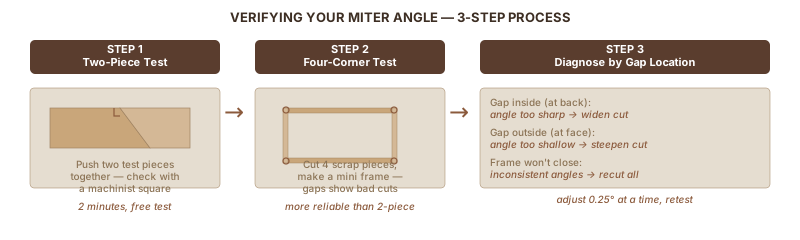
The 90-degree assembly test: Cut two test pieces on scrap. Push them together. They should form a perfect 90° corner with no gap. Check with a machinist's square or adjustable square. If there's a gap, adjust and try again.
The four-corner scrap test: Better: cut four scrap pieces and make a tiny frame. Push all four corners together flat on your bench. If one corner gaps, that cut is off. Usually the last piece cut, meaning your saw drifted.
Diagnosing gaps: Gap on the inside = your cut was too shallow (angle too wide). Gap on the outside = your cut too deep (angle too sharp). Adjust a quarter turn and retest.
Do this every time you set up. Two minutes. Beats an hour of glue-up frustration.
Part 5: Assembly, Clamping, and Glue Selection
A miter joint is all glue. There's no mechanical lock, no interlock, nothing holding it together except the adhesive. That puts pressure on both the glue and the clamp setup.
Clamping methods:
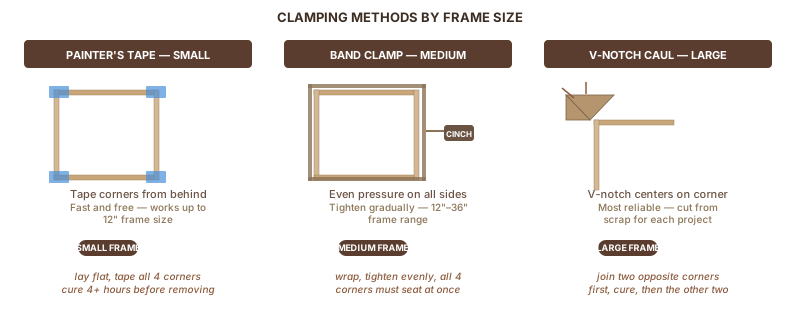
Small frames: blue painter's tape. Lay the frame flat, apply glue, tape the corners from behind. Simple and fast.
Medium frames: band clamp or web clamp. Wrap it around the frame, tighten gradually. Keep pressure even on all four corners.
Large frames: cut cauls — wood blocks with a V-notch cut into them. Clamp the cauls across the corners. The V-notch centers pressure on the miter. Fine Woodworking's clamping guide covers this in detail. Most reliable method.
Glue selection:
PVA glue (Titebond Original, Elmer's) is standard but soaks into end grain too fast, starving the joint. The fix is the glue-size technique from Woodweb: apply 50/50 water and glue to end-grain surfaces, let it dry (15 minutes), then apply full-strength glue and clamp. The water pre-fills the fibers so full-strength glue doesn't vanish.
Titebond Quick & Thick is thicker and slower-setting, which helps. Same glue-size technique applies.
Polyurethane glue (Gorilla Glue, Titebond III) works better on end grain — it doesn't soak like PVA. It expands as it cures, pushing the joint together. No glue-sizing needed, though it doesn't hurt. Clean up immediately with water.
The glue-size technique in detail:
Mix 50/50 PVA and water. Brush it onto both end-grain surfaces of your miter. Let it dry — the wood will feel slightly fuzzy and slightly stiff. This is the glue soaking into the fibers. After 15 minutes, brush full-strength glue onto the same surfaces and clamp immediately. The joint holds much better because the glue isn't starved.
Assembly sequence for large frames:
Join two opposite corners first, let the glue cure overnight, then join the other two. Fine Woodworking's glue-up guide recommends this phased approach. Two clamps at a time are easier to manage.
Part 6: Reinforcement: Splines, Dowels, and Biscuits
Reinforcement is not optional for anything beyond a picture frame. Dowelmax's strength tests make the case clearly:
- Unreinforced miter: ~139 lbs before failure
- Splined miter: ~1,498 PSI tensile strength
- Doweled miter: ~759 PSI tensile strength
- Biscuited miter: ~545 PSI tensile strength
That's the difference between a corner that jiggles and one that's solid.
| Reinforcement | Strength | Visibility | Difficulty | Best For |
|---|---|---|---|---|
| Spline | Very High | Visible if done intentionally | Moderate | Show frames, decorative boxes, emphasizing the joint |
| Dowel | High | Hidden | Moderate | Furniture, drawers, anything you'll stress |
| Biscuit | Good | Hidden | Easy | Frames, trim, quick jobs |
| Dovetail Key | Very High | Visible | Hard | Decorative corners where strength and looks matter |
| Lock Miter | Very High | Hidden | Very Hard | Cabinet-grade work, high-precision setups |
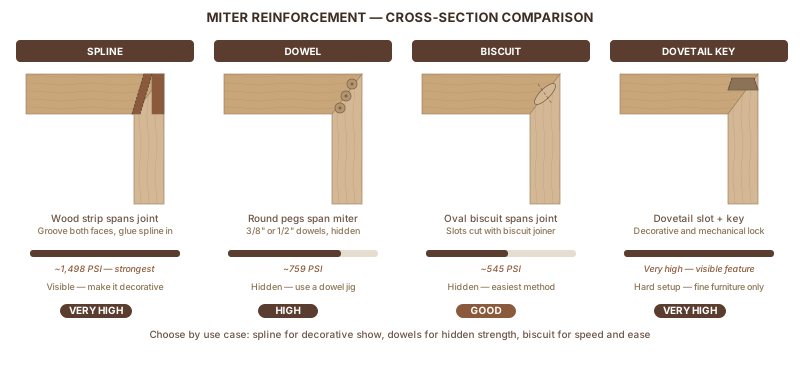
Splines: A wood strip glued into a groove that runs along the miter. Cut a groove into each piece (1/4" deep, 1/4" wide), then glue a spline spanning both. Fine Woodworking's spline guide covers the technique in depth. The spline locks the joint and becomes part of the design. Cut the groove with a table saw sled or router. Easy. Very strong.
Dowels: Drill two or three dowel holes across the miter line (3/8" or 1/2" dowels) and glue dowels into them. Hidden, very strong. Use a cordless drill and dowel jig. A drill press makes alignment easier.
Biscuits: Cut a 1/4" slot into each piece's edge and glue a biscuit spanning both. Stronger than glue alone but weaker than dowels or splines. Very easy — a biscuit joiner handles all the work. For the full cutting and assembly technique, see Biscuit Joints.
Dovetail keys: Cut a dovetail-shaped slot across the miter line and glue a dovetail key into it. Very strong, very decorative. Hard to set up. Worth it only for fine furniture.
Lock miter: A manufactured profile requiring a specific bit and router table. Very strong, completely hidden. Needs precision setup. Common in cabinet shops.
How to choose:
Stress on the joint (table frame, drawer, moved often)? Reinforce it. Purely decorative (picture frame on a wall)? Skip it.
For speed and simplicity: biscuit joints. For hidden strength: dowels. For visible, decorative reinforcement: splines. For high-end work: lock-miter bit.
Part 7: Troubleshooting Gaps and Weak Joints
Gaps that won't close:
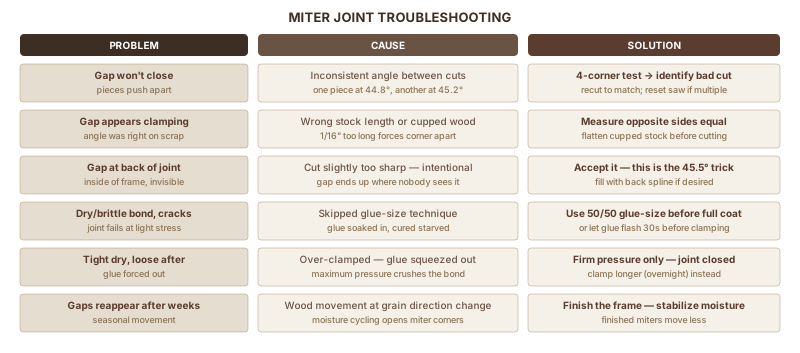
Most common cause: inconsistent angle. Test cuts showed 45°, but one piece was 44.8° and another 45.2°. When pushed together, they gap.
Solution: Use the four-corner test to identify which piece is wrong. Recut carefully to match the others. If multiple pieces are wrong, your saw has drifted. Reset using the 90-degree test and recut everything.
Angle was right but gaps appeared during clamp-up:
Usually the stock length is wrong. If one piece is 1/16" too long, it forces the corner apart. Measure pieces carefully. Opposite sides should be equal length.
Less common: the wood is cupped (curved across the face). Clamping straightens the curve and the joint gaps. Flatten stock before cutting miters.
Gap at the back of the joint (inside the frame):
Actually okay. Your angle is slightly too sharp, but the gap is invisible. Professional framers do this on purpose. Fill it with a thin back spline if you want, or accept it.
Starved glue joint (dry, brittle bond that cracks):
You skipped the glue-size technique. The glue soaked into end grain and cured starved. Prevention: glue-size before full-strength glue. If you're about to clamp, apply glue, let it flash for 30 seconds, then clamp.
Joint is tight dry but loose after clamping:
Your clamp pressure was too high and squeezed out all the glue. Apply firm pressure, not maximum. You need the joint closed, not crushed. Reduce clamp pressure and clamp longer (overnight instead of 4 hours).
One corner of a four-corner frame is loose, others tight:
The loose corner was probably cut last and your saw drifted. Check the angle with a square. Likely off by 0.25° or more. Recut that corner or accept it if it's not critical.
Gaps reappear after weeks:
Wood movement. Fine Woodworking explains why: the frame absorbs and releases moisture seasonally, and mitered corners gap because grain direction changes at the joint. The gap is tiny (1/64" or less) but visible in light. Prevention: finish the frame (stain and topcoat) to stabilize moisture. Finished miters move less.
Part 8: Miters vs. Other Corner Joints
| Joint | Strength | Appearance | Difficulty | Best For |
|---|---|---|---|---|
| Miter | Weak (unless reinforced) | Clean, hidden seam | Medium | Picture frames, boxes, trim |
| Butt Joint | Weak | Visible end grain | Easy | Quick frames, rough work |
| Rabbet | Stronger | Visible from one side | Easy | Frames where you hide the seam with a lip |
| Mortise & Tenon | Very Strong | Visible but intentional | Hard | Furniture, structural joints, fine pieces |
| Dovetail | Very Strong | Decorative, visible | Hard | Drawer boxes, high-end work |
| Box Joint | Strong | Decorative, visible | Medium | Boxes, drawer fronts, modern style |
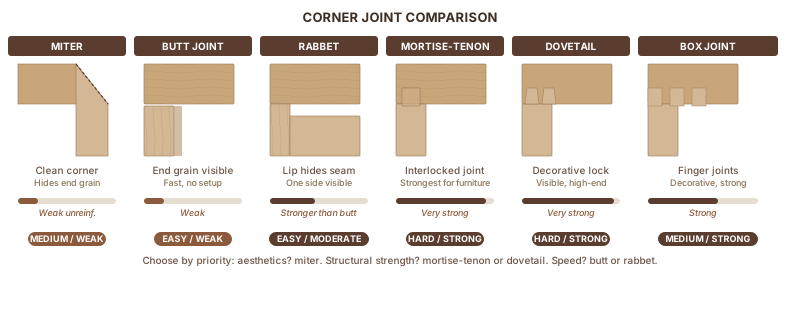
When to use each:
Appearance matters? Use a miter (clean) or dovetail (decorative). Appearance doesn't matter? Use a butt joint or rabbet (faster).
Light stress (picture frame)? Miter. Medium stress (drawer)? Rabbet or reinforced miter. Heavy stress (table frame)? Mortise & tenon or dovetail.
Decorative box with visible corners: dovetails. Picture frame: miter. Drawer in a table: reinforced miter or mortise & tenon.
Where This Fits
Related guides:
- Dados, Rabbets & Grooves — other ways to join two pieces and the geometry behind each
- Edge Joints & Panel Glue-Ups — the long-grain joints that are stronger than miters
What to learn next:
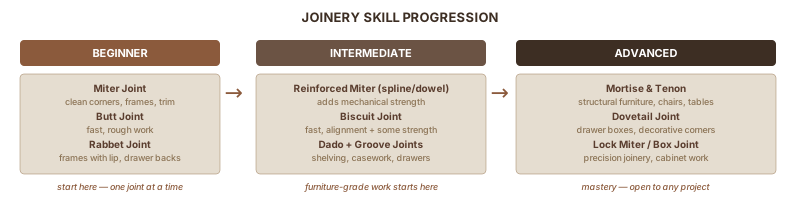
If you're building frames, learn finishes and surface prep. If you're building furniture, mortise-and-tenon joinery is the stronger alternative to reinforced miters. If you're doing decorative work, dovetails are the next skill that opens up new projects.
Sources
The strength data, glue science, and cutting techniques in this guide come from lab-tested research, manufacturer references, and professional woodworking publications.
- Woodweb: End Grain to End Grain Gluing — end-grain weakness, glue-size technique
- Dowelmax Wood Joint Strength Tests — tested strength data for miter reinforcement methods
- Woodgears.ca: Making Splayed Miter Joints — non-90° angle calculations, polygon geometry
- Katz-Moses Tools: 7 Tips for Better Miter Joints — tolerance stack-up, practical tips
- Family Handyman: 14 Expert Tips for Tight Miters — visible gap thresholds, 45.5° strategy
- Infinity Tools: How to Cut Miter Joints at the Router Table — router method for thin stock
- Fine Woodworking: Clamping Tricks for Mitered Frames — clamping cauls, band clamps, assembly sequence
- Fine Woodworking: Three Ways to Glue Up Miters — assembly techniques, glue selection
- Fine Woodworking: Strengthen Miter Joints with Splines — spline technique, grain direction
- Fine Woodworking: Not All Miters Need Reinforcement — when to reinforce, wood movement effects
- Rockler: How to Cut Perfect Miter Joints — cutting method comparison
- Rockler: Doweling vs. Biscuit Joints — reinforcement method comparison
- This Old House: How to Mend Miter Joints — gap causes, repair methods