
Cedar Pergolas at a Glance
Cedar pergolas cost more upfront than pressure-treated pine but typically save $2,000-5,000 over 20 years once you factor in maintenance frequency and replacement probability. Western Red Cedar resists rot naturally through thujaplicin compounds concentrated in the heartwood, holds its shape through temperature swings better than any common softwood, and accepts stain the day you finish building. The real question isn't cedar vs. pressure-treated. It's which parts get which material.
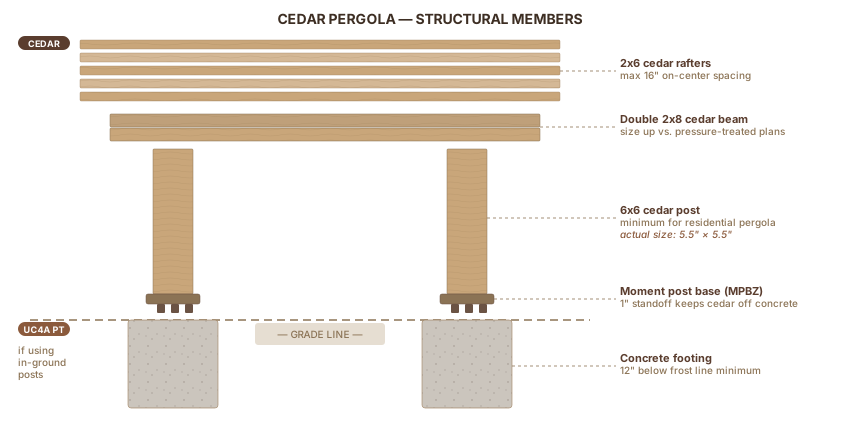
| Best approach | Cedar above ground, UC4A pressure-treated for in-ground posts |
| Upfront cost (12x12, installed) | Cedar ~$4,200 vs. PT ~$3,200 |
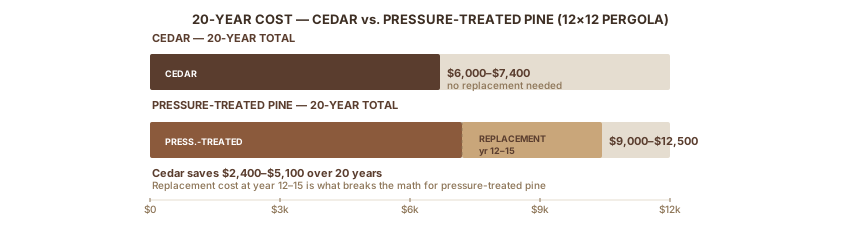
| 20-year total cost | Cedar $6,000-7,400 vs. PT $9,000-12,500 |
| Cedar lifespan (maintained) | 25-40 years above ground |
| Key hardware | 304 stainless steel screws; ZMAX structural connectors |
| Posts | 6x6 minimum for most residential pergolas |
In this guide:
- Cedar vs. pressure-treated: the honest comparison
- Sizing beams, rafters, and posts for your pergola
- Construction details that prevent early failure
- Finishing, maintenance, and the ten mistakes that ruin cedar pergolas
Part 1: Cedar vs. Pressure-Treated: The Honest Comparison
A 12x12 cedar pergola costs about $1,000 more to build than the same structure in pressure-treated pine. That gap closes by year 8 and reverses by year 15.
Why Cedar Costs More Now but Less Later
Pressure-treated lumber changed in 2003. The EPA phased out CCA (chromated copper arsenate) for residential use and replaced it with ACQ and copper azole treatments. Old CCA-treated wood lasted 30-40 years. According to Advantage Lumber's comparison, modern ACQ-treated pine typically lasts 10-15 years before structural degradation begins, sometimes less in humid climates.
Cedar's natural protection comes from thujaplicin, a fungicidal compound that The Wood Database notes makes up 0.5-2% of heartwood dry weight. It doesn't wash out. It doesn't require reapplication. It works as long as the wood is intact.
A 20-year cost comparison for a 12x12 pergola with DIY maintenance:
| Cost Component | Cedar | Pressure-Treated |
|---|---|---|
| Build cost (installed) | $4,200 | $3,200 |
| Stain/seal cycles (7 at $175) | $1,225 | $1,750-3,500 (more frequent) |
| Repairs over 15-20 years | $400-1,200 | $800-2,000 |
| Likely replacement at year 12-15 | $0 | $3,200+ |
| 20-year total | $6,000-7,400 | $9,000-12,500 |
The replacement cost is what breaks the math. If your PT pergola needs full replacement at year 12-15, you're paying the original build cost again plus $300-600 for demolition. Cedar pergolas at that age typically need spot repairs, not rebuilds.
Side-by-Side Comparison
| Factor | Western Red Cedar | Pressure-Treated Pine (SYP) |
|---|---|---|
| Natural decay resistance | Yes (heartwood only) | No (chemical treatment) |
| Bending strength (No. 2) | Fb 700 psi | Fb 1,500 psi |
| Weight | 21 lb/ft3 | 34 lb/ft3 |
| Dimensional stability | Excellent | Poor when green; warps as it dries |
| Accepts stain immediately | Yes | No (2-6 month drying wait) |
| Fastener requirement | Stainless steel | Hot-dip galvanized or stainless |
| Material cost (installed/sq ft) | $18-28 | $12-18 |
| Maintenance cycle | Every 2-3 years | Every 1-2 years |
| Maintained lifespan | 25-40 years | 15-25 years (post-2003 ACQ) |
The Hybrid Approach
Most experienced builders use the same strategy: pressure-treated posts where wood contacts or approaches ground, cedar for everything above.
UC4A pressure-treated lumber (0.40 lb/ft3 retention minimum per AWPA standards) outperforms cedar heartwood in ground contact. Cedar's thujaplicins work well above grade but can't match chemical treatment when wood sits in perpetually damp soil. Using PT posts in concrete footings below frost line and cedar for beams, rafters, and slats gives you the best of both materials.
How Climate Changes the Decision
Your climate zone matters more than most pergola articles acknowledge. Rot, UV, and freeze-thaw cycles affect cedar and PT differently depending on where you live.
| Climate Zone | Above-Ground Material | In-Ground Posts | Seal/Stain Cycle | Primary Threat |
|---|---|---|---|---|
| Humid Southeast | Cedar preferred | UC4A PT | Annual | Rot, mold, termites |
| Pacific Northwest | Cedar (WRC native) | UC4A PT or post base | Every 2-3 years | Rot, surface mold |
| Dry Southwest | Cedar or Douglas fir | PT or helical anchor | Every 1-2 years | UV degradation |
| Freeze-Thaw Northeast | Cedar strongly preferred | UC4A PT below frost line | Every 2-3 years | Checking, frost heave |
| Upper Midwest | Cedar | UC4A PT below frost line | Every 2-3 years | Freeze-thaw, moisture |
| Coastal (any) | Cedar + stainless fasteners | PT with stainless hardware | Annual | Salt air, corrosion |
Cedar handles freeze-thaw better than PT pine. Wright Timber Frame explains that its lower density and straight grain resist the checking (splitting along the grain) that happens when trapped moisture freezes and expands. In the Northeast and Midwest, this is cedar's strongest advantage.
In the humid Southeast, both materials need aggressive maintenance. Cedar's thujaplicins provide meaningful insect resistance but don't eliminate termite risk in Formosan termite zones. Annual sealing is mandatory in this region regardless of material choice.
Part 2: Sizing Beams, Rafters, and Posts
There's no IRC span table written specifically for pergolas. The Journal of Light Construction confirmed it: "There are no prescriptive structural standards for shade structures." Builders adapt deck framing tables from AWC DCA 6 and engineer from there.
Cedar is 10-15% weaker in bending than Southern Yellow Pine. Any plan designed for PT lumber needs members one size larger when built in cedar, or spans reduced accordingly.
Posts
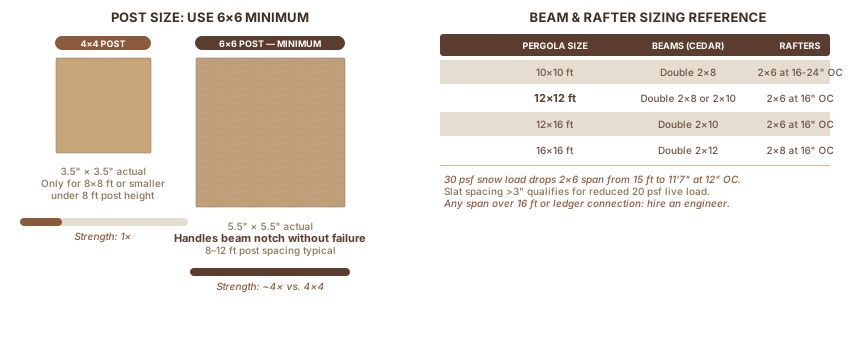
Use 6x6 posts for any residential pergola. A 4x4 works only on structures 8x8 feet or smaller with post heights under 8 feet. The 6x6 has roughly 4 times the bending strength and 6 times the stiffness of a 4x4 in the same species. It also handles beam notches without critical strength loss, which 4x4 posts can't.
Standard post spacing: 8-12 feet on center. Ten feet is the most common.
Beams and Rafters
| Pergola Size | Posts | Beams (Cedar) | Rafters (Cedar) |
|---|---|---|---|
| 10x10 ft | 6x6, corners | Double 2x8 | 2x6 at 16-24" OC |
| 12x12 ft | 6x6, corners | Double 2x8 or 2x10 | 2x6 at 16" OC |
| 12x16 ft | 6x6, consider intermediate | Double 2x10 | 2x6 at 16" OC |
| 16x16 ft | 6x6 (4-6 posts) | Double 2x12 or triple 2x10 | 2x8 at 16" OC |
Maximum rafter spacing: 16 inches on center. This aligns with building code for structures that could receive future loads (shade cloth, climbing plants) and keeps rafters from looking spindly.
Maximum cantilever: 24 inches for beams past the post centerline, 21 inches for rafters past the beam.
Snow load changes everything. A 30 psf snow load reduces a 2x6 rafter span from about 15 feet to 11 feet 7 inches at 12-inch spacing. If you're building in snow country with rafters spaced less than 3 inches apart (nearly a solid roof), full snow load applies. Open slat spacing above 3 inches uses a reduced 20 psf live load.
When to Hire an Engineer
Call a structural engineer before building if any of these apply:
- Any beam span over 16 feet
- Snow load exceeds 30 psf in your area
- Pergola attaches to your house (ledger connection engineering)
- You're in a high seismic zone
The cost of engineering ($300-800 for a residential pergola) is small compared to rebuilding a structure that deflects, racks, or fails.
Part 3: Construction Details That Prevent Early Failure
Four construction details separate a cedar pergola that lasts 15 years from one that lasts 35. Most plans skip all four.
Post-to-Ground Connections
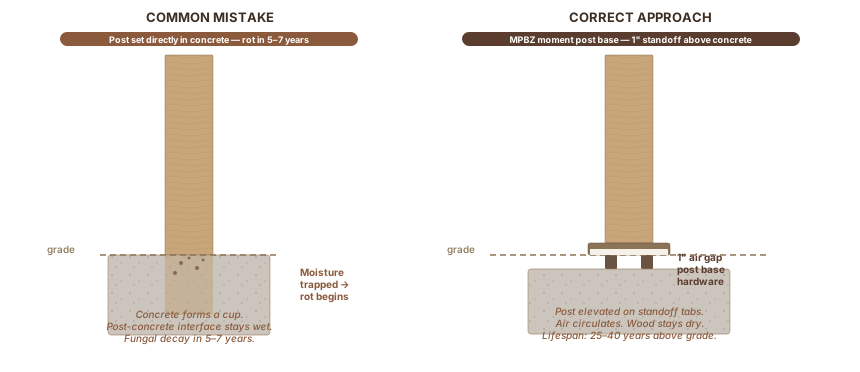
Most pergolas fail at the post base first. A cedar post set directly into concrete traps moisture at the wood-concrete interface. Fungal decay starts at that contact point and works upward. In humid climates, expect failure in 5-7 years. Even in dry climates, 10-15 years is typical.
Best option: Simpson MPBZ Moment Post Base. This hardware keeps the post 1 inch above the concrete on built-in standoff tabs and provides moment resistance (lateral load capacity). It's the first off-the-shelf connector designed to resist both vertical and lateral forces on a freestanding post. Available for 4x4, 6x6, and 8x8 posts. Requires 2,500 psi minimum concrete.
Good option: Simpson APB Adjustable Post Base with knee braces. The APB provides a 1-inch standoff with adjustable positioning. Add 2x4 or 2x6 knee braces at 45 degrees at each post-to-beam junction for lateral resistance.
Avoid: posts set directly in concrete without hardware. This is how fence posts are installed, not structural pergola posts. The concrete forms a cup that traps water against the wood permanently.
Hardware That Won't Stain Your Cedar
Cedar tannins react with zinc. As Pro Deck TN documents, electroplated zinc screws and nails leave black staining within one to two seasons and corrode at the fastener hole, opening pathways for moisture.
Use 304 or 316 stainless steel screws for all cedar-to-cedar connections. For structural connectors (post bases, beam hangers, hurricane ties), use Simpson ZMAX-coated or hot-dip galvanized hardware.
One rule: don't mix stainless steel screws with standard galvanized brackets. As Builders Stainless explains, the contact between dissimilar metals creates galvanic corrosion that accelerates zinc breakdown. Use one metal system consistently at each connection.
Beam-to-Post Joinery
Post caps let the beam sit on top of the full post, preserving the entire cross-section for vertical loads. Notching cuts a pocket in the post for the beam to rest in. You get positive bearing but lose structural material.
Notching works when the notch is shallow relative to the post. A 3-4 inch notch in a 6x6 post (5.5 inches actual) leaves enough material for most residential loads. Notching to receive a double 2x10 beam removes over 60% of the post width. At that point, use a post cap instead.
Drainage and End-Grain Protection
End grain absorbs moisture 5-10 times faster than face grain. Every rafter tail, beam end, and field cut is a moisture entry point. Seal all end grain before assembly with a wax-based end sealer or borate-based preservative.
Angle your rafter tail cuts so water runs off instead of pooling on the end grain. Slope the top surface of concrete footings so water drains away from the post base hardware. Maintain at least 6 inches of clearance between the lowest structural member and the ground.
Part 4: Finishing and Maintaining Your Cedar Pergola
Which Finish System to Use
Penetrating oil-based stains outperform film-forming finishes on outdoor cedar. They soak into the wood rather than sitting on top, so they don't peel. When they wear, you clean and recoat without stripping.

Top choices:
- TWP 100 Pro Series — 25+ years on the market, 2-3 year reapplication cycle on horizontal surfaces. DeckStainHelp's independent testing on a cedar deck showed zero peeling after 2 years of full sun exposure. Not available in California, New York, or Massachusetts (VOC regulations).
- Armstrong Clark Wood Stain — Equivalent performance to TWP 100, available in all 50 states. Good option if TWP isn't sold in your area.
- Sikkens Proluxe Cetol SRD — Best UV resistance for high-sun exposures. More film-forming than pure penetrating oils, which means it can peel if applied too thick. Best fit for the Southwest and other high-UV climates.
Don't stain new cedar immediately. Freshly milled cedar off-gasses natural oils that repel finishes for several months. Wait 6 months. Apply borate preservative and end-grain sealer at installation. When you're ready to stain, clean the wood with an oxalic acid brightener and confirm moisture content is below 15% with a meter.
Prep work drives 70% of finish performance. A coat of premium stain over a dirty, mill-glazed surface fails in one season. A properly cleaned and brightened surface with a mid-range stain holds for three years.
The 20-Year Maintenance Schedule
| When | What to Do |
|---|---|
| Installation | Seal all end grain. Apply borate preservative to post bases. No stain yet. |
| 6 months | Clean with oxalic acid brightener. Apply first coat of penetrating oil stain. |
| Year 1 | Inspect post bases for corrosion. Probe post bottoms with a screwdriver. Check that water still beads on stained surfaces. |
| Years 2-3 | Recoat horizontal surfaces (rafters, beam tops) when water stops beading. |
| Years 5-7 | Pressure wash at 1,500-2,000 PSI maximum (higher damages cedar grain). Brighten. Full restain all surfaces. Inspect and tighten all hardware. |
| Every year after | Spring: inspect hardware, probe post bottoms, check finish. Fall: clear debris from slats, trim vines, remove standing water. |
Warning Signs That Need Immediate Attention
- A screwdriver sinks more than 1/4 inch into a post. That's active rot. Replace the post before structural failure.
- Rust-colored staining around hardware. Galvanic corrosion is destroying your connectors. Replace the hardware with the correct metal.
- Dark discoloration around bolt holes. Moisture is penetrating at fastener points. Treat with borate solution and consider adding flashing.
- Visible mid-span deflection in a beam. Either the beam is undersized or rot has compromised it. Get a structural assessment before it fails under load.
Part 5: Ten Mistakes That Ruin Cedar Pergolas
-
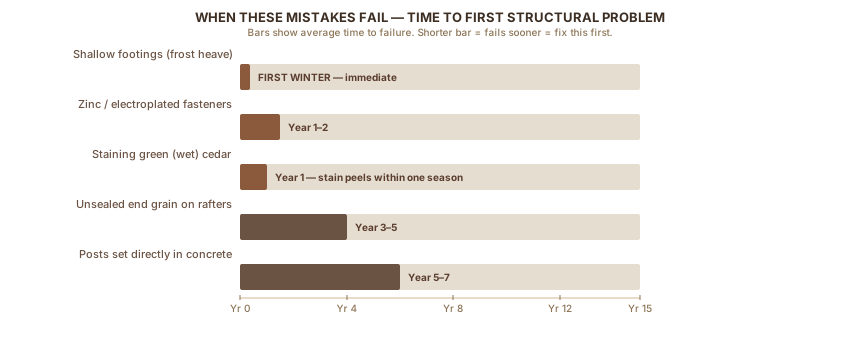
Posts in concrete without a standoff base. Moisture trapped at the concrete-wood interface causes rot in 3-7 years. Use post base hardware with at least a 1-inch standoff.
-
Undersizing beams because the plan was for pressure-treated. Cedar is 10-15% weaker in bending than SYP. A double 2x8 PT beam becomes a double 2x10 in cedar, or the span needs to shrink.
-
Using electroplated zinc fasteners. Cedar tannins dissolve the thin zinc coating. Black staining appears in one to two seasons. Corrosion follows. Use stainless steel.
-
No lateral bracing. Standard post caps resist vertical loads but not wind. A pergola without knee braces or moment-resisting post bases racks in storms and loosens over time.
-
Shallow footings. Footings that don't reach below the local frost line lead to seasonal post heaving. Check your local frost depth (36-48 inches in most of New England, 24-36 inches in the Mid-Atlantic) and dig 12 inches below it.
-
Skipping the building permit. Attached pergolas almost always require a permit. Many jurisdictions require permits for freestanding structures over 120-200 square feet. An unpermitted structure can complicate insurance claims and home sales.
-
Not sealing end grain before assembly. Rafter tails and beam ends are the first places rot appears. End grain absorbs moisture 5-10 times faster than face grain. Seal every cut before the piece goes up.
-
Staining green wood. Cedar fresh from the mill has 19-25% moisture content and off-gasses natural oils. Stain applied to green wood won't penetrate properly and peels within a year. Wait 6 months. Test with a moisture meter. Below 15% before you stain.
-
Concrete footings that hold water. A flat or concave footing top creates a puddle at the post base after every rain. Slope or dome the top surface so water sheds away from the hardware.
-
Letting vines grow unchecked against the wood. Dense vine growth keeps wood surfaces wet for 24-48 hours after rain instead of drying in a few hours. The constant moisture accelerates finish breakdown and rot. Trim for air circulation. Inspect the wood underneath annually.
Part 6: Buying Cedar: Grades and What to Look For
Grade Guide for Pergola Lumber
STK (Select Tight Knot) is the most commonly available cedar grade and works for rafters and purlins. Knots are tight, sound, and won't fall out. This is what you'll find at most lumber yards.
D & Better Clear is the WRCLA-recommended grade for pergola timbers, posts, and primary beams. It permits natural features but ensures sound, well-manufactured lumber.
Avoid Quality Knotty / #2 Common for any structural or long-lasting application. It allows loose knots that shrink and fall out, unlimited checks, and raised grain. Budget a 10-15% waste factor if you use it for non-structural top slats.
The Heartwood Test
Check this before anything else. Cedar's decay resistance comes entirely from thujaplicin compounds concentrated in the heartwood, the dark reddish-brown core of the tree. The sapwood, the pale cream-colored outer wood, has minimal natural protection and performs about as well as untreated pine outdoors.
Cedar from younger, faster-grown plantation trees often has a higher ratio of sapwood. Inspect boards and timbers before buying. If the cross-section shows a large pale outer ring, that post won't last any longer than untreated lumber in ground proximity.
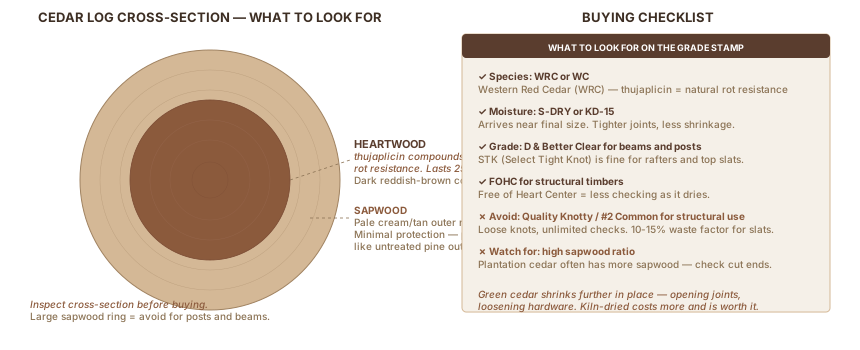
For posts and beams, specify FOHC (Free of Heart Center) when possible. Timbers cut to avoid the pith (the very center of the tree) check and twist less as they dry because the pith dries at a different rate than surrounding wood.
Reading a Grade Stamp
A Western lumber grade stamp shows the grading agency (WWPA or NLGA), the mill number, moisture content at grading, species mark, and grade. For cedar, look for:
- Species: WRC or WC (Western Red Cedar)
- Moisture: S-DRY (surfaced at 19% MC or less) or KD-15 (kiln-dried to 15%) for best dimensional stability
- Grade: The grade designation matching what you specified
S-DRY or kiln-dried cedar costs more but arrives closer to its final dimensions. Green cedar will shrink further as it dries in place, opening joints and loosening connections.
Where This Fits
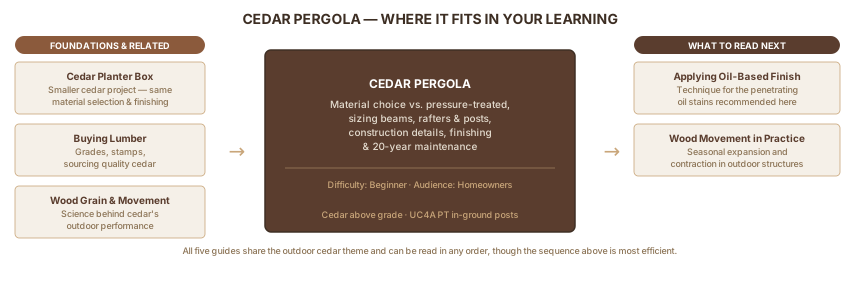
Related guides:
- Cedar Planter Box — A smaller-scale cedar outdoor project with similar material selection and finishing considerations
- Buying Lumber — How to evaluate lumber grades, read grade stamps, and source quality material
- Understanding Wood: Grain and Movement — The wood science behind why cedar outperforms other softwoods outdoors
What to read next:
- Applying Oil-Based Finish — Detailed technique for the penetrating oil stains recommended in this guide
- Wood Movement in Practice — How seasonal expansion and contraction affect outdoor structures
Sources
This guide draws on USDA wood science data, AWPA treatment standards, Simpson Strong-Tie engineering documentation, and practitioner-tested finish and construction data.
- The Wood Database — Western Red Cedar — species data, Janka hardness, thujaplicin content
- Advantage Lumber — Cedar vs Pressure-Treated — CCA/ACQ history, lifespan comparison
- USDA Forest Products Laboratory — WRC Tech Sheet — structural values, decay classification
- AWPA — Preservative Use Categories — UC4A retention levels, 2016 standard revision
- Journal of Light Construction — Sizing Arbor and Pergola Framing — no prescriptive standard for shade structures, load calculation guidance
- AWC DCA 6 — Prescriptive Residential Wood Deck Construction Guide — beam and joist span tables adapted for pergola use
- Simpson Strong-Tie — MPBZ Moment Post Base — load ratings, installation requirements
- Simpson Strong-Tie — Outdoor Accents Pergola Build — lateral load warning on standard post caps, APB post base
- Wright Timber Frame — Timber for Building a Pergola — climate-specific species recommendations, freeze-thaw checking
- Pro Deck TN — What Screws to Avoid with Cedar — cedar tannin and zinc reaction
- Builders Stainless — Galvanic Corrosion Prevention — dissimilar metal contact guidance
- TWP Stain — 100 Pro Series — product specifications
- DeckStainHelp — TWP 100 Review — independent 2-year performance test on cedar
- Real Cedar (WRCLA) — Timber Grades and Specifications — D & Better Clear grade for pergola timbers
- Real Cedar — Engineering Data — WRC design values by grade, rafter span tables
- WWPA — Interpreting Grade Stamps — grade stamp reading guide
- OZCO Building Products — Rafter Spacing Guide — 16" OC maximum, cantilever limits
- Fine Homebuilding — Pressure-Treated Lumber Guide — ACQ/CA-B retention tables, fastener requirements
Wood Species
Also Referenced
Up Next
Cherry Wood: Properties, Hardness, Blotch-Free Finish
WOOD & MATERIALS · Beginner