
Countersink Drill Bits at a Glance
A countersink bit drills a conical (cone-shaped) recess that matches the head of a flat-head screw, letting the head sit flush with or just below the wood surface. Without it, screw heads either sit proud or split the wood. For most woodworking, you want a combination pilot-plus-countersink bit sized to your screw size. Get a 3-piece set in #6, #8, and #10 and you'll cover 95% of furniture and cabinet work.
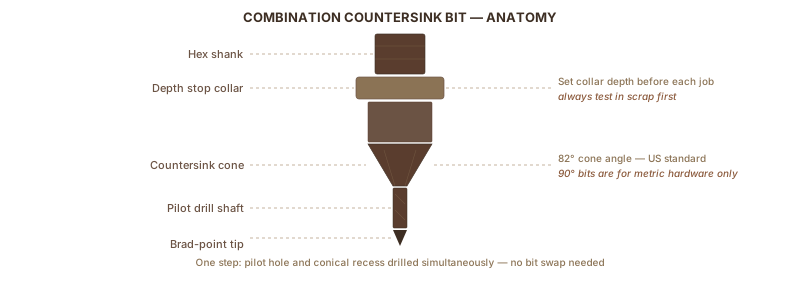
| What it does | Creates conical recess so flat-head screw seats flush |
| Standard angle | 82° (US wood screws); 90° (metric hardware) |
| Most useful sizes | #6, #8, #10 — covers nearly all furniture and cabinet screws |
| Best starting set | Snappy 3-piece ( |
| Drill speed | 800–1,200 RPM softwood; 400–800 RPM hardwood |
| Bonus use | Deep counterbore holds a wood plug over the screw head |
In this guide:
Part 1: Why Screws Split Wood (And What the Countersink Fixes)
A flat-head wood screw has a cone-shaped head. Drive that screw into a board without a matching conical recess and one of two things happens: the head sits proud (raised above the surface), or it mushrooms the wood fibers outward and splits the board near the edge.
In hardwood, it gets worse. The wood can't compress around the head. The screw may break. The drive recess strips. You end up with a stuck half-driven fastener and a cracked board edge.
A countersink bit solves this by drilling a matching cone before you drive the screw. The head seats cleanly, contacts the wood evenly, and the joint is stronger for it. The result is a flush surface — no raised bump, no split, no halo.
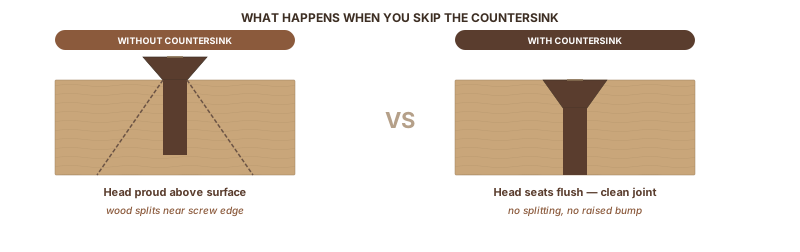
The bit also drills the pilot hole for the screw shank, so with a combination bit you do both in one step.
One quick distinction: countersink (conical, for flat-head screws) is not the same as counterbore (cylindrical flat-bottomed, for bolts and socket heads). For standard wood screws, you want a countersink.
| Countersink | Counterbore | |
|---|---|---|
| Shape | Conical recess | Flat-bottomed cylinder |
| Used for | Flat-head wood screws (flush) | Hex bolts, pan-head machine screws, wood plugs |
| Tool | Countersink bit | Forstner bit or counterbore bit |
Part 2: What Size Countersink Bit for Which Screw
This is the question that sends most people searching. Match the countersink body diameter to your screw head size. For combination bits, each bit is labeled by screw gauge.
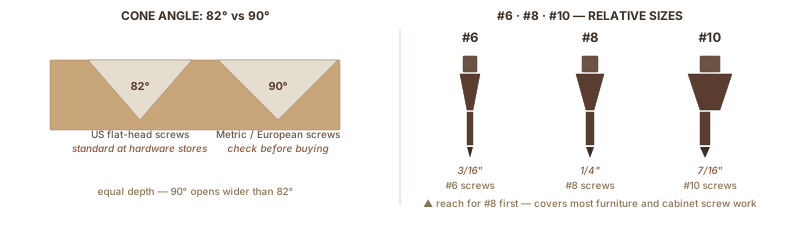
| Screw Size | Countersink Body Diameter | Pilot Hole (Softwood) | Pilot Hole (Hardwood) |
|---|---|---|---|
| #6 | 3/16" (4.5mm) | 5/64" | 3/32" |
| #8 | 1/4" (6mm) | 3/32" | 7/64" |
| #10 | 7/16" | 7/64" | 1/8" |
| #12 | ~1/2" | 1/8" | 9/64" |
Sizes from McFeely's pilot hole drilling chart, cross-referenced with Hand Tool Essentials.
Notice that hardwood gets a larger pilot hole than softwood. Softwood compresses slightly around the screw threads. Hardwood doesn't — it splits. Drill too small a pilot in oak and you'll either crack the board or snap the screw.
The angle question: US flat-head wood screws use an 82° cone angle — the standard set by ASME B18.3, as explained in this Practical Machinist thread on why the angle became the norm. European and metric hardware uses 90°. Most countersink bits sold in the US are 82°, which is correct for any screw you buy at Home Depot, Lowe's, or any hardware store. If you're using metric hardware, check the angle.
A 3-piece set for #6, #8, and #10 covers nearly all screw joinery in furniture and cabinetry. You'll reach for #8 most often.
Part 3: The Five Types of Countersink Bits
Five types exist. One is right for most woodworkers.
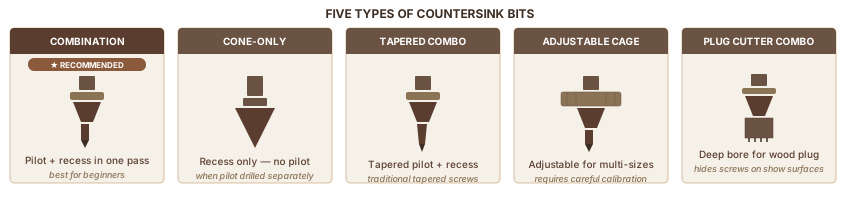
| Type | Best for | Notes |
|---|---|---|
| Combination pilot+countersink | Most woodworking | One step; pilot + recess together; most beginner-friendly |
| Countersink-only (cone bit) | When pilot is drilled separately | More control; useful for multiple screw sizes in one session |
| Tapered combination | Traditional tapered wood screws | Negligible difference on modern straight-shank screws in softwood |
| Adjustable/cage-style | Multiple screw sizes with one bit | Versatile; requires careful collar adjustment |
| Plug cutter combination | Hiding screws on show surfaces | Counterbores deep enough for a wood plug |
For most woodworkers, the combination pilot-plus-countersink is the right call. It's one step, the pilot is perfectly centered in the recess, and the bits are labeled by screw gauge so there's no math. Get the combination type and ignore the rest until you need something specific.
Tapered vs. straight pilot: Modern construction screws have straight shanks. Straight pilot bits are fine for those. Traditional tapered wood screws theoretically benefit from a tapered pilot, but in softwood the difference is negligible. In hardwood with tapered screws, the tapered pilot does give a cleaner fit.
Part 4: Which Countersink Bits to Buy (and What to Skip)
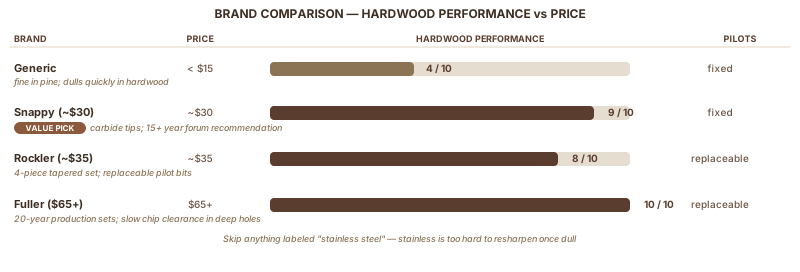
The honest answer for a beginner: spend $30 and get something that lasts. Generic sets cut fine in pine but dull quickly in hardwood.
The recommendation: Snappy or Rockler
Snappy (carbide-tipped, brad-point pilots) runs about $30 for a 3-piece set in #6, #8, and #10. It's been the consistent forum pick for 15+ years — the Sawmill Creek brand comparison thread and LumberJocks' Snappy review thread keep coming back to it. The carbide tips hold an edge in hardwood; the brad-point pilot drill gives a clean, accurate hole with minimal tearout. Minor chipping on plywood sands out at 120 grit.
Rockler's 4-piece tapered set runs about $35. ToolGuyd's hands-on review rated it comparable to Fuller at a lower price. Replaceable pilot bits mean you're not throwing out the whole bit when the pilot dulls.
For regular furniture building
Fuller (~$65+) uses a tapered pilot bit plus a dedicated countersink per screw size. Users report 20-year-old sets that still cut cleanly without resharpening. Cabinetmakers who cut several hundred holes a month often use Fuller. The chip clearance can be slow in deep holes.
Amana Tool carbide sets with adjustable depth stops and ball bearings run higher, but the depth stop won't scratch or burn the surface. Justified for production work; unnecessary for occasional use.
Budget reality
A generic $10 set from Amazon or the hardware store will work in pine or poplar for a first project. The steel is softer — it won't stay sharp through repeated hardwood work. If you're building furniture regularly, the Snappy set pays for itself quickly.
Skip sets with no steel specification and anything described as stainless steel — stainless is too hard to sharpen once dull.
Part 5: How to Use a Countersink Bit: Step by Step
Before you drill
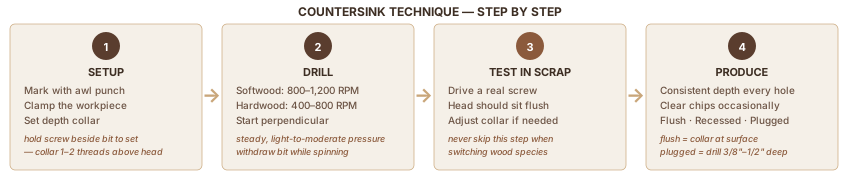
- Mark the hole location with an awl. A pointed awl mark gives the bit something to register against, so it doesn't wander across the surface.
- Clamp the workpiece. An unsecured board shifts under pressure and produces angled holes.
- Set the depth collar. Hold your screw next to the bit. Slide the collar until the collar sits 1–2 thread-lengths above where the screw head will land. Lock the collar. Then test in scrap — drive a real screw and check the seating.
Drilling
- Set your drill speed. Softwood: 800–1,200 RPM. Hardwood: 400–800 RPM. High speed in hardwood causes burning and chatter.
- Start perpendicular. Let the bit find its registration mark before applying full pressure.
- Steady, light-to-moderate pressure. Let the bit cut. Don't force it. Forcing causes chatter and ragged edges.
- Drill to your depth stop or tape flag. Withdraw the bit while the drill is still spinning. Pulling out while stopped can catch the flute on the wood edge.
Before production holes
- Test in scrap from the same species first. Drive a screw. The head should sit flush or fractionally below surface. Adjust the collar if needed. Never skip this step when switching to a different wood.
Depth options
For a flush joint: collar set so the screw head meets the surface. For a slightly recessed joint: drill 1/8" deeper. Screw sits just below surface, good for painting or filling. For a plugged joint: drill 3/8"–1/2" deep. A wood plug goes over the screw head.
Part 6: The Most Common Countersink Mistakes
| Mistake | What happens | Fix |
|---|---|---|
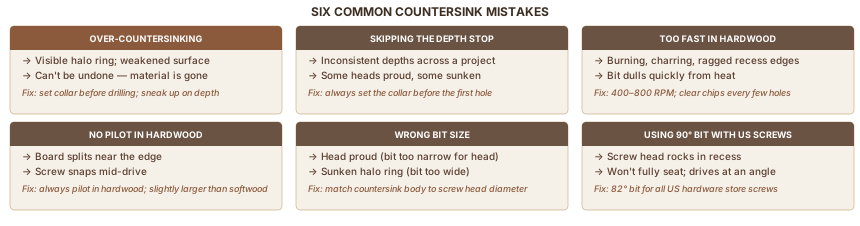
| Over-countersinking | Visible halo ring around screw head; weakened surface | Set collar before drilling; test in scrap first |
| Skipping the depth stop | Inconsistent depths across a project | Always set the collar before the first hole |
| Too fast in hardwood | Burning, charring, ragged edges | Reduce RPM; clear chips by withdrawing bit occasionally |
| No pilot hole in hardwood | Splitting near edges, screw breakage | Always pilot in hardwood; use a slightly larger pilot than softwood |
| Wrong bit size | Head proud (bit too narrow) or sunken halo (too wide) | Match countersink body to screw head diameter |
| Using 90° bit with US screws | Screw rocks in recess, won't fully seat | Use 82° for all US hardware store flat-head screws |
The most expensive mistake is over-countersinking. A conical recess gone too deep creates a visible crater, weakens the surface near the edge, and can't be undone. Sneak up on the depth with a test piece.
Part 7: Wood Plugs: Hiding Screws on Show Surfaces
If you're building furniture with visible screw joints (table aprons, cabinet face frames, outdoor furniture), wood plugs let you cover the screws completely. Grain-matched plugs from the same board are nearly invisible.
When to use plugs:
- Exposed surfaces on furniture where screw heads would show
- Any visible panel where a screw head in the grain would look sloppy
- When you want the option to disassemble later (plugs are removable with a drill)
The workflow:
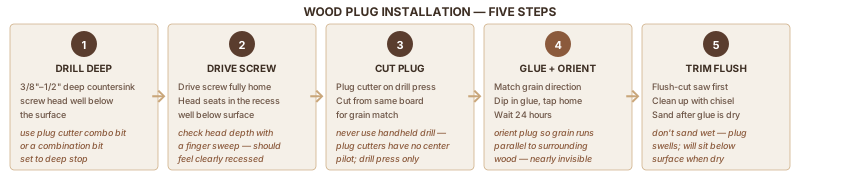
- Drill the countersink 3/8"–1/2" deep so the screw head sits well below the surface.
- Drive the screw.
- Cut a plug from the same board using a plug cutter on a drill press. Plug cutters require a drill press — they have no center pilot and aren't safe in a handheld drill. Rockler's plug installation guide covers the full workflow.
- Orient the plug so the grain runs in the same direction as the surrounding wood. Dip it in glue and tap it home with a mallet.
- Wait at least 24 hours before trimming. Don't rush this.
- Trim flush with a flush-cut saw, then clean up with a chisel or card scraper. Sand only after the glue is fully dry — wet wood swells, and if you sand it flush while damp, the plug will sit below the surface once it dries.
Part 8: Where Countersink Bits Fit in Your Shop
Countersink bits are the kind of tool you don't miss until you drive your first screw without one. After that, you always grab the bit first.
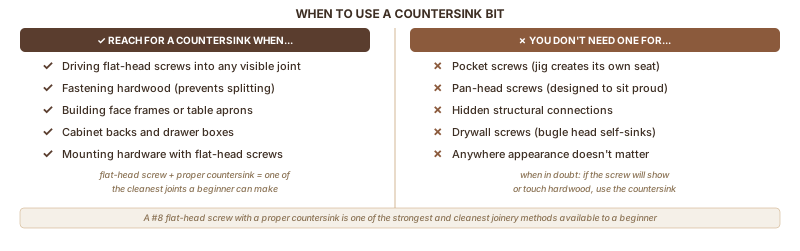
Reach for a countersink when:
- Driving flat-head screws into any visible joint
- Fastening hardwood (to prevent splitting regardless of appearance)
- Building face frames, table aprons, cabinet backs, or drawer boxes
- Mounting hardware with flat-head screws
You don't need a countersink for:
- Pocket screws — the pocket hole jig creates its own angled seat
- Pan-head screws — they're designed to sit proud
- Hidden structural connections where appearance doesn't matter
- Drywall screws — the bugle head is designed to sink without countersinking
A #8 flat-head screw with a proper countersink is one of the strongest and cleanest joinery methods available to a beginner. Learn to use it well, and it'll show up in almost every project you build.
For the related drilling side of the kit, brad-point drill bits drill the cleaner pilot holes that combination countersink bits rely on. And #8 wood screws — the most common size — are what you'll be driving through most of those holes.
Sources
This guide draws on size charts from fastener specialists, brand comparisons from long-running practitioner forums, and drill technique guidance from woodworking retailers.
- McFeely's Wood Screw Pilot Hole Drilling Size Chart — screw-to-pilot-hole size reference (authoritative fastener retailer)
- Hand Tool Essentials: Drilling Countersink Holes for Wood Screws — size chart cross-reference
- Practical Machinist: Why 82 and 90 Degree Countersinks? — angle standard (82° vs 90°) history and explanation
- Sawmill Creek: What Countersink/Bit Brand Do You Think Is Best for the Money? — multi-year practitioner brand comparison
- LumberJocks: Snappy Countersinks — What Do You Think? — long-term Snappy user reports
- ToolGuyd: Straight vs. Tapered Countersink Drill Bits — Rockler set review, tapered vs. straight comparison
- Rockler: How to Make and Install Custom Wood Plugs — plug cutting and installation workflow
How We Research
We don't take affiliate revenue or accept review units. Picks come from multi-source research — manufacturer specs, OSHA / EPA / ASTM regs, and long-form practitioner threads — plus Ahmed's hands-on use where relevant. When we recommend something, we explain why.
Up Next
Picking the right wood screws for your project
WOOD & MATERIALS · Beginner