
Brad Point Drill Bits at a Glance
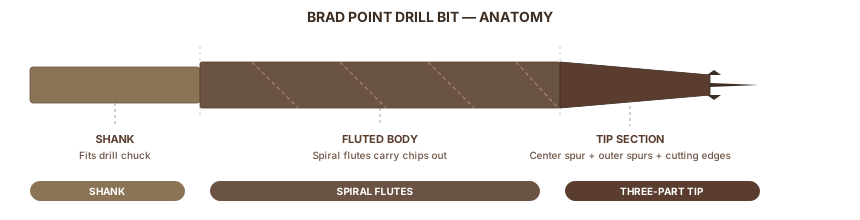
Brad point bits are wood-specific drill bits with a three-part tip: a center spur that prevents wandering, outer spurs that score the hole edge before cutting, and main cutting edges that remove the waste. The result is a clean, accurate hole that twist bits can't reliably produce. A 7-piece HSS set runs $30–$60 and covers 90% of what you'll drill in a woodworking shop.
| Also called | Spur point bit, lip-and-spur bit, dowelling bit (same tool, different regions) |
| Best material | High-speed steel (HSS) — doesn't burn when it heats up |
| Starter set | 7 pieces: 1/8", 3/16", 1/4", 5/16", 3/8", 7/16", 1/2" |
| Hardwood speed | 1,000–1,500 RPM for small bits; slower for larger |
| Never use with | Impact or hammer drivers — snaps the center spur immediately |
| Best budget brand | Irwin; best overall: Lee Valley / Veritas |
In this guide:
- How the three-part tip produces a clean hole
- What material and brand to buy
- When to use them — and when not to
- Speed, setup, and tearout prevention
- Troubleshooting burning, wandering, and blowout
Part 1: How the Three-Part Tip Works
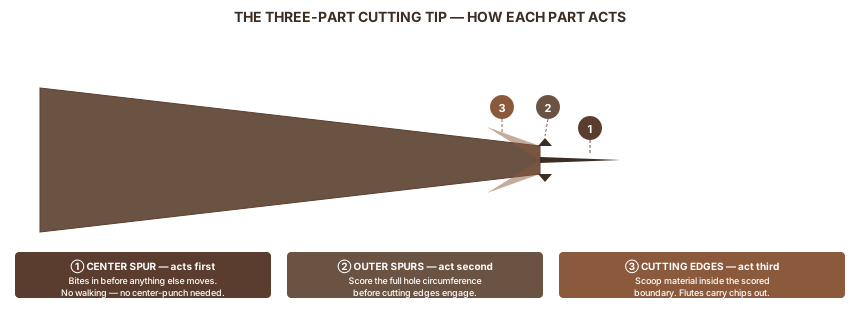
A brad point cuts cleaner holes than a twist bit because its tip does three separate jobs before material gets removed.
Center spur: The sharp spike in the middle. It bites into the wood surface before anything else moves. No walking. No need to center-punch first. Set the point on your mark, start the drill, and it stays there.
Outer spurs (scribers): Two knife-like ridges flanking the center spur. They contact the wood second, just after the center spur has anchored the bit. Their job: score the full circumference of the hole before the cutting edges engage. By slicing the fibers at the perimeter, they prevent the torn, ragged entry holes you get from twist bits.
Cutting edges (lifters): These follow the spurs and scoop out the material inside the scored boundary. The flutes spiraling up the shank carry the chips out.
The sequence: center spur anchors, outer spurs score the perimeter, cutting edges remove waste. A twist bit has no center anchor and no scoring geometry. It wanders before it cuts, then tears fibers as it goes.
Spur point bit, lip-and-spur bit, tip-and-spur bit, and dowelling bit all mean the same tool. "Brad point" is the North American term; "lip and spur" is what the UK calls it. Popular Woodworking's drill bit comparison guide covers all the common types alongside each other if you want a broader reference.
| Bit Type | Centering | Entry Hole Quality | Best Use in Wood |
|---|---|---|---|
| Brad point | Center spur anchors the bit | Clean — outer spurs score first | Through-holes and blind holes where precision matters |
| Twist bit | Wanders until fully engaged | Rough — fibers torn, not scored | Metal; rough wood holes where finish doesn't matter |
Part 2: How to Pick a Brad Point Set
Buy a 7-piece HSS set from Irwin or Fisch to start, learn which sizes you actually use, then replace those specific sizes with Lee Valley when they dull. You don't need to spend $150 on your first set.
Material: Why HSS Is Worth the Small Premium
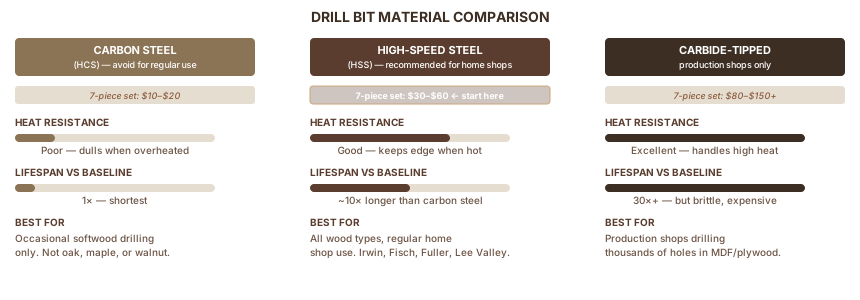
Most drill bit sets you'll find at a hardware store are carbon steel (HCS). They're cheap, they're sharp from the factory, and they have one critical weakness: once they overheat, they lose their hardness and dull almost immediately. Drill too fast in oak, see smoke for three seconds, and the bit is done.
High-speed steel (HSS) maintains its hardness even when hot. According to the woodworking community's consensus on Lee Valley's brad points, HSS stays sharp roughly 10 times longer than carbon steel. For woodworking, that difference is real. You can drill into maple at 1,000 RPM without babying the bit.
Carbide-tipped bits exist for production shops drilling thousands of holes in MDF and plywood. The Wood Whisperer covers carbide-tipped brad points for cabinet shops that need that level of longevity. For a home shop: brittle, expensive, overkill.
| Material | Heat Resistance | Lifespan vs Carbon Steel | Best For | Typical 7-pc Set Price |
|---|---|---|---|---|
| Carbon steel (HCS) | Poor — dulls when overheated | 1× | Occasional softwood use | $10–$20 |
| High-speed steel (HSS) | Good — keeps hardness when hot | ~10× | All wood types, regular use | $30–$60 |
| Carbide-tipped | Excellent | 30×+ | Production shops, engineered wood | $80–$150+ |
Which Brand to Buy
Start here — Irwin: Widely available at Home Depot and Amazon, consistent sizing, cuts cleanly for the price. Good way to learn which sizes you actually reach for before committing to better bits.
Best value full set — Fisch: Austrian-made, 29-piece chrome vanadium set for under $100. For a complete size range without the premium price, Fisch is the one.
For hardwood — Fuller: USA-made, arrives razor-sharp from the factory (they wax-dip the bits for storage). Tools for Working Wood stocks the full Fuller range, available in 1/64" increments. Individual bits run $6–$28. For precision work in oak, walnut, or maple, Fuller bits hold up well.
Best overall — Lee Valley / Veritas: Reshaped from quality American twist drills on Swiss CNC grinders, polished flutes for better chip clearance. The woodworking community's consensus recommendation when you're ready to invest. Available individually in any size so you can replace just the sizes you use most.
| Brand | Material | Set | Price Range | Best For |
|---|---|---|---|---|
| Irwin | HSS | 6-piece+ | $20–$35 | Starter set, widely available |
| Fisch | Chrome vanadium | 29-piece | Under $100 | Best value for a full set |
| Fuller | HSS | 7–28 piece | $40–$100+ | Hardwood precision; USA-made |
| Lee Valley / Veritas | HSS (premium ground) | Individual bits | $8–$15/bit | Long-term upgrade; buy your most-used sizes |
Which Sizes to Buy First
Seven sizes cover almost everything you'll drill in furniture and cabinet work:
| Size | Primary Use |
|---|---|
| 1/8" | Small hardware pilots, trim screw pilots |
| 3/16" | Small hinges, narrow hardware |
| 1/4" | Shelf pins (most common standard), small dowels |
| 5/16" | Medium hardware, shelf pins |
| 3/8" | Standard 3/8" dowel joints |
| 7/16" | Larger hardware, occasional use |
| 1/2" | Maximum practical size for handheld drill work |
Buy an inexpensive 7-piece set first. After three or four projects, you'll know which two or three sizes you reach for constantly. Replace those with Lee Valley or Fuller. Don't drop $150 on a 29-piece premium set before you know which sizes you actually use.
Part 3: When to Use a Brad Point (and When Not To)
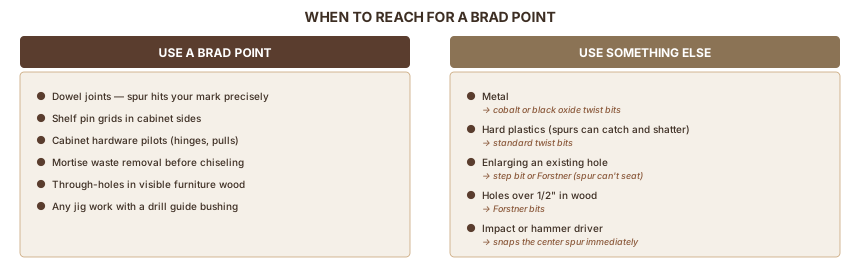
Six Jobs That Call for a Brad Point
Dowel joints. The most common woodworking use. The center spur hits your marked center precisely, and the clean entry/exit hole means dowels seat without splitting the mating faces. Pair with a dowel jig for aligned holes across two parts.
Shelf pin grids. Drilling a column of 1/4" shelf pin holes in cabinet sides requires consistent placement. A shelf pin jig (a strip of pegboard or a commercial jig) combined with a brad point gives you repeatable results every time.
Cabinet hardware pilots. Pilot holes for hinges, handles, and pulls. Door gaps make misalignment visible, so precision matters here.
Mortise waste removal. Drilling out the bulk of a mortise before paring to the line with a chisel. The center spur keeps the bit inside your marked boundaries.
Face frame through-holes. Any through-hole in visible furniture wood where you care about surface appearance.
Jig work. Any time a drill guide bushing is involved, the brad point's center spur is essential for hitting the exact location the jig specifies.
When to Reach for Something Else
| Situation | Use Instead | Why |
|---|---|---|
| Drilling metal | Cobalt or black oxide twist bits | Brad point spurs chip immediately on metal |
| Hard plastics | Standard twist bits | Spurs can catch and shatter thin stock |
| Enlarging an existing hole | Step bit or Forstner | Center spur can't seat in an existing hole; bit wobbles |
| Impact or hammer driver | Anything rotation-only | Percussive action snaps the center spur immediately |
| Holes over 1/2" in wood | Forstner bits | Brad points become awkward above 1/2"; Forstner bits excel here |
| Masonry, tile, concrete | Masonry bits | Always — no wood bit works here |
Part 4: How to Drill Clean Holes Every Time
Speed and Gear Selection
The right RPM depends on bit diameter and wood hardness. Larger bits need more torque, which means slower speed. Harder wood generates more heat, so you slow down to avoid burning.
The Engineering Toolbox drill speed reference has a full chart by bit size and species. For typical woodworking:
| Wood Type | 1/8"–1/4" bits | 5/16"–1/2" bits |
|---|---|---|
| Softwood (pine, cedar, poplar) | 2,000–3,000 RPM | 1,000–2,000 RPM |
| Hardwood (oak, maple, walnut) | 1,000–1,500 RPM | 500–1,000 RPM |
On a cordless drill: use low gear (the tortoise symbol) for hardwood and larger bits. High gear for small bits in soft wood.
Two things burn a brad point regardless of wood species: running it in impact mode, and not clearing chips. Never use a brad point in hammer or impact mode. Back out of deep holes every half inch to let chips escape.
Step-by-Step Drilling Technique
-
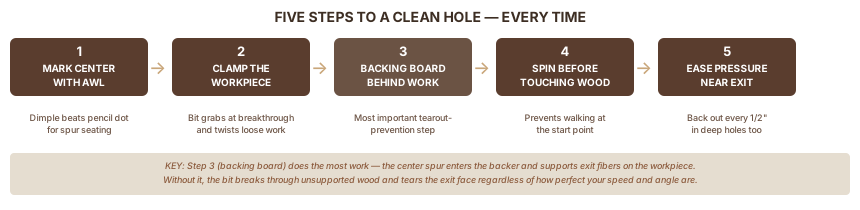
Mark the center. Use a marking awl to make a small dimple at the hole location. The center spur finds this dimple immediately. A pencil dot works but a dimple is better.
-
Clamp the workpiece. Never hold it freehand. A brad point bit can grab on breakthrough and twist the workpiece.
-
Place a backing board. Clamp scrap wood behind the workpiece. Same density as the workpiece works best. This is the most important tearout-prevention step.
-
Bring the drill to speed before touching wood. Start spinning, then lower the bit onto the mark.
-
Apply steady, moderate feed pressure. The bit should cut smoothly. Too much pressure bogs it down and heats it up. Too little means it dwells and generates friction without progress.
-
For deep holes, back out periodically. Every half inch in a deep hole, back the bit out to clear chips. Clogged flutes cause heat. Heat dulls bits.
-
Reduce pressure near the exit. As you feel the bit approaching the back face, ease off the feed pressure. Let the backing board do its job.
Preventing Exit Tearout
Entry tearout is rare with brad points because the outer spurs score first. Exit tearout is the real problem. When the bit breaks through the back face, the fibers have nothing supporting them and blow out. Three ways to handle it:
Backing board (most reliable). Clamp scrap wood of equal or greater density behind the workpiece. The center spur enters the backer, supporting the exit fibers of the workpiece. Obsessed Woodworking's tearout guide calls this the "zero clearance" approach — the wood fibers have nowhere to blow out. Nothing else is as consistent.
Masking tape. Apply tape to the exit face before drilling. It holds the wood fibers together during breakthrough. Faster to set up than a backing board, less reliable.
Flip drilling. Drill until the center spur just pokes through the back face. You'll feel the resistance change. Pull the bit out, flip the workpiece, and finish drilling from the other side using the center spur hole as your start point. Very clean result, especially on small diameters.
Drill Press vs. Cordless Drill
A drill press gives you a guaranteed 90-degree angle and a depth stop, which matters for shelf pin grids and repeated dowel holes. For production work (drilling the same hole location across 10 cabinet sides), a drill press is the right tool.
A cordless drill works well for most brad point drilling if you use a drill guide block (a scrap block with a square hole, or a commercial drill guide) to keep the angle perpendicular. Most beginners have a cordless drill and nothing else, and that's enough for everything in this guide.
Part 5: Troubleshooting Burning, Wandering, and Blowout
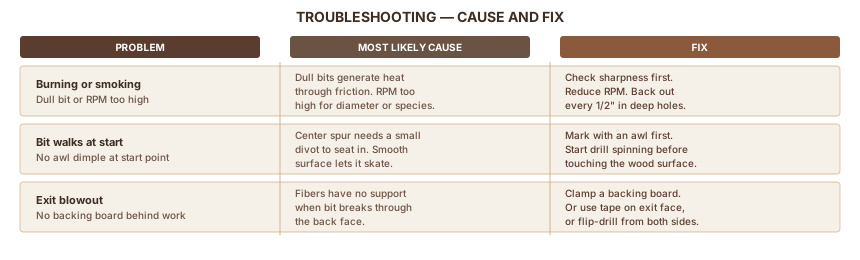
All three happen to experienced woodworkers. Each one has a specific cause and a quick fix.
| Problem | Most Likely Cause | Fix |
|---|---|---|
| Burning or smoking | Dull bit or RPM too high for the diameter/species | Check sharpness first; reduce RPM; back out to clear chips more often |
| Bit walks at start | No awl dimple at the start point | Mark with an awl before drilling; start drill before touching wood |
| Rough hole walls | Dull bit | Sharpen or replace the bit |
| Drill twists or grabs | Breakthrough with no backing board | Always clamp a backing board; reduce pressure near the exit face |
| Exit blowout | No backing board | Use backing board, tape, or flip-drill technique (see above) |
One quick sharpness test: drag your fingernail lightly across one of the outer spurs. A sharp bit catches your nail. A dull one slides right off. If it slides, the bit needs attention before your next use.
Part 6: Sharpening and Caring for Brad Point Bits
When to Sharpen and When to Replace
Sharpen when the bit is dull from normal use but the tip geometry is intact and the flutes are clean.
Replace when the flutes are bent or damaged, the center spur is broken, or previous bad sharpening has ground away too much material. A broken center spur is not repairable.
The Sharpening Method
You need an auger bit file. This is a file with "safe" faces and "safe" edges, meaning certain sides are smooth so you can file in one place without accidentally cutting somewhere else. For HSS bits, use a 600-grit diamond file instead of a standard steel file. Workshop Companion's sharpening guide has the full procedure for auger bits and brad points side by side.
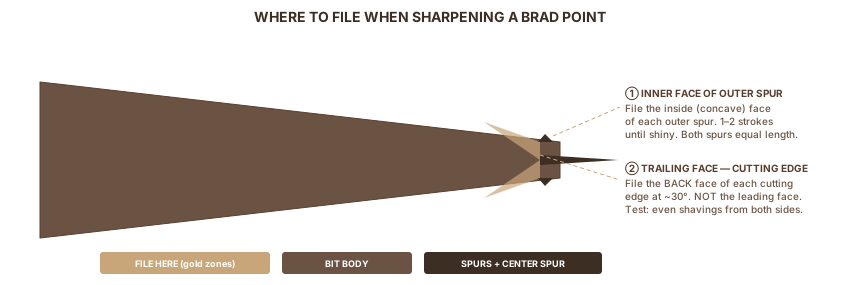
Step 1 — File the inner face of each spur. Use the safe-face end of the file on the inside face of the outer spur. One or two strokes until the surface is shiny and flat. Both spurs need to be equal length. If one spur is longer, it digs deeper, creates a ragged hole, and overloads one side of the bit.
Step 2 — File the trailing face of each cutting edge. This is the back face of the cutting edge, not the front. Maintain roughly a 30-degree bevel. Beginners usually try to file the leading face — that's wrong. File the trailing face.
Step 3 — Test in scrap. Drill a test hole. If one side throws thicker shavings, that cutting edge is too long. Keep filing until the shavings are even from both sides.
One rule: never file the outside diameter of the bit. Grinding the circumference changes the bit's size and can make it out-of-round. The outside diameter is off-limits.
Storage
Keep bits in their case, points up or protected. Loose bits rattling against each other dull the tips quickly. After drilling in resinous softwoods like pine, wipe the flutes clean. Pine sap builds up fast and cooks onto the metal.
Part 7: What to Learn Next

The Biscuit Joiner guide covers a related approach to panel and edge joinery. Dowel joinery and shelf pin installation both use the drilling techniques in this guide.
Choosing Your First Power Tools covers the sequence of purchases that makes sense for a beginner's budget, including where a drill press fits in.
If you're drilling mortise waste before chiseling to the line, Chisel Fundamentals covers the paring and chopping technique that follows.
Sources
Research for this guide drew on woodworking community forums, manufacturer data, and authoritative tool references.
- Popular Woodworking — Drill Bit Differences — comparison of bit types, when each excels
- Sawmill Creek — Best Brad Point Bits — community consensus on brands, HSS quality comparisons
- The Wood Whisperer — Carbide-Tipped Brad Points — when carbide makes sense for production shops
- Tools for Working Wood — Fuller Brad Point Bits — Fuller product specs and sizing
- Power Tool Base — Brad Point Bits 101 — anatomy, limitations, speed guidance
- Engineering Toolbox — Drill Bit Speeds — RPM reference chart by bit size and species
- Obsessed Woodworking — Prevent Tearout When Drilling — backing board and zero-clearance technique
- Workshop Companion — Sharpening Drill Bits — auger file technique for brad point sharpening
How We Research
We don't take affiliate revenue or accept review units. Picks come from multi-source research — manufacturer specs, OSHA / EPA / ASTM regs, and long-form practitioner threads — plus Ahmed's hands-on use where relevant. When we recommend something, we explain why.