
How to Use This Guide
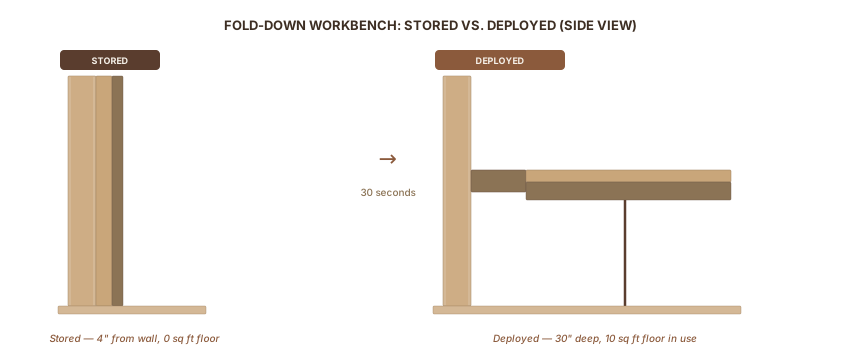
A fold down workbench is the right call for anyone who parks a car in the same space where they work wood. Folded up, it takes 4 inches of wall space. Folded down, it's a full work surface that holds 300 pounds.
You need a drill, a circular saw, a stud finder, and one Saturday. No table saw. No specialized skills. Materials run $100–$160.
- Choosing a design: Start with Part 1. Three variants exist. This guide steers you toward the right one for a beginner and explains why the others are more work than you need.
- Buying hardware: Part 2 covers the three hardware decisions that determine whether the bench holds or fails. Hinge choice is where most first-time builders go wrong.
- Ready to cut and build: Parts 3 and 4 have the complete materials list and step-by-step sequence.
- Something went wrong: Part 5 covers the five most common failures and how to prevent them before they happen.
Prerequisites: You should be comfortable using a circular saw and a drill/driver. No other skills required. If you plan to add a french cleat tool wall above the bench, read the french cleat shelf guide first. The ledger heights need to coordinate.
Fold Down Workbench at a Glance
A wall-mounted fold-down workbench stores flat against the wall when not in use and pivots down to a work surface in under 30 seconds. Properly anchored into wall studs, it holds 300+ pounds, comparable to a mid-weight fixed bench, for a fraction of the permanent floor footprint.
| Build time | 4–6 hours (one Saturday) |
| Material cost | $100–$160 |
| Tools needed | Drill/driver, circular saw, level, stud finder |
| Surface size (recommended) | 30" deep × 48" wide |
| Load capacity | 300+ lbs when anchored into studs |
| Skill level | Beginner — basic carpentry only |
In this guide:
- Which design to build and why the piano-hinge drop-leaf wins for beginners
- The hinge is not the support — what actually holds the weight
- Complete materials list and cut list for a 30"×48" build
- Nine build steps from stud-finding to load test
- Five mistakes that cause fold-down benches to fail
Part 1: Which Design to Build
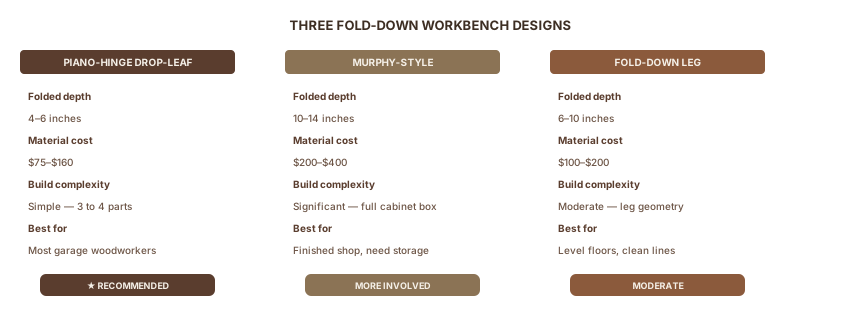
Three types of fold-down workbench exist. They differ in how they store, how they're supported, and how complex they are to build.
The Piano-Hinge Drop-Leaf
The surface hinges along its back edge to a ledger board screwed into wall studs. A piano hinge (or two strap hinges) provides the pivot axis. When not in use, the top swings up against the wall. When open, it rests on folding leg brackets or hangs from a chain.
Folded depth: 4–6 inches from wall face. Material cost: $75–$160. Build complexity: Simple. Three or four components.
This is the design this guide builds. It's the most widely documented, the cheapest, and the most practical for a one-car garage. The Wilker Do's, Kreg Tool, and Ana White plans you've probably seen online are all this type.
The Murphy-Style Workbench
The bench and its storage cabinet fold up as a single unit, flush against the wall. When folded, it looks like built-in cabinetry. A solid-core interior door (30"×80") is a popular work surface for this design: perfectly flat, already the right size, and $40–$80.
Folded depth: 10–14 inches. Material cost: $200–$400. Build complexity: Significantly more work. Full cabinet box required.
Build this if aesthetics matter (finished garage, living space adjacent) or if you want integrated tool storage inside the bench. Skip it if you just need a work surface.
The Fold-Down Leg Design
The surface stays fixed to the wall. Legs pivot out from the underside or ledger and swing down to the floor. Positive-lock brackets (like the Rockler Posi-Lock) click open and closed with spring pressure, so the legs lock at the same height on every deployment.
Folded depth: 6–10 inches. Material cost: $100–$200. Build complexity: Moderate. Leg geometry requires careful layout.
This works well when you want clean lines (no brackets visible under the bench) and the extra stability of floor contact. One problem: if your garage floor isn't flat, fixed-length legs will rock. Measure each leg individually or use leveling feet.
Space Savings: The Real Numbers
A 30"×48" fold-down workbench uses 0 square feet when stored. In use, it uses 10 square feet. A fixed 6-foot workbench uses 12 square feet permanently, every day of the year.
In a one-car garage (typically 200–240 square feet), that 12 square feet is 5–6% of your total floor, permanently gone. If you also park a car, that math gets worse fast. If you have a dedicated shop where the footprint isn't an issue, a traditional wooden workbench handles heavier assembly and mallet work better.
RELATED: French Cleat Shelf System If you're mounting to the wall anyway, consider a french cleat system for tool storage above the bench. The ledger heights coordinate well, and the cleats go up before the bench.
Part 2: Hardware, Hinges, and Anchors
Three hardware decisions determine whether your bench works safely or fails:
- What pivots it (the hinge)
- What holds it open under load (the support system)
- What anchors it to the wall (the fasteners)
Each one does a different job. Confusing the hinge with the support is the most common mistake in first-time builds. It produces a bench that either sags or collapses.
The Piano Hinge: Pivot Only
The piano hinge (also called a continuous hinge) runs the full width of the bench and connects the ledger to the back edge of the surface. Its job is to allow rotation. That's it.
According to DoItYourself.com's piano hinge load data, a standard 24" piano hinge in light gauge holds roughly 60 lbs of panel weight. Kunlong Hardware's guide to hinge capacity confirms that a 14-gauge heavy-duty model at 48" handles 200–300 lbs distributed. Neither number matters much for your workbench, though: the hinge does not support the weight of your surface or anything you put on it. The brackets or legs do.
What to buy: 1-1/2" or 2" wide galvanized piano hinge, full length of your bench, 14-gauge minimum. Expect to spend $10–$20 at any hardware store.
One non-obvious detail: The piano hinge barrel needs 1.5"–2" of clearance between the ledger face and the wall. Without this standoff, the bench surface hits the wall before reaching horizontal. Screw a 1.5"-thick spacer (a 2×4 ripped to 1.5") to the face of the ledger before mounting the hinge.
Screw upgrade: The screws packaged with piano hinges are typically #6×1/2" — too small for a structural application. Replace them with #8×1" screws driven into the face grain of the ledger, not into the plywood edge grain, which holds screws poorly.
The Support System: Where the Weight Goes
Pick one of these:
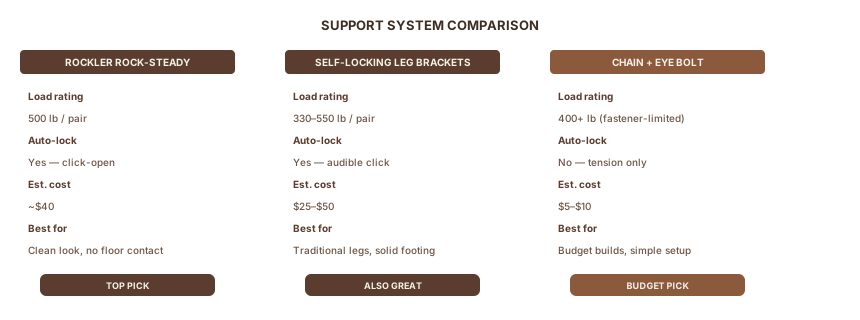
Self-locking folding brackets (recommended): Two brackets mount to the underside of your bench surface, one near each end. When you fold the bench down, the legs swing to the floor and lock open with an audible click. Push a release button to fold back up. The Rockler Rock-Steady brackets mount to the wall and fold out to support the bench from below, rated at 500 lbs/pair. Vadania's folding shelf brackets handle 330 lbs/pair and cost less.
Chain or cable: Drive an eye bolt into a wall stud 24" above the ledger and attach a chain from the eye bolt to the underside front edge of the bench. The chain goes taut when the bench reaches horizontal, stopping it at exactly 90°. No auto-lock mechanism. You rely on chain tension. Simple, cheap, and visible when the bench is in use. Works fine.
What not to use: Lid support hardware (the small hinges used for cabinet lids and toy boxes). These are sized for panels under 25 lbs. A work surface plus tools can easily reach 80–100 lbs before you pick up a clamp.
| Support type | Load rating | Auto-lock | Cost | Best for |
|---|---|---|---|---|
| Rockler Rock-Steady brackets | 500 lbs/pair | Yes (wall-mount fold-out) | ~$40 | Clean look, no floor contact |
| Self-locking leg brackets | 330–550 lbs/pair | Yes (click-open) | $25–$50 | Traditional folding legs |
| Chain/eye bolt | 400+ lbs (fastener-limited) | No | $5–$10 | Budget; adjustable angle |
| Lid support hardware | Under 80 lbs | No | $8–$20 | Not suitable for workbenches |
Wall Anchors: The Step Most Guides Rush
Drywall anchors are for pictures and cabinet shelves. A workbench pulls on the wall in two directions at once: downward load plus horizontal pull when you lean into work. Drywall crumbles under that combination.
The anchor must go into studs. Find every stud in your bench area before buying anything.
Lag screw specifications: According to Decks.com's ledger fastener guide and Monster Bolts' lag screw reference, use 3/8" diameter × 4" long as your minimum. This gives 2.5" of thread engagement into the stud after passing through drywall and your ledger face — enough for 400–700 lbs of withdrawal capacity per fastener. For a stronger install, 1/2" diameter × 4"–5" long gives 600–900 lbs withdrawal per fastener.
Other anchor rules:
- 2 per stud, staggered 1-1/2" vertically. A horizontal row can split the stud.
- Pilot holes are not optional: 1/4" diameter into stud for 3/8" lags, 5/16" diameter for 1/2" lags. Skip the pilot and you'll split the stud or strip the screw.
- Flat washer under every lag head.
Metal stud warning: Lag screws strip out immediately in metal studs, which appear in commercial buildings and some newer residential garages. Probe your wall before buying hardware. Metal studs require snap-toggle bolts (rated 400+ lbs each) or blocking sistered between studs before drywall. If you're unsure what you have, drill a 1/8" test hole at stud center. Wood shavings mean wood. Metal filings mean you have a different project.
For lag screw sizing by diameter and species, the screw sizes chart has withdrawal data in a scannable table.
Part 3: Materials and Cut List
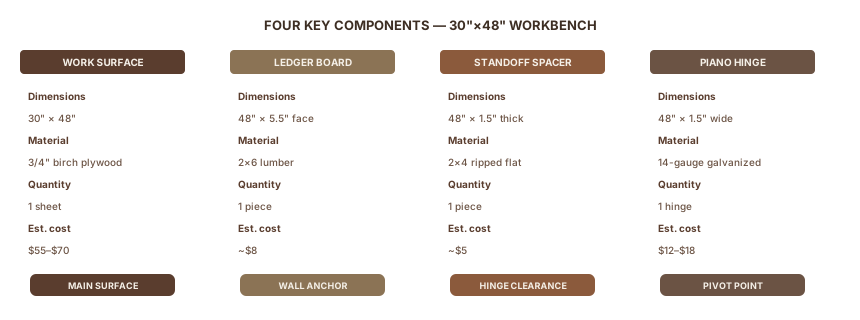
This is the complete shopping list for a 30"×48" piano-hinge drop-leaf bench at 35" height. Adjust the width and depth to match your wall space and stud layout.
Work Surface Options
| Option | Thickness | Weight (30"×48") | Cost | Best for |
|---|---|---|---|---|
| 3/4" birch plywood + 2×4 frame | 3/4" top | ~25 lbs | $50–$70 | Best overall: light, customizable, holds screws well |
| Solid-core interior door | 1-3/8" | ~45 lbs | $40–$80 | Simplest build: no cutting, perfectly flat |
| Double-layer plywood (3/4" + 1/2") | 1-1/4" | ~42 lbs | $75–$100 | Vise use, mallet work |
| 3/4" MDF | 3/4" | ~35 lbs | $25–$40 | Very flat, but heavy and absorbs moisture at edges |
Recommendation: 3/4" birch plywood with a 2×4 perimeter frame underneath. The frame eliminates surface flex without adding much weight. Plywood is lighter than a solid-core door, which matters when you're lifting the bench dozens of times. One 4×8 sheet covers any width you need.
If you want the absolute simplest build, buy a solid-core interior door. It's already flat, already the right thickness, and you skip the frame step entirely. A 30"×80" door at 34" height becomes a full-size workbench for under $100.
Complete Materials List (30"×48" Build)
| Item | Qty | Dimension | Notes | Est. Cost |
|---|---|---|---|---|
| 3/4" birch plywood | 1 sheet | Cut to 30"×48" | Work surface | $55–$70 |
| 2×6 lumber | 1 pc | 48" | Wall ledger | $8 |
| 2×4 lumber | 3 pcs | 8' each | Perimeter frame + standoff spacer | $15 |
| Piano hinge | 1 pc | 48", 14-gauge | Galvanized or zinc-plated, 1-1/2"–2" wide | $12–$18 |
| Folding leg brackets | 1 pair | Heavy-duty, 330–500 lb rated | Rockler, Vadania, or equivalent | $25–$45 |
| Lag screws + flat washers | 8–10 pcs | 3/8"×4" (or 1/2"×4") | 2 per stud at 16" o.c. | $10–$15 |
| 3" wood screws | 1 box | — | Frame assembly, standoff spacer | $8 |
| Piano hinge screws (upgrade) | 1 pack | #8×1" | Replace undersized packaged screws | $4 |
| Total | $137–$183 |
Everything on this list is available at any home center or hardware store.
Tools Required
Essential:
- Cordless drill/driver
- Circular saw (for plywood cuts and 2×4 crosscuts)
- 4-foot level
- Stud finder
- Tape measure, combination square, pencil
- 4 clamps minimum (6 is better for hinge installation)
- Safety glasses and hearing protection
Helpful but not required:
- Miter saw (cleaner 2×4 crosscuts)
- Pocket hole jig (faster frame assembly)
- Random orbital sander (smooth edges before finishing)
Not needed: Table saw, jointer, planer, router. A circular saw with a straight-edge guide handles every cut in this build. For more on cutting sheet goods without a table saw, the 4×8 plywood guide covers the technique.
Part 4: Build Steps
Nine steps. The first three matter most. Get the ledger wrong and everything else is wrong.
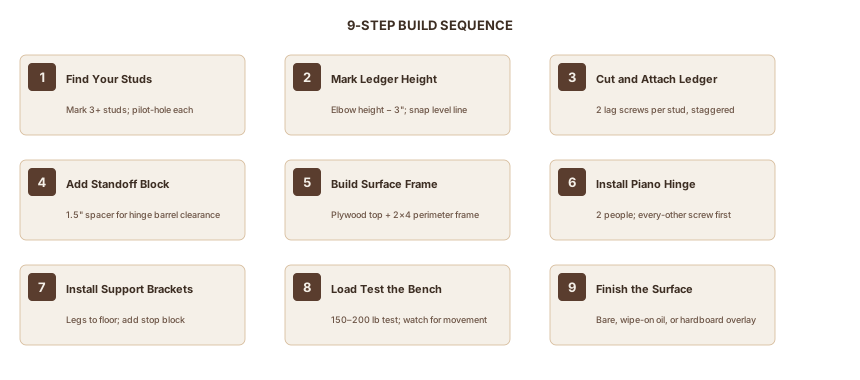
Step 1: Find Your Studs
Use a stud finder to locate every stud in your bench area. Mark each one with painter's tape at the ledger height. Standard residential stud spacing is 16" on center. Some garages use 24".
Verify each mark: drill a 1/16" pilot hole at the marked height. You should feel resistance when the bit hits wood. If you drill through into nothing, the stud finder was off. Move 1/2" in either direction and try again.
For a 48" ledger, you want at least 3 studs. 4 is better. If your layout only hits 2 studs at 16" spacing, shift the bench position until you get 3.
Step 2: Mark the Ledger Height
According to DycoVentures' workbench height guide, ideal bench height sits 2–4 inches below your standing elbow height. Measure from your garage floor to your elbow while standing relaxed. Subtract 3 inches. For most people this lands between 34" and 36".
Mark the ledger bottom edge at that height minus the ledger thickness (5.5" for a 2×6). Use a level to draw a horizontal line across the full bench area.
Step 3: Cut and Attach the Ledger
Cut your 2×6 to 48". Pre-drill two holes per stud location through the ledger face — 1/4" diameter for 3/8" lags, staggered vertically by 1-1/2". Hold the ledger on the line with one helper and drive the center lag screw first. Recheck level, then drive the remaining screws.
Tighten snug plus a quarter turn. Overtightening crushes wood fibers and reduces holding strength. Push on the ledger hard with both hands. If it moves, the lag screws missed solid wood. Find the stud and re-anchor.
For clean pilot holes sized by fastener diameter, the brad point drill bits guide covers the selection.
Step 4: Add the Standoff Block
Cut a 2×4 to 48". Screw it flat to the face of the ledger with 3" screws. This is the standoff spacer. It gives the piano hinge barrel clearance between the hinge and the wall face. Without it, the bench hits the wall before reaching horizontal.
Step 5: Build the Surface Frame
Cut your 3/4" plywood to 30"×48". Cut four 2×4 frame pieces: two at 48" (front and back) and two at 27" (sides). Screw the frame together with 3" screws, then screw the frame to the underside of the plywood from above with 1-1/2" screws. The frame sits flush with the back edge of the plywood — this is where the piano hinge will attach.
Sand the plywood edges and break sharp corners with 80-grit sandpaper.
Step 6: Install the Piano Hinge
This step needs two people. One holds the bench surface horizontal while the other drives screws.
Lay the piano hinge along the back top edge of the ledger standoff. Drive every other screw first with #8×1" screws, confirming alignment before fully committing. Then have your helper hold the bench surface horizontal at the correct height while you attach the second leaf to the back frame piece. Drive every screw.
Test the pivot: the bench should swing smoothly from vertical to horizontal without binding. If it binds, the hinge leaves are at slightly different heights. Loosen one side and shim until it swings free.
Step 7: Install Support Brackets
Mount your folding brackets to the underside of the bench surface, approximately 4" from each end. Lower the bench to horizontal and check that both bracket legs reach the floor simultaneously. If one leg is short, shim its floor contact point or adjust the bracket position.
Add a stop block (a short piece of 2×2 screwed to the wall) at the height where the surface rests horizontal. The bracket or chain catches the load. The stop block adds a redundant hard stop.
Step 8: Load Test
Test the bench before you trust it. Stack lumber, concrete blocks, or similar heavy objects on the center of the surface to reach 150–200 lbs. Leave the load for five minutes and watch for:
- Hinge flex (visible gap opening between hinge leaves)
- Ledger movement (any rotation or gap at the wall)
- Bracket leg slipping or racking
- Plywood surface deflection (more than 1/4" sag at center is too much)
Tighten anything that moved. If the ledger shifted, you missed a stud. Remove, relocate, and re-anchor.
Step 9: Finish the Surface
Three options, in order of permanence:
Leave it bare. Raw plywood in a working shop is practical. Glue wipes off better than from a film finish. Belt-sand the surface flat every year or two when it gets beat up.
Wipe-on oil finish. Apply Danish oil or a 1:1:1 mix of boiled linseed oil, oil-based polyurethane, and mineral spirits. Wipe on, wait 10 minutes, wipe off. Two coats. Gives mild protection without a brittle film that chips under tools.
Hardboard overlay. Screw a sheet of 1/8" hardboard (Masonite) to the surface with a few screws at the edges. This is the sacrificial layer. When it gets dinged, stained, or gouged, you pull it off and replace it for $5. The plywood underneath stays perfect.
Part 5: Mistakes That Kill Fold-Down Workbenches
Five specific mistakes account for almost every fold-down bench failure. None of them are obvious until you've already spent your Saturday building.
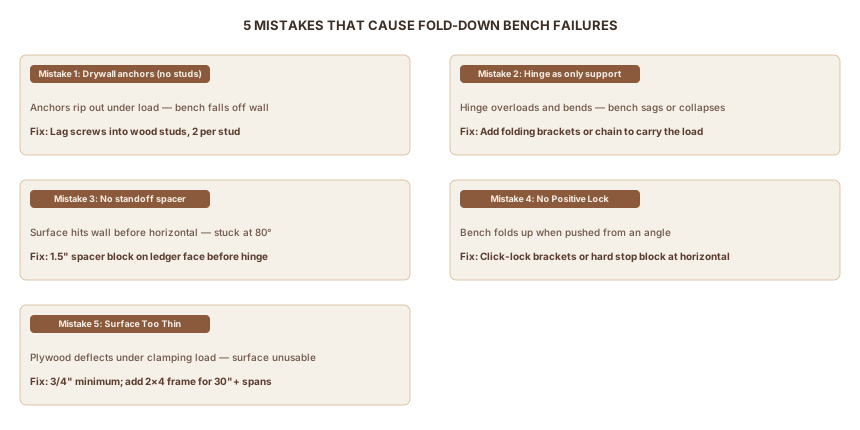
1. Anchoring the ledger to drywall only. This is the one that causes benches to fall off walls. Drywall anchors are rated for picture frames, not workbenches. A 48" bench at 150 lbs generates enough pull on the fasteners to rip standard drywall anchors out cleanly. You must hit wood studs with lag screws.
2. Using the piano hinge as the only support. The piano hinge is a pivot. A standard 48" piano hinge in light gauge holds roughly 60 lbs — fine for a cabinet door, not for a surface you're clamping to. Pair the piano hinge with folding brackets or a chain that carries the actual load. Skipping the support hardware to save $25 means replacing the whole bench when it sags.
3. No standoff block between hinge and wall. If the hinge leaf mounts flush against the wall with no spacer, the back edge of the bench surface hits the wall before the surface reaches horizontal. You end up with a bench that sits at 80° and wobbles. A 2×4 ripped to 1.5" thick and screwed to the ledger face prevents this entirely.
4. No safety lock on the support system. A chain with no lock, or brackets that don't click open, means the bench can fold up when you push it from an angle. Use self-locking brackets with an audible click, or add a positive stop block that the surface rests against when horizontal. The stop block takes five minutes to add.
5. Work surface too thin. Half-inch plywood over a 30-inch span deflects visibly when you clamp a board for sawing. Three-quarter inch is the minimum for a working bench. If you plan to use a vise or mallet regularly, laminate two layers or add the 2×4 frame underneath. The extra material cost is $15–$20. The difference in bench behavior is significant.
Sources
These plans, manufacturer specs, and reference sources informed this guide.
- Wilker Do's DIY Folding Workbench — piano hinge build, complete cut list
- Kreg Tool Drop-Down Workbench Plans — solid-core door variant, hardware specs
- MyOutdoorPlans Wall-Mounted Folding Workbench — fold-down leg design with stopper blocks
- Remodelaholic DIY Folding Workbench — Murphy-style variant
- Rockler Rock-Steady Folding Worktop Brackets — 500 lb/pair load rating
- Rockler Posi-Lock Folding Leg Bracket — positive-lock mechanism details
- DoItYourself.com — Piano Hinge Load Data — hinge capacity by gauge
- Kunlong Hardware Piano Hinge Guide — hinge thickness vs. load capacity
- Vadania Folding Shelf Brackets — 330 lb/pair specs
- Decks.com — Ledger Board Fasteners — lag screw withdrawal capacity by species
- Monster Bolts Lag Screw Guide — pilot hole sizing, withdrawal data
- DycoVentures Workbench Height Guide — ergonomic height formula
Tools Used
Also Referenced
How We Research
We don't take affiliate revenue or accept review units. Picks come from multi-source research — manufacturer specs, OSHA / EPA / ASTM regs, and long-form practitioner threads — plus Ahmed's hands-on use where relevant. When we recommend something, we explain why.
Up Next
How to Design and Build a Workbench
WORKSHOP · Beginner