
Wood Screw Sizes at a Glance
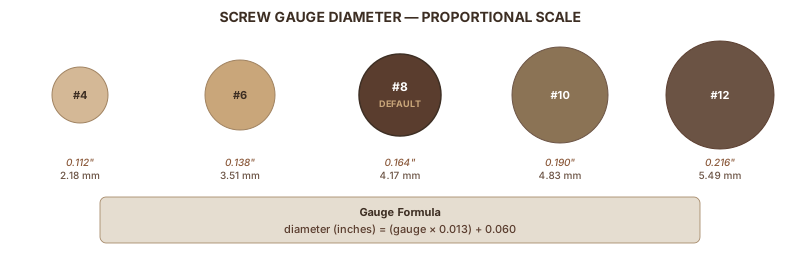
Wood screws are fasteners sized by gauge number — a diameter code where #6 is 0.138", #8 is 0.164", and #10 is 0.190" — selected by matching gauge, length, and pilot hole diameter to your stock thickness, wood species, and joint load. For most cabinet and furniture work, #8 covers the majority of joints; move to #10 for structural connections in thick stock. Apply the 2/3 rule for length: the threaded portion must penetrate at least 2/3 of the base piece's thickness. Always drill a pilot hole in hardwood to prevent splitting and ensure full clamping force.
| Most-used woodworking screw | #8 × 1-1/2" flat head |
| Gauge formula | Diameter = (gauge × 0.013) + 0.060 inches |
| Length rule | Thread penetration into base ≥ 2/3 × base thickness |
| Pilot hole — #8 in hardwood | 1/8" (3.2 mm) |
| Pilot hole — #8 in softwood | 3/32" (2.4 mm) |
| Step up to #10 when | Joints thicker than 1-1/2", heavy loads, structural connections |
In this guide:
- Full screw size chart — #2 through #14
- How to choose: the 2/3 rule, gauge by application, softwood vs. hardwood
- Pilot hole and clearance hole chart
- What to use for hinges, tabletops, cabinets, and frames
- Why screws fail and how to fix it
Part 1: Full Wood Screw Size Chart
The gauge is a diameter code, not a measurement. Bolt Depot's wood screw reference confirms the formula: diameter (inches) = (gauge × 0.013) + 0.060. Each step up adds 0.013" of diameter. Small difference in thickness, but cross-sectional area scales as radius squared. Going from #8 to #10 increases area by 34%, which matters for pull-out strength in dense wood.
| Gauge | Diameter (in) | Diameter (mm) | Common Lengths | Primary Use |
|---|---|---|---|---|
| #2 | 0.086" | 2.18 mm | 1/4"–1/2" | Delicate hardware, miniatures |
| #4 | 0.112" | 2.84 mm | 3/4"–1-1/4" | Small hinges, thin hardware, trim |
| #5 | 0.125" | 3.18 mm | 3/4"–1-1/4" | Light duty, small boxes |
| #6 | 0.138" | 3.51 mm | 3/4"–2" | Drawer hardware, small hinges, thin stock |
| #7 | 0.151" | 3.84 mm | 1"–2" | Light furniture, medium hardware |
| #8 | 0.164" | 4.17 mm | 3/4"–3" | General cabinetry and furniture — the default |
| #9 | 0.177" | 4.50 mm | 1"–3" | Heavy furniture, specialty applications |
| #10 | 0.190" | 4.83 mm | 1"–3-1/2" | Structural joints, heavy furniture, outdoor |
| #12 | 0.216" | 5.49 mm | 1-1/2"–4" | Heavy construction, workbenches |
| #14 | 0.242" | 6.15 mm | 2"–4" | Timberwork, heavy structural |
Woodworking uses #4 through #12. The sweet spot for furniture and cabinets is #6 through #10. #8 × 1-1/2" is the one screw worth stocking in bulk.
How Length Is Measured
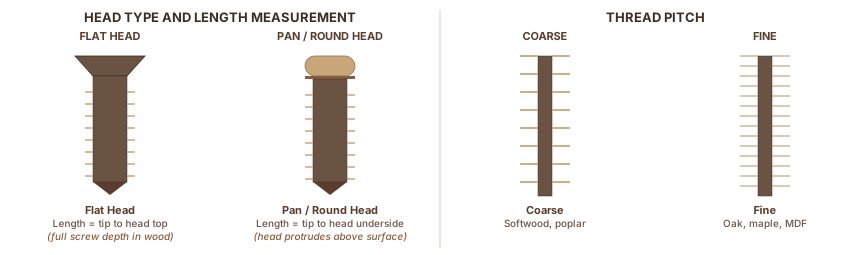
Flat head (countersunk): length includes the full screw from tip to top of head. When flush with the surface, all of the stated length is inside the wood.
Round or pan head: length measured from the underside of the head to the tip. The head protrudes above the surface, so the stated length is the shank depth in the wood.
This matters when you're calculating penetration into the base piece. A 1-1/2" flat-head screw puts 1-1/2" into the wood. A 1-1/2" round-head screw does the same, but leaves the head exposed.
Thread Types
Coarse thread is the standard for softwood. Deeper, wider threads spaced farther apart displace wood fibers rather than cut them, gripping fast in pine, fir, cedar, and poplar.
Fine thread works better in dense hardwood and engineered sheet goods. More threads per inch cut rather than displace, holding better in oak, maple, walnut, and MDF. Harder to drive, stronger holding in dense material.
Hi-Lo thread (GRK, Spax, and similar) alternates high and low thread profiles. The high thread cuts; the low provides a relief channel. Works in both soft and hardwood. More expensive, but worth it for furniture that takes repeated stress.
Part 2: How to Choose the Right Screw Size
The 2/3 Rule — Length Selection
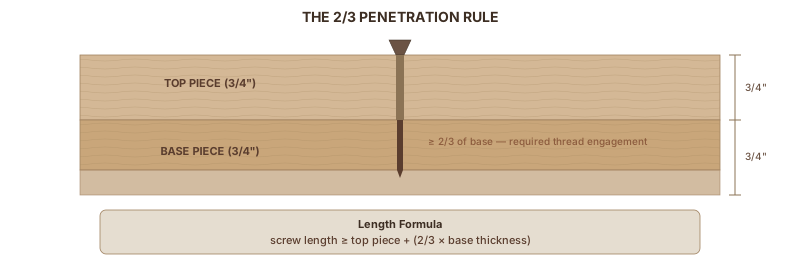
The threaded portion must penetrate at least 2/3 of the way into the base (receiving) piece. McFeely's screw guide frames this as the standard length selection rule: below that threshold, pull-out strength drops.
Formula: screw length ≥ top-piece thickness + (2/3 × base-piece thickness)
| Top piece | Base piece | Min screw length | Recommended |
|---|---|---|---|
| 1/4" plywood | 3/4" panel | 3/4" | #6 × 1" |
| 1/2" plywood | 3/4" panel | 1" | #8 × 1-1/4" |
| 3/4" board | 3/4" board | 1-1/4" | #8 × 1-1/4" |
| 3/4" board | 1-1/2" lumber | 1-3/4" | #8 × 2" |
| 3/4" board | 2" thick leg | 2-1/4" | #10 × 2-1/2" |
| 1/2" drawer side | 1/2" base | 7/8" | #6 × 1-1/4" |
Common mistake: stacking two 3/4" boards with 1-1/2" screws. The math: 3/4" (top) + 3/4" (base) = 1-1/2" total thickness. The screw tip reaches the back face with zero margin for error. Use 1-1/4" screws instead.
Gauge by Application
| Application | Gauge | Why |
|---|---|---|
| Thin stock under 3/8" | #4 | Larger gauges split thin material |
| Drawer hardware, small hinges | #6 | Enough strength, small entry hole |
| Cabinet face frames, shelf cleats | #8 | Standard cabinetry size |
| Standard cabinet door hinges | #8 | Balances head size and holding power |
| Heavy door hinges, table aprons | #10 | More shear strength under load |
| Structural framing, 2× lumber | #10 or #12 | High shear loads require thicker shank |
| MDF and particleboard | #6, fine thread | Coarse #8 blows out MDF near edges |
When in doubt, use #8. Rockler's wood screw buying guide puts it as the default for cabinet and furniture work.
Softwood vs. Hardwood
| Species | Category | Pilot hole | Thread | Notes |
|---|---|---|---|---|
| Pine, fir, cedar | Softwood | Optional at center; required near edges | Coarse | Coarse threads grip fast |
| Poplar, basswood | Soft/medium | Recommended | Coarse or fine | Good paint-grade choice |
| Red oak, white oak | Hardwood | Always required | Fine preferred | White oak is harder than red |
| Hard maple | Very hard | Always required | Fine | Splits without pilot; Janka 1450 |
| Walnut | Medium-hard | Recommended | Fine | Less splitting risk than maple |
| Cherry | Medium | Recommended | Fine | Can seize when gummy. Pilot prevents it. |
| MDF / particleboard | Engineered | Required near edges | Fine or washer-head | Standard screws blow out edges |
End grain rule: McFeely's screw size comparisons notes that screws driven into end grain hold about 25–30% as much as screws into face or edge grain. Never rely on end-grain screwing for a structural connection. Use longer screws, epoxy, or threaded inserts when end grain is unavoidable.
Part 3: Pilot Hole and Clearance Hole Chart
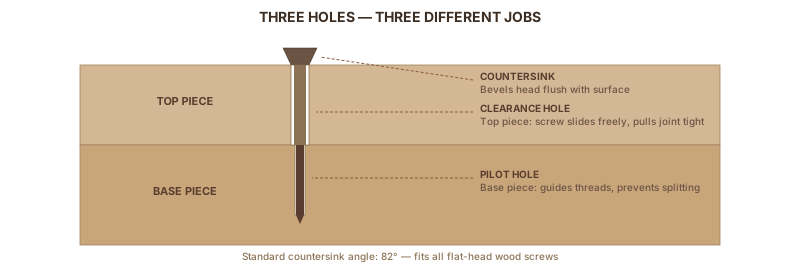
Three different holes, three different jobs. A pilot hole goes into the receiving piece to prevent splitting and guide the threads. A clearance hole goes through the top piece so the screw slides freely and the head pulls the joint tight. A countersink bevels the surface so a flat-head screw sits flush. Bolt Depot's pilot hole chart is the source for the sizes below.
Skip the clearance hole and the threads catch in the top piece, holding the joint apart instead of closing it.
| Gauge | Pilot — softwood | Pilot — hardwood | Clearance hole | Countersink diam |
|---|---|---|---|---|
| #4 | 1/16" (1.6 mm) | 5/64" (2.0 mm) | 7/64" (2.8 mm) | 1/4" |
| #5 | 5/64" (2.0 mm) | 3/32" (2.4 mm) | 1/8" (3.2 mm) | 9/32" |
| #6 | 5/64" (2.0 mm) | 3/32" (2.4 mm) | 9/64" (3.6 mm) | 5/16" |
| #7 | 3/32" (2.4 mm) | 7/64" (2.8 mm) | 5/32" (4.0 mm) | 11/32" |
| #8 | 3/32" (2.4 mm) | 1/8" (3.2 mm) | 11/64" (4.4 mm) | 3/8" |
| #9 | 7/64" (2.8 mm) | 9/64" (3.6 mm) | 3/16" (4.8 mm) | 7/16" |
| #10 | 7/64" (2.8 mm) | 9/64" (3.6 mm) | 3/16" (4.8 mm) | 7/16" |
| #12 | 1/8" (3.2 mm) | 5/32" (4.0 mm) | 7/32" (5.6 mm) | 9/16" |
Standard countersink angle: 82°, for all flat-head wood screws.
Field test: hold the drill bit beside the screw shank (not the threads). For softwood, the bit should be slightly narrower than the shank. For hardwood, match it exactly.
Always drill a pilot when:
- Any hardwood species
- Softwood within 2" of a board edge or 6" of end grain
- Gauge #10 or larger in any species
- Material thinner than 3/4"
Combo countersink bits drill the pilot hole, clearance hole, and countersink in one pass. For #8 screws, a #8 tapered countersink bit is the most efficient setup in the shop. They run $8–15 and eliminate three separate setups.
Part 4: What to Use for Common Woodworking Applications
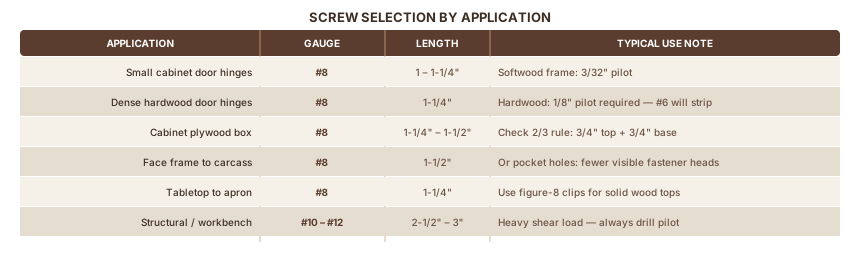
Hinge Attachment
Small cabinet door hinges (softwood frame):
- Screw: #8 × 1" or 1-1/4"
- Pilot: 3/32" in pine
- The screw must reach at least 3/4" past the hinge leaf into the frame, not just through the leaf thickness
Heavy cabinet door hinges (maple or dense hardwood):
- Screw: #8 × 1-1/4" minimum — per LP Screw's hinge guide
- Pilot: 1/8" in maple. Dense grain breaks screw heads without a pilot hole.
- A #6 will strip in maple. Go to #8.
Entry door hinges (3" butt hinge):
- Screw: #10 × 1-1/2"
- Pilot: 9/64" in hardwood, 7/64" in softwood
- For load-bearing doors, one 3" screw through the hinge frame into the wall stud adds significant resistance to racking
Tabletop Fastening
Figure-8 fasteners or Z-clips:
- Screw into apron: #8 × 1-1/4"
- Screw up into tabletop: #8 × 1" (threading up into the underside, not through)
- Never screw straight down through the apron rail into the top. Solid wood expands and contracts seasonally. A fixed screw cracks the top over time.
Pocket hole fastening into tabletop:
- For 3/4" stock: 1-1/4" pocket-hole screws, fine thread, pan head
- These are Kreg-specific screws, not standard wood screws. Use Kreg's sizing chart for pocket holes.
Cabinet Carcass and Face Frames
3/4" plywood box assembly:
- #8 × 1-1/4" or 1-1/2"
- 2/3 rule check: 3/4" (top) + 1/2" (2/3 × 3/4" base) = 1-1/4" minimum. Either length works.
Face frame to carcass:
- #8 × 1-1/2" driven through the face frame into the box side
- Or use pocket holes in the back face of the frame. Fewer visible heads.
Frame and Structural Assembly
2× lumber framing:
- #10 × 2-1/2" standard; #10 × 3" for workbenches and load-bearing assemblies
- #10 × 3" or #12 × 3-1/2" in leg vise hardware and structural joints
- Elsewhere, overkill is fine. You want this thing to outlast you.
Drawer Construction
1/2" plywood drawer sides:
- #6 × 1-1/4" at corner joints
- Pilot: 5/64" in softwood plywood
- Pocket holes in thin plywood give more consistent results with fewer splits
Part 5: Why Screws Fail and How to Fix It
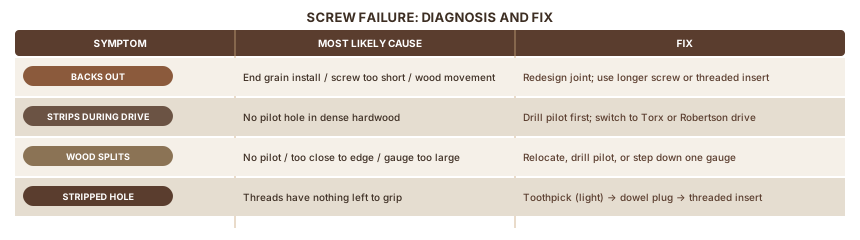
Screw backs out over time
End grain installation: threads can't hold. End grain gives 25–30% of face-grain holding power.
- Fix: redesign the joint. Add a biscuit, dowel, or pocket hole. Use a threaded insert for critical connections.
Screw too short: insufficient thread engagement.
- Fix: pull it out, use a longer screw, verify with the 2/3 rule.
Wood movement cycling the fastener loose: seasonal expansion and contraction works the screw back out.
- Fix: for hardware, use a lock washer. For wood-to-wood connections, use clips or buttons at the tabletop instead of fixed screws.
Screw strips during installation
No pilot hole in hardwood: dense fibers resist the threads. Torque transfers to the drive head and strips it.
- Fix: drill first, then drive.
Phillips drive camming out: Phillips was designed for assembly-line torque limits. Power drivers exceed them. The bit walks out of the head.
- Fix: switch to square (Robertson) or Torx. Both seat without camming.
Worn drive bit: a worn #2 Phillips is the most common cause of stripped screw heads.
- Fix: keep fresh bits. They're cheap. Extraction is not.
Wood splits during driving
- No pilot hole in hardwood
- Screw too close to the board edge. Stay at least 1.5× the screw diameter from any edge.
- Gauge too large for the material thickness
Fix: relocate the screw, drill a pilot, or step down one gauge.
Stripped hole: screw spins, won't tighten
Toothpick method (light duty: drawer pulls, #6 or smaller hardware):
- Remove the screw
- Dip three or four round toothpicks in wood glue
- Pack the hole tightly
- Let cure 24 hours
- Snap flush with a chisel
- Drive the screw back in
According to Family Handyman's stripped hole repair guide, the toothpick method restores 40–60% of original holding strength. Fine for a drawer pull. Not for a load-bearing hinge.
Wooden dowel plug (medium duty, permanent): Drill the stripped hole to the next common dowel size. Glue in a short dowel section. Let cure. Re-drill the pilot. Drives like new wood.
Threaded insert (structural applications): Install an E-Z LOK or similar metal insert. It accepts machine screws and holds full strength in compromised wood. The right answer for workbench hardware, jig fixtures, and anything that takes repeated torque.
Part 6: When to Skip Screws
Three situations call for something other than screws: when wood movement needs to stay free, when visibility matters, or when the joint takes racking stress.
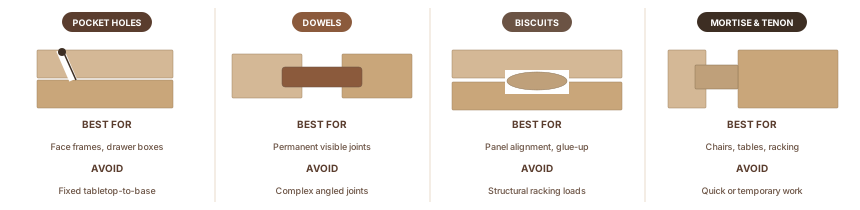
Pocket hole joinery combines an angled screw with a dedicated pocket. Fast, strong, and good for face frames, drawer boxes, and workbench assembly. Wrong for tabletop-to-base connections: the fixed screw location fights wood movement. Uses dedicated pocket-hole screws, not standard wood screws.
Dowels are wood-to-wood pins glued into aligned holes. No visible hardware. Strong when aligned. Requires a drill press or a quality doweling jig. Better than screws for permanent joints in visible locations.
Biscuits are oval compressed-wood wafers glued into matched slots. Good for alignment and light reinforcement. Not a structural replacement for screws or mortise-and-tenon.
Mortise and tenon is the answer for chairs, tables, and anything that takes racking stress. No hardware. Wood-to-wood. Screws can reinforce a loose tenon, but they can't replace one.
Screws are the wrong tool when:
- Gluing up solid panels. Glue alone is stronger. Screws add nothing and complicate flattening.
- Fastening tabletop to base. Use figure-8 clips, Z-clips, or shop-made buttons to allow seasonal movement.
- Joining end grain to end grain under load. Threads pull out. Use mechanical joinery or threaded inserts.
Where This Fits
Return to this guide any time a project requires hardware, cabinetry joinery, or structural connections. Bookmark the pilot hole table. It's the one you'll need mid-project with a drill in your hand.
Project guides for a bookcase, side table, and cutting board reference this guide for fastener selection at each joint. Those are good next reads if you're building one of those pieces.
For hardware going into MDF or particleboard, edge distance and pilot hole sizing matter more than in solid wood. A #6 fine-thread near the edge beats a #8 coarse anywhere close to a panel edge.
Sources
Screw specifications drawn from fastener manufacturer data; selection rules and application guidance from woodworking retailers and shop publications; repair methods from established DIY references.
- Bolt Depot — Wood Screw Diameters — gauge formula and diameter table
- McFeely's Guide to Woodworking Screws — 2/3 penetration rule and thread type selection
- Rockler Wood Screw Buying Guide — gauge selection by application
- McFeely's Screw Size Comparisons — end grain holding strength (25–30% of face grain)
- Bolt Depot — Wood Screw Pilot Hole Sizes — softwood and hardwood pilot hole specifications
- LP Screw — Choosing the Right Hinge Screws — hinge-specific screw selection by load and species
- Family Handyman — Fix a Stripped Screw Hole — toothpick method strength estimate (40–60%)
- AFT Fasteners Wood Screw Dimensions — technical specifications cross-reference
- Woodcraft Wood Screw Sizes Guide — woodworking context and application notes
How We Research
We don't take affiliate revenue or accept review units. Picks come from multi-source research — manufacturer specs, OSHA / EPA / ASTM regs, and long-form practitioner threads — plus Ahmed's hands-on use where relevant. When we recommend something, we explain why.
Up Next
1½" Wood Screws
WOOD & MATERIALS · Beginner