
F Clamps at a Glance
F-clamps use a threaded screw to apply 300 to 1,200 lbs of sustained force. That's the right tool for any glue-up that needs to hold for 30 minutes or more. Quick-grip (trigger) clamps top out around 100 to 150 lbs and can slip under sustained load, but they're unbeatable for one-handed alignment and temporary holds. Know which task calls for which, and you'll stop second-guessing yourself at the bench.
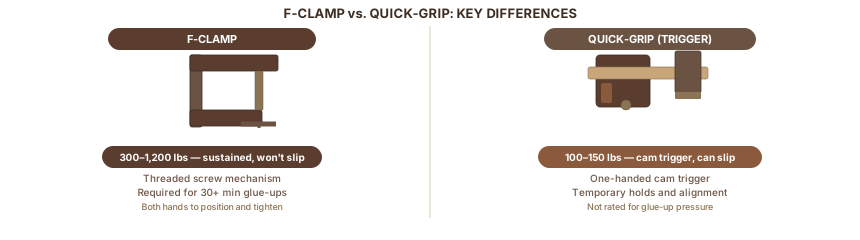
| F-clamp clamping force | 300–1,200 lbs (light to heavy-duty) |
| Quick-grip clamping force | 100–150 lbs max |
| F-clamp jaw opening range | 4"–36"+ depending on bar length |
| Throat depth (both types) | 2–4" from the edge of your work |
| Clamp spacing for edge glue-ups | Every 6–8" along the joint |
| Quick-grip for glue-ups? | No — insufficient sustained force |
In this guide:
- Which clamp for which task
- How to use an F-clamp
- Clamping strategy for glue-ups
- Keeping both types working
Part 1: How F Clamps and Quick-Grip Clamps Work
Understanding the mechanism tells you why these clamps have different force limits, and why that matters.
The F-Clamp: Anatomy and Force
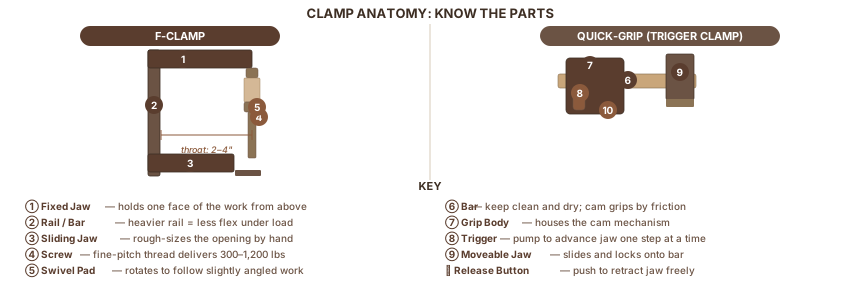
The clamp gets its name from its shape. Two horizontal bars connect to a vertical steel rail, forming the letter F. The top bar is the fixed jaw. The bottom bar is the sliding jaw, which moves freely along the rail to rough-size the opening. A threaded screw and T-handle on the lower jaw do the final tightening.
That screw is where the force comes from. The mechanical advantage of a fine-pitch thread lets you apply 300 to 1,200 lbs of clamping force with a few turns of your wrist. Light-duty models (like Pony's standard F-clamps) are rated at around 300 lbs. Heavy-duty steel models reach 1,200 lbs or more.
The swivel pad at the screw tip rotates to follow slightly angled surfaces. It also reduces point loading on soft wood, though you'll still want a protective pad for finished or soft surfaces.
One spec that gets overlooked: throat depth. This is the distance from the steel rail to the centerline of the screw. Standard F-clamps have 2 to 4 inches of throat. That limits how far from the edge you can apply pressure. For reaching into the center of a wide board, you need a deeper-throat option or a different clamp type entirely.
The rail itself matters more than most beginners realize. Thin rails flex under moderate load. That flex translates to uneven pressure along the joint. Heavier rails cost more, but they hold their geometry under load.
The Quick-Grip: One-Handed Speed and Its Tradeoffs
A quick-grip clamp (Irwin's trademark name) works by squeezing a pistol-grip trigger. Four fingers pump the trigger; the jaw advances along a steel bar via a cam mechanism. Release the trigger and the jaw locks in place. Push a button on the body and the jaw slides back freely.
The cam mechanism is what makes one-handed operation possible, and it's also what limits the clamp's force. A screw mechanism can sustain pressure indefinitely. A cam mechanism is limited by the spring geometry and the grip between the cam and the bar. In practice, quick-grip clamps max out around 100 to 150 lbs. Irwin's own product listings put their Quick-Grip Mini at 140 lbs.
That number sounds adequate until you look at what glue actually requires. Titebond's clamp pressure guidance calls for 100 to 150 PSI for softwoods and 175 to 250 PSI for domestic hardwoods. A quick-grip at 100 lbs over a 1" x 6" joint face delivers about 17 PSI. That's not enough.
One more limitation: the cam relies on clean, dry contact with the bar. Sawdust, dried glue, or oil on the bar breaks that contact. The clamp slips. It's the most common complaint about quick-grips, and it's entirely preventable with basic maintenance.
Part 2: F Clamp vs. Quick-Grip: Which One to Reach For
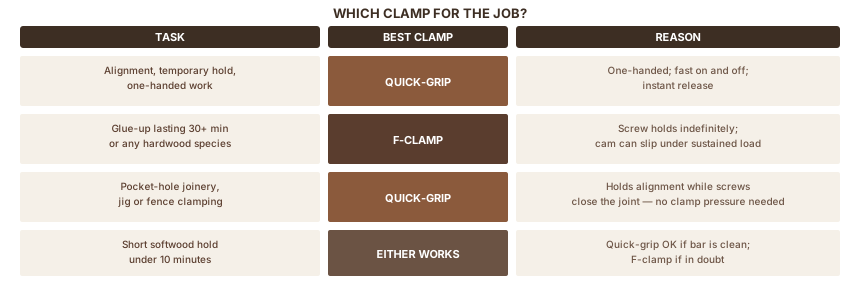
This is the question the SERP doesn't answer well. Here's a direct decision table based on task type.
| Task | Best Clamp | Why |
|---|---|---|
| Temporary hold while driving screws | Quick-grip | Speed; one-handed; instant release |
| Pocket-hole joinery assembly | Quick-grip | One hand holds clamp; other drives screw |
| Dry-fit check before gluing | Quick-grip | Fast on and off |
| Aligning panels before fastening | Quick-grip | One-handed positioning |
| Softwood glue-up under 10 minutes | Either | Quick-grip adequate for very short holds |
| Any glue-up lasting 30+ minutes | F-clamp | Cam can slip; screw holds indefinitely |
| Hardwood glue-up (oak, maple, walnut) | F-clamp | Quick-grip can't reach 175–250 PSI |
| Face-gluing (table legs, laminations) | F-clamp | Sustained high force required |
| Edge-gluing boards into a panel | F-clamp + bar/pipe | Quick-grip not rated for this |
| Box or carcass assembly with glue | F-clamp | Joints need real pressure to close fully |
| Holding a jig or fence | Quick-grip | Temporary; no pressure needed |
| One-handed work | Quick-grip | F-clamp requires both hands to apply |
The 30-Minute Line
Quick-grip clamps work for short holds. The cam mechanism is good enough for the 5 to 10 minutes it takes to drive screws or check a fit. For glue-ups, you need the clamp to hold constant pressure while the adhesive cures — often 30 to 60 minutes for PVA glues at room temperature. The screw on an F-clamp does this without slipping. The cam on a quick-grip often doesn't, especially if the bar picks up any sawdust during the glue-up.
One experienced woodworker on LumberJocks put it plainly: "Quick-grip type clamps max out at less than 100 pounds of clamp pressure while glue professionals recommend about 250 pounds."
What Quick-Grips Actually Do Well
This isn't a knock on quick-grip clamps. They're genuinely useful tools. One-handed positioning is something an F-clamp simply cannot do. For assembly work where speed matters and pressure doesn't, a quick-grip is the right tool. Keep a few on your bench at all times.
Part 3: When F Clamps Shine
F-clamps are the right tool when sustained pressure is what the joint needs.
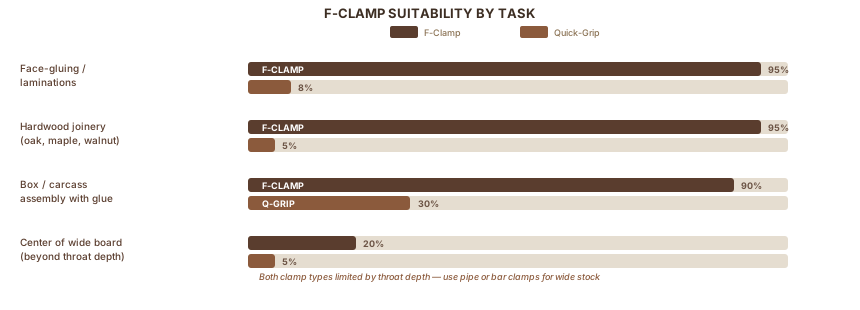
Face-gluing is where F-clamps are hardest to replace. Building up thick stock for table legs, turning blanks, or bent laminations requires even pressure across two flat faces. Space F-clamps every 6 to 8 inches and alternate pressure side to side if the assembly allows.
Hardwood joinery is another clear win. A mortise-and-tenon joint in oak or walnut needs real clamping force to close fully. Quick-grip clamps can't deliver it. F-clamps can.
Small panel glue-ups (two to four boards, up to 24 inches wide) work well with F-clamps. For anything wider, add bar clamps or pipe clamps to the mix.
Box and carcass assembly with glue and dowels or biscuits. The joints need to seat completely before the glue starts to set. Use F-clamps with protective pads and check for square before full pressure.
Where F-clamps fall short: they're slow to apply when you have a dozen holding spots to cover, and they can't reach the center of wide stock. If you're doing high-volume work or clamping far from an edge, look at pipe clamps or parallel-jaw bar clamps.
Part 4: When Quick-Grip Clamps Earn Their Place
Quick-grip clamps are not a budget substitute for F-clamps. They do a specific job better than any other clamp.
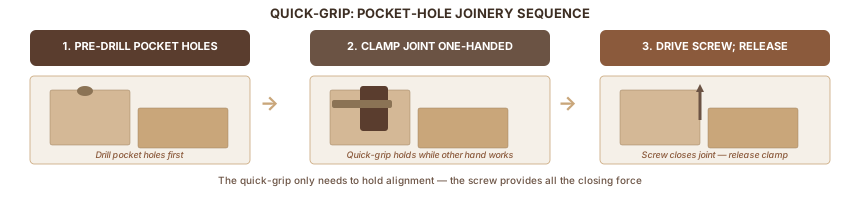
Pocket-hole joinery is the textbook use case. You hold the joint with one hand on the quick-grip, drive the pocket screw with the other. The joint closes under screw tension, not clamp pressure. The quick-grip is just keeping things aligned while that happens.
Temporary positioning during assembly. Before you commit fasteners, you often need to hold two pieces in relation to each other while you check for square, measure, or make adjustments. Quick-grip on and off in seconds.
Jig and fence holding. When you clamp a straightedge guide to a panel for routing or sawing, quick-grip clamps let you position and lock the guide with one hand.
Solo assembly in tight spaces. When both hands are occupied and you need a third, quick-grip is it.
The honest limitation: do not use quick-grip clamps for any glue-up where the joint will bear structural load. That includes glue-only edge joints, face glue-ups, or any joint in hardwood. The risk is not that the clamp fails dramatically. The risk is that it slips just enough to starve the joint of contact pressure, and you don't find out until the joint opens six months later.
Part 5: How to Use an F Clamp
Using an F-clamp correctly is simple once you understand what you're controlling: even jaw contact, appropriate pressure, and alignment throughout the tightening sequence.
-
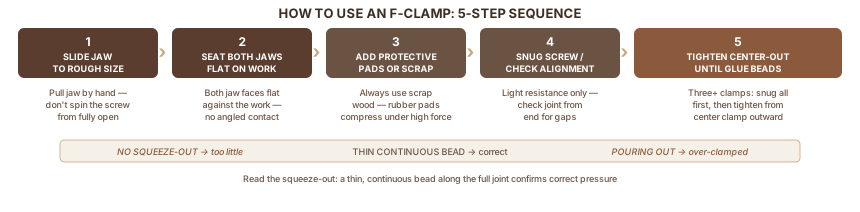
Slide the jaw to rough position. Pull the sliding jaw by hand to approximately the right opening. No need to spin the screw down from a fully open position.
-
Seat both jaws. Place the fixed jaw against one surface and bring the lower jaw up against the other. Both jaw faces should sit flat against the work.
-
Add protective pads. Before tightening, place a scrap wood block between each jaw pad and the workpiece. This is not optional for softwood; it's a good habit on all species.
-
Snug the screw. Turn the handle until you feel light resistance. The swivel pad should be fully seated.
-
Check alignment. Look at the joint from the end. Check for gaps. Confirm nothing shifted when the clamp contacted the work.
-
Tighten to working pressure. For a glue-up, "working pressure" means a thin, continuous bead of glue along the full length of the joint. That's your visual confirmation.
-
Apply multiple clamps center-out. If you're using three or more clamps, snug them all to light contact first. Then tighten from the center clamp outward. Tightening one end fully before starting the other shifts the assembly.
Pressure calibration:
- No squeeze-out: too little pressure, or too little glue
- Thin continuous bead: correct
- Glue pouring out everywhere: over-clamped; the joint inside is starved of adhesive
You do not need to crank F-clamps as tight as possible. Finger-tight plus a firm turn is enough for most softwood joints. An extra half-turn for hardwoods. More than that and you're compressing wood fibers and squeezing out the glue you need inside the joint.
Part 6: How to Use Quick-Grip Clamps
-
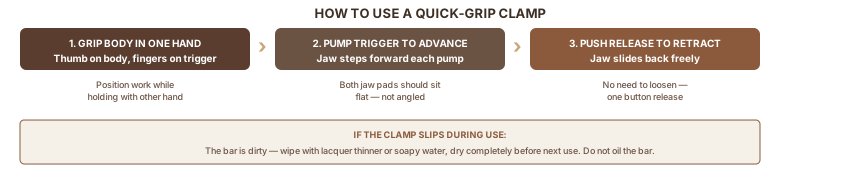
Hold the grip in one hand. Thumb on the body, four fingers on the trigger.
-
Position and pump. Move the jaw toward the work with one hand while holding the work with the other. Squeeze the trigger repeatedly; the jaw advances step by step.
-
Check seating. The jaw pads should be flat against both surfaces, not angled.
-
Release: Press the release lever or button on the body. The jaw slides back freely.
Pocket-hole example:
- Pre-drill the pocket holes
- Apply the quick-grip one-handed to hold the joint
- Drive the pocket screw with the other hand
- Release the clamp; the screw is holding the joint now
If a quick-grip slips during use: The bar is dirty. Wipe it down with lacquer thinner or soapy water before the next use. A clean bar is the most important maintenance step.
Part 7: Size and Capacity: Matching the Clamp to the Job
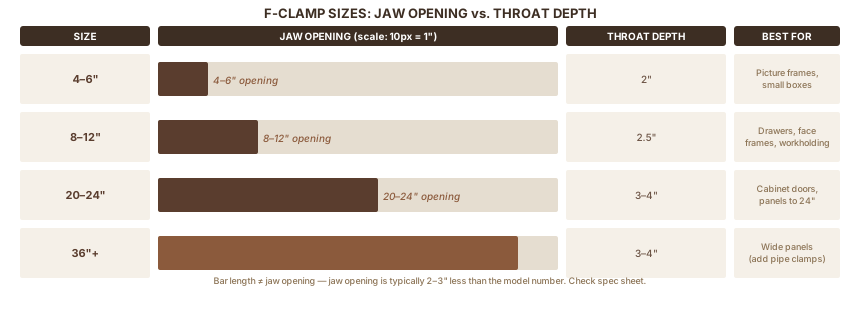
F-Clamp Sizes
| Jaw opening | Throat depth | Best for |
|---|---|---|
| 4–6" | 2" | Picture frames, small boxes, thin stock |
| 8–12" | 2.5" | Drawer parts, small face frames, workholding |
| 20–24" | 3–4" | Cabinet doors, edge-glued panels up to 24" wide |
| 36"+ | 3–4" | Wide panels (consider pipe clamps for this range) |
Throat depth matters as much as bar length. If you need to apply pressure 3 inches from an edge, verify your clamp's throat before assuming it reaches. Standard F-clamps are usually 2 to 4 inches. If you need more, a deep-throat F-clamp or a bar clamp is the solution.
Quick-Grip Sizes
Quick-grips come in 6-inch and 12-inch jaw openings. Buy the 6-inch for tight spots and the 12-inch for general use. The throat depth on most quick-grip models is 2.5 to 3.5 inches.
What "Bar Length" Actually Tells You
The number on an F-clamp (12-inch, 24-inch) refers to the bar length, not the jaw opening. Jaw opening is typically a couple of inches less than bar length once you account for the jaw bodies. When in doubt, look for the "maximum jaw opening" number on the spec sheet, not just the model designation.
Part 8: Clamping Strategy for Glue-Ups
Most clamping mistakes come from one of two sources: too few clamps or clamps placed wrong. Here's a concrete system for both.
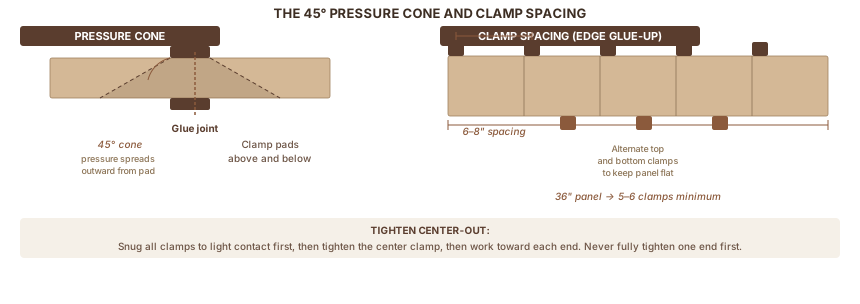
The 45-Degree Pressure Cone
Each clamp jaw distributes pressure in a roughly 45-degree cone radiating from the pad. Your goal is to position clamps so adjacent cones overlap before reaching the glue joint. For standard 3/4-inch boards, this means placing clamps every 6 to 8 inches.
Fine Woodworking's guidance: 12 inches is the maximum spacing for most panel work. Closer is better, and narrower boards need tighter spacing than wider ones because the pressure cone has less material to spread through.
Edge-Gluing a Panel: Step by Step
This is the most common application where clamping technique makes or breaks the result.
-
Set up your clamps first. Lay them on a flat surface, spaced 8 inches apart. Handles alternating left and right.
-
Prepare cauls. Cut boards (MDF or hardwood) to match the panel length. Apply packing tape to the face that contacts the wood. This prevents squeeze-out from gluing the caul to your panel.
-
Apply glue and assemble. Coat both mating edges. Bring the boards together.
-
Lower the panel onto the clamps. Add a top set of cauls. Snug all clamps to light contact.
-
Check for flat. Sight down the panel. If it's cupping upward between clamps, you have all clamps on one side. Alternate top and bottom.
-
Tighten center-out. Start with the middle clamp, work toward each end.
-
Read the squeeze-out. Continuous thin bead along the full joint means the glue is under pressure everywhere. Dry spots mean a problem.
Alternating above and below is not optional for keeping panels flat. Clamps on one side only push the panel into a cup. Alternating top and bottom cancels that. For a 36-inch panel, use at least 5 to 6 clamps total.
How Many Clamps
The honest answer: more than you think. One per 6 to 8 inches of joint length is the standard. For a 36-inch panel that's 5 to 6 clamps minimum. Running short of clamps mid-glue-up is a real problem; dry the panel before you have enough coverage and you'll get a joint that looks fine until load is applied.
Part 9: Protecting Your Work from Clamp Marks
Metal jaw pads can dent soft wood under moderate pressure. Even harder species will show jaw marks if pressure is high or concentrated. This is easy to prevent.
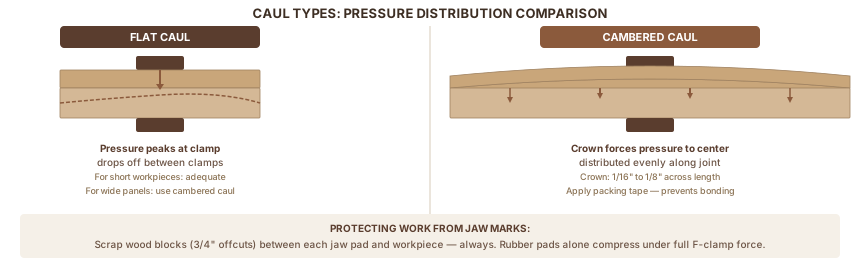
Scrap wood blocks are the simplest solution. A 3/4-inch piece of scrap between each jaw and the workpiece spreads the pressure over more surface area. Keep a pile of small offcuts near your clamp storage.
Commercial rubber jaw pads snap onto most F-clamp jaws. They work well for moderate pressure but can compress enough under full F-clamp force that you're effectively clamping with the hard jaw body anyway.
Flat cauls (straight boards placed between the clamps and the work) distribute pressure along the full length of a glue-up instead of at a series of points. Essential for anything wider than 6 inches.
Cambered cauls are the advanced version. A cambered caul has a slight crown machined or planed into its face, typically 1/16 to 1/8 inch of bow across the length. When clamped, the crown forces pressure toward the center of the joint. Without a camber, clamp pressure hits hardest at the clamp locations and drops off between them. Cambered cauls distribute it evenly. This is Fine Woodworking's recommended technique for any wide panel glue-up.
To make them: cut a board slightly wider than your workpiece. Plane or sand a gentle crown into the face, checking with a straightedge until you see 1/16 to 1/8 inch of light in the center. Apply packing tape to the clamping face so squeeze-out doesn't bond the caul to your panel.
Part 10: Keeping Both Types Working
F-Clamp Maintenance
The screw mechanism is simple and durable, but it needs occasional attention to stay that way.
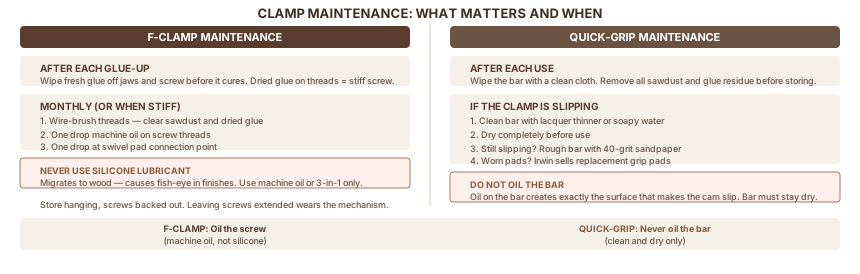
After every glue-up: Wipe fresh glue off the jaws and screw before it cures. Dried glue on threads is harder to remove and makes the screw stiff.
Monthly (or when anything feels stiff):
- Wire-brush the threads to clear accumulated sawdust and dried glue
- Use mineral spirits on a rag for stubborn buildup
- Apply one drop of machine oil to the screw threads — this dramatically reduces the effort needed to tighten
- Apply one drop at the swivel pad connection point (where the screw tip meets the riveted washer that delivers clamping force) — this point sees enormous friction and is almost always neglected
One critical warning: avoid silicone lubricants. Silicone oil migrates to wood surfaces and causes fish-eye and adhesion failure in finishes. Machine oil, 3-in-1 oil, or dry lubricants like paste wax on threads are safe.
Storage: Hang clamps on a wall rack with screws backed out. Leaving screws fully extended reduces spring tension in the mechanism over time. A dry storage environment prevents rust on the rail and jaws.
Quick-Grip Maintenance
The most important rule: keep the bar clean and dry.
The cam mechanism grips the bar by friction. Sawdust, dried glue, or any surface contamination breaks that friction and causes slipping. The bar needs to stay dry and clean.
After each use: Wipe the bar with a clean cloth. Remove any sawdust or glue before storing.
If the clamp is slipping:
- Clean the bar with lacquer thinner or soapy water
- Dry completely before using
- If still slipping, rough up the bar surface with 40-grit sandpaper — this restores the cam's grip texture
Do not oil the bar. Adding oil creates exactly the surface condition that makes the cam slip.
Worn mechanism pads: The rubber gripping pads inside the trigger body wear down over time. Irwin sells replacement pads for their Quick-Grip line. If cleaning doesn't fix persistent slipping, replace the pads before giving up on the clamp.
Part 11: How F Clamps Compare to Bar, Pipe, and C-Clamps
F-clamps are one tool in a larger ecosystem. Knowing where they fit prevents buying the wrong thing.
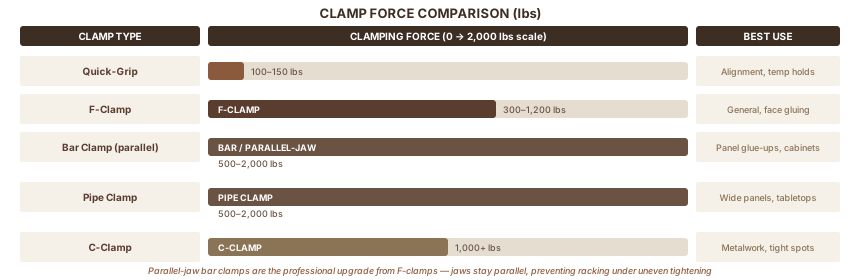
| Clamp type | Clamping force | Best for | Limitation |
|---|---|---|---|
| F-clamp | 300–1,200 lbs | General woodworking, face gluing, medium glue-ups | Limited throat depth; fixed bar length |
| Quick-grip (trigger) | 100–150 lbs | Temporary holding, one-handed, alignment | Not for glue-ups; slips under sustained load |
| Bar clamp (parallel jaw) | 500–2,000 lbs | Long edge glue-ups, cabinets, panels | More expensive than F-clamps |
| Pipe clamp | 500–2,000 lbs | Wide panels, tabletops, large frames | Setup overhead; pipes are heavy |
| C-clamp | 1,000+ lbs | Metalwork, very tight spots | Shallow throat; slow to apply |
Parallel-jaw bar clamps (Bessey K-body, Jorgensen cabinet master) are the professional upgrade from F-clamps for panel work. The jaws stay exactly parallel throughout the clamping range, which prevents the racking that can occur with F-clamps tightened unevenly. They cost significantly more. For a first shop, F-clamps are the right starting point. Add parallel-jaw clamps when panel glue-up quality becomes a bottleneck.
Pipe clamps are the right tool for large, wide glue-ups. You buy the head sets and source the pipe separately, which makes them cheap per inch of reach. They're heavy and slower to set up than F-clamps, but for a 48-inch tabletop, they're the practical solution.
Part 12: What to Buy First: A Beginner Clamp Kit
This is the question that trips up most people setting up a first shop. Here's a direct starting point.
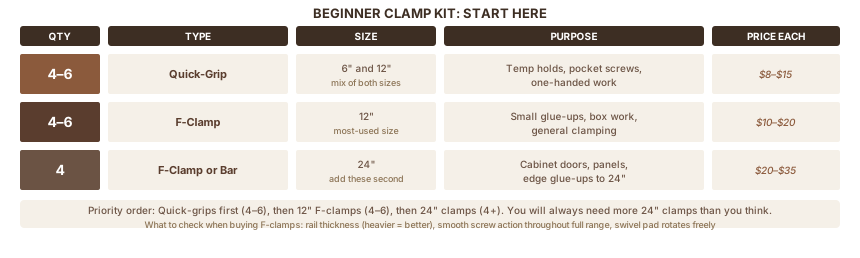
| Type | Quantity | Size | Purpose |
|---|---|---|---|
| Quick-grip (trigger) | 4–6 | 6" and 12" | Temporary holds, one-handed work |
| F-clamps | 4–6 | 12" | Small glue-ups, box work, general holding |
| F-clamps or bar clamps | 4 | 24" | Cabinet doors, panels up to 24" wide |
| Pipe clamp sets | 2 | 3/4" (add pipe when needed) | Large panel work — buy when you need them |
What to look for in F-clamps:
- Rail thickness: Heavier rail resists deflection under load. On a budget, this is the one spec worth paying attention to.
- Screw quality: The screw should turn smoothly throughout its range. The swivel pad should rotate freely.
- Jaw pads included: Some sets include rubber jaw pads; others don't. Not essential if you keep scrap on hand.
Rough price ranges:
- Quick-grip clamps: $8 to $15 each, cheaper in multi-packs
- 12-inch F-clamps: $10 to $20 each
- 24-inch bar clamps: $20 to $35 each
- Pipe clamp head sets: $20 to $30 per pair; pipe is extra
What to add next: More 24-inch clamps. Whatever your initial count, it won't be enough once you start building panels and furniture. Add 24-inch clamps as budget allows before moving to longer sizes.
Part 13: Where Clamping Fits in Your Woodworking
Clamping knowledge is prerequisite to any glue-up, which means it's prerequisite to almost every joint. Before you can build panels, cases, or furniture, you need to be able to apply even pressure without damaging your work or losing joints to inadequate force.
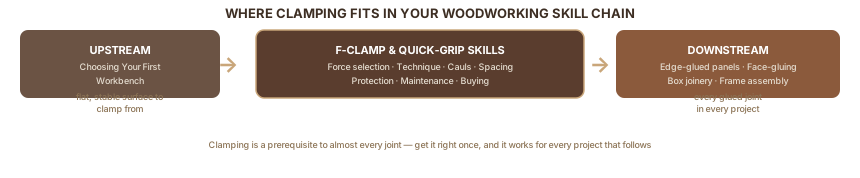
Upstream: Choosing Your First Workbench — having a flat, stable surface to clamp from makes every glue-up more predictable.
Downstream: Edge-gluing panels for tabletops, face-gluing for built-up stock, box construction, frame assembly — all of these rely on the clamping strategy and technique covered here.
Related: Bar clamps and pipe clamps extend the reach and force of F-clamps for larger work. If you're building furniture regularly, those are the natural next additions to the kit.
Sources
[Sources will be added in Step 9]
Tools Used
Also Referenced
Tagged
How We Research
We don't take affiliate revenue or accept review units. Picks come from multi-source research — manufacturer specs, OSHA / EPA / ASTM regs, and long-form practitioner threads — plus Ahmed's hands-on use where relevant. When we recommend something, we explain why.
Up Next
LED Shop Lights: Lumens, CRI, Layout
WORKSHOP · Beginner