
Melamine Wood at a Glance
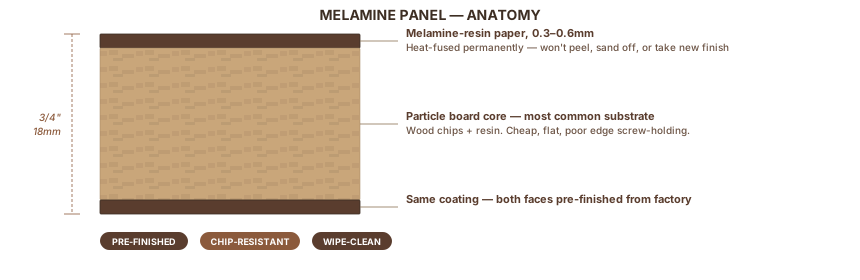
Melamine isn't a solid material. It's a plastic coating fused to particle board or MDF under heat and pressure. The result is a pre-finished panel that's wipe-clean, scratch-resistant, and the standard choice for kitchen cabinet boxes, closet systems, and utility storage. Raw edges absorb moisture, cuts chip with the wrong blade, and when the surface gets damaged you replace the panel rather than repair it.
| What it is | Melamine-formaldehyde resin fused to particle board, MDF, or plywood |
| Most common thickness | 3/4" (18mm) for cabinet carcasses; 5/8" for shelves and doors |
| Typical 4×8 sheet price | $30–45 (particle board core, white); Home Depot and Lowe's both carry it |
| Best use | Pre-finished cabinet boxes, closet shelving, utility storage |
| Key limitation | Exposed edges absorb moisture and swell; surface chips if cut with the wrong blade |
In this guide:
- What melamine actually is and why people get confused
- When to use melamine vs. MDF vs. plywood
- How to cut it without chipping
- Edge banding and fasteners
Part 1: What Melamine Actually Is
People say "I'm building this out of melamine" the same way they say "I'm building this out of plywood." The difference: plywood is a material. Melamine is a coating applied to a substrate. Getting this wrong means buying the wrong thing at the store.
The coating process
Melamine starts as decorative paper, either plain white, wood grain, or solid color, soaked in melamine-formaldehyde resin. That resin-impregnated paper goes into a hydraulic press with a substrate at around 150–200°C. The heat triggers crosslinking in the resin, which forms a permanent chemical bond with the core's surface. Vizusolution's thermofusing overview covers the manufacturing process in detail.
The surface won't peel, sand off, or take a new finish. It's not sitting on top of the core. It's bonded into it.
The three substrates
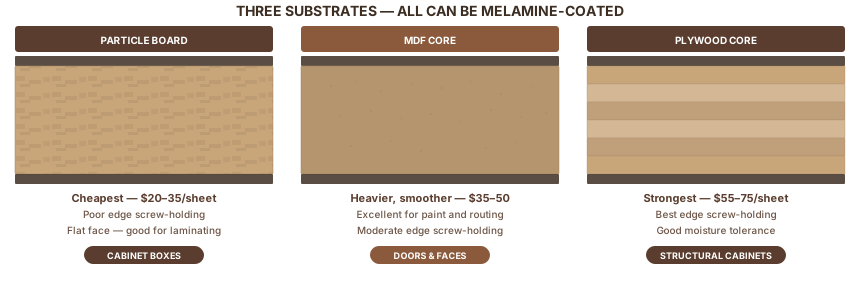
When you buy "melamine" at a hardware store, the panel under the coating is almost always one of three things:
Particle board (also called chipboard or flakeboard): wood chips and shavings pressed together with resin. The cheapest and most common core for melamine panels, the material behind most home improvement store shelving and white cabinet boxes. Low screw holding at the edges and vulnerable to moisture once the melamine face gets cut or damaged.
MDF (medium-density fiberboard): fine wood fibers bonded with resin. Denser, smoother, and heavier than particle board. MDF-core melamine routes slightly cleaner and takes a more consistent finish. For a look at raw MDF on its own, the MDF primer guide covers what it's made of and how it differs.
Plywood core: less common in standard melamine panels, but shows up in commercial-grade applications where structural strength matters. Better screw holding than particle board, especially at edges.
Standard thicknesses run 3/8", 1/2", 5/8", and 3/4". Cabinet boxes use 3/4" (18mm). Shelves typically drop to 5/8" to cut weight.
Part 2: Where Melamine Makes Sense
The one reason to choose melamine over raw sheet goods: a pre-finished surface. No primer, no paint, no laminating. Cut it, band the edges, assemble the box, and the project looks finished.
Projects where melamine earns its place
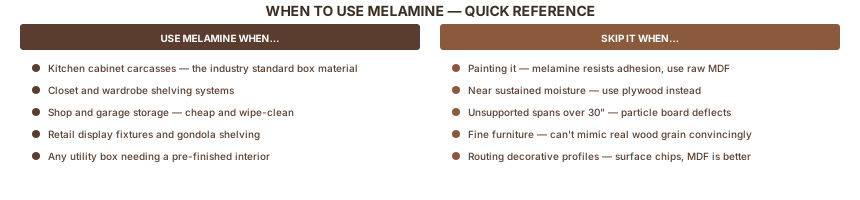
Kitchen cabinet carcasses: the boxes behind your cabinet doors (sides, tops, bottoms, fixed shelves) are almost always melamine-faced particle board in production cabinetry. The door faces run as MDF or solid wood with a painted or routed profile, but the structure behind them is melamine. That's what keeps production cabinet costs down.
Closet and wardrobe systems: melamine shelving and hanging panels in white or almond finish look clean and consistent without site painting. IKEA's PAX wardrobe is melamine-faced particle board at commercial scale.
Shop and garage storage: lower cost than birch plywood, easy to wipe down after a dusty afternoon. Many woodworkers build shop cabinet carcasses from melamine and use plywood or solid wood for the drawers and door faces. See sheet goods for cabinets for a fuller breakdown of material choices by application.
Retail display fixtures: store gondola shelving, display cases, counter fixtures. Pre-finished surface means fast installation without on-site spray finishing.
When to skip it
If you'll paint it: melamine resists paint adhesion. To paint melamine you'd need to scuff-sand and prime with a bonding primer, which is more work than starting with raw MDF.
Near sustained moisture: the particle board core swells when wet. Under a sink, in a bathroom, or anywhere pooled water is a real risk, the raw edges will absorb moisture and fail. Plywood holds up far better.
For unsupported spans over 30": 3/4" particle board deflects under load. A shelf longer than 30" needs a fixed center divider or a step up to 1" material.
Fine furniture: melamine can mimic wood grain but doesn't look like real wood. When the material itself is part of the design, use plywood with a real veneer face or solid lumber.
Part 3: Melamine vs. MDF vs. Birch Plywood
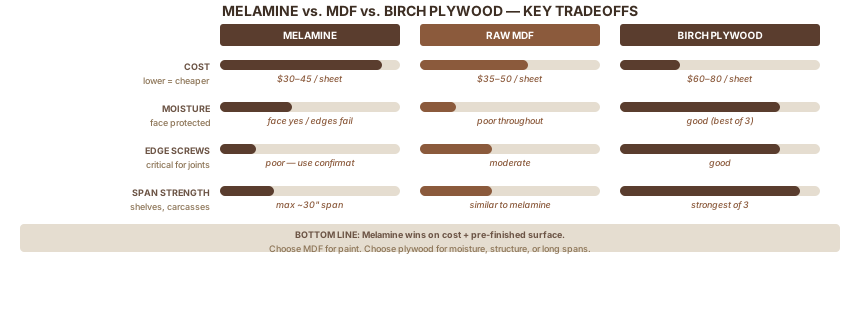
Three materials, one job: flat stable sheet goods for furniture and cabinets. They solve it differently. Cutr.com's melamine vs. MDF breakdown and Woodworking Clarity's comparison both cover the workability differences in detail. The table below distills the practical tradeoffs.
| Factor | Melamine (particle board core) | Raw MDF | Birch Plywood 3/4" |
|---|---|---|---|
| Typical 4×8 price | $30–45 | $35–50 | $60–80 |
| Weight (approx.) | ~87 lbs | ~95 lbs | ~55 lbs |
| Surface | Pre-finished, no painting needed | Must prime and paint | Must finish |
| Moisture resistance | Surface resists; edges fail quickly | Poor throughout | Good (especially BB-grade) |
| Paintability | Poor, resists adhesion | Excellent | Good |
| Edge screw holding | Poor | Moderate | Good |
| Face screw holding | Good with pilot holes | Good | Good |
| Router profiles | Limited, chips easily | Excellent, machines clean | Good |
| Span strength | Weak (max ~24–30") | Similar | Stronger |
| Best for | Pre-finished boxes, closets | Painted doors, moulded profiles | Structural carcasses, moisture risk |
Use melamine when you want a ready-to-use surface and won't be painting or routing profiles into it. Use raw MDF when you're painting or need a smooth base for veneer or laminate. Use birch or oak plywood when structural strength or any moisture risk is in the picture.
RELATED: Sheet Goods for Cabinets A deeper breakdown of when to use particle board, MDF, and plywood for cabinetry applications.
Part 4: Cutting Without Chipping
The most common complaint about melamine: edges chip when cut. The hard, brittle resin surface tears as the saw blade exits the material. Fix it with the right blade and the right orientation.
Blade selection
Use an 80–100 tooth carbide-tipped blade. More teeth means a smaller bite per tooth and a cleaner exit cut. Geometry matters too: a Triple Chip Grind (TCG) blade alternates a flat-top tooth with a chamfered raker tooth. That combination shears the melamine surface instead of tearing it.
A standard 40-tooth crosscut blade works in a pinch but expect some chipping. A 24-tooth ripping blade will chip badly. A dull blade of any kind will chip.
Blade and material orientation
Most beginners get this backwards:
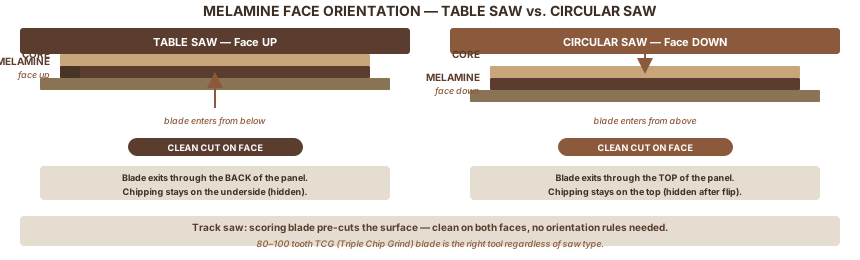
- Table saw: melamine face UP. The blade enters from below as you push the sheet through. Your good surface sits on the entry side, which cuts cleanly.
- Circular saw: melamine face DOWN. The blade exits upward, so your face sits on the cleaner exit side.
- Track saw with a scoring blade: cleanest cut on either face orientation. The scoring blade runs 1–2mm ahead of the main blade and pre-cuts the surface so the main blade follows a clean line. Bob Vila's melamine cutting guide walks through track saw technique in detail.
- Jigsaw: last resort only. Almost always chips. Use it for rough cutouts in non-visible areas.
Steps that reduce chipping further
Masking tape on the cut line: run painter's tape along both sides of your cut line before marking. The tape holds the surface together as the blade passes.
Score with a knife first: a sharp utility knife along the cut line on both faces cuts the resin before the blade does, especially helpful on cross-grain cuts.
Consistent feed rate: don't rush, don't stop mid-cut. Forcing the saw or hesitating causes chipping and dulls the blade. Smooth and steady is faster in the end.
Per The Handyman's Daughter's melamine cutting guide, combining the right blade orientation with masking tape handles most chipping in a home shop.
Part 5: Edge Banding Exposed Edges
Every cut exposes raw core material at the edge. Raw particle board looks bad and absorbs moisture on contact. All exposed edges in a finished project need to be covered.
The moisture problem
BTM Joinery's edge moisture analysis is direct: the particle board core absorbs water once the face is breached. Cabinet toekicks, bathroom vanity sides, and sink base bottoms are common casualties. The melamine face protects the top and bottom surfaces. The edges are where the material fails.
Iron-on melamine tape
For shop work and home cabinetry, pre-glued iron-on melamine tape is the standard:
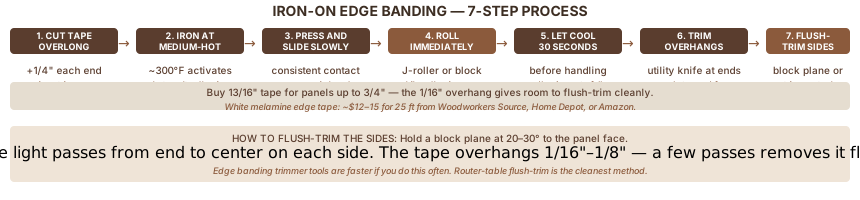
- Cut the tape overlong by about 1/4" at each end
- Set your iron to medium-hot (the hot-melt adhesive activates around 300°F)
- Press and slide the iron slowly along the tape in consistent contact
- Roll immediately with a J-roller or a scrap block while the adhesive is still warm
- Let it cool for 30 seconds before handling
- Trim the end overhangs with a sharp utility knife, angling slightly toward the panel face
- Flush-trim the sides: the tape overhangs 1/16"–1/8" on each face. A block plane held at 20–30 degrees to the panel works well. An edge banding trimmer tool is faster if you have one. Woodworkers Source's edge banding trimming guide covers the router-table flush-trim approach.
Buy 13/16" tape for panels up to 3/4" thick. That 1/16" overhang gives you room to trim cleanly. White melamine edge tape from Woodworkers Source, Home Depot, or Amazon runs around $12–15 for a 25 ft roll.
Part 6: Fasteners That Hold
Particle board's reputation for stripping screws is earned, at the edges specifically. The face holds screws reasonably well. The edge grain, where you're driving into the end of the material, is the weak point.
The screw data
A peer-reviewed study in ResearchGate's screw holding capacity analysis tested melamine-faced particle board and fiberboard per ASTM D1037-12. Surface screw holding consistently outperformed edge screw holding in both materials. Of all fasteners tested, confirmat screws delivered the highest joint strength.
Matching the fastener to the joint
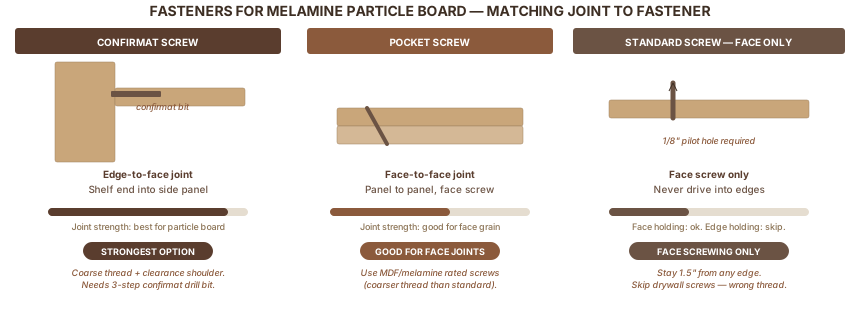
Confirmat screws for edge-to-face joints. This is the most common cabinet joint: a shelf end meeting a side panel. Confirmat screws were designed specifically for particle board assembly. They have a coarse thread on an oversized shank with a clearance shoulder under the head. You need a three-step confirmat drill bit (countersink, clearance hole, and pilot in one pass). McFeely's confirmat assembly guide covers installation in detail. Confirmat joints pull tight and stay tight, which standard wood screws in particle board edges don't.
Pocket screws for face-to-face joints. Use pocket screws rated for MDF/melamine (coarser thread than standard wood pocket screws). The Kreg jig handles consistent pocket hole drilling without fuss.
Standard screws only for face screwing, never edge screwing. Pre-drill a 1/8" pilot hole. Keep screws at least 1-1/2" from any edge.
Skip drywall screws: brittle and the wrong thread geometry for particle board. They fracture under load.
Three rules for assembly
Pilot drill every screw. Melamine cracks around screws driven without a hole first. "Just tight" is the correct torque target. More strips the hole permanently. Corner blocks, small plastic or wood L-brackets glued inside cabinet corners, distribute load across multiple screw points when confirmat access isn't possible.
For the full carcass assembly sequence — box layout, face frame attachment, and drawer fitting — see how to build a cabinet.
Sources
These sources covered workability, manufacturing, and practical cabinetry with enough specificity to be citable.
- Vizusolution — Melamine Thermofusing Process — manufacturing and lamination details
- McFeely's — Confirmat Assembly for Particle Board and Melamine — fastener guidance specific to this material
- ResearchGate — Screw Holding Capacity Study (ASTM D1037-12) — peer-reviewed screw performance data
- cutr.com — Melamine vs. MDF Comparison — material properties comparison
- Woodworking Clarity — Melamine vs. MDF — workability and use-case comparison
- BTM Joinery — Why Edging on Melamine Boards Matters — moisture and edge protection
- The Handyman's Daughter — How to Cut Melamine — blade selection and technique
- Bob Vila — How to Cut Melamine and Veneer — cutting technique and orientation
- Woodworkers Source — Flush Trim Edge Banding — edge banding trimming methods
- Home Depot — Melamine Panel Products — current availability and pricing
Tools Used
Also Referenced
How We Research
We don't take affiliate revenue or accept review units. Picks come from multi-source research — manufacturer specs, OSHA / EPA / ASTM regs, and long-form practitioner threads — plus Ahmed's hands-on use where relevant. When we recommend something, we explain why.
Up Next
Maple Plywood vs Birch Plywood: Which for Cabinets?
WOOD & MATERIALS · Beginner