
Maple Plywood vs Birch Plywood at a Glance
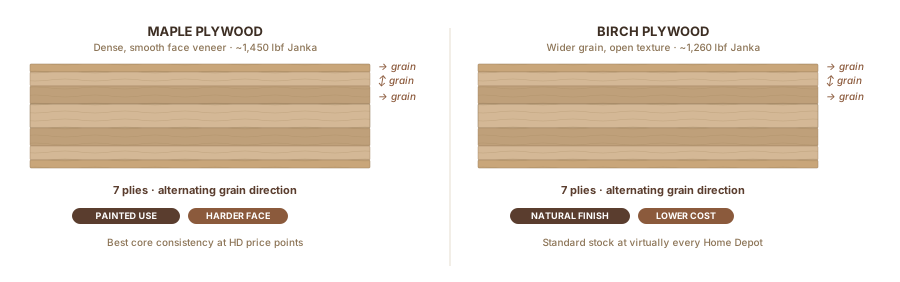
Maple plywood costs roughly $15–25 more per sheet than birch but takes stain more evenly and dents less under daily use. If you're painting cabinet boxes, buy birch — once topcoat dries, the species disappears. If you're staining cabinet doors or building exposed shelving you want to finish clear, maple is the right call. Both are sold as 4×8 hardwood-faced sheets in 1/4", 1/2", and 3/4". The difference shows in cost, finish behavior, and dent resistance, not in how either one cuts or screws.
| Maple | Birch | |
|---|---|---|
| Janka hardness | ~1,450 lbf | ~1,260 lbf |
| Paintability | Smooth surface, minimal grain telegraph | Slightly open texture; spray over roll for best results |
| Availability | HD and lumber yards; not always in-store | Standard stock at virtually every Home Depot |
| Price difference | ~$15–25 more per sheet | Lower base price |
| Best for | Painted boxes, exposed surfaces, drawer fronts | Natural-finish interiors, hidden cabinet boxes, budget builds |
In this guide:
- Where they're the same
- Where maple wins
- Where birch wins
- What both buyers miss
- When to skip both
- How to buy each one
Part 1: Where They're the Same
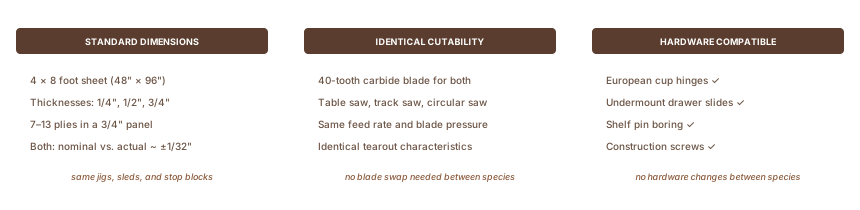
Both maple and birch plywood are domestic hardwood-faced panels: a thin hardwood veneer over a multi-ply core, typically 7 to 13 layers in a 3/4" sheet. Both come in standard 4×8 foot sizes and in 1/4", 1/2", and 3/4" thicknesses. Both accept standard cabinet hardware: European hinges, undermount drawer slides, shelf pins. Both cut cleanly with a 40-tooth carbide blade.
If you're building a hidden interior box that you plan to prime before painting, either species will get you there. The differences surface on exposed faces, painted surfaces, and loaded shelves.
Part 2: Where Maple Wins
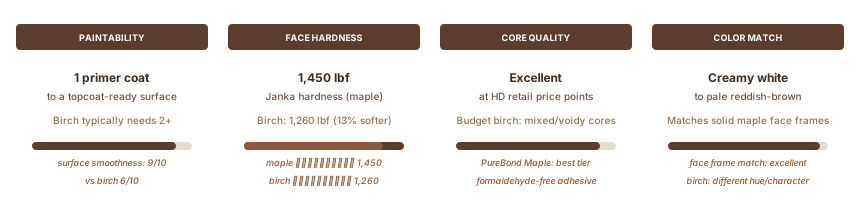
Paintability. Maple's face veneer is denser and smoother than birch at the same grade. Under primer, grain barely shows. One sanded coat typically gives you a surface ready for topcoat. Current Cabinetry's comparison guide describes maple's surface as accepting finishes "more uniformly," producing "a polished look" with minimal prep. For painted cabinet boxes and drawer fronts, maple is the right call.
Face hardness. Maple runs around 1,450 Janka lbf; birch sits at 1,260 — values consistent with the species data published in the [USDA Forest Products Lab Wood Handbook](https://www.fpl.fs.usda.gov/documnts/fplgtr/fpl_gtr190.pdf). That 15% gap shows on exposed surfaces. Birch dents more easily under the same impact. That difference matters on drawer fronts, box tops, and anything handled daily.
Core quality at retail price. Columbia Forest's PureBond Maple (HD SKU 263012) uses a tight-grained core with soy-based, formaldehyde-free adhesive, the same used in PureBond Birch. At comparable price points, maple tends to come with a more consistent core than budget birch options at big-box stores.
Color matching. Maple is creamy white to pale reddish-brown. If your project mixes plywood carcass with solid maple face frames, the color match is close enough to work without fuss.
Part 3: Where Birch Wins
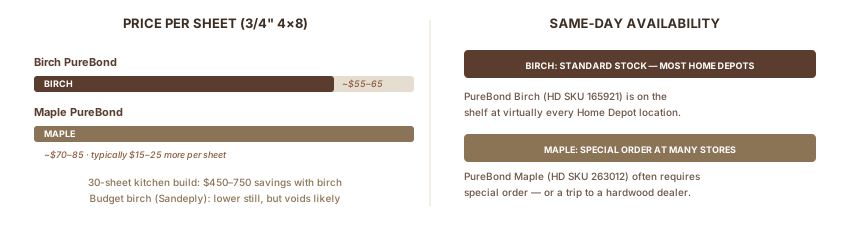
Availability. Columbia Forest's PureBond Birch (HD SKU 165921) is standard stock at virtually every Home Depot. Maple plywood is harder to find in-store; many stores carry it by special order only. For a same-day build start, birch is the realistic choice.
Price. Birch typically runs $15–25 less per sheet than equivalent maple. On a 30-sheet kitchen build, that's $450–750 in material savings. Sandeply (ARAUCO, also at HD) comes in at lower prices, acceptable for hidden interior boxes but problematic for structural shelves with voids.
Interior box applications. For hidden back panels, bottom panels, and interior verticals, birch delivers all the rigidity and screw-holding you need at lower cost. The inside of a cabinet box doesn't need maple's face quality.
Stained interiors. Under Danish oil or amber lacquer, birch's wider grain shows more character than maple. If you're finishing box interiors clear rather than painting them, birch often looks better.
RELATED: Red Oak vs. White Oak Plywood If neither maple nor birch fits your project, oak is the other major hardwood cabinet plywood at the home center — open grain, strong, and widely available in red or white.
Part 4: Critical Considerations Both Buyers Miss
Paintability: roll versus spray
Birch face veneer has a slightly open, papery texture that foam rollers accentuate. That texture shows as stipple under semi-gloss or satin topcoats when viewed in raking light. Spraying closes the gap. Atomized finish fills the surface texture. For brush-and-roll painters, maple gives noticeably cleaner results with less prep.
On maple: one primer coat, sand to 150 grit, second coat gives you a clean surface for topcoat. On birch: add that second primer coat even if the surface looks flat after the first. The texture tends to come back once topcoat goes on. If you're spraying either species, the difference mostly disappears.
Voids and flatness: the core is what matters
Core quality at a given price point determines the void rate. Species is secondary. As Bertastore's cabinet-grade plywood guide explains, "a birch face over a weak, voidy core still behaves like a weak panel where it counts: screw holding, edge durability, and flatness."
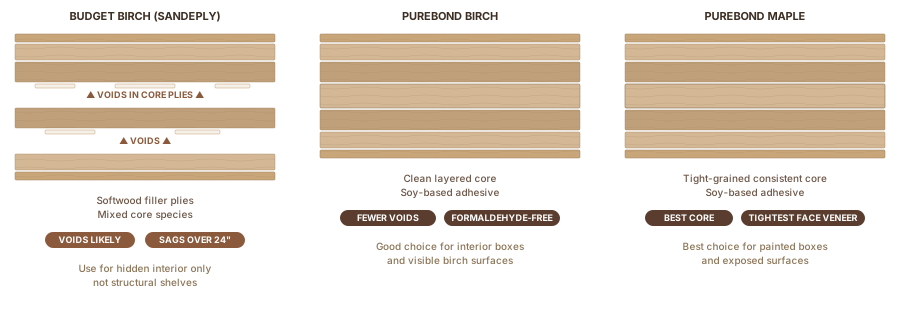
Three tiers at big-box retail:
- Budget birch (Sandeply, ARAUCO cabinet grade): mixed softwood core, inner-ply voids common, shelf sag likely over 24-inch unsupported spans
- PureBond Birch (Columbia Forest): better core, fewer voids, formaldehyde-free adhesive
- PureBond Maple: generally the best core at big-box retail prices
In-store check: sight down the sheet edge for ply gaps, lift one end to test for bow, inspect both faces for filler patches (dark plugs covering repairs). Put it back if two of three checks fail.
Edge banding behavior
Both species accept iron-on veneer tape and PVC edge banding. Birch end grain is more porous and absorbs adhesive unevenly, which leads to corner delamination under humidity cycling. Before banding birch, sand the end grain to 150 grit and wipe it clean. Maple's tighter end grain holds bonding more consistently from the start and holds up better in kitchens that see steam year after year.
Weight and warp
Per ThePlywood.com's weight chart, 3/4" hardwood plywood runs roughly 55–65 lbs per sheet for birch and 65–70 lbs for maple. Over a full kitchen build, that handling difference adds up. Neither species resists warping better than the other. Warp comes from uneven moisture exposure during storage, not the face veneer. Store flat and let sheets acclimate in your shop for 48 hours before ripping.
Part 5: When to Skip Both
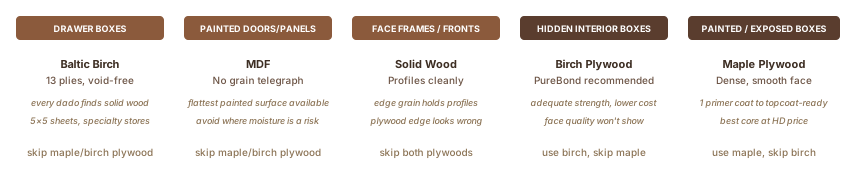
Drawer boxes: Use Baltic birch. At 13 plies and void-free throughout, every dado and dovetail cut finds solid material because there's no internal gap to blow out into. Baltic birch comes in 5×5 sheets at woodworking specialty stores. Use it for shop work and hidden boxes. It paints blotchily, so keep it off painted cabinet faces.
Painted flat panels (cabinet doors, wainscoting): Use MDF. MDF shows no grain telegraph and doesn't move seasonally. Cabinet shops use it for painted door panels because it gives the flattest painted surface available. Avoid it where moisture or structural load are concerns.
Face frames, door rails, drawer fronts: Solid wood. Plywood edge grain machines and finishes differently from face grain. It looks wrong on face frames and can't hold a clean profile.
Part 6: How to Buy Each One
For maple: Columbia Forest PureBond Maple (HD SKU 263012) or a local hardwood dealer. Many HDs don't stock it in-store, but a lumber yard near you likely does. Buy one extra sheet per project. Maple face veneer shows grain variation sheet-to-sheet, and you'll want a reserve for matching adjacent panels.
For birch: PureBond Birch (standard HD stock) for quality work. Sandeply only for budget interior boxes you're confident will stay under light load. Always inspect in-store: sight the edge for ply voids, check the face for bow, and reject anything with moisture staining or filler patches on both faces.
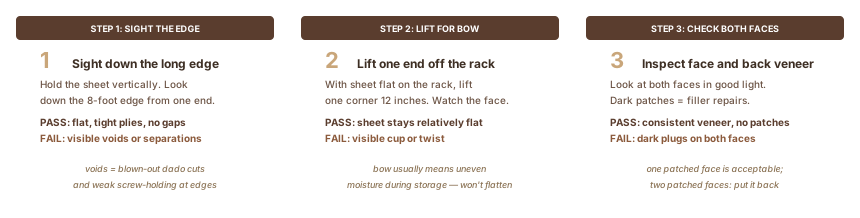
Which species you choose matters less than whether the specific sheet in your hands is flat and void-free. Check the edge before you leave the store.
For full cabinet box construction with either species, see sheet goods for cabinets. For birch as a cabinet-build material beyond plywood selection, see birch cabinets.
Part 7: Cabinet vs. Furniture Use
The cabinet vs. furniture decision changes which species earns its premium.
Kitchen cabinets. Boxes hide behind face frames and doors, so birch carcass plus solid-wood face frame is the long-running pro recipe. Spend the maple budget on face frames and door panels where eyes land. If you're building frameless (Euro-style) cabinets, the box edges show — banded with veneer tape — and maple's tighter end grain holds the band better through a kitchen's humidity swings.
Garage and shop cabinets. Birch is the right answer end-to-end. Heavy use beats up the surface anyway, and a coat of poly over birch hides plenty of small dings. Save $15–25 a sheet across a 12-cabinet shop wall and you've covered a decent set of drawer slides.
Built-in bookshelves and case goods. If the shelves carry a heavy load and you can see the underside, maple resists the visible dent that drops a corkscrew leaves on a softer face. For a paint-grade built-in, birch is fine — modern primers level the open texture once you spray the topcoat. For stained built-ins, especially in a finished living space, maple's uniform grain reads cleaner.
Furniture case goods (dressers, sideboards, TV stands). This is maple's strongest case. The grain on case sides reads under any clear or amber finish, and birch's variable end grain often shows blotch streaks even with conditioner. A dresser is one of the few projects where the species choice is visible from across the room.
Drawer boxes for either category. Skip both species. Use Baltic birch — 13 plies, void-free throughout, glues and dovetails like solid material. The drawer box is the one place the standard hardwood-faced sheet falls behind.
Part 8: What About Prefinished Plywood?
Both species are sold as UV-prefinished panels (typically labeled "white melamine on one face, prefinished on the other" or "shop-grade prefinished maple/birch"). Cabinet shops use them to skip the carcass-finishing step entirely — the face that shows inside the cabinet is already topcoated.
Where prefinished pays off: kitchen cabinet boxes, closet built-ins, and any hidden interior you'd otherwise scuff-sand and topcoat. The factory UV finish is harder than anything you'll spray in a home shop, and a 30-cabinet build saves ~6 hours of finishing labor.
Where it doesn't: anywhere you need to glue the face surface or where you're staining/painting the inside to a custom color. Prefinished panels reject most adhesives and topcoats, so you're locked into the factory color.
Buying notes: HD's online catalog lists both Columbia Forest PureBond UV-Prefinished Maple and PureBond UV-Prefinished Birch. Most stores stock prefinished birch and special-order prefinished maple. Match the unfinished and prefinished sheets from the same brand line if a single project mixes both — the tone shifts noticeably between Columbia Forest and Roseburg, even within the same species.
FAQ
Which holds screws better, maple plywood or birch plywood?
Both hold cabinet screws and shelf pins comparably when the core is sound. Maple's slightly denser face veneer holds the surface threads of a finish screw a touch better, but the difference is negligible compared to whether the inner plies have voids. A budget birch sheet with a softwood-filler core gives up screw-holding strength faster than the species choice would suggest. Per the APA Engineered Wood Association's panel construction guidance, hardwood plywood screw-holding behavior tracks core quality and ply count — not face species. Buy a clean PureBond panel in either species before worrying about which face holds tighter.
Can I use either one for a kitchen cabinet build?
Yes. Most production cabinet shops use birch carcasses with solid-maple face frames and doors, painted or stained as a system. For DIY, the safe recipe is birch boxes + maple (or paint-grade) doors. If your budget allows, all-maple gives a slightly more uniform interior look on Euro-style frameless boxes where the carcass face shows. Either way, build the carcasses out of 3/4" sheet and the backs out of 1/4".
What about paint-grade vs. stain-grade?
Paint-grade is birch's lane. Modern alkyd or hybrid primers fill birch's open grain texture in two coats, and once the topcoat goes on, the surface looks identical to maple at a fraction of the price per sheet. Stain-grade is maple's lane. Birch absorbs stain unevenly without a pre-stain conditioner, and even with conditioner, the result reads blotchy under amber or walnut tones. If you're staining anything that shows, buy maple — or buy birch and plan on a heavy gel stain.
Where do I find UV-prefinished maple or birch plywood?
Home Depot and Lowes both list prefinished panels online but stock varies by store. Hardwood dealers (Hartville, Boards & Beams, MacBeath) carry both species reliably and will quote within 24 hours. Columbia Forest's PureBond UV-Prefinished line is the most widely distributed; Roseburg and States Industries also produce prefinished hardwood plywood for the cabinet trade. Always inspect the prefinished face for shipping damage — UV finish chips are visible under raking light and don't repair cleanly.
Is there a hardness difference that actually matters in real cabinets?
Maple's 1,450 lbf Janka vs. birch's 1,260 lbf is about a 15% gap. On a kitchen cabinet door that sees daily handling for 20 years, you'll see slightly more dings on birch — visible on close inspection, not from across the room. On a shop cabinet, neither species' face hardness is your limiting factor; the corner that gets bumped by a hand truck dents either one the same way. The hardness difference matters most on horizontal surfaces under impact: drawer fronts, exposed shelves, and case tops. For vertical surfaces, the difference is academic.
Sources
Comparisons and specifications from the APA Engineered Wood Association, manufacturer product pages, plywood weight references, and cabinetry trade guides.
- APA — The Engineered Wood Association: Plywood — construction standards, ply count, span ratings, screw-holding factors
- Current Cabinetry — Maple vs. Birch for Cabinets — paintability, hardness comparison
- Columbia Forest PureBond Maple — Home Depot — product specifications, SKU 263012
- Columbia Forest PureBond Birch — Home Depot — product specifications, SKU 165921
- Bertastore — Cabinet Grade Plywood — core quality and void explanation
- King's Fine Woodworking — Baltic Birch Plywood — void-free construction, drawer box use
- ThePlywood.com — Plywood Weight Chart — weight data by species and thickness
- Forest Products Laboratory — Wood Handbook (FPL-GTR-190) — Janka hardness species reference
Up Next
Marine Plywood vs ACX Plywood
WOOD & MATERIALS · Beginner