
Dovetail Router Bits at a Glance
A dovetail router bit cuts the angled profile that makes a dovetail joint lock mechanically. The critical thing: the bit angle must match your jig's specification. Use the wrong angle and the joint won't fit, regardless of how carefully you set the depth. Porter-Cable jigs require 7°. The Leigh D4R Pro uses 8° for through dovetails and 14° for half-blind. Most other jigs use 14°.
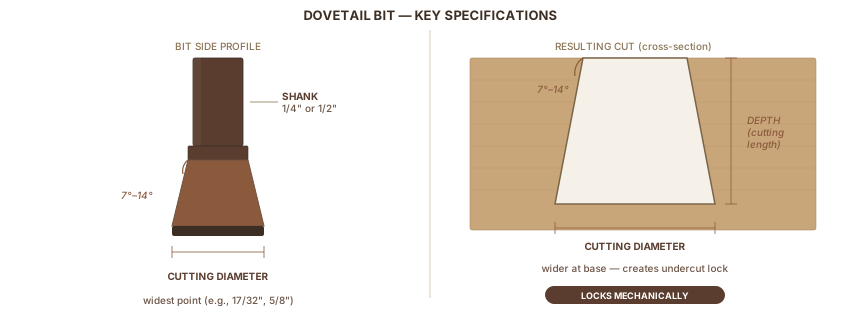
| Common angles | 7°, 8°, 9°, 14° (your jig determines which you need) |
| Most common size | 1/2" shank, 1/2"–5/8" cutting diameter |
| Half-blind depth | Template thickness + 3/8" from router base (~5/8" for most jigs) |
| Fit rule | Heighten to tighten · Lower to loosen |
| Top brand pick | Whiteside (USA, C3 micrograin carbide, accurate angles) |
| Shank recommendation | 1/2" whenever your router has a 1/2" collet |
In this guide:
- Check which angle your jig actually needs
- Set up for a good fit with test cuts
- Diagnose burning, tearout, and loose joints
- What to buy and why Whiteside
Part 1: What a Dovetail Bit Actually Does
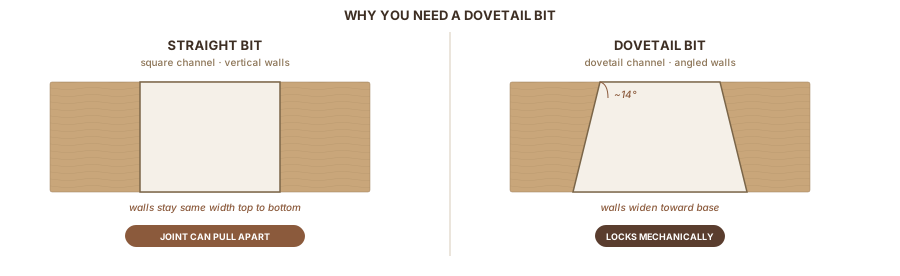
A straight bit cuts a square channel. A dovetail bit cuts a channel wider at the bottom than at the top. The angled flute creates the undercut that makes the joint lock mechanically. You can't cut a dovetail joint with a straight bit.
Reading the spec numbers
Every dovetail bit listing has four key numbers:
| Spec | What it means |
|---|---|
| Angle | Slope of the flute (7°, 8°, 9°, 14°); must match your jig |
| Cutting diameter | Maximum width the bit cuts (e.g., 17/32", 5/8"); also jig-specific |
| Cutting length | Maximum depth of the dovetail profile (e.g., 1/2", 7/8") |
| Shank diameter | What goes in the collet: 1/4" or 1/2" — use 1/2" when available |
Use a 1/2" shank bit whenever your router has a 1/2" collet. More shank mass means less vibration and cleaner shoulders. Save 1/4" shank bits for small routers and miniature dovetail work.
What the angle controls
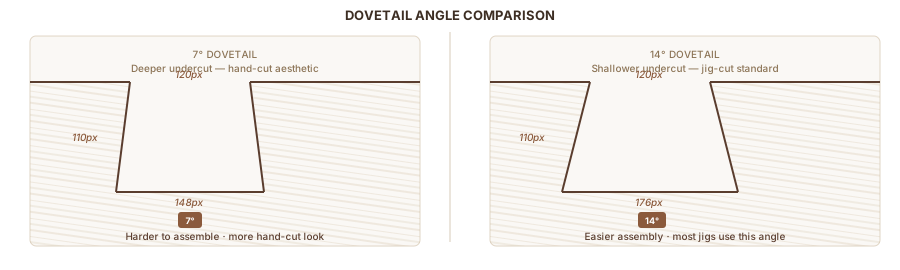
Lower angles (7°–9°) produce a deeper undercut. The joint is harder to press together and has more mechanical resistance. The joint looks closer to hand-cut work. These angles work best in hardwoods.
Higher angles (14°) produce a shallower undercut: easier assembly, more forgiving depth setting, and a clearly machine-cut look. This is the standard for half-blind dovetail jigs.
Part 2: Match the Bit to Your Jig
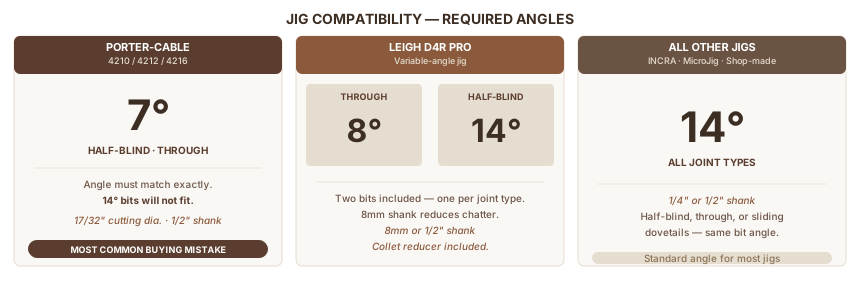
Most woodworkers assume 14° because it's the most common angle. Porter-Cable jigs require 7°. Use the wrong angle and the joint won't fit. The angle must match what the jig was designed for. Not approximately. Exactly.
Check your jig's manual before buying a bit. If you've lost the manual, the table below covers every major system.
| Jig | Joint type | Required angle | Cutting diameter | Shank | Notes |
|---|---|---|---|---|---|
| Porter-Cable 4210/4212/4216 | Half-blind | 7° | 17/32" | 1/2" | PC requires 7°. The most common gotcha. Comes with bit #43776PC. |
| Porter-Cable 4210/4212/4216 | Through | 7° | 17/32" dovetail + 13/32" straight | 1/2" | Two-bit pair; both included in the combo kit |
| Leigh D4R Pro | Through (tails) | 8° | Choose based on pin board thickness | 8mm or 1/2" | D4R includes a Leigh 1/2" 8° bit. 8mm shank = less chatter; collet reducer included. |
| Leigh D4R Pro | Half-blind | 14° | Choose based on pin board thickness | 8mm or 1/2" | D4R also includes a 1/2" 14° bit |
| INCRA Jig | Through | 7° | 5/8" or 3/4" | 1/2" | Some templates use 9°; check the specific template |
| INCRA Jig | Half-blind | 14° | 1/2" | 1/2" | Standard half-blind setup |
| MicroJig MatchFit | Sliding/fixtures | 14° | 1/2" | 1/2" | Designed for the 14° 1/2" MatchFit bit specifically |
| Shop-made or no jig | Sliding dovetail | Any | Typically 14° | 1/2" | Choose based on aesthetics and project scale |
Porter-Cable's 7° requirement is the most common bit-buying mistake. The 14° angle is so prevalent everywhere else that it seems universal. It isn't. If you own a PC jig, you need Whiteside's 7° 17/32" bit, not the generic 14° set from the home center.
Aftermarket bits work fine in any jig as long as the angle and diameter match. The jig doesn't know the brand. It knows the geometry.
Part 3: Half-Blind, Through, and Sliding Dovetails
The same bit, or the same type of bit, can cut all three. The setup changes significantly.
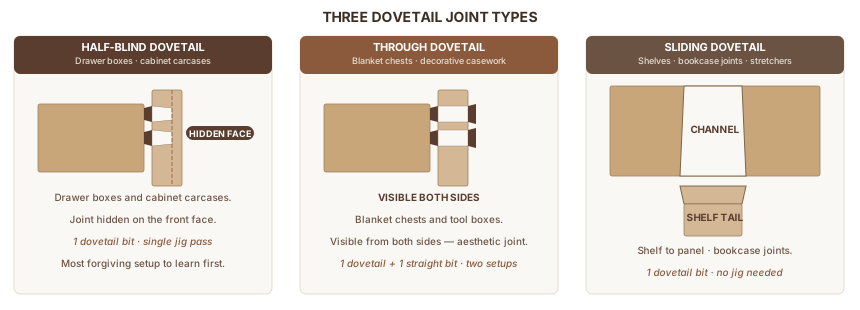
Half-blind dovetails
The standard drawer box joint. The joint is visible from the side but hidden from the front face. Jig-cut half-blind dovetails use a template that guides the router to cut both the tails and the pins in a single setup. The dovetail bit cuts the tails; a straight bit cuts the pins.
Depth controls the fit. That's the entire adjustment. The setup section below covers the exact procedure.
Start here if you're new to router dovetails. Half-blind is the most forgiving jig setup.
Through dovetails
Through dovetails are fully visible from both sides. They're the aesthetic choice for blanket chests, tool boxes, and decorative casework. They require separate cuts for the tails (dovetail bit) and the pins (straight bit). On Leigh-style variable-finger jigs, you can adjust the spacing to look like hand-cut proportions. A 7° or 8° angle with proper spacing is nearly indistinguishable from hand-cut work.
The two-bit relationship matters here: the diameters of your dovetail and straight bit must equal the specification in your jig's manual. On Porter-Cable jigs, the pair must sum to approximately 15/16". Woodsmith's half-blind dovetail guide covers this pairing in detail.
Sliding dovetails
A sliding dovetail connects a horizontal shelf or brace to a vertical panel. The channel is cut with the dovetail bit. Use it to attach shelves to carcass sides, rails to wine racks, and horizontal stretchers to vertical legs. The dovetail locks the joint in both tension and compression: it won't pull apart and won't sag.
The setup differs from a jig-cut joint:
- Cut the socket first. Use a straight bit to remove the bulk of the waste from the channel. This prevents the dovetail bit from doing all the heavy cutting.
- Shape the socket walls with the dovetail bit. Set the fence so the bit is centered on the channel. Make one pass, flip the board, make a second pass. Both walls get identical angles.
- Cut the tail on the mating piece. Router table with fence, same approach: one pass per face, sneaking up on fit in small increments.
- Test fit as you go. The tail should slide into the socket with firm hand pressure. Not a mallet tap. Not a fall-in loose fit.
Don't glue the full length of a long sliding dovetail. Wood movement will cause the joint to bind or crack. Glue only the first few inches.
For detailed technique, Fine Woodworking's sliding dovetail guide and the WoodWorkers Guild of America's sliding dovetail article both show the sequence clearly.
Part 4: Setting Up for a Good Fit
The depth setting procedure is the same for every jig-cut half-blind dovetail. Get this right on scrap before touching your project.
Install the bit
- Install the guide bushing in your router base. If your jig doesn't include a centering pin, get one. The Porter-Cable jig doesn't include one, and an off-center bushing creates joints that don't line up. Centering pins are widely available as accessories.
- Insert the dovetail bit through the bushing opening. Tighten the collet.
- Rotate the bit by hand. Confirm it doesn't contact the bushing walls. Any contact damages both.
Set the depth
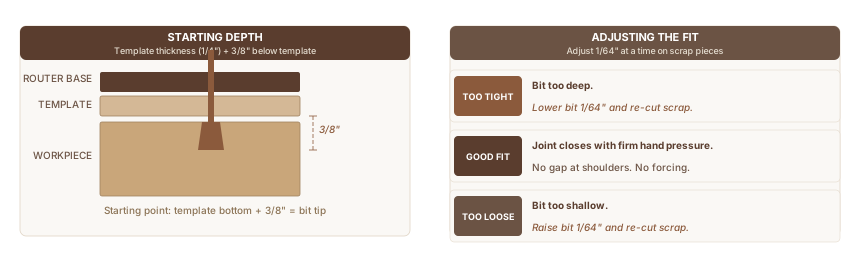
The starting depth for half-blind dovetails is template thickness plus 3/8". Most jig templates are 1/4" thick, so the starting point is 5/8" from the router base to the bit tip. Measure the template with calipers). Don't guess. WoodNBits covers this setup step by step.
Set this on a jig depth gauge, or place the router on a flat surface and use calipers to verify.
Cut and test
Always cut test pieces from the same species and thickness as your project. Cut both the slot and the pin, assemble them, and check the fit.
The fit rule:
- Joint too tight: lower the bit (less depth = less engagement = easier assembly)
- Joint too loose: raise the bit
Heighten to tighten, lower to loosen. Adjust in 1/64" increments. Run another test cut after each change. Don't touch your project until two consecutive test cuts give you a joint that presses together with firm hand pressure. (Popular Woodworking's jig technique guide has a good visual walkthrough of this process.)
Router speed
| Cutting diameter | Recommended speed |
|---|---|
| Up to 1/2" | Maximum (18,000–24,000 RPM) |
| 1/2"–1" | 18,000–20,000 RPM |
| Over 1" | 16,000–18,000 RPM |
Standard 1/2" dovetail bits run at maximum router speed. Reduce speed only for larger-diameter bits where the tip speed becomes unsafe.
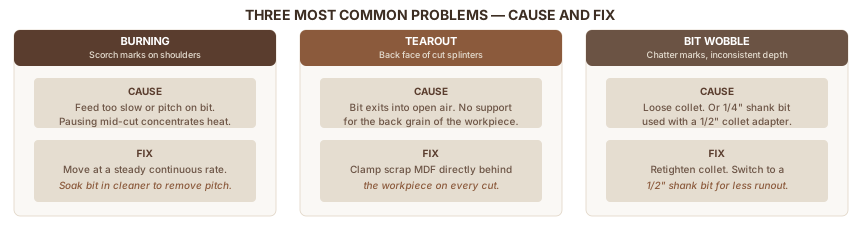
Feed at a steady, continuous rate. Pausing mid-cut concentrates heat. You'll see a burn mark where you stopped. Keep moving.
Part 5: Six Things That Go Wrong
| Problem | Likely cause | Fix |
|---|---|---|
| Burning on the shoulders | Feed rate too slow, or pitch buildup on bit | Move steadily; clean the bit |
| Tearout at the back face | No backer board behind the workpiece | Clamp scrap behind every cut |
| Grain tearout on tails | Wrong feed direction | Feed right to left on the top face |
| Joint too tight | Bit set too deep | Lower the bit 1/64" and test again |
| Joint too loose | Bit set too shallow | Raise the bit 1/64" and test again |
| Inconsistent depth across the joint | Router base rocking on the template | Keep consistent downward pressure; check guide bushing seating |
| Bit wobble or chatter | Loose collet or 1/4" shank bit in 1/2" collet | Retighten collet; switch to 1/2" shank bit |
The backer board
Tearout at the back face of a cut is the most common dovetail problem, and the fix is simple. Clamp scrap MDF or plywood directly behind your workpiece, close enough that the bit exits into the scrap, not into open air. The bit cuts into the scrap instead of splintering the back grain of your workpiece.
This eliminates most tearout problems, including face veneer blowout on plywood. Router Forums threads on tearout consistently point to backer boards as the first fix to try before adjusting anything else.
Part 6: Buying the Right Bit
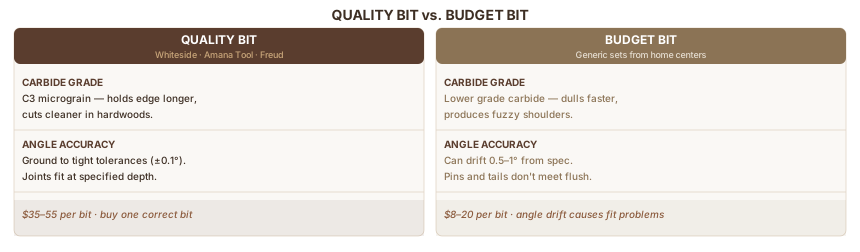
Buying a five-piece budget set hoping it works is the most common mistake. Budget sets cut corners on carbide grade and angle tolerances. A bit sold as 14° might actually be 14.5°, which creates fit problems with precision jigs. Buy one correct bit for your jig rather than a set.
What separates a good bit from a cheap one
Carbide grade. Quality bits use C3 micrograin carbide, which holds an edge longer and cuts cleaner. Cheap bits use lower grades that dull faster and produce fuzzy shoulders.
Angle accuracy. Quality manufacturers grind to tight tolerances. Budget bits can drift 0.5–1° from spec, which creates joints where pins and tails don't meet at the same depth.
Total Indicated Runout (TIR). TIR measures how much the bit wobbles when spinning. Low TIR means a smooth cut and less vibration. High TIR means chatter, rough shoulders, and accelerated wear on your router bearings.
Brazing quality. Carbide tips are brazed (soldered) to the steel body. Poor brazing causes micro-movement at the joint, which degrades cut geometry.
The recommendation
Whiteside is the consistent first choice on Fine Woodworking, Sawmill Creek, and LumberJocks. Made in Claremont, NC. C3 micrograin carbide. Ground to tight angle tolerances. Full range of dovetail specifications: if your jig needs a 7° 17/32" bit, Whiteside makes it. A single bit runs $35–55. Worth it.
Amana Tool is the close second. European carbide, comparable quality, similar price range.
Freud uses titanium-infused micrograin carbide and is slightly more affordable while maintaining solid performance. Good choice if Whiteside isn't stocked locally.
CMT markets jig-optimized sets for Leigh, Porter-Cable, and INCRA systems. Useful if you want a matched set for a specific jig platform.
Budget brands (MLCS, Yonico) are acceptable for light softwood work. Not recommended for hardwoods or production use where angle precision matters.
Part 7: Keeping Your Bits Sharp
Clean after every few sessions
Pitch and resin build up on the cutting edges. The buildup changes the effective geometry, causes burning on cuts that should be clean, and accelerates dulling. A sticky bit runs hotter and dulls faster.
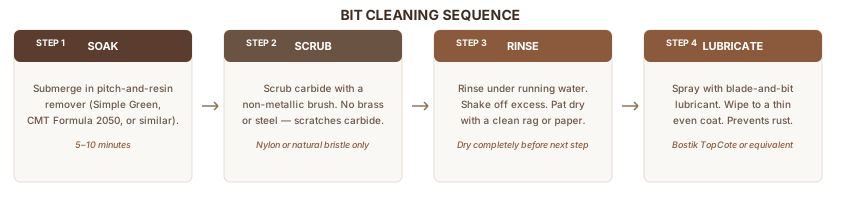
Cleaning steps:
- Soak the bit in a water-based pitch remover (Simple Green works; dedicated bit cleaners like CMT's are more effective) for 5 minutes
- Scrub with a soft brass-bristle brush, not steel. Steel scratches carbide.
- Rinse immediately and dry. The steel body rusts if left wet.
- Apply a light coat of cutting lubricant (DriCote or similar) to prevent pitch from re-bonding
Avoid oven cleaner. It's highly alkaline and attacks the brazing that bonds the carbide to the bit body.
When to replace vs. sharpen
A diamond honing paddle can freshen the flat face of a two-flute dovetail bit — stroke the flat face 5–10 times on the 600-grit side. This removes the wire edge that forms after extended use. It's maintenance, not resharpening.
Don't try to resharpen a dovetail bit at home. The angled geometry requires precision surface grinding. Budget bits are cheaper to replace. For quality Whiteside or Amana bits in regular use, a professional sharpening service will restore them to near-new performance for $10–15 per bit.
In a hobby shop with average use, expect several hundred cuts before a quality bit shows any dulling.
Part 8: Where to Go Next
This guide covers the bit. The rest of the system:
- Dovetail Jig — choosing between fixed-template and variable-finger jigs, comparing the three budget tiers, and the full first-cut setup walkthrough
- Dovetail Joints — how dovetails work mechanically, the five joint types, and when to choose a dovetail over another joint
For router work beyond dovetails:
- Router Tables — when to use a table vs. handheld, fence setup, and the techniques that work better on a table
- Dado Cuts — the other primary router bit use case: straight bits, dadoes, and rabbets
Once you can cut clean half-blind dovetails reliably, through dovetails are the natural next step. The geometry is the same; the setup is more involved. The Dovetail Jig guide covers variable-finger jig setup in detail.
Sources
- Porter-Cable 4210/4212/4216 Instruction Manual — bit specifications and stock thickness range
- Leigh Tools D4R Pro Bit Selection Appendix — 8° angle requirement and shank specifications
- Leigh Tools: Cutters for the D4R Pro — included bits, 8mm shank explanation
- Rockler: Does the Angle of the Dovetail Affect the Strength of the Joint — research on angle vs. joint strength
- WoodNBits: Router Dovetails — Setup Steps That Prevent Gaps and Blowouts — depth setting procedure
- Popular Woodworking: How to Use a Router Dovetail Jig — half-blind setup technique
- Fine Woodworking: How to Cut Sliding Dovetail Joints — sliding dovetail sequence
- WoodWorkers Guild of America: Making Sliding Dovetails — sliding dovetail technique and setup
- Woodsmith: Dovetail Bit Details — bit geometry and angle overview
- Woodsmith: Making Half-Blind Dovetails — bit pairing for through dovetails
- Pro Tool Reviews: Setting Router Bit Speed — Use This Handy Chart — RPM table by diameter
- Router Forums: How Do I Defeat Tear-Out While Dovetail Routing? — backer board technique
- LumberJocks: Porter-Cable 4216 Dovetail Jig and Non-PC Bits — aftermarket bit compatibility
- Sawmill Creek: Whiteside versus CMT Dovetail Router Bits — quality comparison
- Whiteside Router Bits: Dovetail Bit Collection — full spec range
Tools Used
Also Referenced
Tagged
How We Research
We don't take affiliate revenue or accept review units. Picks come from multi-source research — manufacturer specs, OSHA / EPA / ASTM regs, and long-form practitioner threads — plus Ahmed's hands-on use where relevant. When we recommend something, we explain why.
Up Next
Choosing Your First Router Table
POWER TOOLS · Beginner