
Compound Miter Saw vs Miter Saw at a Glance
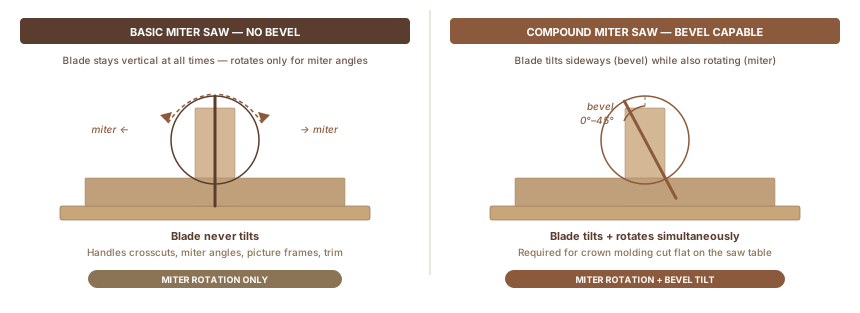
A compound miter saw adds one feature a basic saw doesn't have: the blade can tilt sideways. That tilt, called a bevel, is what you need for crown molding. It's not what you need for shelving, furniture, picture frames, or most trim work. For your first two years of woodworking, a single compound saw handles 95% of projects without triggering the bevel feature once.
| What "compound" adds | Blade tilt (bevel) — blade leans sideways as it cuts |
| When you actually need it | Crown molding cut flat; some complex angled trim |
| What doesn't need it | Shelves, furniture, picture frames, framing lumber, baseboards |
| Best first buy | Single compound, 10", non-sliding |
| Budget entry price | $120–170 (Metabo HPT, Ryobi); $250–320 (DeWalt, Makita) |
| Today's reality | Most budget saws already include compound capability |
In this guide:
- What the tilt feature actually does
- Which projects require bevel cuts — and which don't
- Single vs. dual bevel, explained plainly
- What to buy as a first miter saw
Part 1: What the Tilt Feature Actually Does
A basic miter saw makes two kinds of cuts: straight crosscuts (cutting a board to length at 90°) and miter cuts (rotating the blade left or right for angled corners). In both cases, the blade stays vertical. That covers picture frames, baseboard trim, shelving boards, and framing lumber.
A compound miter saw keeps all of that and adds a second axis: the blade can tilt (bevel). When the blade leans sideways at the same time it rotates, you get a compound cut — both angles in one pass.
The main use for this is crown molding laid flat on the saw table. Instead of standing the molding upright against the fence, you lay it flat, dial in both a rotation angle and a tilt angle, and cut. That's when you need the compound feature.
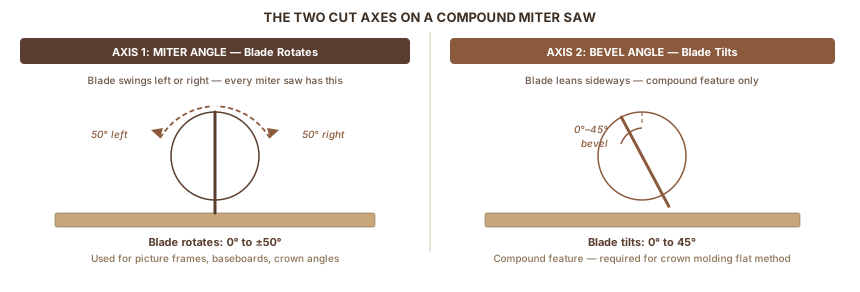
A few terms you'll see in product listings:
- Bevel — the tilt angle, measured in degrees off vertical
- Compound cut — a cut with both miter (rotation) and bevel (tilt) set simultaneously
- Single bevel — tilts one direction only, typically left; standard in most consumer saws
- Double bevel / dual bevel — tilts both left and right; covered below
Part 2: The Four Saw Types, Explained Simply
Shopping for a miter saw means hitting four overlapping names that don't mean the same thing. Pro Tool Reviews has a detailed breakdown of all four configurations if you want more technical depth.
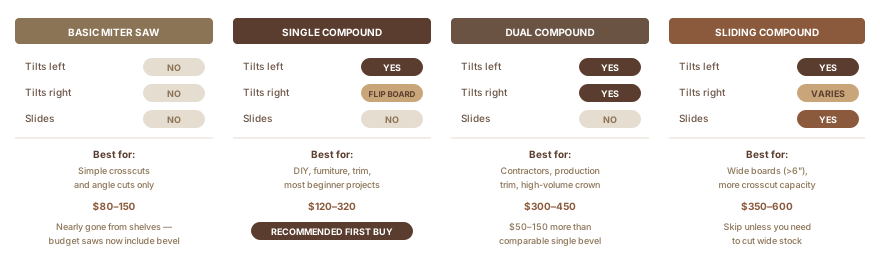
| Type | Tilts? | Slides? | Best for |
|---|---|---|---|
| Basic miter saw | No | No | Simple crosscuts and angle cuts only |
| Single compound | Left only | No | Standard DIY, furniture, trim — the right first buy |
| Dual compound (double bevel) | Both directions | No | High-volume trim work, production crown molding |
| Sliding compound | Left (usually) | Yes | Boards wider than 6", more crosscut capacity |
True "basic" non-compound saws are nearly gone from retail. Walk through a Home Depot or Lowe's and most saws on the shelf — including budget models under $150 — already include single-bevel compound capability. You're probably choosing between single compound, dual compound, and sliding, not between basic and compound.
Part 3: Which Projects Actually Need Bevel Cuts
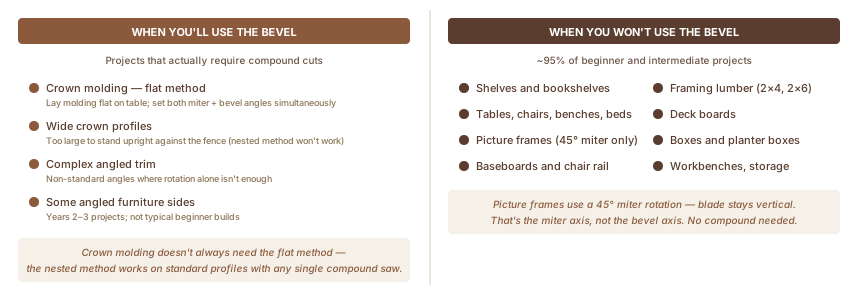
Projects where you'll use the bevel
Crown molding cut flat: When crown molding is too large to stand upright against the fence, you lay it flat on the saw table and set both miter and bevel angles. That requires compound capability. The full technique — spring angles, exact angle tables, and how to cope inside corners — is in Crown Moulding Compound Miter.
Crown molding doesn't always require this method, though. The nested method stands the molding upright against the fence at the same angle it sits on the wall. That cut needs only a miter angle, no bevel. Wood Shop Diaries explains both methods side by side — most residential DIY crown molding jobs use standard-size profiles that work fine nested on any single compound saw.
The flat/compound method matters when the molding profile is too large to stand in the saw, or when you're doing high-volume production work.
Other bevel-requiring projects: Complex angled trim, decorative paneling that meets at non-standard angles, some angled furniture sides. These come up occasionally in years two and three. They're not typical first projects.
Projects where you won't use the bevel
For your first couple of years, this covers nearly everything you'll build:
- Shelves and bookshelves
- Furniture (tables, chairs, benches, beds)
- Picture frames (45° miter at each corner, no tilt needed)
- Baseboards and chair rail
- Framing lumber (2x4, 2x6 crosscuts)
- Deck boards and outdoor furniture
- Boxes and planter boxes
- Workbenches
- Storage units and cabinets
Standard picture frames are worth calling out. You do use a miter saw to make those 45° angled cuts. But those are rotation cuts. The blade stays vertical. No bevel involved.
Part 4: When a Basic Saw Is Enough
Most DIYers never use their bevel feature more than a handful of times in their first few years. That's not a knock on the feature. It's useful when you need it. But for furniture and standard woodworking, most cuts are crosscuts and miters.
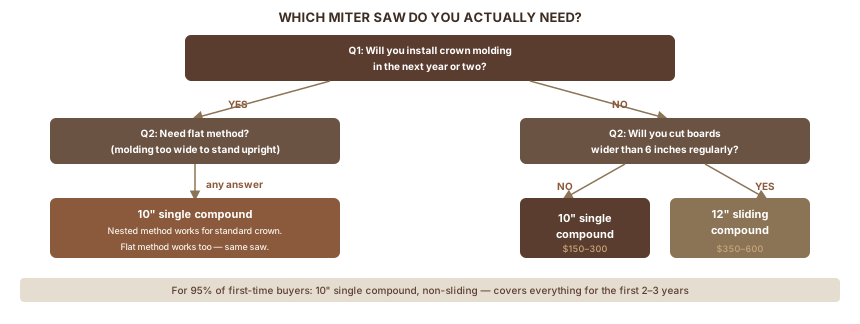
If you're not sure whether you'll install crown molding soon, start with a single compound saw. The nested method covers most residential crown work. If you eventually find yourself doing a full house of wide crown molding, that's when upgrading makes sense — not now.
Part 5: Single vs. Dual Compound: The Confusion, Cleared Up
Most forum threads and product listings use "compound" and "double bevel" interchangeably. They're different things.
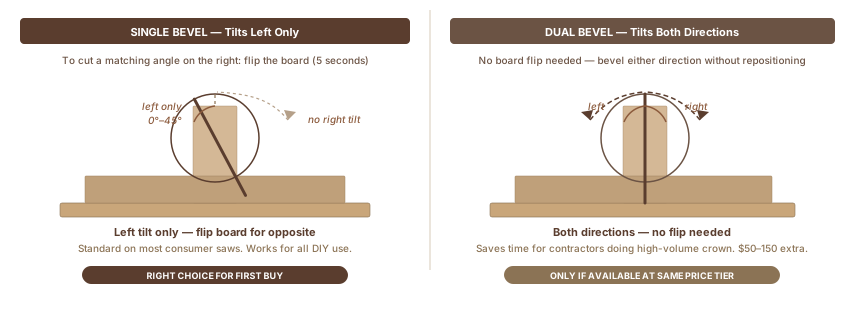
A single compound (single bevel) tilts left only. To make a matching angled cut on the opposite end of the same board, you flip the workpiece. That takes five seconds.
A dual compound (double bevel) tilts both left and right. You can bevel either direction without flipping the board.
| Single bevel | Dual bevel | |
|---|---|---|
| Tilts left | Yes | Yes |
| Tilts right | No — flip the board | Yes |
| Saves time on matched cuts | No | Yes |
| Who benefits most | Everyone | Contractors doing production trim |
| Cost premium | Baseline | $50–150 more at same tier |
For most DIYers, the dual bevel advantage never shows up. You're not installing 500 linear feet of crown molding where each setup change costs money. Flipping the board is fine.
If dual bevel is available at the same price as a comparable single bevel model, take it. Don't pay extra for it at the start. The Handyman's Daughter and Saws on Skates both reach the same conclusion: single bevel is the right first buy. For a deeper look at what double bevel unlocks and how to make compound cuts, see Double Bevel Miter Saw.
Part 6: What It All Costs
Current pricing (2025-2026):
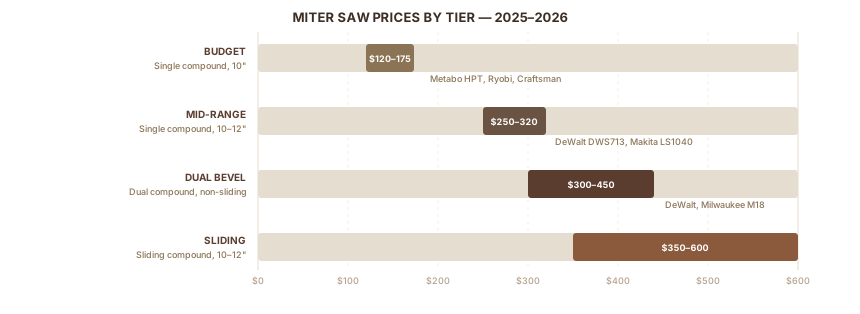
| Tier | Price range | Best for | Example models |
|---|---|---|---|
| Budget single compound (10") | $120–175 | Light DIY, occasional use | Metabo HPT C10FCGS, Ryobi, Craftsman |
| Mid-range single compound (10–12") | $250–320 | Regular shop use, better accuracy | DeWalt DWS713, Makita LS1040 |
| Dual compound (non-sliding) | $300–450 | Contractor-grade, both bevel directions | DeWalt, Milwaukee M18 |
| Sliding compound (10–12") | $350–600 | Wide boards, more crosscut capacity | DeWalt DWS779, Metabo HPT 12" |
The compound premium you expect doesn't exist anymore. In 2010, a budget non-compound saw cost $100–150 and compound started at $250. That gap closed. Today's $130 Metabo HPT or Ryobi already includes bevel capability. The cost decision is about tier and whether you need sliding capacity.
Sliding adds $150–250 and expands your maximum crosscut width significantly. GearLab's miter saw testing has detailed data on which models deliver that capacity most reliably. For most lumber and trim work, though, the sliding feature isn't necessary.
Part 7: Our Recommendation for First-Time Buyers
Buy a 10-inch single compound, non-sliding, in the $150–300 range.
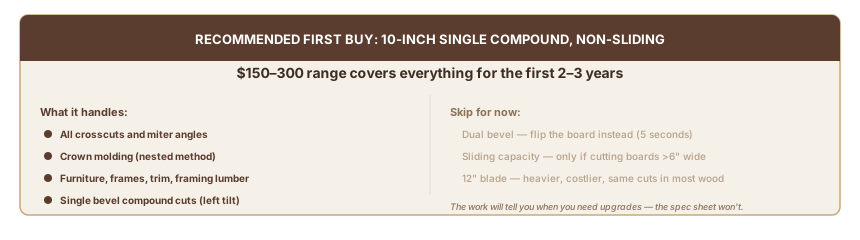
It handles every project a beginner or intermediate woodworker builds for the first 2–3 years. The bevel feature is there when you need it. The price leaves budget for quality lumber, better blades, and the other tools that matter more.
For occasional DIY use, the Metabo HPT 10-inch (around $130–150) is solid. For regular shop use, the DeWalt DWS713 (around $260–280) is the standard recommendation from Pro Tool Reviews and other tool reviewers: better accuracy, better fence, better dust collection.
Skip the dual compound until your projects require it. Skip the sliding model unless you know you'll cut wide stock. You'll know when you need those upgrades because the work will tell you before the spec sheet does.
Cordless miter saws make sense for job sites and mobile work. For a fixed shop setup, corded is simpler.
Part 8: Where to Go Next
A miter saw handles crosscuts and angled cuts. To cut grooves and channels for shelves and cabinets, you'll want to understand dadoes next:

- Dado Cut — what a dado is, when to use one, and how to cut it
- Band Saw Setup and Tuning — if you're adding a second cutting tool to your shop
Sources
Informed by tool testing data, community forums, and woodworking educators. Key sources below, in order of first appearance.
- Pro Tool Reviews — Types of Miter Saws — comprehensive breakdown of all four saw configurations
- Wood Shop Diaries — Cutting Crown Molding — nested vs. flat/compound methods compared
- The Handyman's Daughter — Single vs. Double Bevel — practical recommendation for beginners
- Saws on Skates — Single vs. Double Bevel — single bevel recommendation backed by experience
- GearLab — Best Miter Saws — lab-tested pricing data and model comparisons
- Pro Tool Reviews — Buying a Miter Saw — model-level buying guidance
Tools Used
Also Referenced
How We Research
We don't take affiliate revenue or accept review units. Picks come from multi-source research — manufacturer specs, OSHA / EPA / ASTM regs, and long-form practitioner threads — plus Ahmed's hands-on use where relevant. When we recommend something, we explain why.
Up Next
How to Cut Wood at an Angle
POWER TOOLS · Beginner