
How to Use This Guide
Oil-based stain is forgiving to apply. Two things determine the outcome: the application sequence and the drying timeline. Get those right and you'll have rich, even color. Misjudge either and you'll end up with blotchy patches, a tacky surface, or topcoat that peels.
This guide covers the full process from surface prep through topcoat application, with specific numbers and the reasoning behind each step.
Starting from scratch: Read Parts 1–3, then Part 4 for application.
Already applied stain and something went wrong: Skip to Part 6.
Wondering when to topcoat: Part 5 has the exact wait times.
Safety questions about rag disposal: Part 7. Read this before you leave the shop.
Oil-Based Wood Stain at a Glance
Oil-based stain uses mineral spirits to carry pigment into wood pores. It produces rich, deep color with a long working time. The trade-off is drying time: 24–72 hours before topcoat, depending on what you're putting over it.
The application sequence: sand to the right grit, condition if needed, apply stain, wipe thoroughly, let cure, topcoat.
| Dry to touch | 1–2 hours |
|---|---|
| Recoat (second stain coat) | 8–12 hours |
| Oil-based topcoat wait | 24 hours |
| Water-based topcoat wait | 48–72 hours |
| Ideal application temp | 65–75°F |
| Sanding grit for softwoods | 120 then 150 (stop there) |

In this guide:
- How oil-based stain works
- Oil vs. water-based: which to use
- Surface prep and sanding
- Step-by-step application
- Drying times and topcoat compatibility
- Common problems and fixes
- Safety and cleanup
Part 1: What Oil-Based Stain Actually Does
Understanding the chemistry isn't mandatory. But it explains every rule in this guide, and rules you understand stick better than rules you memorize.
The Three Ingredients
Oil-based stain has three parts: pigment, mineral spirits carrier, and a small amount of linseed oil binder.
Pigment is finely ground iron oxide powder. It's the same material that makes rust brown and clay red. Pigment particles don't chemically bond to wood. They lodge physically in the wood's pores. The larger the pore, the more pigment it holds, and the darker that spot appears.
Mineral spirits is the carrier. It evaporates slowly, which gives you a working window of 5–20 minutes before the stain starts to set. That slow evaporation is also why oil stains produce richer, slightly darker color than water-based alternatives. The pigment has more time to move deeper into the pores.
Linseed oil is the binder. It helps pigment adhere to the wood surface. It also cures by oxidation, a chemical reaction with oxygen that releases heat. That reaction is why oil-soaked rags are a fire hazard. More on that in Part 7.
Higher-end stains from General Finishes and Old Masters also contain dye. Dye molecules bond directly to wood fiber rather than sitting in pores. Dye enhances grain character; pigment obscures it slightly. Budget stains are pigment-only.
Why Blotching Happens
Blotching isn't a technique error. It's a wood structure problem.
Softwoods like pine and species like cherry, maple, and birch have uneven pore density. Light Wood Stain covers blotch prevention for these species in detail. Some zones have large, absorbent pores. Adjacent zones have dense, tight-grained cells that barely absorb anything. When you apply a pigment stain, the high-absorption zones drink in 3–5x more pigment than the surrounding areas. The result looks streaky and patchy.
Oak, walnut, and ash have open, uniform pore structures. Stain absorbs evenly. No blotching.
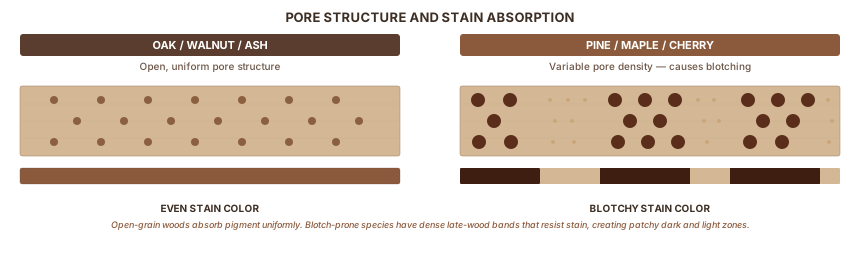
The fix for blotch-prone species is pre-stain conditioner, covered in Part 3.
Part 2: Oil vs. Water-Based Stain
This is a practical decision, not a philosophical one. Each type has real advantages and real trade-offs.
The Comparison
VOC (volatile organic compound) refers to the solvent vapors released during drying. High VOC means stronger fumes; low VOC means safer for enclosed spaces.
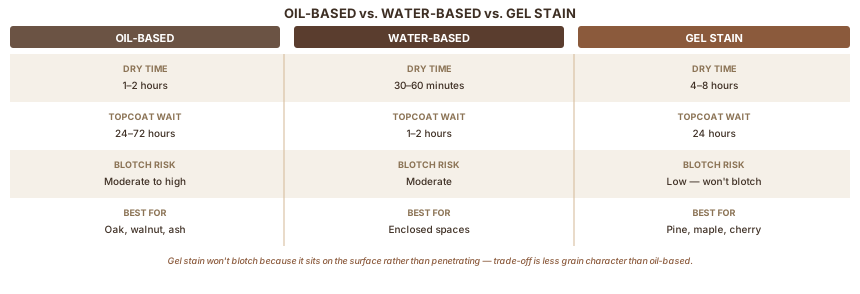
| Factor | Oil-Based | Water-Based | Gel Stain |
|---|---|---|---|
| Dry to touch | 1–2 hrs | 30–60 min | 4–8 hrs |
| Topcoat wait | 24–72 hrs | 1–2 hrs | 24 hrs |
| VOC level | High | Low | High |
| Grain raise | No | Yes | No |
| Blotch risk | Moderate–high | Moderate–high | Low |
| Best surface | Open-grain hardwoods | Any species | Blotch-prone woods |
| Cleanup | Mineral spirits | Soap and water | Mineral spirits |
When Oil-Based Makes Sense
Use oil-based when you're working with open-grain hardwoods (oak, ash, walnut) and want to accentuate the grain. Slow penetration lets pigment settle deep into open pores for richer, more saturated color than water-based alternatives produce.
Oil also makes sense for outdoor projects. The longer cure time produces a more durable bond in exterior conditions.
If you're new to staining and want a forgiving working window, oil gives you more time to apply and wipe before the surface starts to set.
When Water-Based Makes More Sense
Use water-based in enclosed spaces with no ventilation. The VOC levels are a fraction of oil-based. Same if the project is near children or pets.
Water-based also dries fast enough for same-day topcoating. If you need to get a project done in one day, water-based is the practical choice.
One trade-off: water raises wood fibers, which can leave a slightly rough texture. A light pass with 220 grit between the stain and topcoat handles it.
Gel Stain: The Right Answer for Problem Woods
If you're staining pine, cherry, maple, or birch, gel stain changes the equation entirely.
Gel stain is oil-based but thickened to a paste consistency. It sits on the wood surface instead of soaking in. Because it can't penetrate deeply into high-absorption zones, it can't blotch. The color goes on consistently regardless of the pore structure underneath.
The trade-off: gel stain shows less grain character than a penetrating stain. If showcasing the grain matters, gel isn't the right choice. If you want even, predictable color on a difficult species, it is.
Part 3: Surface Preparation
Surface prep is where finish quality gets set. A perfect application technique on a badly prepared surface still produces a bad finish.
Sanding to the Right Grit
Stopping at the right grit is as important as starting at the right grit. For a full breakdown of sander types and grit progressions, see Woodworking Sanders.
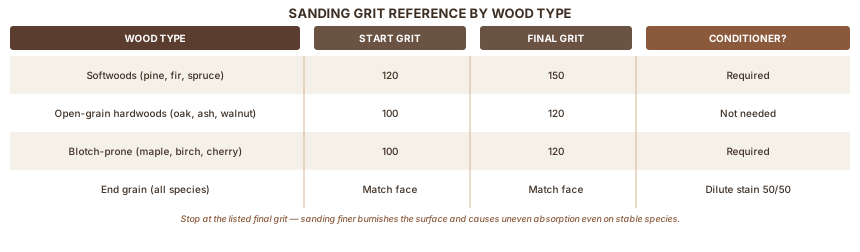
Softwoods (pine, alder, poplar, fir): Sand from 120 to 150 grit. Stop at 150. Do not go to 180 or finer.
Hardwoods with open grain (oak, walnut, ash): Sand from 100 to 120 grit. Stop at 120.
Blotch-prone hardwoods (maple, birch, cherry): Sand from 100 to 120 grit. Follow with pre-stain conditioner.
The reason to stop: finer grits burnish the wood surface. They compress and partially close the pores. Stain applied to burnished wood absorbs unevenly, producing blotchy color even on stable species. Per Old Masters' penetrating stain instructions, this sanding sequence applies to both open-grain and closed-grain woods.
Sand in the grain direction. Cross-grain scratches hold pigment differently than grain-direction scratches. They show.
After sanding, vacuum thoroughly. Wipe the surface with a tack cloth or a lint-free rag dampened lightly with mineral spirits. Dust left on the surface mixes with the stain and creates rough spots.
End Grain: The Special Case
End grain absorbs 5–10x more stain than face grain. If you stain a tabletop and the edges come out much darker than the top, end grain absorption is the cause.
The most reliable fix: dilute your stain 50/50 with mineral spirits. Apply this thinned mixture to the end grain first. Let it penetrate for 5–10 minutes, then wipe. Apply full-strength stain to the face grain immediately after. The pre-diluted coat limits how much pigment the end grain absorbs, closing the gap between end grain and face grain color.
An extra sanding pass at your final grit on the end grain also helps. It lightly burnishes that surface and reduces absorption without making things worse on the face.
Pre-Stain Wood Conditioner
If you're staining pine, alder, aspen, poplar, birch, or cherry, use pre-stain wood conditioner. These species have the pore density variation that causes blotching. Conditioner is the most reliable fix short of switching to gel stain.
Conditioner works by partially filling the large, high-absorption pores before stain goes on. This closes the gap between high-absorption and low-absorption zones, so the stain absorbs more evenly across the surface.
Use oil-based conditioner with oil-based stain. They must match. Both Minwax and General Finishes make oil-based versions.
Application steps:
- Apply with a brush or lint-free cloth in the grain direction
- Let penetrate 5–15 minutes
- Wipe off excess with a clean dry cloth
- Apply stain within 2 hours
The 2-hour window is critical. Minwax's Pre-Stain Wood Conditioner is explicit about it: after 2 hours, the conditioner starts forming a partial barrier that blocks stain penetration rather than evening it out. If you miss the window, apply another coat of conditioner and restart the 2-hour clock.
Skip conditioner if you're using gel stain (gel doesn't penetrate deeply enough to blotch) or working with oak, walnut, or ash (their uniform pore structure doesn't need it).
Part 4: Applying Oil-Based Stain
What You'll Need
- Oil-based stain, stir stick
- Application tool: natural-bristle brush, foam brush, or lint-free cloth
- Wiping cloths: lint-free rags, t-shirt material, or blue shop towels
- Rubber gloves (oil stain stains skin badly; it takes days to wear off)
- Mineral spirits for thinning and cleanup
- Cross-ventilation: open windows, a fan running for airflow

The Application Sequence
Per General Finishes' oil stain application guide and Minwax's recommendations, the sequence below produces consistent results on furniture-scale projects.
Step 1: Stir the can. Pigment settles to the bottom. Scrape the bottom with a stir stick for 2–3 minutes. A poorly stirred can produces weak, pale color for the first half of the project, then suddenly darker toward the bottom.
Step 2: Test on scrap first. Always test on a piece of the same species with the same surface preparation as your project. The color on the can lid looks different from the color on your actual wood. The same stain that reads as a warm medium brown on oak can look orange on pine.
Step 3: Work one face at a time. Divide your project into manageable sections: one tabletop, one cabinet side, one drawer front. Work each face continuously from one end to the other without stopping. Stopping mid-face creates a visible line where the dried edge meets the new wet stain.
Step 4: Apply with brush, foam applicator, or cloth. Any of the three works. Apply in the grain direction, laying down a full, wet coat. Coverage doesn't need to be perfect at this stage. You want full, even contact with the surface.
Step 5: Let it penetrate. 1–3 minutes for standard color. Up to 15 minutes for deeper, darker color. Longer penetration means more pigment in the pores and a darker result. Color depth comes from penetration time, not from application thickness.
Step 6: Wipe off all the excess. This is the step most beginners get wrong. Wipe with the grain using a clean lint-free cloth. The goal is to remove everything that isn't physically absorbed into the wood. Pooled stain sitting on the surface forms a tacky, uneven film when it dries.
Wipe thoroughly. The surface should feel nearly dry to a light touch. Check at a low angle in raking light, a shop light held parallel to the surface, and pooled areas show up as glossy spots. Fix them now.
Step 7: Let it dry. 8–12 hours before a second coat. 24–72 hours before topcoat, depending on what you're applying. See Part 5.
Controlling Color Depth
For lighter color: wipe the excess sooner and more aggressively.
For darker color: let the stain penetrate longer before wiping, or apply a second coat after the first dries (8–12 hours). Two thin coats with proper drying between them produce more even results than one thick coat left on too long.
The Five Errors That Cause Bad Results
- Not stirring the can. Thin, pale color for the first half; suddenly dark at the end.
- Not wiping thoroughly. Excess stain dries tacky and uneven.
- Working in sections with breaks between. The dried edge creates a lap mark when the next section touches it.
- Skipping gloves. Oil stain doesn't come off with soap and water. Mineral spirits first, then soap.
- Poor ventilation. Health risk from mineral spirits fumes, plus significantly slower drying time.
Part 5: Drying, Topcoats, and Timing
Dry Time vs. Cure Time
This is the most misunderstood part of oil-based stain.
"Dry to touch" means the mineral spirits have evaporated. It happens in 1–2 hours.
"Ready for topcoat" means the linseed oil binder has oxidized enough for another finish to bond to it. That takes considerably longer. Applying a topcoat over oil stain that looks dry but hasn't fully oxidized causes adhesion failure: fish-eye, cloudy blushes, or topcoat that peels within weeks.
General Finishes explains this distinction: dry time and cure time are separate stages. Rushing from one to the next is how projects fail.
Topcoat Compatibility
| Topcoat | Wait Time | Notes |
|---|---|---|
| Oil-based polyurethane | 24 hours | Most compatible; same oil chemistry |
| Oil-based varnish | 24 hours | Same chemistry, same wait |
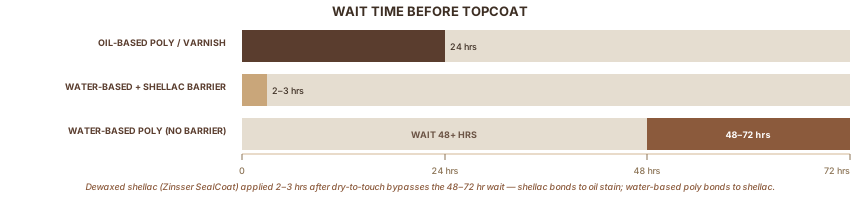
| Dewaxed shellac (Zinsser SealCoat) | 2–3 hours after dry-to-touch | Universal barrier coat |
| Water-based polyurethane | 48–72 hours | Needs full oil cure; see below |
| Lacquer | 24–48 hours | Consult manufacturer TDS |
All times assume 70°F, 50% relative humidity. Below 50°F or above 70% humidity, add 8–10 hours to every stage.
Putting Water-Based Poly Over Oil Stain
Water-based poly is popular because it dries faster and yellows less than oil-based. But linseed oil and water-based acrylic don't bond well unless the oil is fully oxidized.
Woodweb's professional finishing forum documents adhesion failures from applying water-based poly too soon over oil stain.
Three options, in order of reliability:
Option A (safest): Wait 72 hours. At normal temperature and humidity, the oil fully oxidizes in that window. Then apply water-based poly normally.
Option B (faster): Apply one coat of Zinsser SealCoat dewaxed shellac after the stain is dry to touch (2–3 hours). Shellac bonds to the oil stain surface. Water-based poly bonds to the shellac. Bob Flexner recommends this approach for incompatible finish combinations.
Option C (professional shortcut): Wipe the surface with a 1:1 solution of water and denatured alcohol before applying the water-based poly. This removes surface oil that hasn't absorbed. Wait for it to dry, then apply poly.
Use only dewaxed shellac. Regular shellac contains wax that prevents topcoat adhesion. Zinsser SealCoat is pre-dewaxed and available at most paint stores.
Environmental Factors
Below 50°F, oil stain barely cures. Drying time doubles or more. Cold-temperature staining can leave the finish tacky for days and it may never fully cure.
Above 70% relative humidity, drying time extends significantly. Oil needs oxygen to oxidize, and humid air limits oxygen contact with the surface. Add 8–10 hours to every wait time in humid conditions.
A fan positioned to move air across the work (not directly at it) speeds drying. Direct fan airflow on fresh stain can dry one section faster than another, creating visible variation.
Part 6: Troubleshooting Common Problems
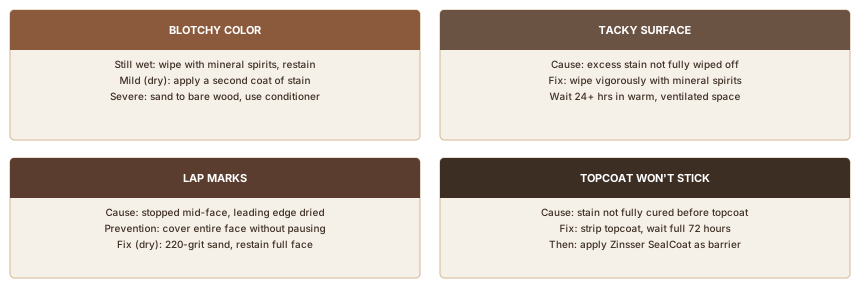
Blotchy, Uneven Color
The most common complaint with oil-based stain on softwoods and blotch-prone species.
Still wet: Wipe immediately with mineral spirits to lighten and even out. Reapply stain more carefully.
Dry, minor blotching: Apply a second coat of stain. This sometimes evens out light variation.
Dry, moderate blotching: Try gel stain applied over the dried oil stain. Gel's thickness can mask unevenness. Test in an inconspicuous spot first to check color interaction.
Dry, severe blotching: Sand back to bare wood. Apply oil-based pre-stain conditioner. Restart. The Wood Whisperer's guide to blotch control is the most thorough resource on this. No shortcut exists for severe blotching.
Tacky Surface That Won't Dry
Cause: Too much stain left on the surface. The linseed oil layer is too thick to oxidize properly.
Fix: Wipe vigorously with a mineral spirits-dampened cloth. Let dry in a warm, well-ventilated area for 24 hours. If still tacky at 48 hours, strip the surface with mineral spirits and restart with better wipe-off technique.
Lap Marks
Cause: Applied stain in sections with a pause between them. The leading edge began to dry and created a boundary when the next wet section touched it.
Prevention: Cover the entire face in one continuous pass without stopping.
Fix if dry: Sand the lap mark area with 220 grit, feather the edges, restain the entire face.
Dark End Grain
Cause: Normal physics. End grain absorbs 5–10x more stain than face grain.
Fix going forward: The diluted pre-treatment in Part 3. Apply 50/50 stain mixed with mineral spirits to end grain first, let it partially absorb, then apply full-strength stain to the face.
Topcoat Won't Stick
Cause: Stain wasn't fully cured before topcoat. Oil was still wet underneath the film finish.
Fix: Strip the failed topcoat with the appropriate solvent (mineral spirits for oil-based poly). Wait the full cure time, 72 hours to be safe. Apply one coat of Zinsser SealCoat as a barrier. Reapply the topcoat.
Part 7: Safety and Cleanup
Rag Disposal: The Fire Hazard
This gets skipped in most guides. It shouldn't.
Consumer Reports has documented the hazard, and the NFPA reports roughly 900 home fires per year from oily rag disposal. The physics: linseed oil cures by polymerization, an exothermic (heat-releasing) reaction with oxygen. A bunched-up rag traps that heat. Temperature rises. The reaction accelerates. At high enough temperatures, the rag ignites.
Popular Woodworking covers this as a genuine risk, not a theoretical edge case. It happens to experienced woodworkers who aren't thinking about it.
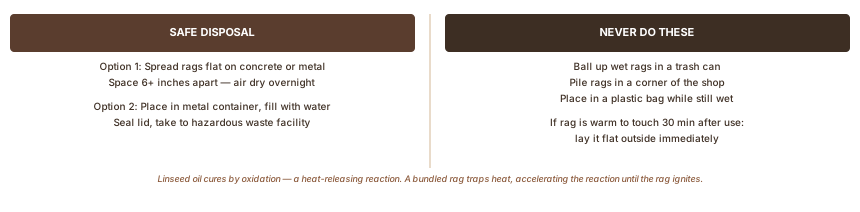
Safe disposal:
Option 1: Spread rags flat on a non-combustible surface outside, a concrete driveway or a metal tray. Space them at least 6 inches apart. Let dry completely overnight. Once the oil has fully oxidized, they're inert and can go in the regular trash.
Option 2: Place rags in a metal container, cover with water, seal the lid. Water stops the oxidation cycle. Take the sealed container to a hazardous waste facility.
Never: Ball up wet rags and toss in a trash can. Never pile rags in a corner. Never put them in a plastic bag while still wet with stain.
If a rag is warm to the touch 30 minutes after use, the oxidation reaction is already underway. Lay it flat immediately.
Ventilation
Mineral spirits vapor is flammable and affects respiratory health at high concentrations. Open windows on opposite ends of the room for cross-ventilation. Keep a fan running.
Keep the work area clear of open flames, pilot lights, and heat sources. Mineral spirits vapor is heavier than air and settles at floor level, which is why floor-level pilot lights on water heaters and furnaces present the highest risk in a home shop.
Skin and Tool Cleanup
Mineral spirits removes oil stain from skin. Soap and water alone won't. Rub with mineral spirits first, then wash with soap and water.
Clean brushes and foam applicators with mineral spirits: swish in a jar, squeeze through a folded cloth, repeat until the rinse runs clear. Treat used mineral spirits the same as used stain rags. Don't pour it down the drain.
Quick Reference
Drying Times at 70°F, 50% RH
| Stage | Time |
|---|---|
| Dry to touch | 1–2 hours |
| Second coat of stain | 8–12 hours |
| Oil-based poly | 24 hours |
| Water-based poly (no barrier) | 48–72 hours |
| Water-based poly over SealCoat barrier | 2–3 hrs after stain is dry to touch |
Sanding Grit by Wood Type
| Wood | Starting Grit | Final Grit | Conditioner Needed? |
|---|---|---|---|
| Pine, fir, spruce | 120 | 150 | Yes |
| Alder, aspen, poplar | 120 | 150 | Yes |
| Birch, maple, cherry | 100 | 120 | Yes |
| Oak, ash, walnut | 100 | 120 | No |
Where This Fits
Once the stain is fully cured and you've chosen a topcoat, the next step is applying it. Applying Polyurethane covers the full process for the most common topcoat choice: oil and water-based polyurethane, brush technique, between-coat sanding, and rubbing out.
If you need a specific color, Minwax Stain Chart covers all 36 oil-based Minwax colors with species-specific results for oak, pine, and maple.
If you're working on an existing piece rather than fresh wood, How to Refinish a Table covers stripping, prep, and finish selection for refinishing projects.
Sources
This guide draws from manufacturer technical data sheets, professional finishing references, and woodworking community documentation.
- General Finishes: How to Apply Oil Based Stains — application sequence and technique
- General Finishes: Dry Time vs. Cure Time — dry time vs. cure time distinction
- General Finishes: Oil and Water Based Compatibility — topcoat compatibility rules
- Minwax: Pre-Stain Wood Conditioner — conditioner application window (2-hour rule)
- Minwax: Wood Staining Tips, Do's and Don'ts — application best practices
- Old Masters: Oil-Based Penetrating Stain Instructions — sanding sequence by wood type
- The Wood Whisperer: Blotch Control to Rule Them All — pre-stain conditioner and blotching on difficult species
- The Wood Whisperer: Uneven Stain Absorption — troubleshooting uneven color
- Popular Woodworking: Finish Compatibility (Bob Flexner) — shellac as barrier coat between incompatible finishes
- Popular Woodworking: Linseed Oil and Spontaneous Combustion — fire hazard from oil stain rags
- Popular Woodworking: Spontaneous Combustion and Oil Finishes — safe rag disposal methods
- Consumer Reports: Oily Paint Rags Can Spontaneously Combust — documented fire hazard
- Woodweb: Water-Based Polyurethane over Oil-Based Stain — professional forum documentation of adhesion issues
- Sherwin-Williams: Common Wood Staining Mistakes — application errors and causes
Up Next
How to Remove Water Stains From Wood Furniture
FINISHING · Beginner