
How to Use This Guide
Wood filler is a category, not a product. The packaging at the hardware store doesn't tell you which type you need. Grab the wrong one and you've wasted an afternoon.
This guide cuts through the confusion with a simple decision framework, specific product recommendations, and the honest truth about stain compatibility that most guides skip.
If you're choosing a product: Start at Part 1 (the four types) and Part 2 (decision framework).
If you have product and just need to apply it: Jump to Part 3: Application.
If you're staining: Read Part 4: Stain Compatibility before you buy anything.
If you're fixing floor cracks: Go straight to Part 5: Floor Cracks.
Wood Filler for Cracks at a Glance
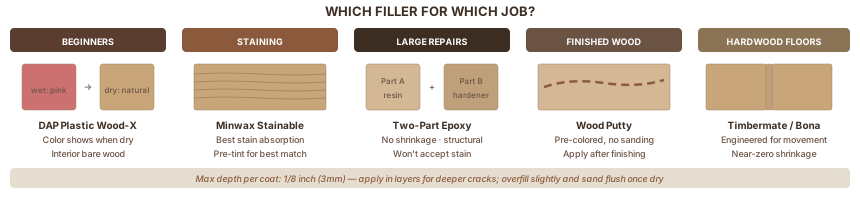
Pick the right filler from the start and the repair is straightforward. Pick the wrong one and it falls out, won't take stain, or just doesn't stick. For most interior furniture repairs on bare wood — oak dining tables, pine trim, maple floors — a water-based filler like DAP Plastic Wood-X (~$8) or Minwax Stainable gets the job done. For rotted wood, structural damage, or anything that'll be outdoors, you need a two-part epoxy.
| Best for beginners | DAP Plastic Wood-X (pink-to-natural dry indicator) |
| Best for staining | Minwax Stainable Wood Filler |
| Best for large or structural repairs | Two-part epoxy — Minwax High Performance or Bondo |
| Best for finished wood | Color-matched wood putty — Minwax Wood Putty |
| Best for hardwood floors | Timbermate or Bona Pacific Filler |
| Max depth per coat | 1/8 inch — apply in layers for anything deeper |
In this guide:
- Which filler do I need?
- The decision framework
- Step-by-step application
- Will it take stain?
- Floor-specific guidance
Part 1: The Four Types of Wood Filler
Most hardware stores stock all four types on the same shelf with similar-looking packaging. Grab the wrong one and you'll be pulling dried filler out of a crack you filled three weeks ago.
Water-Based Filler — The Default Choice
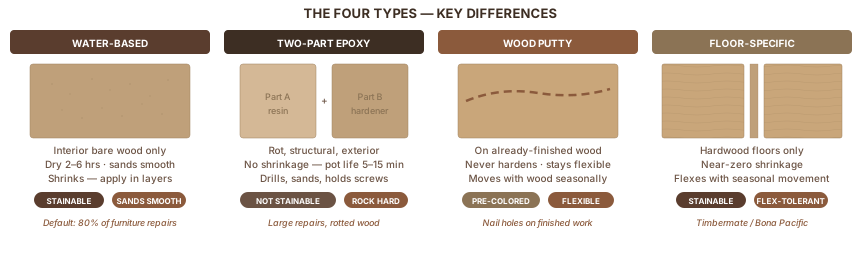
Water-based filler is what most people mean when they say "wood filler." It's acrylic-based, dries hard, sands smooth, and can accept stain. Not perfectly, but close enough for most repairs.
When to use it: Interior furniture repairs, nail holes, and shallow-to-medium cracks in bare, unfinished wood. This is your go-to for 80% of repairs.
The critical rule: Apply to bare wood only, before any stain, oil, or topcoat. Water-based filler won't bond to finished surfaces.
Three products consistently outperform the rest:
- DAP Plastic Wood-X — The most beginner-friendly option. Its DryDex technology means it goes on pink and turns natural when fully dry. No guessing, no pressing your finger into it every hour. Per DAP's specifications, dry time is 2–6 hours for shallow fills, up to 36 hours for deeper cracks. Shrink and crack resistant.
- Minwax Stainable Wood Filler — The best stain absorption of any major brand. Water-based, 2–6 hour dry time at 77°F. One limitation: Minwax specifies this product for holes up to 3/4 inch maximum. Larger gaps need their two-part formula.
- Elmer's Carpenter's Wood Filler — Easiest to spread, good stain uptake, solid choice for lighter stains. Charleston Crafted's head-to-head test found it the most consistent of four brands for stain color.
Water-based filler does shrink as the water evaporates. Apply in layers no deeper than 1/8 inch (6mm) per coat. Overfill by about 10 percent. That extra material sands flush once dry.
Two-Part Epoxy Filler — For Serious Repairs
Two-part epoxy cures through a chemical reaction between resin and hardener, not evaporation. It doesn't shrink.
When to use it: Rotted wood, structural damage, exterior repairs, anything that must hold screws or nails after filling, and any crack over 3/4 inch wide.
The tradeoff: epoxy doesn't accept stain. Its surface is non-porous once cured. If you're painting, that's fine. If you're staining, you need a different plan.
Good options at different price points:
- Minwax High Performance Wood Filler (two-part) — Rock-hard when cured. Can be drilled, screwed, carved, and sanded. Best for large interior repairs.
- Bondo Wood Filler (polyester-based two-part) — Sands in 15 minutes. Useful when you need to work fast. Around $14 per quart.
- West System Epoxy — The professional standard for structural wood repair, particularly exterior. Around $85 for a starter kit.
Pot life matters. Once you mix resin and hardener, you have 5 to 15 minutes before it gels. Mix only what you can apply in that window.
Wood Putty — For Finished Surfaces
Wood putty is what you should use on finished furniture. Most people overlook it.
When to use it: Nail holes, scratches, and cosmetic repairs on wood that's already been stained and top-coated.
Wood putty stays flexible. It doesn't harden. You can't sand it, but it won't crack when the wood moves seasonally. It comes pre-colored to match dozens of common wood tones.
- Minwax Wood Putty — Pre-colored to coordinate with Minwax stain colors. For nail holes in trim and furniture after finishing.
- Color Putty sticks — Quick touch-up option. Dozens of colors available.
If you're filling a finished surface and you reach for water-based filler, it won't stick. That's wood putty territory.
Floor-Specific Filler
Standard water-based fillers work on furniture but underperform on floors. Floors flex under foot traffic and move seasonally. You need a product built for that.
- Timbermate — The professional choice for hardwood floors. Water-based with near-zero shrinkage. Available in White Oak, Red Oak, Maple, and Ebony, plus you can mix in tints and dyes for a custom match. Spread across the grain, scrape before it skins, sand when dry.
- Bona Pacific Filler — Waterborne, designed specifically for hardwood floors before refinishing. Accepts stain, minimum shrinkage.
| Product | Type | Dry Time | Stainable? | Best For | Approx. Price |
|---|---|---|---|---|---|
| DAP Plastic Wood-X | Water-based | 2–36 hrs | Yes (good) | Interior, beginners | ~$8 (6 oz) |
| Minwax Stainable | Water-based | 2–6 hrs | Yes (best) | Stain-grade furniture | ~$10 (6 oz) |
| Elmer's Carpenter's | Water-based | 2–4 hrs | Yes (good) | General interior | ~$8 (4 oz) |
| Minwax High Perf. | Two-part epoxy | 1–4 hrs | No | Large/structural | ~$18 (12 oz) |
| Bondo Wood Filler | Two-part polyester | 15 min | No | Large, fast repairs | ~$14 (qt) |
| Minwax Wood Putty | Non-hardening | Never | N/A | Finished surfaces | ~$6 (3.75 oz) |
| Timbermate | Water-based (floors) | 1–2 hrs | Yes | Hardwood floors | ~$20 (500g) |
| Bona Pacific | Waterborne (floors) | 1–3 hrs | Yes | Pro floor refinishing | ~$25 (qt) |
Part 2: How to Pick the Right Filler
Three questions narrow it down fast.
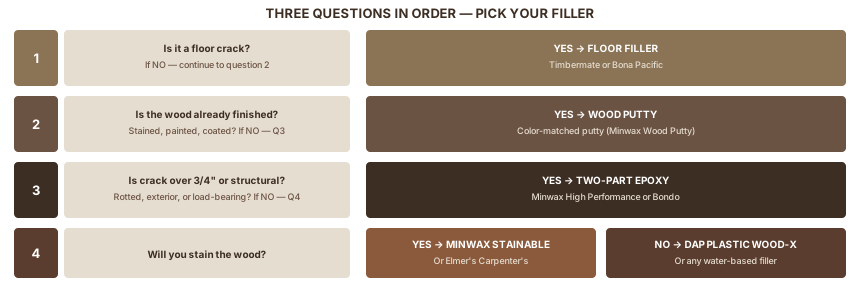
Question 1: Is the wood finished or unfinished?
Finished means it has stain, oil, paint, or any topcoat already on it. Unfinished means bare wood.
- Finished → use wood putty (applies after finishing, stays flexible, pre-colored)
- Unfinished → keep going
Question 2: How big is the crack?
- Under 3/4 inch → standard water-based filler handles it
- Over 3/4 inch, or any structural damage → two-part epoxy
Question 3: Will you stain or paint?
- Staining → use stainable water-based filler, then pre-tint it (more on this in Part 4)
- Painting → any water-based filler works; DAP Plastic Wood-X is the easiest
| Crack type | Finish plan | Use this |
|---|---|---|
| Small, bare wood | Staining | Minwax Stainable or Elmer's Carpenter's |
| Small, bare wood | Painting | DAP Plastic Wood-X |
| Large or structural | Staining | Two-part epoxy + accept color difference, or wood dutchman patch |
| Large or structural | Painting | Bondo or Minwax High Performance (two-part) |
| On finished wood | Any | Color-matched wood putty |
| Hardwood floor | Staining | Timbermate or Bona Pacific Filler |
Part 3: How to Apply Wood Filler Step-by-Step
This covers the standard water-based filler, the right product for most repairs. The epoxy process follows in its own section.
What You'll Need
- Putty knife (a $3 flexible metal one works fine)
- Sandpaper: 100 or 120 grit, 150 or 180 grit, 220 grit
- Sanding block (or a scrap of flat wood wrapped in sandpaper)
- Clean rag or brush
No orbital sander needed for small repairs. This is hand tools and patience.

The Steps
1. Clean the crack. Brush or vacuum out loose debris. Any dust, chips, or old finish in the crack will prevent bonding. For deep cracks, a stiff-bristle brush or a vacuum crevice tool works well.
2. Check the wood for moisture. Wood filler needs dry, bare wood. If you've just cut or resawed the wood, let it sit in shop conditions for at least 24 hours. Freshly machined wood often holds surface moisture that blocks adhesion.
3. Apply the first layer. Load the putty knife, press the filler firmly into the crack, and push it deep into any crevices. Durham's Water Putty recommends applying no more than 1/8 inch (6mm) per layer. Overfill by about 10 percent — that extra material sands flush once dry.
4. Wait for full dry. Water-based filler: 2–6 hours for shallow fills. DAP Plastic Wood-X shows you exactly when it's ready — it starts pink and turns the color of natural wood when dry. Don't sand early. Filler that looks dry on the surface can still be soft in the middle.
5. Repeat for deep cracks. If the crack is deeper than 1/8 inch, let the first layer dry completely, then apply the second. Never pack a deep crack with one thick fill — it will collapse or develop a hollow spot in the middle as the water evaporates.
6. Sand flush. eQualle's sanding guide validates this grit progression for filler work:
- 100–120 grit: Level the filler to flush with the surrounding wood. Use a sanding block on flat surfaces. Finger pressure creates uneven spots.
- 150–180 grit: Blend the filler into the surrounding wood. Switch to light, even strokes.
- 220 grit: Final prep for stain or topcoat. Always sand in the direction of the grain.
7. Check with a raking light. Hold a flashlight or phone light at a low angle across the surface. Any high or low spots stand out clearly. If you see a depression or ridge, sand it or add a thin skim coat, dry, and sand again.
Two-Part Epoxy Application (Brief)
For large or structural repairs:
- Check the pot life before you open anything — usually 5–15 minutes. Mix only what you can apply in that window.
- Mix resin and hardener per the ratio on the label. Don't add extra hardener to speed things up. It ruins the cure.
- Apply with a putty knife or gloved fingers. Epoxy can be molded and sculpted.
- Let cure: workable in 1–4 hours, full cure in 24 hours.
- Sand starting at 80 grit — epoxy is often harder than the surrounding wood and needs an aggressive start.
For rotted exterior wood, This Old House's guide on two-part epoxy for trim walks through the consolidant-first approach before filling.
Part 4: Stain Compatibility — The Real Story
"Stainable" is a marketing claim. Most stainable fillers do accept stain. The filled area will still look different from the surrounding wood. Understanding why helps you work around it.
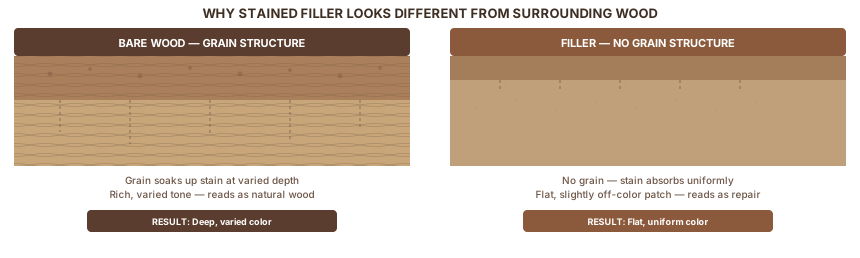
Why the Filled Spot Looks Different
Wood absorbs stain through its grain structure (the fibers, rays, and pores). Each species has a unique absorption pattern, which creates the variation and depth in a stained board.
Filler has none of that. It absorbs stain uniformly, with no grain figure. The result is a flat, slightly different-colored patch that reads clearly as a repair, especially in side-lighting and under light stains.
Darker stains hide this much better than light stains. If you have any flexibility in your stain color, go darker.
Three Ways to Improve the Match
Pre-tint the filler (best method). Before applying, mix a small amount of gel stain — the same color you'll use on the wood — directly into the filler. Or use powdered dye. This pre-colors the filler so it starts closer to your target and absorbs the topcoat stain more evenly. General Finishes recommends this approach for matching filled spots to dark stains.
Stain first, then fill nail holes with putty. For nail holes and small dings on stain-grade work, many finishers stain the wood, apply one sealer coat, then fill the nail holes with pre-colored wood putty before the final topcoats. The pre-colored putty under a topcoat disappears.
Accept slight variation on rustic pieces. On distressed furniture, live-edge slabs, or anything with natural character, a slightly different-colored filled crack reads as part of the wood, not a repair. Don't overthink it.
Once the filler is sanded flush and you're ready to coat, our guide to applying polyurethane covers the full finishing process — including how many coats, dry times between coats, and how to get a smooth final surface.
What Won't Work
Epoxy under stain — epoxy is non-porous once cured, stain won't penetrate. Any epoxy-filled area stays the color of the cured epoxy.
Hard filler applied to already-finished wood — it won't bond. Use pre-colored putty instead.
Filling with a standard (non-tinted) filler and expecting the stain to make it disappear — it won't.
Part 5: Floor Cracks — A Different Problem
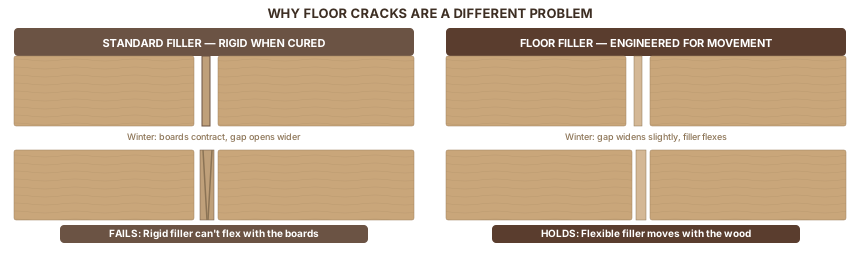
Floor cracks look like furniture cracks but behave differently. Floors flex under foot traffic and expand and contract seasonally. A water-based filler that works fine on a chair leg will pop out of a floor crack within one season.
Why Regular Filler Fails on Floors
Water-based filler hardens as it cures. When floorboards shift with seasonal humidity, that rigid patch has nowhere to go. It cracks, crumbles, or pops loose.
For floors, use a product engineered for movement, not a standard furniture filler.
The Right Products
Timbermate is the professional choice. It's water-based but doesn't shrink the way standard latex fillers do. Available in White Oak, Red Oak, Maple, and Ebony. You can also mix it with fine sawdust from the same species for a better color match. Pete's Hardwood Floors calls it the standard for floor repair work.
Bona Pacific Filler is the other professional option. Waterborne, engineered for hardwood floors before finishing, with minimum shrinkage and good stain acceptance.
Application for floors: Work with the floor clean and dry. Apply across the grain, working filler into the cracks. Scrape the surface flat before the filler starts to skin (usually 5–10 minutes). Let dry, then sand with the grain.
When Not to Fill Floor Cracks
If the gaps between boards open in summer and close in winter, hard filler won't hold. This is normal wood movement. Filling seasonal gaps doesn't work. Leave them or use a flexible floor putty that moves with the boards.
For gaps wider than 1/4 inch, consider a solid wood spline rather than filler. A thin strip of matching wood glued into the gap is a permanent repair that moves with the floor.
Part 6: Clear Wood Filler — When It Works and When It Doesn't
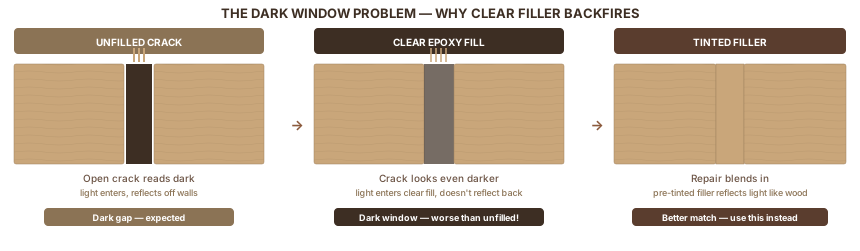
Clear wood filler (usually a clear epoxy resin) is marketed for cracks where you want an invisible repair. Fill the crack, keep the natural look. It often does the opposite.
The Dark Window Problem
Clear epoxy has medium viscosity and flows into narrow cracks well. It cures hard and doesn't shrink. But in any crack with depth, the clear filler creates what professionals call a "dark window." Light enters the crack through the clear filler but doesn't reflect back the way it does from wood fibers. The filled crack looks darker than an unfilled crack, not lighter.
Woodweb's knowledge base on filling gaps under clear finishes documents this optical effect clearly: the filled holes "look even darker than open holes just because the filler will allow less light down into the hole to be reflected back."
When Clear Filler Actually Works
- Decorative applications where the resin is meant to be visible (live-edge river table, artistic cracks)
- Very shallow surface checks with no real depth
- With solid-color paint, where the surface will be opaque
When to Use Tinted Filler Instead
For any repair under a stain or clear topcoat, tinted or color-matched filler consistently produces better results. Pre-tint a water-based filler (see Part 4) and you'll get a more natural-looking repair than clear epoxy gives you in most cases.
Part 7: Common Mistakes
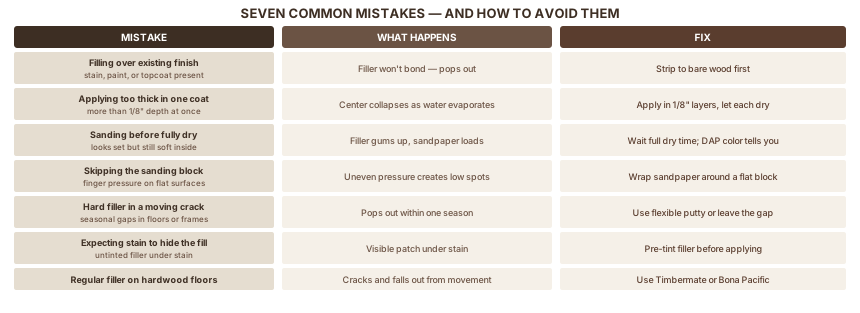
Most wood filler failures come from the same handful of errors.
| Mistake | What happens | Fix |
|---|---|---|
| Filling over existing finish | Filler doesn't bond; pops out | Strip to bare wood first |
| Applying too thick in one coat | Center collapses as water evaporates | Apply in 1/8-inch layers |
| Sanding before fully dry | Filler gums up; sandpaper loads | Wait for full dry time (use DAP's color indicator) |
| Skipping the sanding block | Finger pressure creates low spots | Wrap sandpaper around a block on flat surfaces |
| Using hard filler in a moving crack | Pops out within a season | Use flexible putty or leave the gap |
| Expecting stain to erase the fill | Visible patch under stain | Pre-tint the filler before applying |
| Using regular filler on floors | Cracks and falls out from movement | Use Timbermate or Bona Pacific Filler |
FAQ
How long does wood filler take to dry?
Water-based filler takes 2–6 hours for shallow fills at room temperature. Deep cracks filled in 1/8-inch layers can take up to 36 hours total. DAP Plastic Wood-X removes the guesswork — it goes on pink and turns natural-colored when fully dry. Don't sand early; filler that looks set on the surface can still be soft inside, and premature sanding gums up the sandpaper and pulls material from the repair.
Can you stain over wood filler?
Yes, but the filled area will look different from surrounding wood. Filler has no grain structure, so it absorbs stain uniformly instead of producing the varied depth wood does naturally. Darker stains hide this better than light ones. The best method: mix a small amount of gel stain directly into the filler before applying (pre-tinting) so it starts closer to your target color. Minwax Stainable Wood Filler has the best stain absorption of the major brands.
What's the difference between wood putty and wood filler?
Wood filler is a hard-setting compound for bare wood — apply before staining or finishing, then sand flush. Wood putty stays flexible and never hardens — apply after finishing to color-match nail holes and small dings on already-finished surfaces. They're not interchangeable: filler won't bond to finished wood, and putty can't be sanded. For furniture repairs on unfinished wood, use filler. For touch-ups on completed work, use putty.
How do you fill a deep crack in wood?
Apply water-based filler in layers no deeper than 1/8 inch per coat. Overfill slightly and let each layer dry completely — 2–6 hours — before adding the next. Packing a deep crack in one thick fill causes the center to collapse as the water evaporates, leaving a hollow spot. For cracks over 3/4 inch wide, switch to two-part epoxy, which cures through a chemical reaction and doesn't shrink.
What wood filler is best for hardwood floors?
Standard water-based filler fails on floors because it cures rigid. When boards expand and contract seasonally, the hard patch cracks and pops loose. Use a floor-specific product: Timbermate is the professional standard, available in White Oak, Red Oak, Maple, and Ebony. Bona Pacific Filler is the other proven option. Both are engineered to flex with seasonal wood movement and have near-zero shrinkage compared to standard latex-based fillers.
Sources
Research for this guide drew on manufacturer technical data sheets, woodworking community tests, expert finisher guidance, and professional flooring sources.
- DAP Plastic Wood-X product page — dry time specifications, DryDex indicator, shrinkage resistance
- Minwax Stainable Wood Filler product page — dry time, max hole size, stain specifications
- Minwax Stainable Technical Data Sheet — full product specifications
- Family Handyman — Wood Putty vs. Wood Filler — type distinctions, composition, use cases
- Fine Homebuilding — Deciding on Wood Fillers — expert finisher guidance, product comparison
- General Finishes FAQ — Matching Putty to Dark Stain — pre-tinting technique
- Woodweb — Filling Deep Gaps Under a Clear Finish — clear filler optical effects
- This Old House — Two-Part Epoxy for Rotted Trim — epoxy consolidant-plus-filler technique
- Pete's Hardwood Floors — Wood Filler on Hardwood Floors — floor-specific professional guidance
- Charleston Crafted — Best Wood Fillers Tested — hands-on product comparison
- Durham's Rock Hard Water Putty — How to Fill Cracks — layer depth and application technique
- eQualle — How to Sand Wood Filler — grit progression and sanding technique
- Bona Pacific Filler product info — floor filler specifications
Tools Used
Tagged