
How to Use This Guide
No finishing experience required. You need a putty knife, sandpaper, and about fifteen minutes of dry time.
Wood filler, wood putty, and grain filler share a shelf at the hardware store. The labels don't explain which one you need. Grab the wrong type and you've set up a repair that blotches under stain or falls out entirely.
This guide covers Famowood — the market standard for wood fillers — with specific product specs, step-by-step application, and the staining strategy most guides skip.
If you're choosing a product: Start at Part 1 and Part 2.
If you're staining: Read Part 3 before you buy anything.
Ready to apply: Go straight to Part 4 and Part 5.
Something failed: Head to Part 6.
Famowood Wood Filler at a Glance
Wood filler hides nail holes, cracks, and dents in bare wood before you finish. Famowood Original dries in 15 minutes to a surface harder than the surrounding wood, with almost no shrinkage — that speed and reliability are why finish carpenters reach for it first. The catch: "stainable" doesn't mean the patch disappears. Knowing when to fill before versus after staining is the skill that separates a visible patch from one you have to look for.
| Famowood Original dry time | 15 minutes (sandable) |
| Famowood Latex dry time | 15–30 minutes (sandable) |
| Colors available | 18 (Original), 10 (Latex) |
| Max single-layer depth | ~1/4"–1/2" for latex; layer deeper fills |
| Sanding grit to start | 80–100 grit to remove bulk |
| Interior/exterior | Both formulas rated for indoor and outdoor |
In this guide:
- Three products that aren't interchangeable — and how to pick the right one
- Famowood Original vs. Latex vs. epoxy — when to use each
- The staining problem and the three strategies that work
- Step-by-step application and sanding technique
- Troubleshooting cracks, fallen-out repairs, and dried-out cans
Part 1: Three Products on One Shelf
Wood filler, wood putty, and grain filler are three different products for three different stages of finishing. Using the wrong one is the most common repair mistake — and the packaging doesn't help.
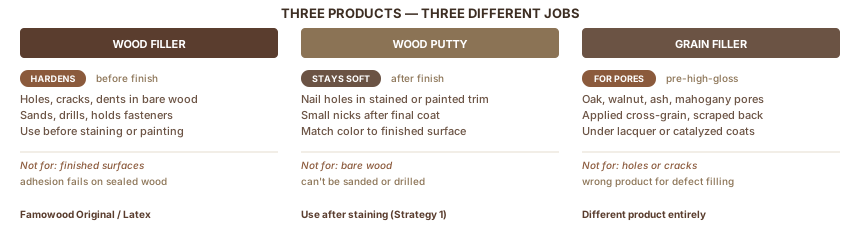
Wood filler
Wood filler is wood flour — fine sawdust — bound in a latex (water-based) or solvent binder. It hardens when it cures. You can sand it, drill through it, and drive a nail through it. It accepts stain and paint like wood, though not identically.
Use wood filler on bare, unfinished wood before any staining or painting. Once the surrounding wood has a finish on it, filler adhesion drops sharply. The sequence is non-negotiable: filler before finish.
Famowood is a wood filler.
Wood putty
Wood putty is oil-based — typically boiled linseed oil, calcium carbonate, and pigments. It stays soft permanently. You can't sand it, shape it, or drill through it. It belongs on finished surfaces: nail holes in painted trim, small nicks on a stained tabletop, minor touch-ups after the final coat.
If your project is already stained and sealed, use wood putty, not filler. Filler on a finished surface won't bond and falls out eventually.
Grain filler
Grain filler is a paste for filling the microscopic open pores of ring-porous woods — oak, walnut, ash, mahogany. Those pores create texture that shows through high-gloss finishes. Grain filler goes cross-grain, gets scraped back, and gets sanded flat, leaving a glass-smooth surface under lacquer or catalyzed finishes.
It does not fill holes or cracks. If you see someone in a forum saying "use grain filler on that knot," they're using the term wrong.
The rule: Bare wood before finish → wood filler. Finished surface, cosmetic only → wood putty. Open-grain wood before a high-gloss coat → grain filler.
If you're dealing with a nail hole, crack, or dent in unfinished furniture, you want wood filler.
Part 2: Choosing Your Filler
Famowood Original vs. Famowood Latex
Both formulas use wood flour. The binder is what differs.
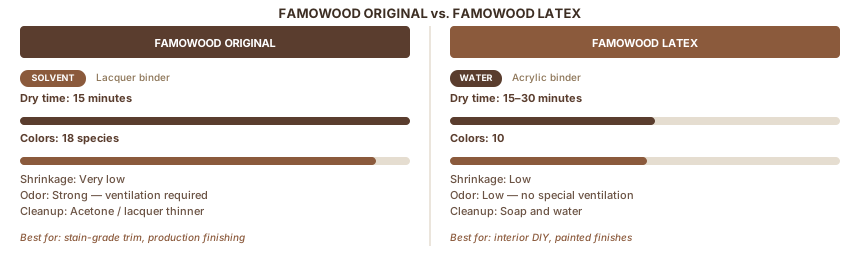
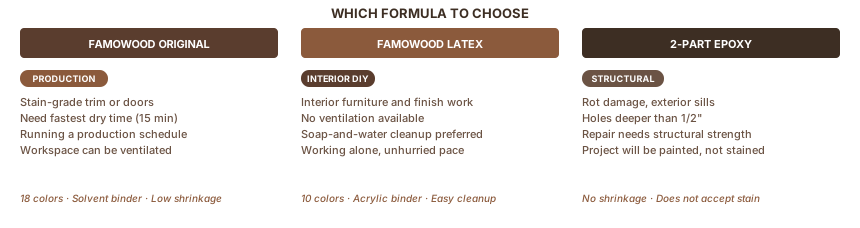
According to the Famowood Original product page, Famowood Original uses a solvent binder — lacquer-type chemistry. It dries in 15 minutes and shrinks almost nothing. Eighteen species colors are available. The tradeoffs: strong odor, flammable, requires ventilation. Finish carpenters use Original for stain-grade trim and doors because fast dry time and low shrinkage matter when you're running a production schedule.
The Famowood Latex formula uses an acrylic binder — water-based. Dry time is 15–30 minutes, longer in cold or humid conditions. Ten colors. Low odor, non-flammable, cleanup with soap and water. Slightly more shrinkage than Original. For interior furniture repairs where you're working alone and unhurried, Latex is the simpler choice.
Both are rated for interior and exterior use.
One note: Famowood also makes Glaze Coat — a two-part pour-on epoxy for bar tops and table surfaces. It is not a wood filler. The name creates real confusion at hardware stores.
When to use two-part epoxy instead
For holes deeper than 1/2" or repairs where structural integrity matters — rotted window sills, door bottoms, exterior trim with water damage — standard latex filler is not the right tool. Two-part epoxy filler bonds chemically to the wood, doesn't shrink, and holds fasteners in compromised material.
The tradeoff: epoxy does not accept stain. If the repair will be stained rather than painted, epoxy is not an option.
Filler comparison
| Product | Type | Dry time | Shrinkage | Stain take | Best for |
|---|---|---|---|---|---|
| Famowood Original | Solvent | 15 min | Very low | Good | Stain-grade trim, pro finishing |
| Famowood Latex | Water | 15–30 min | Low | Good | Interior DIY, painted finishes |
| DAP Plastic Wood-X | Water | 15 min | Low | Fair | Nail holes, ease of use |
| [Minwax Stainable](/guides/minwax-stain-chart) | Water | 4–6 hr | Low | Best on hardwood | Stain-grade furniture |
| Timbermate | Water | 1–2 hr | Very low | Excellent | Fine furniture, grain filling |
| 2-part epoxy | Epoxy | 20–30 min | None | Does not stain | Structural repairs, outdoor rot |
For painted furniture, any water-based filler from this list works. For stain-grade work, Famowood Original and Timbermate are the two to compare. Pine & Poplar's staining comparison found Minwax Stainable matched stained oak most closely in color — but it takes four to six hours to dry, versus Famowood's 15 minutes.
Part 3: Staining Strategy
This is the part most guides skip. It's also where most stained repairs go wrong.
Why "stainable" doesn't mean the patch disappears
Wood filler contains wood flour and a latex or solvent binder. It has no real grain structure. When stain hits actual wood, it penetrates along the grain and into the pores at different rates — that uneven absorption is what gives stained wood its depth and character. Filler absorbs stain differently from surrounding wood:
- Lighter patch: The binder seals the surface, reducing pigment penetration below the surrounding grain's level
- Darker patch: The filler absorbs more color than the dense surrounding grain, common on pine and soft woods
Fine Woodworking's forum discussion on filler blotches covers this from professional finishers' perspectives. The consensus: a perfect stain match through filler is not reliably achievable. The strategies below work around the problem rather than solving it.
Strategy 1: Fill after staining (best for nail holes)
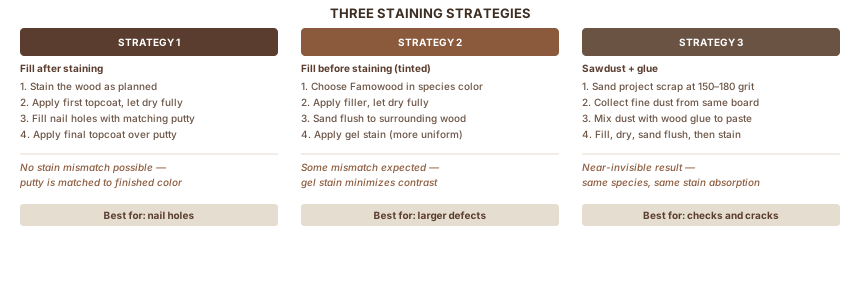
- Stain the wood as planned
- Apply the first coat of topcoat and let it dry
- Sand lightly with 220 grit
- Fill nail holes with pre-tinted wood putty matched to the stained color
- Apply the final topcoat
This is the standard approach professional trim painters use, as The Wood Workplace documents with before/after results. The first topcoat seals the stain. Then you match putty color to the finished surface by eye. No stain mismatch is possible — you're not asking the putty to absorb stain at all.
Strategy 2: Pre-tinted filler for larger defects
For bigger repairs — a filled knot, a large dent — you can't wait until after staining. Use Famowood in the closest species color to your wood, apply and sand flush, then stain.
Two things improve results here: gel stain sits on the surface more uniformly than penetrating stain and narrows the contrast between the patch and surrounding wood. And you can mix universal tinting colorants (UTC) directly into wet Famowood Latex to shift the color closer to your wood before applying.
Accept that some mismatch will remain. Minor variation is normal on stained repairs.
Strategy 3: Sawdust and glue (maximum invisibility)
For checks, small cracks, and defects where an invisible result is the goal:
- Collect fine dust from sanding the actual project wood — a 150–180 grit pass on scrap from the same board generates the right particle size
- Mix the dust with wood glue to a thick paste
- Press into the defect, let dry, sand flush, then stain
The dust is from the same species with the same grain color and pore structure. Stain absorption is nearly identical to the surrounding wood. This approach takes more prep but produces the closest result to an invisible repair.
Part 4: How to Apply Wood Filler
Surface preparation
Filler needs bare, clean, dry wood. Finish, wax, or oil on the surrounding surface prevents adhesion — the repair falls out later. If you're repairing furniture with an existing finish, sand the immediate repair area back to bare wood before you start.
If you stored the Famowood in a cold garage, let the can warm to room temperature first. Cold filler stiffens and resists working into tight spaces.
Applying the filler
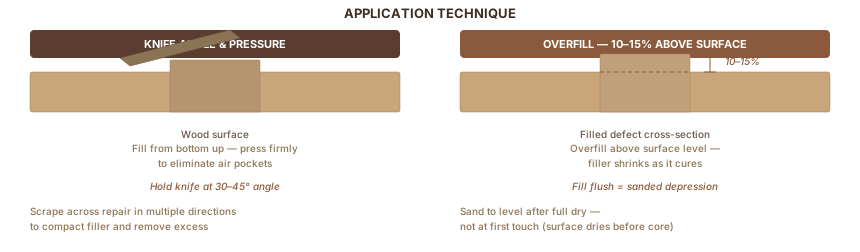
- Load a flexible putty knife with a small amount of filler — about a walnut-sized amount for a nail hole, more for larger repairs.
- Press the filler into the defect with firm pressure. Fill from the bottom up, forcing filler into corners and to the base of the hole to eliminate air pockets.
- Angle the knife sharply and scrape across the repair in multiple directions to compact the filler.
- Overfill by 10–15% above the surface. Filler shrinks as the water or solvent evaporates. Fill flush and you'll sand through it, leaving a slight depression.
- Feather the edges outward from the repair. This tapers the fill and reduces the ridge you need to sand away.
Layering for deep holes
Latex filler has a maximum reliable single-layer depth of about 1/4"–1/2". Fill deeper than that in one pass and the exterior skins over before the interior cures. Trapped solvent or water creates air pockets, which crack later.
For holes deeper than 1/2": apply a first layer, wait for full dry, then apply the second. Repeat as needed. The repair holds long-term; a single thick fill often doesn't.
Dry times
- Famowood Original: 15 minutes to sandable. In practice, wait 30 minutes — the surface firms before the interior is through-hard.
- Famowood Latex: 15–30 minutes to sandable; up to 60 minutes in humidity above 70% or temperatures below 60°F.
- Full cure: 24 hours before topcoat or putting the piece in service.
Part 5: Sanding Flush
When to start sanding
Press a fingernail firmly into the filler. If it dents, wait longer. The surface often firms before the interior cures. Sanding too early tears out undercured material, leaving a void that fails later.
According to Durham's Water Putty's sanding timing guidance, a surface that feels dry to touch can still have a soft interior — err toward more dry time, not less.
Grit sequence
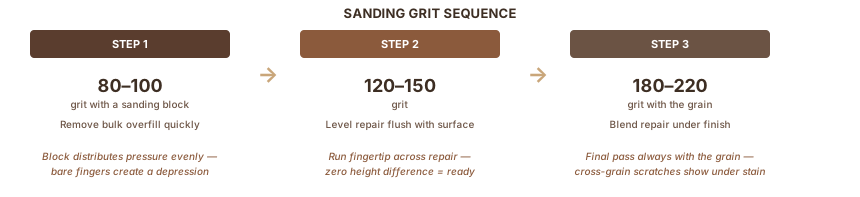
80–100 grit with a sanding block: Remove the bulk of the overfill quickly. Use a sanding block, not bare fingers — a block distributes pressure evenly and keeps the repair flat. Bare-finger sanding bridges the repair and creates a slight depression.
120–150 grit: Level the repair flush with the surrounding wood. After this pass, run your fingertip across the repair. Zero height difference means you're ready to move on.
180–220 grit: Match the scratch pattern of the surrounding wood and sand with the grain. This pass blends the repair under finish.
Common mistakes
Starting with 150 or 220 grit on the overfill clogs sandpaper in seconds on fresh filler. Start at 80–100 grit to remove material fast, then finish fine.
Cross-grain scratches at the 220-grit stage leave visible marks under stain. The final pass goes with the grain only.
Part 6: Troubleshooting
Filler cracks or sinks after drying
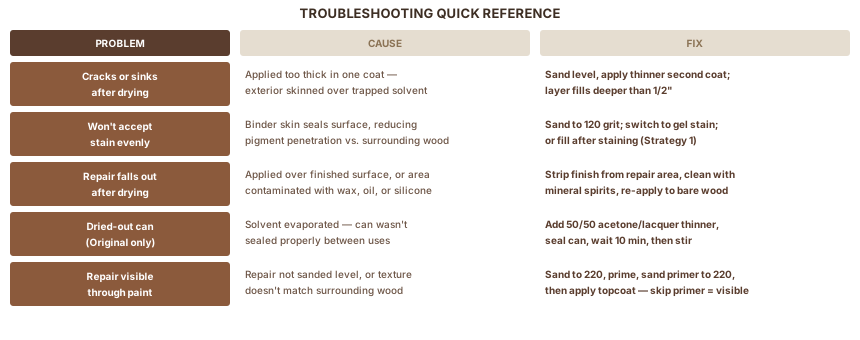
You applied it too thick in a single coat. The exterior skinned over before the interior cured, trapping solvent or water. Let it dry completely, sand the cracked surface level, and apply a thinner second coat. For fills deeper than 1/2", layer from the start.
Filler won't accept stain evenly
Sand the filler surface to 120 grit before staining — the binder creates a skin that resists stain penetration, and roughing it up helps. Try gel stain: it sits on the surface uniformly and narrows the contrast between patch and wood. If the mismatch is still unacceptable, switch to the fill-after-staining approach from Part 3 for future repairs on that project.
Filler falls out after drying
Either you applied it over a finished surface or the repair area was contaminated. Filler bonds to bare wood. If you applied over finish, clean out the failed repair, strip the finish around it, and re-apply to bare wood. If contamination is the cause — oil, wax, silicone — wipe with mineral spirits, let dry completely, then re-apply.
Dried-out can of Famowood Original
The solvent evaporated because the can wasn't sealed properly. Famowood's official thinning guidance recommends a 50/50 blend of acetone and lacquer thinner to restore original consistency. Add a small amount to the can, seal it, wait ten minutes, then stir. If the filler is only slightly stiffer than usual, skip the wait and stir immediately.
Store the can upside down between uses. Solvent stays in contact with the dried surface layer and prevents skinning. A properly sealed can stored this way lasts two or more years.
Repair still visible through paint
The repair wasn't sanded level, or the filler's texture doesn't match the surrounding wood. Sand to 220 grit, apply a coat of primer, sand the primer to 220 grit, then apply topcoat. The primer coat evens out texture differences — skipping it is why painted repairs show through.
Where This Fits
Before this guide: If you're refinishing an existing piece, read how to refinish a table first — it covers stripping and surface prep before filler comes in.
Related guides:
- Best Stainable Wood Filler — deeper brand comparison tested for stain absorption
- Wood Filler for Cracks — crack-specific decision framework and floor crack repairs
After this guide: Applying Polyurethane covers the finish that goes over your filled, sanded surface.
Sources
Research drew from manufacturer technical data sheets, tested product comparisons, professional finishing forums, and hands-on testing documentation.
- Famowood Original Wood Filler product page — formula, colors, specs
- Famowood Latex Wood Filler product page — latex formula specs
- Famowood Original thinning technical data — solvent ratios and reactivation guidance
- Pine & Poplar stainable wood filler comparison — stain absorption testing across brands
- Charleston Crafted — 4 brands tested — hands-on multi-brand comparison
- Fine Woodworking forum — blotches caused by wood filler — professional finisher discussion on staining
- The Wood Workplace — staining over filler blotchy results — strategies and fixes
- Fine Homebuilding — deciding on wood fillers — professional decision framework
- This Old House — how to choose and use wood filler — complete application guide
- Patriot Woodworker forum — reactivating Famowood — reactivation technique
- Durham's Water Putty — sanding timing — when to sand after applying filler
- Bob Vila — best wood fillers tested — tested product comparison
- Family Handyman — wood putty vs. wood filler — definitions and use-case comparison
- The Craftsman Blog — wood filler and epoxy year 5 test — long-term durability data
Tools Used
Also Referenced
How We Research
We don't take affiliate revenue or accept review units. Picks come from multi-source research — manufacturer specs, OSHA / EPA / ASTM regs, and long-form practitioner threads — plus Ahmed's hands-on use where relevant. When we recommend something, we explain why.
Up Next
How to Use Paint Stripper on Wood
FINISHING · Beginner