
How to Use This Guide
Two-part epoxy spray paint gives you a harder, more waterproof finish than polyurethane. It also comes with a short clock: once you mix resin and hardener, the chemical reaction starts immediately. This guide covers the full process: why epoxy earns the added complexity, the chemistry you need before you spray, and the troubleshooting moves for the failures most guides skip.
Skill level: Intermediate. Assumes you've spray-finished before and own or have access to an HVLP gun or airless sprayer.
Choosing between epoxy and poly: Start with Part 1 and the comparison table.
Ready to spray: Jump to Part 4 (mixing) and Part 5 (gun setup).
Something went wrong: Go straight to Part 7 for sagging, fish eyes, amine blush, and delamination.
RELATED: Applying Polyurethane The foundation if you're new to spray finishing or want the polyurethane comparison in full detail.
Epoxy Spray Paint at a Glance
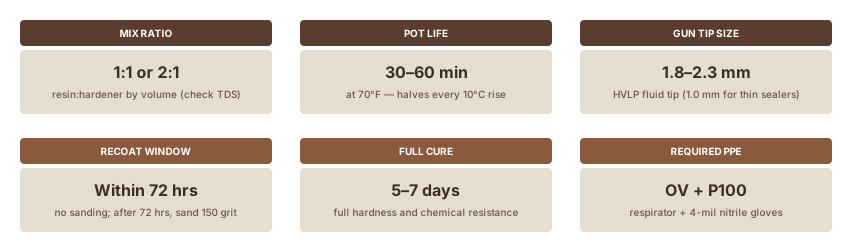
Two-part epoxy cures by chemical reaction, not solvent evaporation. The result is harder, more waterproof, and more chemically resistant than polyurethane. You have a limited window once you mix, typically 30 to 60 minutes at 70°F. Epoxy's higher viscosity also demands a fluid tip of at least 1.8 mm — the 1.4 mm tips used for lacquer won't atomize it properly. Session planning matters as much as technique.
| Mix ratio | 1:1 or 2:1 resin:hardener (check product TDS) | | Pot life | 30–60 min at 70°F; halves every 10°C rise | | Gun tip size | 1.8–2.3 mm HVLP fluid tip | | Recoat window | Within 72 hrs: no sanding; after 72 hrs: sand 150 grit first | | Full cure | 5–7 days | | Required PPE | Organic vapor + P100 respirator, 4-mil nitrile gloves |
In this guide:
- Why epoxy beats poly for high-traffic pieces
- The chemistry of mixing and amine blush
- Surface prep before you spray
- Mixing and pot life management
- Spray gun setup
- Coat schedule and cure times
- Troubleshooting sagging, fish eyes, and amine blush
- Safety
Part 1: Why Epoxy and When to Use It
Polyurethane is the workhorse of wood finishing. Most furniture gets three coats and looks great for years. So when does epoxy earn the switch?
Water, chemicals, and daily abuse.
What two-part epoxy does differently
Polyurethane cures by solvent evaporation. It's a film laid on top of the wood. Sand through it and you're back to bare wood. Two-part epoxy cures differently: resin and hardener react together, forming a cross-linked polymer bonded with itself and mechanically keyed to the surface. According to Rubcorp's finish comparison guide, the result is harder (better scratch resistance), fully waterproof (not just water-resistant), and more resistant to household chemicals and food acids.
A dining table that sees wine, oil, and daily wiping: epoxy holds up. A kitchen cabinet door that sees grease and cleaning spray: epoxy holds up. Bar tops use epoxy for a reason.
Where polyurethane still wins
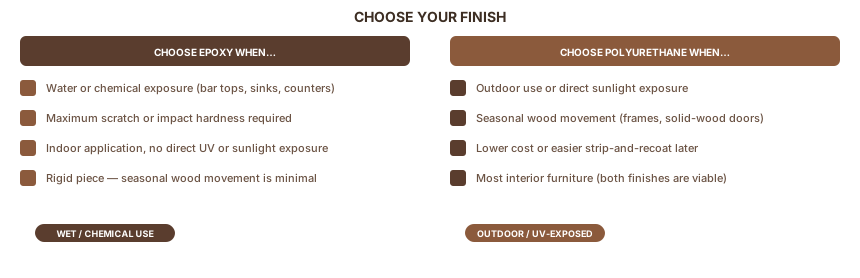
Epoxy yellows under UV light. It's a poor choice for outdoor furniture or pieces in direct sunlight unless topped with a UV-stable topcoat. It's also more rigid than polyurethane. Wood that moves seasonally can eventually crack an epoxy film; polyurethane flexes.
| Two-Part Epoxy | Polyurethane | |
|---|---|---|
| Hardness / scratch resistance | Higher | Moderate |
| Waterproof | Yes | Water-resistant |
| Chemical resistance | High | Moderate |
| UV stability | Poor (yellows) | Good |
| Flexibility | Rigid | Flexible |
| Reversibility | Very difficult | Easier |
| Cost per coat | Higher | Lower |
| Best for | Wet/chemical exposure | Sunlit, exterior, flexible |
Water or chemical exposure, or maximum hardness: choose epoxy. Outdoor or UV-exposed: choose polyurethane. Most interior furniture: both work.
RELATED: Epoxy Wood Finish Brush-applied epoxy finishes, if spray equipment isn't available.
Part 2: Understanding Two-Part Chemistry
Before you spray, understand one thing: the ratio matters more with epoxy than with any other finish.
How the cure works
Lacquer dries when solvent evaporates. Polyurethane oxidizes and cross-links slowly over days. Two-part epoxy triggers a chemical reaction the moment resin and hardener contact each other. The amine groups in the hardener bond with the epoxy groups in the resin, building a three-dimensional polymer network. Cured epoxy isn't a film sitting on the surface. It's a molecular lattice. That's why it's so hard.
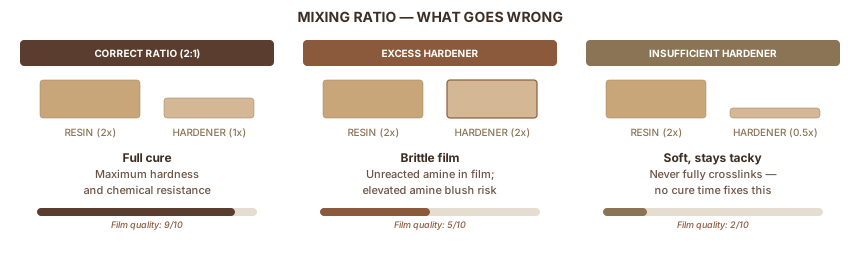
The chemistry requires a specific ratio of reactive sites. Most consumer epoxies use 2:1 resin to hardener by volume, or 1:1. Each product is calibrated differently. Look up the TDS.
What happens when the ratio is wrong
Too much hardener: unreacted amine stays in the film. The coating cures brittle, loses chemical resistance, and the excess amine increases the risk of amine blush. Too little hardener: incomplete crosslinking. The film stays soft and slightly tacky regardless of how long it cures.
Per KTA's guide on incorrect mixing of multi-component coatings, the practical tolerance is roughly ±3–5% by weight. That sounds forgiving until you realize a careless pour off a graduated cup can miss by more than that. Use a graduated mixing cup. A digital kitchen scale is more accurate for larger batches.
Amine blush
Amine blush is a thin, waxy film that forms on curing epoxy when humidity is above 60% or temperature is below 50°F. Sherwin-Williams Industrial's amine blush reference explains the mechanism: excess amine compounds react with atmospheric CO2 and moisture to form a carbamate residue. It looks like a dull haze or feels slick to the touch.
Amine blush is a bond breaker. Spray a second coat over a blushed surface and the new coat won't adhere. It sits on top of the wax and eventually peels.
The fix: wash the cured surface with warm water and white vinegar, scrub with a non-abrasive pad, rinse thoroughly, and let it dry completely before recoating. Do not sand amine blush. Sanding drives the wax into the surface pores and makes it impossible to remove.
Prevention: keep humidity below 60%, temperature above 65°F, and use only electric heat. Direct-fired propane heaters produce combustion moisture and CO2. That's exactly what triggers blush.
Part 3: Surface Preparation
Epoxy bonds to clean, dry, mechanically abraded surfaces. Contamination (oil, silicone, wax, an uncured previous finish) causes immediate adhesion failure. No shortcuts on prep.
Sanding
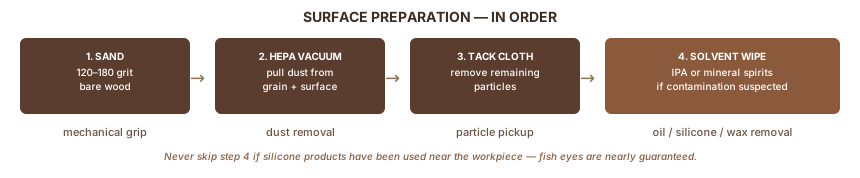
For bare wood, sand to 120–180 grit before applying epoxy. Finish at 150–180 grit: rough enough to give the epoxy mechanical grip, not so smooth that the coating has nothing to key into. Sanding to 220+ before epoxy leaves the surface too polished for reliable adhesion.
Previously finished surfaces need a full scuff to remove gloss: 120 grit, then 150 grit. The previous finish must be completely dulled. No shiny patches.
Cleaning
After sanding:
- HEPA vacuum to pull dust out of the grain
- Tack cloth to remove remaining particles
- Solvent wipe with isopropyl alcohol or mineral spirits if you suspect oil, wax, or silicone contamination
Keep silicone products out of the spray area. Furniture polish, silicone-based lubricants, and some conditioners embed in wood grain. Solvent wiping doesn't fully remove them. If silicone is present, fish eyes are nearly guaranteed.
Dryness
All surfaces must be completely dry before applying epoxy. Moisture under an epoxy film has nowhere to go and will blister or bubble through as the wood dries. For raw wood in humid climates, let freshly sanded surfaces acclimate for 30 minutes before coating.
Part 4: Mixing and Pot Life Management
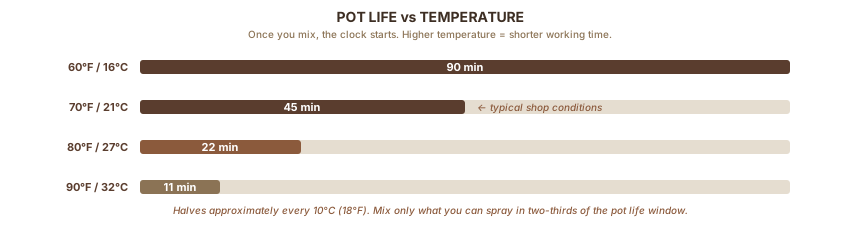
Pot life is the time after mixing when epoxy is still sprayable. According to ASTC Polymers' pot life guide, at 70°F most consumer products give you 30–60 minutes. At 90°F, expect 15–30. At 60°F, you may get 90 minutes. Plan the session before you mix.
Measuring accurately
Pull the product TDS before you pour anything. Common ratios are 2:1 (resin:hardener by volume) and 1:1, but products use other ratios and they're not interchangeable. Use graduated mixing cups or a digital scale. Not the pour-and-eyeball approach.
Measure each component separately into a clean container, then combine in your mixing vessel. This verifies volumes before you commit.
Mixing technique
Stir slowly and deliberately for 2–3 full minutes, scraping the sides and bottom. The goal is a uniform mix with no streaks and consistent color throughout. Do not whip. Air bubbles in the mix become bubbles in the coating.
Immediately after mixing: pour into a wide, shallow container (a roller tray or spray cup works well). Do not leave it in the deep mixing vessel. Epoxy generates heat as it cures (exothermic reaction). A deep narrow container traps that heat, accelerates the reaction, and cuts your working time. A wide, shallow container lets the heat dissipate.
Batch sizing
Calculate your coverage area before you mix. Most consumer two-part epoxy products cover 200–400 sq ft per gallon per coat. Mix only what you can spray in about two-thirds of your pot life window. That leaves margin to flush the gun before material hardens inside it.
When unsure, mix less. Multiple small batches cost five extra minutes. A gun full of hardened epoxy costs hours of cleaning, or the gun itself.
Part 5: Spray Gun Setup
Standard lacquer settings don't work for epoxy. Epoxy is more viscous than lacquer. A 1.4 mm fluid tip that sprays lacquer beautifully produces dry, grainy atomization with epoxy. Match the gun to the material.
Choosing the right gun and tip
For furniture and shop work, an HVLP gravity-feed gun is the right tool. Airless sprayers move material faster and work well for large flat surfaces, but they produce more overspray and less finish quality.
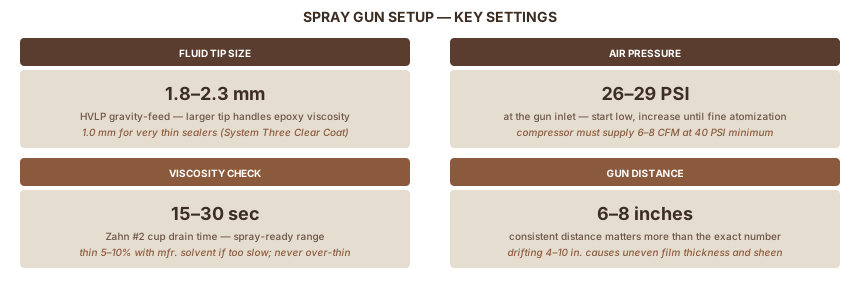
Fluid tip size: 1.8–2.3 mm for most two-part epoxy paints, per Pittsburgh Spray Equipment's epoxy spraying guide. The larger tip passes more material per stroke, which compensates for the higher viscosity without requiring excessive air pressure. For very thin epoxy sealers (such as System Three Clear Coat), a 1.0 mm tip works.
If your product has a pot life under 30 minutes, look into a plural-component sprayer. This keeps resin and hardener separate until the tip, eliminating pot life pressure during the spray session. A significant investment, but required for high-volume production work.
Pressure and viscosity
Set your compressor regulator to 26–29 PSI at the gun inlet, per WoodWeb's HVLP pressure settings reference. Start with the pressure control at minimum, then increase until you get fine, consistent atomization. Don't chase a preset number. The right pressure for your material and gun differs from any chart.
Viscosity check: a Zahn #2 cup that drains in 15–30 seconds indicates spray-ready material. If it drains slower, thin with the manufacturer's recommended solvent at 5–10%. Never thin more than specified (reduces film build, may interfere with cure chemistry). Never use a different solvent than specified.
Your compressor needs at least 6–8 CFM at 40 PSI to sustain an HVLP gun. Run a moisture separator on the air line. Water in the air supply causes fish eyes and adhesion failure.
Test on scrap
Before spraying the actual piece, run a test panel on scrap wood of the same species. Check atomization quality, orange peel tendency, and run risk on vertical surfaces. Adjust pressure, distance, and arm speed on scrap. Not on furniture.
Part 6: The Application Process
Step 1: Apply the seal coat
Apply the first coat thin, about half the coverage rate of your build coats. The seal coat penetrates open-grain wood, seals the surface, and gives subsequent coats their adhesion base. Going straight to a heavy build coat risks bubbles from outgassing wood moisture getting trapped under a thick film.
Step 2: Set up your spray passes
Hold the gun 6–8 inches from the surface throughout. Consistent distance matters more than the exact number. If you drift to 4 inches on one pass and 10 on the next, film thickness varies and sheen turns uneven.
Keep arm speed smooth and constant. Never stop the gun while triggering. Overlap each pass by 50% for even coverage.
Step 3: Apply build coats
Plan on 2–3 build coats over the seal coat. On vertical surfaces, apply thinner coats than you think necessary. A coat that levels beautifully on a horizontal surface will sag on a vertical one.
Step 4: Manage the recoat window
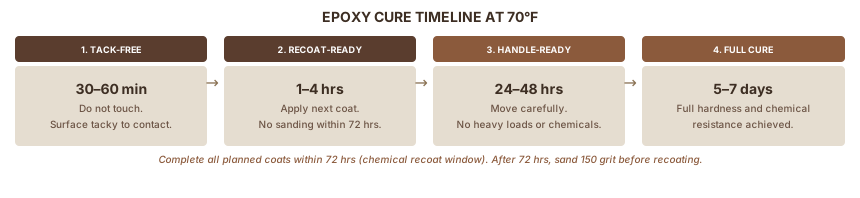
Per System Three's clear finishing guide, the chemical recoat window for most epoxy products is 72 hours without sanding. Within that window, the fresh coat bonds chemically to the previous one. After 72 hours, scuff-sand with 150 grit, clean with a tack cloth, and recoat. The bond becomes mechanical only.
Best practice: complete all planned coats in a single session within the chemical window. This is one of the main efficiency advantages of epoxy over multi-day finishing schedules.
| Stage | Time at 70°F | What you can do |
|---|---|---|
| Tack-free | 30–60 min | Nothing — don't touch |
| Recoat-ready | 1–4 hours | Apply next coat |
| Handle-ready | 24–48 hours | Move carefully, no heavy loads |
| Full cure | 5–7 days | Full hardness and chemical resistance |
Allow full cure (5–7 days) before placing heavy objects or exposing the surface to moisture or cleaning chemicals.
Part 7: Troubleshooting Common Failures
Sagging and runs
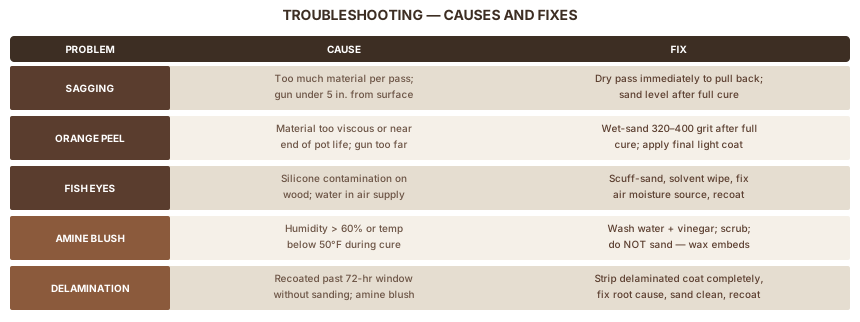
Cause: Too much material per pass, gun held under 5 inches from surface, material over-thinned, or cool humid conditions that slow flash time between passes.
Fix on a wet sag: Immediately run a dry pass over the area to pull material back. On a cured sag: sand level with 220 grit once fully cured, clean, apply a light finish coat.
Prevent: Faster arm speed, lighter passes on verticals, maintain 6–8 inch gun distance, allow more flash time in cooler conditions.
Orange peel
Cause: Material too viscous (under-thinned or near end of pot life), air pressure too high producing over-atomization, or gun too far from the surface causing dry spray.
Mild fix: After full cure, wet-sand with 320–400 grit until the surface is level, then apply a final light coat.
Prevent: Viscosity check before spraying. Consistent gun distance. Start pressure low and dial up.
Fish eyes
Cause: Silicone contamination on the wood surface (furniture polish, silicone spray lubricants, conditioners used near the shop). Water in the air supply is a secondary cause. System Three's fish eye guide identifies silicone as the primary culprit.
Prevent: Wipe with mineral spirits before spraying. Keep silicone products out of the spray area permanently. Run a moisture separator on the air line.
Fix once cured: Scuff-sand (150 grit), solvent wipe, fix the air supply moisture issue, recoat.
Amine blush
What it looks like: A waxy, hazy, or slick film on the cured coat surface. Doesn't sand away cleanly. It smears.
Cause: Humidity above 60% or temperature below 50°F during cure. Also: direct-fired propane or gas heaters.
Fix: Wash with warm water and white vinegar, scrub with a non-abrasive pad, rinse thoroughly, dry completely, then recoat. Do not sand amine blush. The wax embeds in the surface and adhesion fails permanently.
Recoat adhesion failure (delamination)
Cause: Recoating past the 72-hour window without sanding first. Coating over amine blush. Silicone contamination.
Symptom: New coat wrinkles, peels at edges, or lifts in sheets.
Fix: Strip the delaminated coat completely. Sand clean surface to bare or previous sound coat. Identify and fix the root cause, then recoat properly.
Part 8: Safety
Brush-applied epoxy is hazardous. Sprayed epoxy is significantly more hazardous. The spray gun converts liquid into fine airborne mist. Those tiny droplets penetrate deeper into your lungs than liquid splashed on skin. Sensitization risk accelerates with spray exposure.
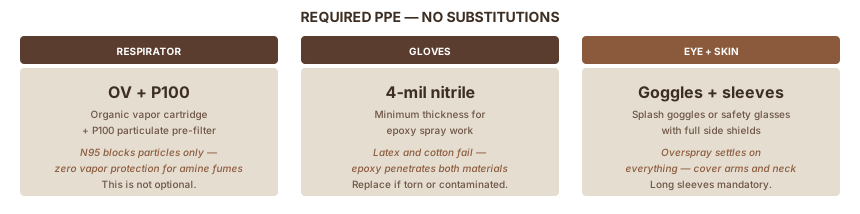
Required PPE
Respirator: Air-purifying respirator with an organic vapor (OV) cartridge plus a P100 particulate pre-filter. PRO-SET Epoxies' safety guide is clear: an N95 dust mask blocks particles but offers no vapor protection against the amine and epoxy resin compounds in the air. This is not optional.
Gloves: Minimum 4-mil nitrile. Latex and cotton gloves are not sufficient. Epoxy penetrates them.
Eye protection: Splash goggles or safety glasses with full side shields.
Skin: Long sleeves. Cover exposed arms and neck. Overspray settles on everything in the room.
Chemical sensitization
Epoxy sensitization is an allergic response that builds with repeated exposures. Once sensitized, even trace amounts of epoxy (a tiny skin contact, a single unmasked minute in a spray booth) can trigger a severe systemic reaction. There is no treatment that reverses sensitization.
This is why experienced finishers wear full PPE for every session without exception, no matter how short. Treat every spray session as if it could be the one that triggers sensitization.
Ventilation and fire safety
Spray mist is flammable. Cross-ventilate with exhaust directed away from any ignition source. No open flames, no gas heaters, no sparks during or immediately after spraying. A proper spray booth with a filtered exhaust fan is ideal. At minimum: fresh air intake and exhaust.
Cleanup and disposal
Flush your spray gun with acetone immediately after every session. Hardened epoxy inside a gun is extremely difficult to remove. Don't let it sit.
Uncured Part A and Part B components are hazardous waste. Take them to your local household hazardous waste facility. Mixed, fully cured epoxy waste (hardened scraps, mixing cups, rags with dried epoxy) is generally inert and goes in regular trash.
FAQ
What fluid tip size do I need to spray two-part epoxy?
Use a 1.8–2.3 mm fluid tip on an HVLP gravity-feed gun. Standard lacquer tips (1.4 mm) can't pass enough material for epoxy's higher viscosity without running air pressure dangerously high, which causes dry spray. For very thin epoxy sealers like System Three Clear Coat, a 1.0 mm tip works. If you're unsure, start at 1.8 mm and increase if the atomization is too coarse.
How long can I work after mixing two-part epoxy?
At 70°F, most two-part epoxy products give you 30–60 minutes of pot life. That window drops to roughly 11 minutes at 90°F. Mix only what you can spray in about two-thirds of your pot life — that leaves time to flush the gun before the material hardens inside it. Working in batches costs a few extra minutes; a gun packed with hardened epoxy costs hours.
How do I fix amine blush on cured epoxy?
Wash the surface with warm water and white vinegar, scrub with a non-abrasive pad, rinse thoroughly, and let it dry completely before recoating. Do not sand amine blush — sanding drives the waxy residue into the wood pores and makes full removal nearly impossible. Prevention is easier: keep humidity below 60%, temperature above 65°F, and avoid direct-fired propane heaters, which produce the combustion moisture that triggers blush.
Can I recoat epoxy without sanding between coats?
Yes, within the 72-hour chemical recoat window. Inside that window, the fresh coat bonds chemically to the previous one and no sanding is needed. After 72 hours, scuff-sand with 150 grit, clean with a tack cloth, then recoat — the bond becomes mechanical only. Plan your coat schedule before you start mixing so you can get all build coats down within that window.
Sources
Research for this guide drew on manufacturer technical data sheets, professional coating application guides, and industrial safety documentation.
- Pittsburgh Spray Equipment – Spraying Epoxies Guide — spray equipment setup and pot life management for epoxy
- System Three Resins – Clear Finishing of Outdoor Wood — recoat windows, coat schedule, spray application
- ASTC Polymers – Epoxy Cure Time and Pot Life — pot life temperature effects, batch sizing, cure stages
- KTA University – Incorrect Mixing of Multi-Component Coatings — mixing ratio consequences
- Sherwin-Williams Industrial – Amine Blush — amine blush cause, prevention, fix
- WEST SYSTEM – Surface Preparation — surface prep requirements
- PRO-SET Epoxies – Safety — PPE and sensitization risks for spray application
- System Three – Fish Eyes in Epoxy — fish eye causes and fixes
- Entropy Resins – Resin and Hardener Instructions — mixing procedure and cure basics
- WoodWeb – Compressor and Gun Pressure Settings — HVLP pressure settings for wood finishes
- Rubcorp – Epoxy vs Polyurethane Table Top — comparison data for the finish selection table
- Master Bond – Crosslink Density in Epoxies — crosslinking chemistry and performance properties
- Epoxyworks – Minimizing Amine Blush — amine blush prevention in humid conditions
- Epoxyworks – Proper Disposal of Leftover Resin — disposal guidance for uncured components
Tagged