
How to Use This Guide
This guide covers the complete furniture refinishing process: identifying what's on the surface, removing it correctly, repairing the wood, and applying a new finish matched to the species and how hard the piece works.
Jump ahead if you already know where you are:
- Not sure what's on the piece: Start with Part 1: Assessing What You Have
- Ready to strip: Jump to Part 2: Stripping the Old Finish
- Deciding on stain: Jump to Part 5: Staining (or Not)
- Applying the topcoat: Jump to Part 6: Applying the Topcoat
- Something went wrong: Jump to Part 7: Troubleshooting
Furniture Refinishing at a Glance
Strip the old finish, repair any damage, prepare the surface, and apply a new finish matched to the wood species and how hard the piece works. The sequence matters — skip the solvent test and you pick the wrong stripper; skip sanding to 180 grit and oil-based stain won't absorb evenly. Each step sets up the next.
| Identify first | Existing finish type (solvent test, 5 minutes) |
| Full process time | 2–4 days (stripping + dry time + finishing) |
| Safest universal stripper | Citristrip (methylene-chloride-free) |
| Best stain for blotchy woods | Gel stain (General Finishes, Old Masters) |
| Minimum coats for dining tables | 3 coats oil-based polyurethane |

In this guide:
- Part 1: Assessing What You Have — identify the finish, decide whether to strip or recoat, check for veneer
- Part 2: Stripping the Old Finish — chemical stripping step by step, sanding, safety
- Part 3: Repairing the Wood — gouges, dark water stains, veneer bubbles, loose joints
- Part 4: Preparing the Surface — sanding progressions, grain raising, pre-conditioner
- Part 5: Staining (or Not) — species-matched stain selection and application technique
- Part 6: Applying the Topcoat — finish by use type, brush application, wipe-on method
- Part 7: Troubleshooting — blotchy stain, bubbles, brush marks, finishes that won't cure
Part 1: Assessing What You Have
The existing finish determines which stripper works, whether you can clean-and-recoat instead of stripping, and which new products are compatible. Five minutes here prevents hours of wasted work.
The Solvent Test
Find an inconspicuous spot: the inside of a drawer frame, the underside of a shelf, or the back of a door panel. Apply a few drops of denatured alcohol and wait 30 seconds.
If the surface softens, smears, or gets sticky: you have shellac. Per Bob Flexner's Understanding Wood Finishing, shellac dominated furniture finishing until the 1940s–1950s, so most pre-war antiques have it. Denatured alcohol alone re-dissolves it.
If denatured alcohol does nothing, try lacquer thinner on the same spot.
If lacquer thinner softens the surface: lacquer. Common on factory furniture from the 1950s through the 1980s. Stripable, or re-dissolved by spraying fresh lacquer over it.
If neither solvent does anything: you have a cross-linked film (oil-based polyurethane, varnish, or conversion varnish). These cure chemically rather than by solvent evaporation. Solvents won't re-dissolve them. They need mechanical removal (sanding) or a longer dwell time with a strong stripper.
| Finish | Field test | Strip approach | Difficulty |
|---|---|---|---|
| Shellac | Denatured alcohol softens it | Denatured alcohol or any stripper | Easy |
| Lacquer | Lacquer thinner softens it | Stripper or lacquer thinner | Easy |
| Oil-based poly / varnish | Neither solvent works | Stripper (long dwell) or sanding | Moderate |
| Oil/penetrating finish | No surface film; feels like bare wood | Clean and recoat | Easy |
| Wax | Naphtha smears it | Mineral spirits to dewax first | Easy |
| Paint | Visible layers | Stripper; lead test first if pre-1978 | Varies |
Pre-1978 painted furniture: The EPA considers pre-1978 painted surfaces presumed-lead without testing. Use a lead test kit (3M or Klean-Strip swab kits, available at hardware stores) before sanding any old painted piece.
Strip, Recoat, or Spot Repair?
You don't always need to strip to bare wood. Match the approach to the actual condition.
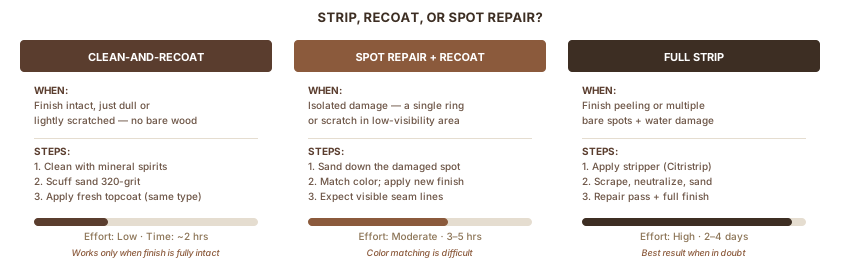
Clean-and-recoat (fastest path): The surface is dull or lightly scratched, the finish is intact, no bare wood, no peeling. Clean with mineral spirits, scuff with 320-grit, apply a fresh coat of the same finish type. Works for poly over poly, lacquer over lacquer.
Spot repair + recoat: Small isolated damage: a single ring, a localized scratch. Fix the bare spots, feather in new finish. Color matching is difficult; visible patches are common. Reserve this for damage in low-visibility areas.
Full strip: The finish is peeling, flaking, or lifting. Bare wood appears in multiple places. Water damage has turned the wood dark. You want a different stain color. You don't know what's underneath and can't get clean adhesion.
When in doubt, strip. Finishing over an unknown or incompatible substrate is the most common reason refinishing jobs fail.
Check for Veneer
Look at a raw edge of the piece, where a panel ends without trim. If you see layers (particleboard, plywood, or MDF core with a thin wood face), the surface is veneer.
Modern veneer runs 1/28" to 1/42" thick (roughly 0.5–0.9mm). A random orbital sander goes through it in seconds. Chemical stripping is safe on veneer; aggressive sanding is not. This distinction drives every decision in Part 2.
Antique solid-sawn veneers from pre-WWII furniture are typically 1/8" thick. Much more forgiving, closer to solid wood in behavior.
Part 2: Stripping the Old Finish
Three methods exist. Most furniture projects use a combination.
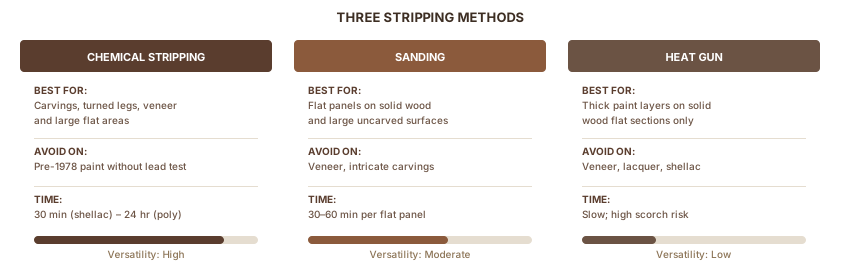
| Method | Best for | Avoid on | Time |
|---|---|---|---|
| Chemical stripper | Carvings, turned legs, veneer, large flat areas | Pre-1978 paint without lead test | 30 min – 24 hours dwell |
| Sanding | Flat panels on solid wood | Veneer, intricate carvings | 30–60 min per panel |
| Heat gun | Thick paint layers (multiple coats) | Veneer, lacquer, shellac | Slow; scorch risk |
The professional approach for most furniture: chemical strip the carved sections, spindles, and legs; sand the flat case panels. Combining methods is faster and safer than committing to one.
Chemical Stripping: Step by Step
Citristrip is the most widely available methylene-chloride-free option. It's benzyl-alcohol based, works on shellac, lacquer, and oil-based finishes, and is safe to use with basic precautions. Dumond Smart Strip works similarly and handles multiple paint layers well.
Per the Citristrip application guide:
- Apply 1/8" thick with a cheap foam brush or old paintbrush. Get it into every crevice, groove, and carved detail.
- Cover immediately with plastic wrap, or tie plastic bags around legs. Keeping the stripper wet keeps it active. A dried-out layer does almost nothing.
- Dwell time: 30 minutes for shellac or thin lacquer; 2–4 hours for lacquer over varnish; up to 24 hours for multiple coats of oil-based poly.
- At the 30-minute mark, test a small spot with a plastic scraper. If the finish comes off cleanly and the scraper slides to bare wood, proceed. If it's still hard, cover and wait.
- Remove finish from flat areas with a plastic scraper. On veneer, use plastic only. Metal edges dig in. Work with the grain.
- For carved profiles: a chip brush with stiff bristles. The bristles conform to the shape.
- For tight crevices on turned legs: an old toothbrush with more stripper, then a bamboo skewer or dental pick for the narrowest grooves. A brass wire brush (not steel) works for wood-grain texture without scratching.
Neutralize before anything else. Stripper residue contaminates stain, prevents finish adhesion, and causes fisheye. For water-based strippers like Citristrip: scrub thoroughly with water and a brush, wipe dry with clean rags. Run a finger along a hidden area. It should feel like bare wood, not slippery.
Allow 24–48 hours to dry completely before staining or finishing.
Sanding as a Strip Method
Start at 60–80 grit for heavy finish buildup on solid wood flat panels. Use a random orbital sander on flat surfaces.
Random orbitals leave circular scratch patterns that show through stain. Always finish with hand-sanding in the grain direction at the final grit (150 or 180) before staining.
Never power-sand veneer. The pencil-mark test tells you how fast you're removing material: draw a light pencil X across the surface, take a few sanding strokes, check how fast it disappears. If it goes in two strokes, you're moving too fast. Hand-sand only on veneer, at 120–150 grit, with light pressure.
Safety
- Gloves: Nitrile, not latex. Solvents penetrate latex in minutes.
- Eye protection: Always with chemical strippers.
- Ventilation: Outdoors is best. Indoors: cross-ventilation with windows on opposite sides of the room.
- Citristrip: No respirator required for occasional well-ventilated use.
- Lacquer thinner: Organic vapor respirator for extended use; highly flammable.
- Spontaneous combustion: Rags soaked in oil-based penetrating finishes (Danish oil, tung oil, linseed oil) generate heat as they cure and can ignite. Spread them flat outdoors to dry completely, or submerge them in water in a metal container before disposal. This causes real house fires every year.
Part 3: Repairing the Wood
Strip first, repair second. Repair materials won't bond over finish residue, and the damage only becomes fully visible after the finish is gone.
Gouges and Dents
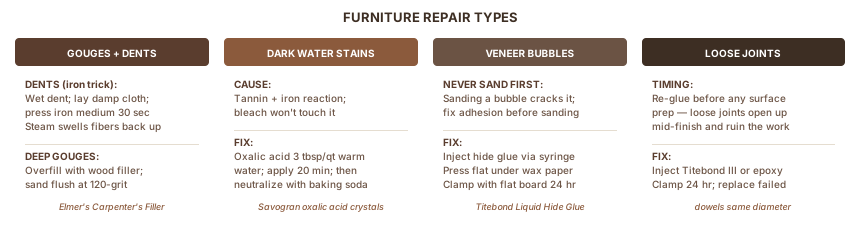
Deep gouges: Fill with Elmer's Carpenter's Wood Filler or Minwax Wood Filler. Apply slightly overfilled with a putty knife, let dry 4 hours, sand flush with 120-grit. These fillers take stain reasonably well. Test on scrap from the same piece before committing.
Small dents in solid wood: Try the iron trick first. Wet the dent with a few drops of water. Lay a damp cloth over it. Press a clothes iron on medium heat for 30 seconds. The steam swells the compressed fibers back up. Works on 60–70% of dents, and the wood accepts stain normally.
Small holes and nail holes: Minwax Stainable Wood Putty. Knead it to match the wood color, press in with a finger, wipe flush.
Dark Water Stains
The black marks around old drawer pulls, or along the bottom of a piece that sat on wet floors, are tannin-iron reactions. Tannins in the wood combined with iron (from hardware, water pipes, or wet tools) to form a dark compound. Regular bleach won't touch it.
The fix is oxalic acid (wood bleach). Savogran's oxalic acid crystals are available at most hardware stores. Mix 3 tablespoons per quart of warm water. Apply to bare, dry wood with a brush. Let sit 20 minutes. The stain will visibly lighten. Neutralize with a baking soda solution (2 tablespoons per quart of water), rinse, and let dry completely. Repeat for deep stains. Sand lightly after drying to remove crystalline residue.
Veneer Repairs
Small bubbles: Inject Titebond Liquid Hide Glue under the bubble with a syringe. Press flat, cover with wax paper, clamp under a flat board or a stack of heavy books. Leave 24 hours.
Larger separated sections: Lift the veneer at the seam. If the original adhesive was hide glue (common on antiques), a household iron on a damp cloth softens it enough to peel back cleanly. Scrape off old adhesive, apply fresh Titebond Liquid Hide Glue to both surfaces, press flat, clamp.
Missing patches: Source matching veneer from a supplier. Test stain on the patch separately and adjust until the color is close.
Never sand a bubbled area. It cracks. Fix the adhesion problem first.
Structural Repairs
Loose chair joints can open up mid-finish and ruin the work. Re-glue before any surface prep. Inject Titebond III or two-part epoxy into the joint, clamp for 24 hours. For failed dowel joints, drill out the old dowel, glue in a fresh one of the same diameter.
Part 4: Preparing the Surface
Properly prepared bare wood takes stain evenly and holds finish longer. This is the step most often skipped, and it's the step that shows most clearly in the final result.
Sanding Progressions
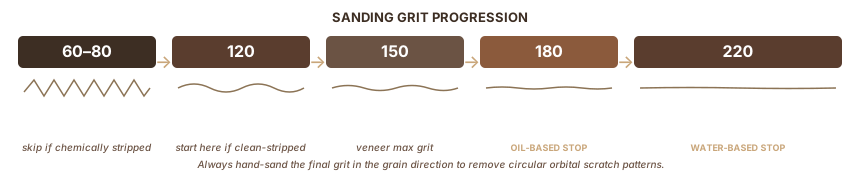
Start at the right grit. Jumping grits leaves deep scratches that the next grit can't remove efficiently. That's how people end up with 80-grit swirl marks showing through stain.
| Starting point | Progression | End grit |
|---|---|---|
| After chemical strip, solid wood | 120 → 150 → 180 | 180 |
| Sanding from finish, solid wood | 80 → 120 → 150 → 180 | 180 |
| Water-based stain or finish target | 120 → 150 → 180 → raise grain → 220 | 220 |
| Veneer | 120 → 150 | 150 |
Advance one grit at a time. Jumping from 80 to 150 leaves 80-grit scratches that 150-grit can't remove without doubling the work.
The raking light test: Hold a bright light at a 10–15-degree angle to the surface. Scratches from the previous grit appear as fine shadow lines. When those lines are gone, advance. Running fingers across the grain also works. Ridges mean remaining scratches.
Stop at 180 for oil-based stain. Going finer closes the wood pores and reduces stain absorption, producing uneven, lighter color.
Always hand-sand the final grit in the grain direction to remove the circular scratch patterns a random orbital leaves.
Grain Raising (Water-Based Finishes Only)
The first coat of water-based stain or finish will raise the wood grain and leave a rough, fuzzy surface. Raise it on purpose first, then sand it back.
Wipe the surface with a damp cloth. Let dry 2 hours. Sand with 220-grit. You'll feel the raised fibers come off. Wipe clean. The first coat of water-based finish won't raise the grain after this.
Skip this step entirely if you're going oil-based throughout.
Pre-Conditioner for Blotchy Species
Pine, soft maple, birch, and alder have alternating bands of dense and porous wood fibers. Oil-based stains soak deep into the porous zones and barely penetrate the dense ones, producing dark patches and streaks.
Minwax Pre-Stain Wood Conditioner applied before oil-based stain reduces this (but doesn't eliminate it). Apply liberally, let penetrate 15 minutes, wipe off excess. Stain within 2 hours. After that, the conditioner has sealed the surface enough to create adhesion problems of its own.
Gel stain is still more reliable than conditioner + liquid stain on pine and maple. Use conditioner as a complement on borderline cases, not a substitute for gel stain.
Part 5: Staining (or Not)
Not every piece needs stain. Some of the best refinished furniture gets nothing but a clear topcoat.
When to Skip Stain
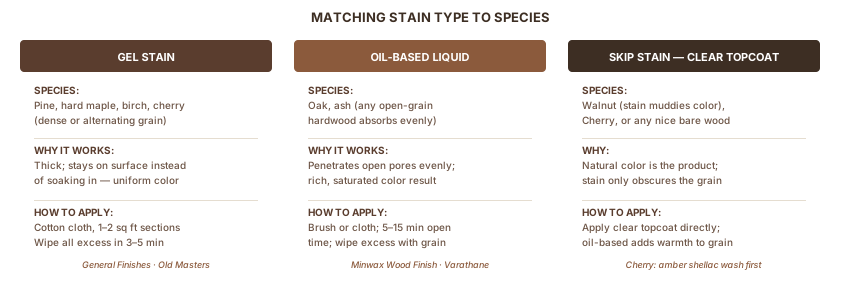
Walnut: Its natural color (rich dark brown with light sapwood streaks) is what people are paying for. A clear oil-based finish enhances the grain without adding color. Adding a walnut stain usually muddies it.
Cherry: Fresh cherry is pale pink. It darkens dramatically with UV exposure over months, reaching a warm reddish-brown that stain can't replicate authentically. Leave it alone and let it age. To speed the process, apply a single coat of diluted amber shellac as a wash coat before your topcoat. This is the trick professional refinishers use on new cherry.
Any piece where the stripped wood looks good: Stop and apply a clear topcoat.
Stain Types: What They Are and When to Use Each
Oil-based stains (Minwax Wood Finish, Varathane) penetrate with 5–10 minutes of open time before wiping. Rich, saturated color. Best on open-grained hardwoods like oak and ash. Blotch badly on pine, maple, and birch.
Water-based stains dry in 1–2 hours, look brighter and less warm, and require grain raising before application. Same blotch risk on dense species.
Gel stains (General Finishes, Old Masters) are thick and stay on the surface rather than soaking in. Color deposits uniformly regardless of wood density. That's exactly why they solve blotching on pine, maple, and cherry. Apply with a cloth, not a brush.
Species-Matched Recommendations
| Species | Stain behavior | Recommendation |
|---|---|---|
| Oak | Absorbs evenly, open grain | Any oil-based stain; grain filler for glass-smooth finish |
| Walnut | Beautiful natural color | Skip stain; clear topcoat only |
| Pine | Severe blotching with liquid stains | Gel stain, or pre-conditioner + oil-based liquid stain |
| Cherry | Can blotch; darkens naturally | Skip stain or very light gel stain |
| Hard maple | Very dense, minimal absorption | Gel stain only |
| Birch | Similar density to maple | Gel stain; pre-conditioner helps somewhat |
| Poplar | Green/gray undertones | Paint, or dye-based stain to mask undertones |
Oak is the most forgiving species to stain. Choose any oil-based color and apply normally. For a perfectly smooth finish on oak, fill the open grain first with a paste grain filler (Timbermate works well) before staining. Without filler, the pores show as small dimples through even 5 coats of poly.
Pine is the hardest. Gel stain is the right call. Apply with a clean cotton cloth, work in 1–2 square foot sections, let penetrate 3–5 minutes, then wipe off all excess. Any gel left in place dries darker and streaky.
Application
Liquid stains (oil or water-based):
- Apply generously with brush or lint-free cloth
- Allow to penetrate 5–15 minutes (check the can)
- Wipe off excess with the grain
Gel stain:
- Apply with a clean cotton cloth (a brush leaves bristle marks in gel)
- Work in 1–2 sq ft sections
- Allow 3–5 minutes penetration
- Wipe off all excess. Every streak left behind dries as a dark spot
Always test on scrap from the same piece. The color on the lid is wet color, not dry color.
The dry test before topcoating: Wipe a clean white rag across the stained surface. If color transfers, the stain isn't dry. Wait. Topcoat over wet stain traps the solvents and keeps the finish permanently soft.
Part 6: Applying the Topcoat
Choose your finish based on how hard the piece works.
Match Your Finish to the Use Case
| Use type | Best topcoat | Notes |
|---|---|---|
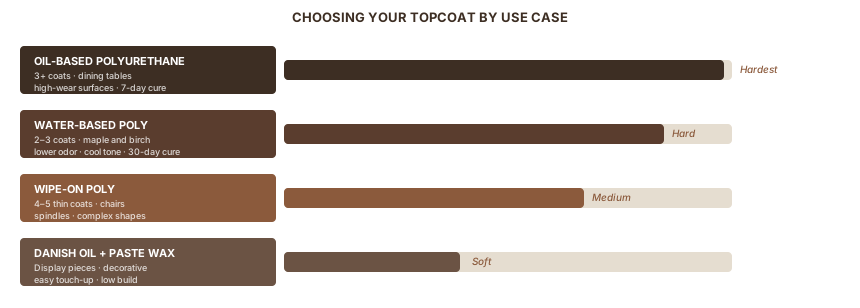
| Dining tables, dresser tops, high wear | Oil-based poly, 3+ coats | Shore D 75–85 hardness; most scratch and water resistant |
| Nightstands, end tables, medium wear | Oil-based or water-based poly, 2–3 coats | Wipe-on poly also fine |
| Chairs, spindles, carved legs | Wipe-on poly or spray lacquer | Brush-on creates drips in cavities |
| Decorative or display pieces | Danish oil + paste wax, or wipe-on | Easier to touch up; less durable |
| Children's furniture | Water-based poly (cured 30 days) | Solvent-free after full cure |
For most furniture (the dresser, nightstand, or dining chair you found at the thrift store), oil-based polyurethane is the right choice. It's durable, adds warmth to the wood color, cures hard, and is available at any hardware store.
Oil-Based Polyurethane: Brush Application
Use a natural-bristle (China bristle) brush, 2"–2.5". Synthetic bristles leave more brush marks in oil-based finish.
- Thin the first coat 10% with mineral spirits. It penetrates deeper and gives better adhesion for subsequent coats.
- Flow on, don't scrub. Load the brush, lay the finish down in long strokes with the grain, lifting at the end. No back-and-forth.
- Tip off: Before the coat gets tacky, drag a nearly-dry brush lightly across the surface at a low angle to pop bubbles and level brush marks.
- Temperature: 65–75°F. Below 55°F, oil-based finish won't cure. Above 90°F, it dries too fast and traps bubbles.
- Between coats: Sand 220-grit after each coat except the final. Vacuum, wipe with a tack cloth, apply the next coat.
- Coat count: 3 for dining tables and high-wear surfaces; 2–3 for most furniture.
Minwax Fast-Drying Polyurethane recoats in 4–6 hours. Full hardness takes 7 days. Don't stack heavy items on a tabletop until then.
For a satin or matte sheen: after the final coat cures (7 days), rub with 0000 steel wool in gentle circular motions, then apply paste wax.
Wipe-On Method (Chairs and Complex Shapes)
Brush-on poly on chair spindles creates drips in cavities and build-up on flat faces. Tipping off doesn't fix it. Wipe-on does.
Make your own: 50% oil-based poly + 50% mineral spirits. Or use Minwax Wipe-On Poly directly.
Apply with a lint-free cotton cloth, wiping with the grain. Thin coats: 4–5 to build the same film as 2–3 brush coats. Between coats, use 0000 steel wool instead of sandpaper; it conforms to curves where sandpaper doesn't reach.
Water-Based Polyurethane
Dries faster (2 hours between coats), lower odor, and works well over maple and birch where oil-based adds unwanted warmth.
Use synthetic brush only. Natural bristle goes limp when wet. Apply quickly; water-based sets fast and overworking leaves marks.
The color is noticeably cooler and bluer than oil-based. On walnut, cherry, or anything where warmth matters, oil-based wins. On maple and birch, the neutral tone of water-based is often the better choice.
General Finishes High Performance Water Based and Minwax Polycrylic are the benchmark products. Full cure: 21–30 days.
Part 7: Troubleshooting
Most problems are fixable without starting over if you catch them at the right time.
| Problem | Likely cause | Fix |
|---|---|---|
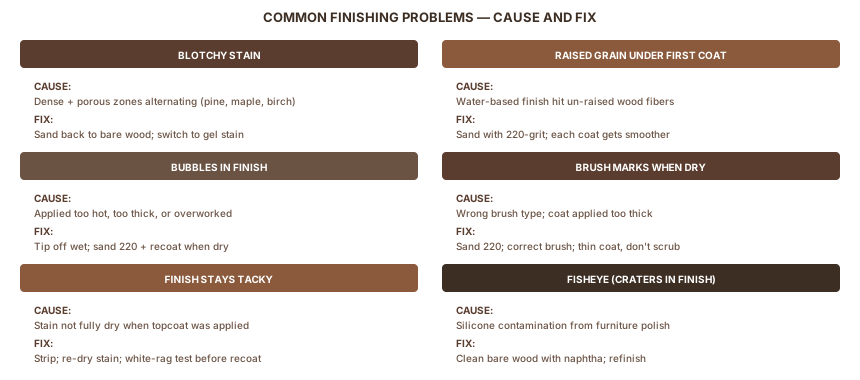
| Blotchy stain | Dense/alternating species (pine, maple, birch) | Sand back to bare wood; switch to gel stain |
| Raised grain under first coat | Water-based finish; wood not fully dry | Sand 220 and continue; each coat gets smoother |
| Bubbles in finish | Too warm, applied too thick, or overworked | Tip off immediately (wet); sand and recoat (dry) |
| Brush marks visible when dry | Wrong brush for finish type; coat too thick | Sand 220; correct brush; thin coat, don't scrub |
| Finish stays soft or tacky | Stain not fully dry before topcoat | Strip; re-dry stain; test with white rag before recoating |
| Fisheye (craters in finish) | Silicone from furniture polish on surface | Clean bare wood with naphtha; or add fisheye eliminator to finish |
| Dark iron stains on bare wood | Tannin + iron reaction (hardware, water) | Oxalic acid bleach on bare wood; neutralize; repeat if needed |
| Veneer surface turns pale/mottled | Sanded through the veneer face layer | Patch with matching veneer; no other recovery |
Blotching is the most common stain problem, and the one most guides don't explain. Stain pine or maple with liquid stain and it comes out patchy: darker in some areas, lighter in others. Sand back to bare wood, use gel stain, and it won't happen again.
Tacky finish that won't cure almost always means the stain wasn't dry before topcoating. Per the Minwax product guide, oil-based stains need 8 hours minimum before an oil-based topcoat; 24 hours before water-based. If the stain was still outgassing when you applied the topcoat, the solvents are trapped and the finish won't cure fully. Strip it, let the stain dry completely, and start the topcoat step over.
Fisheye (craters appearing in a fresh coat) traces back to silicone contamination from furniture polish, spray lubricants, or conditioning wipes used on the piece at any point in its history. Silicone doesn't come off with water or mineral spirits. Naphtha cuts it. Clean the stripped bare wood with naphtha before finishing if you suspect previous silicone polish use.
FAQ
How long does it take to refinish wood furniture?
Most pieces run 2–4 days from bare wood to finished topcoat — stripping and dry time are the slow parts, not the actual finishing. Chemical stripping needs 30 minutes for shellac, up to 24 hours for oil-based poly. After stripping, the wood needs 24–48 hours to dry completely before staining. Each polyurethane coat recoats in 4–6 hours; full hardness is 7 days.
Can I refinish without stripping, or do I have to go to bare wood?
Not always. If the finish is intact — just dull or lightly scratched, no bare spots — clean with mineral spirits, scuff with 320-grit, and apply fresh topcoat over the existing one. Strip to bare wood when the finish is peeling, flaking, or has bare patches in multiple places. Finishing over a failing substrate is the most common reason refinishing jobs have to be redone.
What's the best finish for a dining table?
Oil-based polyurethane, 3 coats minimum. Apply with a natural-bristle brush, thin the first coat 10% with mineral spirits for better penetration, and sand 220-grit between coats. Wait the full 7 days before putting the table back into service. Minwax Fast-Drying Polyurethane recoats in 4–6 hours and is available at any hardware store.
Sources
This guide draws on Bob Flexner's Understanding Wood Finishing, the manufacturer technical guides for Citristrip, Minwax, and General Finishes, EPA guidance on lead paint and methylene chloride, and finishing articles from Fine Woodworking.
- Bob Flexner, Understanding Wood Finishing — finish identification, workflow sequencing, stain chemistry, poly application
- Fine Woodworking — refinishing and stripping articles — stripping technique, species-specific guidance, veneer repair
- Citristrip product guide and SDS (Henkel) — application timing, PPE, composition
- Minwax Pre-Stain Wood Conditioner — blotch prevention, timing window
- Minwax Fast-Drying Polyurethane — coat count, recoat times, between-coat sanding
- Minwax Wipe-On Poly — wipe-on application for complex surfaces
- General Finishes Gel Stain application guide — gel stain technique, timing, wiping method
- General Finishes Arm-R-Seal — wipe-on oil topcoat
- General Finishes High Performance Water Based — water-based poly application
- Savogran oxalic acid (Woodbleach) — wood bleaching procedure, mix ratio
- EPA methylene chloride consumer rule (2019) — why MC strippers are restricted; safer alternatives
- EPA lead renovation rule — pre-1978 paint testing requirements
- Titebond Liquid Hide Glue — veneer re-gluing technique