
Chemical Stripping at a Glance
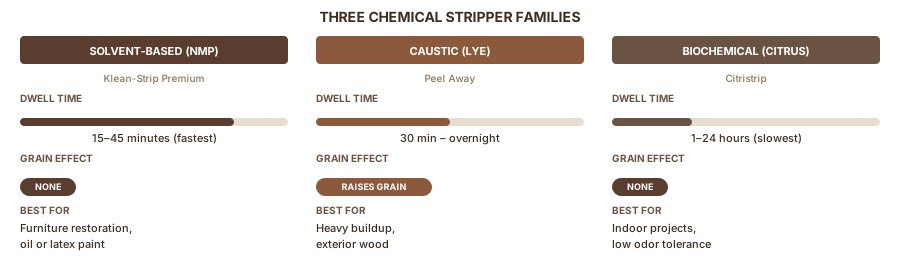
Chemical paint strippers dissolve the bond between paint and wood so you can scrape paint off cleanly. No sanding, no heat gun, no torn grain. Klean-Strip Premium (about $18/quart) works in 15 minutes on latex and 45 minutes on oil-based paint. The application is straightforward. Safety gear and neutralization are where most people go wrong.
| Dwell time (latex/acrylic) | 15–30 minutes |
| Dwell time (oil/alkyd) | 30–45 minutes |
| Gloves required | PE or EVOH outer glove over nitrile liner |
| Respirator | Half-face with organic vapor (OV) cartridges |
| Neutralizer (solvent stripper) | Mineral spirits or denatured alcohol |
| Dry time before new finish | 24–48 hours |
In this guide:
- How chemical paint strippers work
- Safety gear before you open the can
- Step-by-step: applying and removing
- Neutralizing and prepping for new finish
- Chemical vs. heat gun vs. sanding
- Troubleshooting common problems
Part 1: How Chemical Paint Strippers Work
Paint film is a hardened polymer: dried paint molecules bonded together and adhered to wood. Chemical strippers penetrate that film, break the molecular bonds between paint layers, and disrupt adhesion at the wood surface. The paint swells, wrinkles, and lifts off in sheets instead of the fine dust you get from sanding.
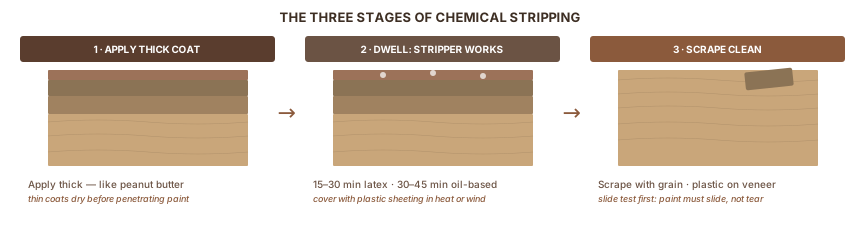
Three chemical families do this differently (per Rawlins Paints' breakdown of caustic vs. solvent strippers):
| Type | Example products | How it works | Effect on wood grain |
|---|---|---|---|
| Solvent-based (NMP) | Klean-Strip Premium | Solvents penetrate paint polymer chains, break adhesion bonds | None |
| Caustic (lye) | Peel Away | Sodium hydroxide converts paint oils to soap (saponification) | Raises and darkens grain |
| Biochemical (citrus) | Citristrip | Plant-derived solvents (citrus terpenes, lactic acid) soften paint | None |
Klean-Strip Premium is a solvent-based stripper made by W.M. Barr & Co. Its current formula uses NMP (N-methylpyrrolidone) and benzyl alcohol, not methylene chloride. C&EN's coverage of the phase-out explains why: the EPA banned methylene chloride from consumer paint strippers in 2019 after decades of injury and fatality data. Klean-Strip is faster than biochemical strippers and doesn't darken wood grain like caustic strippers. It's the default for furniture restoration.
The catch with NMP-based strippers: skin absorption is the primary exposure route, not inhalation. According to the California Department of Toxic Substances Control's NMP profile, NMP passes through latex and nitrile gloves and is absorbed directly through skin. That drives the PPE requirements in Part 2.
Note on current formulations: W.M. Barr has been updating Klean-Strip formulas as retailers phase out NMP. Check the current Safety Data Sheet at kleanstrip.com/sds before using a can you've had sitting around for a while.
Part 2: Safety and Gear Before You Open the Can
What you actually need
NMP penetrates the latex and nitrile gloves that come with most kits. The primary exposure risk with solvent strippers is skin contact, not breathing. That's why the PPE here is specific.
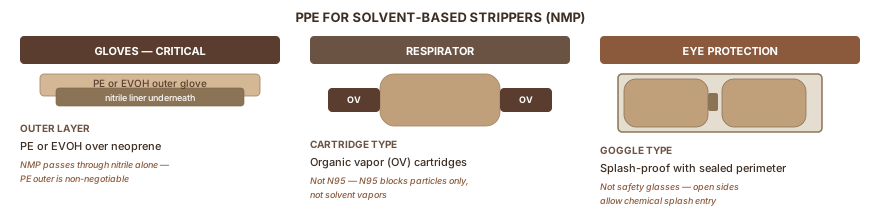
PPE requirements for solvent-based strippers:
| Item | Minimum spec | Why |
|---|---|---|
| Gloves | PE (polyethylene) or EVOH outer glove over nitrile liner | NMP passes through nitrile alone |
| Eye protection | Splash-proof goggles with sealed perimeter | Chemical splash, not just particles |
| Respirator | Half-face respirator with organic vapor (OV) cartridges | Solvent vapors |
| Clothing | Long sleeves, long pants, closed shoes | Skin absorption risk across all exposed skin |
The California Department of Public Health's PPE chart for paint stripping specifies polyethylene as the outer glove material for NMP. In practice, most professional refinishers double-glove: nitrile liner, then a thicker PE or neoprene outer glove.
Ventilation:
- Work outdoors whenever possible. No vapor accumulation, no decision to make.
- Indoors: open windows and doors, run a fan to push air out of the space (not recirculate it)
- Solvent vapors are heavier than air. They pool at floor level and in corners.
- Don't strip in a basement without mechanical exhaust to outside
Fire hazard: Solvent strippers are flammable. Keep them away from pilot lights, sparks, and open flames. If your garage has a gas water heater with a standing pilot, move the project outside.
Tools and materials
Gather everything before you open the can. Once you've started, hunting for tools with contaminated gloves creates exactly the kind of skin contact you're trying to avoid.
| Tool | Note |
|---|---|
| Natural bristle brush, 2–3" (cheap) | No foam brushes — they disintegrate on contact with stripper |
| Plastic scraper, 3–4" wide | For veneer, softwood, any surface where steel risks breakthrough |
| Steel or carbide scraper | Solid hardwood only |
| Old toothbrush or detail brush | Molding, carvings, tight corners |
| Brass wire brush | Open-grain wood (oak, ash) where paint hides in grain channels |
| Heavy plastic drop cloth | Non-optional — stripper sludge ruins floors |
| Cardboard or newspaper | Collect sludge as you scrape |
| Clean cotton rags | Neutralization wipedown |
| Plastic bags (zip-lock or heavy garbage) | Contaminated rag disposal |
| Mineral spirits or denatured alcohol | Post-strip neutralization for solvent strippers |
Part 3: Applying and Removing the Stripper
Step 1: Set up your workspace
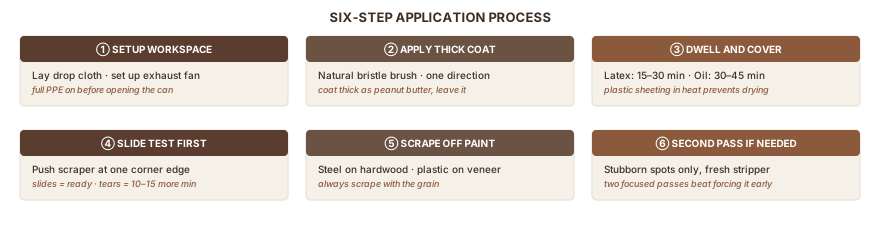
Lay plastic drop cloth under and around the piece. Position a fan to exhaust air away from you if working indoors. Have all tools within arm's reach. Don the PPE before opening the can: gloves, goggles, respirator.
Step 2: Apply a thick coat
Brush on a generous, even layer with a natural bristle brush. Thick means it looks like a coat of peanut butter, not a stain wash. Thin coats evaporate before they penetrate the paint film. That's the single most common reason strippers "don't work."
Brush in one direction and leave it alone. Don't brush back and forth repeatedly. You're applying a chemical, not spreading paint.
Work in sections of about 3 square feet. Finish one before starting the next.
Vertical surfaces: Use a gel or paste formula. Liquid strippers run off vertical surfaces before they have time to work.
Step 3: Let it dwell
Cover the piece with plastic sheeting if working in hot or dry conditions. The stripper needs to stay wet to work, and evaporation in summer heat kills it before it penetrates.
Dwell time reference (per Klean-Strip's application guide):
| Paint type | Minimum dwell | Notes |
|---|---|---|
| Latex / acrylic | 15 minutes | Check at 15; may need up to 30 |
| Oil-based / alkyd | 30 minutes | Check at 30; may need up to 45 |
| Old thick oil paint | 45–90 minutes | Multi-layer may need second application |
Paint wrinkling, bubbling, or lifting from the wood is the signal to start scraping.
Step 4: The slide test
Before committing to scraping, push a plastic scraper gently against one edge of the treated area. Paint should slide cleanly off with almost no resistance.
If it tears instead of slides, give it 10–15 more minutes. Forcing a scraper through paint that hasn't fully released gouges the wood surface. Those gouges show through the new finish.
Step 5: Scrape off the softened paint
Surface type matters:
- Solid hardwood (oak, walnut, maple): steel or carbide scraper, working with the grain
- Veneer or softwood (pine, poplar): plastic scraper only, light pressure, with the grain
- Carved areas, molding, corners: old toothbrush or stiff detail brush
- Open-grain wood (oak, ash): brass wire brush in the grain direction to pull paint out of channels
Always scrape with the grain. The Craftsman Blog's scraping guide makes this point clearly: scraping across grain tears wood fibers and leaves scratches that show through new finish.
Collect sludge on cardboard as you scrape. Don't let it pile up on the surface or it'll re-adhere.
Step 6: Second application (when needed)
Thick paint, multiple layers, or deep recesses usually need a second pass. Apply fresh stripper to stubborn spots only, let it dwell, scrape again. Two focused passes beat one rushed application you force off early.
Paint stuck in open grain (especially oak): Apply a fresh coat, let dwell, then work a brass wire brush with the grain while the stripper is still wet. Woodweb's paint stripping forum covers this problem thoroughly: oak and ash regularly need this second-pass technique because paint lodges in the grain channels that a flat scraper can't reach.
Part 4: Neutralizing and Prepping for New Finish
Neutralization is non-negotiable. Trace amounts of stripper left on wood, even amounts you can't see, kill finish adhesion. The new finish softens, peels, or fails to cure. You did the hard work. Don't lose it here.
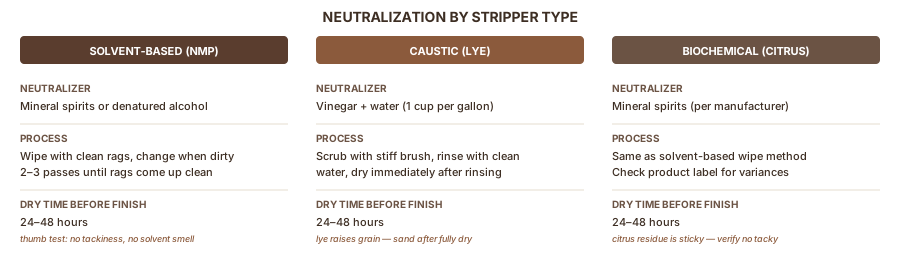
Different strippers need different neutralizers:
| Stripper type | Neutralizer | Process |
|---|---|---|
| Solvent-based (Klean-Strip) | Mineral spirits or denatured alcohol | Wipe with clean rags; change rags when dirty; 2–3 passes until rags come up clean |
| Caustic/lye-based | Vinegar + water (1 cup vinegar per gallon water) | Scrub with stiff brush, rinse with clean water, dry immediately |
| Biochemical (Citristrip) | Mineral spirits or per manufacturer label | Per General Finishes guidance, mineral spirits is reliable |
Drying time
Wait 24–48 hours before sanding or applying new finish. Solvent residue needs that time to evaporate from the wood pores. Press your thumb to bare wood: no tackiness, no solvent smell.
Don't rush drying with a heat gun. It raises grain and can force residue deeper into the wood instead of letting it evaporate.
Final light sanding
Once dry, sand with 150-grit sandpaper, with the grain. This flattens raised grain fibers and smooths scraper marks. Follow with 180 grit for furniture you're finishing clear (skip it if you're repainting).
Sand lightly. You're smoothing, not removing material.
For guidance on what comes next, see Applying Polyurethane, Can You Stain Over Stain, or Green Wood Stain if you're applying a non-traditional color to the stripped surface.
Part 5: Choosing Chemical Stripping Over Alternatives
Chemical stripping isn't always the right call. The table below shows when it wins and when another method makes more sense. The Old House Life's 2024 four-stripper test confirms the pattern: Klean-Strip was fastest on oil-based paint; Citristrip was better for indoor work with lower odor tolerance.
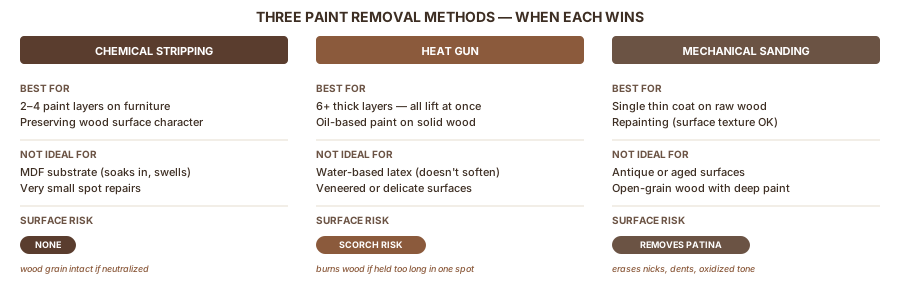
| Situation | Best method |
|---|---|
| Oil-based paint on solid wood furniture | Klean-Strip (solvent) |
| Latex paint, indoor project, low odor | Citristrip (biochemical) |
| 6+ layers of built-up paint | Heat gun (all layers lift at once) |
| Lead paint suspected | Citristrip gel + wet scraping (no dust generation) |
| Veneer surface | Chemical with plastic scraper only |
| MDF substrate | Mechanical scraping only — no strippers |
| Need results in under an hour | Klean-Strip (15 min latex, 45 min oil-based) |
| Spot removal, small area | Heat gun or sanding |
Chemical vs. heat gun
A heat gun beats chemical stripping when the paint has many layers. Heat lifts all layers simultaneously; a chemical stripper works one layer at a time. For furniture with two to four layers of paint, chemical is faster. For a Victorian chair with eight layers of house paint, a heat gun is more practical.
Chemical stripping outperforms heat guns on water-based latex paint (heat doesn't soften latex effectively) and on large flat surfaces where you can brush-apply a whole section at once.
Chemical vs. sanding
Sanding removes the patina and surface character of old wood: the nicks, dents, and oxidized tone that give antique furniture its look. Chemical stripping removes only the paint; the wood surface underneath comes through intact. If you're restoring a piece you want to look right, strip it. Don't sand it bare.
Sanding makes sense for thin single coats on raw wood, or when you're painting again and surface texture doesn't matter.
When to test for lead first
Homes built before 1978 may have lead paint. A lead test swab ($6 at any hardware store) gives you an answer in 30 seconds. If the test is positive, don't sand. Use Citristrip gel (wet scraping captures chips, no airborne dust) and wear an N100 respirator.
Part 6: Troubleshooting and Common Mistakes
| Problem | Most likely cause | Fix |
|---|---|---|
| Stripper dried out, nothing softened | Coat too thin; hot weather evaporated it | Reapply thick; cover with plastic sheeting in heat |
| Paint tearing instead of sliding | Not enough dwell time | Wait 10–15 more minutes; do the slide test before committing |
| Scratches in wood after scraping | Scraping across the grain; using steel on veneer | Always scrape with grain; plastic scrapers only on veneer |
| Paint stuck deep in open grain (oak) | Paint lodged in grain channels | Brass wire brush + second stripper coat, scrub while wet |
| Wood surface darkened | Used caustic/lye stripper | Lighten with oxalic acid wood bleach; neutralize thoroughly |
| New finish peeling weeks later | Skipped or inadequate neutralization | Sand back to bare wood, re-neutralize, let dry, refinish |
| Mess everywhere | No drop cloth under work area | Plastic drop cloth is mandatory — start over with it next time |
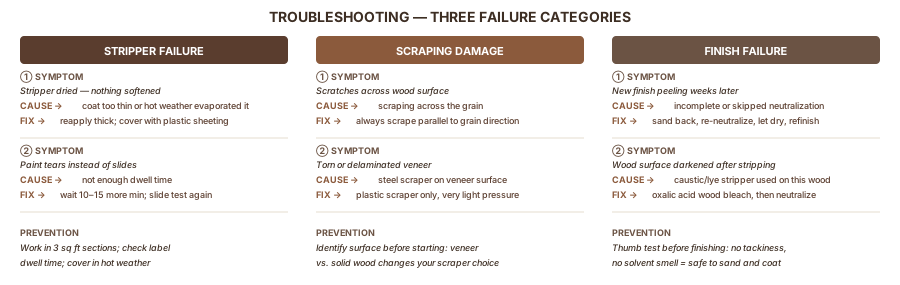
The veneer warning
Veneer is typically 1/28" to 1/8" thick. A steel scraper slip, or any pressure at the wrong angle, goes straight through it. Use plastic scrapers only on veneered surfaces, light pressure, and test a small corner before stripping the whole piece. If the veneer is already loose or bubbled, chemical stripping will likely delaminate it further. Test the corner and have a plan before you commit.
Disposal
Stripper sludge and contaminated rags are hazardous waste. This Old House's disposal guide covers this in detail.
- Allow stripper sludge to dry in open air until solidified, then take to your local household hazardous waste (HHW) facility
- Lay contaminated rags flat to dry (bundled solvent-soaked rags can self-heat). Seal in a metal container or double plastic bag and take to HHW.
- Never pour liquid stripper down a drain or into trash
- Find your local HHW collection day: search "[your county] household hazardous waste"
FAQ
How long do I leave paint stripper on wood?
For latex and acrylic paint, 15–30 minutes is the standard dwell time with Klean-Strip Premium. Oil-based and alkyd paint needs 30–45 minutes. Don't go by the clock alone — do the slide test first. Push a scraper corner against the treated area; if paint slides cleanly, it's ready. If it tears, give it 10–15 more minutes.
Do I need to neutralize after using paint stripper?
Yes, every time. Trace stripper residue left on wood kills finish adhesion — new coats will soften, peel, or fail to cure weeks later. For solvent-based strippers like Klean-Strip, wipe down with mineral spirits or denatured alcohol, 2–3 passes with clean rags until they come up clean. Wait 24–48 hours before sanding or finishing.
Can I use paint stripper on veneer?
You can, but use a plastic scraper only — never steel — and test a small corner first. Veneer is 1/28" to 1/8" thick; any scraper pressure at the wrong angle will go straight through it. If the veneer is already loose or bubbled, chemical stripping will likely delaminate it further. Test before committing to the full piece.
Is Klean-Strip safe to use indoors?
With adequate ventilation and full PPE, yes. Work near open windows and doors with a fan exhausting air out of the space. Solvent vapors are heavier than air and pool at floor level, so mechanical exhaust matters more than just cracking a window. If you can take the project outside, do that instead — no accumulation risk.
What's the difference between Klean-Strip and Citristrip?
Klean-Strip is solvent-based (NMP formula) and the fastest option: 15 minutes on latex, 45 minutes on oil-based. Citristrip is biochemical (citrus terpenes) and slower — 1 to 24 hours — but has significantly lower odor and is better suited to indoor work with limited ventilation. Neither darkens or raises wood grain; both use the same mineral-spirits neutralization step.
Sources
Research for this guide drew on manufacturer Safety Data Sheets, California and federal government agency guidance on chemical safety and PPE, and hands-on technique guides from professional restoration blogs and trade forums.
- Rawlins Paints — Caustic vs. Solvent-Based Paint Removers — chemical mechanism comparison for all three stripper types
- C&EN — Replacing Methylene Chloride in Paint Strippers — NMP as replacement, EPA ban context
- CDPH — NMP Paint Stripper Profile — developmental toxicant classification, skin absorption route data
- Klean Strip — SDS library — current Safety Data Sheets for all Klean-Strip products
- CDPH — Minimum PPE Required for Paint Stripping — glove specification table by chemical
- Klean Strip — Premium Stripper tutorial — official dwell times and application area guidance
- The Craftsman Blog — Scrape Like a Pro — scraping technique and grain direction guidance
- Woodweb — Stubborn Paint Residue in Oak Grain — open-grain residue problem and brass wire brush fix
- General Finishes — Cleaning After Citrus Stripper — neutralization guidance for biochemical strippers
- The Old House Life — Four Strippers Tested (2024) — real-world Klean-Strip vs. Citristrip comparison
- This Old House — Disposing of Chemical Stripper Sludge — hazardous waste disposal guidance
- EPA — Solvent-Contaminated Wipes FAQ — rag and wipe disposal regulations
Tools Used
Also Referenced
Tagged
How We Research
We don't take affiliate revenue or accept review units. Picks come from multi-source research — manufacturer specs, OSHA / EPA / ASTM regs, and long-form practitioner threads — plus Ahmed's hands-on use where relevant. When we recommend something, we explain why.
Up Next
What is Gorilla Wood Filler?
FINISHING · Beginner