
How to Use This Guide
Epoxy gives wood a glass-hard, waterproof surface that most finishes can't match. The catch: small mistakes in mixing, temperature, or surface prep can ruin an entire pour. This guide walks through the whole process — what product to buy, how to apply it, and how to fix failures when they happen.
If you're picking a product: Start with Part 1 and Part 2.
If you're ready to apply: Jump to Part 3 and Part 4.
If something went wrong: Head straight to Part 7.
Before you start: Read Part 8 — amine sensitization from repeated skin contact is permanent, not reversible.
Epoxy Wood Finish at a Glance
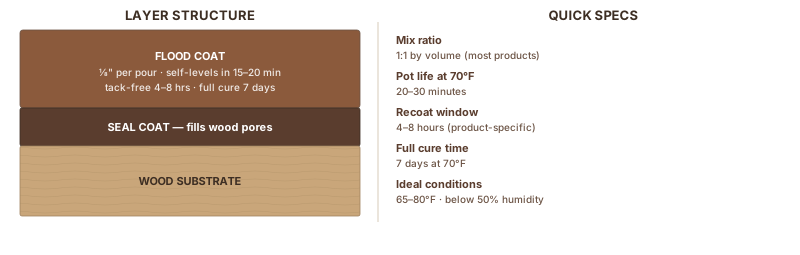
Two-part coating epoxy creates a thick, waterproof, scratch-resistant film on wood. It's harder than polyurethane, runs $40–80 per gallon at roughly 12 sq ft per coat, and builds to full depth in 2–3 coats rather than 6–8. The tradeoff: it requires exact mixing, controlled temperature, and a clean surface. Get any of those wrong and you get sticky rubber.
| Product type to buy | "Bar top" or "table top" coating epoxy — NOT casting resin |
| Mix ratio (most products) | 1:1 by volume (always verify) |
| Coverage at ⅛" depth | ~12 sq ft per mixed gallon |
| Recoat window (no sanding) | 4–8 hours (product-specific) |
| Safe for light use | 72 hours |
| Full chemical cure | 7 days; up to 30 days full hardness |
| Ideal conditions | 65–80°F, below 50% humidity |
| Heat limit | ~120–150°F — use trivets |
In this guide:
- Coating vs. casting epoxy — which product to buy
- Product comparison with real specs
- Step-by-step application: seal coat, flood coat, bubble removal
- When NOT to use epoxy
- Troubleshooting: bubbles, fisheye, amine blush, yellowing
Part 1: What Epoxy Finish Actually Is
Coating Epoxy vs. Casting Epoxy
This is where beginners go wrong first: they buy casting resin thinking it's the same as tabletop epoxy. It's not.
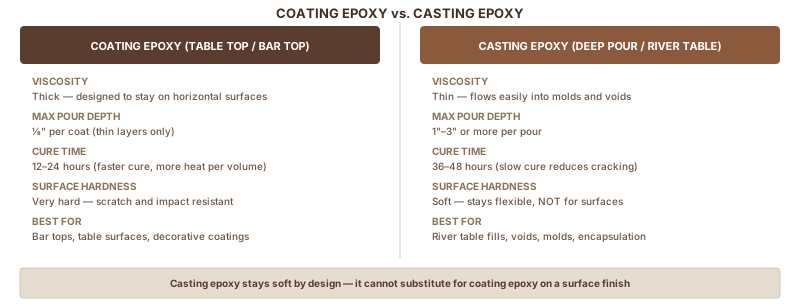
Coating epoxy (sold as "bar top epoxy" or "table top epoxy") is formulated for surfaces. It's viscous enough to stay on a horizontal surface, cures hard in 12–24 hours, and builds a tough scratch-resistant film designed to take daily abuse. Pour depth: ⅛" per coat.
Casting epoxy is designed to fill molds and voids. It's thin and pourable, with a slow cure (36–48 hours) that prevents cracking from the heat generated in thick pours. Casting epoxy is softer by design — that's what prevents cracking in a 2" river table fill, but it makes it useless as a surface coating.
Buy tabletop or bar top epoxy for wood finishing. If the label says "casting resin" or "deep pour," it's the wrong product.
Using coating epoxy in a deep pour creates the opposite problem: West System's documentation on uncontrolled cure warns that temperatures can exceed 400°F in extreme cases, causing cracking, smoking, or fire.
What Kind of Finish Epoxy Is
Epoxy is a film-forming finish, like polyurethane. It sits on top of wood rather than soaking in. The film is essentially a hard plastic layer bonded to the wood surface.
This matters for three reasons:
- Adhesion depends on cleanliness. Oil, wax, or silicone on the surface causes the film to fail. Penetrating finishes tolerate mild contamination; epoxy doesn't.
- Repairs are invasive. Scratched polyurethane can often be scuff-sanded and recoated. Damaged epoxy requires sanding back to bare wood.
- Wood still moves underneath. Epoxy seals the surface but doesn't stop seasonal wood movement. On wide, unsupported panels, this can cause delamination over time.
Part 2: Choosing an Epoxy Product
What to Check on the Label
Mix ratio — most tabletop products are 1:1 by volume. Check whether the ratio is volume or weight — these numbers differ because resin and hardener have different densities. Per TotalBoat's guide on weight vs. volume measurement, TotalBoat TableTop is 1:1 by volume but 1.2:1 by weight. Use graduated mixing cups and follow the volume ratio unless the TDS specifies weight.
Pot life — working time after mixing. Most tabletop epoxies: 20–30 minutes at 70°F. Larger batches gel faster because more mass generates more heat from the exothermic reaction.
Recoat window — how long after pouring you can add another coat without sanding. Usually 4–8 hours. Miss it and you must sand before the next coat.
UV stabilizers — standard epoxies yellow in UV light. Products with HALS (hindered amine light stabilizers) slow this considerably. For pieces near windows, choose a HALS-stabilized formula.
Product Comparison
| Product | Mix Ratio (Vol) | Coverage @ ⅛" | Notes |
|---|---|---|---|
| TotalBoat TableTop | 1:1 | 12 sq ft/gal | 20-min pot life; widely available |
| WiseBond Bar & Table Top | 1:1 | ~12 sq ft/gal | Available at Lowe's; 30-day full hard cure |
| MAS Table Top Pro | 1:1 | ~12 sq ft/gal | Food-safe after 7-day cure; sold at Rockler |
| West System 105+207 | 5:1 | Thin films | Blush-resistant; use pump dispensers for the tight 5:1 ratio |
| System Three SilverTip | 2:1 | — | Marketed as blush-free; good for humid climates |
For a first project, any 1:1 volume product works. Choose West System 105+207 or System Three SilverTip if you're working in a space with high humidity and amine blush is a concern.
The Off-Ratio Problem
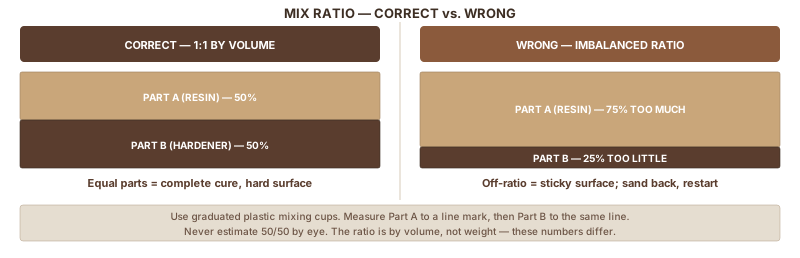
Getting the mix ratio wrong is the most common cause of failed epoxy — a sticky, soft surface that won't harden. Adding more epoxy on top won't fix it.
Off-ratio mixing happens two ways:
- Confusing volume ratio with weight ratio (pouring 1:1 by weight when instructions say volume)
- Eyeballing 50/50 in an unmarked cup
Use graduated plastic mixing cups with clear volume markings. Measure Part A, then Part B to the same line. For West System's 5:1 ratio, buy the pump dispensers — measuring five-to-one by cup is asking for trouble.
Part 3: Surface Preparation
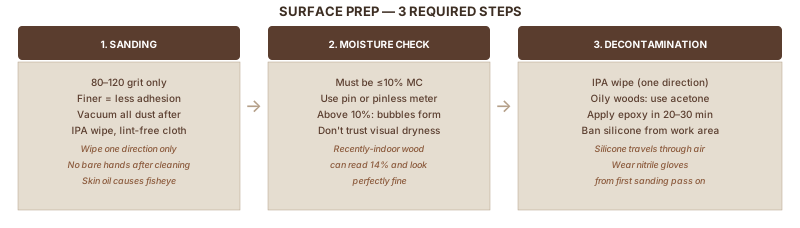
Surface prep determines whether the epoxy bonds or fails. Three factors matter: sanding grit, moisture content, and contamination.
Sanding
Sand to 80–120 grit — not finer. Sanding to 220+ creates too smooth a surface and reduces mechanical adhesion. You want enough tooth for the epoxy to grip.
After sanding: vacuum all dust, then wipe with isopropyl alcohol (91%+) on a lint-free cloth. Wipe in one direction. Don't touch the cleaned surface with bare hands — skin oil causes fisheye craters.
Moisture Content
Wood must be at or below 10% moisture content before applying epoxy. Above that, moisture trapped in wood fibers outgasses as the epoxy cures, creating bubbles and pinholes. West System's surface preparation guide is explicit: the surface must be as dry as possible.
Check with a pin-type or pinless moisture meter. Don't rely on visual dryness — recently brought-in wood can read 14% and look perfectly fine.
Eliminating Contamination
Silicone is the primary cause of fisheye (crater-like depressions in the finish). Sources include spray lubricants, aerosol silicone polish, nearby silicone caulk, and furniture sprays. Silicone travels through the air and contaminates surfaces far from the original source.
Decontamination protocol:
- Wipe with IPA on a lint-free cloth in one direction (not back-and-forth)
- For confirmed silicone contamination: use a dedicated silicone remover first, then IPA
- Let dry completely before applying epoxy
For oily or resinous woods (teak, rosewood, cocobolo, ipe): wipe with acetone, not IPA. Acetone cuts natural oils more effectively. Apply epoxy within 20–30 minutes of the wipe — wait too long and the oils migrate back to the surface.
RELATED: Mineral Oil for Wood If your wood was conditioned with mineral oil or another penetrating finish, strip it before applying epoxy — penetrating oils prevent adhesion.
Part 4: Mixing and Applying Epoxy
Before You Mix
Temperature: Bring both the room and the wood to 65–80°F. Cold epoxy moves slowly, levels poorly, and generates more bubbles. Cold wood in a warm room is a specific trap — bring lumber indoors at least two hours before application.
Level the surface. Epoxy self-levels, so a tilted surface creates uneven thickness and drips from one edge. Use a bubble level.
Tent setup: Have a cardboard box or plastic sheet on a frame ready to cover the surface without touching it — to keep dust off during cure.
The Procedure
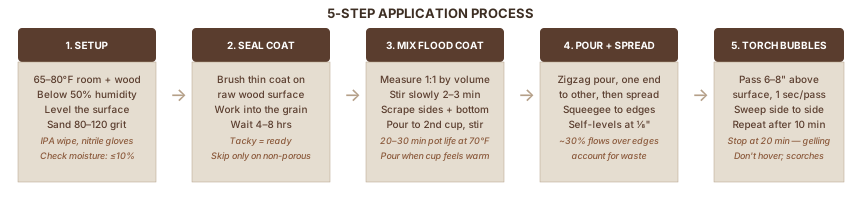
Step 1 — Apply the seal coat. Mix a small batch. Apply with a foam brush or disposable chip brush, working the epoxy into the grain. This coat is thin — just enough to seal the pores. Raw wood has trapped air in its pores. When warm epoxy hits it, that air expands and escapes as bubbles into the flood coat. Epoxyworks' coating guide explains this mechanism clearly: the seal coat lets that air escape first. Skip the seal coat on raw wood and you almost guarantee bubbles.
Immediately after applying: pass a propane torch 6–8 inches above the surface in continuous sweeping passes to pop any bubbles.
Wait 4–8 hours. The seal coat should feel tacky but not liquid. That's the recoat window — the window where chemical bonding between coats happens without sanding.
Step 2 — Mix the flood coat (double-cup method). The double-cup method catches unmixed material clinging to container walls. Measure Part A into Cup 1 by volume. Add Part B. Stir slowly for 2–3 minutes, scraping the sides and bottom. Pour everything into Cup 2 and stir 1 more minute. Slow stirring matters — fast stirring whips in air bubbles.
Pot life at 70°F is 20–30 minutes. Once the cup warms noticeably from the exothermic reaction, pour immediately.
Step 3 — Pour and spread. Pour in a zigzag from one end of the surface and spread toward the edges with a plastic squeegee. Target ⅛" wet film thickness — about 12 sq ft per mixed gallon. About 30% flows over the edges as waste; account for this when calculating your batch size.
Let the epoxy self-level for 5–15 minutes. Don't overwork it after that — additional spreading introduces bubbles and drag marks.
Step 4 — Remove bubbles. Pass a propane torch 6–8 inches above the surface in slow, continuous sweeping passes. Never pause in one spot — you'll scorch the epoxy. Do a first pass immediately after pouring, then a second pass 10 minutes later for late-rising bubbles. Stop at 20 minutes; the epoxy is beginning to gel and heat after that causes surface damage.
A heat gun also works but is less precise. Epoxyworks on controlling exotherm confirms the torch technique: the heat briefly lowers surface tension, letting trapped air escape.
Step 5 — Cover and cure. Tent the surface to keep dust off. Maintain 65–80°F for 24 hours — don't let the temperature drop overnight.
Most tabletop applications need 2–3 flood coats for a full glass-like surface. If you're within the recoat window (still within 4–8 hours), pour the next coat directly with no sanding. If the window closed, sand with 100–120 grit, remove all dust with a vacuum and IPA wipe, then pour the next coat.
Part 5: Curing, Between-Coat Sanding, and Epoxy vs. Other Finishes
The Cure Schedule
Per WiseBond's technical documentation, a typical tabletop epoxy at 75°F follows this timeline:
| Stage | Time at 75°F |
|---|---|
| Tack-free (dust-free) | 4–8 hours |
| Recoat window open | 4 hours |
| Recoat window closes | 8–10 hours |
| Sandable (if window missed) | 24 hours |
| Safe for light use | 72 hours |
| Full chemical cure | 7 days |
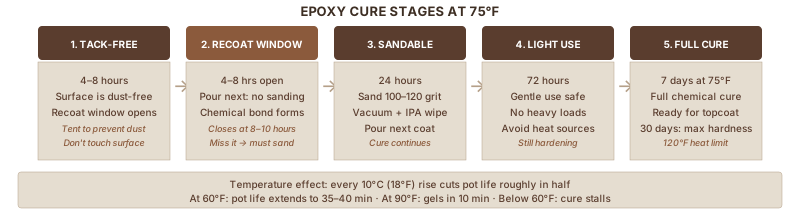
Temperature changes these numbers. Every 10°C (18°F) rise cuts pot life roughly in half — a confirmed relationship across West System, WiseBond, and general chemistry principles. At 60°F, a 20-minute pot life product may stay workable 35–40 minutes. At 90°F, it gels in 10. Below 60°F, the cure stalls; amine blush risk rises significantly.
Sanding Between Coats
Within the recoat window: Pour the next coat directly. No sanding needed — the new coat bonds chemically.
Outside the window (cured hard): Sand with 100–120 grit to create mechanical tooth. Remove all dust with a vacuum and IPA wipe before pouring the next coat. Never skip grit grades; going from 80 to 220 leaves 80-grit scratches that show through.
Final gloss polishing (after the last cured coat): Start at 220 grit dry, progress to 320, then wet-sand from 600 through 800, 1000, 1500, 2000. Finish with automotive polishing compound. Wet sanding above 400: mist the surface with water; it carries epoxy dust away and prevents paper clogging.
Epoxy vs. Other Wood Finishes
| Finish | Hardness | UV Resistance | Repairability | Cost/sq ft | Best For |
|---|---|---|---|---|---|
| Table top epoxy | Very high | Poor* | Difficult | $3–5 | Bar tops, river tables, high-liquid-use surfaces |
| Oil-based polyurethane | High | Moderate | Moderate | $0.50–1 | Indoor furniture, floors |
| Water-based polyurethane | Medium-high | Good | Moderate | $0.50–1 | Light-colored wood, indoor |
| Spar urethane | Medium-high | Excellent | Moderate | $1–2 | Outdoor, high UV exposure |
| Danish oil / tung oil | Low | Poor | Very easy | $0.25–0.50 | Natural look, food prep, cutting boards |
*Epoxy UV resistance: poor without HALS-stabilized formula or a polyurethane topcoat.
Epoxy wins on hardness and waterproofing. But polyurethane is easier to repair, costs 5–8x less, and handles UV better for pieces near windows or outdoors. For most indoor furniture, polyurethane is the practical choice. Epoxy earns its premium on bar tops, counters, and anything that takes constant liquid exposure.
The outdoor combo: apply epoxy as a sealer for its moisture resistance and hardness, then topcoat with spar urethane for UV protection.
RELATED: Applying Polyurethane The complete guide to polyurethane application — brush technique, between-coat sanding, and rubbing out to a glass finish.
Part 6: When NOT to Use Epoxy on Wood
Five situations where a different finish serves you better:
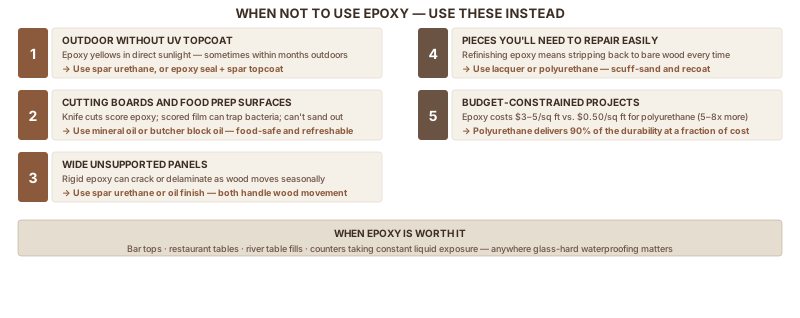
Outdoor pieces without a UV topcoat. Epoxy yellows in direct sunlight. The ScienceDirect study on epoxy yellowing mechanisms confirms that even "non-yellowing" UV-stabilized products yellow over time; UV is the accelerant, not the sole cause. Visible yellowing can appear within 24 hours of direct outdoor sun exposure on unprotected epoxy. Use spar urethane for outdoor pieces, or seal with epoxy and topcoat with spar urethane.
Cutting boards and food prep surfaces. Knife cuts score epoxy. MAS Epoxies' FAQ confirms fully cured epoxy is food-safe, but scored surfaces can trap bacteria in ways that can't be sanded out without major refinishing. Use mineral oil or butcher block oil instead — both penetrating, food-safe, and refreshable with a simple re-application.
Wide unsupported panels with significant wood movement. Epoxy is rigid. Seasonal expansion and contraction in a wide panel can crack or delaminate the epoxy film over time.
Pieces you'll need to repair easily. Refinishing lacquered cabinetry means a light scuff-sand and another coat. Refinishing epoxy means stripping to bare wood. If the piece will need future repairs, a more forgiving finish pays off.
Budget-constrained projects. Tabletop epoxy runs $40–80/gallon at 12–16 sq ft coverage — roughly $3–5 per square foot. Oil-based polyurethane covers 400–500 sq ft per gallon at the same film thickness, about $0.50 per square foot. Epoxy costs 5–8x more. For a dining table that doesn't live at a bar, polyurethane delivers most of the durability at a fraction of the cost.
Part 7: Troubleshooting Epoxy Finish Problems
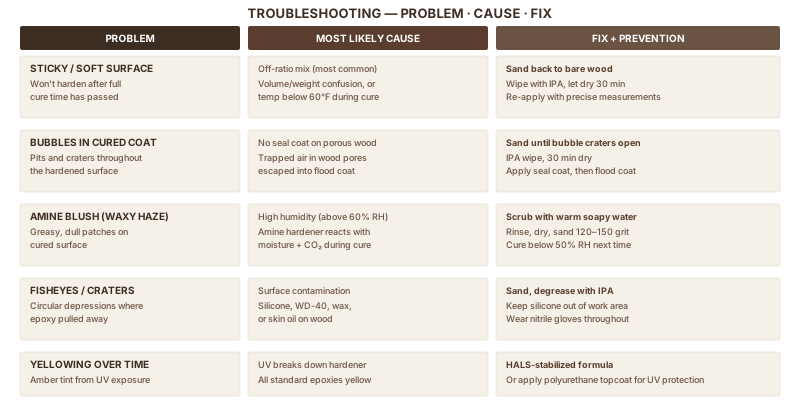
Sticky or Soft Surface
Cause: Off-ratio mix in almost every case. Either volume-to-weight confusion or imprecise measurement. Less commonly, temperature below 60°F during cure.
Diagnosis: Whole surface soft → suspect the mix ratio. Isolated soft patches → incomplete mixing (material stuck to container walls that never combined).
Fix: Can't cure sticky epoxy by applying hardener on top. Sand the soft material back to bare wood, wipe with IPA, let dry completely, then reapply with careful measurement. Use fresh product if the original batch is old.
Bubbles in the Cured Surface
Cause: Porous wood without a seal coat. Air trapped in wood pores escaped into the flood coat before it gelled.
Fix: Sand until all bubble craters are open or removed. Wipe with IPA, wait 30 minutes. Apply a seal coat. After the tacky window, apply a flood coat.
Prevention: Never skip the seal coat on raw wood. Warm wood and materials to 70°F+ before mixing — cold materials generate more bubbles.
Amine Blush
A waxy, greasy haze on the cured surface: dull patches, greasy to the touch despite being hard.
Cause: The amine hardener reacts with moisture and CO₂ in the air during cure. Happens most when humidity exceeds 60% or temperature drops overnight. Epoxyworks' technical article on minimizing amine blush confirms that condensation on the curing surface — when surface temperature falls to or below the dew point — is the primary trigger.
Fix: Scrub with warm water and dish soap (Dawn or equivalent) using a stiff brush. Rinse thoroughly, dry completely, then sand lightly with 120–150 grit before recoating. Never pour over amine blush — it prevents inter-coat adhesion and may cause the new coat to delaminate.
Prevention: Cure below 50% humidity and above 65°F. Use West System 207 or System Three SilverTip in humid climates — both are formulated to minimize blush.
Fisheyes and Craters
Circular craters where epoxy retreated from a spot. Caused by surface contamination — silicone, WD-40, wax, or skin oil. Epoxy has high surface tension and retreats from anything that disrupts it.
Fix: After cure, sand thoroughly, re-degrease with IPA, reapply. Prevention is the only reliable solution — no fisheye additive is compatible with epoxy, and re-torching rarely works once the fisheye has formed.
Prevention: IPA wipe before sealing. Wear nitrile gloves from start to finish. Keep silicone products completely out of the work area — they travel through the air.
Yellowing
All standard epoxies yellow in UV light. Aromatic amine hardeners yellow fastest. The ScienceDirect study on yellowing mechanisms confirms that oxidation causes yellowing even in complete darkness; UV is the accelerant.
Prevention: Use a HALS-stabilized product (TotalBoat TableTop, WiseBond, Entropy Super Sap CLR all claim UV stabilization). For pieces near windows or outdoors, apply a UV-stable polyurethane topcoat over cured epoxy.
Fix: Surface yellowing can be sanded back and recoated. Deep yellowing throughout the film requires full removal. If the piece will be near a window, plan for the topcoat before the yellowing starts — not after.
RELATED: How to Remove Epoxy If the finish has failed completely, this guide covers mechanical and chemical removal methods.
Part 8: Safety and Cleanup
Two-part epoxy presents a hazard that most finishing guides skip: amine sensitization. It's permanent, not reversible, and builds from repeated small exposures — not a single incident.
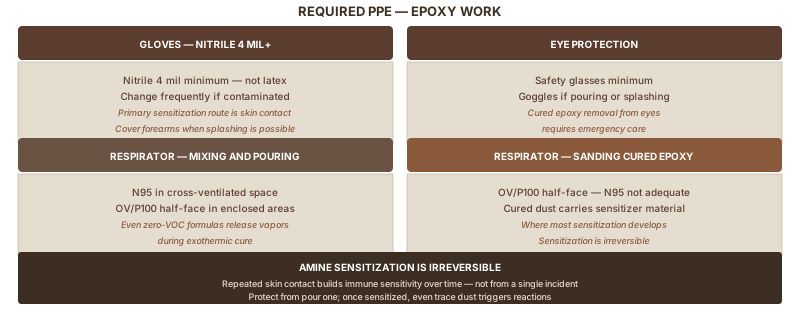
Amine Sensitization
Epoxy hardeners are amine compounds. Repeated skin contact sensitizes your immune system over time. Once sensitized, even trace amounts — including dust from sanding cured epoxy — trigger severe allergic reactions: contact dermatitis, respiratory response, hives. West System's safety guide on preventing overexposure is direct on this: sensitization is irreversible. Protect yourself from the first pour, not after you notice a reaction.
The primary exposure route is skin contact, not breathing vapors (though ventilation still matters). This is why the glove requirement is non-negotiable.
PPE Requirements
| Protection | Minimum | Notes |
|---|---|---|
| Gloves | Nitrile, 4 mil+ | NOT latex (poor chemical resistance); change frequently |
| Eye protection | Safety glasses | Goggles if splashing is possible |
| Respirator (mixing/pouring) | N95 in ventilated space | OV/P100 half-face in enclosed areas |
| Respirator (sanding cured epoxy) | OV/P100 half-face | N95 is not adequate for epoxy dust |
| Skin | Long sleeves | Epoxy sensitization happens through skin |
Sanding cured epoxy generates fine dust that carries partially-cured material. That dust is a sensitizer. This is the step most people skip the respirator on — and the step where sensitization most often develops.
Ventilation
All indoor epoxy work needs cross-ventilation or exhaust ventilation. Even "zero-VOC" tabletop formulas release vapors during the exothermic cure. Don't work in a sealed, unventilated space.
Cleanup
- Uncured epoxy on tools: acetone or denatured alcohol before it gels
- Gloves, mixing cups, brushes: dispose in household trash, not down the drain
- Unused mixed epoxy: spread it thin in a wide container before disposing — a cup full of gelling epoxy can reach temperatures that melt the cup or smoke; spread thin keeps exotherm manageable
- Cured epoxy: no solvent removes it; mechanical removal only (scraping, sanding)
Quick Reference
| Problem | Most Likely Cause | Fix |
|---|---|---|
| Soft/sticky surface | Off-ratio mix | Sand back, reapply with correct ratio |
| Bubbles in cured coat | No seal coat on porous wood | Sand, IPA wipe, seal + flood recoat |
| Waxy haze (amine blush) | High humidity during cure | Warm soapy water scrub, sand, recoat |
| Craters (fisheyes) | Silicone or skin oil contamination | Sand, degrease with IPA, reapply |
| Yellowing | UV exposure | HALS-stabilized formula; poly topcoat |
| Delaminating recoat | Poured over amine blush | Scrape, restart affected area |
FAQ
Why is my epoxy still sticky after 24 hours?
Off-ratio mixing causes this in almost every case — either confusing volume ratio with weight ratio, or estimating the 50/50 split by eye. A sticky surface won't cure on its own; pouring more epoxy on top won't fix it. Sand back to bare wood, wipe with IPA, let dry completely, and restart with precise measurements using graduated plastic mixing cups.
Do I need a seal coat before the flood coat?
Yes, on raw wood. Wood pores hold trapped air that expands when warm epoxy contacts the surface. Without a seal coat, that air escapes into the flood coat as bubbles. The seal coat — a thin brushed-on layer worked into the grain — lets that air escape first. Skip it only on non-porous surfaces like glass or laminate.
How do I remove bubbles from curing epoxy?
Pass a propane torch 6–8 inches above the surface in slow, continuous sweeping passes — never pause in one spot or you'll scorch the epoxy. The brief heat lowers surface tension, letting trapped air escape. Do a first pass immediately after pouring, a second pass 10 minutes later for late-rising bubbles, and stop at 20 minutes when gelling begins.
Will epoxy yellow over time?
All standard epoxies yellow in UV light. Products with HALS (hindered amine light stabilizers) — TotalBoat TableTop, WiseBond, Entropy Super Sap CLR — slow this considerably. For pieces near windows or in direct sun, apply a UV-stable polyurethane topcoat over fully cured epoxy before yellowing starts. Once yellowing is visible, the fix is to sand back and recoat.
Can I apply epoxy over an existing finish?
No. Epoxy requires bare, clean wood for proper adhesion. Existing polyurethane, lacquer, or oil prevents the epoxy film from bonding to the substrate. Strip or sand back to bare wood, verify moisture content is at or below 10%, wipe with IPA, and apply epoxy directly to the raw surface.
Sources
This guide draws on manufacturer technical data sheets, application instructions, and peer-reviewed chemistry research. Sources are ordered by first appearance in the guide.
- West System — Uncontrolled Cure — exotherm hazards in thick pours; temperature limits
- West System — Surface Preparation — moisture content requirements, contamination protocol
- Epoxyworks — How to Coat Over Wood — seal coat mechanism; step-by-step coating workflow
- Epoxyworks — Controlling Exotherm — torch technique; heat and surface tension science
- TotalBoat — Weight vs. Volume Measurement — why volume and weight ratios differ
- TotalBoat TableTop Epoxy TDS — mix ratio, coverage, cure schedule
- WiseBond Bar & Table Top — Application Guide — cure timeline; temperature specs
- WiseBond — Exotherm, Pot Life and Gel Time — temperature/pot life relationship confirmed
- MAS Table Top Pro FAQ — food safety after full cure; product specs
- West System TDS — 105/207 Special Clear — mix ratio, pot life, blush-resistant hardener specs
- System Three SilverTip Product Page — 2:1 ratio; blush-free marketing claim; gel times
- Epoxyworks — Minimizing Amine Blush — amine blush chemistry, dew point mechanism, prevention
- ScienceDirect — Yellowing Mechanisms Study — peer-reviewed; UV as accelerant; oxidation yellowing even without UV
- MAS Epoxies — Why is My Epoxy Hot and Smoking — exotherm in thick pours; manufacturer confirmation
- Meridian Adhesives — Amine Blush — industrial coatings perspective on blush chemistry
- West System — Preventing Overexposure — amine sensitization; irreversibility; PPE requirements
- System Three — Sanding and Recoating Guidelines — inter-coat sanding grit; recoat window timing
- Entropy Resins — Super Sap CLR — UV-stabilized bio-based formula; specs
Tools Used
Also Referenced
Tagged