
How to Remove Polyurethane From Wood at a Glance
The right removal method depends on how old the finish is, what shape your surface is, and whether you want to preserve existing stain. Chemical strippers handle detail work and stain preservation. Sanding is faster on large flat surfaces but takes stain with it. Fresh poly wipes off with mineral spirits — fully cured poly from 30 or more days needs a real stripper or mechanical removal.
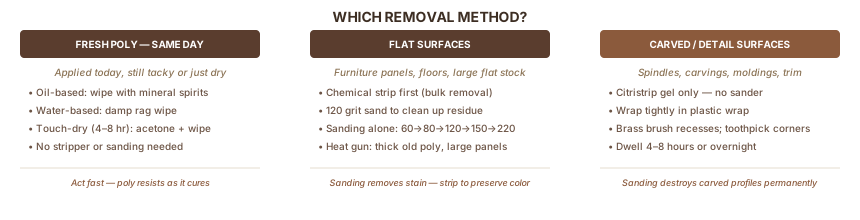
| Best for flat furniture | Chemical strip + 120 grit sand to clean up |
| Best for carvings and spindles | Citristrip gel + brass brush — sanding destroys profiles |
| Fresh poly (same day) | Mineral spirits (oil-based) or damp cloth (water-based) |
| Citristrip dwell time for poly | 1–6 hours — the 30 min on the label is for paint, not poly |
| Step most people skip | Residue wash with mineral spirits after scraping |
| When to repeat | If poly still feels firm after full dwell, reapply and wait |
In this guide:
- Which method to choose for your situation
- Chemical stripping step by step, with exact times and products
- Detail surfaces: spindles, carvings, and moldings
- Prepping stripped wood for a new finish
Part 1: Why Polyurethane Is Hard to Remove
Polyurethane doesn't behave like shellac or lacquer. Those finishes are linear polymers — solvents wedge between the chains and dissolve the film. Cured polyurethane is a three-dimensional cross-linked network of covalent bonds. Every chain connects to every adjacent chain. Solvents that eat through other finishes simply bead off a fully cured poly surface.
Strippers work differently: they disrupt adhesion at the wood-to-poly interface, causing the film to wrinkle, blister, and lift. You scrape off rubbery chunks, not liquid. The active ingredient in most modern products — benzyl alcohol in Citristrip, mixed solvents in Klean-Strip — works on this delamination principle.
Oil-based poly is harder to remove than water-based. Higher cross-link density means more chemical resistance and a tougher film. Water-based poly fully cures in 14–21 days; oil-based takes 30 days. Both resist removal more the longer they've been on.
Cure Time Changes Everything
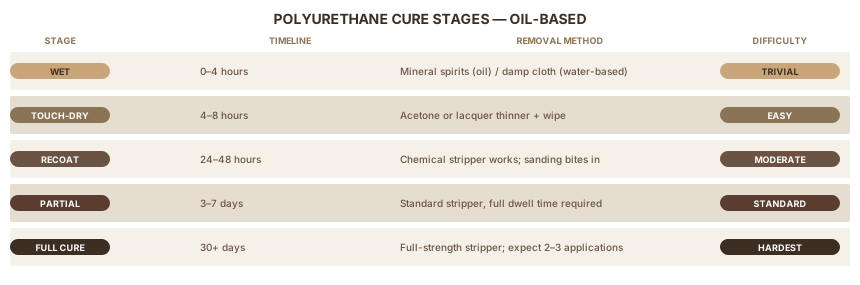
How old the finish is determines which approach works and how long it takes:
| Stage | Oil-Based Timeline | Removal |
|---|---|---|
| Wet | 0–4 hours | Mineral spirits wipe — trivial |
| Touch-dry | 4–8 hours | Acetone or lacquer thinner + wipe |
| Recoat-ready | 24–48 hours | Chemical stripper works; sanding bites in |
| Partial cure | 3–7 days | Standard stripper, full dwell time |
| Full cure | 30 days | Full-strength stripper, may need 2–3 applications |
Applied poly yesterday and don't like it? A stripper at standard dwell time handles it. Finish has been on for months or years? Expect multiple applications or start with mechanical removal.
Part 2: Which Method to Choose for Your Situation
Match your situation to the right method before buying anything.
| Situation | Method |
|---|---|
| Flat furniture, 3–5 coats of old poly | Chemical strip to remove bulk, 120 grit sand to clean up |
| Large flat area, floors | Belt sand first, random orbital sander (ROS) to finish |
| Carved chair legs, turned spindles | Chemical strip only — brass brush for recesses |
| Moldings, door casings | Chemical gel (thick consistency clings to vertical) + brass brush |
| Fresh poly, applied same day | Mineral spirits (oil-based) or damp cloth (water-based) |
| 1–2 day old poly | Chemical stripper, shorter dwell than fully cured |
| Thin veneer | Citristrip gel only — no heat gun, nothing coarser than 80 grit |
| Want to keep existing stain | Chemical strip only — sanding removes stain along with poly |
| Antique or unknown finish | Test on a hidden area before committing |
For a complete view of the refinishing process from stripping through new finish, see how to refinish a table.
Which Stripper to Buy
Three products cover most situations:
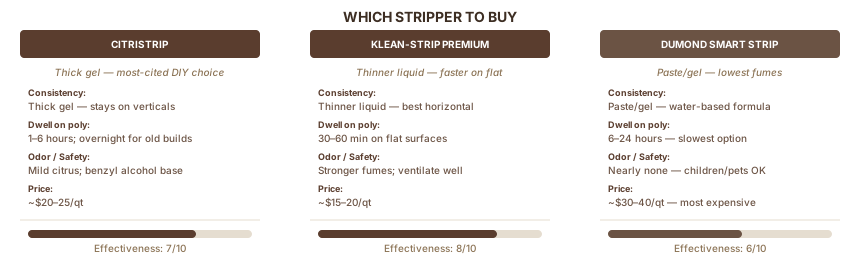
| Product | Consistency | Dwell on Poly | Odor | Price |
|---|---|---|---|---|
| Citristrip | Thick gel — clings to verticals | 1–6 hours | Mild citrus | ~$20–25/qt |
| Klean-Strip Premium | Thinner — better horizontal | 30–60 min | Stronger solvent | ~$15–20/qt |
| Dumond Smart Strip Advanced | Paste/gel, water-based | 6–24 hours | Nearly none | ~$30–40/qt |
Citristrip is the most-cited consumer choice in woodworking communities. Its thick gel stays on vertical surfaces without running, and the long active window — up to 24 hours with plastic cover — gives you flexibility on old, stubborn poly. Use Klean-Strip when speed matters on a flat horizontal piece. Use Dumond Smart Strip when fumes are genuinely off the table — children, pets, or no outdoor access.
A note for readers with older guides bookmarked: methylene chloride-based strippers appear in guides from before 2019. The EPA banned methylene chloride for consumer sale that year due to its acute toxicity. Modern products use benzyl alcohol or other solvents — effective, but slower.
Part 3: How to Use a Chemical Stripper
What You'll Need
| Tool | Purpose | Budget Option |
|---|---|---|
| Chip brush (2–3") | Apply stripper | Any $3–5 disposable brush |
| Plastic scraper | Remove softened finish | Hyde flexible plastic scraper (~$5); old credit card |
| Brass-bristle brush | Detail areas and carvings | Any brass wire brush (~$10) |
| Nylon scrub pad | Residue cleanup | Green kitchen scrubber |
| Plastic sheeting | Cover gel to keep it wet | Painter's plastic or grocery bags taped flat |
| Nitrile or neoprene gloves | PPE — not latex | Pharmacy box nitrile |
| Organic vapor respirator | PPE — mandatory for solvent strippers | 3M 6200 half-face + 6003 cartridges (~$40 total) |
| Odorless mineral spirits | Residue wash | Generic hardware store brand |
Skip latex gloves. Benzyl alcohol penetrates latex quickly. Nitrile or neoprene only.
Set Up Your Workspace
Work outdoors or in an open garage for any solvent-based stripper. Indoors: open every window and door, then set a box fan blowing out of the space. The fan creates negative pressure and pulls fumes away from your breathing zone rather than through it.
Keep open flames away from acetone and lacquer thinner — both highly flammable. Citristrip is far safer but still needs fresh airflow.
Lay a drop cloth under the piece. Dripped stripper marks floors.
Apply and Dwell
-
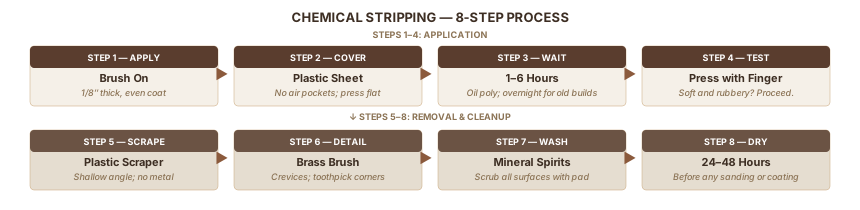
Brush on a thick, even coat — roughly 1/8 inch. Thin application dries out before it penetrates. On a vertical surface, Citristrip's gel consistency holds without dripping.
-
Cover with plastic immediately. Press it flat to eliminate air pockets. Without coverage, the gel dries on the surface and stops working.
-
Wait 1–6 hours for oil-based poly. According to Citristrip's official application guide, the 30-minute minimum on the label applies to paint, not polyurethane. For a fresh coat — a week old or less — 1–2 hours usually works. For old, thick, oil-based poly, plan 4–6 hours. Heavy builds or antique furniture: leave it overnight.
-
Test before scraping. Peel back a corner of the plastic and press with a gloved finger. Poly should feel soft, rubbery, and slightly blistered. If it still feels firm and bonded, recover with plastic and wait another hour.
Scrape and Detail
-
Scrape with a plastic scraper at a shallow angle. Push firmly but don't dig — the softened finish should roll ahead of the blade. Metal scrapers gouge softened wood.
-
Switch to a brass brush for carved areas, crevices, or profiles. Brass bristles conform to curved shapes and lift poly from recesses without scratching wet wood. Work in short, firm strokes. Steel wool looks faster — it isn't. Metal particles embed in wet grain and rust-stain the wood.
-
Use a wooden toothpick for the tightest corners. Wood on wood leaves no marks.
The Residue Wash
- Scrub all surfaces with odorless mineral spirits on a nylon scrub pad. After scraping, there's an invisible residue film in the wood grain. Skip this step and the new finish fish-eyes or beads off — as Woodworking Clarity's analysis of bad poly jobs confirms, adhesion failure from contaminated surfaces is the most common cause of finish failure after stripping.
Pour mineral spirits onto a pad or rag. Scrub all surfaces, flipping to fresh sections as the pad picks up residue. Dry at least 24 hours before doing anything else — 48 hours is better.
If poly still hasn't fully lifted after one round, repeat: apply stripper, cover, wait, scrape. Thick builds often need two or three rounds.
Part 4: Detail Surfaces — Spindles, Carvings, and Moldings
An orbital sander destroys crisp edges and can't reach into recesses. On turned spindles, carved furniture, or complex molding profiles, chemical stripping is the only practical approach.
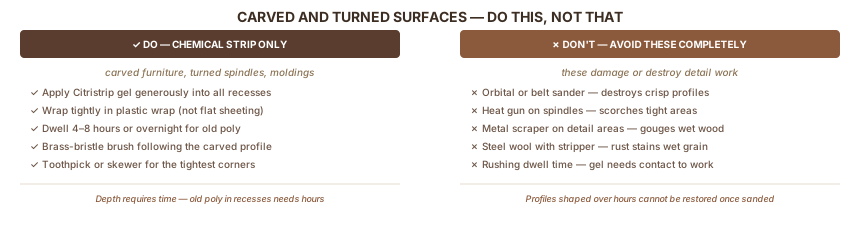
Step-by-Step for Carved and Turned Surfaces
-
Apply Citristrip generously with a brush, working gel into every recess and turned detail. The thick consistency stays put on curved surfaces.
-
Wrap tightly in plastic wrap and tape the edges sealed. On flat surfaces you lay plastic sheeting over the top — on a spindle or carved piece, conforming plastic wrap holds the gel against the entire surface. Without it, the gel dries out and stops working.
-
Extend the dwell time. Old poly in carved recesses may need 4–8 hours or overnight. Depth requires time.
-
Scrub with a brass-bristle brush after testing softness. Short strokes following the profile. On turned spindles, use a folded strip of sandpaper wrapped around the spindle like a shoelace — pull back and forth.
-
Wooden toothpicks and skewers for the tightest corners. A metal pick leaves marks.
-
Re-apply stripper to stubborn spots and wait. Antique pieces often have uneven coat thickness.
-
Final flush: wipe all surfaces with mineral spirits on a rag, working into every recess. Dry 24–48 hours before new finish.
Avoid: rotary wire brush attachments (destroys carved profiles instantly), heat gun on turned spindles (scorches tight areas), steel wool with stripper (rust stains wet wood).
RELATED: How to Refinish Wood Furniture
Full process for furniture refinishing — stripping, repairs, staining, and final finish.
Part 5: Sanding and Heat as Alternatives
Chemical stripping handles most furniture. Two other methods earn their place in specific situations.
Sanding — Flat Surfaces Only
Sanding works best when you're refinishing a large flat surface, don't need to preserve existing stain, or want the cleanest possible raw wood surface before a new finish. For sander types and grit progressions, see Woodworking Sanders.
The combination approach most professionals use: chemical strip first to remove bulk, then sand to clean up residue and raise nap. The chemical does the heavy lifting; sanding finishes the surface.
If sanding alone on a flat piece, start at a grit that bites without leaving excessive scratch depth:
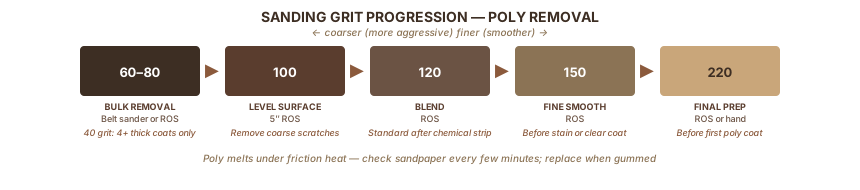
| Stage | Grit | Tool | Notes |
|---|---|---|---|
| Bulk removal | 60–80 | Belt sander or ROS | 40 grit only for 4+ thick coats |
| Level surface | 80–100 | 5" ROS | Remove coarse scratches |
| Intermediate | 120 | ROS | Blend |
| Fine smoothing | 150 | ROS | Ready for stain or finish |
| Final prep | 220 | ROS or hand | Before first poly coat |
Poly melts under friction heat and gums up sandpaper. Check the abrasive every few minutes. Between grit changes, blow off dust with compressed air and tack cloth — coarse particles from the previous grit embed in the next sheet and leave unexpected deep scratches.
Heat Gun — Large Flat Panels
A heat gun makes sense for thick, old oil-based poly on large flat surfaces: a solid wood tabletop, exterior trim, outdoor furniture. It's faster than multiple stripper applications on very heavy builds.
Use a variable-temperature heat gun — the Wagner HT1000 runs about $50 and handles most DIY work. Pair it with a stiff metal scraper.
Set to 500°F. Move to 600°F only if the finish isn't lifting — wood scorches beyond that, especially softwoods and end grain.
Hold the gun 2–4 inches from the surface and keep it moving constantly. Each area needs 20–30 seconds to bubble and change sheen. Scrape immediately while the poly is still soft. Work in 6"x6" sections: heat, scrape, move. Stop moving and you scorch in seconds.
After heat stripping, cool the surface for 15–20 minutes. Sand 80–120 grit to remove residual poly haze. Wipe with a mineral spirits-dampened rag held at a low angle — remaining poly shows as lighter patches against the darker wet wood.
No heat gun on veneer, thin stock, or carved detail. Veneer scorches immediately and can delaminate from the substrate.
Part 6: Prepping Stripped Wood for a New Finish
Stripping removes old finish. It doesn't leave the surface ready to coat. Rush this part and the new finish fish-eyes, raises grain visibly, or fails adhesion within months.
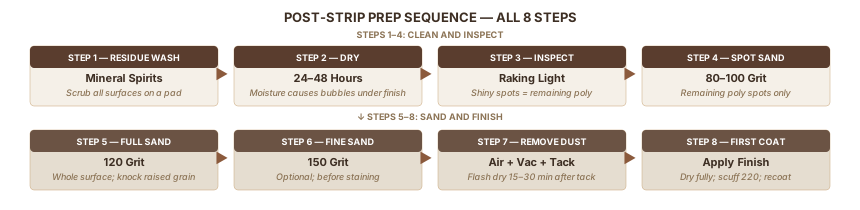
The Post-Strip Sequence
-
Residue wash immediately after scraping — odorless mineral spirits on a clean rag, flipping to fresh sections as you go. You're lifting residue, not spreading it.
-
Dry for 24 hours minimum, 48 hours preferred. Chemical strippers carry moisture into the wood. Finish applied over damp wood bubbles.
-
Inspect in raking light. Hold a bright lamp at a low angle across the surface. Remaining poly patches catch light differently from bare wood. Mark spots with chalk.
-
Sand remaining poly spots with 80–100 grit, feathering into surrounding bare wood.
-
Sand the whole surface with 120 grit to knock down raised grain — chemical exposure opens wood fibers and leaves a fuzzy surface texture.
-
150 grit pass (optional) for a smoother starting point, especially before staining. Grain raise causes blotchy absorption if the surface is too rough.
-
Remove dust: compressed air, then vacuum, then tack cloth or a mineral spirits-dampened rag. Flash dry 15–30 minutes before coating.
-
Apply first poly coat. It raises grain slightly. Let it dry fully, scuff with 220 grit sandpaper — just enough to knock down nibs, not cut through the coat — then apply the second.
See applying polyurethane for the full application process, brush technique, and between-coat sanding schedule.
When Water-Based Poly Goes Back On
Water-based finishes raise grain more than oil-based. After the 120 grit sand, wipe with a lightly damp rag and let it dry overnight. Sand with 220 grit. Pre-raising the grain this way prevents the first finish coat from doing it.
What Completely Stripped Wood Looks Like
Bare wood after chemical stripping feels slightly fuzzy — raised grain from moisture exposure. The color looks lighter than the old finish suggested, since you're seeing raw wood without the amber tint poly adds. No shiny patches, no areas that feel harder or smoother than the surrounding wood.
Shiny spots mean remaining poly. Sand them out before coating. One missed patch shows up as a fisheye or adhesion blister months later, when it's harder to fix.
Part 7: Common Mistakes and How to Avoid Them
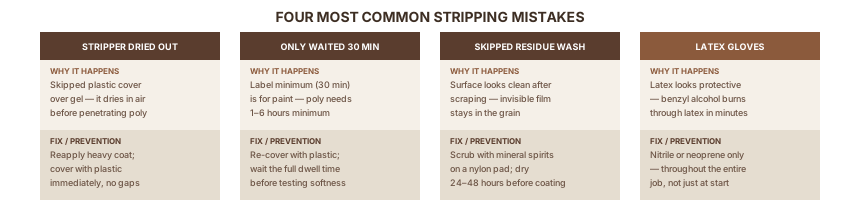
| Mistake | Why It Happens | Fix or Prevention |
|---|---|---|
| Poly barely lifts after 30 min | Label minimum is for paint — poly needs 1–6 hours | Re-cover with plastic; wait the full time |
| Stripper dried out on surface | Skipped plastic coverage | Reapply heavy coat, cover immediately |
| New finish fish-eyes or beads | Invisible residue left in grain | Re-strip; do a thorough mineral spirits wash before recoating |
| Scratches or gouges in softened wood | Metal scraper on vulnerable surface | Fill with wood filler; switch to plastic scraper |
| Stain won't absorb evenly | Tannin reaction in oak or mahogany; or uneven sanding | Pre-stain wood conditioner before staining |
| Grain rising under new poly | New coat applied before wood dried | Sand 120 grit; wait full 48 hours; recoat |
| Veneer damage | Aggressive sanding — veneer is 1/28"–1/40" thick | Chemical strip only; 80 grit maximum on veneer |
| Gloves failing mid-job | Latex — not chemically resistant to benzyl alcohol | Nitrile or neoprene only |
For the full application process after stripping, see applying polyurethane — coat count, dry times, and fixing problems that show up in the finish.
Sources
Research for this guide drew on manufacturer technical documentation, woodworking community discussions, and independent product tests.
- Citristrip Paint & Varnish Stripping Gel — Official Tutorial — application steps, dwell times for poly vs. paint
- Woodworking Clarity: How to Use Citristrip — practical technique guide
- The Craftsman Blog: Citristrip Guide — furniture refinishing application
- Old House Life: Four Stripper Head-to-Head Test — independent product performance comparison
- Dumond Smart Strip Advanced Product Page — product specs and usage
- Dumond Smart Strip Technical Data Sheet — dwell times, safety data
- Resiners: How Long for Polyurethane to Cure — cure timeline by stage
- Fine Woodworking Forum: Quickest Way to Remove Poly — community product recommendations
- Woodworking Clarity: Remove Polyurethane Without Sanding — chemical-only method detail
- Vertec Biosolvents: Acetone and Polyurethane — solvent behavior on cured vs. fresh poly
- Addicted2Decorating: How to Strip Furniture — detail work on carved and turned surfaces
- Benchmark Abrasives: Belt Sander vs. Orbital Sander — sanding tool selection
- TURI: Safer Alternatives for Coating Removal — PPE requirements and VOC assessment
- Woodworking Clarity: Fix a Bad Polyurethane Job — adhesion failure causes after stripping
Tagged
How We Research
We don't take affiliate revenue or accept review units. Picks come from multi-source research — manufacturer specs, OSHA / EPA / ASTM regs, and long-form practitioner threads — plus Ahmed's hands-on use where relevant. When we recommend something, we explain why.
Up Next
How to Remove Varnish From Wood
FINISHING · Beginner