
How to Use This Guide
Skill level: Intermediate. You've applied a clear finish before and want better, faster results. If polyurethane is new to you, read the applying polyurethane guide first.
Polyurethane is the default clear finish for furniture, shelves, and cabinets. It's tough, clear, and available at every hardware store. Standard oil-based poly can stretch a simple 3-coat project across a week.
This guide cuts that time down. Specific product names, exact dry time numbers, and the shop conditions that separate 2-hour recoats from overnight waits.
Choosing a product: Start with Part 1 (oil vs. water-based) and Part 2 (specific products and specs).
Ready to apply: Jump to Part 4 (brush and wipe-on technique) and Part 5 (between-coat sanding).
Something went wrong: Head to Part 7.
Want the full weekend schedule: Part 6 lays out the exact timeline.
Fast Drying Polyurethane at a Glance
Water-based polyurethane recoats in 2 hours and finishes a 3-coat project in 2 days. Oil-based "fast-drying" formulas cut the standard 24-hour wait to 3–4 hours but still cure over 30 days. The biggest dry-time killers are thick coats, cold shops, and high humidity.
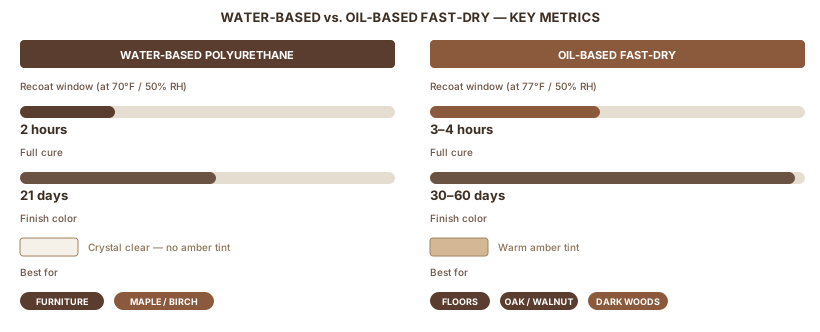
| Water-based recoat time | 2 hours (at 70°F/50% RH) |
| Oil-based fast-dry recoat | 3–4 hours (at 77°F/50% RH) |
| Water-based full cure | 21 days |
| Oil-based full cure | 30–60 days |
| Minimum shop temperature | 55°F (65°F preferred) |
| Maximum humidity for application | 85% RH (60% preferred) |
In this guide:
- Oil-based vs. water-based — which actually dries faster
- Product comparison — dry times by formula
- Temperature and humidity — the hidden variables
- Application technique for fast-drying results
- Sanding between coats
- The complete 3-coat schedule
- Troubleshooting when poly won't dry
Part 1: Oil-Based vs. Water-Based — Which Actually Dries Faster
Water-based dries faster. The reason is chemistry, not marketing. These two products cure through completely different processes.
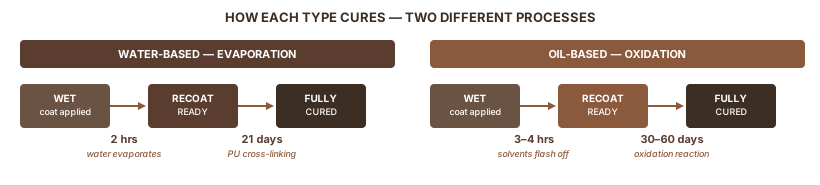
Water-based dries through evaporation
Water-based polyurethane carries polyurethane particles suspended in water. Apply it and the water evaporates. The PU particles coalesce into a continuous film. Warm air and airflow drive the process. Two-hour recoat times are achievable because evaporation is fast.
After the water leaves, the film hardens through cross-linking over 21 days. General Finishes University puts touch-dry at 30+ minutes and full cure at 21 days for water-based topcoats. You don't have to wait for full cure to apply the next coat. Touch-dry and recoat-ready arrive well before full cure.
Oil-based cures through oxidation
Oil-modified polyurethane is a different product. As Woodshop News explains, the resin contains fatty acid groups derived from drying oils that react with atmospheric oxygen to form the hard film. It's a chemical reaction. You can't blow a fan at it and speed up the oxidation.
"Fast-drying" oil-based formulas reach 3–4 hour recoat times by using faster-reacting oil components and higher-volatility solvents. The solvents flash off quicker, letting the surface accept a new coat sooner. The oxidation cure still takes weeks. Per the Minwax Fast-Drying Polyurethane TDS, dry times assume 77°F and 50% RH — a "fast-drying" oil-based poly is touch-dry at 3 hours and fully cured at 30 days.
Which one should you use
| Feature | Water-based | Oil-based |
|---|---|---|
| Recoat time | 2 hours | 3–24 hours |
| Full cure | 21 days | 30–60 days |
| Color | Crystal clear | Amber/warm tint |
| VOC/odor | Lower | Higher |
| Best for | Furniture, lighter woods, maple, birch | Floors, dark woods, oak, walnut |
For most furniture projects, water-based wins on speed and clarity. Oil-based earns its place on floors, outdoor projects, and wherever you want that warm amber tone.
Part 2: Product Comparison — Dry Times by Formula
The fastest water-based options
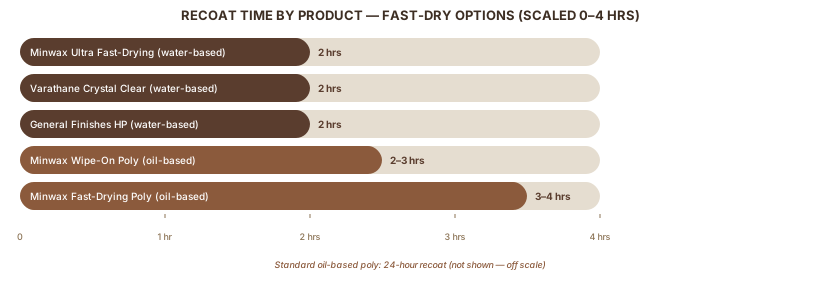
Minwax Ultra Fast-Drying Polyurethane for Floors — 2-hour recoat window, no sanding required if you stay within 2–24 hours. Floor formula but works fine on furniture. Available at Home Depot and Lowe's.
Varathane Crystal Clear Ultimate Water-Based — 2-hour recoat, application temperature 55–90°F, humidity below 85% RH. The most widely available water-based option at big box stores.
General Finishes High Performance Water-Based Topcoat — 2+ hour recoat under ideal conditions (70°F, 50% RH), light use in 7–10 days, full cure at 21 days. Well-regarded among furniture builders for clarity and film durability. Available at Woodcraft, Rockler, and online.
The fastest oil-based options
Minwax Fast-Drying Polyurethane (oil-based) — 3–4 hour recoat, but you must recoat before 12 hours. Miss that window and the surface cures enough to require 220-grit sanding before the next coat.
Minwax Wipe-On Poly (oil-based) — Pre-thinned formula for rag application. Recoat every 2–3 hours. Thin individual coats mean you'll need 4–6 coats to match the film build of 2–3 brush coats, but each coat dries fast enough that total project time stays competitive.
Full product comparison
| Product | Type | Recoat Time | Full Cure | Key Conditions |
|---|---|---|---|---|
| Minwax Ultra Fast-Drying (floors) | Water-based | 2 hr | ~21 days | 70°F, 50% RH |
| Varathane Crystal Clear Ultimate | Water-based | 2 hr | ~21 days | 55–90°F, <85% RH |
| General Finishes High Performance | Water-based | 2+ hr | 21 days | 70°F, 50% RH |
| Minwax Fast-Drying Poly (oil) | Oil-based | 3–4 hr | 30+ days | 77°F, 50% RH; 12-hr window |
| Minwax Wipe-On Poly (oil) | Oil-based | 2–3 hr | 30+ days | 70°F, 50% RH |
| Varathane Interior Oil-Based (standard) | Oil-based | 24 hr | 30–60 days | 68–72°F, 40–60% RH |
Part 3: Temperature and Humidity — The Hidden Variables
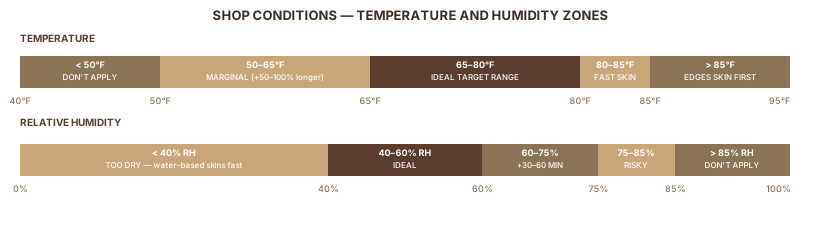
Shop conditions matter as much as product choice. A 2-hour recoat claim assumes 70°F and 50% relative humidity. In a cold autumn garage or a humid summer basement, those numbers stretch significantly.
Temperature thresholds
Below 50°F: Don't apply. Oil-based oxidation won't complete and may stay tacky indefinitely. Water-based film won't coalesce properly.
50–65°F: Marginal. Dry times run 50–100% longer than ideal. An oil-based "3-hour recoat" becomes a 6-hour wait. Workable if you have no choice, but plan for it.
65–80°F: The target range. 70–75°F is the sweet spot for both types. This is what all manufacturer dry time specs assume.
Above 85°F: Water-based skins faster at the edges before the brush catches up. Thin slightly more and work in smaller sections.
A space heater in the shop works. Let the piece warm to room temperature before applying. Cold wood causes water-based poly to blush (white haze) as condensation forms on the surface.
Humidity thresholds
Below 40% RH: Very dry air causes water-based poly to skin before it levels properly. Edge marks and brush strokes lock in. Add 10–15% General Finishes Extender to slow the dry.
40–60% RH: Ideal for both types. This is where dry times match the label.
60–75% RH: Acceptable, but add 30–60 minutes to each recoat window. Water-based is more affected than oil-based.
Above 75% RH: Significantly slower. Water-based may stay tacky for hours. Oil-based risks blushing (white haze from trapped moisture). Above 85% RH, most manufacturers say don't apply.
| Shop Condition | Effect | Fix |
|---|---|---|
| Below 55°F | Finish won't dry or cure | Space heater; move piece inside |
| Above 75% RH | Slow dry; blushing | Dehumidifier + fan |
| No airflow | Oil-based: slow cure, fumes | Open windows; box fan across room |
| Too dry (< 40% RH) | Water-based skins too fast | Thin 5% more; add GF Extender |
Airflow setup
Gentle air movement across the room helps. Set a box fan or oscillating fan to create a cross-draft through the space. Don't aim it directly at the piece. For oil-based in an enclosed shop, ventilation is a safety requirement, not just a drying tip. The solvent vapors need somewhere to go.
A fan aimed directly at wet polyurethane creates uneven drying, pulls in dust, and can cause checking in the film.
Part 4: Application Technique for Fast-Drying Results
Thin coats matter more than any other variable in this guide. Two thick coats trap solvents and stay tacky longer than three thin coats that flash off cleanly. If your brush leaves visible wet ridges, you're going too thick.

Brush technique for oil-based poly
Use a natural bristle brush: China bristle, ox hair, or a "Pure China Bristle" brush from Purdy or Wooster. Natural bristles carry oil-based finish better than synthetic. A 2–2.5" brush works for most furniture pieces.
Load the brush lightly. Dip 1–2" into the finish, then press once against the rim. Don't scrape. Apply in long strokes with the grain and maintain a wet edge. At the end of each section, tip off: hold the brush nearly vertical, barely touching the surface, and drag the full length in one stroke to level any brush marks.
Don't go back and touch areas that started to skin. Skinning begins around 5 minutes after application. Touching a skinning surface leaves drag marks that won't level out.
Brush technique for water-based poly
Use a synthetic bristle brush (nylon/polyester blend). Natural bristles absorb water and go limp, leaving streaks. A high-density foam roller on large flat surfaces gives you no lap marks and goes fast.
Water-based dries faster at the edges, so work quickly and keep sections small. Apply 3 strokes maximum per section. Over-brushing introduces air bubbles. Leave bubbles alone. They pop within 3–5 minutes while the film is still fluid. Going back over them locks them into the surface.
Wipe-on technique
Wipe-on is the right call for turnings, spindles, carved profiles, or anything where brush marks would be hard to level. It's the lowest-skill application method. Over-applying is nearly impossible.
Oil-based wipe-on: Use Minwax Wipe-On Poly (pre-thinned) or mix brush-on oil poly with mineral spirits 50/50, as Family Handyman recommends. Apply with a lint-free cloth folded into a pad. Wipe with the grain in overlapping passes with firm pressure. Recoat every 2–3 hours.
Water-based wipe-on: Thin 10% with distilled water. Don't use tap water; dissolved minerals can affect clarity. Apply with a lint-free cloth. Recoat in 1–2 hours.
Each coat is thin, so you'll need 4–6 coats to match the film build of 2–3 brush coats. On a chair or a set of table legs, the no-brush-marks advantage usually outweighs the extra coat count.
Thinning for the first coat
Thin the first coat 10–15% for oil-based (mineral spirits) and 5–10% for water-based (distilled water). The thinned first coat penetrates the wood surface and acts as a sealer. Subsequent full-strength coats bond to it better. Skip this on dense or oily species and you risk adhesion problems on the first coat.
Part 5: Sanding Between Coats
The first coat raises the grain. Dust that settled while it dried is locked into the surface. Sand before the second coat and you remove both, giving the next coat a flat, clean surface to bond to.

Grit and tool selection
Use 220-grit silicon carbide sandpaper after the first coat to remove raised grain and dust nibs. Woodworking Sanders covers technique for between-coat sanding, including why a cork block outperforms bare fingers on flat surfaces. After the second coat, 220 or 320-grit depending on how smooth the surface already is.
Never use steel wool under a water-based finish. As Sawmill Creek finishers note, microscopic iron particles rust in the presence of waterborne finish and bleed rusty spots into your clear topcoat. Synthetic Scotch-Brite pads (grey or white) are the right substitute.
Steel wool (0000 grade) is fine between oil-based coats, but not for the final coat if you're planning to apply a water-based topcoat.
Use a cork sanding block or fabric-backed block for flat surfaces. Bare fingers create uneven pressure and leave ridges. A random-orbital sander is too aggressive for between-coat work.
Technique
Sand lightly with the grain. The goal is a uniform matte surface, not bare wood. Stop when the sheen is gone. Once the surface has lost its slickness, you're done.
Vacuum thoroughly, then wipe with a tack cloth for oil-based finishes or a slightly damp lint-free cloth for water-based. After a damp cloth wipe, wait 10–15 minutes before applying the next water-based coat. Residual moisture under waterborne finish causes adhesion problems.
When you can skip sanding
Some fast-drying formulas allow a no-sand recoat if you stay within their recoat window:
- Minwax Fast-Drying oil: Recoat at 3–4 hours but before 12 hours. No sanding required.
- Minwax Ultra Fast-Drying water-based: Recoat at 2 hours up to 24 hours. No sanding required.
Even when skipping the sanding pass, wipe the surface with a tack cloth to remove any settled dust before applying.
Part 6: The Complete 3-Coat Schedule
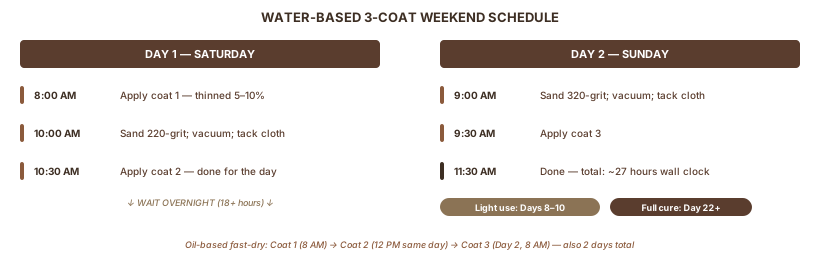
Water-based 3-coat schedule (fastest option)
| Time | Step |
|---|---|
| Day 1, 8:00am | Apply coat 1 (thin; thinned 5–10% with distilled water) |
| Day 1, 10:00am | Inspect; sand lightly with 220-grit if needed; tack cloth |
| Day 1, 10:30am | Apply coat 2. Stop for the day. |
| Day 2, 9:00am | Sand lightly with 320-grit; vacuum; tack cloth |
| Day 2, 9:30am | Apply coat 3 |
| Day 2, 11:30am | Done. Light use in 7–10 days; full cure 21 days |
Total wall-clock time: about 26 hours from first coat to last.
ZAR's coating guide specifies a maximum of 2 coats per day for water-based poly. Three coats same-day can trap solvents from earlier coats before they fully coalesce.
Oil-based 3-coat schedule (fast-drying formula)
| Time | Step |
|---|---|
| Day 1, 8:00am | Apply coat 1 (thin; thinned 10% with mineral spirits) |
| Day 1, 12:00pm | Inspect; apply coat 2 without sanding (within 12-hr window) |
| Day 2, 8:00am | Sand with 220-grit; vacuum; tack cloth; apply coat 3 |
Total: 2 days. Full cure for light use: 7 days. Full cure for full use: 30–60 days.
Standard oil-based schedule (for reference)
If you're using a standard oil-based poly (Varathane Interior, Minwax Helmsman):
- Day 1: coat 1
- Day 2: sand with 220-grit, coat 2
- Day 3: sand with 220-grit, coat 3
- Light use: 7 days from final coat
What "full cure" means in practice
Touch-dry and cured are not the same. Items placed on the surface before full cure leave impressions, scuff marks, and can cause adhesion failure.
- Water-based: light use after 7–10 days; place protective felt pads after 21 days
- Oil-based: light use after 7 days; full use after 30–60 days
Rubber feet, silicone mats, and protective pads placed on freshly cured poly before the full cure timeline can bond to the surface or leave permanent marks.
Part 7: Troubleshooting — When Poly Won't Dry
Coat stays tacky for 24+ hours
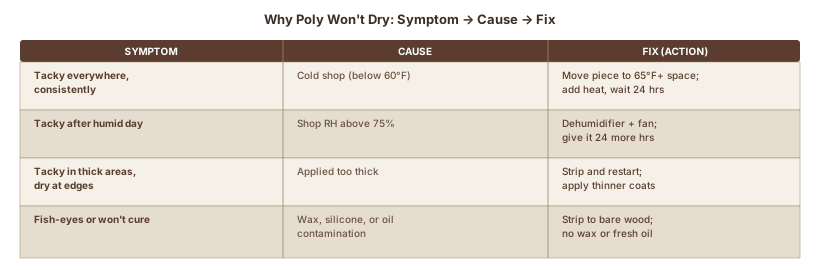
| Symptom | Cause | Fix |
|---|---|---|
| Tacky everywhere, consistently | Cold shop (below 60°F) | Move piece to 65°F+ space; space heater; wait 24 hrs |
| Tacky everywhere after humid day | RH above 75% | Dehumidifier + fan; give it another 24 hrs |
| Tacky in thick areas, dry at edges | Applied too thick | Strip and restart; apply thinner next time |
| Fish-eyes or won't cure | Silicone, wax, or oil contamination underneath | Strip to bare wood; don't apply poly over wax or fresh penetrating oil |
| Gummy on oil-based over fresh stain | Stain not fully cured | Strip; wait 72+ hours for oil stain before applying poly — Oil-Based Wood Stain explains the dry vs. cure time distinction |
For an already-stuck coat: rub lightly with 0000 steel wool (oil-based) or 220-grit sandpaper and mineral spirits. This abrades the sticky surface enough to accept a new coat. Apply in better conditions.
Bubbles in the finish
Over-brushing is the most common cause. Going back over a section that's already starting to set introduces air the film can't release.
Leave the bubbles alone. Bubbles from the first few minutes of application pop on their own while the film is still fluid. Touch them after 5 minutes and they lock into the surface. Foam brush application with oil-based poly introduces air the same way. Use a bristle brush instead.
Dust nibs and bumpy texture
Dust settled on the wet surface during drying. Sand between coats with 220-grit. That's the normal process, not a mistake.
Prevent it: dampen the shop floor before applying (settles airborne dust), close the shop to foot traffic, and wipe the piece with a tack cloth immediately before each coat.
White haze or blushing (water-based)
High humidity or cold temperature trapped moisture in the film. The haze often clears in 24–48 hours as moisture migrates out. If it persists, run a dehumidifier and improve ventilation. In extreme cases, lightly sand and recoat on a drier day.
Quick Reference
| Task | Spec |
|---|---|
| First-coat thinning — oil-based | 10–15% mineral spirits |
| First-coat thinning — water-based | 5–10% distilled water |
| Between-coat sanding — first coat | 220-grit silicon carbide |
| Between-coat sanding — second coat+ | 220 or 320-grit |
| Steel wool under water-based? | Never — causes rust |
| Recoat test — fingernail | Press gently; no mark = ready |
| Min temp for application | 55°F (65°F preferred) |
| Max humidity for application | 85% RH (60% preferred) |
| Water-based: max coats per day | 2 coats |
| Light use — water-based | 7–10 days after final coat |
| Full cure — water-based | 21 days |
| Full cure — oil-based | 30–60 days |
Where This Fits
Prerequisite: Applying Polyurethane — covers the full application process from surface prep through rubbing out. Read it if this is your first time finishing with poly.
Related guides:
- Best Brush for Polyurethane — which brush to use for oil-based vs. water-based, and why it matters
- How to Refinish a Table — stripping, prep, and refinishing an existing piece where dry time efficiency matters most
What this unlocks: Once you've got your recoat schedule dialed in, the next gap is usually film quality. Getting a truly flat, glossy surface after the final coat requires rubbing out, covered in the applying-polyurethane guide under Part 6.
Sources
Research for this guide drew on manufacturer technical data sheets, trade publications, and woodworking community expertise. Dry time figures are sourced directly from product TDS files; application tips are cross-referenced across manufacturer instructions and practitioner forums.
- General Finishes University — Drying Times — touch-dry, recoat, light-use, and full-cure timelines for water-based topcoats
- Woodshop News — Finishes Are Defined by How They Dry — evaporation vs. oxidation cure chemistry
- Minwax Fast-Drying Polyurethane TDS via Paintdocs — oil-based recoat conditions (77°F, 50% RH; 3–4 hr window)
- Minwax Ultra Fast-Drying Polyurethane for Floors — 2-hour recoat specs and no-sand window
- Minwax Fast-Drying Polyurethane (oil-based) — product specs and Wipe-On Poly formulation
- Varathane Crystal Clear Ultimate Water-Based (Rust-Oleum support) — 2-hour recoat, temperature and humidity application range
- General Finishes High Performance Water-Based Topcoat — product specs, ideal conditions, coat limits
- ZAR — How Long Between Coats of Water-Based Polyurethane — maximum 2 coats per day guidance
- Family Handyman — Pro Tips for Wipe-On Polyurethane — wipe-on technique and 50/50 mineral spirits ratio
- Sawmill Creek — Sandpaper or Steel Wool Between Coats — steel wool and rust risk under waterborne finishes
Tools Used
Also Referenced