
How to Use This Guide
Green stain is one of the trickier finishing choices. The technique is standard: flood, wait, wipe. But green reveals mistakes that brown tones hide. Blotchy walnut stain reads as character. Blotchy forest green reads as error.
Skill level: Beginner. If you've never stained wood before, read this fully. If you've stained in brown tones and are switching to green, start at Part 1. The color selection rules are different.
What you need: Stain (see Part 1 for product picks — most water-based green stains run $14 to $20 per quart), a brush or lint-free rags, pre-stain conditioner or gel stain if you're working with pine or maple, and a clear topcoat for the final coat.
Choosing a shade? Start with Part 1.
Already have a product, worried about blotching? Skip to Part 2.
Ready to apply? Jump to Part 3.
Wondering if your topcoat will change the color? Go straight to Part 4.
Working over an existing stain or paint? Read Can You Stain Over Stain before you open the can — the process is different when there's already a coat on the wood. If the old finish needs to come off entirely, Chemical Paint Stripping for Wood covers what actually works.
Green Wood Stain at a Glance
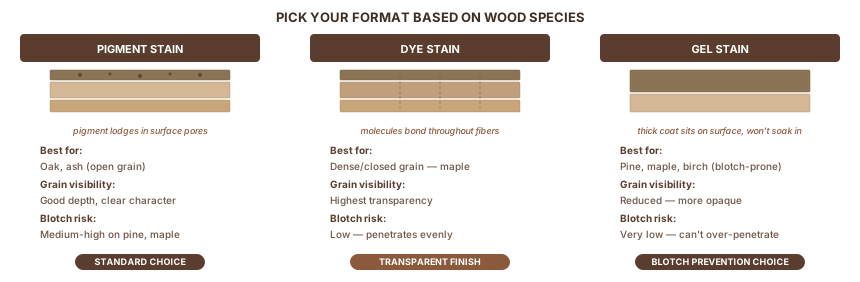
Green stain comes in three formats (pigment, dye, gel) and spans from muted sage to deep jewel-tone emerald. The color you get depends on two things: the product and your wood species. The same stain looks different on pine than on oak because the wood's natural color mixes with the stain optically.
| Shade range | Sage/gray-green to forest green to dark emerald |
| Best wood for vivid green | Oak, ash, poplar |
| Best for blotch-prone wood | Gel stain (no conditioner needed) |
| Standard coats | 1 to 2; flood-and-wipe method |
| Topcoat for true color | Water-based polyurethane |
| Oil-based poly effect | Slight amber shift; pushes green toward olive |
In this guide:
- Pick your shade and product
- Prep and blotch prevention by wood species
- Apply green stain step by step
- Seal it without shifting the color
Part 1: Picking Your Green Shade and Product
The color on the chip is not the color you'll get on your wood. That's not a flaw in the product. It's how stain works, and once you understand it, you can choose the right shade on purpose.
The Green Spectrum
Target Coatings' breakdown of dye vs. pigment stains explains why the same stain color looks different across species. Green stains at retail break into four practical categories:
| Shade | Character | Best Woods | Product Example |
|---|---|---|---|
| Sage/muted | Gray-green, subtle | Maple, poplar, conditioned pine | Varathane Rustic Sage |
| Forest/true green | Balanced mid-range | Oak, ash, poplar | SamaN Interior Emerald |
| Dark/emerald | Jewel-tone, rich | Oak, ash | Minwax Express Color Emerald, SamaN Interior Emerald |
| Olive | Warm yellow-green | Pine naturally; or dye on demand | TransTint Green dye on pine |
When people search "greenish wood stain," they mean sage or muted green: a hint of green, not a statement. "Dark green wood stain" means jewel-tone coverage where the grain still shows through.
The Wood Undertone Rule
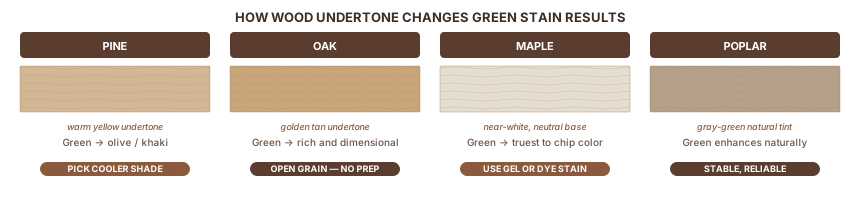
Wood isn't white. It has its own color: warm yellow in pine, golden brown in oak, near-cream in maple. When you stain it green, you get stain color plus wood color combined. This is why every photo of "forest green stain" looks slightly different.
Pine (yellow undertone): Green plus yellow equals olive. A sage stain on pine reads warmer and more khaki than on the chip. A forest green on pine pushes toward olive. If you want true green on pine, pick a shade cooler and bluer than your target.
Oak (golden/tan undertone): Green on oak looks rich and dimensional. The open grain soaks up pigment and creates depth. Forest green on oak reads strong and traditional.
Maple (near-white): Green reads closest to the chip. What you see in the store is close to what you get. Good for sage when you want color accuracy.
Poplar (natural gray-green tint): Poplar already has a slight greenish undertone. Green stains enhance it naturally. More stable than pine, less blotch-prone.
Cherry (reddish undertone): Red and green sit opposite on the color wheel. Green stain on cherry produces a muddy, brownish result. Skip it.
Walnut (naturally dark): Too dark for pigment stains to register. Only heavy dye applications show. Don't stain walnut green.
What Type of Stain to Use
Three formats. Pick based on your wood and how much control you need.
Pigment stain (standard hardware store stain): Colored particles in water or oil. Lodges in pores and sits on the surface. Good color depth. Open-grain woods (oak, ash) take it well. Prone to blotching on soft or closed-grain woods. This is the default for most projects.
Dye stain: Molecules dissolve completely in the carrier. Penetrates deep into wood fibers. Transparent. Grain shows through clearly. Better for dense, closed-grain woods where pigment won't absorb. TransTint Green is the most accessible concentrate: dilute in water or alcohol. Requires careful testing before committing.
Gel stain: Thick consistency, like pudding. Sits on the surface instead of penetrating. Cuts blotching risk on difficult woods. Trade-off: more opaque, less grain character. The reliable choice for pine, maple, birch, and cherry.
Recommended Products
For most beginners going after a true forest or emerald green: SamaN Interior Water-Based Stain in Emerald. Water-based means easy cleanup and low odor. It produces a jewel-tone dark green that still shows the grain. Charleston Crafted tested it on multiple species and the results are solid. It's darker than most people expect. Test on scrap first.
For a subtle, muted sage: Varathane Rustic Sage. Less saturation, more neutral. Good when you want green as an accent, not a statement.
For blotch-prone wood (pine, maple, birch): use gel stain or add a pre-stain conditioner. Part 2 covers which to choose.
For eco-conscious projects: PureColor Deep Forest Green (water-based, low VOC, available on Amazon).
Part 2: Prep and Blotch Prevention
Green is unforgiving because it's not a wood tone. Blotchy walnut stain can pass as character. Blotchy green looks like something went wrong, because it did.
Why Some Woods Blotch
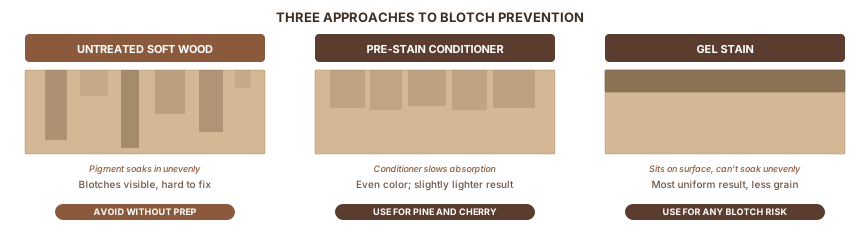
Blotching happens when wood absorbs stain unevenly: some areas soak up more pigment than others. The cause is uneven density in the wood itself.
Pine, fir, birch, cherry, and maple all have irregular grain structure or variable early/latewood density. These woods blotch regardless of stain color. Green makes the variation more visible.
Oak, ash, walnut, and mahogany have open, consistent pore structure. They absorb stain evenly without conditioning.
Three Prevention Methods
Match the method to your wood.
Pre-stain conditioner (for pine, poplar, birch, cherry)
Apply conditioner (Minwax Pre-Stain Wood Conditioner is the standard) with a brush or rag, moving with the grain. Let it sit 10 to 15 minutes. Wipe off excess. Stain while the wood is still damp. Don't let the conditioner dry fully before applying stain. Popular Woodworking's blotching guide recommends this approach for pine and other unpredictable woods.
Limitation: conditioner reduces color depth. Your green will be slightly lighter than without conditioning.
Gel stain (for any blotch-prone wood, pine and maple in particular)
Gel stain works because its thick body prevents deep penetration. It can't soak in unevenly if it barely soaks in at all. The Wood Whisperer's blotch control guide calls gel stain the most reliable prevention method. You probably won't need conditioner at all with gel.
Apply with a rag in thin coats. Buff off excess. Wait for dry time. You'll give up some grain character for guaranteed evenness.
Washcoat (for cherry and maple when you want grain character)
Mix Zinsser SealCoat (dewaxed shellac) with denatured alcohol at a 1:6 ratio. Apply a thin coat with a rag, let dry for 30 minutes, then sand lightly with 320 grit. Stain over the washcoat. This seals the surface enough to control penetration while still letting color in. Fine Woodworking's color mistakes guide covers washcoats for exactly this case.
If Blotching Already Happened
Still wet: add more stain and wipe hard to blend. Sometimes works.
Dry, no topcoat yet: sand back to bare wood with 80 to 100 grit. Apply the prevention method. Re-stain. It's frustrating but it's the clean fix.
Topcoat already applied: apply a tinted glaze over the topcoat to soften the contrast. Or strip everything and start over. Neither option is good, which is why prevention is worth the extra step.
Part 3: Applying Green Stain
The technique is the same for any liquid stain: flood the surface, let it sit, wipe off the excess. The difference with green is that small errors show up more clearly.

Before You Apply
-
Sand to 150 grit. Not finer. Sanding to 220 closes the pores on open-grain woods and reduces absorption. On soft woods, 120 to 150 grit is enough. Sand with the grain.
-
Remove all dust. Vacuum first. Then wipe with a tack cloth (oil-based stain) or a barely damp rag (water-based). Dust under stain creates bumps you'll see in the final finish.
-
Test on scrap. Same wood species. Same prep sequence. Let the test piece dry to final color before you commit to the full surface. This is the step most beginners skip and most regret.
-
Stir thoroughly. Pigment settles to the bottom of the can and forms a glob. Stir until the glob dissolves. An unstirred can gives you a lighter color at the start and a muddy one near the end.
The Flood-and-Wipe Method
Family Handyman's guide to even staining and Minwax's application tips both describe the same core method. Apply with a brush, foam applicator, or lint-free rag.
-
Work in manageable sections with the grain. Small enough to keep a wet edge: don't let one section dry before you connect the next. Lap marks in green stain are visible.
-
Flood the surface. Apply more than you think you need. The wood takes what it can. You wipe off the rest.
-
Wait 2 to 5 minutes. Shorter wait gives lighter color. Longer gives darker. Test on scrap to find your timing. Some green stains hit their target at 2 minutes; some need 5.
-
Wipe off excess with a clean rag, moving with the grain. This levels the color. Work corners and recesses immediately: stain pools there and dries darker and sticky if you miss it.
Dry Time and Additional Coats
Water-based stain: 1 to 2 hours between coats. Oil-based: 4 to 8 hours minimum (check the can).
One coat is often enough for dark green or emerald shades. If the color is too light after drying, apply a second coat with the same method. No sanding between stain coats.
Stop at 2 to 3 coats. Beyond three, pigment stains can get muddy and the topcoat won't bond as well.
Grain raising with water-based stain: Water raises the wood grain slightly. After the first coat dries, sand lightly with 220 grit to knock down the raised fibers before a second coat or topcoat. Light pressure, you're scuffing the surface, not sanding through.
If You Used a Pre-Stain Conditioner
Stain while the wood is still slightly damp from the conditioner. Don't let it dry fully before staining. Conditioner is less effective at controlling blotching once it cures.
Part 4: Topcoats and Color Preservation
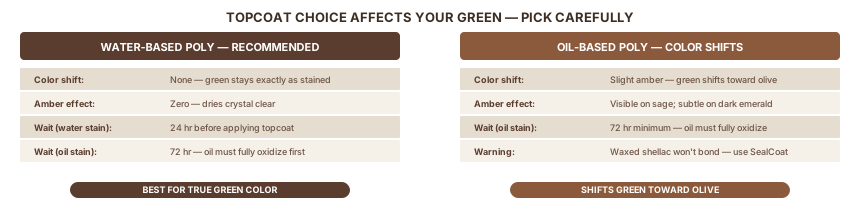
The wrong topcoat shifts your green. Oil-based poly adds amber as it cures. The shift is barely noticeable on dark emerald but clearly visible on sage. Choose based on your shade, not just convenience.
Does the Topcoat Change the Color?
Oil-based polyurethane adds a slight amber/yellow cast as it cures. That shift pushes greens toward olive: barely noticeable on deep emerald, clearly visible on sage or muted tones.
Water-based polyurethane dries clear. Green stays green.
For true color preservation, use water-based poly. Apply 2 to 3 coats, sanding lightly between coats with 220 grit (scuff only, don't sand through to the stain).
Topcoat Compatibility
| Topcoat | Compatible? | Color Effect | Wait After Stain |
|---|---|---|---|
| Water-based polyurethane | Yes | None; clearest option | 24 hr (water-based stain); 72 hr (oil-based stain) |
| Oil-based polyurethane | Yes | Slight amber; greens shift toward olive | 72 hr (oil-based stain) |
| Lacquer | Yes | None | Per product spec |
| Dewaxed shellac (Zinsser SealCoat) | Yes | Very slight amber | 24 hr |
| Waxed shellac (standard orange Zinsser) | Final coat only | Slight amber | Don't topcoat over this |
The waxed shellac trap: Standard Zinsser orange shellac contains wax. Polyurethane won't bond over wax and will peel. If you want poly over shellac, use Zinsser SealCoat (the white label), which is dewaxed. The Wood Whisperer's shellac guide covers this in detail. Woodweb's shellac knowledge base confirms dewaxed shellac is compatible under any finish.
Wait time matters: Applying water-based poly over oil-based stain less than 72 hours after staining is a common cause of finish adhesion failure. The oil stain needs to fully oxidize. Wait the full time even if the surface feels dry.
Once your topcoat cures, the color you chose is the color you keep. The grain still shows through. That's a harder result to achieve than most brown finishes, and it's worth the extra step of choosing the right topcoat.
Quick Reference
Species and Green Stain Results
| Wood | Blotch Risk | Prep | Stain Type | Expected Result |
|---|---|---|---|---|
| Pine | High | Conditioner or gel | Gel, or conditioned liquid | Warmer/olive-toned |
| Poplar | Medium | Conditioner | Liquid pigment | True-to-shade; natural green tint enhances |
| Oak | Low | None needed | Liquid pigment | Rich, dimensional, grain-forward |
| Maple | High | Gel or washcoat | Gel or dye | Cleanest; truest chip color |
| Birch | Medium-High | Conditioner | Conditioned liquid or gel | Cool-toned; close to true green |
| Cherry | Medium | Gel only | Gel only | Not recommended; goes muddy |
| Ash | Low | None needed | Liquid pigment | Similar to oak; dramatic open grain |
FAQ
Does green stain look different on pine than on oak?
Yes. Pine's yellow undertone pushes green toward olive — a forest green on pine reads khaki by the time it dries. Oak's golden-tan base makes the same stain look rich and dimensional. If you're staining pine and want true green, pick a shade a step cooler and bluer than your target on the chip.
Do I need to prep pine before applying green stain?
Yes, unless you're using gel stain. Pine's variable density causes uneven absorption — some areas soak up far more pigment than others, and green makes the contrast obvious. Apply Minwax Pre-Stain Wood Conditioner with a rag, wait 10 to 15 minutes, then stain while the wood is still damp. With gel stain, skip the conditioner entirely.
Will the topcoat change my green color?
Water-based polyurethane won't — it dries crystal clear and green stays exactly as stained. Oil-based poly adds amber as it cures, shifting greens toward olive. The shift is barely noticeable on deep emerald but clearly visible on sage or any muted shade. For color accuracy, use water-based poly and wait at least 24 hours after a water-based stain before applying it.
How many coats of green stain do I need?
Usually one. Dark emerald and forest green shades reach full saturation after a single flood-and-wipe coat. If the color is lighter than you wanted once it dries, apply a second coat without sanding between. Stop at three coats maximum — additional pigment layers turn the finish muddy and weaken topcoat adhesion.
Sources
This guide draws on manufacturer guidelines, tested product comparisons, and expert finishing references.
- Charleston Crafted — The Best Green Wood Stains, Tested — tested multiple green stains across wood species
- Target Coatings — Dye vs. Pigment Stains — stain chemistry and mechanism
- The Wood Whisperer — Blotch Control to Rule Them All — definitive blotch prevention guide
- Popular Woodworking — How to Control Blotching — expert blotching diagnosis
- Fine Woodworking — Avoid Color Mistakes and Fix Blotchy Stain — washcoats and blotch fixes
- Family Handyman — Stain Wood Evenly — flood-and-wipe technique
- Minwax — Wood Staining Tips — manufacturer application guidance
- The Wood Whisperer — Shellac Under Polyurethane — topcoat compatibility
- Woodweb — Shellac as a Sealer — professional finishing reference
- Baton Rouge Woodworking Club — Gel Stains — gel stain technique for blotch control