
Wood Stain at a Glance
Wood stain adds color by soaking into wood fibers. It does not protect the surface. For furniture, you always need a clear topcoat after staining. For decks, most exterior stains include a built-in sealer. The four stain types (oil-based, water-based, gel, and solid-color) are not interchangeable, and neither are interior and exterior formulas.
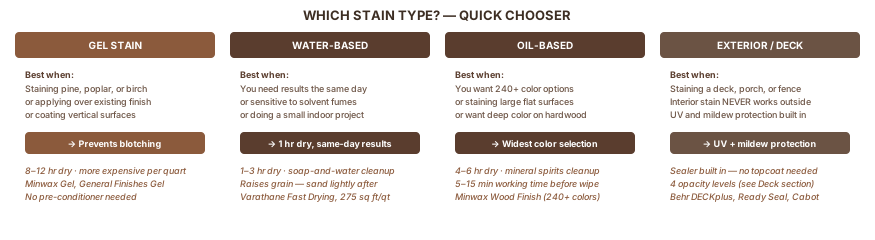
| Most color options (interior) | Minwax Wood Finish, oil-based (240+ colors) |
| Fastest dry (interior) | Varathane Fast Drying Wood Stain, water-based (1 hour) |
| Pine, poplar, or cherry | Gel stain: prevents blotching, no pre-conditioner needed |
| New deck | Semi-transparent exterior stain (grain shows, easy to maintain) |
| Weathered or old deck | Semi-solid or solid stain (covers gray and damaged wood) |
| Topcoat required? | Yes for interior furniture; most deck stains include sealer |
In this guide:
- How to choose the right stain type
- Deck stain: oil vs. water and opacity levels
- Colors and how your wood species changes the result
- Pine, poplar, and blotchy woods
Part 1: Stain Type Quick-Reference
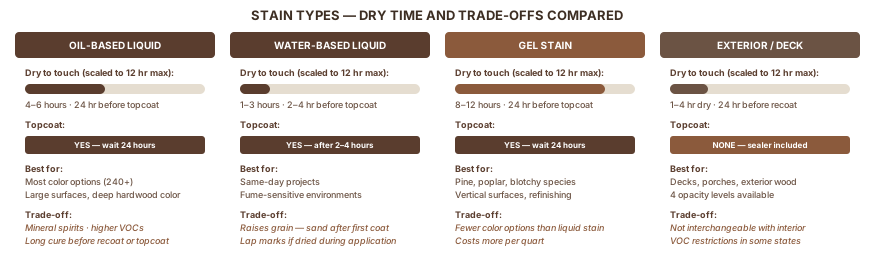
There are four types of wood stain. Choose based on your project location (interior vs. exterior), the wood species, and how much time you have.
| Type | Dry to touch | Best for | Topcoat needed? |
|---|---|---|---|
| Oil-based liquid (Minwax Wood Finish) | 4–6 hours | Interior furniture, trim, floors | Yes |
| Water-based liquid (Varathane Fast Drying) | 1–3 hours | Interior furniture, fast projects | Yes |
| Gel stain (Minwax Gel, General Finishes Gel) | 8–12 hours | Blotch-prone woods, vertical surfaces, refinishing | Yes |
| Semi-transparent exterior (Behr DECKplus, Ready Seal) | 1–4 hours | New or lightly weathered decks | No, sealer included |
| Solid-color exterior (Behr Premium Solid) | 1–2 hours | Old, weathered, or damaged decks | No, sealer included |
Oil-based liquid stain
Oil-based stain penetrates deeper into wood fibers than water-based. It gives you 5–15 minutes of working time before wiping, which makes it forgiving on large surfaces. Cleanup requires mineral spirits. General Finishes' stain comparison puts oil-based coverage at 150–225 sq ft per quart, with a full 24-hour cure before applying a topcoat.
Use oil-based when you have time to work slowly, or when you need the widest color selection. Minwax Wood Finish comes in over 240 colors.
Water-based liquid stain
Water-based stain dries in about an hour and cleans up with soap and water. Varathane's Fast Drying Wood Stain covers 275 sq ft per quart and is topcoat-ready in 2 hours. One trade-off: it raises the grain slightly, so you may need a light 220-grit sanding after the first coat.
Use water-based when you want to work and move on the same day. It's also the better choice if you're sensitive to solvent fumes.
Gel stain
Gel stain is thick. It stays on the surface instead of penetrating into the wood. That makes it the best solution for blotch-prone species like pine, poplar, and cherry, because it bypasses uneven porosity entirely. It also works on vertical surfaces without dripping, and you can apply it over an existing finish without stripping. The Wood Whisperer's blotch control guide notes that gel stain is so effective at preventing blotching that a pre-conditioner is often unnecessary.
The trade-offs: fewer color options, higher cost per can, and a longer dry time (8–12 hours before a second coat).
Interior vs. exterior: never swap them
Interior and exterior stains are formulated for different conditions. Exterior stains contain UV absorbers, mildewcides (which inhibit mold and fungi), and flexible resins that expand and contract with wood. Interior stains have none of those additives.
Use interior stain outdoors and it will fade, gray, and develop mold within one season. There's no UV protection, and the rigid formula can't handle outdoor temperature swings. Use exterior stain indoors and the mildewcides off-gas in an enclosed space. That's a health issue, not just an odor problem.
Part 2: Deck Stain: Oil or Water, and How Opaque
For deck staining, two decisions drive everything else: oil or water-based formula, and how opaque you want the finish.
Oil-based vs. water-based deck stain
Oil-based advantages: deeper penetration into wood fibers, more working time during application (useful on rough or uneven boards), and it fades gradually instead of peeling. A maintenance coat requires no stripping: clean the deck and reapply.
Oil-based disadvantages: 24+ hours before foot traffic, higher VOCs (some states have restrictions on high-VOC products), and greater susceptibility to mold and mildew growth in humid climates.
Water-based advantages: walk on the deck in 1–2 hours, soap-and-water cleanup, lower VOCs. Consumer Reports' three-year outdoor exposure testing found water-based formulas outperformed oil-based in long-term durability. Their top-ranked deck stain, Behr Premium Solid Color Waterproofing Stain & Sealer, is water-based.
Water-based disadvantages: dries faster, so lap marks are easier on large surfaces. The best penetrating water-based options (like Defy Extreme) are often sold online or at specialty stores, not at big-box retailers.
For most beginners staining a deck: go water-based. It's more durable long-term, easier to clean up, and the top-rated products at Home Depot use it.
Four opacity levels for deck stain
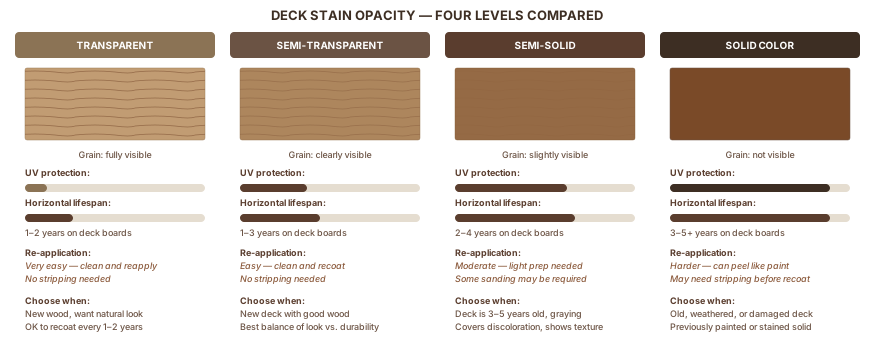
Opacity determines how much grain shows through. It also determines how long the stain lasts.
| Opacity | Grain visible? | Lifespan (horizontal) | UV protection | Re-application |
|---|---|---|---|---|
| Transparent | Yes, fully visible | 1–2 years | Minimal | Easy: clean and reapply |
| Semi-transparent | Yes, clearly visible | 1–3 years | Moderate | Easy: clean and recoat |
| Semi-solid | Slightly visible | 2–4 years | Good | Moderate: light prep needed |
| Solid | No | 3–5+ years | Maximum | Harder: can peel, may need stripping |
More pigment means more UV protection. Clear and transparent stains let UV through, so wood grays over time regardless of stain color. Cabot's opacity selection guide puts it plainly: the stain's pigment content is what blocks UV rays, not the base formula. In DeckStainHelp's contractor testing, semi-transparent stains on horizontal deck surfaces typically need recoating within 1–3 years; solid stains last 3–5 years but fail by peeling rather than fading.
How to choose:
- New deck with good wood: semi-transparent. The grain shows, the color is subtle, and it's the easiest to maintain. When it's time to recoat, you clean the deck and apply a new coat. No stripping.
- Moderately weathered deck (3–5 years old, some graying): semi-solid. More coverage to hide discoloration, still shows some texture.
- Old or damaged deck, previously painted, or heavily weathered: solid stain. It covers everything and lasts longest, but behaves like paint. It can eventually peel. Once you go solid, stepping back to semi-transparent requires stripping the old finish.
See the guide on staining pressure-treated wood if your deck boards are pressure-treated. Prep requirements differ.
Part 3: Stain Colors and What Your Wood Does to Them
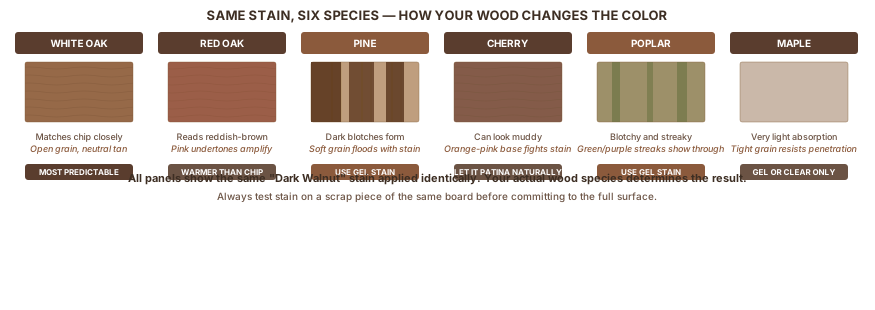
A stain color chip at the store shows the color on a controlled sample, not on your specific wood. Species, grain orientation, and surface prep all change the result.
How wood species changes stain color
| Species | Natural character | Takes stain how? | Key note |
|---|---|---|---|
| White oak | Neutral tan, open grain | Predictably, closest to chip | Best species for consistent stain color |
| Red oak | Pink/red undertones | Reads reddish even with neutral stain | Need a green-base or ash-tinted stain for true neutral brown |
| Pine | Yellow undertones, soft/hard bands | Blotchy without gel stain | See Staining Pine, Poplar, and Other Blotchy Woods |
| Cherry | Orange-pink, darkens with UV | Can look muddy | Many finishers let cherry patina naturally. Staining fights the wood's own color trajectory. |
| Poplar | Green/purple streaks | Blotchy, streaky | Gel stain strongly recommended |
| Maple | Very tight, light grain | Light, uneven absorption | Gel stain or clear topcoat only |
Test stain on a scrap piece of the same board first. This one step prevents the most common staining disappointment. For species comparison help, the best wood for staining guide covers porosity and predictability in more depth.
Interior stain color families
| Family | Popular colors |
|---|---|
| Warm browns | Dark Walnut, Special Walnut, Provincial, Early American, Golden Pecan |
| Gray and neutral | Weathered Oak, Classic Gray, Briarsmoke, Driftwood |
| Dark/statement | Ebony, Jacobean, Espresso |
| Light/natural | Golden Oak, Natural, Simply White |
Dark Walnut is Minwax's best-selling color: a deep brown with no red lean, consistent across species. Special Walnut is lighter and warmer. For a modern or farmhouse look, Weathered Oak and Classic Gray are the standard choices. Minwax's full color guide has 240+ options with on-wood swatches.
Deck stain color families
Exterior deck stains come in similar families: warm browns (Natural Cedar, Chestnut Brown, Harvest Gold), grays (Driftwood, Slate, Weathered Wood), and naturals (Teak, Natural). Gray tones have become popular on pressure-treated lumber, which has a naturally grayish cast that gray stains enhance rather than fight.
One rule holds for both interior and exterior: always test on a hidden area of your actual wood before committing to the full surface.
Part 4: Staining Pine, Poplar, and Other Blotchy Woods
Pine blotches. So does poplar, birch, alder, and sometimes cherry. It's not your fault. It's the wood's structure.
Why it happens
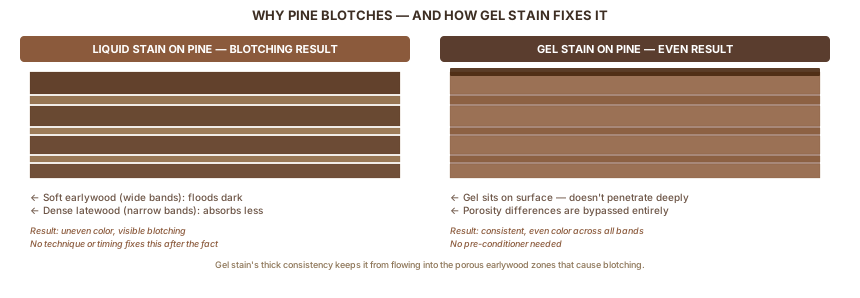
These species have uneven porosity: the soft early wood between growth rings absorbs stain faster than the dense late wood. Liquid stain floods the soft areas and creates dark blotches. No amount of careful application fixes it after the fact.
Three solutions, ranked by reliability
1. Gel stain (best for beginners)
Gel stain's thick consistency means it doesn't penetrate deeply, so uneven porosity doesn't cause uneven color. The Wood Whisperer's blotch control guide notes that gel stain eliminates the need for a pre-conditioner on blotch-prone species. Minwax Gel Stain and General Finishes Oil-Based Gel Stain are both widely available. Gel stain also handles end grain (which absorbs much faster than face grain) without creating the dark edges you'd get from a liquid stain.
Trade-off: fewer color choices, costs more per quart.
2. Shellac wash coat (reliable, two steps)
Apply a diluted shellac (1 lb cut, thinned to about 5% solids) to the bare sanded wood, let it dry, then sand lightly with 220-grit before staining. The shellac partially seals the high-absorption areas and evens out penetration. The color will be slightly lighter than without the wash coat, but it will be consistent.
3. Pre-stain wood conditioner (limited effectiveness)
Commercial conditioners like Minwax Pre-Stain Wood Conditioner work by temporarily slowing absorption. The problem: manufacturer directions require applying stain within 2 hours while the conditioner is still wet. Popular Woodworking's blotching article explains why this creates inconsistency. The wet conditioner mixes with the stain, and results vary depending on timing.
Use gel stain instead on pine or poplar. Skip the conditioner unless gel isn't an option for your specific color choice.
Part 5: How to Apply Stain in Five Steps
This is the basics. For a full technique guide, see how to refinish a table.
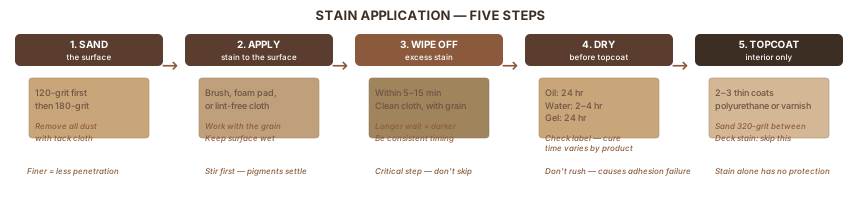
1. Sand the surface General Finishes' prep guide recommends sanding with 120-grit to remove rough spots or old finish residue, then finishing with 180-grit for furniture. For deck boards, 120–150 grit is the limit. Finer grits close the wood pores and reduce stain penetration. Remove all dust with a tack cloth or vacuum.
2. Apply stain Stir the can before use. Pigments settle. Apply a liberal coat with a brush, foam applicator, or lint-free cloth. Work with the grain. Keep the surface wet so you don't get lap marks.
3. Wipe off excess Wipe off the stain within 5–15 minutes using a clean, absorbent cloth. Wipe with the grain. The longer you leave it before wiping, the darker the final color. Keep your timing consistent across the whole piece. Don't let excess stain dry on the surface.
4. Let it dry
| Stain type | Dry to touch | Before topcoat/recoat |
|---|---|---|
| Oil-based liquid | 4–6 hours | 24 hours |
| Water-based liquid | 1–3 hours | 2–4 hours |
| Gel stain | 8–12 hours | 24 hours |
| Exterior/deck stain | 1–2 hours | 24–48 hours |
5. Apply topcoat (interior only) Stain alone provides no surface protection on furniture or floors. Apply polyurethane or another clear finish in 2–3 thin coats, sanding lightly with 320-grit between coats. See the applying polyurethane guide for full coverage. Most exterior deck stains include a built-in sealer. Check your product label before adding a separate topcoat.
Sources
Wood stain research drew from manufacturer technical documentation, independent consumer testing, and professional finishing resources.
- General Finishes: Oil vs. Water Stain Comparison — stain type mechanics and coverage data
- General Finishes: How to Prepare Wood for Stain — surface prep guidance
- Varathane Fast Drying Wood Stain — coverage (275 sq ft/qt) and dry time (1 hr)
- The Wood Whisperer: Blotch Control to Rule Them All — gel stain and blotch prevention
- Cabot: Choosing Stain Color and Opacity — four opacity levels for deck stain
- Consumer Reports: Best Wood Stains 2026 — three-year outdoor durability testing
- DeckStainHelp: Deck Stain Types and Testing — contractor-tested semi-transparent and solid stain lifespan data
- Popular Woodworking: How to Control Blotching — pre-conditioner limitations
- Minwax: Wood Stain Color Guide — 240+ interior color catalog with on-wood swatches