
Dark Stained Wood at a Glance
Getting a consistently dark finish on wood comes down to three choices: the right stain type for your species, surface prep that lets it absorb evenly, and knowing when a gel stain or dye will do what a penetrating stain won't.
Oak takes dark stain easily — sand to 120 grit and apply Minwax Jacobean or Varathane Dark Walnut, wiping after 5 minutes. Pine and maple blotch without prep, but the right approach (shellac washcoat for pine, TransTint dye stain for maple) fixes both.
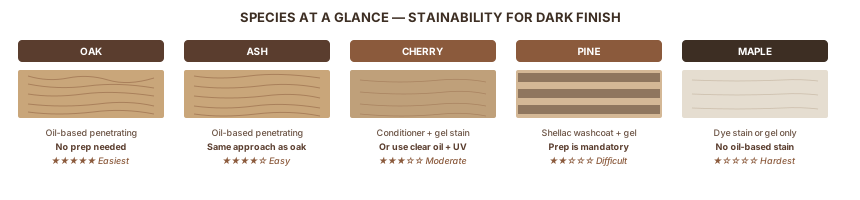
| Easiest species for dark stain | Red oak, ash |
| Hardest species | Hard maple, birch |
| Best product for blotch-prone wood | Gel stain (General Finishes, Old Masters) |
| Use conditioner on maple? | No — closes grain further; use gel or dye stain |
| Darkest standard stain colors | Minwax Ebony, Minwax Jacobean |
| Chemical darkening option | Iron acetate (vinegar + steel wool) |
In this guide:
- Why dark stain blotches and how to prevent it
- Stain types compared: oil, gel, dye, and chemical
- Species guide: which woods stain dark well
- Step-by-step: applying dark stain without mistakes
Part 1: Why Dark Stain Blotches and How to Prevent It
Dark stain exposes every absorption inconsistency that a lighter stain hides. Fix the absorption problem first and the stain result follows.
Earlywood, Latewood, and the Absorption Gap
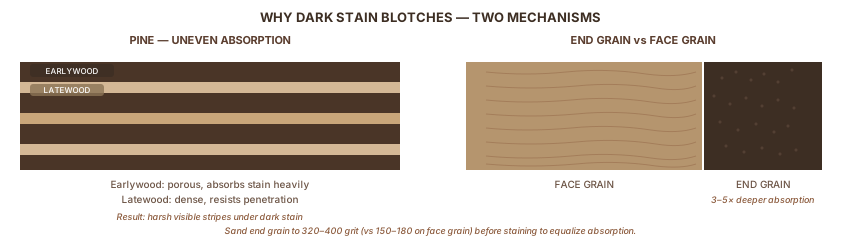
Wood grows in rings. Earlywood (formed in spring) is soft, porous, and open. It drinks stain aggressively. Latewood (formed in summer) is dense and tight. It resists penetration. In softwoods like pine, the contrast between these zones is extreme. Under a light stain, the variation barely shows. Under a dark walnut or Jacobean stain, the porous earlywood goes very dark and the dense latewood stays light, producing harsh stripes that follow the growth rings.
Dense hardwoods like maple and birch have a different problem. Their grain looks uniform, but mineral streaks and subtle grain reversals create spots of inconsistent porosity. Pigment finds those spots and highlights them as dark blotches.
End Grain Absorbs Far More Than Face Grain
The cells in wood run lengthwise. At the end of a board, those cells open to the surface like hollow tubes. End grain absorbs 3 to 5 times more stain than face grain. On a tabletop or box lid, end grain stains almost black while the rest of the surface is medium brown.
Two solutions: sand end grain to a much finer grit than face grain (320 to 400 grit versus 150 to 180) to close down the openings, or apply a thin wash of diluted shellac to the end grain before staining to partially seal it.
Pre-Stain Conditioner — When to Use It and When to Skip It
Minwax Pre-Stain Wood Conditioner and General Finishes Water-Based Pre-Stain Conditioner work by partially filling the open pores of wood, which equalizes how much stain each area absorbs. Apply with a rag or brush, let penetrate 5 to 15 minutes, wipe off excess, then apply stain within 2 hours.
Use conditioner on pine, alder, birch, poplar, and cherry. These are the soft or semi-porous woods that blotch with penetrating stains.
Do not use conditioner on maple. General Finishes states this explicitly: conditioner closes maple's already-tight grain further, making color adherence worse. For maple, use gel stain or dye stain instead.
Skip conditioner under gel stain. Gel stain's thick consistency prevents preferential pore saturation on its own. Adding conditioner reduces color depth without improving evenness.
The shellac upgrade. For the best results on pine with dark stains, a diluted shellac washcoat outperforms standard conditioner. Mix Zinsser SealCoat 1:1 with denatured alcohol, apply a light coat, let dry 30 to 60 minutes, sand lightly with 220-grit to knock down any nibs. The partially sealed surface accepts stain evenly without absorbing as much as raw pine. Apply gel stain over the top.
Part 2: Stain Types for Dark Wood
Picking the wrong stain type for your species causes most dark-finish failures. Each type behaves differently on wood for specific reasons.
Oil-Based Penetrating Stain
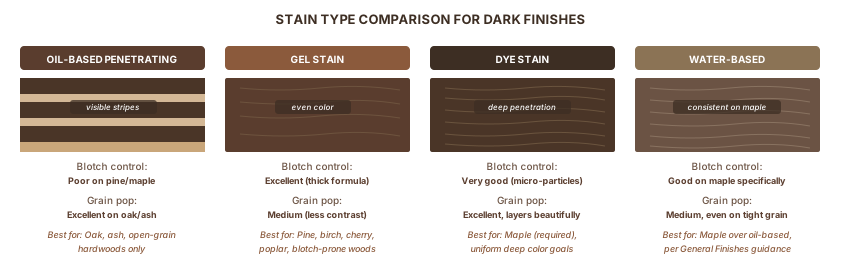
The standard product at every hardware store. Thin, solvent-based, penetrates deeply into open pores. Produces good grain pop on open-grain species (the contrast between pigment-filled pores and clear wood fiber). Dry time 2 to 8 hours.
Best for oak, ash, and other open-grain hardwoods. Avoid on pine, maple, and birch without prep work.
Darkest available colors: Minwax Jacobean (very dark brown, borderline espresso), Minwax Ebony (near-black), Varathane Dark Walnut.
Gel Stain
Gel stain has a thick, pudding-like consistency. It sits on the surface rather than rushing into open pores, so it can't preferentially saturate the wide-open earlywood zones the way a thin penetrating stain can. General Finishes describes gel stain as providing "superior color control" because the thickness limits differential penetration.
Use gel stain on pine, poplar, birch, and cherry, where penetrating stain causes blotching. It also adheres to furniture that already has a finish. A lightly scuffed surface accepts gel where a penetrating stain won't penetrate at all.
The tradeoff is less grain pop. The color is more uniform and slightly more opaque. If you want grain to visually jump out, gel stain is not the right choice for an open-grain wood like oak.
Gel stain also layers far better than penetrating stain. A second coat adds noticeable darkness. A second coat of penetrating stain on already-saturated wood does almost nothing.
Professional products: General Finishes Gel Stain Antique Walnut and Old Masters Gel Stain Dark Walnut are the most-cited choices among professional finishers for dark tones.
Dye Stain
Dye particles are microscopic, far smaller than the pigment particles in standard stains. They penetrate deep into wood fiber and bond chemically with the wood itself rather than sitting in pores. As Target Coatings explains, dye produces "a uniform shade finish" specifically because the particles soak into places pigments can't reach.
Dye stain is the best option for maple, where pigment stains fail. It also lets you build very deep color with multiple coats. Each application blends into the previous and deepens without the muddy look that multiple pigment stain coats produce.
Products: TransTint concentrated dyes (mix into water, denatured alcohol, or oil), Woodcraft Aniline Dyes. TransTint can also be mixed directly into water-based finishes to create a tinted topcoat, useful for color correction after staining.
Stain Type Comparison
| Stain type | Best species | Grain pop | Layers well | Key advantage |
|---|---|---|---|---|
| Oil-based penetrating | Oak, ash | High | Poorly | Grain contrast |
| Gel stain | Pine, birch, cherry | Medium | Well | Blotch control |
| Water-based | Maple (specifically) | Medium | Moderately | Even on tight grain |
| Dye stain | Maple, uniform color goals | High | Excellent | Deepest color, no grain loss |
| Iron acetate (ebonizing) | Oak, walnut, cherry | None (chemical) | N/A | Near-black from tannin reaction |
Part 3: Species Guide
The same dark stain produces different results on every species.
Oak — The Most Forgiving
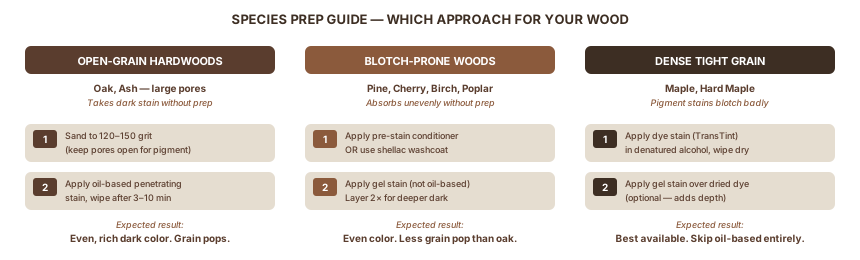
Red oak and white oak have large, open pores that accept dark stain evenly and predictably. Red oak produces a rich warm brown with pronounced grain contrast; white oak produces a slightly more muted result. Both are excellent candidates for dark finishing with penetrating oil stain.
Sand to 120 to 150 grit. No conditioner needed. Minwax Jacobean and Varathane Dark Walnut both produce deep, clean results on oak. Practice dark staining here before moving to more difficult species.
Ash behaves similarly to oak and takes the same approach.
Pine — The Hardest Softwood
Dark stain on unprepared pine looks gray-striped, not warm brown. The earlywood absorbs so much more than the latewood that stripes become stark under dark stain. Minwax Dark Walnut on pine goes grayish. Pine's yellow undertones fight the brown pigment and produce no warmth.
Prep is mandatory: conditioner plus 150-grit sanding, or a shellac washcoat plus gel stain for the most consistent results. Even with perfect prep, pine won't look like oak. Some natural variation remains. For a truly dark, even finish on pine, gel stain outperforms penetrating stain.
Maple — The Densest Challenge
Hard maple is the hardest domestic hardwood to stain dark uniformly. Its tight grain has inconsistent micro-porosity from mineral streaks and subtle grain reversals. Pigment finds these spots and highlights them.
Skip conditioner. Sand to 220 grit. Use gel stain or dye stain, not oil-based penetrating stain. General Finishes recommends water-based stain specifically over oil-based on maple because water-based formulas penetrate more evenly through maple's tight grain.
For the best dark results on maple: apply a dye stain first (TransTint in denatured alcohol, wipe on and let dry fully), then apply a coat of gel stain over it. The dye penetrates uniformly; the gel adds color and covers remaining variation.
Cherry — Let Time Do the Work
Cherry carries a warm reddish-brown tone that darkens significantly with UV exposure. A dark stain fights this natural color and often looks muddy rather than rich. Cherry also absorbs unevenly; conditioner helps but doesn't fully solve the problem.
The better approach: use a clear penetrating oil finish (Rubio Monocoat, Osmo Polyx) and let UV darkening do the work over 6 to 12 months. Cherry darkens from pale tan to deep reddish-brown on its own, and it looks far better than a stained result.
If you must stain cherry darker: use conditioner first, accept that some variation will remain, and test on scrap from the same board before committing to the project.
Walnut — Usually Doesn't Need Stain
Walnut ranges from chocolate brown to near-black, with natural color variation in the grain. Dark stain on walnut mostly obscures the natural figure that makes walnut worth buying.
Use a clear penetrating oil (Rubio Monocoat, Osmo, or Danish oil) to protect while showing the grain. If you're evening out the lighter sapwood, use a dye stain rather than a pigment stain. Dye blends color without flattening grain.
RELATED: Best Wood for Staining Which species take stain well and which to avoid.
Part 4: Applying Dark Stain
Surface Prep
Final sanding grit matters more for dark stains than for light ones. Finer sanding closes pores and produces lighter stain. Coarser sanding leaves pores open for more pigment.
For maximum dark on open-grain woods (oak, ash): stop at 120 to 150 grit. The open pores absorb more pigment, and grain contrast is more pronounced.
For blotch-prone species (pine, maple, birch): sand to 180 to 220 for a consistent surface, then follow with conditioner or gel stain as described in Part 1.
For end grain: sand to 320 to 400 grit to close down the cell openings. Without this, end grain will be dramatically darker than the face.
After sanding: remove all dust with compressed air, then wipe with a tack cloth. One missed dust particle under stain produces a visible nib.
If using water-based stain, pre-raise the grain. Wipe the surface with a damp cloth, let dry completely, then sand with 220-grit to knock down the raised fibers. Skip this step and the water-based stain raises the grain itself, producing a rough surface under the finish.
Applying Penetrating Stain
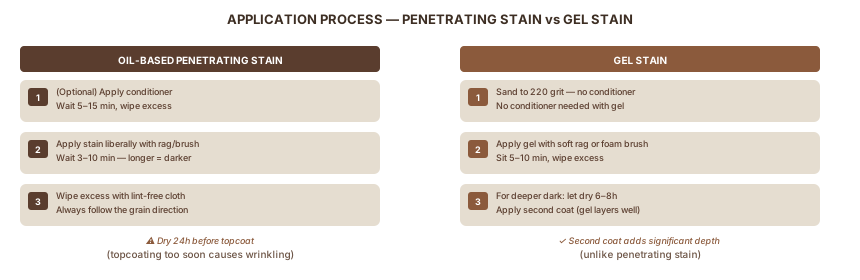
- If using conditioner, apply it first, wait 5 to 15 minutes, wipe excess, proceed within 2 hours.
- Apply stain liberally with a brush, rag, or foam brush. Work in sections of 2 to 3 square feet. Don't try to cover a large surface at once.
- Let the stain penetrate 3 to 10 minutes. Longer penetration time equals darker result. Don't let it get tacky.
- Wipe excess with a lint-free cloth, always following the grain direction. Work quickly and consistently.
- Check from a raking angle (low light source across the surface) to spot missed areas or heavy buildup.
- Let dry 6 to 8 hours before a second coat or topcoat.
Applying Gel Stain
- Sand to 220 grit. No conditioner needed.
- Apply gel stain with a soft rag, foam brush, or chip brush, working in the direction of the grain.
- Work in sections and don't flood the surface.
- Let sit 5 to 10 minutes.
- Wipe excess with lint-free cloth, following the grain.
- Dry 6 to 8 hours before a second coat. Two coats of Old Masters Dark Walnut gel stain look significantly darker than one.
- For maximum adhesion on the second coat, lightly scuff the first with 320-grit before applying.
Going Darker Than the First Coat
Most people expect a second coat of penetrating stain to work like a second coat of paint. It doesn't. Once wood is partially saturated, the second coat mostly sits on the surface and wipes off. You might get 10 to 20 percent more darkness. Usually not enough to matter.
Options that work:
Wet-on-wet: Apply the second coat while the first is still wet, before the thinner evaporates. Both coats penetrate together. As Bob Flexner explains in Woodshop News: "As the thinner evaporates, the ratio of colorant to liquid increases." That's a concentrated stain effect without a second product.
Gel stain over dried penetrating stain: Gel sits on the sealed surface and builds color without needing to penetrate. Apply after the first coat dries (6 to 8 hours). This works as a recovery strategy when the penetrating stain result wasn't dark enough.
Tinted topcoat: Mix TransTint dye into water-based finish and apply as a toned coat. This adds darkness uniformly over an already-stained surface and lets you fine-tune the final color without re-sanding.
Common Mistakes
Wiping too fast: The stain needs time to penetrate. Wiping immediately gives a light, flat result.
Not wiping at all: Stain left on the surface without wiping gets tacky and never fully cures. It traps under the topcoat, stays soft, and causes adhesion failure.
Topcoating too soon over oil-based stain: Oil-based stains need 24 hours before a topcoat. Apply too early and the topcoat traps solvent that needs to evaporate, causing wrinkling or adhesion failure.
Using the wrong grit: Sanding to 220 before applying a penetrating stain on oak produces a noticeably lighter result than stopping at 150. Match your final grit to the darkness you want.
RELATED: Can You Stain Over Stain? When re-staining works and when it doesn't.
Part 5: Ebonizing and Chemical Darkening
Standard stain tops out around dark chocolate brown. Ebonizing with iron acetate produces blue-black to charcoal tones that no pigment stain can match, and it penetrates deeper than any surface-applied product.
Iron Acetate (Vinegar + Steel Wool)
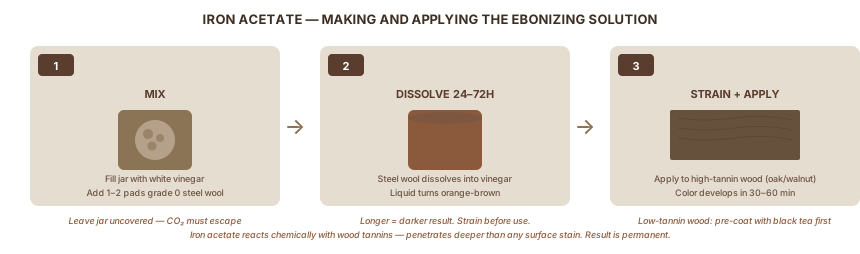
Iron acetate reacts with the natural tannins in wood to form dark phenolate complexes. Springer Nature research confirmed that iron acetate prepared from steel wool produces stable color that penetrates deeper than surface stains. This is a chemical change in the wood, not a coating on top of it.
Making the solution:
- Fill a glass jar with white vinegar
- Wipe 1 to 2 pads of grade 0 steel wool with acetone or denatured alcohol to remove any oil
- Drop steel wool into the vinegar and leave the jar uncovered or loosely covered. CO2 bubbles need to escape, and sealed jars can build pressure.
- Wait 24 to 72 hours until the steel wool dissolves and the liquid turns orange-brown
- Strain through cheesecloth or a coffee filter before use
Application on high-tannin species (oak, walnut, cherry): Apply directly with a natural-bristle brush, working with the grain. The wood darkens almost immediately; the final shade develops over 30 to 60 minutes. Wear gloves.
Application on low-tannin species (maple, pine, birch): First coat the wood with strong quebracho bark tea or black tea, let dry completely, then apply iron acetate. The tannin pre-load produces significantly darker results.
According to Fine Woodworking's ebonizing guide, the steel wool and vinegar recipe gives "depth and darkness to heavy-tannin woods like walnut and oak" that stains can't replicate. Finish with penetrating oil or wax. Heavy film-building topcoats can interfere with the reactive color.
For a full step-by-step on the ebonizing process, see the dedicated ebonizing wood guide.
Ammonia Fuming (White Oak)
Ammonia vapors react with the natural tannic acid in white oak to produce warm gray-to-brown tones, the signature finish of Arts & Crafts furniture. This requires a sealed tent (plastic sheeting), open containers of 26% ammonia, and full PPE (goggles, acid-rated respirator). It works only on high-tannin species.
Part 6: Topcoat Over Dark Stain
The topcoat affects the final color, especially with very dark stains.
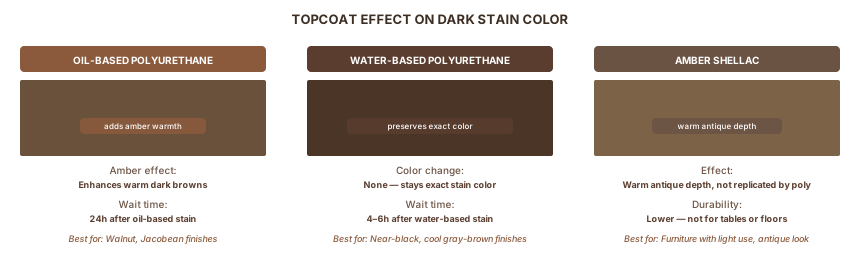
Oil-based polyurethane adds amber warmth that enhances warm dark browns like walnut and Jacobean. The yellowing people warn about only matters over white or very light stains. Over dark stain, amber adds perceived depth. Apply 2 to 3 coats, 4 to 6 hours between coats. Let oil-based stain dry 24 hours before applying.
Water-based polyurethane preserves the exact stain color without warming it. Best choice if you want a cool gray-brown or near-black to stay that way. General Finishes High Performance Topcoat is the professional standard: clear, hard, and non-yellowing. Let oil-based stain dry 24 hours before applying water-based poly; let water-based stain dry 4 to 6 hours.
Amber shellac over dark stain creates a warm, antique depth that poly doesn't replicate. Less durable than polyurethane, so it's not the right choice for dining tables or floors. For furniture that won't see hard use, it's a beautiful option.
With any topcoat over dark stain: apply thin coats. Heavy coats pool and dry with uneven color. Sand between coats with 320-grit to maintain a flat surface.
FAQ
Why does dark stain look blotchy on pine?
Pine has a wide absorption gap between earlywood (porous spring growth) and latewood (dense summer growth). Dark pigment floods the soft bands and barely touches the hard ones, creating gray stripes. Fix it with a shellac washcoat — Zinsser SealCoat diluted 1:1 with denatured alcohol, dried 30 to 60 minutes, sanded lightly with 220-grit — then apply gel stain rather than penetrating stain.
How do I stain maple dark without blotching?
Skip oil-based penetrating stain entirely on hard maple. Apply TransTint dye stain mixed in denatured alcohol — wipe on and let dry 30 minutes — then add a coat of gel stain for additional depth. Dye particles are small enough to penetrate maple's tight grain evenly where pigment stains pool and blotch. Conditioner makes this worse on maple, not better.
Why doesn't a second coat of stain make the wood much darker?
Once wood is partially saturated, a second coat of penetrating stain mostly sits on the surface and wipes off — 10 to 20 percent more color at best. To actually deepen the result, apply gel stain over the dried first coat (gel layers well), or mix TransTint dye into a water-based topcoat and apply it as a toned finish coat over the sealed surface.
Do I need pre-stain conditioner before dark stain?
Only on blotch-prone species — pine, alder, birch, and cherry. Apply Minwax Pre-Stain Wood Conditioner, wait 5 to 15 minutes, wipe excess, then stain within 2 hours. Skip conditioner on maple (it closes the already-tight grain and worsens color adhesion) and skip it under gel stain — gel's thick consistency controls blotching on its own.
Sources
Research for this guide drew on manufacturer technical documentation, practitioner guides, and peer-reviewed research on wood finishing chemistry.
- General Finishes: Why can't I get a dark stain color on Maple — maple-specific staining advice and conditioner rule
- General Finishes: How to Prepare Wood for Stain — sanding grit and prep sequence
- General Finishes Oil Base Gel Stain — gel stain mechanics and application
- Old Masters Gel Stain — application instructions, dark walnut gel stain
- The Wood Whisperer: Blotch Control to Rule Them All — shellac washcoat technique and blotch mechanisms
- Target Coatings: Understanding Dye vs. Pigment Stains — dye stain penetration mechanics
- Fine Woodworking: Ebonizing Wood with Steel Wool and Vinegar — iron acetate technique
- Springer Nature: Iron acetate solution for ebonizing wood — scientific study on iron acetate penetration depth
- Bob Flexner: Ironclad Rules for Finishing — colorant ratio, wet-on-wet technique
- General Finishes High Performance Topcoat — water-based topcoat specification