
QUICK ANSWER: Ebonizing isn't black stain. It's a chemical reaction between iron acetate (steel wool dissolved in white vinegar for 48 hours) and the tannins naturally in the wood. The reaction creates a permanent black color INSIDE the fibers — grain texture stays visible because there's no surface film. High-tannin species like white oak, walnut, and cherry turn deep black on direct application. Low-tannin species like maple, pine, and poplar go gray and need a pre-treatment of strong black tea (a tannin source) before the iron acetate.
Ebonizing Wood at a Glance
Ebonizing wood is a chemical finishing process in which iron acetate reacts with naturally occurring tannins in wood fibers to produce ferric tannate — a permanent black compound that penetrates the wood rather than coating the surface. High-tannin species like oak and walnut turn deep black with direct application. Low-tannin species like maple go gray unless you pre-treat the surface with a strong tea solution to introduce tannins before applying the iron acetate. You can make the solution at home by submerging steel wool in white vinegar for about 48 hours.
| Active ingredient | Iron acetate (ferrous/ferric acetate) made from steel wool + white vinegar |
| Color mechanism | Ferric tannate: a permanent chemical reaction inside the wood |
| Best species | Oak, walnut, cherry (naturally high in tannins) |
| Low-tannin fix | Apply strong black tea or quebracho tea first, then iron acetate |
| Solution prep time | 48–72 hours; color appears within 5 minutes of application |
| Topcoat options | Oil (richer black), water-based poly (durable), dewaxed shellac (vintage) |
In this guide:
- The iron-tannin reaction in plain terms
- Species guide: which woods turn black and which turn gray
- Making iron acetate and applying it step by step
- Troubleshooting gray, streaky, or chalky results
Part 1: What Separates Ebonizing from Black Stain
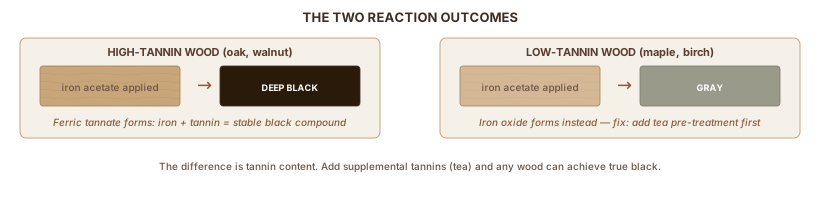
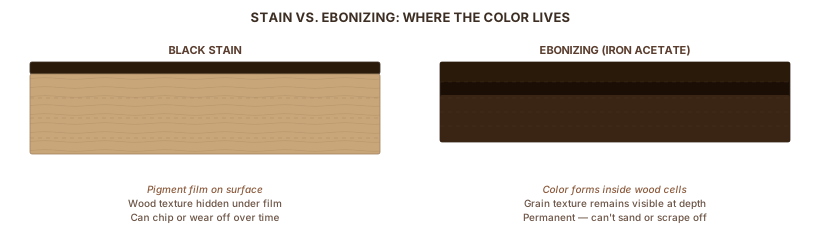
Black stain deposits pigment on wood's surface. Ebonizing creates a chemical reaction inside the wood fibers. That difference shows up immediately when you run your hand across an ebonized oak board: the grain pops in three dimensions, with the ring-porous texture visible at depth rather than buried under a film of color.
The technique isn't new. In the 19th century, when genuine ebony was no longer plentiful enough to satisfy demand for mass-market furniture, makers turned to chemical ebonizing to produce the same look on oak, walnut, and cherry. Victorian piano keys, library furniture, and decorative objects: many were ebonized softwoods and hardwoods, not actual ebony.
The result is also lightfast. The ferric tannate compound that forms is chemically stable. It won't fade the way organic dyes do. On the right species, a properly ebonized surface still looks black after decades.
Part 2: The Chemistry: Iron Meets Tannin
Tannins are polyphenolic compounds that occur naturally in varying amounts in wood. When iron acetate (a solution of iron dissolved in acetic acid, i.e., vinegar) contacts those tannins, they react to form ferric tannate: a deep blue-black amorphous compound that precipitates within the wood cells.
More tannins means more reaction sites and a darker result. When there aren't enough tannins for the full reaction, iron oxide deposits form instead. They look gray or brown, not black. That's why maple goes gray and oak goes black.
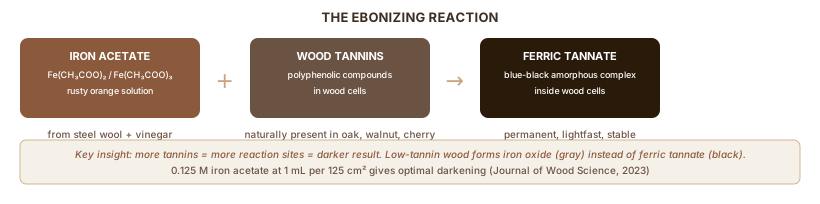
In a 2023 study published in the Journal of Wood Science, researchers found that optimal darkening on cherry and red oak required a 0.125 M iron acetate solution applied at about 1 mL per 125 cm² of wood surface. Home-mixed solutions approximate this concentration well when you use the proportions below.
The reaction is fast: color develops within one to five minutes of application. You can watch the wood darken as the iron finds the tannins. On oak, it's striking. On maple with no pre-treatment, it's pale gray that deepens slightly and stops.
Part 3: Which Woods Turn Black
The practical rule: high-tannin woods blacken with iron acetate alone. Low-tannin woods go gray or brown and need a tea pre-treatment. Ash is the notable exception. It has almost no tannins despite being an open-grained hardwood, but its ring-porous grain makes stunning ebonized pieces when you add tannins artificially. The [USDA Forest Products Lab Wood Handbook](https://www.fpl.fs.usda.gov/documnts/fplgtr/fpl_gtr190.pdf) lists tannin content alongside other extractive chemistry for the major commercial species.
| Species | Tannin Level | Iron Acetate Alone | With Tea Pre-treatment |
|---|---|---|---|
| White oak | Very high | Deep black | Deeper black |
| Red oak | Very high | Deep black | Deeper black |
| Walnut | High | Deep black | Deeper black |
| Cherry | Moderate-high | Dark gray-black | True black |
| Chestnut | Very high | Deep black | Deeper black |
| Ash | Very low | Gray | Deep black |
| Maple | Very low | Light gray | Dark gray to black |
| Birch | Low | Gray-brown | Dark gray |
| Pine | Very low | Minimal darkening | Dark gray to black |
| Poplar | Low | Gray | Dark gray |
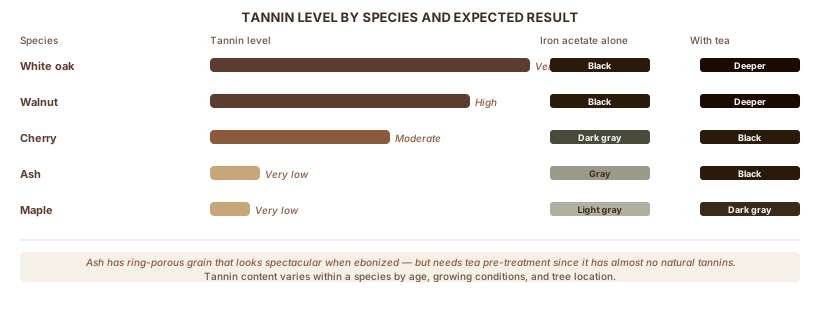
Tannin content varies even within a species based on growing conditions, age, and the part of the tree. A board cut from an old-growth white oak reacts more vigorously than one from a fast-grown plantation tree.
Do all your machining, routing, and profile work before you ebonize. The iron tannate reaction affects only the wood surface. Any cutting after ebonizing removes the color. Shaped edges and routed profiles must be done first.
Part 4: Making Iron Acetate at Home
You need two things: fine steel wool and white distilled vinegar.
What you'll need:
- 0000 or #1 steel wool (one pad, roughly 4 g)
- White distilled vinegar (about 1.5 cups / 340 mL)
- Mason jar or other non-metallic container (glass or plastic)
- Lacquer thinner or warm soapy water
- Coffee filters for straining
- Squeeze bottle or small jar for storage
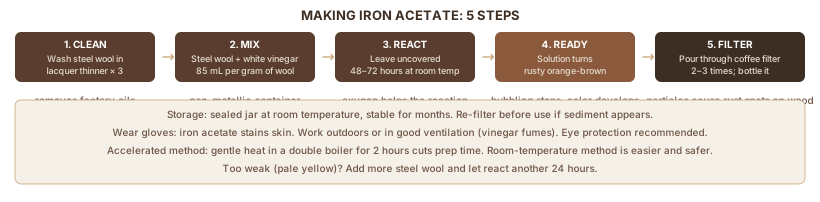
Preparation:
Factory steel wool has oils on it that slow the reaction. Wash the pad two or three times in lacquer thinner and let it dry completely. Alternatively, scrub in warm soapy water, rinse well, and dry. Skip this step and your solution takes longer to develop.
Mixing and reaction:
Put the cleaned steel wool in your container. Add the vinegar — use about 85 mL per gram of steel wool, per the Springer research. For one standard pad (about 4 g), that's roughly 1.5 cups of vinegar.
Leave the container uncovered. Oxygen helps the reaction. The mixture will bubble and feel warm for the first several hours. That's the acetic acid dissolving the iron. Leave it at room temperature for 48–72 hours.
When it's ready, the solution looks rusty orange-brown. Filter it through coffee filters into a clean squeeze bottle, running it through two or three times to catch all the steel particles. A particle in the solution will leave a rust spot on your wood.
Storage: A sealed jar at room temperature keeps for months. Re-filter before each use if you see any sediment.
Part 5: How to Apply Iron Acetate
For high-tannin woods (oak, walnut, cherry):
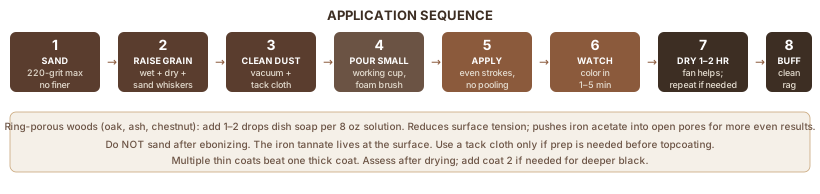
- Sand to 220-grit. Don't go finer. 320-grit or above closes the wood pores and blocks penetration. Stop at 220.
- Raise the grain. Wipe the surface with water, let dry, then sand the whiskers with 220-grit. This prevents post-ebonizing grain-raising that looks rough under topcoat.
- Remove dust thoroughly. Vacuum and tack cloth. Sanding dust sitting in open pores interferes with the reaction.
- Grab a dedicated foam brush. Never use the same brush for both the tea solution and the iron acetate. Cross-contamination causes unwanted reactions on the wood surface.
- Pour into a small working container. Don't dip your brush into the main batch. Any cross-contamination will slowly degrade the solution.
- Apply iron acetate in even strokes. Watch the color develop over the next one to five minutes. Work steadily. Don't let the solution pool at edges or drip.
- For ring-porous woods (oak, ash, chestnut): add one or two drops of dish soap per 8 oz of solution. The surfactant reduces surface tension and pushes the iron acetate into the open pores for more even results.
- Let dry 1–2 hours. A fan helps. The surface should feel completely dry and stable.
- Assess. If you want darker results, apply a second coat the same way.
- Buff with a clean rag to remove any chalky surface deposits before topcoating.
Don't sand after ebonizing unless you have to fix a problem. The iron tannate lives close to the surface, and aggressive sanding removes it. If the surface feels rough, a light wipe with a tack cloth is enough.
Part 6: Boosting Low-Tannin Woods with Tea
Low-tannin woods go gray because there aren't enough tannins for the iron to react with. The fix is simple: add tannins artificially, using tea.
Black tea method (easy, works for most species):
- Steep 8–10 black tea bags in 2 cups of hot water for 30 minutes
- For more tannins, squeeze the bags and leave overnight
- Apply the tea generously with a foam brush
- Let dry completely (1–2 hours)
- Sand lightly with 220-grit to knock down raised grain
- Apply iron acetate over the dried tea coating
Quebracho tea method (stronger, best for maple and birch):
Timber Biscuit Woodworks uses quebracho bark powder, extracted from the quebracho tree, which contains far more tannins than black tea leaves. Mix 1 part quebracho powder to 8 parts water, boil briefly, strain, and apply the same way. With this pre-treatment, even maple turns genuinely black.
The sequence for low-tannin wood:
- Apply tea (black tea or quebracho), then let dry
- Sand lightly to remove raised grain
- Apply a second tea coat, then let dry
- Apply iron acetate, then let dry
- Assess darkness; apply another iron acetate coat if needed
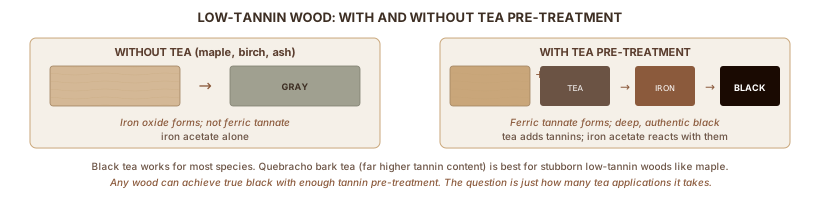
Any wood species can achieve true black with enough tannin pre-treatment. The question is just how much tea it takes.
Part 7: Choosing a Topcoat
Ebonizing creates color but no protection. Apply a topcoat once the surface is dry. The choice affects how the black looks, not just how long it lasts.
| Topcoat | Appearance | Durability | Best For |
|---|---|---|---|
| Oil (danish, tung, boiled linseed) | Richer, deeper black; matte-satin | Medium | Natural aesthetic, decorative objects |
| Dewaxed shellac | Warm vintage tone; medium sheen | Medium | Period furniture, traditional pieces |
| Water-based polyurethane | Neutral, clean black; medium-high sheen | High | Furniture, high-wear surfaces |
| Paste wax | Natural matte; minimal film | Low | Display objects, low-traffic pieces |
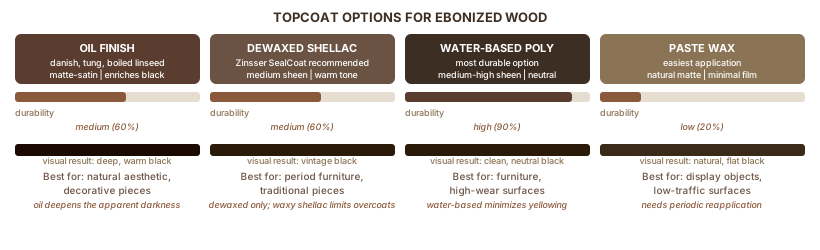
Oil finishes darken the ebonized surface further. The oil enriches the black rather than sitting neutrally over it. If you want depth and warmth, oil is the right call. See boiled linseed oil for application details.
For durability on furniture, polyurethane protects without visually altering the color much. Use water-based poly to minimize yellowing over the black surface.
Use dewaxed shellac only. Zinsser SealCoat is the standard dewaxed option. Waxy shellac limits what you can put over it. If you're unsure, check the label or use SealCoat.
No special compatibility issues arise between iron tannate and standard finishes. The ebonized surface is stable. Standard finishing rules apply.
Part 8: Troubleshooting: When the Black Won't Come
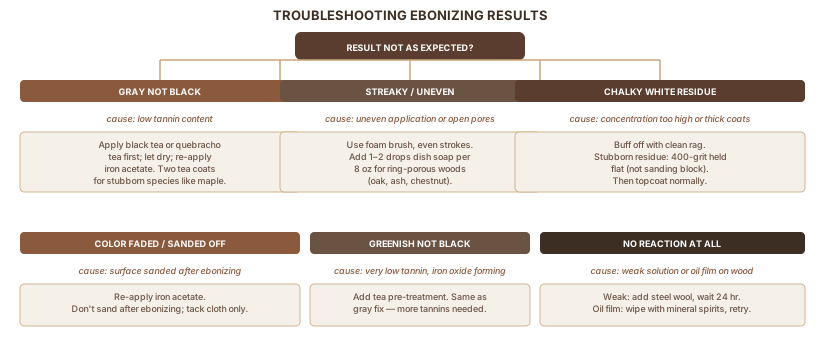
Wood turned gray, not black
Low tannin content. The iron reacted with whatever tannins were present, but not enough for true ferric tannate. Apply black tea or quebracho tea, let dry, then re-apply iron acetate. For stubborn species like maple, two tea applications before the iron acetate often make the difference.
Streaky or uneven result
Two causes: uneven application, or open pores resisting penetration. Use a foam brush (not bristle), work in even strokes, and don't let the solution pool at edges. For ring-porous woods, add one to two drops of dish soap to the solution. It breaks surface tension and pushes iron acetate into the pores. Florida School of Woodwork also recommends a few drops of denatured alcohol for the same effect.
Chalky white residue after drying
Iron acetate concentration is high, or you applied too many thick coats. Buff the residue off with a clean rag. For stubborn residue, a light pass with 400-grit sandpaper held flat (not a sanding block, which is too aggressive) before topcoating removes it without removing the color underneath.
Color rubbed off when you sanded
Ebonizing only colors the surface wood fibers. Sanding removes them. If you sanded too aggressively between the ebonizing and the topcoat, re-apply iron acetate. Next time, skip sanding after ebonizing. Use a tack cloth only.
Wood turned greenish, not black
Very low tannin content, with the iron forming iron oxide (green-gray) instead of iron tannate. This is the same problem as gray, just more pronounced. Add tea pre-treatment first and the reaction shifts from iron oxide to iron tannate.
Solution not reacting at all
Two possibilities: the iron acetate is too weak, or there's an oil film on the wood. For weak solution, add more steel wool and let react another day. For oil film, wipe the wood surface with mineral spirits, let flash off completely, then apply. Machine oil from routing or sawing sits in the pores and blocks penetration.
Sources
Research for this guide drew on a peer-reviewed study, maker documentation from working woodworkers, and community troubleshooting resources.
- Journal of Wood Science 2023 (Springer Nature) — optimal iron acetate concentration, application rate, and chemistry of the tannin-iron reaction
- Timber Biscuit Woodworks — quebracho tea method, species-specific results including maple
- Florida School of Woodwork — complete recipe, application steps, and surfactant tips
- MakerDesignLab experiment — controlled testing of seven ebonizing approaches on birch plywood
- Woodworkers Source — ash-specific guidance and alternative methods
- WoodWorkers Guild of America — practical overview
- Wikipedia: Ebonising — history and chemistry summary
- Sawmill Creek community forum — real-world troubleshooting