
How to Remove Epoxy at a Glance
Cured epoxy doesn't dissolve. Heat softens it at around 180°F; scrapers remove it. Solvents work on fresh epoxy and thin residue, not on the fully cured bulk. Your method depends almost entirely on how long ago the epoxy was applied.
| Difficulty | Beginner |
| Time | 5 min (fresh squeeze-out) to 1–3 hours (large cured area) |
| Primary tool — cured epoxy | Heat gun + cabinet scraper |
| Primary tool — fresh or gelling | Sharp chisel or plastic scraper |
| Skin removal | Waterless hand cleaner with pumice. Never solvents. |
| Solvents on fully cured epoxy | Minimal effect. Use heat for bulk removal. |
In this guide:
- Remove fresh or gelling epoxy
- Remove fully cured epoxy with a heat gun
- When solvents actually help
- Skin, fabric, and metal
Part 1: Two Things to Know Before You Start
Most epoxy removal failures come from one mistake: treating a cured epoxy problem with a solvent. Acetone is the first thing people reach for. It doesn't work on cured epoxy. Knowing why points you to the right approach without wasting an afternoon.
Cure stage determines your method
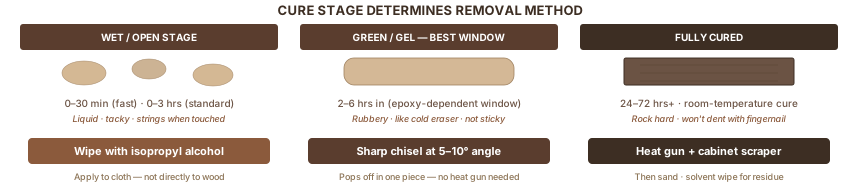
Epoxy passes through three stages as it cures, and each calls for a different removal approach:

| Stage | Timing | Feel | Best removal method |
|---|---|---|---|
| Wet / open | 0–30 min (5-minute epoxy); 0–3 hrs (standard) | Liquid, tacky, strings when touched | Wipe with isopropyl alcohol on a paper towel |
| Green / gel | 30 min–12 hrs (epoxy-dependent) | Rubbery like playdough, no longer sticky | Sharp chisel at low angle — pops off clean |
| Fully cured | 24–72 hrs+ | Rock hard, won't dent with a fingernail | Heat gun + scraper, then sand |
The green stage is the window woodworkers miss most often. Don't wipe squeeze-out while it's liquid; you push it into the grain. Wait two to six hours for it to gel, and a chisel pops it off in one piece. More on that in Part 2.
Solvents don't dissolve cured epoxy
Epoxy cures through cross-linking: a chemical reaction that creates an irreversible three-dimensional polymer network. As Ecolink's technical reference explains, common solvents including acetone, lacquer thinner, and isopropyl alcohol can't break those bonds at room temperature. They work on wet and partially cured epoxy. On fully cured epoxy, extended contact softens the surface slightly and helps with residue cleanup. They don't remove the bulk.
Most articles about "epoxy removers" blur this distinction. You'll waste time soaking a cloth in acetone and watching nothing happen. For cured epoxy, heat is the tool. For fresh and gelling epoxy, alcohol gets you there fast.
Part 2: Remove Epoxy While It's Still Soft
Liquid stage: catch it in the first few minutes
While epoxy is still liquid, clean up most of it with a plain paper towel. Fold it, press down, lift. Don't rub. Rubbing smears it.
For residue after blotting, apply isopropyl alcohol (70% or higher) to a clean cloth and wipe the area. Don't pour the alcohol directly onto wood; you risk driving solvent and uncured epoxy into the grain. Apply to cloth, wipe the surface, repeat with a fresh section of cloth until it comes clean.
Denatured alcohol works faster than isopropyl if you have it. Acetone works too, but it strips most wood finishes on contact. Test it on an inconspicuous spot first.
Green stage: the best moment to remove squeeze-out
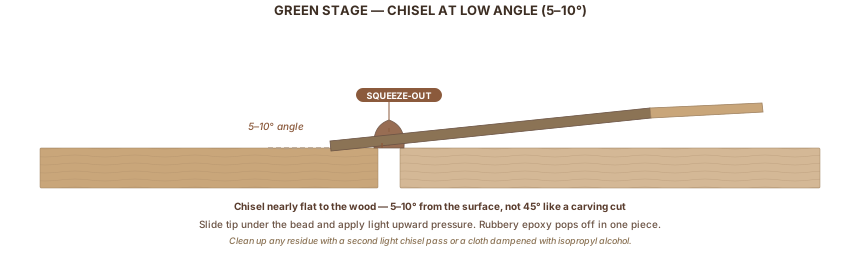
Two to six hours after glue-up, the epoxy firms up into a rubbery consistency. It won't stick to your fingers. Press on it and it feels like cold eraser rubber. This is the green stage, and it's the easiest time to remove squeeze-out from any joint.
According to woodworkers on the Sawmill Creek forum, a freshly sharpened chisel held at a low angle makes fast work of cleaning up this stage cleanly and completely:
- Get a sharp chisel. A dull one drags.
- Hold it nearly flat: 5 to 10 degrees off the wood surface. Think scraper, not carving tool.
- Slide the edge under the bead of epoxy at the glue line.
- Apply light pressure. The bead pops off in one piece.
- A second pass with the chisel or a cloth dampened with isopropyl cleans the residue.
Wiping liquid epoxy smears it into the grain. Sanding the fully cured bead takes a heat gun and risks cutting through veneer. The green stage avoids both problems. Set a timer and come back. Don't miss the window.
Part 3: Remove Fully Cured Epoxy with Heat
When epoxy has fully hardened, heat is your primary tool. Every cured epoxy has a glass transition temperature (Tg): the point where it shifts from a hard, glassy solid to a rubbery state you can scrape. According to the Fiber Optic Center's guide to glass transition in epoxies, room-temperature-cured woodworking epoxies typically transition in the 120–180°F range (50–80°C). Get the surface to roughly 180°F and the epoxy softens enough to scrape cleanly.
What you need
- Heat gun: Variable temperature, 1,200–1,500W. Any brand works. The goal is moderate, even heat on the surface, not a specific wattage.
- Cabinet scraper: The best tool for flat areas. Works like a miniature plane, removing thin ribbons of softened epoxy with complete control. Much less risk of gouging than a putty knife. Lee Valley carries single-profile and set options purpose-built for fine work.
- Metal putty knife or chisel: For thick globs, edges, and corners.
- Plastic scraper or old credit card: For delicate surfaces where scratches would matter.
- Safety glasses: For heat and sanding steps.
- N95 respirator: Required for sanding (see below).
Heat gun technique: step by step
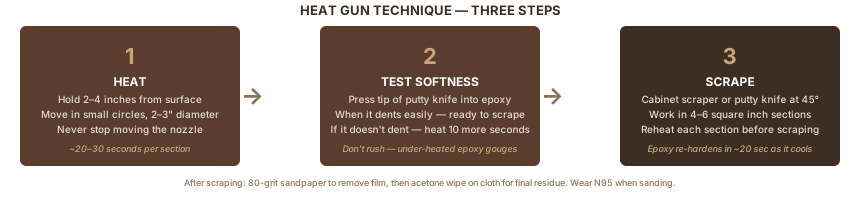
- Make sure the surface is dry. No solvents on or near the area. Heat plus flammable vapors is a fire hazard. Let any solvent evaporate fully before picking up the heat gun.
- Set the heat gun to medium-high. Hold it 2–4 inches from the surface.
- Move the nozzle in small circles, about 2–3 inches in diameter. Never stop moving.
- After 20–30 seconds, press the tip of a putty knife into the epoxy. When it dents easily, it's ready to scrape.
- Use the scraper at roughly 45 degrees. Work quickly. The epoxy re-hardens in about 20 seconds as it cools.
- Work in 4–6 square inch sections. Reheat each section before scraping.
- Watch the wood surface. If it starts to darken, stop. That's scorching.
As Epoxyworks notes in their guide to scrapers, a cabinet scraper offers precise depth control that a putty knife can't match. Lean it forward to take a heavier cut, ease off for a finer pass. It removes thin ribbons with every stroke, like a small plane on softened material.
Cleaning up the residue after heat scraping
Heat scraping leaves a thin epoxy film. Two steps finish the job:
Work the area with a cabinet scraper or 80-grit sandpaper to remove most of it mechanically.
Then apply acetone to a cloth (not directly to the wood) and wipe the area. On thin residue over a mostly clean surface, acetone is effective. It's bulk removal where it fails.
Sanding for complete removal
- Start at 80-grit if the surface is rough or epoxy is still visible.
- Start at 120-grit if only light residue remains.
- Progress: 80 to 120 to 150 to 180 to 220.
- Sand with the grain.
Wear an N95 respirator when sanding epoxy. WEST SYSTEM warns that sanding partially cured epoxy creates dust that causes sensitization: a type of allergic reaction that worsens with each exposure. This risk applies even to epoxy sanded weeks after application, since room-temperature cure takes longer than it appears. An N95 is the minimum. A half-mask respirator with P100 cartridges is better for extended work.
Wet sanding reduces airborne dust significantly. Wet the surface, sand, wipe away the slurry. Epoxyworks recommends starting wet sanding from 120-grit up.
Part 4: Chemical Help and When It Actually Works
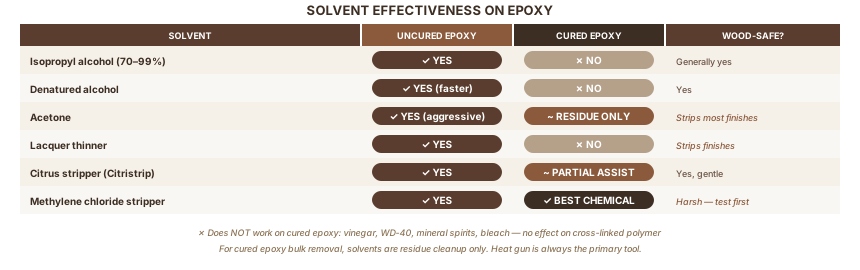
Solvents support the mechanical work. They're not the primary approach. Each one has a specific job:
Solvent guide for woodworkers
| Solvent | Works on uncured? | Works on cured? | Wood-safe? |
|---|---|---|---|
| Isopropyl alcohol (70–99%) | Yes | No | Generally yes |
| Denatured alcohol | Yes, faster | No | Yes |
| Acetone | Yes, aggressive | Residue only | Caution: strips finishes |
| Lacquer thinner | Yes | No | Strips finishes |
| Citrus stripper (Citristrip) | Yes | Partial assist | Yes, gentle |
| Methylene chloride stripper | Yes | Best chemical option | Harsh: test first |
When to reach for a solvent
- Fresh spill on a finished surface: Isopropyl alcohol first. Less likely to strip the finish than acetone.
- After heat-scraping: Acetone on a cloth wipes thin residue efficiently.
- Squeeze-out missed in the green stage: Denatured alcohol softens partially cured epoxy better than isopropyl.
- Stubborn residue in tight corners: Citristrip, left 20 minutes, then scrubbed with a stiff brush.
What doesn't work on cured epoxy: Vinegar, WD-40, mineral spirits, bleach. None of them affect the cross-linked polymer.
Chemical removal process:
- Apply solvent to a cloth. Never pour directly onto wood.
- Lay the cloth over the area; let it sit 10–15 minutes.
- Scrub with a stiff brush or abrasive pad.
- Wipe clean with a fresh cloth.
- Follow with a plain water wipe to remove solvent residue.
Part 5: Skin, Fabric, and Metal
Skin: pumice, never solvents
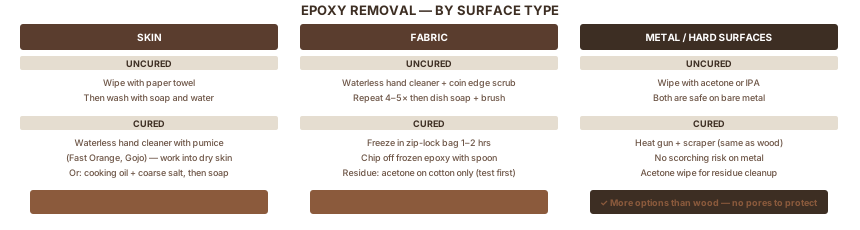
The natural instinct is acetone. Don't use it. As WEST SYSTEM's safety guidance explains, solvents carry uncured epoxy compounds through the skin barrier and increase sensitization risk. The epoxy itself is a smaller hazard than the solvent you'd use to remove it.
What works:
- Waterless hand cleaner with pumice (Fast Orange, Gojo with pumice): Work it into dry skin, let sit 30 seconds, rinse with soap and water. The pumice acts as a mild abrasive; the waterless formula lifts the epoxy. ArtResin recommends citrus-based waterless cleaners as the safest and most effective option.
- Cooking oil plus coarse salt or sugar: Rub into the skin, let sit 1 minute, rinse with soap and water.
Cured epoxy on skin doesn't need urgent removal. It flakes off within 24–48 hours as skin renews. Pumice and oil just speed the process.
Fabric and clothing
Uncured epoxy on fabric:
- Place scrap wood or cardboard behind the stained area for backing.
- Apply waterless hand cleanser to the spot and scrape with the edge of a coin.
- Repeat four or five times.
- Scrub with dish soap and a stiff brush.
- Wash normally.
Cured epoxy on fabric:
- Seal the garment in a zip-lock bag and freeze for 1–2 hours.
- Remove it and immediately chip off the frozen epoxy with a spoon or butter knife. It's brittle now.
- Pick off remaining fragments by hand.
- For residue on cotton or denim: dab acetone on a cloth and test first on a seam.
Epoxyworks cautions that acetone melts polyester, nylon, spandex, and acetate. Check your garment's fabric content before using any solvent.
Metal and hard surfaces
Non-porous surfaces give you more options. Heat gun plus scraper works exactly as it does on wood, with no wood scorching to worry about. Acetone is safe on bare metal. Chemical adhesive removers from hardware stores work well on metal; they're generally ineffective on wood but fine here.
Part 6: Prep the Surface for Refinishing
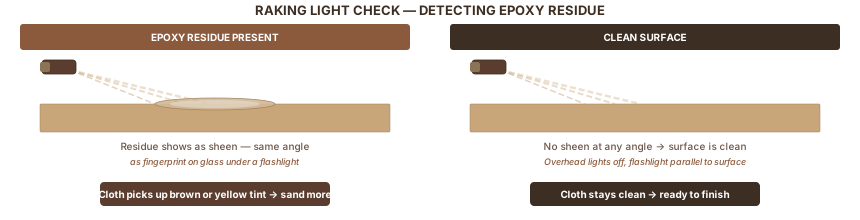
Epoxy residue left on wood causes fisheye and bonding failure in any finish that follows. The raking-light check catches what sanding alone misses.
The raking-light check
After sanding, turn off overhead lights and hold a flashlight parallel to the wood surface, 6–12 inches above it. Remaining epoxy residue shows as a subtle sheen: the same way a fingerprint shows on glass when you look from the right angle.
Then wipe the surface with denatured alcohol on a white lint-free cloth. If the cloth picks up any brown or yellowish tint, epoxy is still there. Sand at 120-grit, clean with the cloth, and check again under raking light.
No tint, no sheen: that's a clean surface.
Final prep before applying a new finish
- Complete the sanding sequence: 150 to 180 to 220, with the grain.
- For surfaces you're staining: wipe with a damp cloth to raise the grain, let dry 30 minutes, then do a final pass at 220. Skipping this leaves fuzzy texture after staining.
- Wipe down with a clean cloth dampened with denatured alcohol. This removes sanding dust and last-trace residue.
- Apply your chosen finish.
For a clear finish over bare wood, Applying Polyurethane covers product selection through final coat. For a complete furniture refinish, How to Refinish a Table covers stripping through the final topcoat. If you're cleaning up from a river table build, Live Edge Epoxy Table has the full project context including pour troubleshooting.
FAQ
Will acetone remove cured epoxy?
No. Acetone dissolves uncured and partially cured epoxy effectively, but it can't break the cross-linked polymer bonds in fully cured material. Extended contact softens the surface slightly — useful for wiping thin residue after scraping — but it won't touch the bulk. For fully cured epoxy, heat is the primary tool. Get the surface to around 180°F with a heat gun until the epoxy dents under light pressure, scrape it off, then use acetone on a cloth as a final residue wipe.
What's the green stage and why does it matter for squeeze-out cleanup?
Two to six hours after a glue-up, epoxy firms into a rubbery consistency — not sticky, and it feels like cold eraser rubber under your finger. This is the green stage, and it's the easiest window for removing squeeze-out. A sharp chisel held at 5–10 degrees slides under the bead and pops it off in one piece. No heat gun, no sanding, no risk of pushing residue into open grain. Set a timer when you glue up. Miss this window and you're into heat-scraping territory.
How do I remove epoxy from wood without scorching the surface?
Keep the heat gun moving. Hold it 2–4 inches from the surface, work in small circles roughly 2–3 inches in diameter, and never stop the nozzle. Heat each 4–6 square inch section for 20–30 seconds, then test by pressing a putty knife tip into the epoxy. When it dents easily, scrape immediately — the epoxy re-hardens in about 20 seconds as it cools. If the wood starts to darken at all, stop. Scorching is the sign you're dwelling too long in one spot.
How do I get epoxy off my hands safely?
Skip the acetone. Solvents carry uncured epoxy compounds through the skin barrier and increase sensitization risk. Use waterless hand cleaner with pumice — Fast Orange or Gojo with pumice. Work it into dry skin, let it sit 30 seconds, then rinse with soap and water. Cooking oil mixed with coarse salt works nearly as well. For cured epoxy on skin, patience is actually fine — it flakes off within 24–48 hours as your skin renews naturally.
Sources
Research for this guide drew on manufacturer technical documentation, practitioner forums, and epoxy specialty educational resources.
- Entropy Resins — How to Remove Epoxy from Surfaces — cured vs. uncured distinction, chemical methods
- WEST SYSTEM — Preventing Overexposure — N95 requirement, sensitization risk from epoxy dust
- Epoxyworks — Scrapers for Working with Epoxy — cabinet scraper technique, control and depth
- Sawmill Creek — Epoxy Squeeze-Out Thread — green-stage removal, chisel approach
- MAS Epoxies — How to Remove Soft and Sticky Resin — cure stage timing and denatured alcohol use
- WoodenBoat Forum — Epoxy Removal — practitioner experience with heat gun and scraper
- Ecolink — Does Acetone Remove Cured Epoxy — solvent effectiveness on cured epoxy
- Fiber Optic Center — Glass Transition in Epoxies — Tg range for room-temperature-cured epoxies
- ArtResin — How to Clean Resin from Your Hands — skin removal methods
- Entropy Resins — How to Remove Epoxy from Skin and Clothes — fabric freeze method, waterless cleanser
- Epoxyworks — How to Get Epoxy Off Your Clothes — waterless cleanser for fabric, fabric type cautions
- Epoxyworks — Wet Sanding Epoxy — wet sanding technique and dust reduction
Tools Used
Also Referenced