
Staining Pressure Treated Wood at a Glance
Yes, you can stain pressure treated wood. The only reason it fails is staining too soon or over a dirty surface. Wait until the moisture content drops below 15%, clean off the treatment residue, and use a penetrating stain. Done right, it holds for years.
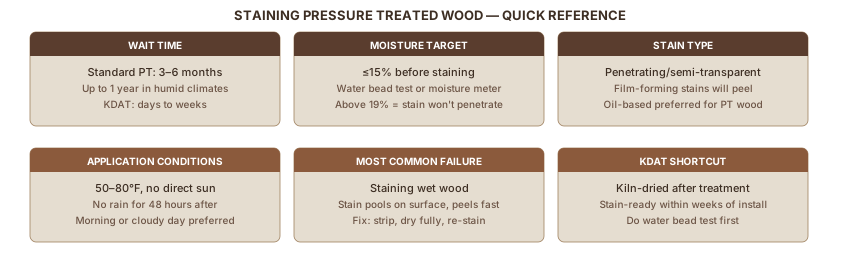
| Wait time | 3–6 months for standard PT; weeks for KDAT (kiln-dried) |
| Moisture target | ≤15% — water bead test or pin moisture meter |
| Stain type | Penetrating/semi-transparent only — film-forming stains will peel |
| Application conditions | 50–80°F, no direct sun, rain-free for 48 hours |
| Most common failure | Staining wet wood — stain sits on the surface and peels |
| KDAT shortcut | Kiln-dried-after-treatment lumber can often be stained within weeks |
In this guide:
- Test if your wood is ready
- How to clean and prep the surface
- Which stain to use and why
- Application technique, step by step
- Why stain fails and how to recover
Part 1: Why Pressure Treated Wood Resists Stain
When PT lumber comes off the truck, it's been soaked under pressure in a preservative solution. Modern treatments use alkaline copper quaternary (ACQ) or copper azole compounds, which replaced the arsenic-based CCA treatments phased out for residential use in 2004. The process forces those preservatives deep into the wood fibers — and it saturates the wood with water in the process.
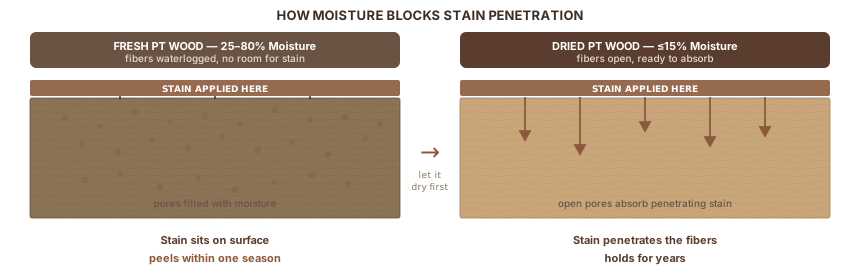
Fresh PT lumber can arrive with moisture content anywhere from 25% to 80%. Normal air-dried softwood runs 12–19%. Stain is designed to soak into wood fibers. When those fibers are already full of water, the stain has nowhere to go. It pools on the surface as a thin coating, and as the wood dries underneath, it lifts that coating off. The result is peeling within one season.
Modern copper preservatives also raise the surface pH, which affects how stain bonds to the wood. As the wood weathers and the pH normalizes, adhesion improves — but waiting for that to happen naturally takes months.
KDAT is the exception. Some PT lumber is kiln-dried after treatment (KDAT). YellaWood explains that KDAT boards go back into a kiln after pressure treatment to remove excess moisture and return to near their original moisture content. They can be stained within days to weeks of installation, once they pass the water bead test. Look for "KDAT" stamped on the end of the board or ask your lumber yard.
Part 2: Test Before You Stain: Two Methods That Work
Don't guess by calendar. The wood is ready when the tests pass — not when a certain number of days have elapsed.
The Water Bead Test
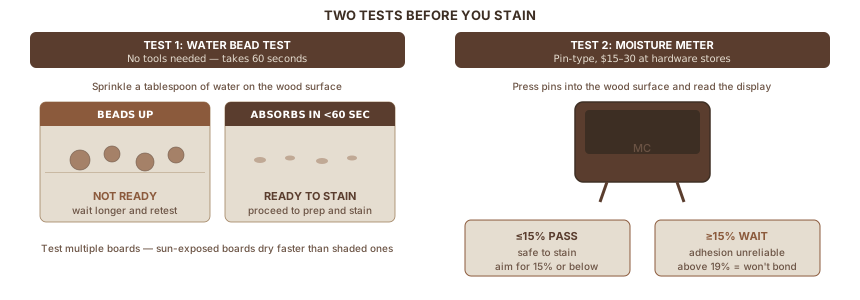
Sprinkle a tablespoon of water on the wood surface. Watch for 60 seconds.
- Water beads up: the wood is still too wet or chemically sealed. Wait.
- Water absorbs into the surface: the wood is ready.
Test several boards in different locations. Boards in full sun dry faster than shaded ones. The east-facing boards on a fence might be ready while the north-facing ones need another month.
The Moisture Meter Test
A pin-type moisture meter gives you a number. Press the pins into the wood surface and read the display. Target: 15% or below. Above 15%, adhesion is unreliable. Above 19%, most penetrating stains won't properly bond.
Moisture meters cost $15–30 at hardware stores. They're useful for every future woodworking project that involves wood and moisture — worth owning.
What to Expect: Timeline
| Condition | Expected drying time |
|---|---|
| KDAT lumber | 1–6 weeks |
| Standard PT, hot dry summer | 6–8 weeks |
| Standard PT, typical conditions | 3–6 months |
| Standard PT, humid/shaded location | 8–12 months or more |
Per Flowyline's PT staining guide, moisture content matters more than calendar time. Your wood might be ready in 6 weeks or need a full year depending on thickness, climate, and sun exposure. The wood doesn't know what month it is — the tests do.
Part 3: How to Clean and Prep PT Wood for Staining
Both tests passed? Now prep. Treatment chemical residue, dirt, and pollen all create a barrier between the wood and your stain. Skipping this step is the second most common reason stain fails on PT wood.
5-Step Prep Sequence
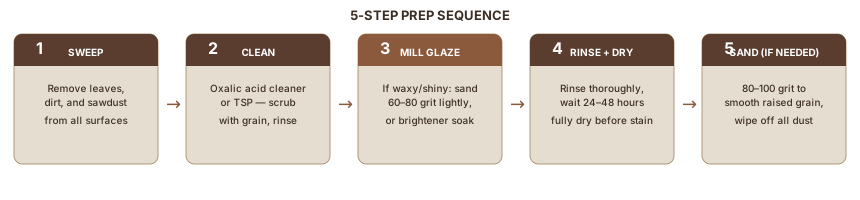
1. Sweep or blow off loose debris. Remove leaves, dirt, and sawdust from the surface.
2. Clean with a deck cleaner. Use an oxalic acid-based brightener (Defy Wood Cleaner, Armstrong-Clark's cleaner) or TSP (trisodium phosphate). Apply to slightly damp wood, scrub with a stiff brush working with the grain, then rinse thoroughly with a garden hose. If using a pressure washer, keep the nozzle at least 12 inches away and stay under 1,500 PSI — too much pressure raises the grain aggressively.
3. Remove mill glaze if present. Mill glaze is a surface hardening that develops when lumber is dried too fast. It looks slightly shiny or waxy and blocks stain penetration entirely. DeckStainHelp describes it as one of the primary reasons stain fails on new PT lumber. To remove it: either sand with 60–80 grit sandpaper (lightly, with the grain), or apply an oxalic acid brightener and let it dwell 10–15 minutes before rinsing. Most quality deck cleaners also break down mill glaze during the cleaning step.
4. Rinse thoroughly and let dry. Rinse with clean water. Then wait 24–48 hours for the wood to dry completely before staining. Don't stain damp wood even if it passed the moisture test before cleaning.
5. Light sanding if needed. After drying, you may find raised grain or fuzzy fibers. A light pass with 80–100 grit sandpaper smooths this without opening the grain too aggressively. Wipe off dust with a dry cloth before staining. See Woodworking Sanders for technique guidance on sanding softwoods.
Part 4: Penetrating Stain vs. Film-Forming: Why the Type Matters
Use a penetrating stain. Not a film-forming one.
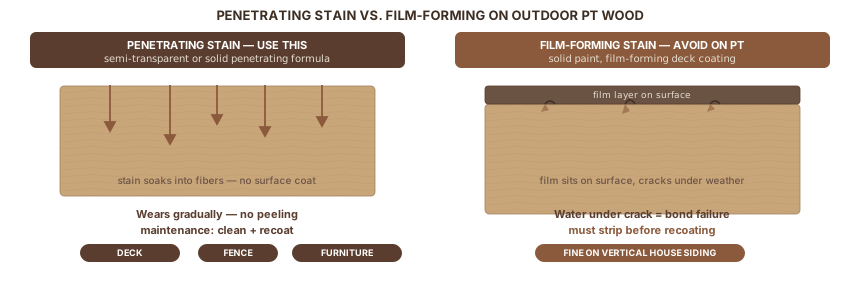
Film-forming finishes — solid paints, film-forming deck stains — sit on top of the wood as a coating. On vertical surfaces like house siding, they work. On horizontal surfaces that take rain, sun, foot traffic, and temperature cycles — decks, top rails of fences, outdoor table tops — film-forming finishes eventually crack. Water gets underneath the crack, the bond fails, and you're stripping and starting over. The Craftsman Blog identifies using a film-forming stain as one of the four most reliable ways to get a failed finish on PT wood.
Penetrating stains soak into the wood fibers. There's no surface film to crack. When they wear, they do so gradually and evenly. Maintenance means cleaning and applying a fresh coat — no stripping required.
Semi-Transparent vs. Solid Color
Semi-transparent penetrating stains are the right choice for PT wood in decent condition. They let the grain show, soak in fully, and wear gracefully. This is your default for new construction.
Solid-color penetrating stains are better for wood that's already weathered gray (5+ years outside) or has uneven discoloration you want to hide. More UV protection, less natural look.
Oil-Based vs. Water-Based
Both work on properly dried PT wood.
Oil-based penetrating stains penetrate deeper into wood fiber, offer excellent mold and mildew resistance, and are what most professional deck finishers still reach for on PT lumber. Cleanup requires mineral spirits. Cure time: 24–48 hours before light foot traffic. For how oil-based stain chemistry works — including dry vs. cure time and safe rag disposal — see Oil-Based Wood Stain.
Water-based penetrating stains have improved dramatically. Lower VOCs, soap-and-water cleanup, 2–4 hour cure time. On properly dried PT wood, they perform comparably to oil-based for most residential applications.
For a first deck or fence with standard PT lumber: a quality oil-based semi-transparent penetrating stain is the safest choice. Worth considering: Armstrong-Clark (oil-based, consistently rated for PT), TWP 100 or 1500 series, Defy Extreme (water-based option), and Minwax's deck stain line which is widely available at home centers.
Staining PT Wood to Look Like Cedar
PT southern yellow pine is yellow-brown with prominent grain — it doesn't naturally look like the pinkish-red warmth of cedar. But a semi-transparent or solid stain in a cedar tone gets you close.
Choose a stain labeled "cedar," "natural cedar," or "rustic cedar." Semi-transparent cedar tones add the warm reddish color while letting the grain texture show through. If you want the color without the grain (or if the PT wood is heavily weathered), a solid cedar-toned stain is a better match. Most major brands carry cedar shades — Ready Seal, Armstrong Clark, Cabot, and ZAR all make good options. Apply the same way as any penetrating stain once the wood passes the moisture test. One coat is usually enough with solid stains; semi-transparent may benefit from two.
The result won't fool a timber framer, but at deck distance it reads as cedar-toned wood.
Part 5: How to Apply Stain to Pressure Treated Wood
Conditions First
Get the conditions right or the application won't hold regardless of how well you prepped.
- Temperature: 50–80°F. Below 50°F, the stain won't cure. Above 85°F, it dries on the surface before it can penetrate.
- No direct sunlight. The sun heats the wood and flashes the stain dry before it can soak in. Apply in the morning before direct sun hits the surface, or choose a cloudy day.
- Rain-free for 48 hours after application. Rain before the stain cures washes it out and causes blotching. Check the forecast.
Per TWP's application guidelines, these three conditions matter as much as the stain itself.
Choose Your Application Tool
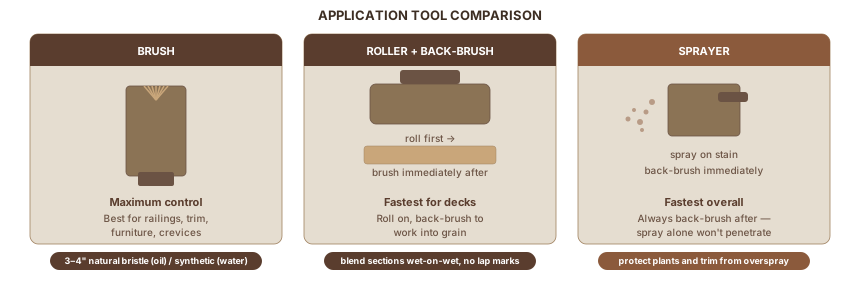
Brush: Best penetration and control. Right for railings, trim, furniture, and any surface with crevices or corners. Use a 3–4 inch natural bristle brush for oil-based stains, synthetic bristle for water-based.
Roller + back-brush: The fastest method for large flat surfaces like deck boards. Roll the stain on generously, then immediately follow with a brush to work it into the grain and prevent lap marks. This combination covers quickly without sacrificing penetration.
Sprayer: Fastest overall for large projects like fences. Always back-brush after spraying — stain applied only by sprayer sits on the surface instead of penetrating. Protect plants, trim, and neighboring surfaces from overspray.
Application Steps
- Stir the stain thoroughly. Don't shake — shaking introduces air bubbles that create pinholes in the finish.
- Apply a thin, even coat working in the direction of the wood grain.
- Work in manageable sections: two or three deck boards at a time, or a 3-foot section of fence.
- Maintain a wet edge. Blend each new section into the previous one before it dries to avoid lap marks.
- Watch for pooled stain that hasn't absorbed within 20–30 minutes. Wipe it up with a clean rag. Stain that pools and dries on the surface creates a sticky, tacky film that attracts dirt and looks wrong.
One Coat or Two?
For PT wood in good condition, one coat of a quality penetrating stain is enough. A second coat can trap moisture, build up on the surface, and increase the chance of adhesion failure.
If the manufacturer recommends a second coat, apply it wet-on-wet while the first coat is still tacky, or follow their exact recoat window. Don't apply a second coat to a fully dried first coat without the manufacturer's explicit guidance.
Part 6: When Stain Fails and How to Recover
Most PT wood stain failures come from one of four causes.
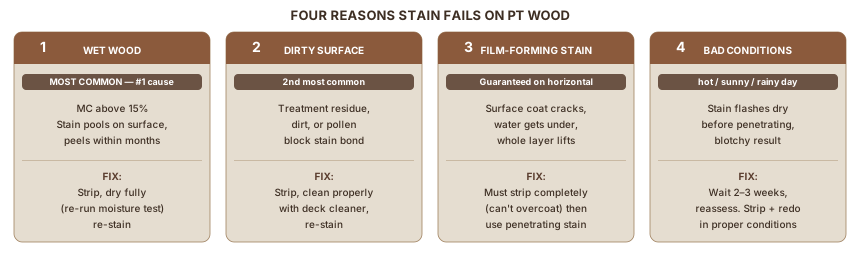
Wet wood. The most common failure. Stain can't penetrate fibers still full of water. It forms a thin surface coat, then peels within months. The fix: strip the failed finish with a chemical deck stripper, power wash, let the wood dry completely (run the moisture test again before reapplying), then re-stain.
Surface not cleaned. Treatment residue, dirt, and pollen block the bond. The stain sticks to the debris instead of the wood and fails early. The fix: strip, clean thoroughly, dry, and re-stain with proper prep.
Film-forming stain. Film-forming finishes peel on horizontal surfaces exposed to weathering — no exception. The fix requires stripping completely (you can't overcoat film-forming failure with a penetrating stain; the failed layer has to go first), power washing, then re-staining with a penetrating stain.
Bad application conditions. Too hot, direct sun, or rain before the stain cured. The result is a blotchy or tacky finish. If it's only slightly uneven, give it 2–3 weeks to fully cure and reassess — some minor unevenness normalizes. If it's significantly blotchy or peeling, strip and redo in proper conditions.
How to strip: Apply commercial deck stripper (most use oxalic acid or sodium hydroxide) per the manufacturer's instructions, let it dwell, scrub, and power wash. Run the moisture test after the wood dries before re-staining.
Part 7: Keeping Stained PT Wood Looking Good
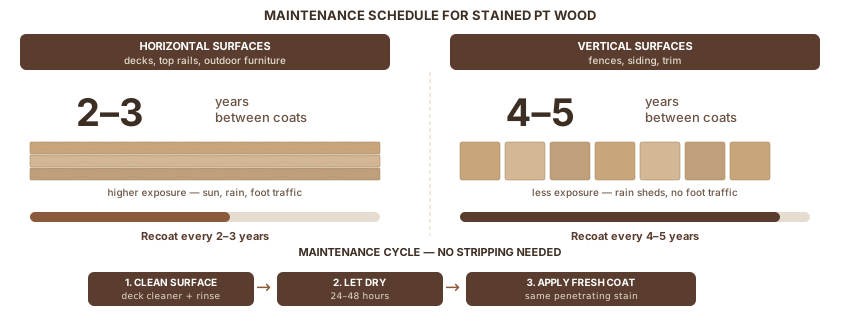
Clean the surface and apply a fresh coat of the same penetrating stain every 2–3 years on decks and other horizontal surfaces. Vertical surfaces like fences hold stain 4–5 years. Penetrating stains don't form a film, so you don't strip between maintenance coats. Clean and recoat.
If you're finishing other outdoor wood on the same project, how to apply polyurethane covers film-forming finish techniques for vertical or indoor surfaces where polyurethane is appropriate.
Sources
Research for this guide drew on manufacturer staining guides, professional deck finishing resources, EPA wood preservative chemistry documentation, and practical testing guides from the deck restoration community.
- YellaWood: Staining Pressure Treated Wood — manufacturer timing and application recommendations
- YellaWood: What is KDAT? — kiln-dried-after-treatment lumber and staining timeline
- EPA: Overview of Wood Preservative Chemicals — ACQ and copper azole chemistry
- The Craftsman Blog: 4 Mistakes When Staining Pressure Treated Wood — failure mode analysis
- DeckStainHelp: What is Mill Glaze on Decking — mill glaze definition and removal
- DeckStainHelp: Water-Based vs. Oil-Based Deck Stains — stain type comparison
- Flowyline: How Long Before You Can Stain Pressure Treated Wood — timeline and moisture guidance
- Flowyline: Can You Stain Pressure Treated Wood? 4 Tests — readiness test methods
- TWP: Tips & Techniques — professional application conditions and guidance
- Lowes: Can You Paint or Stain Pressure Treated Wood? — general readiness and application guidance
- Barrier Boss: 5 Tips for Staining Pressure Treated Wood — practical tips and moisture target
- Hunker: How to Stain Pressure Treated Wood to Look Like Cedar — cedar color selection and technique
Tools Used
Also Referenced
Tagged
How We Research
We don't take affiliate revenue or accept review units. Picks come from multi-source research — manufacturer specs, OSHA / EPA / ASTM regs, and long-form practitioner threads — plus Ahmed's hands-on use where relevant. When we recommend something, we explain why.
Up Next
How to Tell If Wood Is Pressure Treated
WOOD & MATERIALS · Beginner