
Cherry Wood Color at a Glance
Cherry wood's darkening over time is a photochemical process in which fresh-cut, pale pinkish-brown lumber deepens into rich reddish-brown after months to years of light and air exposure. Most beginners buy cherry expecting that finished color immediately — and are caught off guard by the raw, almost blonde look at the saw. The transformation isn't surface-level: UV and visible light break down compounds in the wood's cell structure, driving the color change from the inside out. Understanding that gap between raw and aged cherry is essential before choosing a finish, pairing it with other species, or explaining the final color to a client.
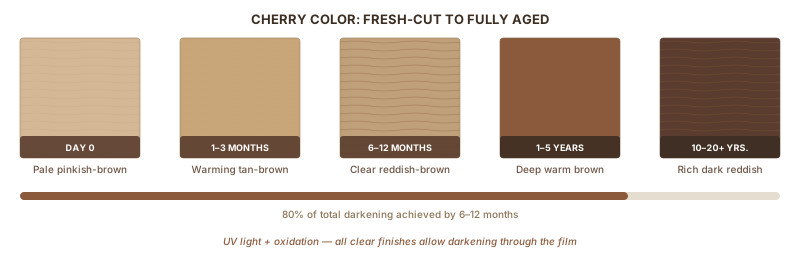
| Fresh color | Light pinkish-brown — pale salmon, sometimes near-straw |
| Aged color (1+ year) | Deep reddish-brown with warm amber undertones |
| Time to major change | 6–12 months (80% of total darkening) |
| Cause | UV light reacts with phenolic compounds in the wood |
| Heartwood vs. sapwood | Sharp contrast — cream-white sapwood, pinkish-brown heartwood |
| Figuring | Typically straight grain; curly and crotch figure available |
In this guide:
- What cherry actually looks like out of the mill — and why it surprises people
- The color timeline — from pale pink to rich reddish-brown
- Dark cherry: species or stain?
- Cherry vs. walnut and maple — color side by side
Part 1: What Fresh Cherry Wood Looks Like
The first time most woodworkers see fresh cherry, they think they grabbed the wrong board.
Cherry's heartwood is a light pinkish-brown when freshly milled. Not the deep reddish-brown you've seen in photos. Something closer to pale salmon, or sometimes an almost-straw tan with a faint orange cast. It can look enough like maple that the two get confused at the lumber yard. If you were expecting aged cherry color, fresh cherry is a surprise.
That's not a defect. It's just cherry before it meets light.
Heartwood and Sapwood
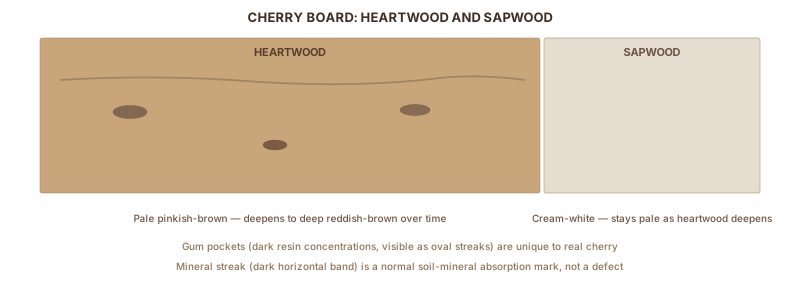
Cherry boards with both heartwood and sapwood show a clear contrast. The heartwood is the pinkish-brown core, the part that will darken over time. The sapwood is the cream-white to pale yellow outer wood, and it behaves differently.
The sapwood doesn't darken. As the heartwood deepens to reddish-brown over the coming months and years, the sapwood stays cream-colored. The contrast between them increases with age, not decreases. On a board that's 20% sapwood at the edge, you'll eventually have a vivid cream strip next to deep reddish wood.
Most woodworkers cull sapwood from primary faces and use it on hidden surfaces like drawer sides and cabinet interiors. Some embrace it deliberately. "Sap cherry" or "rustic cherry" includes the sapwood as a design element.
Grain, Texture, and the Marks That Identify It
Cherry grain is fine and straight. Much finer than oak, which has prominent rays and visible ring lines. Comparable in smoothness to maple, but with a warmer tone even at its palest. The surface has a natural satin luster before finishing.
Three marks help you identify cherry specifically:
Gum pockets. Nearly every cherry board has them. Small dark streaks, wavy black lines, or small oval voids in the heartwood. They're concentrations of resin — a natural feature of the species, not a defect. Cherry-stained alder or maple won't have them. Gum pockets are the clearest signal that you're looking at real cherry.
Mineral streaks. Dark bands running with the grain, caused by mineral absorption from the soil the tree grew in. Can't be removed. Most woodworkers leave them as character; they're part of what makes cherry look like itself.
Pin knots. Small, tight knots from side branches, usually under 1/4 inch. Common in cherry, especially in lumber from the lower trunk.
Figured cherry exists — curly, crotch figure, occasionally quilted — but it's rarer than curly maple and commands a premium when found. Curly cherry shows undulating light and dark waves that shift as the viewing angle changes.
Part 2: The Color Timeline: From Pale Pink to Deep Reddish-Brown
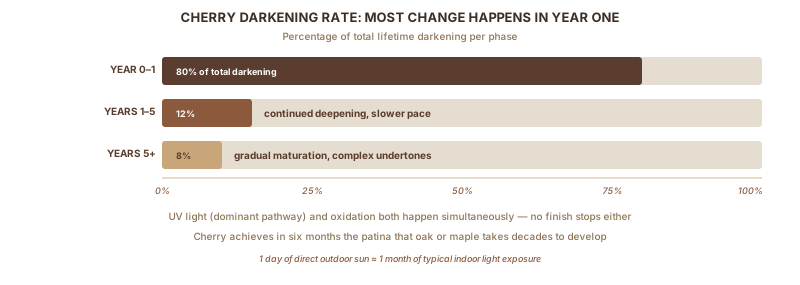
Cherry is the fastest-darkening domestic hardwood. What takes oak or maple decades to achieve, cherry reaches in months.
Why It Happens
Cherry wood contains phenolic compounds and prussic acid that react to ultraviolet light. UV exposure alters these compounds at the molecular level, changing how the wood surface reflects light. That's the fast pathway. Oxygen in the air also reacts with cherry's cellular chemistry through oxidation — the [USDA Forest Products Lab Wood Handbook](https://www.fpl.fs.usda.gov/documnts/fplgtr/fpl_gtr190.pdf) covers the photochemistry of extractive-rich species in detail. That's the slow pathway.
Both happen simultaneously. UV dominates. In direct outdoor sunlight, you can sometimes see cherry begin to change color in under an hour. Oxidation alone takes months.
No finish stops this. The wood darkens through shellac, lacquer, polyurethane, oil — any clear coat. You can slow the rate (water-based finishes run slightly slower than oil-based), but you can't stop it.
The Timeline
| Stage | Timeframe | Color |
|---|---|---|
| Fresh cut | Day 0 | Pale pinkish-brown, salmon, sometimes near-straw |
| Early aging | 1–3 months in direct sun | Noticeably warmer; tan deepening to light reddish-brown |
| Mid-age | 6–12 months | Clear reddish-brown; roughly 80% of total darkening achieved |
| Maturing | 1–5 years | Continued deepening, slower pace |
| Fully aged | 10–20+ years | Deep, complex reddish-brown with amber and dark undertones |
"Cherry achieves in six months the patina that oak or maple acquires only after six decades." Thos. Moser has been building in cherry for over fifty years. That line reflects the chemistry accurately.
The most dramatic change happens in the first year. After that, the wood continues to deepen but at a much slower rate. A piece of cherry furniture that looks "almost there" at six months will be fully developed at two to three years.
Sunlight Accelerates Everything
One day of direct outdoor sun is roughly equivalent to a month of typical indoor light. Marc Spagnuolo of The Wood Whisperer documented a blade shadow experiment: after leaving a fresh cherry board in direct outdoor sun for minutes, a visible color line developed where the blade blocked UV. The change is fast.
Woodworkers who want consistent color before assembly will leave boards in outdoor sun for a few days. If you do this: rotate the boards regularly so all faces get equal exposure, and select boards from the same flitch. Different cherry boards darken at different rates.
The Shadowing Problem
Objects left sitting on a fresh cherry surface block UV and create lighter patches underneath — books, lamps, coasters, a vase that doesn't move for three months. The patches are lighter because those areas didn't get the same light exposure as the surrounding wood.
This is one of the most common complaints from cherry furniture owners in the first year. Prevention: keep surfaces clear, or rotate objects weekly during the first year. For dining tables with leaves, extend them fully and expose the entire surface consistently.
If you already have uneven patches: remove the blocking objects and wait. The lighter areas will gradually catch up. It takes time, but the wood will even out.
Can You Stop It?
No. Not permanently. UV-blocking window film on nearby windows helps slow the process; woodworkers report meaningful but not complete reduction. Water-based finishes darken cherry more slowly than oil-based, which matters short-term. UV-inhibiting finishes have some effect on rate, almost none on eventual outcome.
If a project truly cannot tolerate color change over time, cherry is the wrong species. Its aging is a feature of the material, not a problem to be engineered away.
Part 3: Dark Cherry: Species or Stain?
The phrase "dark cherry wood" covers two different things, and confusing them leads to real purchasing mistakes.
One meaning: aged American black cherry (Prunus serotina), the natural deepened color of real cherry wood after months or years of light exposure. A species characteristic, not a finish.
The other: a stain color. Manufacturers make products with names like "Dark Cherry," "Early American Cherry," and "Colonial Cherry." These are pigment finishes applied to whatever wood is available to approximate aged cherry. Most commercial furniture labeled "cherry finish" or sold with "dark cherry" in the product name is another species, often alder, birch, or poplar, with a cherry-colored stain on top.
Why This Confusion Exists
The mass furniture market has been using cherry-colored finishes for decades. Real cherry was historically expensive and hard to source consistently. Stain on alder or poplar can produce something close to the aged cherry look for a fraction of the material cost. Over time, consumers came to associate "cherry" with the stain color, not the species.
The result: most people have seen the "cherry look" many times without ever seeing real cherry wood. When they buy actual cherry lumber and find it pale and pinkish, they assume something's wrong.
Nothing's wrong. That's just cherry before it ages.
How to Tell the Difference
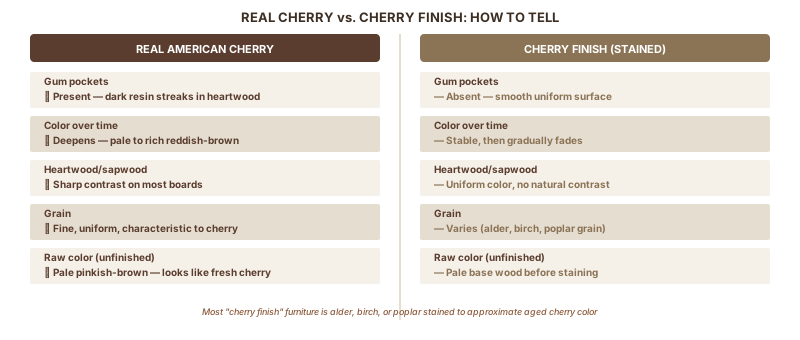
Real cherry:
- Has fine, uniform grain — distinctly finer than many common furniture woods
- Shows gum pockets (the dark streaks described above) — cherry-stained alder or maple won't have these
- Has visible heartwood/sapwood contrast on most boards
- Continues to deepen in color over years
Cherry-stained lookalikes:
- Uniform color across the board, without the natural variation of real heartwood
- No gum pockets
- Often coarser or visibly different grain pattern
- Color stays constant (then gradually fades rather than deepens)
A Brief Note on Brazilian Cherry
"Brazilian cherry" is not cherry. It's Jatoba (Hymenaea courbaril), a South American hardwood from an entirely different family. It's called "Brazilian cherry" because its color — reddish-brown when fresh, deepening over time — resembles aged American cherry. But Jatoba is about 2.5 times harder than American black cherry (Janka 2,690 vs. 950 lbf), heavier, and machines like a different class of wood. If someone offers you "Brazilian cherry" as a substitute for American cherry, it is not a substitute.
Part 4: Cherry vs. Walnut and Maple
These are the three domestic hardwoods most often compared when choosing furniture material. The color differences matter more than most people realize before they buy.
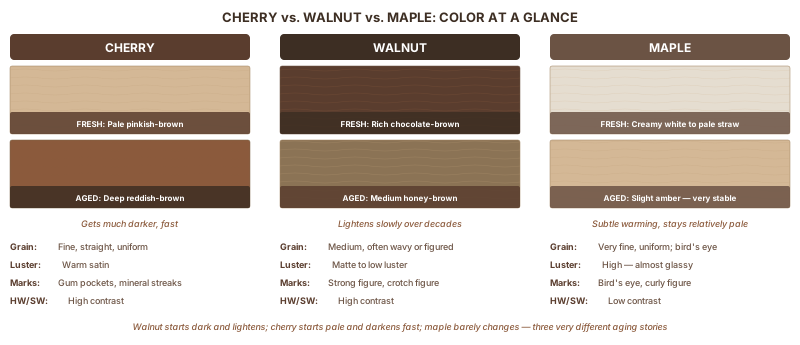
| Feature | Cherry | Walnut | Maple |
|---|---|---|---|
| Fresh color | Pale pinkish-brown, salmon | Rich chocolate brown, dark purple-gray | Creamy white to pale straw |
| Aged color | Deep reddish-brown, warm amber | Lightens to medium brown with honey tones | Warms slightly to amber — subtle change |
| Direction of change | Gets much darker, fast | Gets lighter over decades | Gets slightly warmer, very gradual |
| Grain | Fine, straight, uniform | Medium-open, often wavy or with strong figure | Very fine, uniform; bird's eye and curly common |
| Luster | Warm satin | Matte to low luster | High — almost glassy |
| Heartwood/sapwood contrast | High | High | Low |
| Characteristic marks | Gum pockets, mineral streaks | Strong grain figure, frequent crotch figure | Bird's eye figure, curly figure |
Walnut and cherry are the two premium domestic hardwoods that age most visibly, but in opposite directions. Walnut starts dark and lightens slowly. Cherry starts pale and darkens fast. A piece using both species starts high-contrast and drifts toward similar medium tones over decades.
Fresh cherry vs. fresh maple: Both are pale and can look similar at the lumber yard. The tell is the slight pinkish-orange cast on cherry heartwood versus the neutral cream of maple. And cherry will have gum pockets; maple won't.
Want a warm, reddish-brown wood that improves with age? Cherry. Deep chocolate-brown from day one? Walnut. A light, clean surface that stays relatively consistent? Maple.
Part 5: How Finish Changes What You See
Different finishes change what cherry looks like on day one and influence how the aging appears over time.
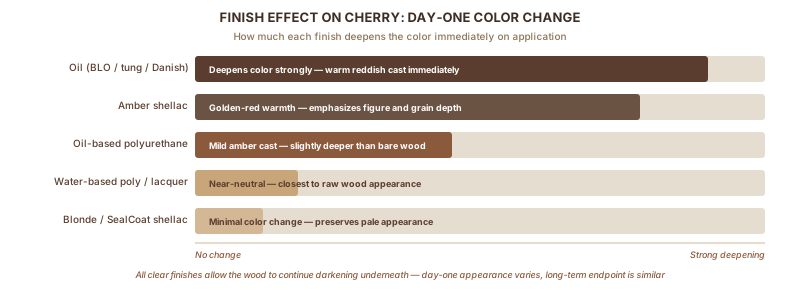
Immediate Color Effect
| Finish | Effect on day one |
|---|---|
| Oil (boiled linseed, tung, Danish oil) | Deepens color significantly; warm reddish cast immediately |
| Amber shellac | Golden-red warmth; emphasizes figure and grain depth |
| Blonde/SealCoat shellac | Minimal color change; preserves the natural pale appearance |
| Oil-based polyurethane | Mild amber cast; slightly deeper than unfinished |
| Water-based poly or lacquer | Near-neutral; closest to the raw wood appearance |
The Long Game
All clear finishes allow the wood to darken underneath them. An oil finish applied to fresh cherry makes the piece look aged immediately, but the underlying wood continues to deepen — so the final appearance two years out is similar regardless of finish choice. Water-based finishes show the aging more gradually.
Finish choice matters most for day-one appearance and durability, not for where the color ends up. Cherry reaches its deep reddish-brown either way.
Why Staining Cherry Usually Backfires
Oil-based pigment stains blotch on cherry. The wood absorbs unevenly — more porous areas pull in more stain and turn darker, leaving an irregular surface that can look like the wood is diseased. Beyond the application problem, staining locks in an artificial color while the underlying wood continues to change. After a year, you get an inconsistent finish where the stain color and the natural aging work against each other.
Clear finish and patience produce better results than any stain. For more on finishing cherry — including when stain is actually necessary and how to do it without blotching — see Applying Oil-Based Finish and the staining section in the main Cherry Wood guide.
Part 6: Spotting Cherry at the Lumber Yard
When you're standing in front of a stack of boards and want to confirm you've got cherry:
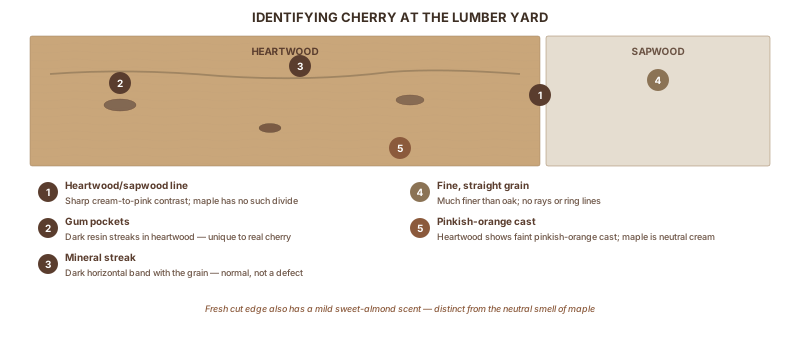
Look for the heartwood/sapwood line. Cherry's contrast is sharp. A cream-white band of sapwood against a pinkish-brown heartwood is a reliable visual marker. Maple, which can look similar in fresh color, doesn't show this sharp division.
Look for gum pockets. Small dark streaks or oval voids in the heartwood are nearly universal in cherry and characteristic to the species. No other common domestic hardwood has them in this form.
Check the grain scale. Cherry grain is fine and uniform. Much finer than oak, without oak's prominent rays or ring-porous lines. Smoother-looking than ash or hickory.
Smell a fresh cut edge. Cherry has a mild sweet-almond scent when cut. Not strong, but distinct from the more neutral smell of maple.
Note the pinkish cast. Even at its palest, cherry heartwood has a faint pinkish or orange warmth. Maple's fresh color is more neutral cream without that cast.
Part 7: Where to Go From Here
This guide covers appearance and color. For everything else on the species:
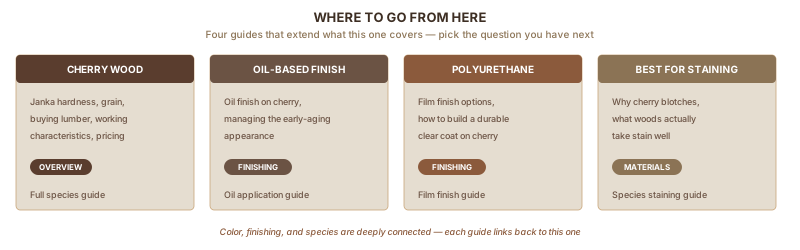
- Cherry Wood — Janka hardness, grain comparison, buying lumber, working characteristics, pricing
- Applying Oil-Based Finish — how to apply an oil finish to cherry and manage the early-aging appearance
- Applying Polyurethane — film finish options and how to build a durable clear coat on cherry
- Best Wood for Staining — why cherry isn't on the list, and what woods actually take stain well
Sources
- Thos. Moser, "The Evolution of Elegance: The Aging Process of Cherry Furniture" (2025) — https://www.thosmoser.com/blog/2025/04/30/the-evolution-of-elegance-the-aging-process-of-cherry-furniture/
- Thos. Moser, "Cherry: Beauty Over Time" (2019) — https://www.thosmoser.com/blog/2019/10/21/cherrys-beauty-over-time/
- Marc Spagnuolo, "The Power of the Sun," The Wood Whisperer — https://thewoodwhisperer.com/articles/the-power-of-the-sun/
- Baird Brothers, "American Cherry Hardwood Identification Guide" — https://www.bairdbrothers.com/Cherry-Hardwood-Identification-Guide.aspx
- ASI Architectural, "Understanding Cherry Wood Patina and Color Change" — https://www.asiarchitectural.com/cherry-wood-patina/
- Forma Furniture, "Does Cherry Wood Furniture Darken in Color Over Time?" — https://formafurniture.com/does-cherry-wood-darken-over-time/
- Adirondack Kitchen, "Maple, Cherry, or Walnut?" — https://www.adirondackkitchen.com/pages/wood-types
- DutchCrafters, "Cherry vs. Walnut Wood for Furniture" — https://www.dutchcrafters.com/blog/cherry-vs-walnut-wood-for-furniture/
- WoodNBits, "Cherry Wood Identification: Color Change and Grain Patterns" — https://woodnbits.com/wood-identification/cherry-wood-identification/
- Woodworking Talk, "Identifying Wood (cherry vs wood that is stained like cherry)" — https://www.woodworkingtalk.com/threads/identifying-wood-cherry-vs-wood-that-is-stained-like-cherry.232316/
- The Flooring Blog, "The Difference Between American Cherry and Brazilian Cherry Hardwood" — https://theflooringblog.com/american-cherry-vs-brazilian-cherry-hardwood/
- WoodWorkers Source, "5 Sublime & Simple Cherry Wood Finishes" — https://www.woodworkerssource.com/blog/woodworking-101/tips-tricks/5-simple-cherry-wood-finishes/
- Popular Woodworking, "Tips for Finishing Cherry" — https://www.popularwoodworking.com/finishing/tips-for-finishing-cherry/
- Solid Custom Heirlooms, "Cherry vs. Maple wood color" — https://solidcustomheirlooms.com/blogs/lifestyle/cherry-vs-maple-wood-color
- Vermont Woods Studios, "Cherry Wood: Color, Grain, & Characteristics" — https://vermontwoodsstudios.com/pages/cherry-wood
Up Next
Why Red Oak Stains Go Orange
WOOD & MATERIALS · Beginner