
How to Use This Guide
Red oak staining orange is a predictable chemical reaction between the wood's open ray-fleck pores, natural pink undertones, and the oil carriers in most stains — which amplify warm pigments and push browns toward amber and orange. The large, open pores absorb stain unevenly, and the ray flecks drink in more pigment than the surrounding grain, creating a striped effect that surprises woodworkers expecting a flat, even tone. Understanding these two variables — undertone and pore structure — is what separates a muddy, orange result from a rich, controlled finish.
This guide explains the why, then the what-to-do.
- Choosing a color: Start with Part 1 (two minutes, gives you the mental model) then go to Part 2 for the color guide and table.
- Early American specifically: Go straight to Part 3.
- About to apply: Read Part 4 for prep and technique.
- Just need a color chart: Quick Reference table at the bottom.
Red Oak Stains at a Glance
Red oak takes stain well. Its open, consistent pore structure absorbs color evenly. The challenge is the natural pink undertones that interact with warm stains and shift the final color toward orange. Choose the right color strategy and prep the surface correctly, and the results are predictable.
| Pore structure | Ring-porous, open (no pore blockages unlike white oak) |
| Natural undertone | Pink/salmon, warm |
| Best stain type | Oil-based penetrating stain |
| Stop sanding at | 80–100 grit (floors), 120–150 grit (furniture) |
| Best dark stains | Jacobean, Dark Walnut |
| Best neutral stains | Provincial, Special Walnut |
| Early American result | Medium brown — often reads orange without water popping |
| Gray stain success | Moderate — test carefully, use cool stain and water-based topcoat |
In this guide:
- Why red oak stains differently than other hardwoods
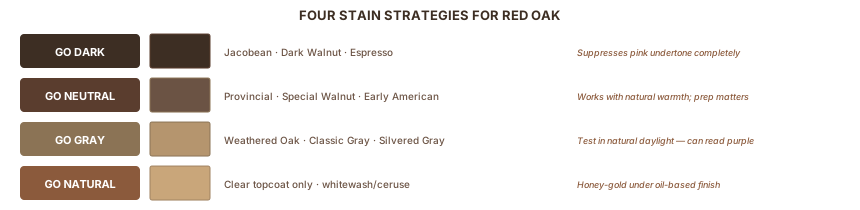
- The four color strategies and which stains actually work
- Early American: why it goes orange and how to get brown
- Sanding grit, water popping, and application steps
- Full color quick-reference table
Part 1: Why Red Oak Stains the Way It Does
Two things drive nearly every result you get staining red oak: pore structure and natural wood color.
Open Pores, Every Time
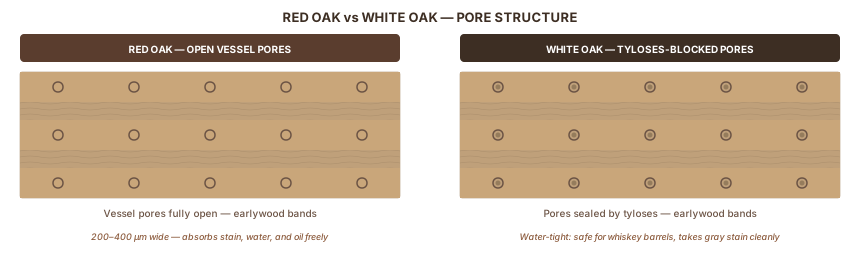
Red oak is a ring-porous hardwood. Large vessel pores concentrate in the early wood (the first flush of spring growth), forming visible lines across the face grain. You can see these pores without magnification; they run parallel to the grain on any oak surface.
Those pores are roughly 200–400 microns wide. Maple pores are under 50 microns. The difference matters because larger pores absorb more stain, and the contrast between the dense latewood and the open earlywood pores creates visible grain lines in the finished color.
Here's the structural detail that separates red oak from white oak: white oak's pores are plugged with tyloses, balloon-like cellular growths that fill the vessels and make white oak water-tight enough for whiskey barrels. Red oak has no tyloses. Its pores stay fully open, absorbing liquids readily and amplifying the grain pattern when stained.
The Pink Undertone
Red oak's natural color is warm tan with distinct pink or salmon undertones. These come from the wood's natural extractives, organic compounds in the wood cells. Under oil-based clear finishes, these undertones amplify and shift toward orange. Under water-based finishes, the pink stays closer to the raw wood color.
Warm stains (amber, golden, honey-toned) combine with the pink undertone to produce orange. Cool stains (grays, dark browns with green undertones) counteract the pink. Get this wrong and you refinish the floor twice.
Does Red Oak Blotch?
No. This is the most common misconception about staining oak.
Blotching happens when a wood has inconsistent density: alternating patches of dense fiber and open porous areas absorb stain at wildly different rates. Pine, soft maple, and cherry blotch badly because of this irregular structure.
Red oak's ring-porous structure is consistent. The earlywood pores absorb heavily; the denser latewood absorbs less. The result is pronounced grain contrast (the striped look you see on stained oak), but the pattern is predictable, not random. Red oak stains evenly within its grain pattern.
That striped grain appearance is built in. Some stain strategies minimize it; others let it show. Either way, you're working with a predictable material.
Part 2: Choosing a Stain Color for Red Oak
Four strategies cover the realistic range of outcomes.
| Strategy | Stain Examples | What It Does |
|---|---|---|
| Go dark | Jacobean, Dark Walnut, Espresso | Covers pink undertones, minimizes grain contrast |
| Go neutral | Provincial, Special Walnut | Complements natural warmth, traditional oak look |
| Go gray | Classic Gray, Weathered Oak | Neutralizes pink with cool tones, requires careful prep |
| Go natural | Clear topcoat or light stain | Embraces the warm undertone, lets grain show |
Go Dark
Dark stains put enough pigment on the wood that the natural undertones become irrelevant. The color you see is mostly stain, not wood.
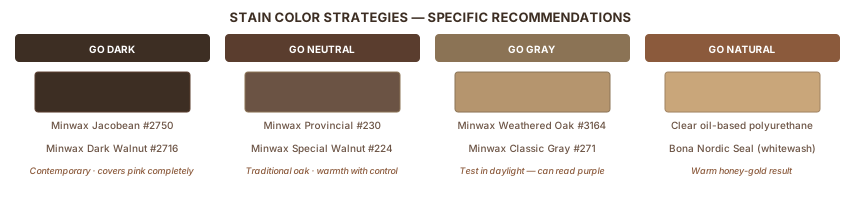
Professional floor finishers consistently reach for Jacobean when a client wants a contemporary, neutral dark floor on red oak. It's a rich, cool dark brown with enough depth to suppress the pink without going gray or black. The open pores absorb the dark pigment evenly, and the result looks intentional.
Dark Walnut (Minwax #2716) runs slightly warmer and a step lighter than Jacobean. On red oak, it reads as chocolate brown with warm undertones. A good choice if you want richness without going as dark as Jacobean.
Espresso is cool and very dark, close to Jacobean in depth with slightly less warmth. Works well for contemporary or minimalist interiors. Going to Ebony or Black moves into near-full coverage territory, more paint than stain.
Going dark also reduces visible grain contrast. The open pores fill with dark pigment and blend into the overall dark field, producing a more uniform appearance than medium stains.
Go Neutral
Medium browns work with the natural warmth of red oak rather than suppressing it. These are the classic oak colors, what traditional oak floors and cabinets have looked like for decades.
Provincial (Minwax #230) sits in the medium warm-brown range. It has some red in the formula, which on red oak produces a color that feels settled and established, warm but not orange. A safe choice when matching existing trim, molding, or furniture made from red oak.
Special Walnut (Minwax #224) is slightly darker than Provincial and a little less red. The difference on red oak is subtle but real: Special Walnut reads a bit more mature and neutral, while Provincial reads warmer. Both work. Special Walnut is the safer pick when uncertain.
Golden Pecan and Golden Oak push into warm honey territory. These bring out the natural red and produce a light, warm result. They're classic for a reason, but understand you're amplifying the warmth rather than counteracting it.
Go Gray
Gray is the hardest strategy on red oak, worth understanding before committing.
The color wheel principle: green sits opposite red, so stains with green or gray-green undertones cancel the pink. That's the theory behind gray floors on red oak. Professionals who specialize in floor finishing note that white oak takes gray stains far more cleanly than red oak. White oak's closed pores produce even, crisp gray coverage. Red oak's open pores absorb more, and the pink undertone interacts with gray to produce a purple or lavender cast in some lighting conditions.
If you want gray on red oak:
- Weathered Oak (Minwax #3164) is a gray-brown with natural, driftwood-like warmth. The brown in the formula keeps it from going purple, making it a better gray option for red oak than the pure cool grays.
- Classic Gray (Minwax #271) can work, but test it carefully. The pink undertone in red oak can interact with the cool gray to produce a purple or mauve result.
- Silvered Gray (Minwax) runs warmer than Classic Gray and is less likely to read purple.
Whatever gray you choose: test on a sample board and look at it in natural daylight at multiple times of day. Gray floors on red oak look dramatically different under morning light versus evening lamp light.
Use a water-based topcoat over a gray stain on red oak. Oil-based polyurethane adds an amber cast that shifts gray toward brown-gray or, over red oak, toward olive.
Go Natural
Skipping stain is a valid choice. Red oak under a clear oil-based finish produces a warm honey-gold color, the classic look many people associate with traditional American homes. Under a water-based finish, the color stays closer to the raw pale tan of the unsanded wood.
For a lighter, more Scandinavian result, a whitewash or ceruse technique fills the open pores with white-pigmented finish while leaving the wood surface close to its natural color. Bona Nordic Seal does this as a professional product. Apply it before a light stain or topcoat and it knocks the pink down significantly, producing a pale putty or cream result.
Part 3: Why Early American Stain Goes Orange on Red Oak
Early American (Minwax #230-A) is one of the most-searched stains for red oak, and one of the most commonly disappointing results.
Why Orange Happens
Testing on real red oak floors shows that Early American looks like a medium warm brown on the sample chip at the hardware store. On red oak, particularly under an oil-based finish, it often reads noticeably more orange.
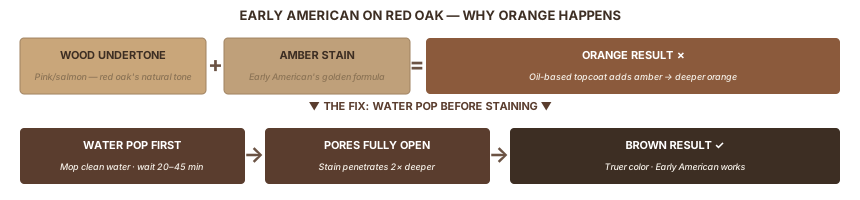
Early American's formula has amber and golden undertones. Red oak's natural extractives produce pink undertones. Pink plus amber equals orange. Apply oil-based polyurethane on top (which adds its own amber shift as it cures) and the orange intensifies.
The problem worsens when:
- You sand to 220 grit (shallower penetration, stain sits on the surface, colors stay lighter and redder)
- You skip water popping (same shallow-penetration effect)
- You apply a heavy first coat of oil-based polyurethane
How to Get Brown
Professionals who get good results with Early American on red oak use one or more of these approaches:
Water pop first. Apply clean water to the sanded floor, let it dry to barely damp (20–45 minutes), and apply stain immediately. Water popping opens the pores to maximum size, enabling deeper penetration. Deeper penetration shifts the color toward brown. Many homeowners who got orange without water popping got exactly the brown they wanted after adding that step.
Mix with Jacobean. A 3:1 mix of Early American and Jacobean adds depth and cool tone to the formula. The Jacobean's darker, cooler brown dilutes the amber in Early American and produces a richer, less orange result.
Use a water-based topcoat. This prevents the topcoat from adding its own amber shift. The stain color stays truer to what you applied.
Early American is a good choice for red oak. It requires specific prep to get right.
Part 4: How to Apply Stain to Red Oak
Two prep decisions determine most of your result: how fine you sand, and whether you water pop.

Sand at the Right Grit
Sanding too fine hurts your stain results on oak.
At 80–100 grit, red oak's pores are fully open and receptive. At 150 grit, you start closing the outer edge of the pores. At 220 grit, you've partially sealed the pore openings. Stain sits on the surface rather than penetrating, and the color comes out lighter and more variable.
WoodFloorDoctor recommends stopping at 100 grit for most red oak floors intended for staining. Going finer accentuates the color difference between earlywood and latewood, making the grain look more striped, not less.
Floor sanding sequence for staining:
- Cut: 36–40 grit (drum sander, removing old finish or leveling cupped boards)
- Mid: 60–80 grit (removing deep scratches from the cut)
- Final: 80–100 grit (the pass before staining)
- Oil-based stain: stop at 120–150 grit
- Water-based stain: 180 grit maximum
Water Popping (Floors)
Water popping is the single biggest factor separating good floor stain results from mediocre ones. Professional floor finishers use it routinely. Most DIYers have never heard of it.
The process:
- Sand to final grit (100) and clean the floor thoroughly: vacuum, then wipe with a tack cloth.
- Apply clean water with a mop or sponge, working with the grain
- Let the floor dry to barely damp. Not soaking, not bone dry. Typically 20–45 minutes.
- Apply stain immediately while the wood is still in this open, receptive state
Water popping swells the wood fibers, opening the vessel cells to maximum aperture. Stain penetrates deeper, producing richer, more even color. The pink undertones affect the final color less because the stain is deeper in the wood.
No special products required. Just clean water and a mop.
Application
- Clean the surface before staining. Sanding dust in the pores means stain goes into the dust instead of the wood. Vacuum, then wipe with a tack cloth.
- Test on a scrap or inconspicuous area. The sample chip at the store is on generic wood, not red oak with its specific undertones. A piece of scrap flooring or a closet corner is the real test.
- Apply liberally with a rag, brush, or applicator pad, working with the grain. Don't let any section dry before you wipe.
- Wipe off the excess while wet. Longer contact time equals darker color. One minute is lighter; three minutes is medium; five minutes is toward the darker end of the stain's range.
- Wait for full dry time before topcoat. Oil-based stain needs 6–8 hours minimum, overnight preferred. Solvent in the topcoat can reactivate undried stain and cause cloudiness.
Oil vs. Water-Based Stain
Oil-based stain outperforms water-based on open-grain woods like red oak. Oil molecules are smaller and don't face the surface tension problem that water-based stains encounter: water molecules resist entering vessel cells and can sit on top of the open pores rather than penetrating them.
Oil-based stain also gives more working time. Typically 3–5 minutes before the formula starts to set, compared to 1–2 minutes for water-based. On a large floor, that working time matters.
If you use water-based stain on red oak:
- Water pop the floor first (the damp fibers help penetration)
- Work in smaller sections, 3–4 board widths at a time
- Expect slightly less color depth than the same shade in oil-based
General Finishes recommends water-based stains when amber shift is a concern, particularly when targeting gray or white tones where oil-based topcoat would muddy the color.
Quick Reference
Popular stain colors on red oak, how they actually look on the wood.
| Stain Color | Brand | Tone | Works on Red Oak? | Notes |
|---|---|---|---|---|
| Jacobean | Minwax | Dark cool brown | Excellent | Professional floor choice, neutralizes pink undertones |
| Dark Walnut | Minwax | Dark warm brown | Excellent | Chocolate brown, masks red, approachable warmth |
| Espresso | Various | Dark neutral | Excellent | Contemporary interiors, very dark |
| Provincial | Minwax | Medium warm | Very good | Traditional oak floor look |
| Special Walnut | Minwax | Medium neutral | Very good | Less red than Provincial, more mature |
| Early American | Minwax | Medium amber | Good with prep | Water pop first or mix 3:1 with Jacobean |
| Classic Gray | Minwax | Cool gray | Moderate | Can read purple/lavender — test in natural light |
| Weathered Oak | Minwax | Light gray-brown | Moderate | Rustic/driftwood look, less purple than Classic Gray |
| Natural (no stain) | — | Clear | Good | Embraces warm undertone; oil-based poly adds amber |
Sources
This guide drew on professional floor finishing guidance, manufacturer technical data, and homeowner testing across multiple stain colors on actual red oak.
- The Wood Database — Distinguishing Red and White Oak — tyloses, pore structure, anatomical comparison
- WoodFloorDoctor — Choosing Correct Grit and Stain for Red Oak — sanding grit guidance and stain selection for floors
- Woodweb — Red Oak Finishing Basics — professional finisher knowledge base, technique and product guidance
- Woodweb — Avoiding Grain Darkening with Stain on Red Oak — grain contrast management, dye vs. pigment stain
- DuraMagic Floor — Best Red Oak Stain Colors — professional flooring color recommendations with rationale
- Addicted 2 Decorating — Testing Minwax Stain Colors on Red Oak Floor — side-by-side color testing with photographs
- Cyclone Hardwood Floors — Gray Stain on White Oak — white oak vs. red oak for gray stain results
- General Finishes — How to Prepare Wood for Stain — manufacturer guidance on prep sanding grit and water-based stain
- Four Generations One Roof — Best Red Oak Floor Stains — first-person testing across multiple stain colors
- Hydrangea Treehouse — Best Stain for Red Oak Floors — color testing and water popping discussion
- Pine and Prospect — The Stain We Chose for Red Oak Floors — first-person Early American experience and resolution
- Plank and Pillow — How to Take the Red Out of Red Oak — neutralization techniques for pink undertones
- Canadian Woodworking — Pore Fillers — pore filler products and application for furniture finishing
- PTL Flooring — Proper Sanding Sequence — floor sanding grit sequences from a professional installer
Wood Species
Also Referenced
Tagged