
18 Gauge Nails at a Glance
An 18 gauge brad nail is 0.0475 inches in diameter — thin enough to avoid splitting most trim and leave a hole small enough to vanish under filler. The four jobs it does best: trim and molding casings, cabinet face frames (with glue carrying the structural load), thin panels under 1/2", and picture frame assembly. Step up to 16 gauge when material runs over 3/4" thick or when the joint is load-bearing — at that point the brad's holding power isn't enough.
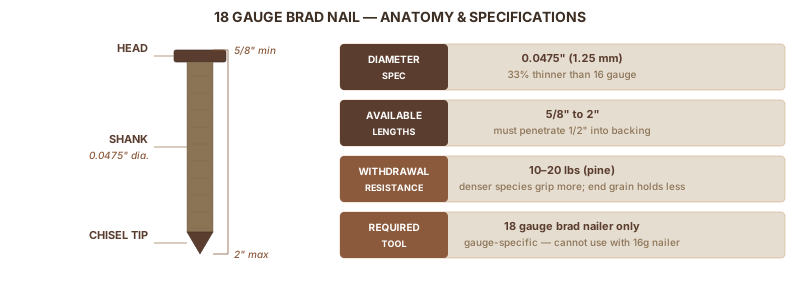
| Diameter | 0.0475" (1.25 mm) |
| Available lengths | 5/8" to 2" |
| Withdrawal resistance | 10–20 lbs in pine (without glue) |
| Tool | 18 gauge brad nailer (pneumatic or cordless) |
| Nail length rule | Must penetrate at least 1/2" into the backing piece |
| Step up to 16 gauge when | Material exceeds 3/4", dense hardwood, or structural trim |
In this guide:
- What 18 gauge means and how it compares to other gauges
- Seven applications where 18 gauge is the right call
- Air pressure settings by wood species
- Depth, length, and placement
- Preventing blowout in thin stock
- Hiding nail holes under paint, stain, and oil finishes
Part 1: What 18 Gauge Actually Means
Nail gauge runs backwards. Higher numbers mean thinner nails. An 18 gauge brad is thinner than a 16 gauge finish nail, which is thinner than a 15 gauge.
The gauge system comes from wire manufacturing. Sizes.com's nail wire gauge reference documents the standard: 18 gauge wire measures 0.0475 inches (1.25 mm) in diameter. Move down to 16 gauge and the diameter jumps to 0.063 inches. That's 33% more cross-sectional area, which means more holding power and a bigger hole.
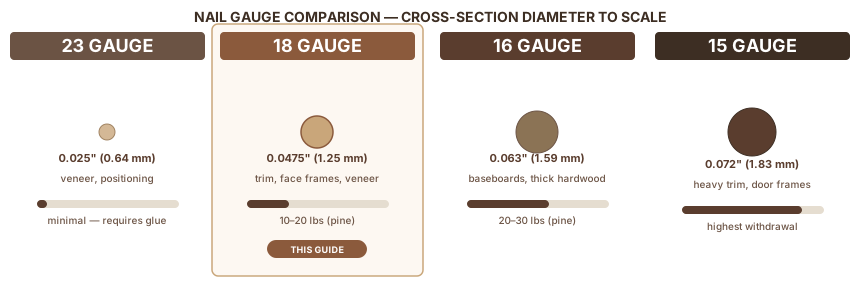
| Gauge | Diameter | Length range | Withdrawal resistance | Best for |
|---|---|---|---|---|
| 15 gauge | 0.072" (1.83 mm) | 1.25"–2.5" | Highest | Heavy trim, door frames, structural |
| 16 gauge | 0.063" (1.59 mm) | 3/4"–2.5" | 20–30 lbs | Baseboards, thick hardwood molding |
| 18 gauge | 0.0475" (1.25 mm) | 5/8"–2" | 10–20 lbs | Thin trim, face frames, delicate molding |
| 23 gauge | 0.025" (0.64 mm) | 5/8"–1" | Minimal | Veneer, positioning, requires glue |
Withdrawal resistance varies by species and grain direction. The numbers above are approximate values in softwood, drawn from Engineering Toolbox's withdrawal load data. Dense hardwoods grip tighter. End grain holds less.
Each gauge requires its own tool. An 18 gauge brad nailer accepts only 18 gauge nails. You can't load brads into a 16 gauge finish nailer or vice versa.
Part 2: Where 18 Gauge Brad Nails Belong
A 16 gauge nail in 3/8" shoe molding can push enough wood aside to split it. An 18 gauge brad won't. That smaller diameter also leaves a hole you can fill in seconds or ignore entirely under paint.
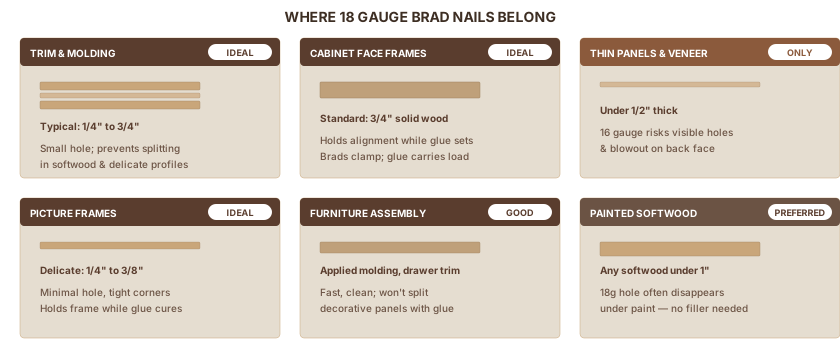
Trim and molding. Window casings, door trim, crown molding, chair rails, quarter-round, shoe molding. SENCO's fastener selection guide identifies 18 gauge as the standard for interior trim in the 1/4" to 3/4" thickness range.
Cabinet face frames. Standard face frame stock is 3/4" solid wood glued and nailed to a plywood cabinet box. The nails hold alignment while the glue sets. Glue carries the permanent load. Brads keep everything in position so you don't need six clamps per joint. If you're building face frames, Face-Frame Cabinet Construction covers the full process.
Thin panels and veneer. Anything under 1/2" thick. With these materials, 18 gauge is often the only option. 16 gauge at that thickness means visible holes, splitting risk, and potential blowthrough on the back face.
Picture frames. Delicate 1/4" to 3/8" stock with tight corners. The small hole needs minimal filling. Strong enough to hold the frame until the glue cures.
Furniture assembly. Drawer trim, applied molding, decorative panels. Anywhere you need a fast, clean fastener that won't split the workpiece. Brad nails combined with glue create joints that last decades. WOODSTARTER's brad nailer guide frames it well: brads hold position while glue cures. The glue carries the permanent load.
Painted trim. The small 18 gauge hole often disappears in softwood under paint without any filler. 16 gauge holes always show through.
Part 3: When to Step Up to 16 Gauge
More holding power costs you a bigger hole and more splitting risk.
| Project | Recommended gauge | Why |
|---|---|---|
| Crown molding (thin profile) | 18 gauge | Prevents splitting in delicate stock |
| 3/4" oak baseboards | 16 gauge | Dense wood needs more holding power |
| Cabinet face frames (with glue) | 18 gauge | Brads hold while glue does the work |
| Pine window casing | 18 gauge | Softwood, small hole, easy fill |
| Hardwood door trim | 16 gauge | Structural importance, thicker stock |
| Picture frames | 18 gauge | Delicate assembly, minimal holes |
| 1/4" veneer edge banding | 18 gauge | Any thicker gauge risks blowout |
| Shelving cleats | 16 gauge | Structural, load-bearing |
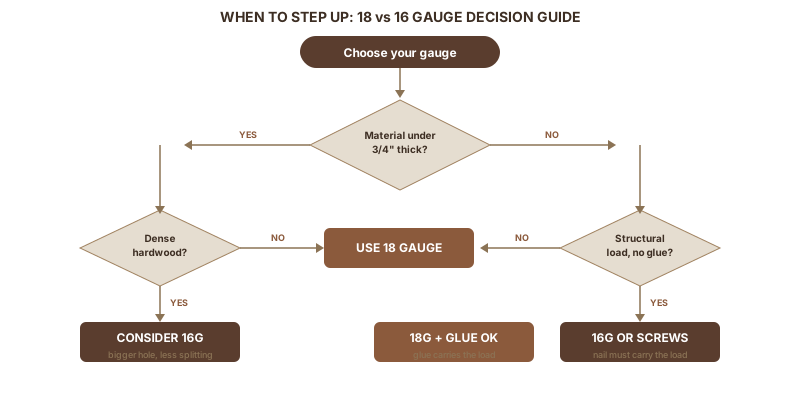
The thickness rule: Below 3/4", reach for 18 gauge. At 3/4" or above in dense hardwood, consider 16 gauge. Above 1", 16 gauge is the safer bet.
The finish rule: Stained or clear-finished projects benefit from 18 gauge's smaller hole. Painted projects can absorb the larger 16 gauge hole more easily. Lowe's brad vs. finish nailer guide puts it simply: use 18 gauge when hole visibility matters.
The structure rule: If the nail itself needs to carry load without glue, use 16 gauge or screws. If glue handles the structural work and brads just hold position, 18 gauge is enough.
Air Pressure Settings for 18 Gauge Brad Nailers
Wood density is the variable that decides PSI. Softer species crush under pressure that's correct for oak; denser species under-drive at pressure that flushes pine. Get this number right on scrap before you touch project material — a crater from an over-driven brad in finished work takes real effort to fix.
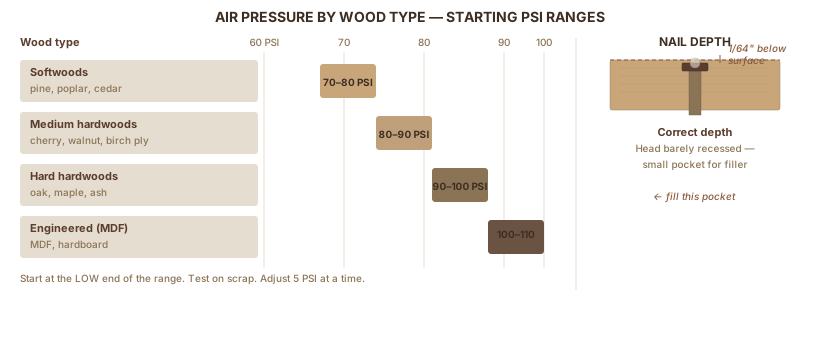
Start at the low end of each range and adjust up by 5 PSI at a time. The numbers below are starting points, not final answers — humidity, nail length, and individual tool tuning all shift the right setting a few PSI.
| Wood type | Species examples | Starting PSI |
|---|---|---|
| Softwoods | Pine, poplar, cedar, spruce | 70–80 PSI |
| Medium hardwoods | Cherry, walnut, birch plywood | 80–90 PSI |
| Hard hardwoods | Oak, maple, ash | 90–100 PSI |
| Engineered (MDF) | MDF, hardboard | 100–110 PSI |
RYOBI's brad nailer setup guide recommends testing on scrap from the same material before starting your project. A setting that drives flush in pine will under-drive in oak by 1/32" or more.
The test-on-scrap protocol: fire into a scrap piece of the same species and thickness. Check the depth. If the head sits too deep, lower pressure 5 PSI. If it's proud, raise 5 PSI. Mark the dial when you get it right so you can return to the same setting on the next session.
Part 4: Depth, Length, and Placement
With air pressure dialed in on scrap, the remaining variables are how deep the head sits, how long the nail needs to be for your stack, and where on the workpiece you place it.
Depth setting
Set the brad head 1/64" below the surface. Barely recessed, leaving a small pocket for filler. Over-driven nails crush wood fibers and leave craters that show through paint. Under-driven nails stick proud and catch sandpaper. Most brad nailers have a depth-of-drive adjustment dial near the trigger — use that for fine corrections instead of swinging PSI in either direction.
Nail length
The nail must pass through the first piece and penetrate at least 1/2" into the backing material.
| Workpiece thickness | Nail length |
|---|---|
| 1/4" | 5/8"–3/4" |
| 3/8" | 1"–1-1/8" |
| 1/2" | 1-1/4"–1-1/2" |
| 3/4" | 1-3/4"–2" |
When glue does the structural work, you have some flexibility. The nails just need to keep pieces aligned while the glue sets.
Placement and spacing
Stay at least 3/8" from any edge. In hardwoods, increase to 1/2". Closer than that and splitting risk jumps, especially in dry wood or near end grain.
Space nails 6–8 inches on edges and 12 inches in the field. On cupped or wavy material that needs pulling flat, tighten the spacing. At ends and corners, drop to 4–6 inches.
Keep the nailer nose flat against the work surface. Toolsradar's technique guide recommends angling slightly (about 15 degrees) toward the backing piece when nailing trim to reduce blowout on the entry side.
Part 5: Preventing Blowout in Thin Stock
Blowout is the most visible brad nail failure. The nail exits the side or back of thin wood, tearing a hole 2–3 times wider than the brad diameter with ragged grain edges. It's preventable.
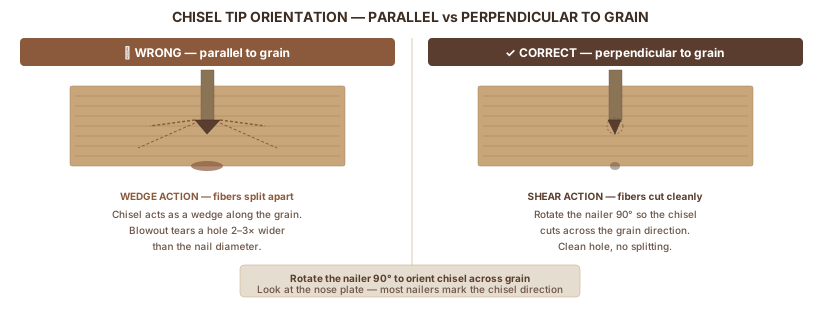
Orient the chisel point across the grain. Brad nails have a chisel-shaped tip. Fine Woodworking's blowout prevention guide explains why orientation matters: when the chisel point runs parallel to the grain, it acts as a wedge and splits the fibers apart. Perpendicular to the grain, it shears them cleanly. Rotate the nailer 90 degrees so the chisel cuts across the grain direction.
Lower the pressure. Drop 10–15 PSI below your normal setting for thin or delicate stock. Less velocity means less fiber disruption. For softwoods under 3/8", try 60–70 PSI.
Use the shortest nail that works. A 2" brad in 3/8" shoe molding is asking for trouble. Match the nail length to the material.
Stay away from edges. Minimum 3/8" from any edge. In thin stock under 1/4", move toward the center of the piece.
Pre-drill in hard species. WWGOA's blowout repair guide describes a trick for dense exotics: cut the head off a brad nail, chuck it in a drill, and use it as a pilot bit. The hole matches the brad diameter exactly, eliminating the wedging force that causes splits.
Part 6: Six Common Mistakes
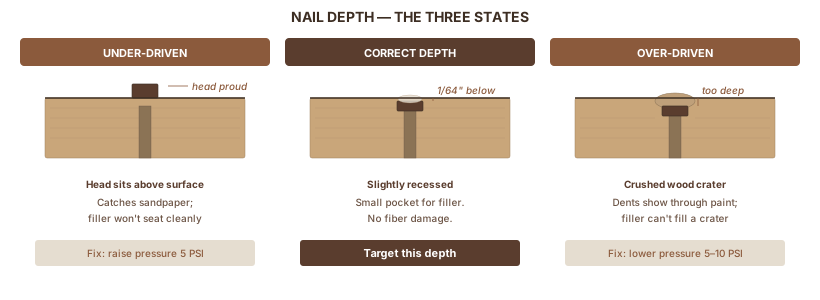
Over-driving. The brad sinks too deep, crushing the wood surface and leaving a crater. The fix: reduce air pressure and test on scrap. Set the head 1/64" below the surface.
Under-driving. The head sits proud of the surface, catches sandpaper, and won't accept filler cleanly. Increase pressure in 5 PSI increments until the head seats flush.
Splitting near edges. Thin molding and hardwood trim crack when you nail too close to the end. Maintain 3/8" minimum from edges. In very dry or brittle wood, pre-punch with an awl.
Nailing into knots. The brad deflects, bends, or jams the nailer. Avoid knots. If you must nail near one, pre-drill.
Wrong spacing. Nails too close together weaken the local area. Too far apart and the trim lifts between fasteners. Follow the 6–8 inch edge / 12 inch field pattern.
Skipping glue. Brad nails alone provide 10–20 lbs of withdrawal resistance. That holds trim on a wall, but it won't hold a face frame joint long-term. Fine Homebuilding's nailer selection guide puts it directly: in cabinet work, brad nails are clamps while glue sets. A joint with glue and brads relies on the glue for strength. A joint with brads alone will loosen.
Part 7: Hiding Brad Nail Holes
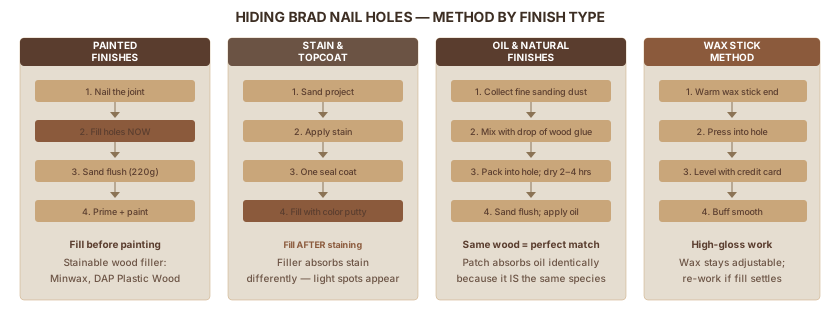
The filling method depends on your finish. Getting the sequence wrong on stained work is one of the most common finishing mistakes.
Painted finishes
Fill after nailing, before painting. Stainable wood filler (Minwax, DAP Plastic Wood, or Varathane) pressed into the hole with a putty knife. Let it dry, sand flush with 220 grit, then prime and paint. On softwood with 18 gauge holes, light sanding alone sometimes makes the hole disappear.
Stain and topcoat finishes
Fill after staining, not before. Wood filler absorbs stain differently from the surrounding wood, creating light spots that show through the finish. The correct sequence per WoodWeb's nail hole filling reference:
- Sand the project
- Apply stain
- Apply one seal coat (polyurethane, shellac, or lacquer)
- Fill holes with color-matched putty (Mohawk, Color Putty brand, or similar)
- Apply remaining topcoats
The seal coat locks in the stain color so you can match putty to the finished surface, not the raw wood.
Oil and natural finishes
Mix fine sanding dust from the same species with a drop of wood glue. Pack the paste into the hole, let it dry 2–4 hours, sand flush. The patch takes oil identically to the surrounding wood because it is the same wood.
Wax stick method
Warm the end of a color-matched wax stick, press into the hole, level with a credit card or putty knife, buff smooth. Wax sticks don't harden, so you can adjust the fill if it settles. Professional furniture finishers use this method on high-gloss work where any filler mismatch would be visible.
Part 8: What to Build Next
18 gauge brad nails show up constantly in cabinet and trim work. Two guides that put them in context:
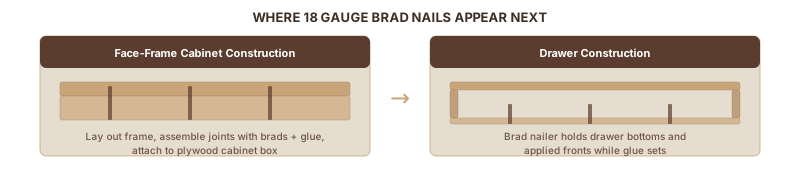
Face-Frame Cabinet Construction covers laying out the frame, assembling joints with brads and glue, and attaching the frame to the plywood box.
Drawer Construction walks through the assembly steps where a brad nailer comes back into use, holding drawer bottoms and applied fronts while glue sets.
Frequently Asked Questions
What are 18 gauge nails used for?
18 gauge brad nails are the standard fastener for interior trim and light cabinet work. The four jobs they do best are door and window casings, crown molding and quarter-round, cabinet face frames paired with wood glue, and picture frame assembly. They also work for thin panels under 1/2 inch thick. They are not the right choice for structural framing or for any joint without glue when the material runs over 3/4 inch thick — at that thickness step up to 16 gauge.
Can I use 18 gauge nails for baseboards?
Yes for thin softwood or MDF baseboard up to 1/2 inch thick, but only if the wall studs are reasonably close to the surface. For thick hardwood baseboard (3/4 inch and up) or any baseboard that will be walked into, kicked, or vacuumed against, 16 gauge gives meaningful holding-power gain over 18 gauge. The rule of thumb: if the trim is decorative, 18 gauge is fine. If it's structural or impact-prone, step up.
What's the difference between 16 gauge and 18 gauge nails?
The wire diameter. An 18 gauge brad measures 0.0475 inches; a 16 gauge finish nail measures 0.0625 inches — about 33 percent thicker. The thicker 16 gauge holds significantly more weight and resists pull-through better, but it leaves a larger hole that's harder to hide and is more likely to split narrow trim. 18 gauge is the trim-and-cabinet default; 16 gauge is for thicker stock and load-bearing trim. Most shops keep both nailers on hand.
What length 18 gauge nail should I use for trim?
The rule is that the nail should penetrate the substrate by at least twice the thickness of the material being fastened. For 1/2 inch trim into 1/2 inch drywall over a stud, that's a 1-1/4 inch brad. For 3/4 inch casing over drywall to stud, use 1-1/2 inch or 2 inch. Going longer than necessary doesn't add holding power on brad-thin nails, but going shorter risks the brad pulling out under expansion or impact.
What air pressure should I set my brad nailer to?
Pressure depends on wood density. Softwoods (pine, poplar, basswood) drive cleanly at 70 to 80 PSI. Mid-density hardwoods (oak, ash, cherry, maple) need 90 to 100 PSI. MDF and particleboard run 100 to 110 PSI to seat the head flush. Always test in scrap from the same board before driving into a finished surface — fluctuating moisture content can shift the right pressure by 5 to 10 PSI even within a single species.
Sources
Research for this guide drew on manufacturer specifications, engineering data, professional installation references, and woodworking community technical discussions.
- Sizes.com — Nail Wire Gauge — authoritative gauge diameter specifications
- Engineering Toolbox — Nail Withdrawal Loads — withdrawal resistance data by species
- MEITE USA — Brad Nails vs Finish Nails — gauge comparison with shear test data
- SENCO — Fastening Tips from the Pros — professional application guidance
- Fine Homebuilding — Trim Fastener Options — professional nailer selection, glue as primary fastener
- RYOBI — Beginner's Guide to Brad Nailers — air pressure and technique settings
- Toolsradar — Mastering Brad Nailers — placement, angle, and spacing technique
- Fine Woodworking — Preventing Brad Nail Blowouts — chisel point orientation technique
- WWGOA — Fixing Nail Blowouts — blowout repair and pre-drill prevention
- Lowe's — Brad Nailer vs Finish Nailer — gauge selection decision guide
- WoodWeb — Nail Hole Filling and Blending — professional hole filling techniques
- WOODSTARTER — When to Use a Brad Nailer — application framework and brad + glue principle
- Nailer Guy — Gauge Sizes and Brad Nailers — length ranges and selection guidance
- Engineering Toolbox — Wood Density — species density data for pressure calibration
- Lost Art Press — Nail Technology — historical context and technical depth
How We Research
We don't take affiliate revenue or accept review units. Picks come from multi-source research — manufacturer specs, OSHA / EPA / ASTM regs, and long-form practitioner threads — plus Ahmed's hands-on use where relevant. When we recommend something, we explain why.
Up Next
Brad Nailer vs Finish Nailer
WOOD & MATERIALS · Beginner