
Brad Nailer vs Finish Nailer at a Glance
Brad nailers and finish nailers are pneumatic fastening tools distinguished primarily by nail gauge: brad nailers drive 18-gauge nails for delicate trim and thin stock, while finish nailers drive heavier 15- or 16-gauge nails that deliver significantly more shear strength for baseboards, door casing, and cabinetry. The gauge difference also affects hole size — 18-gauge brads leave pinhole marks that need little or no filler, while 15-gauge finish nails leave a larger hole that typically requires wood putty. The right choice comes down to material thickness, holding power requirements, and your tolerance for visible hole repairs.
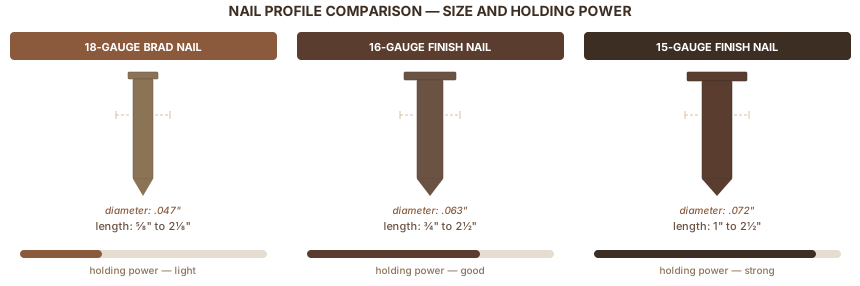
| Brad nails | 18 gauge, .047" diameter, ⅝"–2⅛" long |
| Finish nails (16ga) | 16 gauge, .063" diameter, ¾"–2½" long |
| Finish nails (15ga) | 15 gauge, .072" diameter, 1"–2½" long |
| Holding power | Finish nails hold significantly more than brads |
| Hole visibility | Brad holes often need no filler; finish holes usually do |
| Cost | Brad nailers run 10–20% less than comparable finish nailers |
In this guide:
- What makes them different — gauge, diameter, and holding power
- Which nailer for which job — a project-by-project breakdown
- Where they fit in the nailer family
- What happens when you choose wrong
- Which nailer to buy first
Part 1: What Makes Them Different
Both tools drive nails into wood. The difference is caliber. Brad nails are thinner, shorter, and leave smaller holes. Finish nails are thicker, longer, and grip harder.
How the Gauge System Works
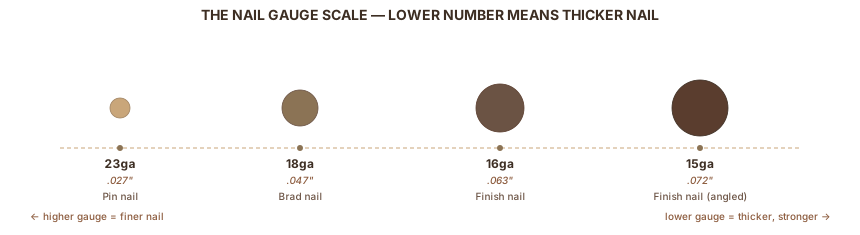
Nail gauge comes from the wire gauge standard. The numbering runs backward: higher gauge means thinner wire. An 18-gauge brad nail is thinner than a 15-gauge finish nail.
These are the gauges you'll see in trim and finish work, from SENCO's nail selection guide:
| Gauge | Diameter | Length Range | Head Type | Common Name |
|---|---|---|---|---|
| 23 | .027" | ½"–2" | Headless | Pin nail |
| 18 | .047" | ⅝"–2⅛" | Small/headless | Brad nail |
| 16 | .063" | ¾"–2½" | T-head | Finish nail |
| 15 | .072" | 1"–2½" | Brad head | Finish nail (angled) |
A 15-gauge finish nail is about 54% thicker than an 18-gauge brad. That's not a subtle difference. It shows up in holding power, hole size, and splitting risk.
Why Holding Power Differs
Three things create holding power in a nail: shank thickness, head size, and penetration depth.
Thicker shanks create more friction against wood fibers. That's why finish nails hold better than brads at the same length. Larger heads resist pull-through under load. And longer nails engage more wood, which means more friction overall.
Brad nails hold fine for lightweight trim under ½" thick. But for anything over ¾", or anything that bears weight, you need finish nails. In dense materials like MDF, hardwood, or plywood, brads tend to buckle and fold instead of driving clean. Bob Vila's nailer comparison notes that brads can "fold up on themselves" in dense stock, jamming the tool or bending inside the material.
Hole Size and Visibility
Brad nails leave tiny holes. On painted trim, you can often skip the filler entirely. On softwoods, the hole nearly closes on its own.
Finish nails leave larger, more visible holes. You'll need wood filler and sanding before paint or stain looks clean. On stained hardwood, color-matching filler is tricky, and the holes can still show.
If appearance matters and the joint doesn't need serious holding power, brads win. If the joint needs to stay put for years, finish nails win even though the holes take more work to hide.
Part 2: Which Nailer for Which Job
Three things drive the choice: material thickness, material density, and how much the fastener needs to hold.
When to Reach for the Brad Nailer
Brad nailers handle the light, delicate work where a bigger nail would split the stock or leave a hole you can't hide:
- Thin decorative molding (under ½" thick) — the main reason brad nailers exist
- Picture frames and small boxes — thin stock, appearance-critical
- Cabinet back panels — attaching ¼" plywood to the cabinet box
- Bead board and wainscoting — thin panels, no structural load
- Craft projects — anything small and delicate
- Temporary clamping — holding pieces while glue dries, then removing or leaving the brads
For more on 18-gauge brad nails, including driving technique and air pressure settings, see our dedicated guide.
When to Reach for the Finish Nailer
Finish nailers take over when the material is thicker, denser, or needs to stay in place under load:
- Baseboards (16ga) — heavy trim that needs to hold against a wall for years
- Window and door casing (16ga) — secure attachment to framing
- Crown molding — 16ga for standard profiles, 15ga for large, heavy profiles
- Cabinet face frames (15ga or 16ga) — structural connections
- Stair treads and risers (15ga) — load-bearing, can't fail
- Door jamb installation (15ga) — heavy, needs maximum holding power
- Furniture assembly without glue — the nail alone provides the hold
The Quick Decision
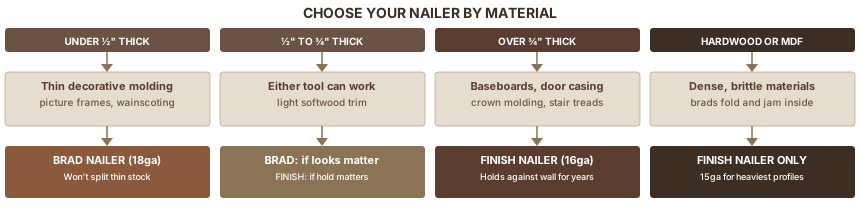
| Material Thickness | Recommended | Why |
|---|---|---|
| Under ½" | Brad nailer (18ga) | Finish nails risk splitting thin stock |
| ½" to ¾" | Either works | Brad if appearance matters; finish if hold matters |
| Over ¾" | Finish nailer (15/16ga) | Brads lack holding power at this thickness |
| Hardwood or MDF | Finish nailer only | Brads fold and jam in dense material |
| Softwood trim | Either | Brad for light molding; finish for baseboards |
| Temporary hold (glue drying) | Brad nailer | Small holes, easy to remove if needed |
Part 3: Where Brad and Finish Nailers Fit in the Nailer Family
Five types of nailers cover the full range from invisible pins to structural framing nails. Brad and finish nailers sit in the middle.

| Tool | Gauge | Best For | Holding Power |
|---|---|---|---|
| Pin nailer | 23ga | Invisible fastening, glue assist, delicate veneer | Minimal |
| Brad nailer | 18ga | Light trim, crafts, temporary holding | Moderate |
| 16ga finish nailer | 16ga | Baseboards, window casing, general trim | Good |
| 15ga finish nailer | 15ga | Heavy trim, cabinetry, door hanging | Strong |
| Framing nailer | 8–11ga | Wall framing, decking, structural work | Maximum |
Brad and finish nailers are both finishing tools. The framing nailer handles structural work. The pin nailer handles cosmetic-only fastening. Between those extremes, brad and finish nailers cover everything from light trim to heavy casing, differing only in how much material they grip and how visible the holes are.
Part 4: What Happens When You Choose Wrong
You won't destroy a project by grabbing the wrong nailer. But you'll create problems that take longer to fix than choosing the right one up front.
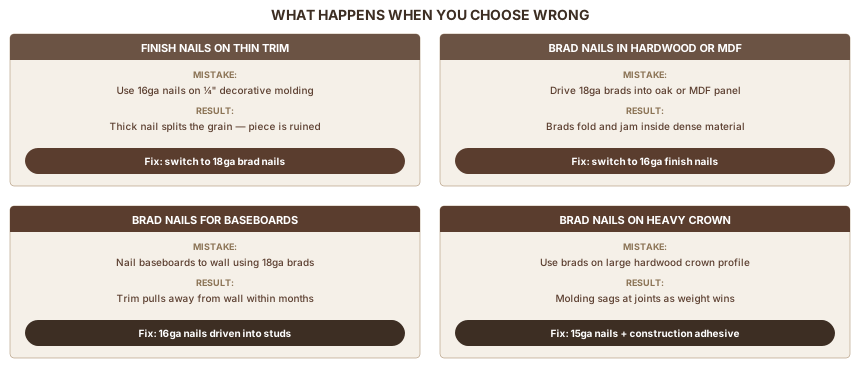
Finish nails in thin trim. You're installing ¼" decorative molding. You grab the 16-gauge finish nailer because it's what you used for the baseboards. The thick nail splits the molding along the grain. Now you need a new piece. Brads would have held it without splitting.
Brads in MDF. You're attaching MDF panels to a cabinet. The 18-gauge brads buckle instead of driving clean. Some fold inside the material. Others jam the tool. MDF is dense enough that thin brads can't penetrate reliably. Switch to 16-gauge finish nails.
Brads on baseboards. You nail baseboards to the wall with brads. They look fine at first. A few months later, one section pulls away. Brads don't have the holding power to keep heavy trim tight against drywall and framing over time. Finish nails driven into studs hold for decades.
Brads on heavy crown molding. Large hardwood crown profiles are heavy. Brad nails can't support the weight against gravity. The molding slowly sags at the joints. Use 15-gauge finish nails, or combine 16-gauge nails with construction adhesive.
Finish nails on stained hardwood. You install cherry cabinet face frames with 16-gauge nails. The holes show through the stain. Finish nail holes need color-matched filler applied before staining, and even then they can be visible on dark hardwoods. If the joint can handle brads, the smaller holes are easier to hide.
Part 5: Which Nailer to Buy First
If you can only buy one nailer, buy the one that handles 80% of your current projects. Woodsmith's comparison review frames it the same way: match the tool to your work, not to a hypothetical project list.
The Recommendation
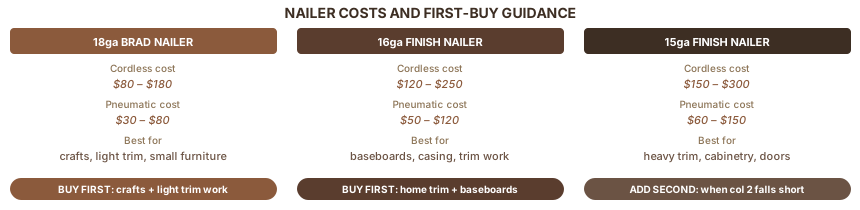
For most beginners doing home trim work — baseboards, door casing, window trim, crown molding — buy a 16-gauge finish nailer. It handles the widest range of trim tasks. It has enough holding power for almost any finish application. And when you eventually add a brad nailer, you'll use both regularly.
If most of your projects are crafts, small furniture, or light trim — picture frames, small boxes, wainscoting — buy an 18-gauge brad nailer first. It's cheaper, lighter, and won't split the thin stock you work with most.
The 16-gauge finish nailer is the more versatile single-nailer choice. But "more versatile" only matters if it matches what you actually build.
Cordless or Pneumatic?
Most beginners should go cordless. No compressor to buy, no hose to manage, no air fittings to figure out. Modern 18V and 20V battery nailers match pneumatic performance for home shop use.
Pneumatic nailers cost less per tool, but you need a compressor ($100–$300) and hose setup. If you already own a compressor, pneumatic is the cheaper path. If you don't, cordless is simpler and the total cost is comparable. Per Bob Vila, brad nailers run 10–20% cheaper than finish nailers from the same manufacturer.
What They Cost
| Tool | Cordless | Pneumatic |
|---|---|---|
| 18ga brad nailer | $80–$180 | $30–$80 |
| 16ga finish nailer | $120–$250 | $50–$120 |
| 15ga finish nailer | $150–$300 | $60–$150 |
| Air compressor | — | $100–$300 |
Nail costs are roughly equal across gauges: $5–$15 per box of 1,000–5,000 nails. The hidden cost with finish nailers is wood filler and the sanding time to make each hole disappear.
Most serious woodworkers own both a brad nailer and a finish nailer within a year. Buy whichever matches your current work. Add the second one when you hit a project where the first falls short.
Where This Fits

Related guides:
- 18 Gauge Nails: When to Use Them and How — deep dive on brad nail specs, driving technique, and air pressure settings
What to learn next:
If you're installing trim, learn about wood filler and finishing techniques. If you're building cabinets, face frame construction is where nailers get used the most. If you're choosing between joinery methods, brad and finish nails are one option alongside pocket screws, biscuits, and traditional wood joints.
Sources
The nail specifications, holding power comparisons, and cost data in this guide come from manufacturer references, woodworking publications, and professional tool review sites.
- SENCO: Choosing the Right Nail for the Job — manufacturer nail gauge specifications and diameter data
- Bob Vila: Brad Nailer vs. Finish Nailer — cost comparison data, brad folding in dense materials
- Lowes: Brad Nailer vs Finish Nailer Buying Guide — application guidance by nail type
- Woodsmith: Brad vs. Finish Nailers — expert first-purchase recommendation
- Popular Woodworking: Brad Nailer vs Finish Nailer — detailed comparison for woodworkers
- MEITE USA: Brad Nails vs Finish Nails vs Pin Nails — nailer spectrum context and application mapping
- Everwin Pneumatic: Choosing a Finish Nailer — gauge-by-gauge application breakdown
- Pro Tool Reviews: Brad Nailer vs Finish Nailer — professional perspective on tool selection
- Fine Homebuilding Forum: Brad or Finish Nailer? — professional contractor discussion on first-nailer choice
- Obsessed Woodworking: Which Should You Buy First? — woodworker recommendation with project-type reasoning
- Fastener USA: Finish Nail Gauge Chart — industry gauge reference data
- Nail Gun Depot: Brad Nails vs Finish Nails — nail specification comparison
Tools Used
Also Referenced
Up Next
Countersink Drill Bit: How to Choose and Use One
WOOD & MATERIALS · Beginner