
Light Oak at a Glance
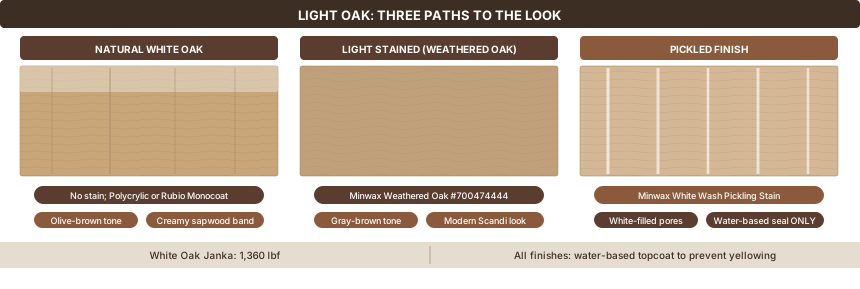
White oak in its natural state is already a light oak. Fresh-cut, the wood is a pale olive-brown with creamy sapwood and a straight, open grain. Expect to pay $8–14 per board foot at a hardwood dealer for 4/4 (about 1 inch thick) white oak — roughly twice the cost of red oak. To keep it light, you need a water-based or penetrating finish. Oil-based finishes amber over time and gradually kill the effect. If you're staining another species to look like light oak, species choice matters more than stain color: red oak's pink undertones fight light stains, while white oak's neutral grain accepts them cleanly.
| White oak Janka hardness | 1,360 lbf |
| Natural color | Light to medium olive-brown; sapwood creamy white |
| Best stain for lightest look | Minwax Weathered Oak or Varathane Weathered Oak |
| Clear coat that won't yellow | Minwax Polycrylic or Rubio Monocoat Natural |
| Red oak warning | Pink undertones turn light/gray stains peachy |
In this guide:
- What light oak wood looks like
- White oak vs. red oak for light finishes
- Choosing your stain or finish
- Preparing and applying the finish
- Common mistakes and how to fix them
How to Use This Guide
If you have white oak and want to keep it light: Go straight to Part 3 (natural finishes and light stains) and Part 4 (application).
If you're trying to stain red oak light: Read Part 2 first. The species problem likely explains your results. Then Part 3 for the fix.
If your light finish yellowed: That's a clear coat problem. Skip to Part 3 (the non-yellowing clear coats section) and Part 5 (mistake #3).
If you want to stain non-oak wood to look like light oak: Part 3 (gel stain section) covers that.
Part 1: What Light Oak Wood Looks Like
White oak (Quercus alba) is the species that gives "light oak" its definition. According to The Wood Database's white oak entry, fresh from the mill, unfinished white oak is light to medium olive-brown. Sapwood, the wood closest to the bark, reads as creamy white to light brown. Heartwood sits a few shades warmer: light brown trending toward medium brown, without the yellow-orange intensity of pine or the red warmth of cherry. Janka hardness is 1,360 lbf.
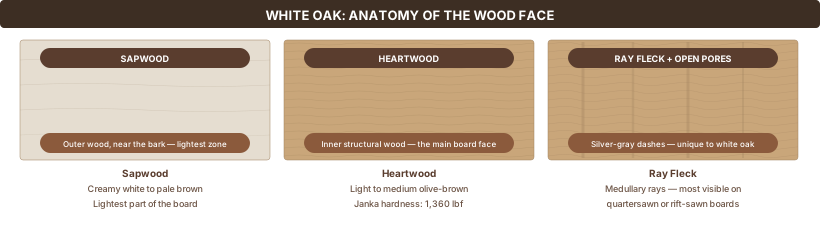
The grain is straight and coarse. Pores are large and open, which gives the wood its texture and makes it excellent at holding stain evenly. What sets white oak apart visually is its ray fleck: medullary rays that appear as silver-gray dashes across the face grain, especially prominent on quartersawn or rift-sawn boards. That pattern is the hallmark of Scandinavian and modern American furniture. It reads as sophisticated grain rather than busy figure.
How the color changes over time
White oak doesn't stay pale indefinitely. UV light and oxygen react with the wood's tannins and other compounds, gradually shifting the color toward honey and amber. Apres Floors' guide on white oak aging describes this as white oak developing a "mature, golden glow" over time. The change is slow in a well-lit interior. You'd notice it over years, not months.
Your finish choice controls how fast this happens. A water-based polyurethane forms a barrier that slows UV and oxygen contact, so the wood stays light longer. An oil-based finish does the opposite: it adds its own amber tone on top of any natural aging, accelerating the shift from pale to warm.
Part 2: White Oak vs. Red Oak for Light Finishes
The single biggest variable in achieving a light oak look isn't the stain you pick. It's the species you're working with.
The undertone problem
White oak and red oak look similar unfinished. They're different species with similar names, and at a glance (especially at a big-box store) the boards look close enough that buyers don't notice the difference. Under light stain, the difference becomes unmistakable.
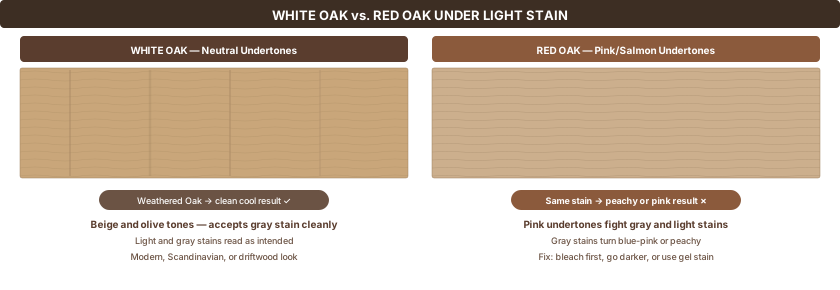
White oak has neutral undertones: beige, creamy, a touch of olive. Under light stains, these neutral tones read as clean honey-brown or a cool driftwood. Gray stains on white oak produce the modern, clean look you see in high-end furniture catalogs.
Red oak has pink and salmon undertones. Apply the same gray stain to red oak, and it can read blue-pink, peachy, or simply muddy. Apply a light brown stain, and the pink undertones push through as an unwanted warmth. This is why red oak frustrates so many finishers. They're fighting their species, not their technique.
Carlisle Wide Plank Floors' species comparison puts it plainly: white oak is better with gray and lighter stains. The darker you go, the less the difference matters. Ebony, dark walnut, or black stains overwhelm both species' undertones. Light finishes amplify them. If you're going light, species is your first decision.
If you only have red oak
Three options:
-
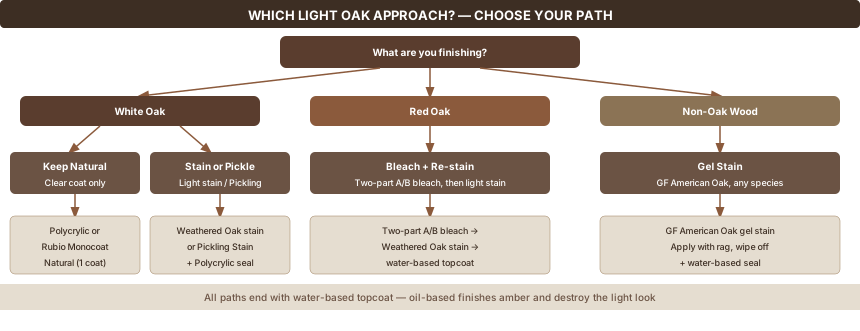
Bleach it. Two-part A/B bleach (sodium hydroxide + hydrogen peroxide) strips the wood's natural color, turning red oak essentially bone-white. You then stain the neutral, bleached surface with any light color and get clean results. More work, but it solves the species problem completely.
-
Go darker. Dark finishes minimize the undertone difference. If your project can handle a medium-brown or darker result, red oak works fine.
-
Use gel stain. Gel stain sits on the surface rather than penetrating the wood. It's more opaque and covers undertones better than a penetrating stain. You won't get the most natural-looking result, but you'll get a consistent color.
Part 3: Choosing Your Stain or Finish
Four approaches. Pick the one that matches your situation.
Enhance white oak naturally: no stain
If you have white oak and want to preserve its pale color without any shift, skip stain entirely. Two options:
Water-based clear coat: Minwax Polycrylic or General Finishes Enduro Clear Poly. Both dry clear without yellowing. Apply 2-3 coats over bare wood. Available in satin, semi-gloss, or gloss.
Hardwax oil: Rubio Monocoat Oil Plus 2C (Natural color) or Osmo Polyx-Oil. These penetrate the wood fibers rather than sitting on top as a film. The result is a matte, natural feel that looks and feels like the wood, not like a plastic coating. Rubio Monocoat is 0% VOC and covers in a single coat. A 390mL tin runs $50-60 and covers roughly 150-200 square feet.
If your goal is "show me the wood, keep it pale," this is the path.
Apply a light stain on white oak
These penetrating oil-based stains produce a light oak result on white oak:
| Product | Color description | Best for | Where to buy |
|---|---|---|---|
| Minwax Weathered Oak #700474444 | Very light gray-brown, barely-there | Modern/Scandinavian look | Lowe's, Amazon |
| Varathane Weathered Oak #339716 | Ashy gray-brown | Similar to Minwax Weathered Oak | Home Depot |
| Varathane Golden Oak #339702 | Warm honey-golden | Traditional or farmhouse look | Home Depot |
| Minwax Classic Oak MW1191 | Traditional medium oak tone | Classic oak furniture color | Home Hardware stores |
For the lightest results, Minwax Weathered Oak is your stain. It barely colors the wood. It deepens the grain slightly without adding much brown or gray. One coat gives a very subtle effect; you can apply a second if you want slightly more presence.
Pickled or whitewashed finish
Pickling creates a lighter-than-natural effect by filling oak's open pores with white while leaving the face of the wood mostly natural. The grain reads more dramatically (white pores against natural wood face), and the overall look is bright and airy.
Commercial option: Minwax White Wash Pickling Stain, around $15 for a quart.
DIY option: Mix white latex paint with an equal amount of water.
Oak is particularly good for pickling because its large, open pores hold the white pigment well. This Old House's guide to pickled finishes notes that working the stain against the grain first pushes it into pores more effectively than going with the grain. The grain stays visible. The bright, clean quality you get from pickling is different from anything a natural clear finish produces.
Important: seal a pickled finish with a water-based clear coat. Oil-based finishes yellow and will turn your bright white pores cream or orange within a year.
Staining non-oak wood to look like oak
Penetrating stains reveal whatever grain the wood already has. Apply a light oak stain to pine and you get stained pine. The pine grain shows through, and it doesn't look like oak.
For non-oak wood, use gel stain (General Finishes American Oak is a good lighter option). Gel stain is thick and sits on the surface rather than penetrating. It provides consistent, opaque color regardless of the wood underneath.
Apply gel stain with a rag, work it into the surface, and wipe off excess. Seal with a compatible clear coat.
Part 4: Preparing and Applying the Finish

Surface prep
- Oil-based stain: sand to 150 grit. Going finer doesn't help and can slightly reduce penetration.
- Water-based stain: sand to 180 grit. Not 220. Too fine closes the grain and makes water-based stain absorb unevenly.
- Always sand with the grain. Cross-grain scratches show under light stains.
- Vacuum between grits. Finish with a tack cloth.
Pre-stain wood conditioner: Oak doesn't blotch the way pine does, but conditioner still helps even out absorption on older or kiln-dried wood. Apply, let sit 15-30 minutes, wipe off excess.
Steel wool warning: Never use steel wool on oak before a water-based finish. Oak's high tannin content reacts with iron particles to create permanent black stains, as Hardwoods Group's tannin guide explains in detail. Use a synthetic 0000 scuff pad (3M Scotch-Brite white pads work) for surface prep and between-coat scuffing.
Applying oil-based stain
Per Minwax's staining technique guide:
- Stir the stain thoroughly. Pigment settles; an unstirred can gives uneven results.
- Apply with a brush or lint-free rag.
- On oak's coarse, open grain, work the stain in with a circular motion to push it into the pores.
- Let it penetrate 3-5 minutes for light results. Longer contact means a darker result. Leave it up to 15 minutes if you want a deeper color.
- Wipe off all excess with a clean lint-free cloth, following the grain. Remove everything sitting on the surface.
- Let dry 24 hours before applying a topcoat.
- A second coat adds slightly more color. For the lightest result, one coat is usually enough.
Applying water-based stain
Water-based stains dry fast. Work in small sections: one board at a time for furniture, one strip at a time for floors.
- Apply with a brush, working quickly.
- Wipe off within 2 minutes. If it dries before you wipe, you'll get hard, uneven edges.
- Let dry 2-4 hours.
- Scuff lightly with a 220-grit sanding sponge between coats.
Applying a pickled finish
- Apply pickling stain liberally with a brush.
- While still wet: wipe with a dry rag against the grain. This pushes the stain into the pores.
- Then wipe with the grain to remove excess from the face. The pores keep their white; the surface is mostly clean.
- Let dry 24 hours.
- Seal with water-based clear coat.
Bleaching red oak (when needed)
Two-part A/B bleach comes as two separate solutions. Most finishing suppliers carry it. Popular Woodworking's bleaching guide notes that two-part bleach is the only method that actually removes natural wood color, and it works particularly well on oak.
- Apply Part A (typically sodium hydroxide) with a brush.
- Apply Part B (typically hydrogen peroxide) over it immediately. The chemical reaction begins and the wood lightens.
- Let react 10-20 minutes, checking the color.
- Neutralize: wipe down with a rag soaked in a 50/50 water and white vinegar solution, then with clean water. Let dry completely. Two full days minimum.
- The grain will be raised. Sand with 120, then 180/220.
- Now apply your light stain to a neutral, pink-free surface.
Oxalic acid is a different product. It removes iron and water stains from oak but won't lighten the wood's natural color. Don't confuse them.
Sealing without yellowing
Your clear coat choice determines whether the finish stays light or shifts amber. Get this wrong and every other decision you made becomes irrelevant.
Use these:
- Minwax Polycrylic (water-based): non-yellowing, 2-3 coats, available in satin/semi-gloss/gloss. Best choice for most DIYers.
- General Finishes Enduro Clear Poly (water-based): professional grade, non-yellowing, available in Dead Flat through Semi-Gloss. Better build, harder film.
- Rubio Monocoat Oil Plus 2C / Osmo Polyx-Oil (hardwax oil): penetrating, non-yellowing, matte natural feel. One coat for Rubio. Penetrating finishes don't build up a surface film, so repairs are easier.
Avoid these for light finishes:
- Oil-based polyurethane: ambering within 6-12 months.
- Shellac: strong orange/amber tone from day one.
- Linseed oil: heavy yellowing.
Water-based poly tip: water raises wood grain slightly. Before your first coat, wipe the bare stained wood with a damp cloth, let it dry, then sand lightly with 220. This prevents the first coat from feeling rough.
Part 5: Common Mistakes and How to Fix Them
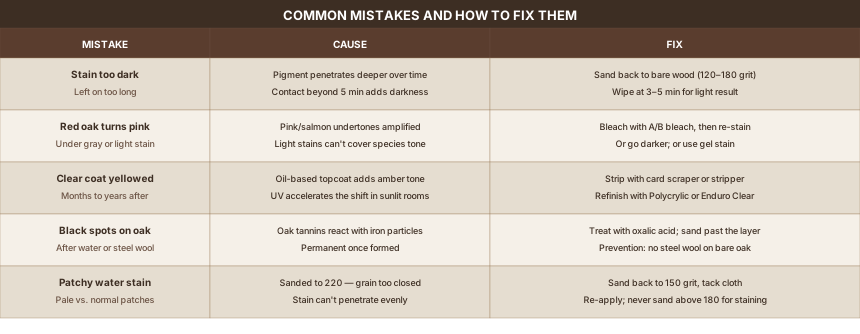
Stain left on too long: result too dark
Stain penetrates quickly. What sits on the surface after 3 minutes just adds darkness, not richness. For light results, wipe at 3-5 minutes. If your first coat came out too dark, sand back to bare wood (120-180 grit) and try again with a faster wipe.
Red oak with light stain: pink or peachy result
That pink is the species undertone, not a technique problem. Light and gray stains amplify red oak's pink grain rather than covering it. Strip and bleach before re-staining, switch to a darker color, or use gel stain for more opaque coverage.
Clear coat yellowed the finish
An oil-based topcoat applied over a light stain will amber over time. In a south-facing room with direct sunlight, you'll notice it within months. Fine Woodworking's forum thread on non-yellowing finishes for white oak covers this in detail. There's no fixing this without stripping the topcoat. Remove the finish with a card scraper or chemical stripper, and refinish with Minwax Polycrylic or General Finishes Enduro Clear Poly.
Black spots after water prep or steel wool
Black spots on oak are the tannin-iron reaction. Once they appear, removal is nearly impossible without sanding past the stained layer or treating with oxalic acid, which targets iron staining specifically. Prevention is the only reliable answer: no steel wool on bare oak, keep steel tools dry, use stainless hardware.
Patchy light areas under water-based stain
Sanding to 220 before water-based stain closes the grain. The stain can't penetrate evenly, so you get pale patches next to normal ones. Sand to 180. If you've already hit this problem, sand back to 150, vacuum, tack cloth, and re-apply.
FAQ
Will white oak stay light over time without a finish?
No. Bare white oak darkens within months of UV exposure, especially near windows, deepening to a warm caramel-brown over a year or two. To preserve the light look, apply a water-based clear coat like Minwax Polycrylic or General Finishes High Performance, which contains UV inhibitors. Re-coat every 5–7 years on heavily exposed pieces. Rubio Monocoat Pure 2C is another option that locks in close to the bare-wood color.
Why does my "light oak" stain look pink on red oak?
Red oak has natural pink-coral undertones in its heartwood. When you put a gray, weathered, or driftwood stain on it, those pink tones bleed through and shift the result toward peach. White oak's olive-neutral undertone takes light stains cleanly. If you must use red oak, pre-bleach with a two-part A/B wood bleach (Klean-Strip and similar) to neutralize the pink before staining — but expect extra labor and a color that's harder to predict.
What's the cheapest way to fake a light oak look on red oak?
Pickling stain is the cheapest fix. Minwax White Wash Pickling Stain costs about $12 per quart and fills the grain pores with white pigment, masking red oak's pink undertones. Apply liberally, wait 1–3 minutes, then wipe off the excess. Seal with water-based polyurethane only — oil-based topcoats will yellow the white pigment within 6 months.
Should I sand to 220 before staining oak?
Not for water-based stains. Sanding past 180 grit closes the grain so finely that water-based stain can't penetrate evenly, leaving pale patches. Stop at 180 grit for water-based work. For oil-based stains, sanding to 220 is fine because the slower-drying oil has time to penetrate. The single most common cause of patchy light-oak finishes is over-sanding before applying water-based product.
How do I prevent black spots on oak?
Black spots are the tannin-iron reaction — oak's natural tannins meeting iron from steel wool, raw hardware, or even tap water with high iron content. Never use steel wool on bare oak (use synthetic abrasive pads instead), keep steel tools dry, and use stainless or brass hardware. If spots appear, oxalic acid will lift them, but only if you catch them early — once they oxidize through the wood, you have to sand back to fresh material.
Sources
This guide draws on species data from woodworking databases, manufacturer technical data sheets, expert finishing publications, and professional finisher forums.
- The Wood Database — White Oak — species data: color, grain, hardness
- Apres Floors — Does White Oak Lighten or Darken Over Time — aging and patina behavior
- Carlisle Wide Plank Floors — Red Oak vs. White Oak — undertone comparison for finishing
- The Wood Database — Distinguishing Red Oak from White Oak — species identification
- Rubio Monocoat — Oil Plus 2C — hardwax oil product specs
- This Old House — How to Create a Pickled Finish on Wood — pickling technique and process
- Minwax — Wood Staining Tips — oil-based stain application technique
- Hardwoods Group — Understanding Tannin Staining in Oak — tannin-iron reaction and prevention
- Popular Woodworking — Bleaching Wood — two-part A/B bleach process
- General Finishes — Enduro Clear Poly — water-based topcoat specs
- Fine Woodworking — Non-Yellowing Finish for White Oak — professional finisher advice on clear coat choice
- Minwax — Color Guide — stain color options and product numbers
Tagged
Up Next
Staining Maple: Why It's Difficult and How to Get Even Color
WOOD & MATERIALS · Beginner