
12-Inch Table Saw at a Glance
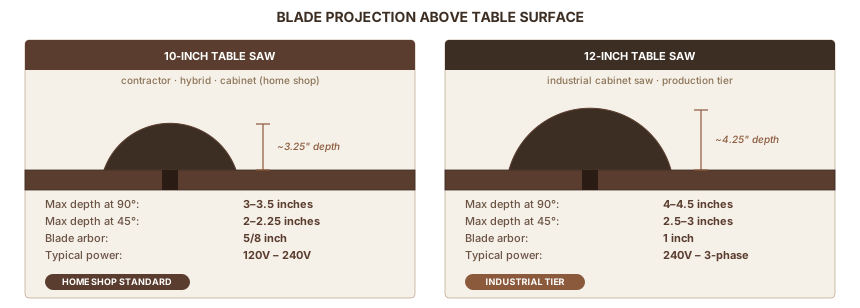
A 12-inch table saw gives you roughly 0.5–1 inch of extra cutting depth over a 10-inch saw. For most furniture projects, that difference never comes up. The real problem: almost no 12-inch table saws run on standard home-shop power. If you're building furniture from 4/4 to 8/4 lumber, you don't need one. If you regularly cut 4×4 post stock or thick hardwood slabs in single passes, it's worth pursuing. But you'll be shopping an industrial product, and you'll pay for it.
| Blade diameter | 12 inches |
| Max depth at 90° | ~4–4.5 inches (vs. ~3–3.5 inches for 10-inch) |
| Max depth at 45° | ~2.5–3 inches (vs. ~2–2.25 inches for 10-inch) |
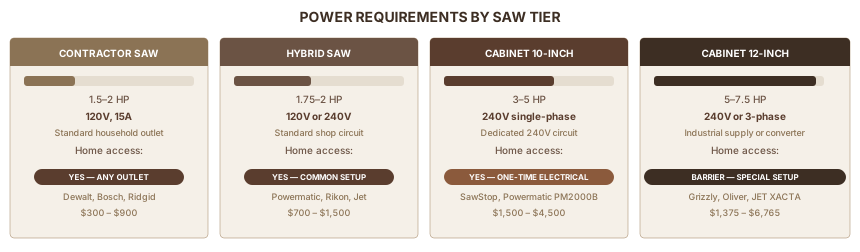
| Power requirement | 3–7.5 HP, typically 3-phase or 240V single-phase |
| Blade arbor | 1 inch (incompatible with standard 10-inch blades) |
| New price range | ~$3,500–$6,765 (single-phase consumer options) |
In this guide:
- Why 12-inch table saws are so hard to find
- What a 12-inch blade actually gets you
- Models available for home shops
- Who should actually buy one
- What to do if you need more cutting capacity
Part 1: Why 12-Inch Table Saws Are So Hard to Find
The 10-inch saw won the hobbyist market decades ago and never let go.
Every major accessory ecosystem was built around 10-inch compatibility: dado stacks, specialty blades, aftermarket fences, zero-clearance inserts. Home improvement stores stock 10-inch blades in dozens of configurations. Quality 12-inch table saw blades are specialty items you order online or track down at a woodworking supply retailer. Weekand's 12 vs 10-inch comparison puts the price premium at 30%+ over equivalent 10-inch blades.
The 10-inch standard settled into power requirements that work in residential shops. Most 10-inch contractor and hybrid saws run on 120V household current. Cabinet saws run on 240V single-phase, which a dedicated shop circuit handles.
12-inch saws live in a different tier. Almost every current 12-inch table saw requires 3-phase power (the industrial supply found in commercial buildings, not residential garages) or 240V single-phase with a motor of 5 HP or more. The cheapest new 12-inch option (the Grizzly G0697X at ~$1,375) is 3-phase only, so a hobbyist still needs a rotary phase converter ($500–$2,000+) to run it. As OPE Forum members note, "If your garage or shop isn't wired for it, an electrician is required to install the outlet for you."
The consumer-accessible single-phase 12-inch models start around $3,500. There's no 12-inch equivalent to an entry-level hybrid saw. The SawStop FAQ confirms they make no 12-inch cabinet saw at all. The Powermatic PM2000B is the same. Both are 10-inch saws, despite what some buyers assume from their cabinet-saw price tags.
Part 2: What a 12-Inch Blade Actually Gets You
The number that matters is depth of cut: how far the blade projects above the table.
Blade diameter doesn't directly equal cutting depth. The arbor, arbor washer, table insert, and required clearance all subtract from usable projection. WoodworkerLodge's cut depth guide documents the practical numbers across saw categories:
| Material | Thickness | 10-inch saw | 12-inch saw | Notes |
|---|---|---|---|---|
| 4/4 lumber | ~1" | Yes | Yes | No contest |
| 8/4 lumber | ~2" | Yes | Yes | Standard furniture stock |
| 12/4 lumber | ~3" | Barely | Yes | At the edge for most 10-inch saws |
| 4×4 post stock | ~3.5" actual | Two passes | One pass | The clearest use case for 12-inch |
| 16/4 hardwood slab | 4" | No | Yes | Requires 12-inch for single-pass cut |
| Crown molding, 45° | ~3" at 45° | No | Yes | 45° capacity is where 12-inch matters more |
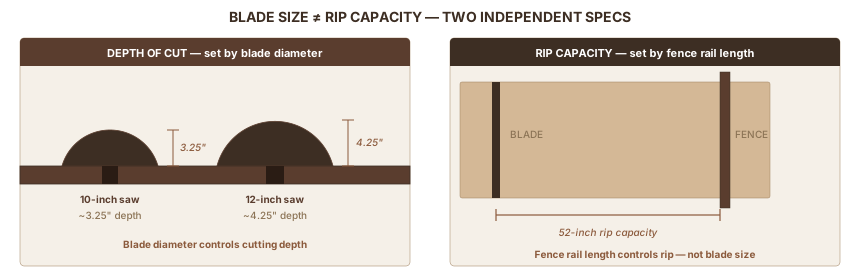
A bigger blade does not mean you can cut wider boards. Rip capacity (how wide a board you can cut) is set by fence rail length, not blade diameter, as Landmark Tools explains. A 10-inch saw with a 50-inch fence handles wider panels than a 12-inch saw with a 30-inch fence. These are completely separate specs. Many buyers confuse them.
Blade compatibility is the other catch. 10-inch table saws use a 5/8-inch arbor; 12-inch saws use a 1-inch arbor. You can't mount a standard 10-inch blade on a 12-inch saw without boring the arbor hole, which is expensive and rarely worth it. Sawmill Creek's blade discussion makes the point clearly: you're locked into a thinner, pricier ecosystem. Quality 12-inch table saw rip blades (Forrest WWII, Freud Premier Fusion) run $150–$400 compared to $80–$200 for equivalent 10-inch blades.
Part 3: Models Available for Home Shops
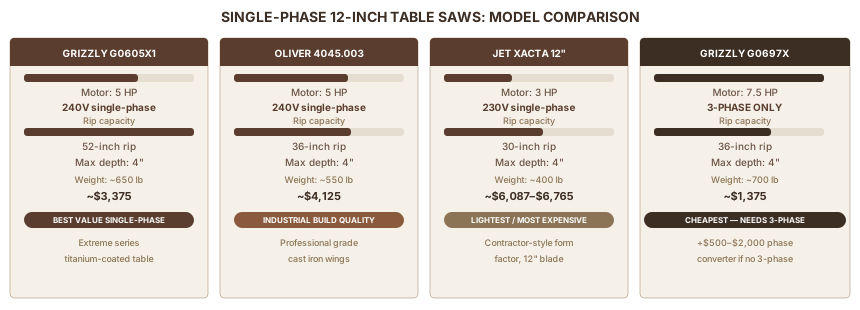
As of 2026, your options for a single-phase 12-inch table saw are limited to a handful of industrial-grade machines. There's nothing in the contractor or hybrid tier.
| Model | Motor | Power | Max Depth | Rip | Price (approx.) |
|---|---|---|---|---|---|
| Grizzly G0605X1 | 5 HP | 240V single-phase | 4" | 52" | ~$3,375 |
| Oliver 4045.003 | 5 HP | 240V single-phase | 4" | 36" | ~$4,125 |
| JET XACTA 12" | 3 HP | 230V single-phase | 4" | 30" | ~$6,087–$6,765 |
| Grizzly G0697X | 7.5 HP | 3-phase only | 4" | 36" | ~$1,375 |
The G0697X is cheapest by a wide margin but requires 3-phase power. The G0605X1 and Oliver run on 240V single-phase, the same service a 10-inch cabinet saw uses. They're still 500–700+ lb industrial machines.
The used market has vintage 12-inch industrial cabinet saws (Delta, Oliver, Northfield) appearing on Craigslist and used machinery dealers. They're excellent machines built for commercial production, but they weigh 500–1,000+ lbs and require professional rigging to move.
Part 4: Who Should Actually Buy a 12-Inch Table Saw
Most hobbyist woodworkers don't need one.
Start with a simple diagnostic: have you ever needed more than 3.75 inches of cutting depth in the last year? If the answer is no, a 12-inch saw solves a problem you don't have.
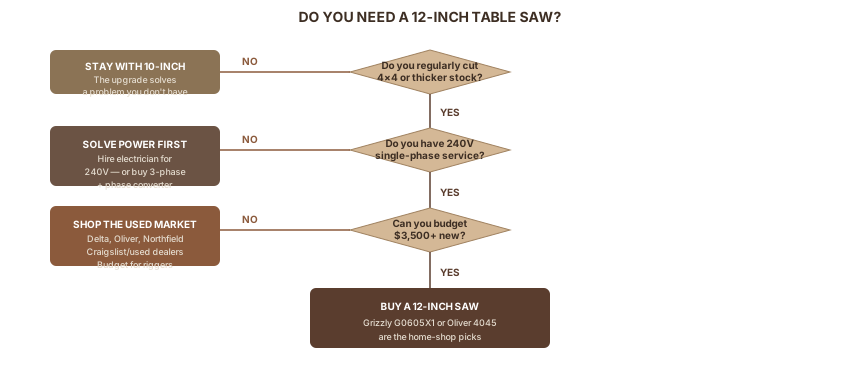
A 12-inch saw makes sense if you regularly cut 4×4, 4×6, or 6×6 post/beam stock in single passes: timber framing, stair building, structural work. It also makes sense if you run a production shop and your 10-inch bogs down on long rips through thick hardwood, or if you found a solid used industrial saw at a fair price and have 3-phase service (or budget for a phase converter).
Sawmill Creek members have built full careers without hitting the 10-inch depth limit. The one scenario the community points to without hesitation: cutting 4×4 post stock in a single pass.
If your projects use 4/4 to 8/4 lumber (furniture, cabinets, shelving, boxes), a 12-inch saw adds nothing practical. Sheet goods (plywood, MDF) make the decision even clearer — depth of cut doesn't matter for sheet goods, fence quality and rip capacity do. Those specs are independent of blade size. Add the power requirements, the blade-sourcing headaches, and the price premium, and the upgrade rarely makes sense for a home shop.
Part 5: What to Do If You Need More Cutting Capacity
For most shops, the better move is a quality 10-inch cabinet saw paired with a 14-inch bandsaw.
A 14-inch bandsaw handles 6 inches or more of resaw height with a sharp blade. Rip rough or thick stock on the bandsaw, then clean the cut on the table saw or thickness planer. Production shops use this workflow even when they own a 12-inch cabinet saw. The bandsaw wastes less material and is safer for deep resawing. A 14-inch bandsaw like the Jet JWBS-14DX or the Rikon 10-325 runs $400–$700 and adds genuine capacity to any 10-inch setup.
The cut-and-flip method handles the occasional thick rip without a bandsaw:
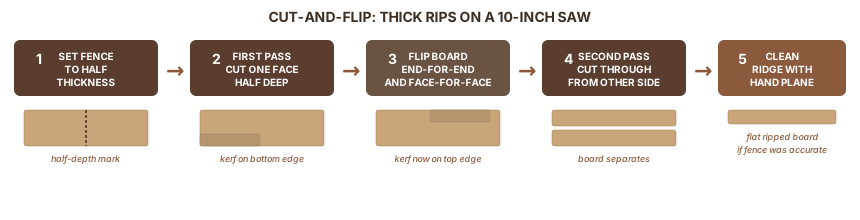
- Set your fence to exactly half the board's thickness
- Make the first pass
- Flip the board end-for-end and face-for-face
- Make the second pass
- Clean any ridge at the center with a hand plane or cabinet scraper
It works when your fence is accurate and the board is consistent thickness. Any fence drift creates a step at the center that needs cleaning up.
Part 6: Three Things People Get Wrong About 12-Inch Saws
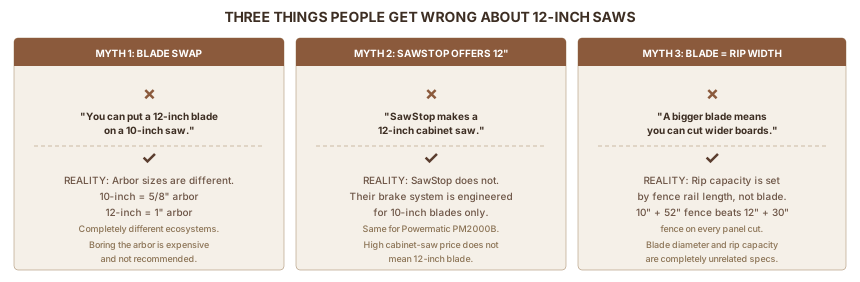
You can put a 12-inch blade on a 10-inch saw. No. The arbor hole is different — 5/8 inch on 10-inch saws, 1 inch on 12-inch saws. Boring a 10-inch saw's arbor to fit a 12-inch blade is expensive and not recommended. These are different tool ecosystems.
SawStop makes a 12-inch cabinet saw. No. SawStop's FAQ confirms they don't — their blade-detection system is engineered for 10-inch blades. The Powermatic PM2000B is also 10-inch.
A bigger blade means you can cut wider boards. No. Rip capacity is determined by fence rail length, as Landmark Tools explains. A 10-inch saw with a 52-inch fence handles wider panels than a 12-inch saw with a 30-inch fence. Blade size and rip capacity are unrelated.
Where This Fits
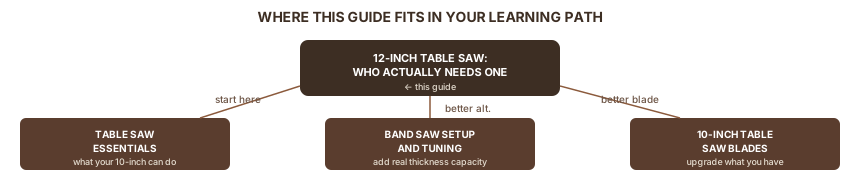
If you're wondering what your current 10-inch setup can actually handle, read Table Saw Essentials first. It covers what a 10-inch cabinet saw can and can't do. To add thickness capacity without going industrial, Band Saw Setup and Tuning covers what to look for in a 14-inch shop bandsaw. To upgrade your blade on a 10-inch saw, 10-Inch Table Saw Blades walks through blade types, tooth counts, and specific recommendations.
Sources
This guide draws on manufacturer specifications, woodworking forum consensus, and retail listings current as of March 2026.
- Grizzly G0605X1 product page — specs, price, and availability for the single-phase G0605X1
- Grizzly G0697X product page — specs and power requirements for the 3-phase G0697X
- Oliver 4045.003 at Elite Metal Tools — Oliver 5 HP single-phase model, $4,124.99
- JET XACTA 12" at Home Depot — JET 12-inch pricing and specs
- SawStop FAQ: Do you offer a 12-inch cabinet saw? — confirms no 12-inch model exists; recommends 10-inch ICS
- WoodworkerLodge: Table Saw Cut Depths — depth-of-cut measurements across saw categories
- Landmark Tools: What Is Rip Capacity? — explains that rip capacity is fence travel, not blade size
- Sawmill Creek: 12 inch vs 10 inch table saw — forum consensus on use cases, blade availability, and power requirements
- Weekand: 12-inch vs 10-inch table saw — blade cost premium, electrical barriers, market availability
- OPE Forum: Table saw 10 vs 12 — electrical wiring requirements and practical shop advice
- WoodworkingTalk: 10" vs 12" table saw — power requirements and hobbyist use cases
Tools Used
Also Referenced
Tagged
How We Research
We don't take affiliate revenue or accept review units. Picks come from multi-source research — manufacturer specs, OSHA / EPA / ASTM regs, and long-form practitioner threads — plus Ahmed's hands-on use where relevant. When we recommend something, we explain why.
Up Next
Best Table Saw Blade for a Beginner
POWER TOOLS · Beginner