
Band Saws at a Glance
A band saw cuts curves and resaws thick stock — two things no other common shop tool handles as well. The 14-inch floor model is the shop standard: it fits in most home shops, accepts a riser block to double its resaw capacity, and covers everything from band saw boxes to book-matched panels. Start with a quality 1/2" resaw blade and a 1/4" curve blade, and you're set for 90% of the work.
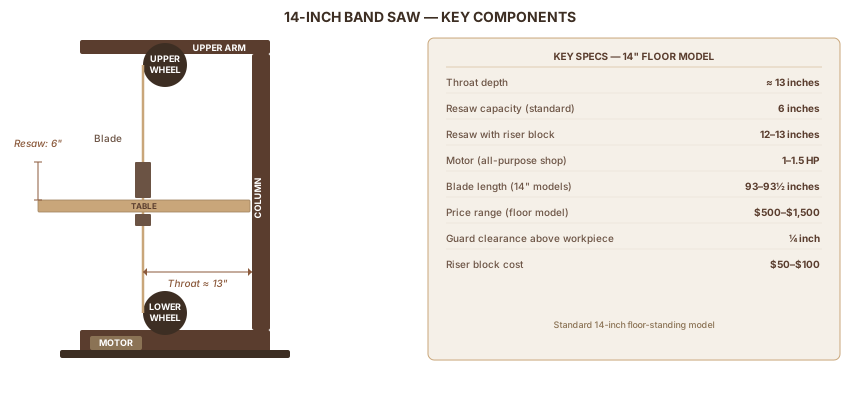
| Standard shop size | 14-inch floor-standing |
| Resaw capacity, 14" standard | 6 inches (12–13" with riser block) |
| Motor for resawing hardwood | 1–1.5 HP minimum |
| Blade for curves | 1/4" wide, 6–10 TPI |
| Blade for resawing | 1/2" wide, 3–4 TPI hook tooth |
| Guard height | 1/4" above workpiece |
In this guide:
- What band saws actually do
- How sizing works: throat depth and resaw capacity
- Specs that matter at purchase
- Decision by project type
- Three blades cover most work
- Getting started safely
Part 1: What Band Saws Actually Do
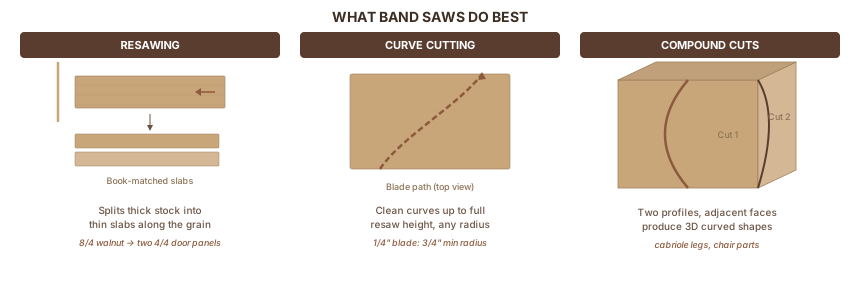
Resawing splits a thick board into thinner slabs along the grain. A 4/4 plank becomes two book-matched cabinet door panels. An 8/4 walnut slab becomes veneer. Bent lamination strips for curved chair parts get resawn to 1/8". Table saws can resaw, but the band saw gives you more control and less risk with wide stock.
Curve cutting is where the band saw has no real competition. A jig saw cuts curves but leaves a rougher kerf. A scroll saw handles finer detail but tops out at about 2" of stock thickness. A band saw cuts through material up to its full resaw height, with a surface clean enough to use directly.
Compound cuts stack the band saw's curve capability: cut two profiles on adjacent faces of a blank to produce cabriole legs, or stack multiple pieces to cut identical shapes at once.
Where it falls short: straight ripping and crosscutting. A table saw is faster and more accurate for any straight cut. A band saw is a complement to your table saw, not a replacement.
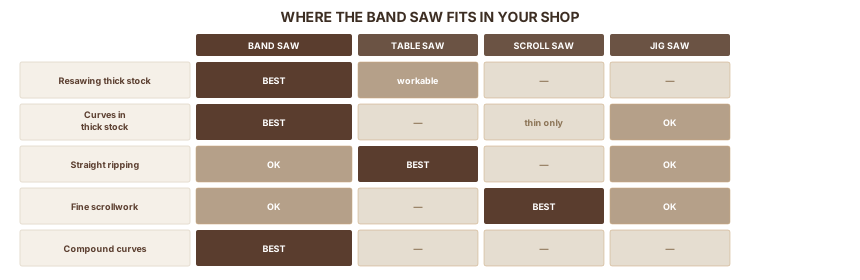
| Task | Band Saw | Table Saw | Scroll Saw | Jig Saw |
|---|---|---|---|---|
| Resawing thick stock | Best | Workable | No | No |
| Curves in thick stock | Best | No | No | Acceptable |
| Fine scrollwork | Acceptable | No | Best | No |
| Straight ripping | Acceptable | Best | No | Acceptable |
| Compound curves | Best | No | No | No |
Part 2: How Sizing Works: Throat Depth and Resaw Capacity
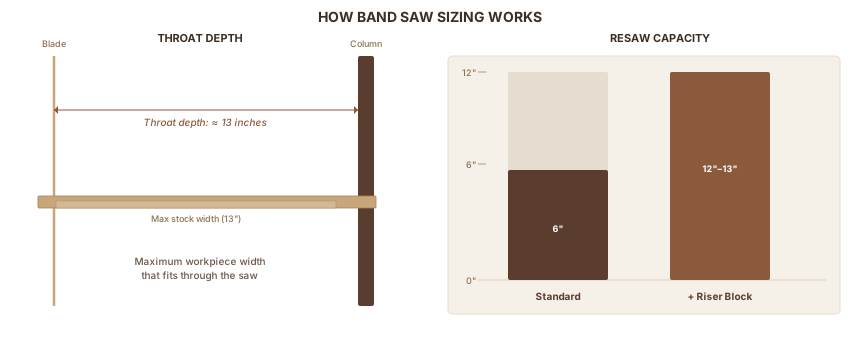
Throat depth is the distance from the blade to the vertical column (the machine's frame). A "14-inch band saw" has approximately 14 inches of throat — the maximum width of stock you can feed through side-to-side. Real throat capacity runs about 1 inch less than the wheel diameter due to frame clearance. For most furniture and box work, where boards rarely exceed 12 inches, this isn't a limitation.
Resaw capacity is the distance from the table surface to the bottom of the upper blade guides. This limits stock height for resawing. On a standard 14" band saw, resaw capacity is typically 6 inches — enough for 4/4 through 8/4 lumber lying flat. Add a riser block ($50–100) and that expands to 12–13 inches.
The riser block is worth knowing about before you buy. It's a cast-iron spacer that fits between the upper arm and lower body on most 14" band saws, doubling the resaw capacity for modest cost. Many buyers discover they need one after purchase. Check whether the model you're considering accepts one.
| Size | Type | Resaw Capacity | Motor | Price Range | Best For |
|---|---|---|---|---|---|
| 9–10" | Benchtop | ~4–5" | 1/3–1/2 HP | $150–400 | Curves, scrollwork, thin stock |
| 14" | Floor-standing | 6" standard, 12–13" w/ riser | 1–1.5 HP | $500–1,500 | All-purpose shop saw |
| 16–17" | Floor-standing | 8–12" | 1.5–2 HP | $1,200–2,500 | Serious resawing, production |
| 18–20" | Semi-pro | 12"+ | 2+ HP | $2,500+ | Production shops |
Fine Woodworking's 14-inch band saw review criteria note the 14-inch is the most common size in woodworking shops. It fits most home shops, covers general curves and light resawing, and scales up with a riser block when you need more capacity.
Part 3: Specs That Matter at Purchase
Motor Horsepower
| Task | Motor HP Needed |
|---|---|
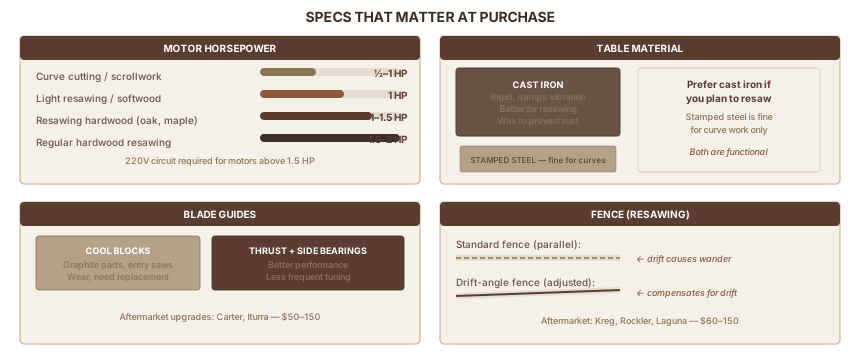
| Curve cutting, scrollwork | 1/2–1 HP |
| Light resawing (softwood) | 1 HP |
| Resawing hardwood (oak, maple, walnut) | 1–1.5 HP |
| Regular hardwood resawing | 1.5–2 HP |
If the blade slows noticeably entering hardwood, the motor is undersized for that job. For resawing, lean toward the higher HP in each range.
220V note: Motors above 1.5 HP often require a 220V circuit. Check your garage electrical before buying a 2 HP saw — adding a 220V outlet runs $100–300.
Table Material
Cast iron is more rigid and dampens vibration. For resawing, where stock needs firm, consistent support, cast iron is meaningfully better than stamped steel. The downside: rust risk in humid shops. Wipe down with paste wax after each session.
Stamped steel works fine for curve cutting and light work. For a hobbyist who resaws occasionally, it's not a deal-breaker.
Blade Guides
Blade guides — positioned above and below the table — control lateral blade movement during cuts.
Thrust bearings + side bearings: Better. Harder to adjust initially, but they perform well long-term with less frequent tuning.
Cool blocks (graphite pads): Common on entry-level saws. Work for curve cutting. Wear over time and need periodic replacement.
Aftermarket guides from Carter Products and Iturra Design run $50–150. Worth the upgrade if you do regular resawing.
Fence
Resawing needs a fence that accounts for blade drift — the slight angle at which a band saw blade naturally tracks. A fence set parallel to the blade causes stock to wander. You need one that adjusts to the blade's actual drift angle and locks there.
Many entry-level saws lack a usable fence. Aftermarket options from Kreg, Rockler, and Laguna run $60–150.
What Not to Prioritize
Blade speed (FPM): Matters at the extremes only. For general woodworking, standard blade speed is fine.
Wheel diameter alone: Throat depth and resaw capacity are the specs you need. Wheel diameter alone tells you neither.
Part 4: Decision by Project Type
Ask what you'll actually build with the saw, not which brand is best.
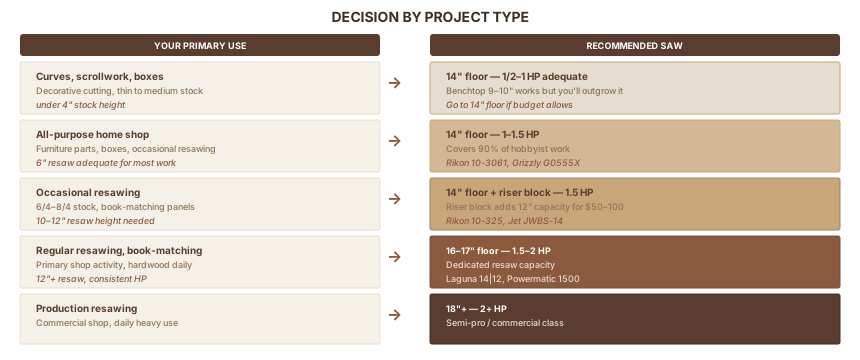
| Use Case | Minimum Size | Motor | Resaw Needed |
|---|---|---|---|
| Curves, scrollwork, band saw boxes | 14" benchtop acceptable | 1/2 HP fine | Under 4" |
| Furniture parts, all-purpose shop | 14" floor | 1 HP | 6" adequate |
| Occasional resawing (6/4–8/4 stock) | 14" floor + riser block | 1.5 HP | 10–12" |
| Regular resawing, book-matching | 16–17" floor | 1.5–2 HP | 12"+ |
| Production resawing | 18"+ | 2+ HP | 12"+ |
Curves and scrollwork only: A 14-inch floor saw handles this well. A 9–10" benchtop works but you'll want more capacity within a year or two. The 9" is a starter saw, not a shop saw.
All-purpose home shop: A 14-inch floor model at 1–1.5 HP handles 90% of hobbyist work. Add a riser block if you plan to resaw 6/4 or thicker stock occasionally.
Resawing as a primary activity: Get at least 1.5 HP motor and enough resaw height — either the riser block or a step up to 16". A weak motor stalls in hardwood.
Budget Tiers
Entry ($300–600): WEN 3962 and similar. Adequate for learning. Nearly always needs blade and guide upgrades to perform reliably. Factor in the real all-in cost before comparing sticker prices.
Mid-range ($600–1,000): Rikon 10-3061, Grizzly G0555X (~$695). Cast-iron tables, better motors, consistent performance. The sweet spot for hobby woodworking. Rikon earns the best hobbyist reviews for price-to-performance in this range.
Better hobby ($1,000–1,500): Rikon 10-325 (1.5 HP, 13" resaw capacity, ~$895–1,045) and Jet JWBS-14. Serious resawing capability at hobbyist prices.
Premium ($1,500+): Laguna 14|12, Powermatic 1500. Fine Woodworking's 2014 14-inch band saw test awarded both best-overall honors. Worth the price if you use the saw daily.
Common Mistakes That Cost Money
Buying too small. A 9–10" benchtop feels limiting fast. Most buyers who start there upgrade to 14" within a year. Go straight to 14" if budget allows.
Not accounting for upgrade costs. A $350 entry saw can need $150+ in additions: riser block, better guides, quality blade. Know the all-in cost before comparing sticker prices.
Skipping blade quality. The stock blade on most budget saws is its worst part. Buy a quality aftermarket blade before judging the saw. The Wood Slicer resaw blade from Highland Woodworking and Timber Wolf are repeatedly cited in woodworking forums as transformative upgrades for resawing.
Part 5: Three Blades Cover Most Work
Fine Woodworking's essential bandsaw blade guide puts the complete shop setup at three blades:
- 3/8" wide, 6-TPI, hook-tooth — general purpose; handles the vast majority of non-resaw cuts
- 1/4" wide, 10-TPI, regular tooth — tight curves, scrollwork, detail work
- 1/2" wide, 3-TPI, hook-tooth — resawing, thick stock, book matching
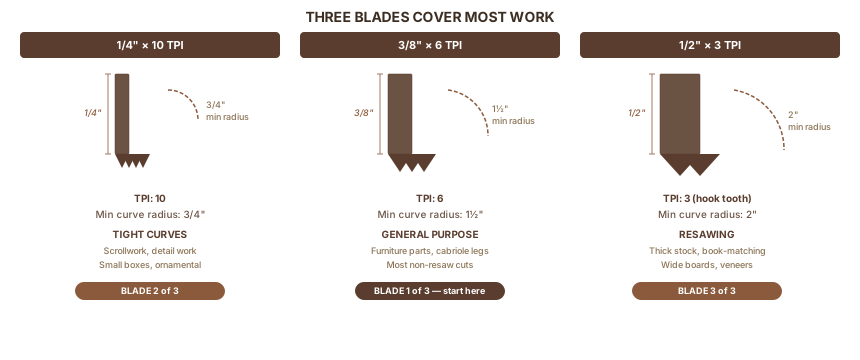
Blade width determines minimum curve radius. Per Dakin-Flathers' blade width guide:
| Blade Width | Minimum Radius |
|---|---|
| 1/8" | 1/4" |
| 1/4" | 3/4" |
| 3/8" | 1-1/2" |
| 1/2" | 2" |
| 3/4" | 5" |
A wider blade resists deflection during heavy cuts. A narrower blade navigates tighter curves. Match width to the tightest radius you plan to cut.
TPI selection: Fewer teeth (2–4 TPI) for thick material and resawing. More teeth (6–14 TPI) for thinner material and smoother finish. Keep at least 3 teeth in contact with the material at all times per Dakin-Flathers' TPI chart.
Start with the right blade, not the stock one. Blade quality matters more than saw brand at the entry level. A quality aftermarket blade on a mid-range saw outperforms the stock blade on a premium saw.
Part 6: Getting Started Safely
Band saws are safer than table saws. The blade moves downward through the table, no kickback hazard, and blade exposure above the workpiece disappears when the guard is set correctly. A few rules keep it that way.
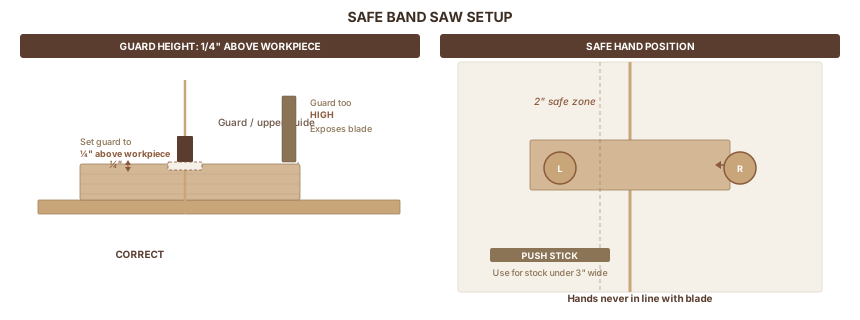
Setup before every session:
- Inspect the blade for cracks or missing teeth — discard immediately if found
- Set the blade guard to 1/4" above the workpiece, no higher. Per OSHA's band saw safety guidelines, wider gaps increase blade-break risk
- Let the saw reach full speed before feeding — never start with stock pressed against the blade
While cutting:
- Keep hands at least 2" from the blade at all times. Per CCOHS woodworking safety guidance, brace hands against the table, not in line with the blade
- For curves: smooth, consistent pressure. Let the blade cut, don't force direction
- For tight curves: make relief cuts (kerfs perpendicular to the cut line) first, then cut the curve
- For narrow ripping under 3": use a push stick
Resawing setup: Blade drift is the key challenge. Woodsmith's resawing guide explains that every band saw blade tracks at a slight angle — freehand-follow a marked line on scrap to find your blade's drift angle, then lock the fence to match that angle rather than running parallel to the blade slot. The fence compensates for drift automatically once set.
After cutting: Shut off and wait for the blade to fully stop before removing waste pieces. Never back stock out of the blade while the saw is running.
Where This Fits
Once you have a band saw, tune it before using it. Band Saw Setup and Tuning covers blade tracking, tensioning, and guide bearing adjustment — the setup work that determines how well the saw performs.
Related guides:
- Table Saw Essentials — the complementary tool for straight cuts and ripping
- Jointer vs. Planer — other stationary power tools to consider for your shop
- Building a Crosscut Sled — a jig build that pairs with your table saw
- Oscillating Spindle Sander — the tool for smoothing inside curves after the band saw cut
Sources
Research for this guide draws on tool tests from trade woodworking publications, manufacturer blade specifications, occupational health and safety guidelines, and discussions across hobbyist woodworking forums.
- Fine Woodworking — Essential Bandsaw Blades — three-blade shop recommendation
- Fine Woodworking — Flawless Curves on the Bandsaw — curve cutting technique
- Fine Woodworking — Learn to Resaw — resawing fundamentals
- Fine Woodworking — Set Up Your Bandsaw for Resawing — drift and fence setup
- Fine Woodworking — Evaluating a 14-in. Bandsaw — what to look for at purchase
- Fine Woodworking — Tool Test: 14-in. Bandsaws — reviewed models, best overall
- Woodsmith — Resawing Technique and Blade Drift — fence compensation for drift
- Woodcraft — Choosing the Right Bandsaw Blade — blade selection guide
- Dakin-Flathers — How to Select Bandsaw Blade Width — width-to-radius table
- Dakin-Flathers — Bandsaw Blade TPI Chart — TPI selection data
- Rockler — How to Resaw Lumber With a Band Saw — resawing guide
- Rockler — How to Make Book-Matched Panels — book matching technique
- Highland Woodworking — Wood Slicer Resaw Blade — recommended resaw blade
- Wood and Shop — Best Bandsaw for Woodworking — practical buying guidance
- Popular Woodworking — Best Band Saws — current recommendations
- OSHA — Band Saw Safety — operational safety rules
- CCOHS — Woodworking Machines: Band Saws — occupational safety guidelines
Tagged
How We Research
We don't take affiliate revenue or accept review units. Picks come from multi-source research — manufacturer specs, OSHA / EPA / ASTM regs, and long-form practitioner threads — plus Ahmed's hands-on use where relevant. When we recommend something, we explain why.
Up Next
How to Make a Bandsaw Box
POWER TOOLS · Beginner