
Wood Routers at a Glance
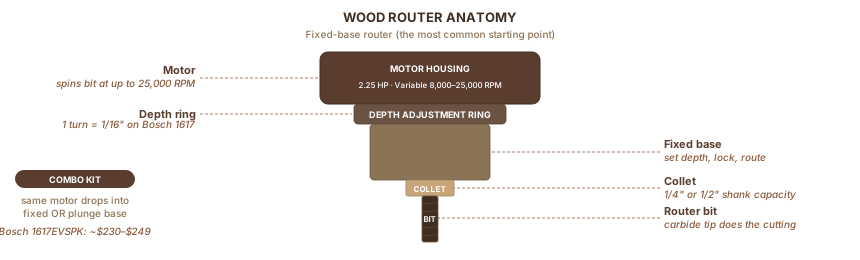
A wood router spins a cutting bit at 20,000+ RPM to cut edge profiles, grooves, and joinery that nothing else can replicate. The most useful thing it does for beginners: soft round edges on any project in 30 seconds. For $230, the Bosch 1617EVSPK combo kit (fixed base + plunge base + both collets) is the near-universal beginner recommendation from experienced woodworkers.
| What it does uniquely | Edge profiles, stopped dadoes, template routing, plunge mortises |
| Top beginner pick | Bosch 1617EVSPK combo kit (~$230–$249) |
| Budget alternative | DeWalt DW618PK combo kit (~$200–$231) |
| HP sweet spot | 1.75–2.25 HP for a beginner — handles everything |
| Speed rule | Larger bit = slower RPM. Under 1" bit: full speed is fine |
| First bit to buy | 1/4" roundover bit — teaches feed direction, immediate results |
In this guide:
- What a router does that nothing else can
- Fixed, plunge, and compact: which type to buy
- How to read router specs without getting lost
- Feed direction: the one safety rule that matters most
- Five bits that cover 90% of beginner work
- Which router to buy on a $150–$250 budget
- First projects to build with your router
Part 1: What a Router Does That No Other Tool Can
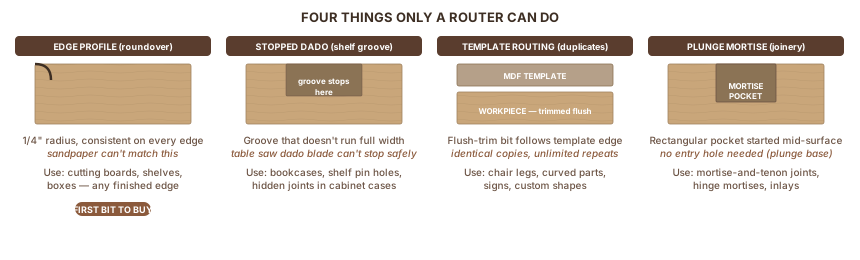
You can round an edge with sandpaper. You can cut a dado (a groove cut across a board) with a table saw and dado blade. You can mortise with a chisel. None of those alternatives do what a router does. The router does several things nothing else can touch.
Edge profiles. Run a roundover bit along any board edge and you get a perfect, consistent radius — identical on every inch of every board. A hand plane comes close, but not in 30 seconds, not on end grain, and not with a cove or ogee curve. The router is the only tool that produces complex profiles consistently.
Stopped dadoes. A dado blade on a table saw cuts dadoes, but it can't stop partway across a board safely. A router with a straight bit and a T-square jig starts and stops wherever you want, so the groove doesn't show at the front of a bookshelf. That's the difference between furniture that looks custom and furniture that looks like someone ran it through a machine.
Template routing. Attach a router template to your workpiece, run a flush-trim bit, and the bearing rides the template while the cutter trims the wood. Every copy is identical. Chair legs, decorative shapes, custom signs — the router can duplicate anything you can make a template for.
Plunge mortises. A plunge router can start a cut in the middle of a board's face — no entry hole needed. That's how you cut the rectangular pocket a tenon slides into. Hand chisels work too, but a plunge router is faster and more consistent.
If you're just getting started, the two high-leverage uses are roundovers on project edges (makes everything look finished) and dadoes for shelf construction (essential for cabinets and bookcases). Those two alone justify buying the tool.
Part 2: Fixed, Plunge, and Compact: Which Type to Buy
Three router types exist. Each has a distinct job.
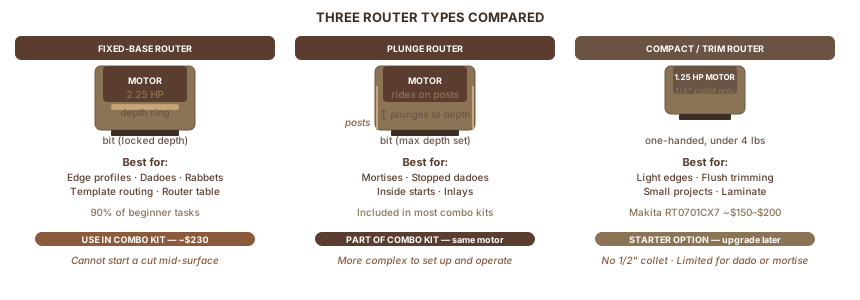
Fixed-base router. The bit protrudes a set distance below the base. You set depth before you start and lock it. Depth doesn't change while you're cutting. Fixed bases are simpler to use, lighter, easier to see around, and better for edge work. They cover 90% of what most beginners do: profiles, dadoes with a jig, rabbets, template routing. The limitation: you can't start a cut in the middle of a surface. The spinning bit is exposed when you lower the router onto the work, which is dangerous for interior cuts.
Plunge router. The motor rides on spring-loaded posts. You set a maximum depth with a stop rod, then plunge the motor down into the work during the cut. Lift the lever and the springs push the bit back up. Plunge routers are essential for mortises, stopped dadoes, and any cut that starts interior to the workpiece. They're heavier and more complex, and the plunge mechanism takes practice to operate confidently. Most beginners spend 80–90% of their time on fixed-base work even after they own a plunge base.
Compact/trim router. Small, one-handed, 1.0–1.25 HP, 1/4" collet only. Excellent for roundovers on small parts, flush-trimming laminate, and light template work. If your projects are boxes, small shelves, and picture frames, a compact router might be all you need. The limitation is real: 1/4" collet only, limited power, no 1/2" shank bits, and it struggles on hardwood with large profiles.
The beginner's actual answer: buy a combo kit. Both Bosch and DeWalt sell kits that include one motor with both a fixed base and a plunge base. You get both capabilities for roughly the price of one specialized router. Forum consensus on this has been consistent for 10+ years: buy the two-base kit, don't buy them separately, don't start with a compact if you plan to do serious joinery.
| Type | Best For | Limitations | Price Range |
|---|---|---|---|
| Fixed base | Edge profiles, dadoes, rabbets, templates | Can't start mid-surface | $100–$200 alone |
| Plunge base | Mortises, stopped grooves, inside starts | Heavier, more complex | $100–$200 alone |
| Combo kit | Everything | — | $200–$280 |
| Compact | Small projects, light edge work, one-handed | 1/4" collet only, less power | $100–$180 |
Part 3: How to Read Router Specs Without Getting Lost
Three specs matter. Everything else is marketing.
HP (horsepower). Router HP claims are inflated — manufacturers list peak motor output, not sustained load capacity. Comparing HP across brands is unreliable. What you need to know: 1.75–2.25 HP handles everything a beginner will do for years. Trim routers (1.0–1.25 HP) handle light edge work only. Full-size production routers (3+ HP) are for cabinet shops. The Bosch 1617 and DeWalt DW618 both run 2.25 HP and are the sweet spot for hobbyists.
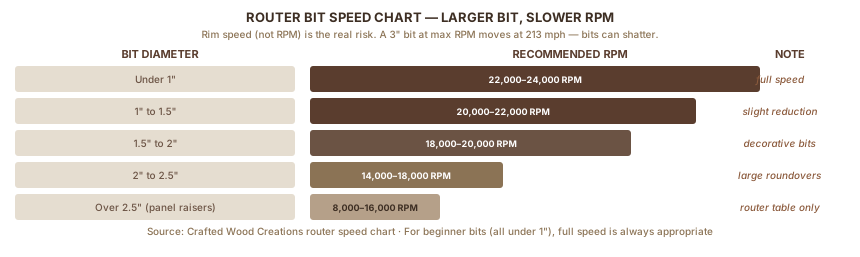
RPM and variable speed. Router bits spin at 8,000–25,000 RPM depending on the model and setting. The critical concept is rim speed: the actual speed of the cutting edge, not the RPM. A 3" panel-raising bit at 24,000 RPM moves its cutting edge at roughly 213 mph, which is dangerous: bits can shatter, workpieces can kick. According to Crafted Wood Creations' router speed chart, you need to dial down as bit size increases:
| Bit Diameter | Recommended RPM |
|---|---|
| Under 1" | 22,000–24,000 |
| 1" to 1.5" | 20,000–22,000 |
| 1.5" to 2" | 18,000–20,000 |
| 2" to 2.5" | 14,000–18,000 |
| Over 2.5" | 8,000–16,000 |
For most beginner bits (roundovers, chamfers, straight bits under 1"), full speed is fine. Variable speed becomes important once you're running large decorative bits or working a router table with panel raisers. Buy a router with variable speed. The $40 you save on a single-speed router isn't worth the limitation.
Collet size (1/4" vs. 1/2"). The collet is the chuck that grips the bit shank. Toolguyd's breakdown of router bit shank stiffness shows that a 1/2" shank is four times stiffer than a 1/4" shank, which means less vibration, less deflection, and cleaner cuts under load. Buy a router that accepts both. Mid-size combo kits (Bosch 1617, DeWalt DW618) include both collet sizes. Compact routers only accept 1/4" shanks — fine for small bits, a real limitation for anything larger.
Part 4: Feed Direction: The One Safety Rule That Matters Most
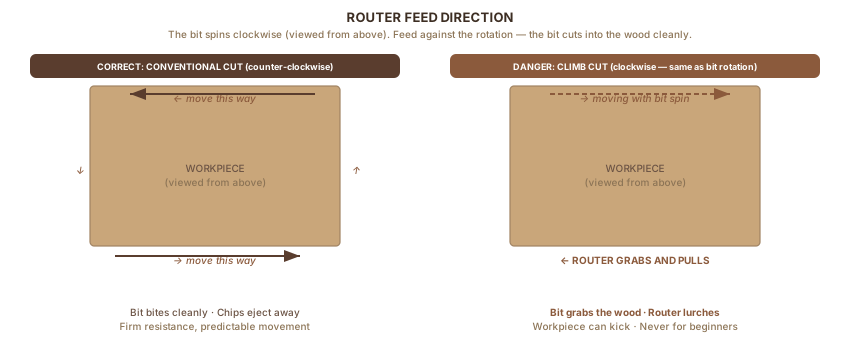
The router bit spins clockwise when viewed from above. That rotation creates a direction of force. Feed the router in the right direction and the bit cuts cleanly. Feed it the wrong way and the bit grabs the wood, tries to pull itself forward faster than you're moving, and can yank the router out of your hands. This is called a climb cut.
The conventional feed rule:
- Outside edge of a board: Move the router counter-clockwise around the perimeter. Left to right on the front edge, right to left on the back edge, pushing toward you on the right side, away from you on the left side.
- Inside edge (routing the inside of a frame or cutout): Move clockwise — the direction reverses because you're now on the inside of the bit's rotation.
Stumpy Nubs' feed direction guide offers a right-hand memory rule: hold your right hand palm-down, index finger extended along the edge. Your finger points the direction of correct feed for outside edge work.
Signs you're climb cutting:
- The router pulls itself forward faster than you're pushing
- You feel a lurch or sudden grab
- The cut surface is rough with fibers pulled upward rather than sliced clean
- You lose directional control
Toolstoday's climb cutting explainer notes that experienced woodworkers sometimes use a very light climb cut (1/32" depth or less) as a final pass to prevent tear-out on figured wood — but this is handheld only, never on a router table, and never appropriate for beginners.
The other safety fundamentals:
- Clamp your workpiece. Never rout freehand on a piece that can move.
- Start with the router off the work, fully up to speed, then engage. Never start the motor with the bit against the wood.
- PPE: safety glasses with side shields, NRR 25+ hearing protection (routers typically run above 95 dB), N95 respirator for fine dust. No gloves. Gloves can catch on a spinning bit and pull your hand in.
- Minimum workpiece width for handheld routing: 4–6 inches. Narrow stock requires a router table for safe control.
Part 5: Five Bits That Cover 90% of Beginner Work
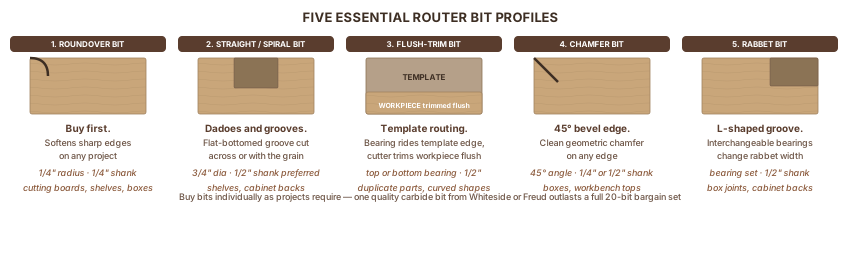
You don't need a router bit set on day one. Buy bits for specific projects. These five cover the work most beginners actually do:
1/4" roundover bit. Softens sharp edges on any project — cutting boards, boxes, shelves. One of the highest-leverage tools in woodworking: takes ten seconds per edge, dramatically improves how work looks and feels. Buy this first.
Straight/spiral bit (3/4" diameter). Cuts dadoes for shelf construction and grooves for cabinet backs. The 3/4" matches standard plywood thickness. A spiral upcut bit clears chips better and cuts cleaner than a straight bit; worth the slight extra cost. For stopped dadoes, pair with a plunge base.
Flush-trim bit. A straight cutter with a bearing at the top (or bottom). Rides against a template to trim workpieces flush. Essential for template routing — making duplicate parts, curved shapes, pattern work. Buy this once you have a project that requires it.
Chamfer bit. Cuts a 45° bevel on edges. Looks cleaner and more intentional than a roundover on some projects — boxes, cutting boards, workbench tops. Interchangeable with the roundover bit depending on the aesthetic you want.
Rabbet bit with interchangeable bearings. Cuts L-shaped grooves along board edges for box joints, cabinet backs, and drawer bottoms. Different bearing sizes let one bit cut different widths. More versatile than buying multiple straight bits for the same work.
What to buy in terms of shank size: 1/4" shank bits are cheaper and fine for small-diameter profiles. For 3/4" straight bits and larger, buy 1/2" shank — stiffer, less vibration, cleaner cuts. Once you own a router with both collets, use 1/2" shanks whenever the bit comes in both sizes.
What to avoid: Sets of 20+ router bits. The cheap bits in large sets are stamped steel or low-grade carbide that dull fast and chatter. Buy individual carbide bits from Whiteside, Freud, or Amana when you have a specific project. A single quality bit outlasts a box of bargain bits. See straight router bits: selection and setup for a complete breakdown of diameters, quality tiers, and what to buy first. For the shortest starting list, the four bits worth buying first covers the essentials with specific brand picks.
Part 6: Which Router to Buy on a $150–$250 Budget
One recommendation, backed by a decade of consistent forum agreement. The LumberJocks thread on first router purchases is representative: dozens of experienced woodworkers across multiple pages reaching the same conclusion.

Buy the Bosch 1617EVSPK (~$230–$249).
The kit includes: 2.25 HP motor, fixed base, plunge base, 1/4" and 1/2" collets, carrying case. The motor drops into either base in under a minute.
Why this specific router:
- Best depth adjustment in its class. The fixed base uses a rack-and-pinion mechanism — one revolution of the adjustment ring moves the bit exactly 1/16". You dial in your depth precisely and it holds. Competing fixed-base systems use a twist-and-lock ring that's harder to set consistently.
- Variable speed 8,000–25,000 RPM. Full range covers every bit size from trim work to panel raisers.
- Both bases cover every routing task. Fixed base for edge work, dadoes, template routing. Plunge base for mortises, stopped cuts, interior starts.
- Widely accepted in router tables. When you're ready for a router table, the Bosch 1617 motor drops into virtually every aftermarket table on the market.
- Track record. This router has been the consensus beginner pick for over a decade. A recommendation that consistent is worth trusting.
If the Bosch is over budget: The DeWalt DW618PK (~$200–$231) is an excellent alternative. It has better ergonomics for handheld work (lower center of gravity, easier to control), includes an edge guide, and has built-in dust collection routing through the column. Some users prefer it. The DeWalt's main drawback is a less intuitive depth adjustment ring vs. the Bosch rack-and-pinion; it's more forgiving for handheld work, slightly harder to set precisely for table use.
If budget is strictly $150: The Makita RT0701CX7 compact router (~$150–$200) handles roundovers, chamfers, and flush trimming well. If you're already in a battery ecosystem (DeWalt, Milwaukee, Makita), check the cordless router guide first — a cordless compact may fit your workflow better than a budget corded unit. It's a quality tool. The limitation is real: 1/4" collet only, 1.25 HP, no upgrade path to a plunge base. Buy it if your projects are small and you're not planning mortise or dado work soon. Expect to add a mid-size router within two years.
What to avoid: Buying the cheapest router you can find with the plan to upgrade later. The Bosch 1617 or DeWalt DW618 will last 15+ years of hobby use. The cheapest options from unfamiliar brands often have collet issues, imprecise depth mechanisms, and vibration problems that make routing frustrating and less accurate. Buy once.
Part 7: First Projects to Build With Your Router
Start with these five, in order. Each one teaches a specific skill.

1. Cutting board with rounded edges. First day with the router. Install the roundover bit, set depth to expose 1/4" of the bit's radius, route around all top edges. You'll learn feed direction, how depth setting sounds when it's right, and why end grain needs multiple shallow passes rather than one deep cut.
2. Simple box with rabbet joints. Cut four box sides. Rout a rabbet (an L-shaped groove) along the inside edge of each. The rabbet creates the lip that the adjacent side seats into. This teaches rabbet bit setup, fitting joints for tight assembly, and how to adjust depth for a perfect fit.
3. Shelf with stopped dadoes. Mark shelf positions on the case sides. Clamp a T-square jig perpendicular to the board. Run a 3/4" straight bit along the jig for the dado. For stopped dadoes: plunge in from the back of the board, rout forward to a marked stop line, lift out. This teaches jig use, plunge technique, and the depth consistency needed for multiple matching dadoes.
4. Template routing a curved shape. Cut a template from MDF, smooth its edge carefully, and attach it to your workpiece with double-sided tape. Run a flush-trim bit against the template edge. Every copy comes out identical. This is the moment the router becomes irreplaceable: chair legs, curved aprons, signs, any shape you need in multiples.
5. Mortise practice joint. Set up the plunge router with a 3/8" spiral upcut bit. Mark a mortise on scrap — 1" × 3" × 3/4" deep. Plunge in, rout across in overlapping passes to clear the waste, work up to full depth in two or three passes. Then cut a matching tenon (the projecting tongue that fits into the mortise) on the table saw. Fit them together. This teaches the plunge base fully and prepares you for furniture-grade joinery.
See router tables for when you're ready to move from handheld to table routing — the technique and bit selection shift significantly.
Sources
Research for this guide drew on manufacturer documentation, practitioner-tested tutorials, and experienced woodworker communities. All inline-cited sources are listed here.
- Crafted Wood Creations — Router Bit Speed Chart — recommended RPM ranges by bit diameter
- Stumpy Nubs — Feed Direction Guide — conventional vs. climb cutting, right-hand memory method
- Toolstoday — What Is a Climb Cut — safety context, signs of climb cutting, when experienced woodworkers use it
- Toolguyd — 1/4 vs. 1/2" Router Bit Shank — technical comparison of shank stiffness
- LumberJocks — First Router Opinions — multi-page forum consensus on HP and combo kits
Tools Used
Also Referenced
Tagged
How We Research
We don't take affiliate revenue or accept review units. Picks come from multi-source research — manufacturer specs, OSHA / EPA / ASTM regs, and long-form practitioner threads — plus Ahmed's hands-on use where relevant. When we recommend something, we explain why.
Up Next
Fixed-Base vs Plunge Router: Which One Should You Buy First
POWER TOOLS · Beginner