
Jointer vs Planer at a Glance
A jointer and a planer are complementary milling machines that work as a pair: the jointer flattens one face of a warped board to create a true reference surface, while the planer mills the opposite face parallel to it at a precise, consistent thickness. They look similar and both cut with rotating cutter heads, but they solve fundamentally different problems and cannot substitute for each other. Sequence matters — you always joint first to establish the reference face, then plane to final thickness. Skipping the jointer and running twisted stock through a planer produces a board that's uniformly thick but still twisted.
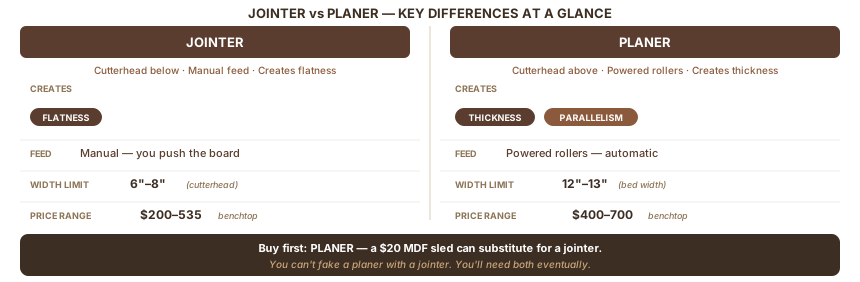
| Jointer | Cutterhead below the board. Flattens one face or straightens one edge. |
| Planer | Cutterhead above the board. Makes faces parallel at a set thickness. |
| Order | Joint first, then plane. Always. |
| Buy first? | The planer. A $20 sled can substitute for a jointer. |
| Common sizes | 6"–8" jointer, 12"–13" benchtop planer |
| Price range | $200–535 benchtop jointer, $400–700 benchtop planer |
In this guide:
- How each machine works and why they're different
- The milling sequence and why order matters
- Which to buy first if you can only afford one
- Common mistakes and how to avoid them
Part 1: How a Jointer and Planer Actually Work
Both machines have spinning cutterheads. Both remove wood. But they remove wood in opposite directions, and you can't substitute one for the other.
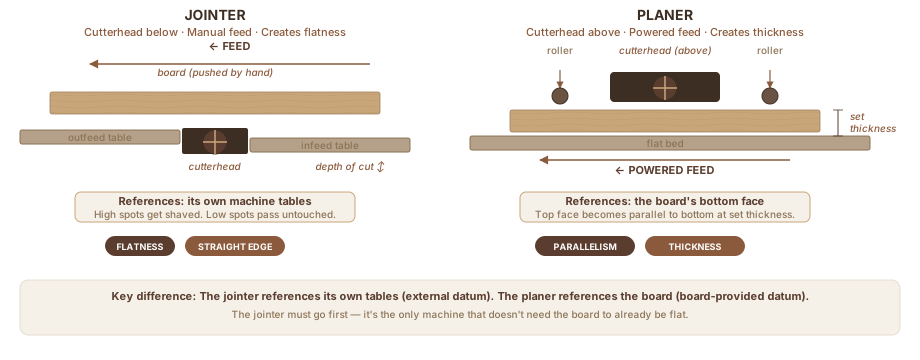
The Jointer: Cutterhead Below, Manual Feed
A jointer's cutterhead sits below the board, recessed between two tables. The infeed table adjusts up and down to set your depth of cut. The outfeed table stays fixed, flush with the knife tips at their highest point.
You push the board across by hand. High spots contact the spinning knives and get shaved off. Low spots pass right over, untouched. After several passes, the high spots are gone and the surface is flat.
The jointer references its own tables, not the board. The machine provides the flat datum. A warped board goes in, a flat board comes out.
A jointer does two things. Face jointing flattens a broad surface. Edge jointing, with the board standing against the fence, straightens and squares an edge. Typical depth of cut: 1/32" to 1/16" per pass.
The Planer: Cutterhead Above, Powered Feed
A planer's cutterhead sits above the board. The board rides on a flat bed. Powered feed rollers grab the board and push it through. You set the thickness with a crank or handwheel, and the machine does the rest.
The planer makes the top face parallel to the bottom face at whatever thickness you set. It creates parallelism and consistent thickness. It does not create flatness.
Why a Planer Can't Flatten a Warped Board
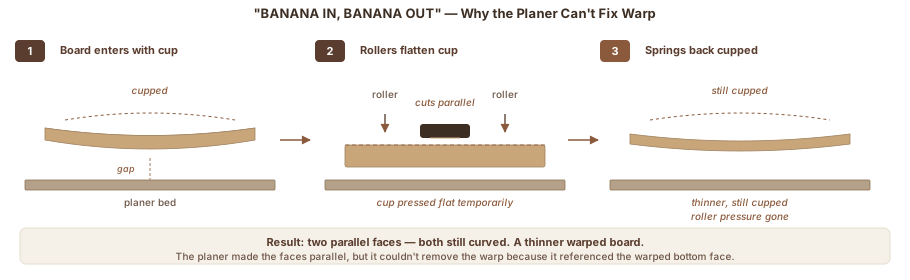
Feed a cupped board through a planer and watch. The feed rollers press down with spring-loaded force, squishing the cup flat against the bed. The cutterhead shaves the top surface parallel to this artificially flattened bottom. The board exits the machine, roller pressure releases, and the wood springs right back to its cupped shape.
You now have a thinner cupped board. Both faces are parallel to each other, but both are still curved. Woodworkers call this "banana in, banana out." The Wood Whisperer's milling guide covers this in detail.
Twist is worse. A twisted board rocks on the bed, touching only two diagonal corners at a time. The cutterhead cuts unevenly. You end up with a board that's still twisted and now varies in thickness corner to corner.
A planer references the board's bottom face. If that face is warped, the planer reproduces the warp on the top face. Only a jointer (or a hand plane) can create initial flatness, because the jointer references its own machine tables instead of the board. WWGOA's comparison guide has a good visual explanation of this principle.
| Jointer | Planer | |
|---|---|---|
| Cutterhead | Below the board | Above the board |
| Reference | Machine tables (external) | Board's bottom face |
| Feed | Manual | Powered rollers |
| Creates | Flatness | Parallelism and thickness |
| Board width limit | Cutterhead width (6"–8") | Bed width (12"–13") |
Part 2: The Milling Sequence: Joint First, Then Plane
Rough lumber from a sawmill has no flat surfaces. Every face is rough, cupped, bowed, or twisted. Turning that into usable stock requires a specific sequence. Each step builds on the one before it.
Five Steps to Four Square Sides
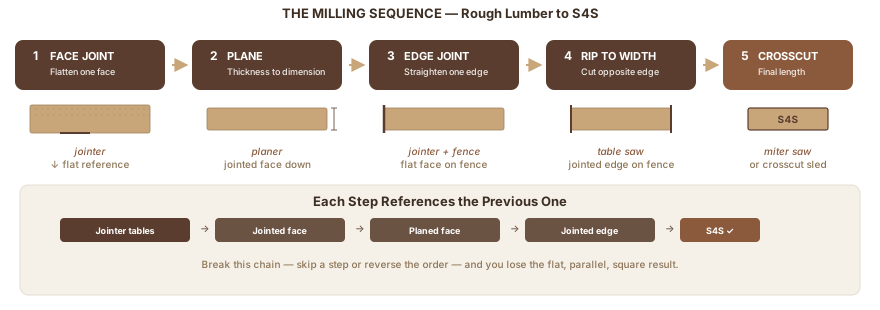
Woodworkers call the goal "S4S" or "four-square": two flat parallel faces and two straight parallel edges, all at 90 degrees to each other.
- Face joint on the jointer. This creates your first flat reference surface.
- Thickness plane with the jointed face down on the planer bed. The planer makes the top face parallel to your reference, at whatever thickness you set.
- Edge joint on the jointer, with the flat face pressed against the fence. This gives you a straight edge that's square to the face.
- Rip to width on the table saw, with the jointed edge against the fence.
- Crosscut to length on a miter saw or with a crosscut sled.
Each step references the surface you made in the previous step. The jointed face gives the planer its reference. The planed face gives the jointer fence its reference. The jointed edge gives the table saw fence its reference.
Why You Can't Reverse the Order
Plane first, and the feed rollers flatten the warp, the cutterhead cuts parallel to it, and the board springs back warped. You've wasted wood. If you then joint the board flat, you destroy whatever parallelism the planer created. You chase your tail, removing more material each pass, never reaching a board that's both flat and consistent in thickness.
The jointer creates flatness from an external datum (its own tables). The planer creates parallelism from a board-provided datum (the bottom face). The jointer has to go first because it's the only machine that doesn't depend on the board already being correct.
The Two-Session Trick
Milling exposes wood that's been sealed inside the board, sometimes for years. Internal moisture gradients and stresses can cause a freshly milled board to warp overnight.
A good practice from Katz-Moses's milling guide: rough-mill on Day 1, leaving your boards 1/8" thicker than final dimension. Let them sit overnight. Come back on Day 2 and take a light final pass on the jointer and planer. This catches post-milling movement before you cut your joinery.
Part 3: When You Need Which Machine
Not every project requires both machines.
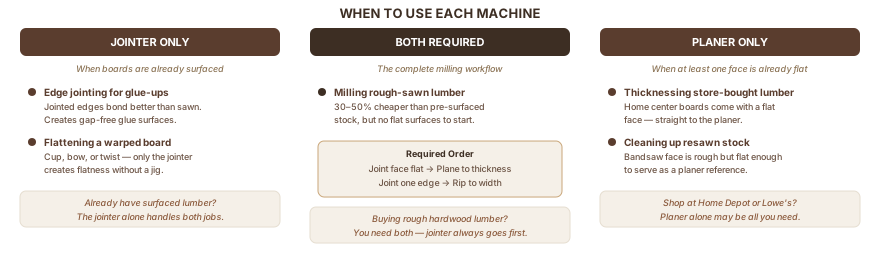
Planer Only
Thicknessing store-bought lumber. You buy S2S or S4S boards from a home center. One face is already flat. You just need to bring them down to a specific thickness, like milling 3/4" stock to 1/2" for a drawer bottom. Straight to the planer.
Cleaning up resawn stock. You resaw thick lumber on a bandsaw to get two thinner boards. The bandsaw face is rough but flat enough to serve as a reference. The planer cleans up the sawn surface.
Batch thicknessing. You need eight boards at exactly 11/16". Feed them all through the planer at the same setting. The powered feed and fixed thickness make this fast.
Jointer Only
Edge jointing for glue-ups. Your boards are already surfaced, but you need perfectly straight, square edges for a panel glue-up. The jointer creates a better glue surface than a table saw.
Flattening a warped board. A cupped or twisted board needs the jointer before anything else can happen. No other machine creates initial flatness without a jig.
Both Required
Milling rough-sawn lumber. Buying rough lumber from a hardwood dealer saves 30–50% over pre-surfaced stock, but those boards have no reliable flat surfaces. You need the full milling sequence: jointer first, then planer, then back to the jointer for the edges.
Part 4: Which Machine to Buy First
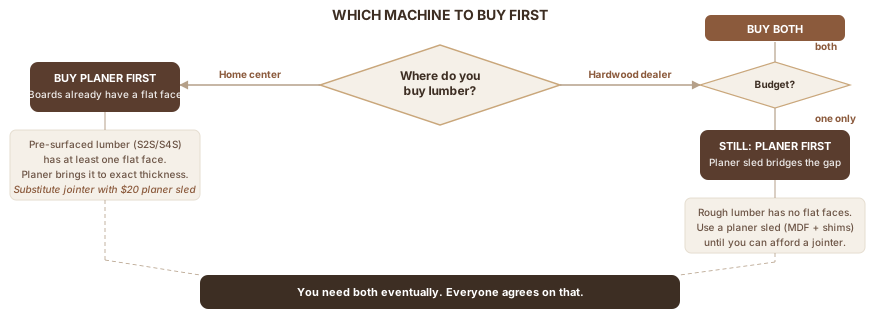
If you can only afford one machine right now, buy the planer.
Why the Planer Wins
Most beginners buy lumber from a home center. Those boards come pre-surfaced with at least one flat face. A planer takes that flat-faced board and brings it to whatever thickness you need. A jointer alone can't do that. You can flatten a face, but you can't control the final thickness with any precision.
The clincher: you can fake a jointer with a planer. Build a simple sled from a piece of MDF, shim the warped board level with hot glue, and run the whole assembly through the planer. The MDF provides the flat reference instead of a jointer. Total cost: about $20 in materials. It's slower than a real jointer, but it works. Katz-Moses covers six jointer alternatives, and the planer sled is the simplest.
You can't fake a planer with a jointer. The jointer has no way to produce a consistent, measurable thickness across a board.
The DeWalt DW735X (13" width, three-knife, two-speed) is the most recommended benchtop planer. It runs about $600–700. The DW734 (12.5", single speed) is $400–450 if that's easier on the budget.
The Other Side
Marc Spagnuolo (The Wood Whisperer) recommends a different path: learn to flatten boards with hand planes first, then buy a jointer, then a planer last. His argument is that hand-flattening teaches you to read grain direction, feel when a surface is flat, and understand wood behavior in ways a machine can't teach.
Christopher Schwarz at Lost Art Press makes a similar case. Both are experienced woodworkers who value the hand-tool learning path.
What Actually Drives the Decision
Where you buy lumber. If you shop at Home Depot or Lowe's, you're getting pre-surfaced boards. Planer first, no question. If you buy rough hardwood from a lumber yard, a jointer becomes more immediately useful because nothing is flat. But even then, a planer sled bridges the gap until you can afford both.
You need both eventually. Everyone agrees on that.
Part 5: Combos and Small-Shop Solutions
A jointer and planer side by side eat floor space. You need each machine's footprint plus eight feet of clearance on both the infeed and outfeed sides for an eight-foot board. In a small garage shop, that math doesn't work.
Jointer/Planer Combos
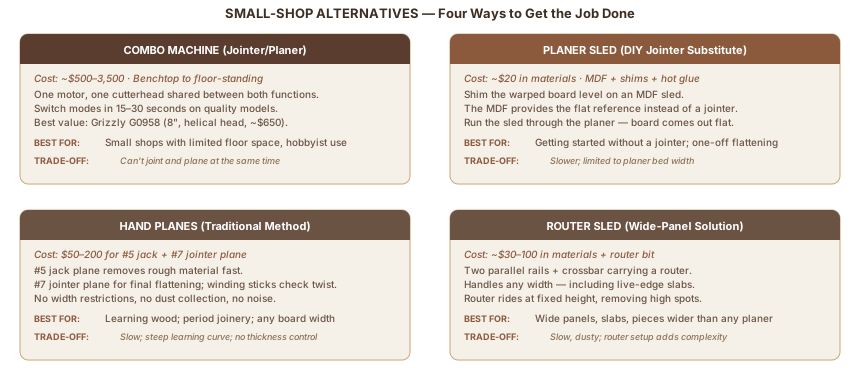
A combo machine shares one motor and one cutterhead between both functions. You flip or adjust the machine to switch modes. Modern designs make the changeover fast: 15–30 seconds on quality models.
| Model | Type | Width | Price | Notes |
|---|---|---|---|---|
| Jet JJP-8BT | Benchtop | 8" | ~$500 | Budget combo, decent for light use |
| Grizzly G0958 | Benchtop | 8" | $625–695 | Helical cutterhead, best value — full review |
| Hammer A3-31 | Floor | 12" | ~$3,582 | Gold standard for serious small shops |
The tradeoff: you can't joint and plane at the same time. If you're milling a stack of boards, you'll switch modes repeatedly. For a hobbyist processing a few boards at a time, that's fine. For production work, it's a bottleneck.
Alternatives When You Can't Fit (or Afford) Both
Planer sled. A flat piece of MDF with a stop block. Shim the warped board level, secure with hot glue or wedges, run it through the planer. The sled provides the flat reference. Limited to your planer's width capacity.
Hand planes. A #5 jack plane for rough work and a #7 jointer plane for final flattening. Use winding sticks to check for twist. No width restrictions, no noise, no dust collection needed. The tradeoff is speed and a learning curve. Stumpy Nubs compares all three approaches (jointer, planer, and drum sander) for beginners deciding on a purchase order.
Electric hand planer. Not the same as a bench plane or a bench-top planer. An electric hand planer trims doors in place, chamfers edges, and handles on-site jobs a bench-top planer can't reach. It's a specialist tool, not a substitute for the machines this guide covers. Worth having if door fitting or site work is part of your work.
Router Sled. Two parallel rails with a crossbar carrying a router and flattening bit. The router rides at a fixed height, removing high spots. Handles any width, including live-edge slabs wider than any planer. Slow and dusty, but effective.
Table saw with a straight-line rip jig. For edge jointing only. Attach the board to a plywood sled, overhanging edge gets trimmed by the blade. Quick and most shops already have the saw.
Part 6: Common Mistakes with Jointers and Planers
Jointer Mistakes
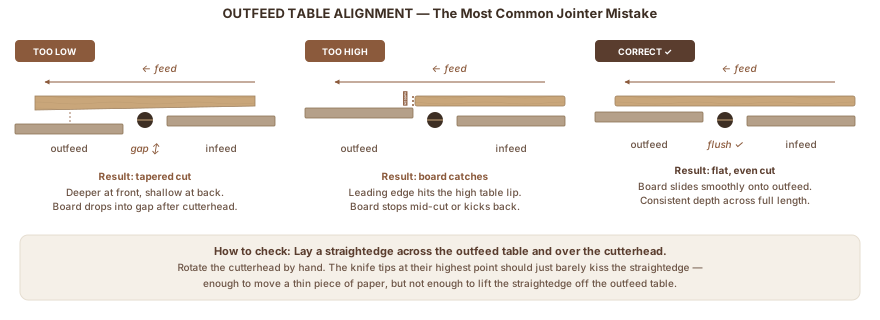
Outfeed table misalignment. If the outfeed table sits too low, the jointer cuts a taper: deeper at the leading end, shallow at the trailing end. If it sits too high, the board hits the table lip and stops mid-cut. The outfeed table needs to be precisely flush with the knife tips at their highest point. Check this with a straight edge across the outfeed table and cutterhead.
Wrong pressure placement. Beginners press down hard right over the cutterhead. This lifts the trailing end of the board and produces snipe at the end of each pass. Transfer your downward pressure to the outfeed side of the board as it moves past the cutterhead. Pressure on the outfeed table, not over the knives.
Feeding against the grain. This tears chunks from the surface instead of shearing them cleanly. Look at the board's edge. The grain lines angle one direction, like hair lying flat. Feed the board so the knives cut "with the hair," not against it. Katz-Moses puts it well: "Pet it in the direction the fur lies."
Taking too much per pass. Max depth for face jointing: about 1/16". Max for edge jointing: about 1/8". Deeper cuts strain the motor, increase tearout, and risk kickback.
Planer Mistakes
Skipping face jointing. The most common beginner mistake. If the bottom face isn't flat, the planer makes two parallel warped faces. Always start on the jointer.
Ignoring snipe. Most benchtop planers leave a slightly deeper cut in the first and last 2–3 inches of a board. Matthias Wandel measured this at about 0.008" (0.2 mm) on a Delta planer. Katz-Moses recommends four fixes: take shallow passes (1/16" or less), feed boards end-to-end so the rollers never fully disengage, support the board at entry and exit with roller stands, or cut your boards 2" long and trim the sniped ends off.
Not alternating faces. Planing removes wood, and removing wood releases internal stresses. If you take every pass from the same face, the board can cup or bow as stresses release unevenly. Alternate: one pass face up, flip, one pass face down.
Not letting lumber acclimate. Rough-mill on Day 1. Leave 1/8" extra. Let the boards sit overnight in your shop. Final-dimension on Day 2. Milling releases internal moisture and stress that can warp a board after you've already cut it to size.
Part 7: Key Specifications to Compare
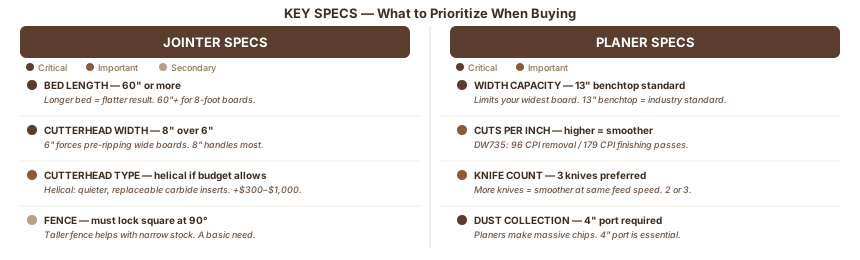
Jointer Specs
| Spec | What to Look For | Why It Matters |
|---|---|---|
| Cutterhead width | 6" or 8" | Most rough lumber is 6"–8" wide. A 6" jointer forces you to rip wider boards first. See 8-inch jointer guide for the full comparison. |
| Bed length | 60"+ for long boards | Often more important than width. Longer bed produces flatter results. |
| Cutterhead type | Straight knives or helical | Helical heads are quieter, produce less tearout, and use replaceable carbide inserts. They add $300–$1,000 to the price. |
| Fence | Must lock square at 90° | Tall fence helps with edge jointing narrower stock. |
Planer Specs
| Spec | What to Look For | Why It Matters |
|---|---|---|
| Width capacity | 12"–13" benchtop | Limits the widest board you can plane. |
| Cuts per inch | Higher = smoother | The DeWalt DW735 offers 96 CPI for stock removal and 179 CPI for finishing passes. |
| Number of knives | 2 or 3 | More knives = smoother surface at the same feed speed. |
| Dust collection | 4" port | Planers produce massive chips. Good dust extraction is a must. See the DIY dust collector guide for sizing a collection system around a planer. |
Popular Models
Benchtop Planers:
| Model | Width | Standout Feature | Price Range |
|---|---|---|---|
| DeWalt DW735X | 13" | 3-knife, 2-speed (96/179 CPI) | $600–700 |
| DeWalt DW734 | 12.5" | 3-knife, solid budget pick | $400–450 |
| Makita 2012NB | 12" | Quietest benchtop (83 dB) | $500–600 |
Benchtop Jointers:
| Model | Width | Standout Feature | Price Range |
|---|---|---|---|
| WEN JT3062 | 6" | Cheapest entry point | $200–315 |
| Grizzly G0947 | 8" | Spiral cutterhead, best value 8" | $495–535 |
Part 8: Where Jointers and Planers Fit in Your Shop
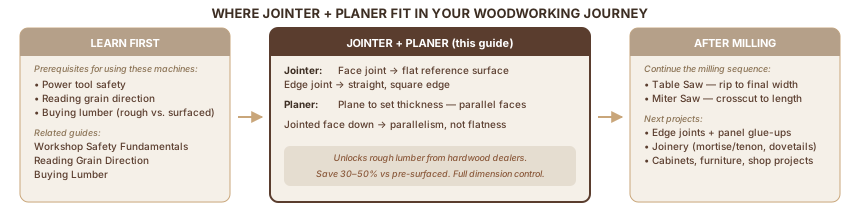
You should already understand: Basic power tool safety and how grain direction affects cuts.
Related guides: Buying Lumber covers the difference between rough and pre-surfaced stock. Edge Joints and Panel Glue-Ups picks up where the jointer leaves off. Table Saw Essentials covers the ripping step in the milling sequence.
What's next: Once you understand these two machines, you can buy rough lumber from a hardwood dealer and mill it yourself. That saves 30–50% on lumber costs and gives you control over every dimension.
Sources
This guide draws on woodworking educators, manufacturer specs, and hands-on testing data from experienced woodworkers.
- The Wood Whisperer — Which Comes First, Planer or Jointer? — why the planer wins as a first purchase, the "banana in, banana out" problem
- The Wood Whisperer — The Jointer's Jumpin' (Episode 6) — the definitive beginner milling video, the S4S sequence
- Jonathan Katz-Moses — Milling Lumber 101 — six-step milling process, two-session milling, grain direction for feeding
- Katz-Moses — 6 Ways to Joint Without a Jointer — planer sled, router sled, hand plane, and table saw alternatives
- Katz-Moses — 4 Ways to Stop Planer Snipe — snipe causes and practical fixes
- Matthias Wandel — Planer Snipe Causes and Measurement — measured snipe at 0.008" on a Delta planer
- Stumpy Nubs — Jointer vs Planer vs Sander — purchase order recommendations, visual demos of planer limitations
- WWGOA — The Difference Between a Jointer and Planer — mechanical differences, reference surface concept
- Grizzly G0947 — 8" Benchtop Jointer — spiral cutterhead benchtop jointer specs
- Grizzly G0958 — 8" Combo Planer/Jointer — combo machine specs and pricing
Tagged
How We Research
We don't take affiliate revenue or accept review units. Picks come from multi-source research — manufacturer specs, OSHA / EPA / ASTM regs, and long-form practitioner threads — plus Ahmed's hands-on use where relevant. When we recommend something, we explain why.
Up Next
Jointer-Planer Combo: What It Does, When to Buy One
POWER TOOLS · Beginner