
Double Bevel Miter Saw at a Glance
A double bevel miter saw tilts its cutting head both left and right, not just one direction. That matters when you're making compound cuts (miter angle and bevel angle simultaneously) for crown molding or mirrored trim. For most beginners doing crosscuts and basic 45° miter cuts, a single bevel saw is enough. Double bevel earns its cost when you regularly cut crown molding or work with long trim pieces where flipping the workpiece is awkward.
| What it does | Tilts cutting head left AND right (single bevel: left only) |
| Compound cut | Miter angle + bevel angle cut simultaneously in one pass |
| When it matters | Crown molding, chair rail, production compound cutting |
| When it doesn't | Crosscuts, basic 45° miters, simple furniture |
| Price premium | ~$100–$200 more than equivalent single-bevel saw |
| Crown molding setting | 31.6° miter + 33.9° bevel = standard 52/38 crown corner |
In this guide:
- The miter saw type hierarchy: from chop saw to double bevel sliding
- Single bevel or double bevel: the honest answer
- The compound miter cut explained through crown molding
- Making a compound cut, step by step
- Five mistakes and how to avoid them
Part 1: Miter Saw Types: From Chop Saw to Double Bevel Sliding
Manufacturers stack these terms into names like "12-inch dual bevel sliding compound miter saw" without explaining what any of it means. Here's the breakdown.
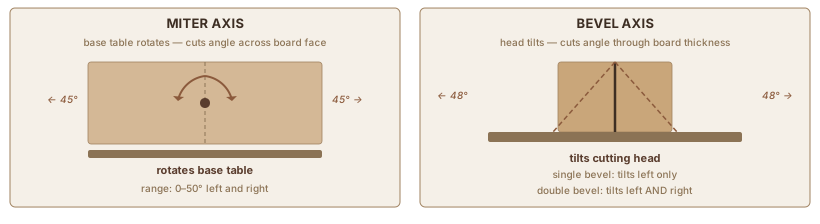
A miter saw has two independent adjustment axes:
The miter axis: the base table rotates left and right. This cuts at an angle across the face of the board. Set it to 45°, and you get the angled cut for a picture frame corner.
The bevel axis: the cutting head tilts side to side. This cuts at an angle through the thickness of the board. Set it to 45°, and the end of the board comes off as a wedge shape.
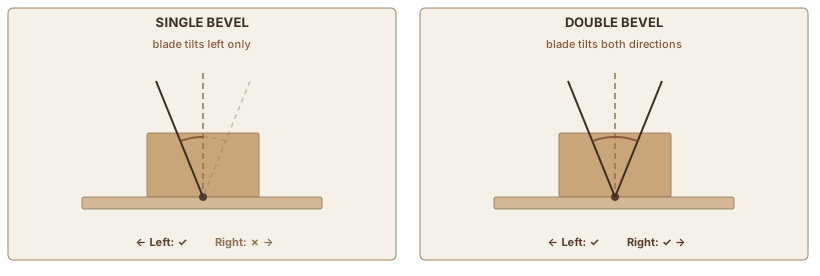
A "compound" saw uses both axes. "Single bevel" means the head tilts one way (usually left). "Double bevel" and "dual bevel" are the same feature with different marketing names: the head tilts both ways. "Sliding" means rails that let the head move forward and backward, increasing how wide a board you can cut.
| Saw type | Tilts left | Tilts right | Slides | Price range |
|---|---|---|---|---|
| Basic/chop saw | No | No | No | $100–200 |
| Compound (single bevel) | Yes | No | No | $150–350 |
| Compound (double bevel) | Yes | Yes | No | $250–500 |
| Sliding compound (single) | Yes | No | Yes | $250–450 |
| Sliding compound (double) | Yes | Yes | Yes | $350–800+ |
A basic chop saw drops straight down: no pivoting base, no tilting head. Good for framing lumber. Not what most woodworkers mean when they say "miter saw."
A standard compound miter saw (single bevel) is what most hobbyists buy first. You can make most cuts you'll ever need with one. The sliding version adds width capacity. The double bevel version adds the ability to bevel in both directions without repositioning your workpiece.
For a deeper look at how compound saws compare to basic miter saws, see Compound Miter Saw vs. Miter Saw.
Part 2: Single Bevel or Double Bevel: The Honest Answer
For most beginners, single bevel is good enough.
A finish carpenter on the ContractorTalk forum has used the same single-bevel Makita sliding saw since 1991. "Probably made a million cuts with it, maybe a thousand compound bevel cuts total." Even professional trim carpenters manage most work with a single bevel. For the occasional compound cut, you flip the workpiece. It's a little awkward, but it works.
Double bevel earns its cost in a few situations:
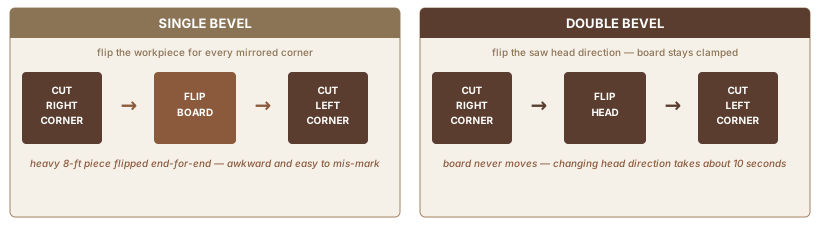
Installing crown molding repeatedly. Each room involves 20–30 compound cuts, typically in mirrored pairs: one left corner, one right corner. On a single-bevel saw, you flip an 8-foot piece of crown molding between each pair. On a double-bevel saw, you flip the saw head instead. For one room, the difference is minor. Across an entire house, it adds up fast.
Long, heavy stock. Repositioning an 8-foot trim board end-for-end is awkward and creates opportunities for measurement errors. With a double-bevel saw, the board stays put. You change the saw head direction.
Production volume. If you're cutting 50+ compound cuts in a session, saving 30 seconds per setup is real time.
| Your situation | Single bevel | Double bevel |
|---|---|---|
| Budget under $250 | ✓ | |
| Mostly crosscuts and basic miters | ✓ | |
| Occasional crown molding (one room) | ✓ | |
| Regular crown molding work | ✓ | |
| Long production trim runs | ✓ | |
| Want to avoid repositioning stock | ✓ |
If you're buying your first compound miter saw and you're not already planning a crown molding project, get the single bevel. The price difference buys you other tools. When you find yourself frustrated flipping long crown pieces on a real job, you'll have the experience to know the upgrade is worth it.
Part 3: The Compound Miter Cut: Crown Molding As the Test Case
A compound miter cut uses both axes at once: the base pivots at a miter angle while the head tilts at a bevel angle. The cut is angled in two planes simultaneously.
Crown molding shows exactly why this matters. Crown runs diagonally between wall and ceiling at what's called the spring angle, typically 38° or 45° depending on the molding profile. Because of that diagonal, every corner needs a cut that's angled across the face of the molding AND through its thickness. A simple 45° miter cut won't close a crown molding corner. You need a compound cut.
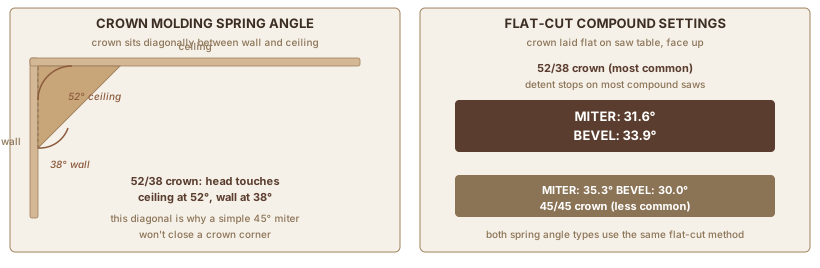
For standard 52/38 crown molding (the most common type), cutting flat on the saw table — a method Family Handyman calls "the secret numbers for cutting crown flat":
| Crown molding type | Miter angle | Bevel angle |
|---|---|---|
| 52/38 crown (most common) | 31.6° | 33.9° |
| 45/45 crown | 35.3° | 30.0° |
Angle data confirmed by WoodWeb's compound angle reference. Those odd angles (31.6° and 33.9°) look arbitrary, but they're marked as detent stops on most compound miter saws. You'll feel the saw click into place at both positions. They exist specifically for crown molding. This Old House's compound miter saw guide explains how the detent system works in more detail.
Why double bevel matters here specifically: At the right-hand corner of a room, the bevel tilts one direction. At the left-hand corner, it tilts the other. On a double-bevel saw, you adjust the head direction. About 10 seconds. On a single-bevel saw, you flip the crown piece. That takes longer and is more likely to throw off your measurement.
Always test your settings on a cheap scrap profile before touching finish molding. An 8-foot length of lattice strip costs about $4 and lets you dial in your corners without stress.
For the full crown molding installation technique, see Crown Moulding Compound Miter.
Part 4: Making a Compound Miter Cut, Step by Step
This procedure applies to any compound cut: crown molding, chair rail, or any trim that needs both a miter and a bevel angle.
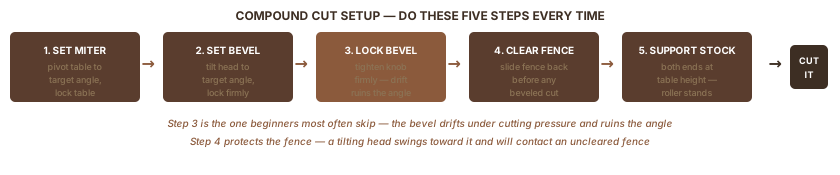
Setup before every compound cut:
- Set your miter angle. Loosen the miter lock, pivot the table until you feel the detent click at your target angle, lock the table.
- Set your bevel angle. Loosen the bevel lock knob (usually at the back of the head), tilt the head to your target angle, lock it firmly.
- Confirm the bevel lock is tight. An unlocked bevel drifts under cutting pressure and ruins the angle.
- Slide the fence out of the way. When the head tilts, it swings toward the fence. If the fence isn't cleared, the blade hits it.
- Support both ends of long workpieces at table height. Use roller stands or sawhorses.
The cut:
- Mark your cut line. Note which side is waste.
- Position the workpiece flat on the table, tight against the fence.
- Hold the workpiece with your non-dominant hand. Keep it at least 6 inches from the cut line. Never put it in the blade's path.
- Dry run: lower the head without power. Confirm the blade will contact the waste side of your line.
- Raise the head fully. Engage the trigger.
- Wait one second for the blade to reach full speed.
- Lower the blade through the cut steadily. Don't force it.
- Complete the cut. Release the trigger.
- Wait for the blade to stop completely before raising the head.
- Raise the head. Remove the workpiece.
For paired cuts with a double-bevel saw:
Batch all cuts in one bevel direction before switching. Cut every right-hand corner first, then loosen the bevel, flip to the other side, lock, and cut every left-hand corner. Fewer bevel changes means fewer opportunities for setup errors.
Part 5: Five Bevel Cut Mistakes and How to Avoid Them
Each of these mistakes is easy to make and easy to prevent once you know to look for it.
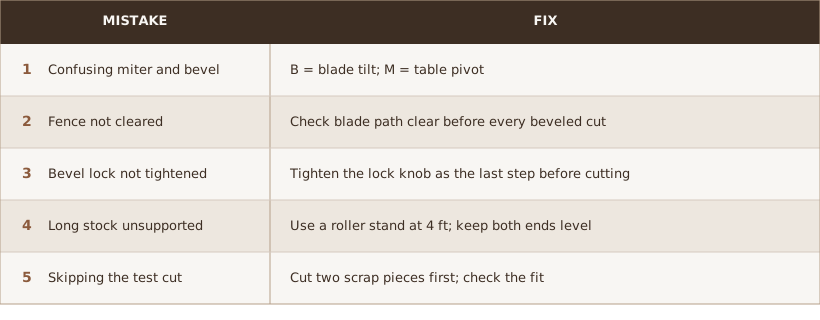
1. Confusing miter and bevel. The base table pivots for the miter angle (horizontal). The head tilts for the bevel angle (vertical). Beginners often set one when they mean the other. Remember: "B for bevel, B for blade-tilt."
2. Not sliding the fence back. When the head tilts into a bevel, it swings toward the fixed fence. If you don't move the fence, the blade hits it mid-cut. Before every beveled cut, check that the fence is clear of the blade path.
3. Not locking the bevel knob. You set the angle, start the cut, and the head drifts slightly under pressure. Result: wrong angle, wasted material. Get in the habit of tightening the lock knob as the final step before every cut.
4. Not supporting long workpieces. An 8-foot trim board hanging off the end of a compact saw will tip after the cut. The tipping can pinch the still-spinning blade. Use roller stands or a sawhorse to keep both ends at table height.
5. Skipping the test cut. Half a degree of error creates visible gaps in crown molding joints. Cut two test pieces from scrap, hold them together, check the fit. Two minutes of testing saves an hour of frustration.
Part 6: A Practice Sequence for Bevel Cuts
Don't start with your finish crown molding. Run through this sequence on cheap pine first.
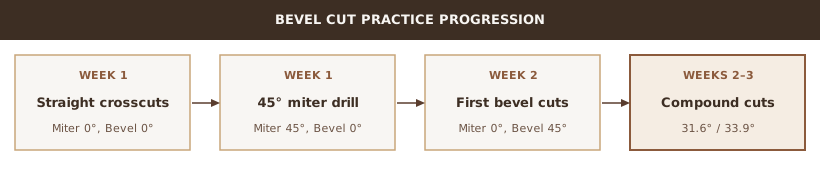
Week 1: Straight crosscuts on 2x4 pine Cut scrap pine into 6-inch pieces. Leave every angle setting at zero. Focus on trigger control: wait for the blade to reach full speed before lowering it, wait for it to stop fully before raising the head. This becomes automatic.
Week 1: 45° miter cuts (the picture frame drill) Set the miter to 45°, leave the bevel at 0°. Cut four pieces of 1x4 to form a picture frame. Push the corners together. Check how they fit. This teaches the left/right miter relationship and what a tight joint looks like versus a gapped one.
Week 2: First bevel cut Set the bevel to 45° with the miter at 0°. Cut scrap pieces. Look at the wedge-shaped cross section at the end. That's what a bevel does. On a double-bevel saw, flip the bevel to the other side and cut a matching piece. See how they mirror.
Week 2–3: First compound cut on cheap molding Buy a cheap 8-foot length of base cap or lattice strip ($3–5). Set 31.6° miter and 33.9° bevel. Cut corners. Hold them up to a wall corner. Check the fit. Adjust if needed. Iterate.
Your first ten corners will have gaps. That's the learning curve, not a personal failure. By thirty cuts, you'll have reliable fits.
Where This Fits
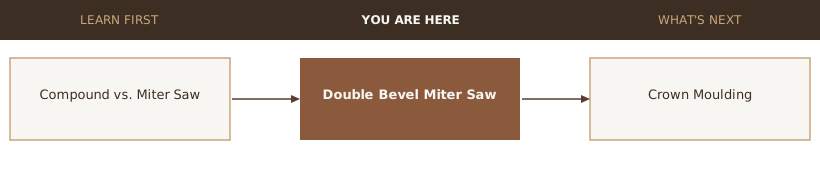
Learn this first:
- Compound Miter Saw vs. Miter Saw — if you're still deciding between saw types
Related:
- Miter Joints — the geometry behind every miter cut
- Crown Moulding Compound Miter — the full installation technique for crown molding
What double bevel unlocks:
- Crown molding installation across multiple rooms
- Chair rail and wainscoting with mirrored corners
- Angled furniture components (legs, frames, carcases)
- Any trim work that wraps corners at compound angles
Sources
The technique steps, angle settings, and professional experience referenced in this guide draw from practitioner forums, manufacturer guides, and established woodworking publications.
- ContractorTalk: Single or Double Bevel Miter Saw — professional finish carpenter perspective on single vs. double bevel
- Family Handyman: The Secret Numbers for Cutting Crown Flat — flat-cut crown molding method and angle tables
- WoodWeb: Finding Compound Angles for Crown Moulding — compound angle reference tables by spring angle
- This Old House: How to Tune Up and Use a Miter Saw — detent system, cutting procedure, setup accuracy
Tagged
How We Research
We don't take affiliate revenue or accept review units. Picks come from multi-source research — manufacturer specs, OSHA / EPA / ASTM regs, and long-form practitioner threads — plus Ahmed's hands-on use where relevant. When we recommend something, we explain why.
Up Next
What Is a Radial Arm Saw?
POWER TOOLS · Beginner