
Table Saw Blades at a Glance
For most beginners, the answer is the Diablo D1040X — a 40-tooth combination blade for about $35 at Home Depot. It cuts clean from day one, fits contractor saws and cabinet saws alike, and when it dulls, you replace it rather than sharpen it. Don't spend more than that until you're cutting regularly enough to feel the limits of a combination blade.
| Best first blade | Diablo D1040X 40T combo, ~$35 |
| Best upgrade | Freud LU84R 50T, ~$70 (for 3HP+ saws) |
| Premium pick | Forrest Woodworker II 40T, ~$165 (high-volume only) |
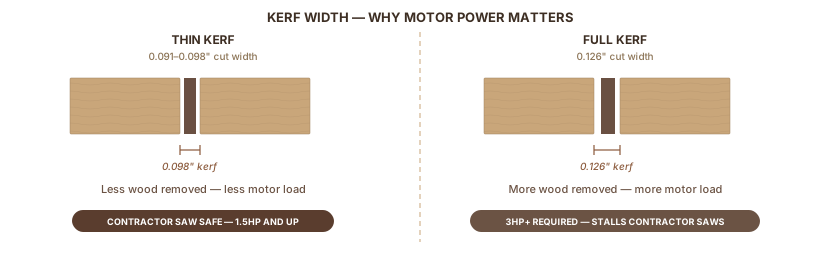
| Contractor saw rule | Thin kerf only (0.091–0.098") — full kerf bogs the motor |
| Standard arbor | 5/8" bore — fits all 10" table saws |
| Clean before replacing | Pitch buildup mimics dullness — always try cleaning first |
In this guide:
- The three blade types and which to buy first
- Diablo vs. Freud vs. Forrest — what you're actually paying for
- Which blade for which cut and material
- When to clean, sharpen, or replace
Part 1: The Three Blade Types That Cover Everything
Table saw blades come in three types worth knowing: combination, rip, and crosscut. Buy them in that order, and only buy the next one when you feel the current one holding you back.
For the full breakdown of specs — tooth geometry, hook angle, carbide grades — see 10-Inch Table Saw Blades. This guide focuses on the buying decision.
Combination Blade (40–50T) — start here
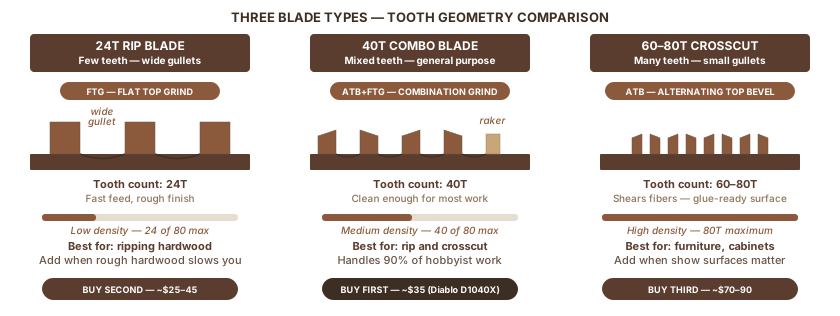
A 40-tooth combination blade handles ripping boards to width and crosscutting to length well enough for 90% of hobbyist work. The finish isn't as smooth as a dedicated crosscut blade, and it's not as fast as a dedicated rip blade. But the gap is smaller than the reviews make it sound.
The Wood Whisperer calls it "the blade for people who don't want to change blades." That's not a knock. For a hobbyist building shelves, a workbench, or a coffee table, one combination blade is enough to get through the whole build.
Buy first: Diablo D1040X 40T, ~$35. Handles most work. Replace when dull.
Rip Blade (24T) — add this second
A 24-tooth rip blade has large flat-top-ground (FTG) teeth with wide gaps between them to clear the long chips that ripping creates. It cuts along the grain fast and rough. The finish needs planing or sanding. That's normal and expected.
Add one when you're regularly buying rough-sawn hardwood and dimensioning it yourself. Ripping 4/4 oak through a combination blade is work. The same cut through a 24T rip blade takes half the effort.
If you buy pre-surfaced lumber (S4S — surfaced four sides) at the home center, you may never need a rip blade.
Buy second: Diablo D1024X 24T, ~$25–35 (thin kerf). Or Freud LM72R010 24T, ~$45–65 (full kerf, for 3HP+ saws).
Crosscut Blade (60–80T) — add this third
A 60–80 tooth blade with alternating bevel teeth shears wood fibers instead of tearing them. Crosscuts come out clean enough to glue without sanding. Plywood edges show minimal tearout.
Add one when you're building furniture with visible crosscut edges — cabinet sides, drawer fronts, face frames. For rough construction and DIY projects, a 40T combo blade is enough.
Buy third: Freud LU74R010 80T, ~$70–90. Or keep using the combo blade until you feel the difference mattering.
Part 2: Diablo, Freud, and Forrest: What You're Actually Paying For
The price difference between a $35 Diablo and a $165 Forrest is carbide volume and how you use the blade. More carbide means more sharpenings. More sharpenings change the total cost of ownership. Here's how that plays out.
Diablo (~$30–50): Replace it when it's dull
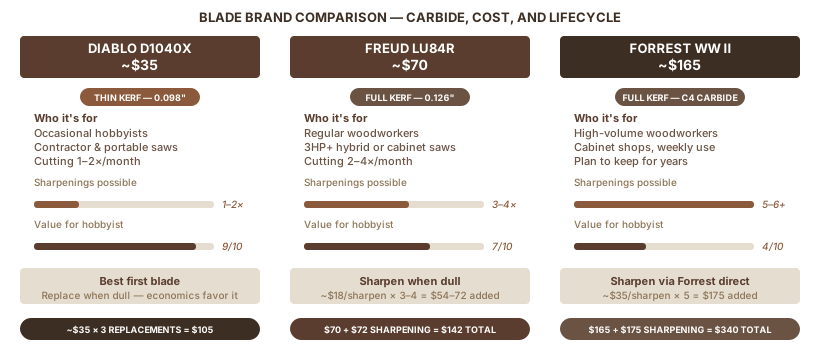
Diablo is Freud's value brand, made by the same parent company to a thinner spec. The blades use micro-grain carbide and a PermaShield anti-pitch coating. They're always thin kerf (0.098" kerf, 0.071" plate), which makes them the right choice for contractor saws, portable saws, and anything under 2HP.
The D1040X 40T is the most recommended beginner blade in every major woodworking forum — Sawmill Creek, LumberJocks, tool review sites. Consistently. The price is low enough that when it dulls, you replace it rather than sharpen it — and the economics favor that approach.
Sharpening a $35 blade costs $15–20 and gets you 1–2 more passes before the carbide is too short. That's fine value. But the carbide volume just isn't there for multiple sharpenings.
Who it's for: Occasional hobbyists. Contractor and portable saws. Anyone cutting 1–2 times per month who wants a clean blade without overthinking the purchase.
Freud Industrial (~$50–90): Sharpen it when it's dull
Freud's Industrial line — the LU, LP, and LM series — uses the same parent company and similar quality control as Diablo but with full kerf and more carbide per tooth. The LU84R 50T combination blade is the standard upgrade for woodworkers who have outgrown the Diablo.
More carbide means you can sharpen a Freud Industrial 3–4 times at a local sharpening service (~$15–20 per sharpen) before the teeth are too short. The economics start to favor sharpening over replacement.
The LumberJocks community summarizes it: "Freud Industrial has more carbide than comparable Diablo models and can be sharpened more times."
Because these are full kerf (0.126" wide), your saw needs enough motor to handle them. On a 3HP+ hybrid or cabinet saw, no problem. On a 1.5HP contractor saw, stick with Diablo.
Who it's for: Woodworkers cutting regularly — 2–4 times per month. 3HP+ saws. Anyone who wants to sharpen rather than replace.
Forrest Woodworker II (~$155–175): Earn this
The Forrest Woodworker II is hand-brazed C4 carbide, made in the USA. In most independent tests, including Fine Woodworking's saw blade comparisons and community tests on Sawmill Creek, it finishes at or near the top for surface quality. Community reviews consistently describe the cut surface as exceptionally smooth.
At $165, it costs 4–5× a Diablo. The justification is longevity: Forrest's C4 carbide allows more sharpenings, and Forrest's direct resharpening service ($35) returns the blade to exact factory spec. Over 5–8 years of regular use, a Forrest blade sharpen-and-repeat cycle can cost less than a series of mid-range replacements.
The honest caveat: for a hobbyist cutting 10–20 board-feet per week, the finish quality improvement over a $70 Freud is real but small. The economics only favor the Forrest at high volume — regular use, cabinet-quality requirements, or a shop where you'll keep the blade for years.
One practical note: Forrest uses C4 carbide that most local sharpening shops aren't set up to handle. Send it back to Forrest for sharpening or find a shop that specifically advertises C4 capability.
Who it's for: High-volume woodworkers, cabinet shops, serious hobbyists who use their saw weekly and plan to keep the blade for years.
DeWalt (~$25–40): Fine for home improvement, not woodworking
DeWalt's combination blades work for occasional home improvement cutting — framing, rough construction, trim work. Less carbide than Freud or Diablo, fewer sharpenings, shorter effective life.
For woodworking specifically, the Diablo D1040X costs $5–10 more and performs better. If you're already a DeWalt power tool household and want a matching blade, the DW3128 pack works. It's just not the best value for furniture and cabinetmaking work.
Brand comparison at a glance
| Brand | Price | Kerf | Sharpenings | Best for |
|---|---|---|---|---|
| Diablo D1040X | ~$35 | Thin (0.098") | 1–2 | Occasional use, contractor saws |
| Freud LU84R | ~$70 | Full (0.126") | 3–4 | Regular use, 3HP+ saws |
| Forrest WW II | ~$165 | Full | 5–6+ | High-volume, cabinet quality |
| DeWalt DW3128 | ~$30 | Both | 1–2 | Home improvement |
Part 3: Matching Your Blade to the Cut and the Material
| Cut | Material | Best blade | Why |
|---|---|---|---|
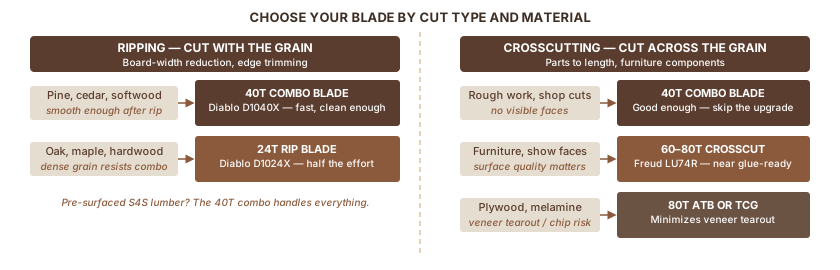
| Ripping | Pine, cedar | 40T combo | Fast enough; softwood doesn't punish a combo blade |
| Ripping | Oak, maple, hard hardwoods | 24T dedicated rip | Combo blade works but labors through dense grain |
| Crosscutting | Furniture parts, show surfaces | 60–80T crosscut | ATB grind shears fibers; leaves near-glue-ready surface |
| Breaking down plywood | 3/4" birch or oak ply | 40T combo (fine) or 60T (better) | Higher tooth count reduces tearout on veneer |
| Melamine, laminate | Coated sheet goods | 80T ATB or TCG grind | Standard blade chips the coating |
| MDF | Dense sheet good | 60–80T ATB | Dulls blades faster; clean the blade frequently |
On feed rate: Rip cuts need steady continuous feed. Stopping mid-cut causes friction heat and burn marks. Crosscuts move slower. Let the blade do the work rather than pushing.
On MDF: MDF uses abrasive bonding resins that eat carbide faster than solid wood. If you cut a lot of MDF, clean the blade after every session and expect shorter intervals between sharpenings.
Part 4: When to Clean, Sharpen, or Replace
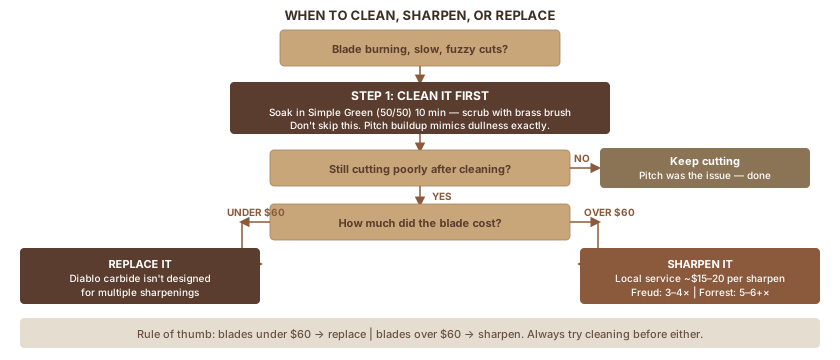
Try cleaning first
Pitch buildup (resin from pine, cherry, and MDF) makes a clean blade cut like a dull one: burning, slow feed, fuzzy cut edges. Before buying a new blade or taking yours to the sharpener, try cleaning it.
The Wood Whisperer's cleaning method: Lay the blade flat in a shallow pan. Pour Simple Green (diluted 50/50 with water) or dedicated CMT Blade Cleaner to cover the teeth. Soak 10 minutes. Scrub with an old toothbrush or brass brush — the pitch lifts off. Rinse, dry completely.
After cleaning, apply a thin coat of paste wax or Bostik Blade Wax to the plate before reinstalling. It reduces how much pitch sticks next time.
Don't use oven cleaner. Its active ingredient is sodium hydroxide (lye), which attacks the brazing that holds carbide teeth to the plate. It can loosen teeth and strips anti-pitch coatings. This Old House's blade cleaning guide recommends Simple Green for the same reason.
Signs a clean blade is actually dull
Per Fine Woodworking's guidance, rely on feel and performance more than visual cues:
- Burn marks that don't go away after cleaning
- Stock noticeably harder to push through at normal feed rate
- Motor sounds like it's straining on cuts that used to be easy
- Cut surface looks torn or fuzzy instead of clean
- Visible chipped or missing carbide on teeth (replace or send to sharpener)
The economics of sharpening
Rule of thumb: If the blade cost less than $60, replace it when dull. If it cost more than $60, sharpen it.
A $35 Diablo sharpened once costs $15–20 at a local service — fine value. But the carbide isn't designed for repeated sharpenings. After one or two sharpens, you're pushing it.
A $70 Freud sharpened three or four times at $18 each runs you $124–142 total. Versus buying three or four Diablo replacements at $35 each: $105–140. The economics are similar, but the Freud cuts better throughout.
A $165 Forrest resharpened five times at $35 each (Forrest direct): $340 over the life of the blade. A comparable number of Freud replacements would cost more. The economics favor Forrest only at high volume and if you actually send it for sharpening.
Blade storage
Store blades hanging or flat in their original plastic sleeve. Never stack them — edge-to-edge contact nicks the carbide. Blade socks (cloth protectors, ~$8) are cheap and prevent nicks in a crowded drawer.
Part 5: Quick Safety Check Before Every Cut
- RPM rating: Standard 10" table saw blades are rated 3,450–5,000 RPM. Check the blade's spec; your saw shouldn't exceed it.
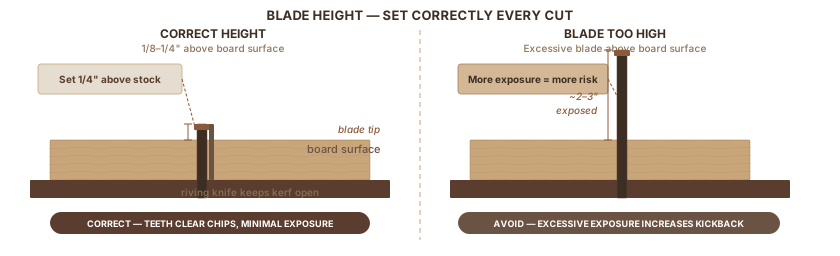
- Blade height: Set 1/8–1/4" above the stock thickness. Enough for teeth to clear chips; minimizes exposed blade.
- Guard and riving knife: Use them for rip cuts. They prevent kickback by keeping the kerf open as wood passes through. Removing them for convenience is how kickback happens.
- Never force a cut: If the motor strains, slow your feed rate. Forcing a cut into a bogged blade is how you get kickback.
For the full table saw safety and technique guide, see Table Saw Essentials.
Where This Fits

Once you have the right blade and the basics down, the next skill that makes the most difference is accurate crosscutting — and Building a Crosscut Sled is the tool that gets you there. The sled holds your stock square and consistent regardless of which blade you're running.
For more accurate joinery cuts — dadoes, rabbets, and grooves — see Dados, Rabbets & Grooves, which covers setting up both dado stacks and standard blades for groove work.
If you want the full spec breakdown on tooth count, hook angle, and kerf, 10-Inch Table Saw Blades goes into the geometry in more depth.
Sources
Blade performance data, brand comparisons, and maintenance guidance draw on practitioner communities and professional woodworking publications.
- The Wood Whisperer: Which Saw Blade Should I Buy — honest combination blade recommendation
- Katz-Moses Tools: First 3 Table Saw Blades — buying order and specific models
- Sawmill Creek: Freud vs. Diablo — community brand comparison
- LumberJocks: Freud Diablo vs. Other Freud Blades — carbide volume and sharpening comparison
- Stumpy Nubs: Thin vs. Full Kerf — kerf decision by saw motor power
- Fine Woodworking: When to Sharpen Table Saw Blades — dullness indicators
- The Wood Whisperer: How to Clean Blades and Bits — cleaning method
- This Old House: How to Clean Saw Blades — oven cleaner warning
- Toolstoday: The Science of Saw Blades — specs reference
- Rockler: Choosing the Right Saw Blade — application selection guide
Tagged
How We Research
We don't take affiliate revenue or accept review units. Picks come from multi-source research — manufacturer specs, OSHA / EPA / ASTM regs, and long-form practitioner threads — plus Ahmed's hands-on use where relevant. When we recommend something, we explain why.
Up Next
Can a Circular Saw Replace a Table Saw?
POWER TOOLS · Beginner