
2x4 Woodworking at a Glance
Construction-grade 2x4s are the best first lumber in woodworking. At $3–7 per 8-foot board, they're cheap enough that a mistake costs $5, not $50. Every hardware store stocks them. They're pre-planed to consistent dimensions, strong enough for real furniture, and forgiving enough that you learn fast. The projects below range from a pair of sawhorses you can build in two hours to a platform bed frame you can finish over a weekend.
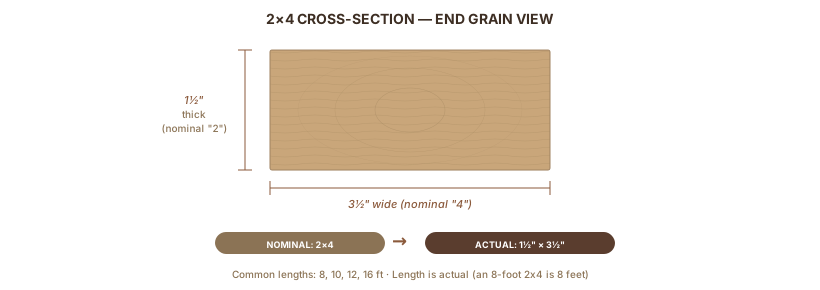
| Actual dimensions | 1.5" × 3.5" (nominal 2"×4") |
| Common lengths | 8, 10, 12, 16 feet |
| Cost per 8-foot board | $3–7 at home centers |
| Grade for woodworking | #2 common (standard); Select for knot-free surfaces |
| Outdoor use | Pressure-treated or cedar 2x4s |
| Tools to start | Circular saw, drill, tape measure, speed square |
In this guide:
- What a 2x4 actually measures and why it matters for your cut list
- How to pick straight boards at the hardware store
- Eight projects worth building, with real costs and times
- Fasteners and joinery for 2x4 construction
- How to finish your project for indoor or outdoor use
Part 1: What a 2x4 Actually Measures
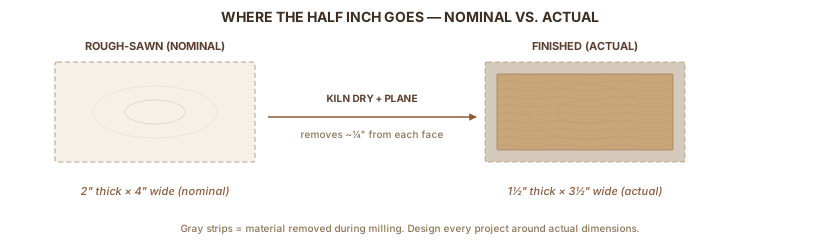
A "2x4" is 1.5 inches thick and 3.5 inches wide when you buy it. The nominal name (2×4) refers to the rough-sawn size before the board gets dried in a kiln and run through a planer. Drying and planing remove about half an inch from each face, producing the consistent dimensions you find on the shelf.
Length is the exception: an 8-foot 2x4 is 8 feet long.
This matters for every cut list. If you design a box expecting 4-inch sides, each 2x4 only gives you 3.5 inches of width. Build everything around actual dimensions, not the nominal name.
The same gap applies across dimensional lumber. The Nominal Wood Sizes guide has the full reference, but the most common sizes:
| Nominal | Actual |
|---|---|
| 2×4 | 1.5" × 3.5" |
| 2×6 | 1.5" × 5.5" |
| 2×8 | 1.5" × 7.25" |
| 2×10 | 1.5" × 9.25" |
| 2×12 | 1.5" × 11.25" |
| 4×4 | 3.5" × 3.5" |
Part 2: Choosing Good Boards at the Store
The biggest frustration in 2x4 projects is fighting warped lumber. Two minutes at the store choosing straight boards saves an hour of frustration during assembly.
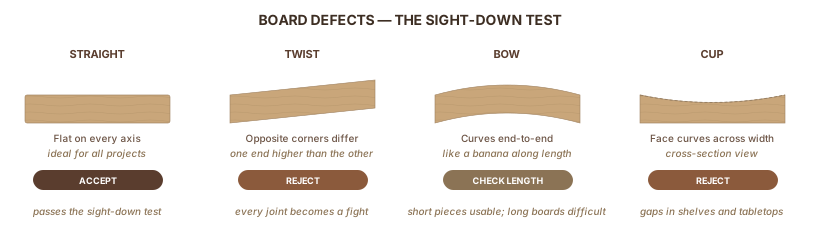
The sight-down test: Hold one end of the board at eye level and look down the length. You'll see any twist, bow, or curve immediately. Reject boards with:
- Twist: Opposite corners going in different directions. Every joint becomes a fight.
- Bow: The board curves end-to-end like a banana. Manageable in short pieces, difficult in long ones.
- Cup: The width curves side-to-side. Causes gaps in tabletops and shelves.
- Large loose knots: Knots that move or crack around the edges can fall out and weaken the board.
Tight, solid knots (the kind you can't move with your thumbnail) are fine for structural projects. For painted furniture, prime over them with shellac-based primer (Zinsser BIN) before painting. Standard latex primer won't block knot bleed-through.
Grades at the Home Center
#2 Common is the default at big box stores. Some knots and imperfections, occasionally a warp. This is what every project in this guide uses.
Select or Clear boards have fewer or no knots and cleaner surfaces. They cost 2–3 times more. Worth it for indoor furniture where the wood shows through a natural finish.
Stud Grade is selected for straightness (for wall framing). It's often the straightest lumber on the rack at #2 prices. Check if your store stocks it.
Indoor vs. Outdoor
Standard kiln-dried pine 2x4s are fine indoors but will rot outdoors in a few years without heavy finish protection. For anything that touches the ground or sits in weather, use:
- Pressure-treated lumber (ACQ-treated) for structural outdoor use and ground contact
- Cedar 2x4s for outdoor furniture. Naturally rot-resistant, weathers well, accepts stain and paint.
If you're buying lumber for an indoor project, pick it up a week early and sticker it flat in your shop (lay boards with small spacers between them for air flow). Blacktail Studio's kiln-dried lumber testing found that home center 2x4s typically run 15–19% moisture content. Your shop air will pull them down to 6–9%. Wagner Meters' moisture content guide puts interior wood at 6–8% MC, which means boards can still move across their width as they acclimate. Better that happens before you build than after.
Part 3: Eight Projects Worth Building
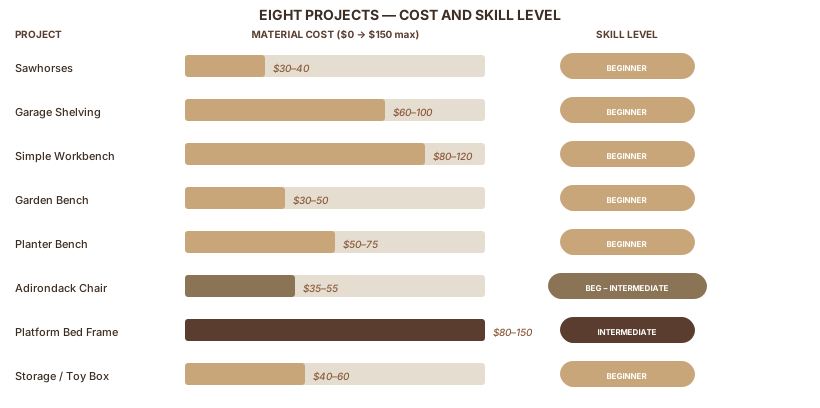
Each project below produces something useful. They're in roughly ascending order of complexity.
| Project | Cost | Time | Skill Level |
|---|---|---|---|
| Sawhorses | $30–40/pair | 1–2 hours | Complete beginner |
| Garage Shelving | $60–100 | 4–6 hours | Beginner |
| Simple Workbench | $80–120 | Full day | Beginner |
| Garden Bench | $30–50 | 3–4 hours | Beginner |
| Planter Bench | $50–75 | Afternoon | Beginner |
| Adirondack Chair | $35–55 | Full day | Beginner–intermediate |
| Platform Bed Frame | $80–150 | Weekend | Intermediate |
| Storage Box | $40–60 | 4–5 hours | Beginner |
Sawhorses
Build these first. You need them to support stock while cutting, hold projects at a working height, and keep lumber off the floor. A pair costs about $35 in lumber, less than any commercial sawhorses worth owning.
Materials: Seven 8-foot 2x4s and about 30 three-inch deck screws.
The simplest version is the I-beam style: screw three boards together to form an I profile (two flat, one standing between them), then attach two leg pairs to each end. No angle cuts required. The I-beam top rail is stiff and resists downward force from stock laid across it.
Ana White's heavy-duty sawhorse plans use this approach with free step-by-step instructions. Family Handyman's version adds a shelf between the legs.
Garage Shelving
Freestanding 2x4 shelving with OSB or plywood decking holds several hundred pounds per shelf. A four-level unit costs about $80 in materials.
Materials (4-shelf unit, 6'W × 7'H × 2'D): Fourteen 8-foot 2x4s for the frame, two 4×8 sheets of 3/4" OSB or plywood, and a box of 2-1/2" and 3" screws.
Cut all pieces to the same length before assembly. Check for square at every step with a speed square. One upright that's off by a degree makes the whole unit rack and refuse to stand straight.
Free plans from Fix This Build That and Ana White are reliable starting points.
Simple Workbench
A 2x4 workbench with a plywood top is stiffer, heavier, and more useful than any commercial bench at this price. You can clamp to it, pound on it, and abuse it.
Materials: Ten to twelve 8-foot 2x4s for legs, stretchers, and frame; one 4×8 sheet of 3/4" plywood for the top; 3" screws and a few 3/8" carriage bolts for the leg-to-rail connections.
Standard workbench height is 34 inches, but cut your legs to put the surface at your hip bone. You want your wrists bent downward when planing, not reaching up. A bench at the wrong height gets tiring fast.
Use carriage bolts, not just screws, for the leg-to-rail connections. A workbench sees serious racking force when you're sawing or hand planing. Screws alone will loosen over time. Carriage bolts stay tight.
For a complete guide to design, height, materials, and build sequence, see Wooden Work Bench. Or if you want a specific step-by-step for the Nicholson style, see Build a Nicholson Workbench.
Garden Bench
Five or six 8-foot 2x4s and an afternoon produce a bench sturdy enough for adults.
Materials: Five to six 8-foot 2x4s; 3" deck screws; optional carriage bolts for the leg connections.
Seat height: 15–18 inches. Bench depth (front to back): 12–15 inches. Length: 48 to 72 inches is typical.
For an outdoor bench, use pressure-treated 2x4s for the legs and lower frame, and cedar for the seat slats. The PT lumber handles moisture exposure; cedar weathers well and stays splinter-free as it ages.
Planter Bench
The same construction as the garden bench, with a box planter built into one or both ends. Works well on a porch or deck.
Materials: Eight to ten 8-foot 2x4s; 3" deck screws; cedar or PT lumber.
The most important detail: drill 1/2" drainage holes every 6 inches across the planter box floor. Without drainage, the bottom stays wet and rots within a season, even with PT lumber. With drainage, the box can last 10+ years.
For more on planter construction, see Cedar Planter Box.
Adirondack Chair
The classic outdoor chair. All 2x4 construction except for the curved back slats and arm profile, which need a jigsaw. The seat slant and back recline angle are what make an Adirondack comfortable. Follow a proven plan for these angles rather than improvising them. For a detailed build guide with a complete cut list, see Modern Adirondack Chairs.
Materials: Eight 8-foot 2x4s; 2-1/2" exterior screws; a jigsaw for the curved cuts.
Pre-drill near board ends before driving screws. Pine splits along the grain without a pilot hole. A 1/8" pilot hole takes ten seconds.
HowToSpecialist's Adirondack chair plans include templates for the curved pieces.
Platform Bed Frame
A platform bed replaces both a box spring and a traditional bed frame. The result is low, modern, and solid.
Materials (queen size, 60"×80" interior): Eighteen 8-foot 2x4s for frame rails, slats, and legs; 3" and 2-1/2" screws. A pocket hole jig cuts assembly time at this board count.
A center support rail is required for queen and king sizes. Without it, the mattress flexes under weight and the frame joints work loose over months. Add one center rail from head to foot, with at least one leg underneath it.
For a floating look, set the corner legs 3–4 inches inward from each corner. The frame appears to hover above the floor. Ana White's simple floating bed plans show this clearly.
Storage Box / Toy Box
A 2x4 frame wrapped with 1/2" plywood panels. Durable, cheap, and a good way to practice panel assembly before moving to furniture.
Materials: Six 8-foot 2x4s for the frame; one to two 4×8 sheets of 1/2" plywood; wood glue; 2" screws; piano hinge for the lid.
For a toy box, add a lid support. A simple chain from the back inner wall to the lid prevents the lid from slamming on small fingers. Pneumatic lid supports (available at Rockler or Woodcraft) hold the lid open at any position.
For a simpler first project at the same skill level, see Build a Simple Shelf.
Part 4: Joinery and Fasteners
Four fastener approaches cover every project above:
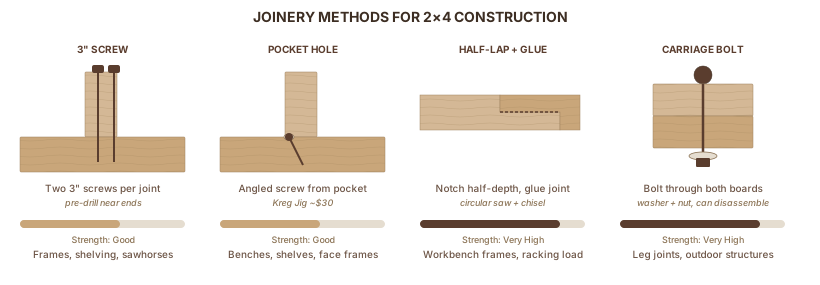
| Method | Strength | Speed | Best For |
|---|---|---|---|
| 3" construction screws | Good | Fast | Frames, sawhorses, shelving |
| Pocket hole + 2-1/2" screw | Good | Fast | Benches, shelf frames, non-racking joints |
| Half-lap joint + glue | Very high | Slower | Workbench frames, tables with racking force |
| 3/8" carriage bolt | Very high | Medium | Leg connections, outdoor structural joints |
3" screws: Pre-drill near ends to prevent splitting. Drive two screws per connection, offset so they're not in line with the grain.
Pocket holes: Drill at an angle through one board's end, then drive a screw into the adjacent board. Fast and clean. Weak in joints that see racking or pure tension. A Kreg Jig (about $30) handles the drill angle automatically. See Pocket Hole Joinery for the full technique.
Half-laps: Cut a notch halfway through each board where they meet. The boards interlock flush and glue across a large surface. Much stronger than a screwed butt joint. Set your circular saw depth to half the board thickness (3/4") and make a series of passes to remove the waste.
Carriage bolts: Thread through both boards, add a washer and nut, tighten. You can disassemble later if needed. Use for any joint that will see serious load — workbench legs, bench legs, outdoor furniture that sees weather cycling.
Part 5: Finishing Your 2x4 Project
Interior projects: Sand to at least 120 grit before priming. Construction-grade pine is rough and absorbs primer unevenly at lower grits. Apply a shellac-based primer (Zinsser BIN, Bulls Eye 1-2-3) over any knots before painting. Standard latex primer won't fully block knot bleed-through; shellac-based primer does. Two coats of interior latex paint after that.
For a clear finish on indoor furniture, water-based polyurethane over sanded pine works well and holds up to use.
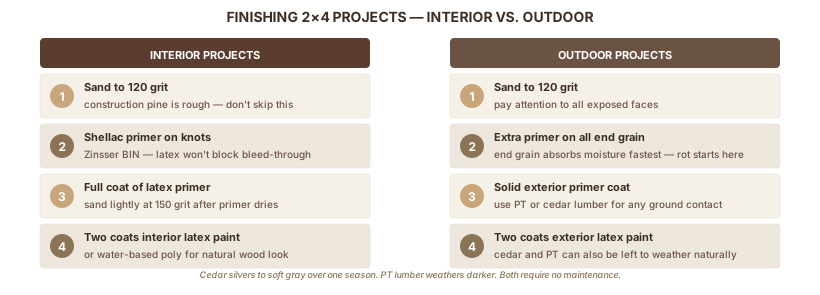
Outdoor projects: Two coats of exterior paint over a solid primer is the most durable option. Pay extra attention to end grain. It absorbs moisture fastest and is where rot starts. An extra brushed coat of primer on end-grain surfaces before painting adds years of outdoor life.
Cedar and pressure-treated lumber can also be left to weather naturally. Cedar silvers to a soft gray over a season. PT lumber weathers darker. No maintenance required.
Part 6: Where to Go Next

- Pocket Hole Joinery — the fastest joinery upgrade for 2x4 projects
- Buying Lumber — grades, S4S vs. rough, big box vs. lumber yard
- Nominal Wood Sizes — full reference for all dimensional lumber actual dimensions
- Choosing Your First Workbench — workbench design decisions before you build
- Build a Nicholson Workbench — full step-by-step workbench build
Sources
This guide draws on moisture content testing data, manufacturer references, and free woodworking plans.
- Nominal Wood Sizes — nominal vs. actual dimensions for all standard lumber sizes
- Blacktail Studio: How Dry Is Home Depot Kiln Dried Lumber? — kiln-dried MC% testing at home centers
- Wagner Meters: Acceptable Moisture Levels in Wood — MC% targets for interior and exterior wood
- Family Handyman: Sawhorse Plans — sawhorse designs and dimensions
- Ana White: Easy Heavy Duty 2x4 Sawhorses — I-beam sawhorse plans
- Ana White: DIY Freestanding Garage Shelves — shelving unit plans
- Fix This Build That: DIY Garage Shelves — shelving with structural framing approach
- Ana White: Simple Floating Bed — platform bed floating-leg approach
- HowToSpecialist: Adirondack Chair from 2x4s — Adirondack chair plans with curved templates
How We Research
We don't take affiliate revenue or accept review units. Picks come from multi-source research — manufacturer specs, OSHA / EPA / ASTM regs, and long-form practitioner threads — plus Ahmed's hands-on use where relevant. When we recommend something, we explain why.
Up Next
2x8 Treated Lumber: Spans and Fasteners
WOOD & MATERIALS · Beginner