
1x4 Lumber at a Glance
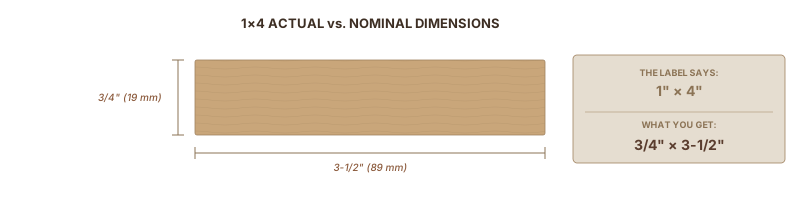
A 1x4 board is not 1 inch by 4 inches. It measures 3/4 inch thick by 3-1/2 inches wide. The "1x4" is a nominal name from when lumber was sold rough-sawn. Drying and planing cut it down. This matters the moment you start measuring for a project.
| Nominal size | 1 × 4 |
| Actual thickness | 3/4 inch (19 mm) |
| Actual width | 3-1/2 inches (89 mm) |
| Common species at big-box | SPF (spruce/pine/fir), cedar, pine |
| Typical grades | #2 at big-box; Select and Clear at specialty suppliers |
| Board feet per 8-ft board | 2.67 BF |
In this guide:
- Full nominal vs. actual dimensions table — all 1x and 2x sizes
- Lumber grades explained — #1, #2, Select, Clear
- What 1x4 is right for (and when to size up)
- Board foot calculation and storage tips
Part 1: The Real Dimensions: What You're Actually Buying
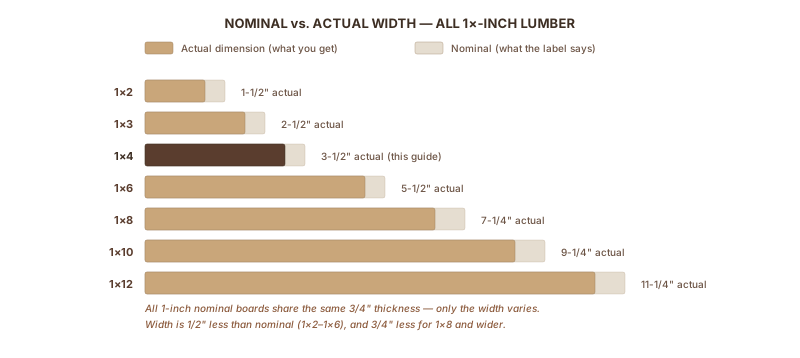
Every "1-inch" board is 3/4 inch thick once it leaves the mill. The width drops by roughly 1/2 inch from nominal. Use actual dimensions when designing anything — nominal numbers will throw off your measurements.
1-Inch Nominal Lumber
| Nominal | Actual |
|---|---|
| 1×2 | 3/4" × 1-1/2" |
| 1×3 | 3/4" × 2-1/2" |
| 1×4 | 3/4" × 3-1/2" |
| 1×6 | 3/4" × 5-1/2" |
| 1×8 | 3/4" × 7-1/4" |
| 1×10 | 3/4" × 9-1/4" |
| 1×12 | 3/4" × 11-1/4" |
2-Inch Nominal Lumber
| Nominal | Actual |
|---|---|
| 2×4 | 1-1/2" × 3-1/2" |
| 2×6 | 1-1/2" × 5-1/2" |
| 2×8 | 1-1/2" × 7-1/4" |
| 2×10 | 1-1/2" × 9-1/4" |
| 2×12 | 1-1/2" × 11-1/4" |
Once you hit 1×8 and above, the width loss isn't uniform. A 1×8 gives you 7-1/4" (not 7-1/2"), and a 1×10 gives 9-1/4" instead of 9-1/2". This trips up a lot of project plans. Double-check anything wider than a 1×6.
Part 2: Why a 1x4 Isn't 1 Inch by 4 Inches
Two things happen between the sawmill and your hands.
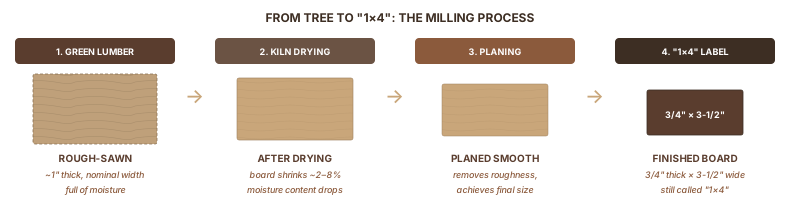
Drying. Freshly cut (green) lumber is full of water. As it dries, whether kiln-dried or air-dried, moisture leaves the wood and the board shrinks. Shrinkage across the grain runs roughly 2–15% depending on species and how the board was cut from the log.
Planing. After drying, the mill runs the board through a planer to remove roughness and reach a consistent, uniform dimension. This removes more material.
The name "1x4" is historical. When sawmills first standardized lumber, rough-sawn boards were close to those measurements. As milling became more precise, actual sizes fell. The names didn't. Per North Castle Hardwoods' sizing explainer, a board labeled 1×4 loses about 1/4 inch in thickness and 1/2 inch in width from rough nominal to finished actual.
The practical cost: design a five-shelf bookcase with 4-inch shelves, buy 1×4 boards, and each shelf comes in 1/2 inch narrower than you planned. Five shelves, five 1/2-inch gaps. Your design doesn't fit. Always use actual dimensions when you build — 3/4" thick, 3-1/2" wide.
Part 3: Lumber Grades: What the Labels Mean
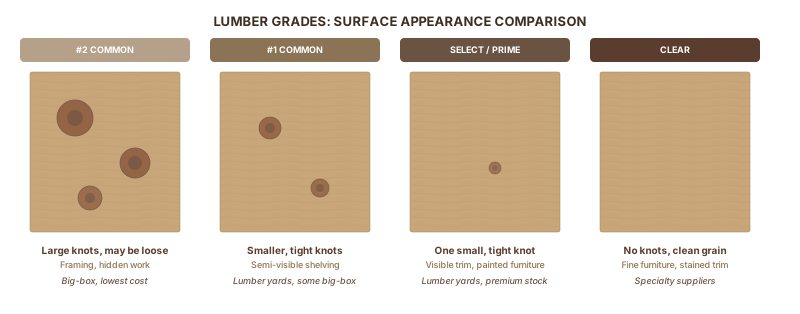
Grade affects how a board looks, not how big it is. A Clear 1×4 and a #2 1×4 are both 3/4" × 3-1/2".
| Grade | Knots | Wane | Best for | Where to find |
|---|---|---|---|---|
| #2 | Moderate; some unsound | Considerable | Framing, rough shelving, anything hidden | Big-box stores |
| #1 | Smaller, tight | Less | Better structural work, semi-visible shelving | Big-box (sometimes), lumber yards |
| Select / Prime | Tight, minimal | Virtually none | Visible trim, interior shelving, painted furniture | Lumber yards, some big-box |
| Clear | Minimal to none | None | Fine furniture, stained/painted premium trim | Specialty suppliers |
Most lumber at Home Depot and Lowe's is #2. It's fine for framing, rough shelving, and anything that'll be painted or hidden. If the board will be visible (a bookshelf face frame, painted trim, a simple box), look for Select or #1 Prime. For stained furniture where grain matters, you want Clear or better. That usually means a specialty lumber yard.
Grade definitions come from the National Lumber Grades Authority and vary slightly by grading agency, but the labels above are what you'll see at most US retailers.
Part 4: Wood Species in a Standard 1x4
What species you get at a big-box store depends on where the store sources its lumber. You often won't know the exact species — it'll just be labeled "pine" or SPF.
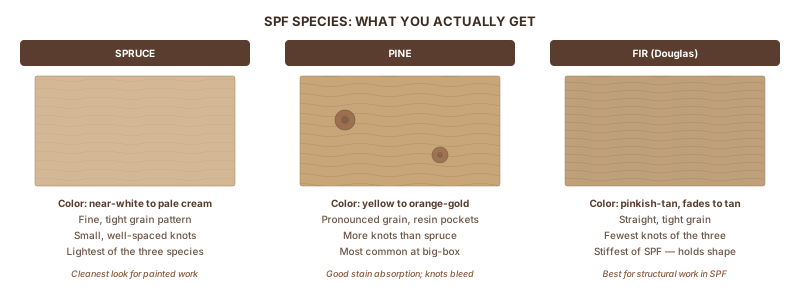
At big-box stores
SPF (Spruce/Pine/Fir): The most common. Spruce runs whiter with fine grain and small knots. Pine leans yellow-orange with more pronounced grain. Fir starts pinkish and fades; it's the stiffest of the three. All three finish to the same 3/4" × 3-1/2".
Cedar: Naturally rot-resistant. Used for outdoor trim, siding, raised beds, and fence work. Costs more than SPF. Takes stain well but doesn't hold screws as firmly as denser species.
At hardwood dealers
Hardwood dealers don't sell lumber as "1x4." They use a different system: thickness measured in quarters of an inch (4/4, 5/4, 8/4). Per Rockler's quarter system guide:
| Designation | Rough thickness | Typical planed thickness |
|---|---|---|
| 4/4 | 1" rough | ~13/16" finished |
| 5/4 | 1-1/4" rough | ~1" finished |
| 6/4 | 1-1/2" rough | ~1-1/4" finished |
| 8/4 | 2" rough | ~1-3/4" finished |
If you want oak, maple, walnut, or cherry in a 1x4 footprint, ask for 4/4 lumber and have it surfaced (S2S or S4S) to 3/4". For a full species comparison by hardness, workability, and cost, see the Hardwood Species Guide.
Part 5: What 1x4 Lumber Is Good For
A 1x4 is a trim and light-duty board. It's right for a wide range of projects, as long as you're not asking it to carry structural loads.
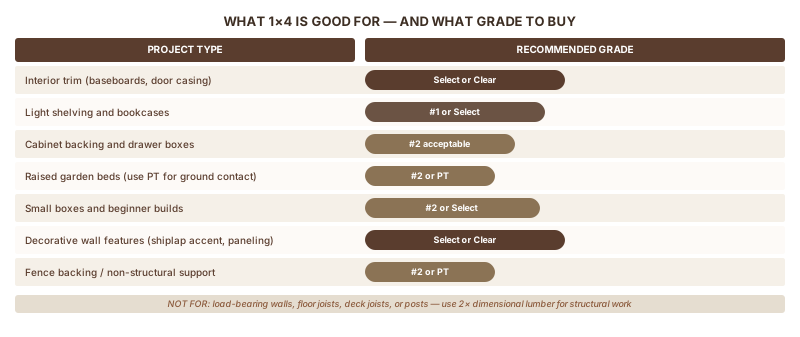
| Project type | Why 1x4 works | Grade recommendation |
|---|---|---|
| Interior trim (baseboards, casing) | Slim profile, takes paint well | Select or Clear |
| Light shelving and bookcases | Adequate for books and light items | #1 or Select |
| Cabinet backing and drawer boxes | Thin panel fits flush | #2 acceptable |
| Raised garden beds | Cheap, workable (use PT for ground contact) | #2 |
| Small boxes and beginner builds | Easy to cut and join | #2 or Select |
| Decorative wall features | Visible surface; appearance matters | Select or Clear |
| Fence backing | Non-structural support (use PT for outdoor) | #2 PT |
A 1x4 is not rated for load-bearing walls, floor joists, deck joists, or posts. For anything structural, use 2x lumber (minimum 2×4) designed for that purpose.
Part 6: When to Choose 5/4 or 2x4 Instead
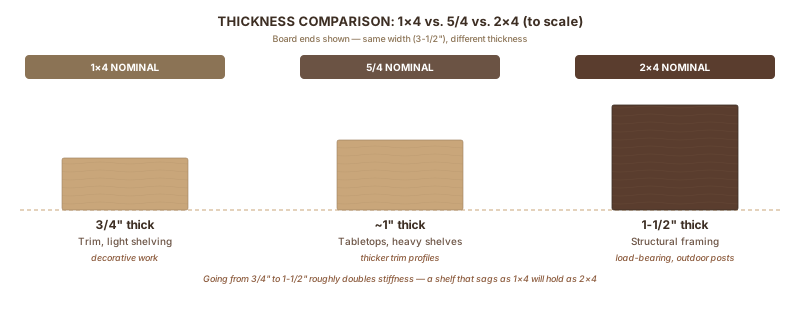
| Size | Finished thickness | Best for |
|---|---|---|
| 1×4 | 3/4" | Trim, light shelving, decorative work |
| 5/4 | ~1" | Tabletops, heavier shelves, thicker decorative trim |
| 2×4 | 1-1/2" | Structural framing, load-bearing, outdoor posts and beams |
Use 5/4 when you want a thicker look without going full 2x. Per Advantage Lumber's size reference, 5/4×6 finishes to about 1" × 5-1/2". Good for tabletops, heavy shelves, or trim that needs more heft.
Use 2×4 when the board needs to handle weight or stress. The extra 3/4" of thickness (from 3/4" to 1-1/2") roughly doubles the stiffness. A shelf that would sag as a 1×4 will hold as a 2×4.
Part 7: Calculating How Much Lumber to Buy
Board foot formula:
Board feet = (nominal thickness × nominal width × length in feet) ÷ 12
Use nominal dimensions in this formula, not actual. For a 1×4 board that's 8 feet long:
(1 × 4 × 8) ÷ 12 = 2.67 board feet
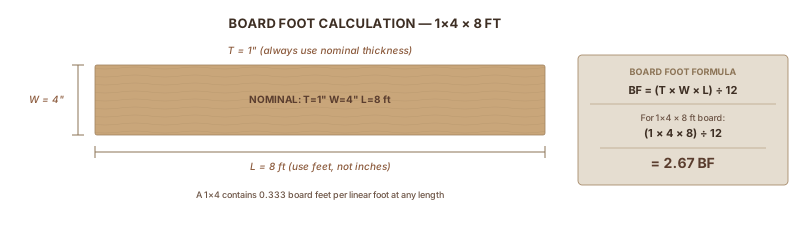
Quick reference for 1×4 boards at standard lengths:
| Length | Board feet |
|---|---|
| 6 ft | 2.00 BF |
| 8 ft | 2.67 BF |
| 10 ft | 3.33 BF |
| 12 ft | 4.00 BF |
A 1×4 contains 0.333 board feet per linear foot. For full-project planning, the Omni Calculator board foot calculator handles mixed sizes.
Part 8: Storing and Acclimating Your Lumber
Big-box lumber runs about 14% moisture content, per Blacktail Studio's Home Depot moisture testing. Fine woodworking needs 6–9% MC. Use lumber straight from the store and your joints will shift as the wood dries down.
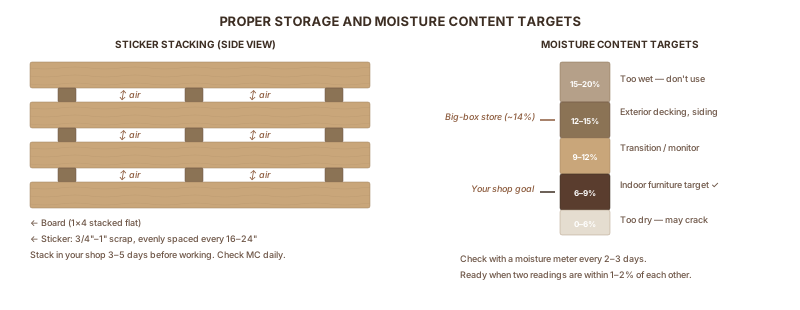
Target moisture content by application:
| Use | Target MC |
|---|---|
| Indoor furniture and fine woodworking | 6–9% |
| Interior cabinetry and shelving | 6–9% |
| Exterior (decking, siding) | 12–15% |
Per Wagner Meters' moisture guidelines, acclimate lumber in your shop at 45–55% relative humidity for at least 3–5 days before working it. Stack boards with stickers (small spacers) between each layer to let air circulate. Check with a moisture meter every 2–3 days. The board is ready when two consecutive readings are within 1–2% of each other.
For most 1×4 pine and SPF projects (painted trim, simple shelving, beginner boxes), you can be less rigorous. For furniture that'll be stained or show movement (drawer boxes, tabletops, shelf pins going through a panel), acclimation matters. The full mechanics behind why wood moves with humidity are covered in Wood Movement in Practice.
Part 9: Where to Go Next
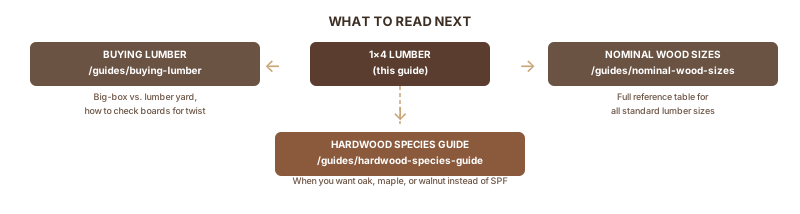
Once you know your dimensions, the next question is usually where to buy and what to check before you load the boards in your car. Buying Lumber covers big-box vs. lumber yard, how to read for twist and cup, and when rough lumber is worth the trip.
Sources
These sources informed the data and specifications in this guide.
- Lowe's Nominal vs. Actual Lumber Sizes — dimensional reference table
- Archtoolbox Lumber Dimensions — comprehensive nominal/actual table for all standard sizes
- UFP Edge: Nominal vs. Actual Dimensions — explanation of the milling process
- North Castle Hardwoods: Lumber Sizing Explained — rough-cut to finished dimensions walkthrough
- WoodBin Softwood Grades — softwood grading definitions
- Culpeper Treated Lumber: Grades of Lumber — grade descriptions and applications
- Rockler: The Quarter System of Lumber Thickness — 4/4, 5/4, 8/4 explained
- Woodworkers Source: What Does 4/4 Mean? — hardwood thickness system
- Advantage Lumber Size Reference — 5/4 and other size comparisons
- Blacktail Studio: How Dry Is Home Depot Lumber? — big-box moisture content testing
- Wagner Meters: Acceptable Moisture Levels in Wood — MC targets by application
- WoodWeb: Humidity, Moisture Content, and Lumber Storage — storage and acclimation science
- Penn State Extension: Understanding Equilibrium Moisture Content — EMC and shop humidity
- Omni Calculator: Board Foot Calculator — board foot calculation tool
Up Next
1x6 Lumber Actual Size: 3/4" × 5-1/2" Picks
WOOD & MATERIALS · Beginner