
Board Footage at a Glance
A board foot equals 144 cubic inches of lumber — a piece 12 inches long, 12 inches wide, and 1 inch thick. Multiply thickness (inches) by width (inches) by length (feet), divide by 12. Hardwood dealers price per board foot. Big-box stores sell by the piece.
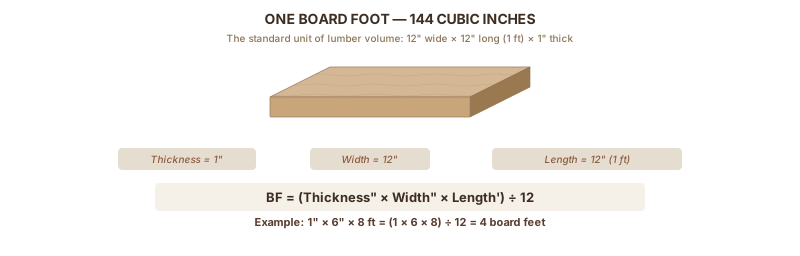
| One board foot | 144 cubic inches (12" × 12" × 1") |
| Formula | BF = (Thickness" × Width" × Length') ÷ 12 |
| A 2×6×8 | 8 board feet |
| A 1×6×10 | 5 board feet |
| Pricing | Hardwood yards sell by board foot; Home Depot sells by piece |
| Which dimensions? | Use nominal (labeled) size, not actual milled size |
In this guide:
- The formula and how to use it
- Pre-calculated board feet for common lumber sizes
- The quarter system for hardwood thickness
- Estimating lumber costs for a project
Part 1: What a Board Foot Is and Why It Matters
A board foot is a unit of volume: 144 cubic inches. Picture a piece of wood one foot long, one foot wide, and one inch thick. That's one board foot.
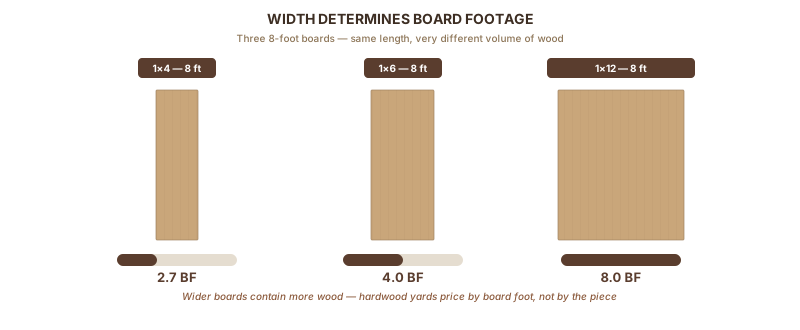
Lumber comes in different widths and thicknesses. A 1×6 and a 1×4 cost different amounts per linear foot because they contain different amounts of wood. Board feet solve this by measuring volume instead of length. Two boards with different widths and lengths can contain the same number of board feet.
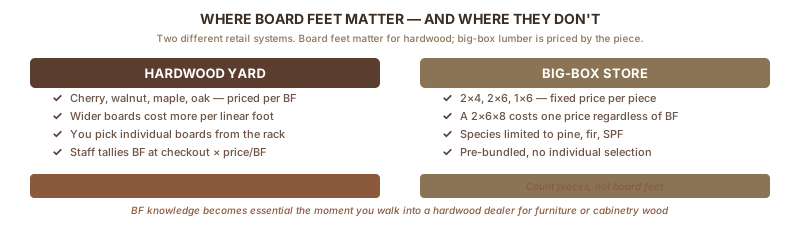
Hardwood lumber yards sell by the board foot. You walk up to a stack of cherry, pick out the boards you want, and the yard tallies the total board feet and multiplies by the price per BF. Big-box stores like Home Depot and Lowe's sell construction lumber by the piece — a 2×4×8 is a fixed price regardless of board footage.
The National Hardwood Lumber Association (NHLA) standardized board foot measurement in 1898 when they published their "Rules for the Measurement & Inspection of Hardwood & Cypress." That standard is still the governing reference today.
Part 2: The Board Foot Formula
Three versions of the same formula. Pick whichever matches how you measured.
Standard formula (length in feet):
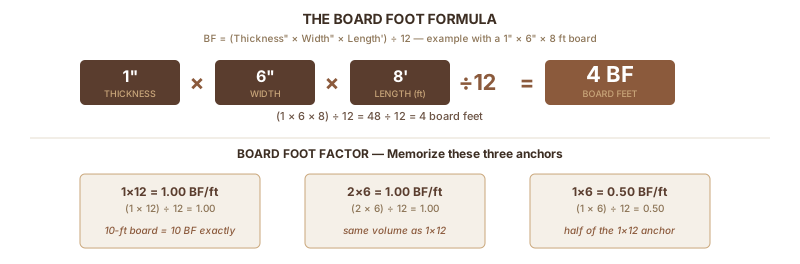
BF = (Thickness" × Width" × Length') ÷ 12
Thickness and width in inches. Length in feet. Divide by 12.
Example: A board 1" thick × 6" wide × 8 feet long:
BF = (1 × 6 × 8) ÷ 12 = 48 ÷ 12 = 4 board feet
All-inches formula:
BF = (Thickness" × Width" × Length") ÷ 144
Same board: (1 × 6 × 96) ÷ 144 = 4 board feet
The Board Foot Factor
Calculate the factor once, use it for any length.
Factor = (Thickness" × Width") ÷ 12 = board feet per linear foot
For a 1×6: Factor = (1 × 6) ÷ 12 = 0.5 BF per foot
An 8-foot 1×6 = 0.5 × 8 = 4 BF. A 10-foot 1×6 = 0.5 × 10 = 5 BF. Calculate the factor in your head, multiply by any length.
Three factors worth memorizing:
- 1×12 = exactly 1 BF per foot (the easiest anchor)
- 2×6 = exactly 1 BF per foot (same volume as a 1×12)
- 1×6 = 0.5 BF per foot (half a board foot per foot)
Part 3: Board Feet for Common Lumber Sizes
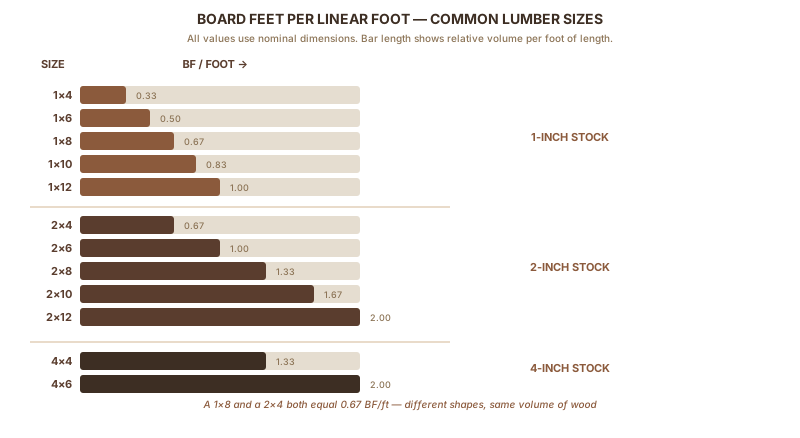
Find your board size in the left column, read across to the length. All values use nominal dimensions.
| Size | BF/ft | 6 ft | 8 ft | 10 ft | 12 ft | 14 ft | 16 ft |
|---|---|---|---|---|---|---|---|
| 1×4 | 0.33 | 2.0 | 2.7 | 3.3 | 4.0 | 4.7 | 5.3 |
| 1×6 | 0.50 | 3.0 | 4.0 | 5.0 | 6.0 | 7.0 | 8.0 |
| 1×8 | 0.67 | 4.0 | 5.3 | 6.7 | 8.0 | 9.3 | 10.7 |
| 1×10 | 0.83 | 5.0 | 6.7 | 8.3 | 10.0 | 11.7 | 13.3 |
| 1×12 | 1.00 | 6.0 | 8.0 | 10.0 | 12.0 | 14.0 | 16.0 |
| 2×4 | 0.67 | 4.0 | 5.3 | 6.7 | 8.0 | 9.3 | 10.7 |
| 2×6 | 1.00 | 6.0 | 8.0 | 10.0 | 12.0 | 14.0 | 16.0 |
| 2×8 | 1.33 | 8.0 | 10.7 | 13.3 | 16.0 | 18.7 | 21.3 |
| 2×10 | 1.67 | 10.0 | 13.3 | 16.7 | 20.0 | 23.3 | 26.7 |
| 2×12 | 2.00 | 12.0 | 16.0 | 20.0 | 24.0 | 28.0 | 32.0 |
| 4×4 | 1.33 | 8.0 | 10.7 | 13.3 | 16.0 | 18.7 | 21.3 |
| 4×6 | 2.00 | 12.0 | 16.0 | 20.0 | 24.0 | 28.0 | 32.0 |
A 1×8 and a 2×4 have the same BF factor (0.67). A 2×12 and a 4×6 both hit 2.0. Different shapes, same volume.
Part 4: The Quarter System for Hardwood Thickness
Hardwood lumber yards don't label boards "1-inch" or "2-inch." They use 4/4, 5/4, 6/4, 8/4. Each quarter equals 1/4 inch of rough-sawn thickness.
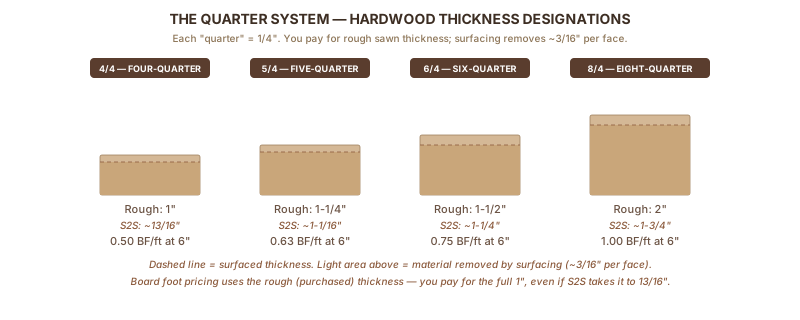
| Designation | Rough Thickness | After Surfacing (S2S) | BF per ft at 6" wide |
|---|---|---|---|
| 4/4 ("four-quarter") | 1" | ~13/16" | 0.50 |
| 5/4 ("five-quarter") | 1-1/4" | ~1-1/16" | 0.63 |
| 6/4 ("six-quarter") | 1-1/2" | ~1-1/4" | 0.75 |
| 8/4 ("eight-quarter") | 2" | ~1-3/4" | 1.00 |
| 10/4 ("ten-quarter") | 2-1/2" | ~2-1/4" | 1.25 |
| 12/4 ("twelve-quarter") | 3" | ~2-3/4" | 1.50 |
You pay for rough thickness. A 4/4 board billed at 1" thick will measure about 13/16" after the yard surfaces it. You still pay for the full inch. This is standard practice under NHLA rules — the board foot calculation uses the nominal (rough) dimension because that's how much wood the mill cut from the log.
Surfacing removes about 3/16" from each face. If you buy rough 4/4 and plane it yourself, you control how much you remove. If you buy S2S (surfaced two sides), the yard has already taken it down to ~13/16".
Part 5: Nominal vs. Actual: Which Dimensions to Use
Board foot calculations use nominal dimensions. The labeled size, not the measured size after milling.
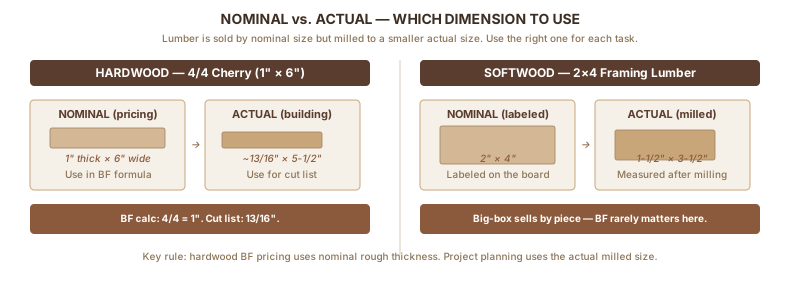
Buying lumber: Use nominal thickness. A 4/4 board is billed as 1" thick. An 8/4 board is billed as 2" thick. Hardwood width rounds to the nearest inch (fractions below 1/2" round down, above 1/2" round up).
Planning a project: Use actual surfaced dimensions. A 4/4 board surfaced to 13/16" yields less usable wood than the board-foot number suggests. Account for this in your cut list.
Softwood is different. A 2×4 is nominally 2" × 4" but measures 1-1/2" × 3-1/2" after milling. This rarely matters for board foot calculations because big-box stores sell softwood by the piece, not by the board foot.
Part 6: Estimating Lumber for a Project
Three steps to go from "I want to build a side table" to "I need 10 board feet of cherry."
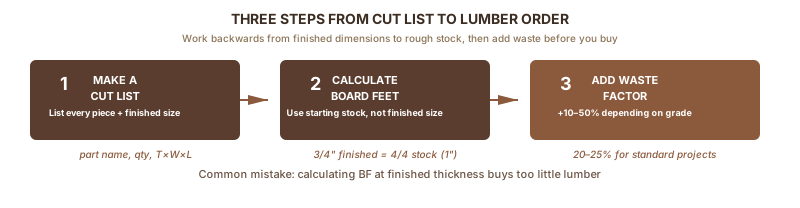
Step 1: Make a cut list. List every piece your project needs with finished dimensions.
Step 2: Calculate board feet from starting dimensions. Use the starting lumber thickness, not the finished thickness. A 3/4" finished tabletop starts from 4/4 lumber (1" thick). Table legs at 1-1/2" square start from 8/4 lumber (2" thick). This catches the mistake most beginners make: calculating board feet at finished dimensions and buying too little.
Step 3: Add a waste factor. You'll lose wood to saw kerfs, defects, and mistakes. Add a percentage on top of your subtotal.
Waste Factor Guidelines
| Situation | Add |
|---|---|
| Simple straight cuts, S4S lumber | 10–15% |
| Standard furniture project | 20–25% |
| First time using the technique | 25–30% |
| Lower-grade lumber (#1 Common) | 30–50% |
FAS-grade hardwood yields about 83% clear cuttings. #1 Common yields 67-75%. Lower grades mean more cutting around knots and defects.
Worked Example: Small Side Table in Cherry
| Part | Qty | Finished Size | Starting Stock | BF Each | BF Total |
|---|---|---|---|---|---|
| Top panels | 2 | 9" × 24" × 3/4" | 4/4 × 10" × 26" | 1.81 | 3.61 |
| Legs | 4 | 1-1/2" × 1-1/2" × 24" | 8/4 × 2" × 26" | 0.72 | 2.89 |
| Aprons | 4 | 3/4" × 3-1/2" × 16" | 4/4 × 4" × 18" | 0.50 | 2.00 |
| Subtotal | 8.50 | ||||
| + 20% waste | 10.20 |
At $9/BF for cherry: about $92 in lumber. At $14/BF for walnut: about $143.
2026 Hardwood Prices (approximate retail, 4/4)
| Species | Price per BF |
|---|---|
| Poplar | $3.50–$5.50 |
| Red Oak | $5.50–$9.00 |
| Hard Maple | $6.00–$10.00 |
| White Oak | $6.50–$11.00 |
| Cherry | $8.00–$14.00 |
| Black Walnut | $10.00–$18.00+ |
Prices vary by region, grade, and season. Thicker stock (8/4 and up) costs more per board foot. Quartersawn boards run 20–50% above plainsawn.
Part 7: Irregular Boards and Live Edge Slabs
For boards with uneven widths — live edge slabs, tapered planks, boards with bark edge — take 3–4 width measurements along the length and average them.
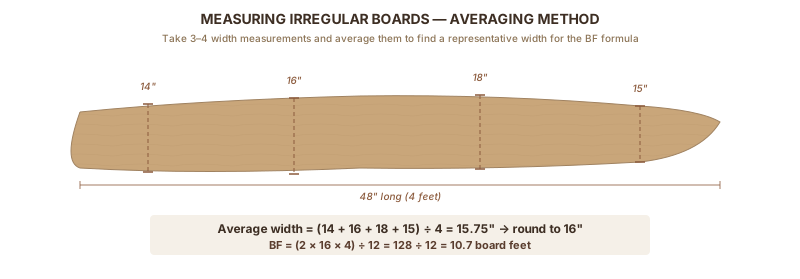
Example: A live-edge walnut slab, 2" thick × 48" long. Width at four points: 14", 16", 18", 15".
Average width = (14 + 16 + 18 + 15) ÷ 4 = 15.75" → round to 16"
BF = (2 × 16 × 4) ÷ 12 = 10.7 board feet
This averaging method is standard practice at hardwood dealers and slab sellers.
Part 8: Quick Estimation Rules for the Lumber Yard
Five ways to estimate board feet at the rack without pulling out your phone:
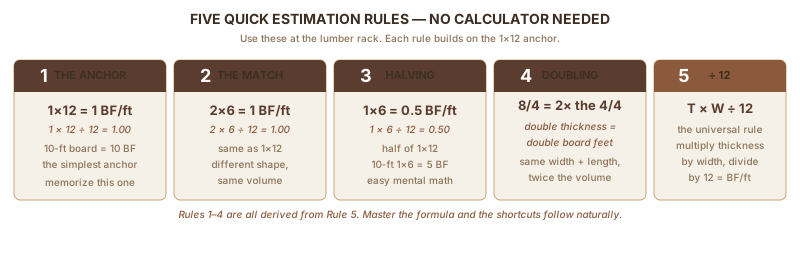
- The 1×12 anchor. A 1×12 is exactly 1 BF per foot. A 10-foot 1×12 = 10 BF.
- The 2×6 match. A 2×6 is also 1 BF per foot. Same volume, different shape.
- Halving. A 1×6 is half a 1×12 = 0.5 BF per foot. A 10-foot 1×6 = 5 BF.
- Doubling thickness. 8/4 stock has twice the BF of 4/4 at the same width and length.
- Divide by 12. Multiply nominal thickness × width, divide by 12. That's your BF per foot.
Four mistakes that cost money:
- Using actual (surfaced) thickness instead of nominal for pricing. You pay for the rough dimension.
- Forgetting the waste factor. A 20 BF cut list needs 24–26 BF of lumber.
- Using finished thickness instead of starting stock for project planning. 3/4" finished parts come from 4/4 (1") lumber.
- Ignoring defects in lower grades. #1 Common has knots you'll cut around — budget 30–50% extra.
Where This Fits
Related guides:
- 1×6 Lumber and 1×4 Wood cover specific lumber dimensions, grades, and uses
- 3/4 Plywood covers sheet goods sizing — a different measurement system than board feet
What to learn next:
Planning a project? Start with your cut list and work backward through the three-step method above. Shopping for hardwood? Learn which species fits your project and budget.
Sources
The formulas, pricing data, and industry standards in this guide come from lumber industry references, hardwood dealer resources, and university extension publications.
- NHLA Rules Book 2023 — official measurement and grading standards
- National Hardwood Lumber Association — founding history, standardization role
- Omnicalculator Board Foot Calculator — formula explanation and calculator
- Woodworkers Source: What Does 4/4 Mean? — quarter system explained
- Woodworkers Source: Estimate Board Footage for Projects — project estimation method
- Rockler: Quarter System of Lumber Thickness — S2S thickness after surfacing
- Curtis Lumber Board Footage Chart — pre-calculated lookup table
- Engineering Toolbox: Board Feet — board feet chart and reference
- J&W Lumber: Understanding Board Feet — BF per linear foot reference
- Wood Slabs Board Foot Calculator — irregular board measurement method
- Hearne Hardwoods Price List — current hardwood pricing
- Purdue Extension FNR-130 — hardwood grades and yield percentages
Also Referenced
Up Next
How to Calculate Board Feet
WOOD & MATERIALS · Beginner