
Acacia Wood Hardness at a Glance
Acacia wood hardness ranges from 1,430 lbf for plantation acacia (A. mangium) — the species most commonly stocked in US stores — up to 1,750–2,200 lbf for hybrid retail flooring varieties, measured on the Janka scale. At 1,430 lbf, A. mangium outperforms red oak (1,290 lbf) and sits just below hard maple (1,450 lbf), making it a genuinely hard domestic-use wood. The inflated figures of "1,650" or "2,300" lbf circulating online belong to different acacia species sold under the same label — not the boards you'll find at most US lumber yards or flooring showrooms.
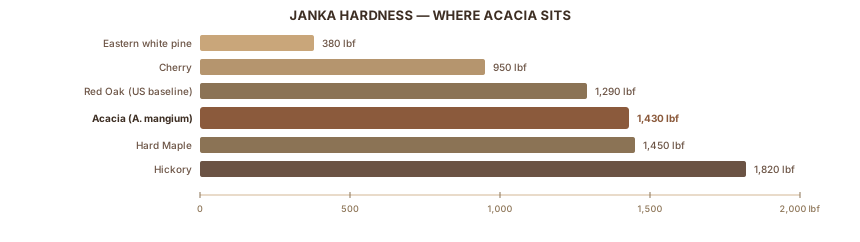
| Janka (A. mangium, plantation default) | 1,430 lbf — harder than red oak (1,290), equal to hard maple (1,450) |
| Janka range (all sold species) | 1,160–3,100+ lbf depending on species |
| Is it a hardwood? | Yes, botanically and practically |
| Typical US source | Vietnamese plantation; 5–10 year harvest cycle |
| Price range | $5–6/bf consumer; $11–16/bf specialty (Australian Blackwood) |
| Best applications | Cutting boards, indoor furniture, hardwood floors, outdoor furniture (with maintenance) |
In this guide:
- Janka numbers for every acacia species you'll actually encounter
- Side-by-side comparison with 14 common species
- Use-case decision table: is it hard enough for your project?
- Acacia vs. teak for outdoor furniture
Part 1: Acacia Hardness by Species
The Janka test embeds a 0.444-inch steel ball halfway into a wood sample and records the force in pounds-force (lbf). Higher numbers mean harder wood — more resistant to denting and surface wear. It doesn't measure toughness, flexibility, or decay resistance. A 3,000-lbf wood can still split along the grain.
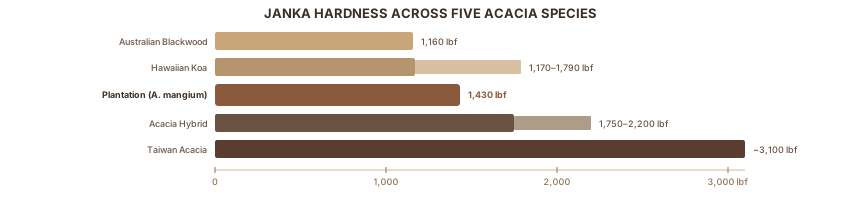
Multiple species get sold in the US under the single label "acacia," which is why you'll find conflicting hardness numbers online. The five species you'll actually encounter:
| Species | Common Name | Janka (lbf) | Typical Source | Price |
|---|---|---|---|---|
| A. mangium | Plantation acacia | 1,430 | Vietnamese plantation | $5–6/bf |
| A. hybrid (mangium × auriculiformis) | Acacia hybrid | 1,750–2,200 | Vietnamese plantation | $5–7/bf |
| A. confusa | Taiwan Acacia | ~3,100 | Taiwan, Philippines | Consumer (flooring) |
| A. melanoxylon | Australian Blackwood | 1,160 | Australia, Tasmania | $11–16/bf |
| A. koa | Hawaiian Koa | 1,170–1,790 | Hawaii | $30–150+/bf |
Many sources cite "acacia 1,700–2,300 lbf" without specifying the species. That range covers the hybrid and A. confusa. When you're buying a butcher block at Home Depot or a dining table at IKEA, you're getting A. mangium or the hybrid — 1,430–2,200 lbf depending on the batch. Without a species label, the number could be anywhere in that window.
Australian Blackwood (A. melanoxylon) is a premium specialty wood sold by dealers like Bell Forest Products at $11–16/bf. At 1,160 lbf, it's softer than red oak. Beautiful wood, but different expectations than plantation material.
Part 2: Is Acacia a Hardwood?
Yes, on both counts.
Botanically: Hardwood means wood from an angiosperm — a flowering tree. Acacia belongs to the family Fabaceae, a flowering legume. It qualifies.
Practically: Plantation acacia (A. mangium, 1,430 lbf) is harder than red oak, the baseline for US hardwood flooring. Even Australian Blackwood at 1,160 lbf beats cherry (950 lbf) and walnut (1,010 lbf).
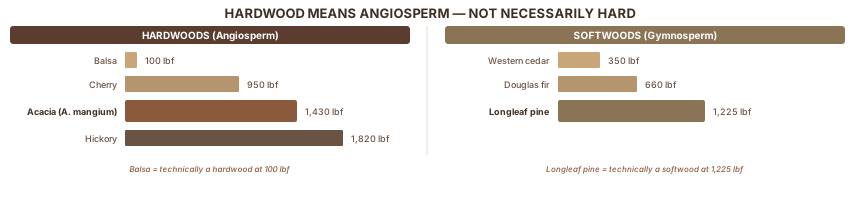
Worth knowing: "hardwood" and "softwood" are botanical categories, not hardness guarantees. Balsa is technically a hardwood at 100 lbf. Longleaf pine is technically a softwood at 1,225 lbf, yet it's harder than cherry. The label tells you about the tree's reproductive biology, not how your chisel will feel. For hardness comparisons, use Janka numbers.
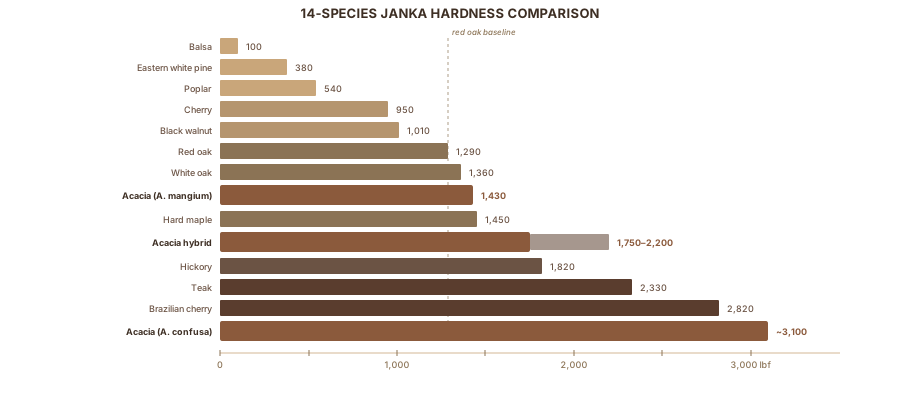
Part 3: Acacia vs. 14 Common Wood Species
All Janka data from The Wood Database, the standard reference for species properties.
| Species | Janka (lbf) | Notes |
|---|---|---|
| Balsa | 100 | Reference baseline |
| Eastern white pine | 380 | Common softwood; fine for furniture, not floors |
| Poplar | 540 | Paint-grade cabinets and drawer boxes |
| Cherry | 950 | Domestic hardwood, prized for color; softer than it looks |
| Black walnut | 1,010 | Premium domestic; excellent to work |
| Red oak | 1,290 | US flooring baseline; open grain; stains predictably |
| White oak | 1,360 | More stable than red oak; ray fleck figure; outdoor-capable |
| Acacia (A. mangium) | 1,430 | Plantation default — sits with hard maple |
| Hard maple | 1,450 | Common for gym floors, cutting boards, workbenches |
| Acacia (hybrid) | 1,750–2,200 | What most retail spec sheets describe |
| Hickory | 1,820 | Hardest common US domestic hardwood |
| Teak | 2,330 | The outdoor standard; high natural oil content |
| Brazilian cherry (Jatoba) | 2,820 | Common exotic flooring; orange-red color |
| Acacia (A. confusa) | ~3,100 | Found in some flooring products; rarely specified |
Red oak at 1,290 lbf is where the US flooring industry sets its residential baseline. Hard maple at 1,450 lbf is the standard for high-traffic floors and butcher block countertops. Plantation acacia lands in that same tier. For indoor furniture (tables, benches, shelves), hardness matters less — cherry and walnut at 950–1,010 lbf hold up fine in those applications for decades.
Part 4: Hard Enough for Your Project?
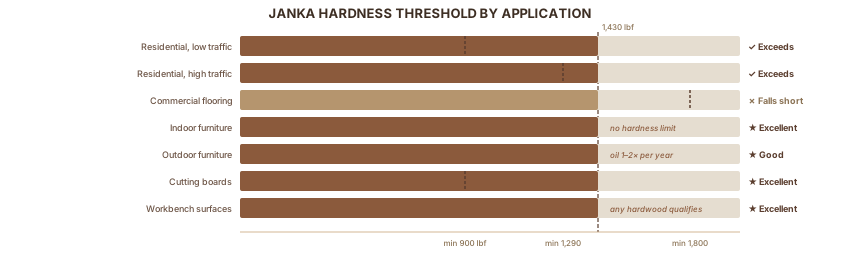
| Application | Minimum Janka | Acacia (1,430 lbf) | Verdict |
|---|---|---|---|
| Residential flooring, low traffic | 900–1,000 | Exceeds | Solid choice |
| Residential flooring, high traffic | 1,290 (red oak) | Exceeds | Strong choice |
| Commercial flooring | 1,800+ | Falls short | Specify A. hybrid or A. confusa |
| Indoor furniture | No hard threshold | Excellent | Hardness isn't the constraint here |
| Outdoor furniture | Decay resistance > hardness | Good with maintenance | Oil 1–2× per year |
| Cutting boards | 900+ preferred | Excellent | Closed grain + hardness = ideal combo |
| Workbench surfaces | Any hardwood | Excellent | Cheap butcher block from hardware stores |
For most indoor projects, hardness isn't what limits acacia. The real constraints are:
Board length. Acacia trees grow more like large shrubs than tall timber trees. Boards top out around 4 feet. Table aprons, long shelf spans, and wide panels require multiple glue-ups. Oak and walnut come in 8–12 foot lengths.
Species inconsistency. Without a species label, you don't know the Janka number. Two boards from the same bin can differ by 300 lbf. Planer settings and blade selection may need adjusting.
Staining. Acacia's variable grain density causes blotching. If the project calls for a specific stain color, oak or walnut behave more predictably. Clear finishes and natural color: acacia is fine.
For sourcing and species verification, Buying Lumber covers what to ask at the yard.
Part 5: Acacia vs. Teak for Outdoor Furniture
Acacia gets marketed as the affordable teak alternative. The hardness numbers are close — the hybrid species approaches teak's 2,330 lbf. But hardness barely matters for outdoor longevity. Decay resistance and natural oil content are what keep a piece standing in the rain.
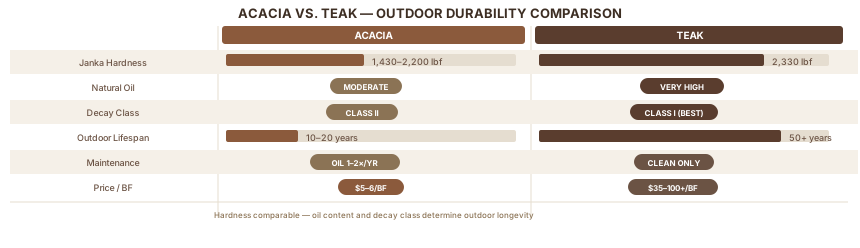
| Factor | Acacia | Teak |
|---|---|---|
| Janka hardness | 1,430–2,200 lbf | 2,330 lbf |
| Natural oil content | Moderate | Very high (silica + oil) |
| Decay class (EN 350) | Class II — naturally durable | Class I — very durable |
| Outdoor lifespan (maintained) | 10–20 years | 50+ years |
| Maintenance required | Oil 1–2× per year | Clean 1–2×/year; oil optional |
| Price (rough lumber) | $5–6/bf consumer | $35–100+/bf |
Teak lasts longer outdoors, period. Per Teakmaster's comparison, teak's high natural oil and silica content make it weather-resistant without maintenance — outdoor lifespan 50+ years versus acacia's 10–20 years with regular oiling.
Acacia makes sense outdoors for covered patios, mild temperate climates, and projects where annual oiling is acceptable. Teak wins for coastal and tropical climates, pieces left in the elements year-round, and anything expected to last 30+ years with minimal care.
Maintenance protocol for outdoor acacia:
- Clean with mild soap and water; let dry completely
- Apply tung oil or teak oil with a lint-free cloth
- Let penetrate 15–20 minutes; wipe off excess
- Apply 2–3 coats for a new piece
- Re-oil 1–2× per year when the surface goes gray
Gray acacia isn't damaged. It's weathered. A light sand with 220-grit and fresh oil brings it back.
For oil finish options, see Oil and Wax Finishes.
Part 6: What Hardness Doesn't Tell You
Hardness tells you one thing: resistance to surface denting. For acacia, the other properties matter just as much.
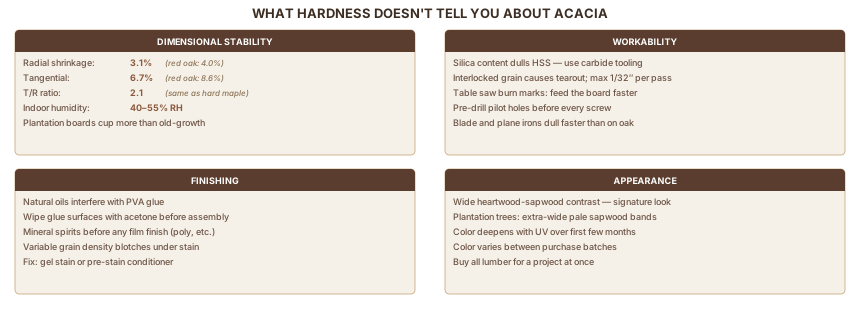
Dimensional stability. Per ResearchGate's shrinkage data, plantation acacia shrinks 3.1% radially and 6.7% tangentially — better absolute numbers than red oak (4.0%/8.6%), with the same T/R stability ratio as hard maple (2.1). That said, plantation-grown boards cup more than old-growth because fast growth produces variable ring density. Keep indoor acacia at 40–55% relative humidity.
Workability. Acacia contains silica that dulls high-speed steel quickly — carbide tooling only. Interlocked grain causes tearout on planer passes; keep your depth of cut at 1/32 inch per pass. Burn marks on the table saw come from feeding too slowly. Pre-drill before screwing.
Finishing. Natural oils interfere with PVA glue (wipe glue surfaces with acetone within 15 minutes of glue-up). Film finishes bead on oily surfaces if you skip prep — wipe with mineral spirits before the first coat of polyurethane. Stain blotches due to variable grain density; use gel stain or a pre-stain conditioner.
Appearance. Wide heartwood-sapwood contrast is acacia's signature look. Plantation trees harvested young have wide pale sapwood bands. Boards bought at different times won't match for color; buy all lumber for a matched set at once. The wood deepens in color with UV exposure over the first few months.
For the full species profile including workability, finishing, and sourcing, see Acacia Wood. For cutting board finishing, see Food-Safe Finishes. For stain troubleshooting, see Troubleshooting Stain Problems.
Sources
- The Wood Database — Mangium (A. mangium) — Janka 1,430 lbf, strength data, shrinkage values
- The Wood Database — Australian Blackwood (A. melanoxylon) — Janka 1,160 lbf, species profile
- The Wood Database — Koa (A. koa) — Janka 1,170–1,790 lbf
- Hardwood Floors Magazine — "Confucius or Confusion?" — A. confusa species identification, Janka ~3,100 lbf
- Bell Forest Products — Acacia Lumber — US retail pricing, species identification
- Wikipedia — Janka Hardness Test — test methodology, ASTM standardization 1927
- ResearchGate — A. mangium Shrinkage Data — 3.1%R / 6.7%T dimensional change values
- Hurst Hardwoods — Hardness Chart — flooring threshold guidance
- BuildDirect — Janka Hardness Scale — practical thresholds by application
- Teakmaster — Teak vs. Acacia — outdoor lifespan comparison data
- Ash & Ember — Acacia vs. Teak — maintenance and climate guidance
- Scanica — Acacia Outdoor Furniture Care — oiling protocol
Up Next
How Hard Is Maple Wood?
WOOD & MATERIALS · Beginner