
Jatoba Wood at a Glance
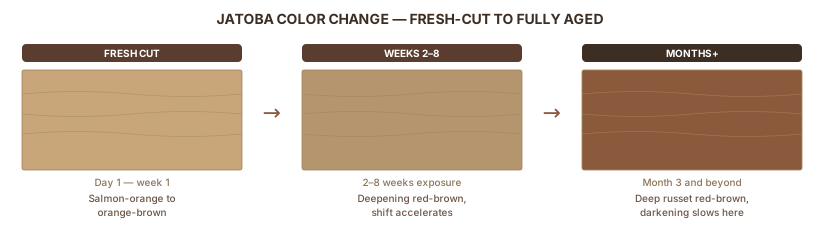
Jatoba is a Brazilian tropical hardwood — sold widely under the trade name "Brazilian Cherry" — with one of the highest hardness ratings of any wood you can buy commercially in North America. The fresh-cut color is salmon-orange with dark streaks. Weeks of light exposure shift it to a deep russet red-brown that most people find more appealing. That color transformation is the reason most woodworkers seek it out; the exceptional hardness is the reason it performs.
| Botanical name | Hymenaea courbaril |
| Janka hardness | 2,690 lbf |
| Shrinkage | Radial 4.5% / Tangential 8.5% |
| Origin | Brazil, Central and South America |
| Price | ~$5–12 per board foot |
| CITES status | Not listed |
In this guide:
- What jatoba is and why "Brazilian Cherry" misleads buyers
- How to work it without destroying your tools or the surface
- How to finish it and work with the color shift
- Best uses, where to buy it, and sustainability
Part 1: What Is Jatoba?
The "Brazilian Cherry" Problem
Walk into a flooring showroom and you'll see "Brazilian Cherry" on every label. Walk into a hardwood lumber dealer and you'll see "Jatoba." Same wood. The flooring name creates real confusion.
Jatoba (Hymenaea courbaril) has no botanical relationship to American Black Cherry (Prunus serotina). The two species belong to different plant families and grow on different continents. The "cherry" label stuck because aged jatoba develops a reddish-brown color that resembles stained domestic cherry. Flooring salespeople adopted it; now everyone else has to deal with it.
Hymenaea courbaril is a member of the legume family (Fabaceae). It grows throughout Brazil, Central America, and the Caribbean, with Brazil as the primary commercial source. You'll also hear it called West Indian Locust, Jutaby, and Copal depending on the harvest region.
The naming confusion matters practically. Jatoba is more than twice as hard as domestic cherry, far denser, and significantly harder to hand-plane. If someone recommends it as a cherry substitute, they mean color only — the working properties are nothing alike.
Appearance and Color Change
Fresh jatoba surprises buyers who purchased based on photos. The heartwood starts salmon-red to light orange-brown, lighter than expected, with dark contrasting streaks. The sapwood is gray-white and clearly separate.
The photos you see in flooring catalogs and woodworking galleries show the aged version. The Wood Database describes the color shift: UV light and air exposure trigger a photosensitive reaction, and the wood deepens progressively — from salmon-orange to russet to deep reddish-brown with prominent dark streaking. Most of this shift happens in the first few months of light exposure; it continues slowly for years.
Buy jatoba knowing you're buying the aged color, not the fresh-cut tone. If the color shift is a problem for your project, jatoba is the wrong species. If you can embrace it — or design around it — the final appearance is exceptional.
Part 2: Working Jatoba
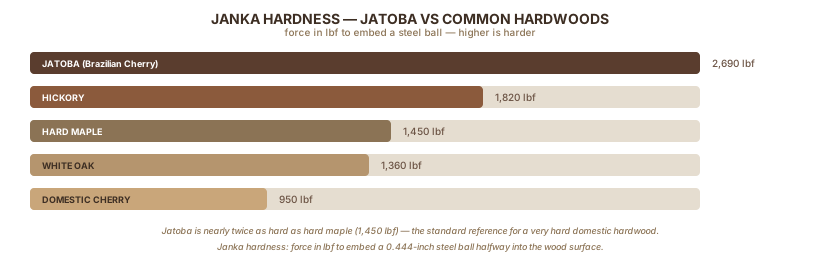
Jatoba at 2,690 lbf Janka is nearly twice the hardness of hard maple (1,450 lbf). That number translates directly into shop behavior: it dulls tools fast, and its interlocked grain causes tearout when you plane it from the wrong direction. Plan for both.
Tool Requirements
Carbide is the baseline for all machine work. High-speed steel blunts within minutes on dense tropical hardwoods.
For machines:
- Table saw: 80-tooth carbide blade for crosscuts; 40-tooth ATB for ripping. Feed at a steady pace — slow enough to avoid burning, fast enough that you don't dwell in the cut.
- Router bits: Carbide spiral upcut bits. High-speed steel bits burn and deflect.
- Jointer and planer: Maximum 1/32" passes. A helical cutterhead planer handles interlocked grain far better than straight-knife heads.
- Drill bits: Brad-point or solid carbide for clean entry and exit without blowout.
For hand tools, strop your plane iron after every 10–15 passes. An edge that feels sharp on oak will feel dull on jatoba within a single board face. Keep a strop at the bench.
One safety note: jatoba dust irritates some woodworkers' skin and respiratory tract. Wear an N95 respirator when sanding or machining, and use dust extraction. The irritation is typically mild but consistent.
Tackling Interlocked Grain
Jatoba's grain doesn't run straight along the board's length. The fiber direction reverses periodically — a pattern called interlocked grain. Plane with the grain and you get clean cuts; continue past a reversal and fibers tear out ahead of the blade.
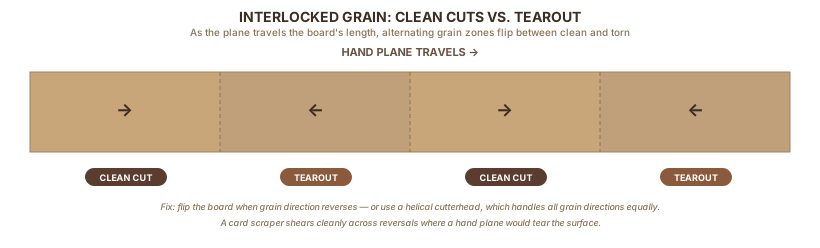
Machine approach: Use a helical cutterhead planer for face work. Take very light jointer passes. Don't skip sanding grits — jatoba's hardness means 120-grit scratches require genuine effort at 150, 180, and 220 to remove. Skipping a grit leaves visible scratches under finish.
Hand plane approach: Sawmill Creek's jatoba threads document consistent results with a bevel-up plane (a Lie-Nielsen 62 is mentioned repeatedly) bedded at 50° or higher. Set the depth shallower than you think necessary. Read the grain direction on each section of the face and flip the board when the direction reverses.
The card scraper often beats the hand plane for final smoothing. It shears clean across grain reversals, handles very hard surfaces without the constant re-sharpening a plane iron demands on jatoba, and leaves a surface ready for finish with less effort. If your hand plane raises tearout, reach for the scraper before reaching for sandpaper.
Quartersawn stock is meaningfully easier to work. Flatsawn jatoba with broad face grain releases more stress during milling and tears out more readily. Ask for quartersawn or riftsawn boards when you order lumber.
RELATED: Maple Janka Hardness Hard maple sits at 1,450 lbf — about half of jatoba. Useful reference point for understanding how hardness differences translate to shop behavior.
Gluing and Fastening
Jatoba glues better than most tropical hardwoods. Unlike ipe, teak, or cumaru — which contain oily extractives that interfere with adhesive bonding — jatoba bonds reliably with standard PVA. Titebond II works for most furniture applications; Titebond III for moisture-exposed joints. Epoxy for end-grain-heavy joints.
Pre-drill all nail and screw locations. The density makes splitting near edges easy without pilot holes. For tongue-and-groove flooring installation, 18-gauge cleats at 50–60 PSI pneumatic pressure work well. Staples tend to split the tongue.
Part 3: Finishing Jatoba
Managing the Color Shift
Jatoba will darken regardless of what finish you apply. Your decision is how to work with that fact, not against it.
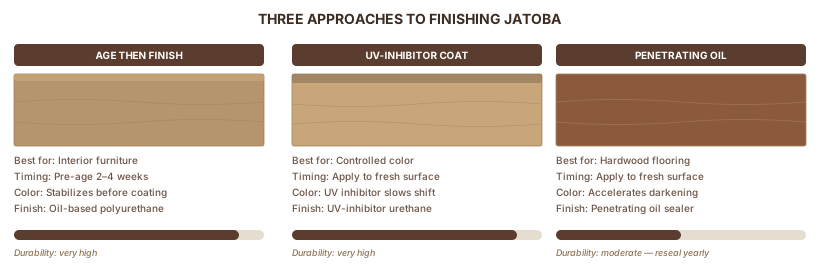
Three approaches, ranked by practicality for most projects:
1. Let it age, then finish (best for furniture). Leave the surface exposed to indirect light for 2–4 weeks before applying a topcoat. The color shift slows after initial development, so finishing over a partially aged surface gives you more predictable long-term results. The topcoat reduces — but doesn't prevent — further change.
2. UV-inhibitor topcoats (best for controlled results). Film finishes containing UV inhibitors (standard in quality exterior urethane products, available in some interior finishes) slow the shift. Useful when you need a more stable color over time. Expect the wood to still darken, just more gradually.
3. Penetrating oils (best for flooring). Penetrating oil sealers accelerate the natural darkening. Popular choice for floors where owners want the deep russet tone established quickly rather than watching it shift over months.
For most furniture projects, option 1 is the most practical — it costs only time.
Grain Filling and Topcoat Selection
Jatoba's medium-to-coarse pores leave a dimpled surface under film finishes without grain filling. Fill before applying lacquer or polyurethane.
Oil-based grain fillers work best. Per woodworkly's guide to finishing jatoba, they enhance the natural red tones rather than neutralizing them. Apply across the grain, scrape back, sand at 220 grit once dry. Water-based fillers dry faster but don't enhance the color the same way.
For topcoats:
- Oil-based polyurethane: The practical choice for furniture and floors. Durable, adds warmth to the color, complements the reddish hue. Three-coat system, 220-grit between coats. Full technique in the applying polyurethane guide.
- Water-based polyurethane: Less amber toning, cleaner application. Use when you want a more neutral final appearance.
- Lacquer: Fast dry times, good clarity. Two to three coats. Less durable than polyurethane on high-wear surfaces.
- Exterior penetrating oil: Products like Defy Extreme or Penofin protect the surface appearance and slow UV graying. Reapply every 1–2 years. The wood's natural decay resistance handles the structural protection.
Jatoba takes stain, but most woodworkers skip it — the natural color is the reason they bought the species. If you do stain, use gel stain. Liquid stain on interlocked grain blotches where the fiber direction reverses.
Part 4: Uses, Sourcing, and Sustainability
Where Jatoba Performs Best
The hardness data from Hardwood Floors Magazine's species specifications places jatoba at 2,690 lbf against hickory (1,820 lbf), hard maple (1,450 lbf), white oak (1,360 lbf), and domestic cherry (950 lbf). Applications where other hardwoods dent, scratch, or wear prematurely are exactly where jatoba makes sense.
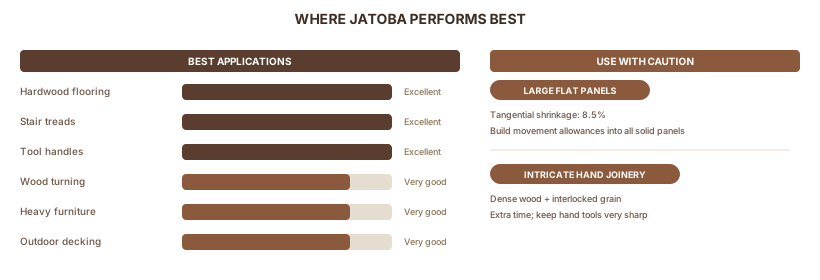
Buy it for:
- Hardwood flooring. The dominant commercial application. Exceptional wear resistance, developing color, good stability once acclimated.
- Stair treads and risers. High-traffic surfaces that develop visible dents and scratches on softer species stay cleaner on jatoba.
- Tool handles. Hardness plus density plus shock resistance. Traditional choice for striking tool handles.
- Turning. Takes cleanly on the lathe, produces smooth burnished surfaces, and the color transformation in a turned bowl is dramatic.
- Heavy-use furniture. Dining tables, workbenches, benches, countertops. Surfaces that take daily impact without showing it.
- Outdoor decking and furniture. Natural Class I decay resistance — resistant to brown-rot and white-rot fungi. No chemical treatment required for durability; finishing maintains appearance only.
Use caution for:
- Large flat panels. Tangential shrinkage of 8.5% means a 12-inch solid panel can move close to one inch seasonally. Build movement allowances into your joinery and panel attachment. Don't glue panels solid without room to expand.
- Intricate hand joinery. Chopping mortises and cutting dovetails in jatoba is harder than in any domestic species. Interlocked grain means paring cuts that come out clean in oak can tear in jatoba. Allow extra time and keep edges sharp.
Sourcing and Price
Jatoba enters North American supply through two channels: flooring-grade material (pre-dimensioned strips) and lumber-grade stock. For furniture and shop work, you need lumber grade — kiln-dried to 6–8% MC, in useful widths and lengths.
Bell Forest Products and Wood Vendors both carry kiln-dried lumber-grade stock consistently. Woodworkers Source handles small orders reliably. Woodcraft retail locations stock turning blanks and some dimensional lumber.
| Supplier | Format | Rough Price |
|---|---|---|
| Bell Forest Products | Kiln-dried lumber, turning stock | $8–12/BF |
| Wood Vendors | 4/4–8/4 lumber, ships nationally | From ~$5/BF |
| Woodworkers Source | Small kiln-dried orders | $8–11/BF |
| Woodcraft (retail) | Turning stock, dimensional | $10–14/BF |
Prices vary with thickness, width, and quantity. Buy 10% more than your cut list requires — interlocked grain means more rejected boards than you'd have with domestic hardwoods.
Sustainability
Jatoba sits outside CITES appendices and carries an IUCN Least Concern classification, so no trade restrictions apply. The habitat concern is density: in native forests, jatoba occurs at fewer than one individual per hectare, which means selective harvest and long recovery intervals — typically around 30 years in responsibly managed operations — matter for long-term supply.
FSC-certified jatoba is available. Ask your supplier for chain-of-custody FSC documentation. When the certified and uncertified options cost the same, the certified choice supports the sourcing practices that keep the species commercially available.
Quick Reference
Shrinkage data from The Wood Database; jatoba Janka from Hardwood Floors Magazine.
| Property | Jatoba | Hard Maple | Hickory | White Oak | Domestic Cherry |
|---|---|---|---|---|---|
| Janka (lbf) | 2,690 | 1,450 | 1,820 | 1,360 | 950 |
| Radial shrinkage | 4.5% | 4.8% | 7.0% | 5.6% | 3.7% |
| Tangential shrinkage | 8.5% | 9.9% | 11.0% | 10.5% | 7.1% |
| Interlocked grain | Yes | Occasionally | No | No | No |
| Glues with PVA | Yes | Yes | Yes | Yes | Yes |
| Natural decay resistance | Very high | Low | Low | Medium | Low |
Sources
Technical specifications, forum discussions, and practitioner guides that informed this article.
- Hardwood Floors Magazine — Jatoba Species Specs — Janka hardness (2,690 lbf), shrinkage coefficients, specific gravity, dimensional stability data
- The Wood Database — Jatoba — Color description, grain characteristics, workability overview
- Core77 — Wood Species Part 15: Jatoba/Brazilian Cherry — Color change mechanism, naming context, exterior vs. interior performance
- Sawmill Creek — Jatoba: this is some hard wood — Practitioner hand plane experience, tearout management, bevel-up plane technique
- Sawmill Creek — Jatoba table: warnings or experiences? — Real-world grain behavior, quartersawn recommendations
- woodworkly — How to Finish Jatoba Wood — Grain filler comparison, topcoat steps, color shift management
- The Wood Database — Wood Dust Safety — Respiratory and skin irritant data for tropical hardwoods
- Bell Forest Products — Jatoba Lumber — Pricing and availability reference
Wood Species
How We Research
We don't take affiliate revenue or accept review units. Picks come from multi-source research — manufacturer specs, OSHA / EPA / ASTM regs, and long-form practitioner threads — plus Ahmed's hands-on use where relevant. When we recommend something, we explain why.
Up Next
How Hard Is Acacia Wood?
WOOD & MATERIALS · Beginner