
Acacia Countertop at a Glance
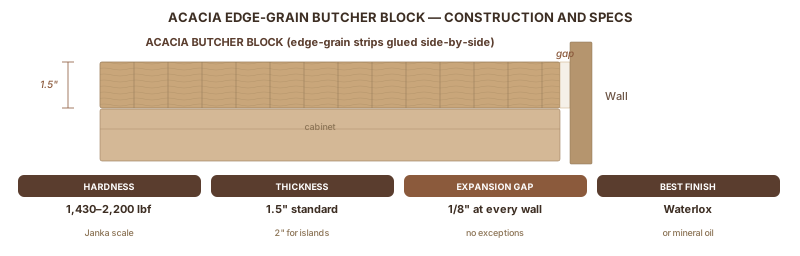
Acacia butcher block is harder than birch, naturally water-resistant, and available at Home Depot for around $540 for a 12-foot slab. It replaces laminate or tile with a surface you can refinish, repair, and keep for decades. Two installation rules matter above everything else: leave a 1/8" expansion gap at every wall, and finish all six sides before the top goes in. Skip either one and the top will warp or crack within a year.
| Janka hardness | 1,430–2,200 lbf (birch: ~1,260 lbf) — harder and more dent-resistant |
| Standard size | 1.5" thick × 25" deep × 4 ft / 8 ft / 12 ft lengths |
| Typical price | ~$540 for a 12-ft slab at Home Depot or Lumber Liquidators |
| Required expansion gap | 1/8" at every wall — no exceptions |
| Best finish | Waterlox (best balance of food safety and durability) |
| Maintenance | Monthly mineral oil, or annual Waterlox recoat |
In this guide:
- Acacia vs. birch — head-to-head comparison
- What you're buying and what it costs
- How to install without warping or cracking
- Finishing for kitchen use vs. workbench use
Part 1: Acacia vs. Birch — Which One Wins
If you're shopping for butcher block countertops, you'll come down to this choice. Both woods show up at Home Depot and Lumber Liquidators. Both look like solid wood. Here's how they actually differ.
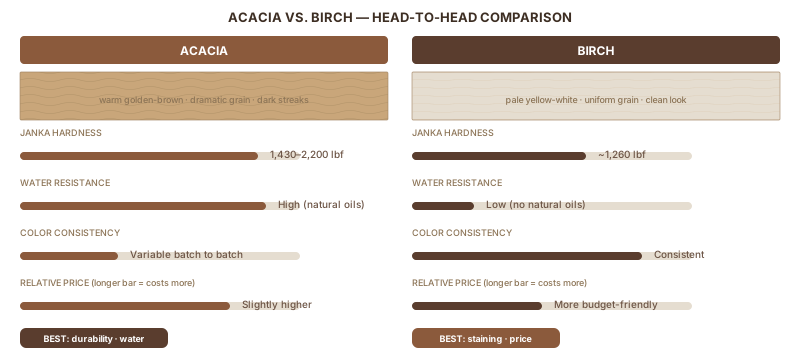
| Factor | Acacia | Birch | Better choice |
|---|---|---|---|
| Janka hardness | 1,430–2,200 lbf | ~1,260 lbf | Acacia |
| Natural water resistance | High (natural oils) | Low (no natural oils) | Acacia |
| Appearance | Warm golden-brown, dramatic grain | Pale yellow-white, uniform grain | Depends on your kitchen |
| Color consistency | Varies batch to batch | Consistent | Birch |
| Price | Slightly higher | More budget-friendly | Birch |
| Staining predictability | Blotches without gel stain | More predictable | Birch |
| Workbench use | Excellent | Good | Acacia |
Hardness. Plantation acacia (A. mangium) measures 1,430 lbf on the Janka scale per The Wood Database. The hybrid varieties common in retail products run 1,750–2,200 lbf. Birch lands around 1,260 lbf, according to Woodworking Advisor's comparison. For a kitchen prep surface, both hold up fine. For a workbench that takes mallet blows and dropped tools, acacia's extra density makes a practical difference.
Water resistance. The same natural oils that make acacia tricky to glue also repel water. Birch has no such oils. Without consistent sealing, birch absorbs moisture, swells, and warps faster than acacia. Around a sink, acacia forgives a missed maintenance cycle. Birch doesn't.
Appearance. Acacia has warm golden-to-reddish-brown heartwood, dark chocolate streaks, and wide sapwood contrast. Birch reads clean and neutral. A light Scandinavian kitchen fits birch better. A warm or rustic kitchen fits acacia.
Pick acacia for durability, water resistance, and visual warmth. Pick birch for a lower price, a lighter look, or if you need to stain it to match your cabinets.
Part 2: What You're Buying and What It Costs
Forms and dimensions
Retail acacia countertops are edge-grain butcher block: strips of wood glued together on edge, then planed flat. This construction is stable and gives you a long-grain surface for food prep.
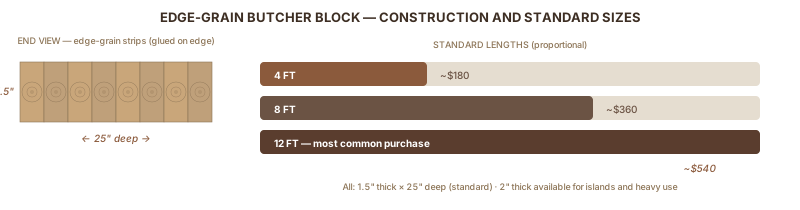
Standard retail dimensions:
- 1.5 inches thick is the most common. Works for most kitchens. A 25-inch-wide slab at 1.5" can feel a bit thin — if you want the look of a substantial countertop, go thicker.
- 2 inches thick is the sweet spot for kitchen islands and serious prep areas. Better for undermount sink cutouts.
- 25 inches deep is standard, matching most base cabinet depth.
- 4 ft, 8 ft, and 12 ft lengths off the shelf. Most retailers will cut to length for you.
For custom work, specialty suppliers like Hardwood Lumber Company make acacia edge-grain up to 4.5 inches thick, 84 inches wide, and 138 inches long.
The species question
Home Depot and Lumber Liquidators don't specify which acacia species you're buying. You'll most likely get A. mangium or the A. mangium × auriculiformis hybrid from Vietnamese plantations — Janka 1,430–2,200 lbf. The Acacia Wood guide covers the species confusion in detail, including what it means for color and hardness consistency.
The practical implication: boards from the same bin may differ in color and hardness. Buy all your countertop material at once. Two slabs bought on separate trips often won't match.
Where to buy
| Source | What you get | Typical price |
|---|---|---|
| Home Depot, Lowe's | Unfinished acacia, 1.5" thick, 25" deep | ~$540 for 12-ft slab |
| Lumber Liquidators — Essential Acacia | 12 ft × 25 in × 1.5 in | Similar pricing |
| Hardwood Reflections | More species control, custom sizing | Higher — call for quotes |
| Hardwood Lumber Co. | Custom edge-grain, verified species | Custom pricing |
Buy unfinished. Pre-finished products lock you into the manufacturer's finish and make spot repairs harder.
Part 3: How to Install It Without Warping or Cracking
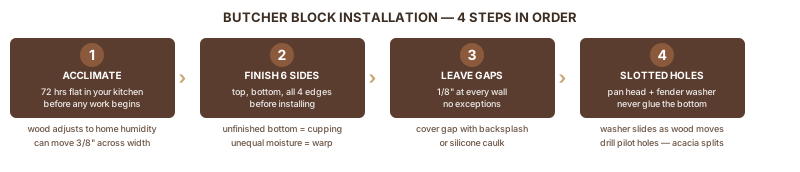
Both common failures — warping and cracking — come from installation mistakes, not from bad wood. Gluing the top down causes cracking. Leaving the bottom unfinished causes cupping. Both are preventable.
Step 1: Acclimate the top
Leave the slab flat in the kitchen for 72 hours before installation. The wood needs to adjust to your home's humidity. A slab installed straight from the delivery van can move 3/8 inch across its width as it settles. If it's already fastened when that happens, it cups or cracks.
Step 2: Finish all six sides before installing
Apply your finish to the top, bottom, and all four edges before the top goes in. The bottom matters most. If the bottom is unfinished and the top is sealed, moisture enters the bottom faster than it leaves the top. One face swells; the other doesn't. The top cups. H.J. Oldenkamp's warping analysis identifies unequal moisture exposure as the leading cause of butcher block failure.
Step 3: Leave expansion gaps
Leave 1/8 inch between the countertop and every wall or fixed structure. Cover the gap with a backsplash or silicone caulk. Forever Joint Tops' installation guide specifies this for tops trapped between two walls: 1/8 inch on each side, minimum.
Wood expands and contracts with humidity across its width. If the wall blocks that movement, the top buckles upward.
Step 4: Fasten with slotted holes
Use slotted or oversized holes through your cabinet top, with a pan-head screw and an oversized fender washer. The screw should penetrate at least half the countertop thickness. The oversized hole lets the washer slide as the wood moves across the season.
Never glue the countertop to the cabinet. Never silicone the bottom face. Both prevent wood movement and guarantee warping.
Drill pilot holes before driving screws. Acacia is dense enough that a screw without a pilot hole can split the grain.
Sink installation
Drop-in (self-rimming) sinks: The rim sits on top of the countertop, covering the cut edge. This is the safer choice for butcher block. The exposed edge sees minimal water.
Undermount sinks: The cut edge is fully exposed above the sink. John Boos — among the most widely referenced butcher block manufacturers — recommends against undermount sinks in wood countertops for exactly this reason. If you choose undermount: seal the cut edge with 4–5 coats of Waterlox or oil-based polyurethane before mounting, use silicone sealant (not standard caulk) between the sink and the wood, and refresh the sealer on all surfaces within 4 inches of the opening every year. Butcher Block Co. notes that the sealer on the sink area wears faster than everywhere else and needs annual attention.
Part 4: Finishing: Oil, Waterlox, or Polyurethane
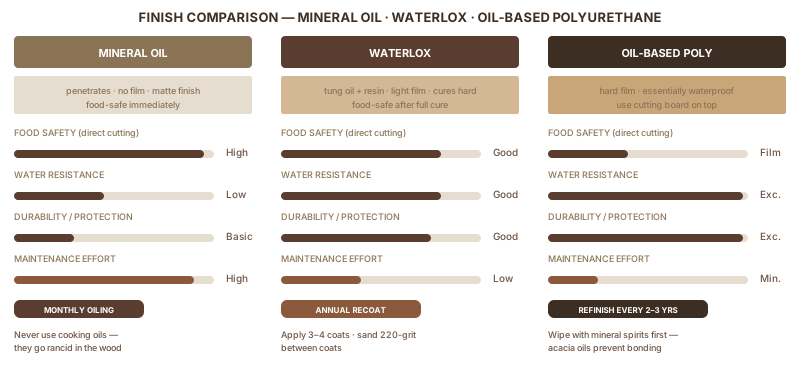
One question drives the decision: will you cut food directly on this surface?
| Use | Best finish |
|---|---|
| Direct food prep (cutting, chopping) | Mineral oil or Waterlox |
| Kitchen countertop with cutting boards | Waterlox or oil-based poly |
| Workbench or bar top | Oil-based polyurethane |
Mineral oil
Pure food-grade mineral oil is the simplest option and the safest for surfaces where you prep food directly. It penetrates the wood without building a film. The surface stays matte and natural.
The maintenance protocol from The Kitchn: once a day for the first week, once a week for the first month, once a month after that. Apply generously, let it soak for 20 minutes, wipe off the excess. When water no longer beads on the surface, it's time to oil again.
Two downsides: paper placed on a freshly oiled surface absorbs oil and stains, and standing water near a sink can still cause damage if left for hours. Mineral oil is the most hands-on option.
One rule: never use olive oil, canola oil, or any cooking oil. They go rancid inside the wood fibers. Use only pure food-grade mineral oil.
Waterlox
Waterlox is a tung oil and modified resin blend. It penetrates like oil but polymerizes into a light film as it cures — more water-resistant than raw oil, without the thick plastic surface of polyurethane. It's food-safe after full cure.
In a four-year real-world test by Driven by Decor, Waterlox held up well on kitchen countertops — water beaded consistently, no oil spots on papers left on the surface, and maintenance dropped to one annual recoat rather than monthly oiling.
Apply 3–4 coats, letting each cure fully between applications. Use Waterlox Original or Sealer/Finish for the first coat. Recoat annually or when the surface shows wear. Sand lightly with 220-grit before recoating.
Oil-based polyurethane
The most durable option. Oil-based poly builds a hard, essentially waterproof film. It handles moisture and heavy use better than oil or Waterlox.
The trade-off: you can set food on a cured poly surface safely, but cutting directly on it scratches the film and lets water underneath. Use polyurethane on countertops where you'll always use a separate cutting board.
For acacia specifically, wipe the surface with mineral spirits before the first coat. Acacia's natural surface oils cause poly to bead and fail to bond if you skip this step. Apply 3–5 thin coats and sand at 320 grit between each.
Part 5: Keeping It Looking Good
Maintenance by finish
Mineral oil: Monthly, or whenever the wood looks dry or water stops beading. Apply, wait 20 minutes, wipe off the excess. If oil pools on the surface after 20 minutes, the wood is saturated. Wipe it off and come back next month.
Waterlox: Check annually. When the surface looks worn, sand lightly with 220-grit and apply one or two fresh coats.
Polyurethane: Clean with mild soap and water. Don't soak the surface. Refinish every 2–3 years when the topcoat wears through.
Common problems and fixes
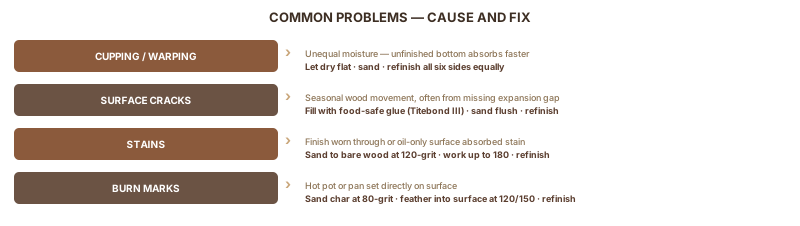
Cupping or warping. Almost always caused by unequal moisture exposure — an unfinished bottom, or no airflow under the cabinet. Let the top dry to ambient humidity, sand flat, then refinish all six sides equally.
Surface cracks. Fill immediately with food-safe wood glue (Titebond III for non-food-contact areas; mineral oil fills hairline cracks in oiled surfaces). Sand flush and refinish.
Stains. Sand down to bare wood at 120 grit, work up to 150 and 180, then refinish. Stains in oiled surfaces sand out easily because there's no film to cut through.
Burn marks. Sand out the char at 80 grit, feather into the surrounding surface at 120 and 150, then refinish. The long-term fix is keeping a trivet on the counter.
Where This Fits

Start here if you haven't already:
- Acacia Wood — full species profile, workability, outdoor use, and why "acacia" isn't a single wood
- Acacia Wood Hardness — Janka numbers and 14-species comparison table
- Understanding Wood Finishes — the four finish families before you pick one
Finishing the countertop:
- Butcher Block Oil — mineral oil, board cream, and oil blends in depth
- Oil and Wax Finishes — penetrating finish options for wood surfaces
- Surface Preparation — how to prep wood for any finish
If you're building a custom countertop from boards:
- Edge Joints and Panel Glue-Ups — gluing panels without gaps or steps
Sources
This guide draws on manufacturer installation documentation, long-term real-world finish tests, and wood science references.
- The Wood Database — Mangium (A. mangium) — Janka hardness, species properties
- Forever Joint Tops — Butcher Block Installation Guide — expansion gaps, fastening specifications
- H.J. Oldenkamp — Why Butcher Block Warps — moisture and warping analysis
- Driven by Decor — Waterlox vs. Mineral Oil — four-year real-world finish test
- The Kitchn — How to Oil Butcher Block Countertops — mineral oil application and maintenance schedule
- Butcher Block Co. — Undermount Sink Cutout Guide — sink installation specifications
- Hardwood Lumber Company — Acacia Edge Grain Butcher Block — custom sizing, species data
- Hardwood Lumber Company — Repairing Cracks and Scratches — repair protocols
- Hardwood Reflections — How to Maintain Butcher Block — maintenance schedule
- Woodworking Advisor — Acacia vs. Birch Butcher Block — comparison data, birch Janka hardness reference
- Lumber Liquidators — Essential Acacia 12-ft Butcher Block — pricing and dimensions
Up Next
Choosing Jatoba for Your Project
WOOD & MATERIALS · Beginner