
Curly Maple at a Glance
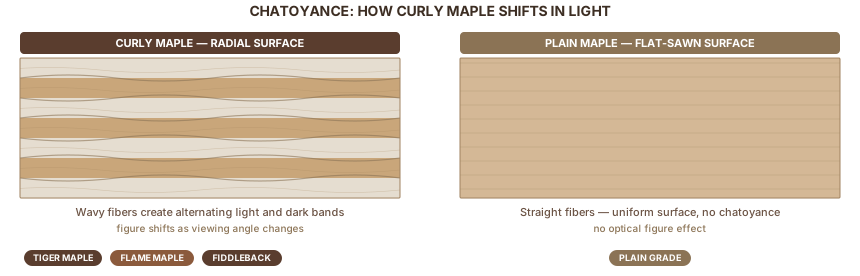
Curly maple is hard maple — the same dense species used for bowling alleys and hardwood floors, with a 1,450 lbf Janka rating — whose fibers grew with a lateral undulating wave rather than straight. When a sawyer slices through that wavy grain on a radial plane, alternating light and dark bands appear that shift and shimmer as the viewing angle changes; woodworkers call this the "chatoyance" or figure. The curl is purely visual: it doesn't alter the wood's structural properties, its hardness, or its dimensional stability. It does, however, make the wood significantly rarer and more expensive than standard hard maple, and far more prone to tear-out at the planer.
| Species | Acer saccharum (sugar/hard maple) |
| Janka hardness | 1,450 lbf — harder than white oak |
| Shrinkage | 4.0% radial, 6.5% tangential |
| Price range | $12–$35/bf for good figure (plain hard maple: $8.50–$12.75) |
| Figure appearance | Wavy bands perpendicular to grain, shift in light |
| Finish system | Water-based dye + water-based topcoat (not pigment stain; not oil-based poly) |
In this guide:
- What creates the curly figure and why you can't predict it
- Evaluating figure quality before you buy
- Working curly maple without tear-out
- Finishing to enhance the figure
Part 1: What Creates the Curly Figure
The fiber cells in curly maple grow in an undulating wave rather than straight up the trunk. When the wood is sawn on the radial or quartersawn plane, those waves appear as alternating light and dark bands running perpendicular to the grain. This creates chatoyance: the bands appear to shift, lighten, and darken as the viewing angle changes. Same optical effect as a cat's eye gemstone.
Why the waves form isn't fully established. Research in Trees (Springer, 2026) suggests a genetic locus with dominant effect in related maple species. Seeds from figured trees tend to produce figured offspring. Phytohormones and epigenetic factors are also implicated, and no single trigger explains every case. You find curly maple. You don't grow it reliably. That scarcity drives the price.
The figure types in maple:
| Figure | What it looks like | Common names |
|---|---|---|
| Curly | Wavy bands across the face, shift in light | Tiger maple, flame maple |
| Quilted | Broader, 3D undulations; looks like a quilt | Quilted maple (mainly bigleaf maple) |
| Bird's eye | Discrete round spots, 1/8"–1/4" across | Bird's eye maple |
| Fiddleback | Tight, consistent curly with fine, regular bands | Fiddleback (luthier term for premium curly) |
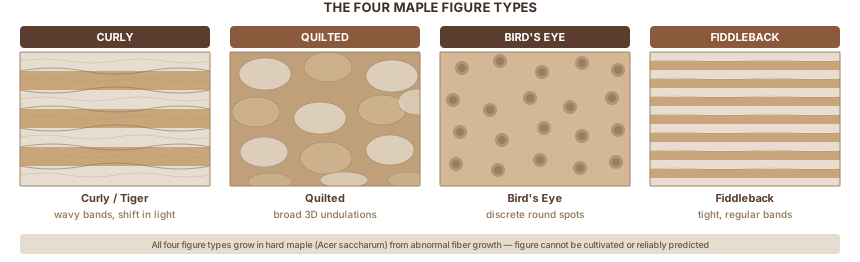
"Fiddleback" is the same wavy grain as curly, just with unusually consistent, closely-spaced bands. Luthiers prize it for violin and cello backs. The name comes from that use.
Curly, quilted, bird's eye, fiddleback — all are hard maple (Acer saccharum) displaying abnormal growth. The species is native to eastern North America, from New England and mid-Atlantic states across to the Midwest and southern Canada.
Part 2: Properties You'll Actually Use
The curly figure doesn't change the wood's structure. These are the same properties as plain hard maple, per The Wood Database:
| Property | Value | What it means |
|---|---|---|
| Janka hardness | 1,450 lbf | Harder than white oak (1,360), walnut (1,010), cherry (950) |
| Density | 43–47 lbs/ft³ | Dense — tools dull faster than with softer species |
| Radial shrinkage | 4.0% | Quartersawn stock moves less seasonally |
| Tangential shrinkage | 6.5% | Flat-sawn stock has significant seasonal movement |
| Origin | Eastern US and Canada | Domestic species, widely available |
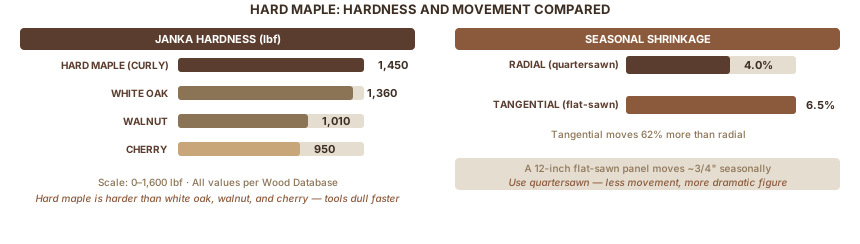
Two things matter most for project planning. The hardness (1,450 lbf) means tooling will dull faster than it does in walnut or cherry. Sharp tools aren't optional. And maple moves: a 12-inch flat-sawn panel can move 3/4" seasonally in a region with real humidity swings. If you're building a table top or cabinet door with curly maple, account for movement in your joinery the same way you would with any flat-sawn maple.
Quartersawn curly maple is worth seeking out. It moves less (4.0% vs 6.5% shrinkage) and shows the figure better, since the radial face produces the most dramatic curl.
Part 3: Evaluating Figure Quality Before You Buy
No standardized grading system exists for figured maple. NHLA grades (FAS, Select, Common) measure clarity and size, not figure intensity. A board can grade FAS and show almost no curl. Figure intensity is priced separately and assessed by eye.
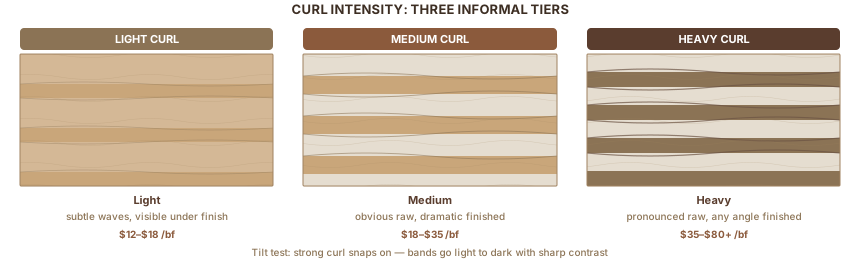
Specialty vendors use informal intensity tiers:
- Light curl: subtle waves, mainly visible under finish
- Medium curl: obvious bands visible in raw wood, dramatic chatoyance when finished
- Heavy curl: pronounced waves visible in raw wood, dramatic from any angle when finished
The tilt test is the most useful evaluation tool. Hold the board at chest height and tilt it toward a light source. Strong curl snaps on — the bands go from light to dark with sharp contrast. Weak curl looks nearly the same at all angles. Rotate end-for-end and repeat. Figure usually reads better from one direction.
For rough-sawn stock: Wipe a small area with mineral spirits. It evaporates without permanent effect and shows you exactly what the board will look like under an oil-based finish. Worth doing before committing to a purchase.
Regularity matters. Consistent, evenly-spaced bands produce the strongest chatoyance, per Commercial Forest Products' chatoyance guide. Irregular or scattered pattern means weaker visual impact even if figure is present. When two boards have comparable intensity, the one with more regular spacing will look more dramatic finished.
Look at both faces. Figure varies from face to face on the same board. The show face may look completely different from the back. Check both before buying.
Part 4: Pricing and Where to Find Curly Maple Lumber
| Material | Price per board foot (2026) |
|---|---|
| Plain hard maple, FAS 4/4 | $8.50–$12.75 |
| Curly maple, light figure | $12–$18 |
| Curly maple, medium figure | $18–$35 |
| Curly maple, heavy figure | $35–$80+ |
| Plain walnut, FAS 4/4 (comparison) | $15–$22 |
| Figured exotics (koa, figured rosewood) | $50–$200+ |
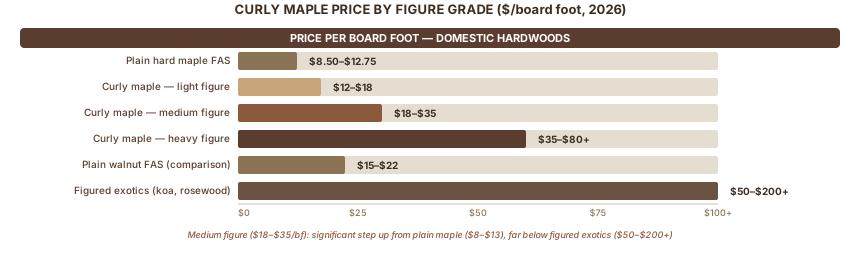
For a domestic figured hardwood, curly maple is accessible compared to exotics. Heavy figure costs real money, but medium figure at $18–$35/bf is reasonable for a piece where the show surface matters.
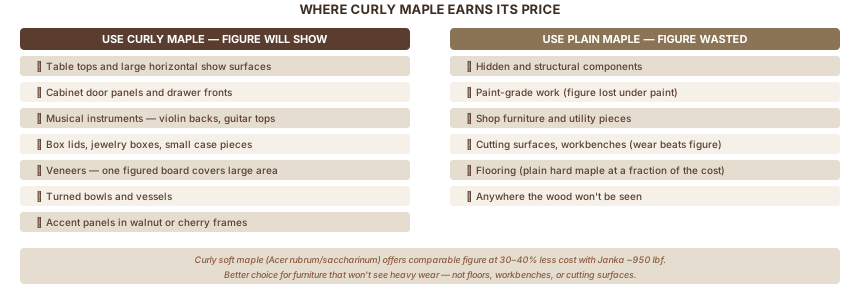
Curly soft maple is worth knowing about. Red maple and silver maple (Acer rubrum, Acer saccharinum) both produce curly figure. Janka hardness is around 950 lbf, noticeably softer and easier to work than hard maple, less prone to tear-out, and typically 30–40% less expensive with comparable figure. For furniture where the piece won't take heavy wear (not a floor, workbench, or cutting surface), curly soft maple is a sensible choice.
Where to source:
- Specialty hardwood dealers — best selection, sort through boards in person
- Online specialty vendors — Woodworkers Source, Bell Forest Products, Hearne Hardwoods, Cook's Maple. Some vendors photograph individual boards.
- Big-box stores — almost never carry figured stock
Part 5: Where Curly Maple Earns Its Price
Curly maple has been used in fine furniture and musical instruments for centuries. Stradivarius violins feature curly maple backs. 18th-century New England craftsmen used tiger maple in Windsor chairs, chests, and bureaus. Sam Maloof incorporated curly maple into his iconic rocking chairs.
Where it belongs in your shop:
- Table tops and large horizontal show surfaces — chatoyance is strongest in ambient light that moves across the piece
- Cabinet door panels and drawer fronts
- Musical instruments: violin and cello backs, guitar tops and bodies, mandolins
- Box lids, small case pieces, jewelry boxes
- Veneers: one figured board covers substantial surface area at lower cost per square foot
- Turned bowls and vessels
- Accent wood in mixed-species work — curly maple panels in a walnut or cherry frame
Where plain maple is the right call:
- Hidden or structural components
- Paint-grade work
- Shop furniture, utility pieces
- Any project where the figure won't be seen
Part 6: Working Curly Maple Without Tear-Out
The challenge is grain reversal. The wavy figure means grain direction changes every inch or two across the board face. No matter which direction you feed the stock, you're cutting against the grain somewhere. Standard technique produces torn surfaces.
Machine planing and jointing:
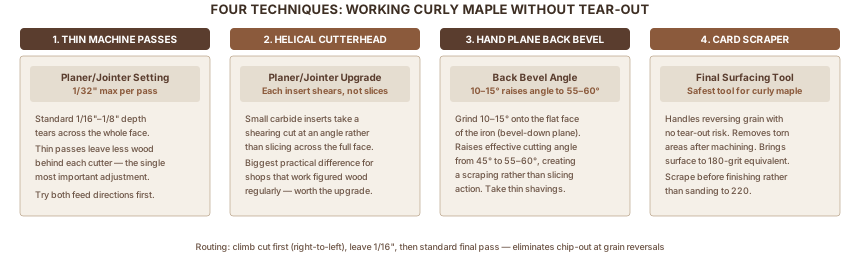
Set your planer to 1/32" per pass or less. This is the single most important adjustment. Thin passes leave less wood behind each cutter, minimizing tear-out from reversing grain. At standard depth (1/16"–1/8"), curly maple comes out torn across the whole face.
A helical or spiral cutterhead makes the biggest practical difference. Each small insert takes a shearing cut rather than a continuous slice across the full face. Makers who work figured wood regularly upgrade their planers and jointers for this reason. WoodWeb's knowledge base on limiting tear-out with curly maple documents this consistently across professional shops.
Try both feed directions on a test piece before running your stock. With reversing grain, one direction almost always produces less tear-out.
Hand planing:
A back bevel of 10–15° on the cutting iron raises the effective cutting angle from 45° to 55–60°, creating a scraping rather than slicing action. This handles reversing grain well. A standard bevel-down bench plane works with a back bevel applied to the flat face of the iron. Take thin shavings.
Routing:
Climb cut on the first pass, feeding right-to-left (opposite normal direction), leaving 1/16" of material. Take a standard final pass to remove the last 1/16". The climb cut eliminates most chip-out at grain reversals; the standard pass cleans the surface. As WoodWeb's preventing tear-out guide notes, bit sharpness matters as much as direction.
After machining:
A card scraper is the safest final surfacing tool for curly maple. It handles reversing grain without tear-out risk, removes remaining torn areas, and brings the surface to 180-grit equivalent quality. Scrape before finishing rather than sanding to 220, and you avoid the risk of over-sanding.
Part 7: Finishing to Enhance the Figure
The right finish showcases the figure. The wrong finish buries it.
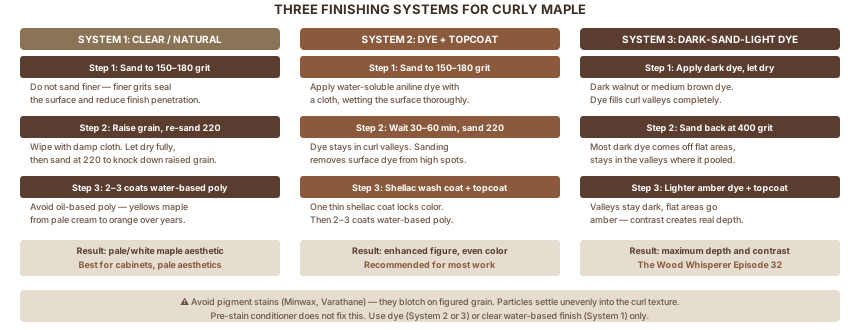
Why pigment stains fail. Pigment-based stains (Minwax, Varathane, most hardware store stains) are colored particles suspended in a carrier. They settle into surface texture unevenly on figured grain, going darker where grain is more porous and lighter where it isn't. The result is blotching that obscures the figure. Pre-stain wood conditioner doesn't fix this. As Popular Woodworking explains, conditioner requires stain within two hours, but at two hours the varnish-based conditioner hasn't cured. Stain mixes with the wet conditioner and still penetrates unevenly.
Three finishing systems work reliably:
System 1: Clear/natural — preserves maple's pale color. Apply water-based polyurethane directly over a surface sanded to 150–180 grit (not finer, since finer grits seal the surface). Raise grain with a damp cloth, re-sand at 220, then two to three coats of water-based poly. Figure shows without dramatic enhancement. This is the right choice for maple cabinets where the white/pale aesthetic matters. Avoid oil-based poly on curly maple: it yellows progressively, shifting maple from pale cream to orange-amber over years.
System 2: Water-soluble dye + topcoat — recommended for most work. Dye molecules are small enough to penetrate uniformly regardless of grain texture. Sand to 150–180 grit, apply water-soluble aniline dye with a cloth, wetting the surface thoroughly. After 30–60 minutes, sand at 220 to knock down raised grain and remove surface dye from the high spots. The dye stays in the curl valleys. Apply one thin coat of shellac to lock in the color, then two to three coats of water-based poly or cab acrylic lacquer. Woodcraft's dye staining guide covers this wash-coat approach in detail.
System 3: Dark-sand-light dye — maximum figure. The Wood Whisperer's episode 32 popularized this technique. Apply a dark dye (dark walnut, medium brown) and let it dry completely. Sand back at 400 grit: most dark dye comes off the flat areas, but stays in the curl valleys where it pooled. Apply a lighter amber or golden dye over the sanded surface, then seal with shellac and topcoat with water-based finish. The curl valleys stay dark, the flat areas go light amber, and the contrast makes the figure read with real depth.
The BLO preview: Before any finish, wipe the raw sanded wood with boiled linseed oil, let it absorb five minutes, then wipe completely dry. This previews what the figure will look like under any oil-based finish, with no permanent effect. Let it cure 24–48 hours before topcoating.
Stop sanding at 180 before dye. Finer grits seal the surface and reduce penetration. After dye, sand at 220–320 to knock down raised grain. Going further removes figure from the raised areas and reduces the contrast that makes the wood worth buying.
Where This Fits
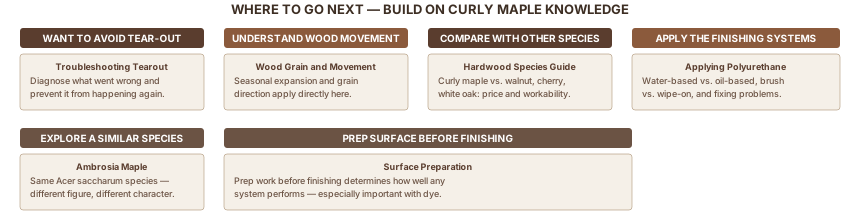
Curly maple is about understanding the material before you buy or use it. The guides that turn that understanding into specific skills:
- Understanding Wood Grain and Movement — seasonal expansion and grain direction principles apply directly to curly maple panel construction
- Hardwood Species Guide — how curly maple compares to walnut, cherry, white oak across workability, price, and durability
- Troubleshooting Tearout — diagnose what happened and fix or prevent it
- Surface Preparation — prep work before finishing that determines how well any system performs
- Applying Polyurethane — water-based vs. oil-based, brush vs. wipe-on, and fixing problems
Sources
Research for this guide drew on wood science references, industry knowledge bases, finishing guides from specialty retailers, and woodworking publications.
- The Wood Database — Hard Maple — species properties, Janka hardness, shrinkage coefficients
- Springer Trees — Genetic basis of wavy grain in Acer (2026) — genetics of figure formation
- WoodWeb — Limiting Tear-Out when Planing Curly Maple — machine settings and technique
- WoodWeb — Preventing Tear-Out with Curly Maple — helical cutterheads, back bevel technique
- WoodWeb — Achieving a 3D Effect with Curly Maple — dye layering technique
- Woodcraft — Staining Curly Maple with Dye — wash coat shellac + dye system
- Popular Woodworking — Battling Blotching — why wood conditioner fails on maple
- The Wood Whisperer — Pop the Grain (Episode 32) — dark-sand-light dye technique
- Woodworkers Source — 3 Curly Maple Finishes — comparison of three finishing approaches
- Fine Woodworking Forum — Best Finish for Curly Maple — experienced maker perspectives
- Commercial Forest Products — Chatoyancy in Figured Wood — chatoyance grading and evaluation
- Flame Maple — Wikipedia — historical applications, Stradivarius, 18th-century furniture
Wood Species
Also Referenced